
27.07.2026

ARIANESPACE TO LAUNCH WEATHER SATELLITE MTG-I2 ON ARIANE 6'S FIRST MISSION TO GEOSTATIONARY ORBIT ON AUGUST 27, 2026
- On August 27, 2026, Arianespace will place into orbit the 2nd Meteosat Third Generation Imager satellite, MTG-I2, with a dedicated Ariane 62, the two-booster configuration of Ariane 6.
- Building on a long-standing partnership between ESA and EUMETSAT, MTG-I2 is part of Europe's next-generation geostationary meteorological satellite system, providing enhanced imagery for the early detection of fast-developing severe storms, weather forecasting and climate monitoring.
- This mission, designated VA270, will mark Ariane 6's fourth mission of the year and the first flight to geostationary transfer orbit.
On August 27 2026, Arianespace will launch the MTG-I2 meteorological satellite with the Ariane 62 configuration from Europe's Spaceport in French Guiana.
The mission is expected to last approximatively 36 minutes from lift-off to satellite separation.
The mission MTG-I2 will mark the fourth Ariane 6 launch of the year and the first to a geostationary orbit.
Meteosat Third Generation (MTG) is part of a new generation of geostationary satellites providing imagery for the early detection of fast-developing severe storms, weather forecasting and climate monitoring. The combination of MTG's innovative instruments and their increased resolution and sensitivity offer significant enhancement on Meteosat Second Generation, particularly in the challenging task of early detection and prediction of rapidly evolving and potentially dangerous weather events such as severe thunderstorms. The MTG system is the most complex and innovative meteorological geostationary system ever built. Its fleet will comprise two imaging satellites and one sounding satellite in orbit 36,000km above the Earth.
The MTG-I2 satellite will complete the first family of the MTG system, the most powerful weather constellation in the world. MTG-I2 will provide a rapid scan service over Europe every 2.5 minutes, working together with Meteosat-12 (MTG-I1), which was successfully launched by Ariane 5 VA259 in December 2022, ensuring the continuity and resilience of Europe's operational meteorological services.
MTG satellites have been developed by ESA based on the users' requirement collected by EUMETSAT, and built by a large consortium of European industries led by Thales Alenia Space with main partners OHB System in Germany and Leonardo in Italy. EUMETSAT develops the ground infrastructure to control and communicate with the satellites, operates them throughout their lifetime, and disseminates the scientific data to users worldwide.
The satellite arrived in French Guiana on June 12 and is currently undergoing launch preparations at the Europe's Spaceport.
Ariane 6 is a programme developed by the European Space Agency (ESA) - ensuring development and monitoring operations to help deliver a reliable and available launch system for its Member States.
With this launch, Arianespace will further strengthen Europe's strategic and autonomous access to space for key institutional missions such as meteorological satellites, ensuring the continuity of weather forecasting and climate monitoring through a reliable and versatile launch service.
VA270 launch at a glance:
- 362nd launch by Arianespace, 4th Arianespace launch in 2026
- 9th Ariane 6 launch and 6th launch of Ariane 62
- 1st Ariane 6 mission to geostationary transfer orbit
Quelle: arianespace
----
Update: 8.12.2026
.
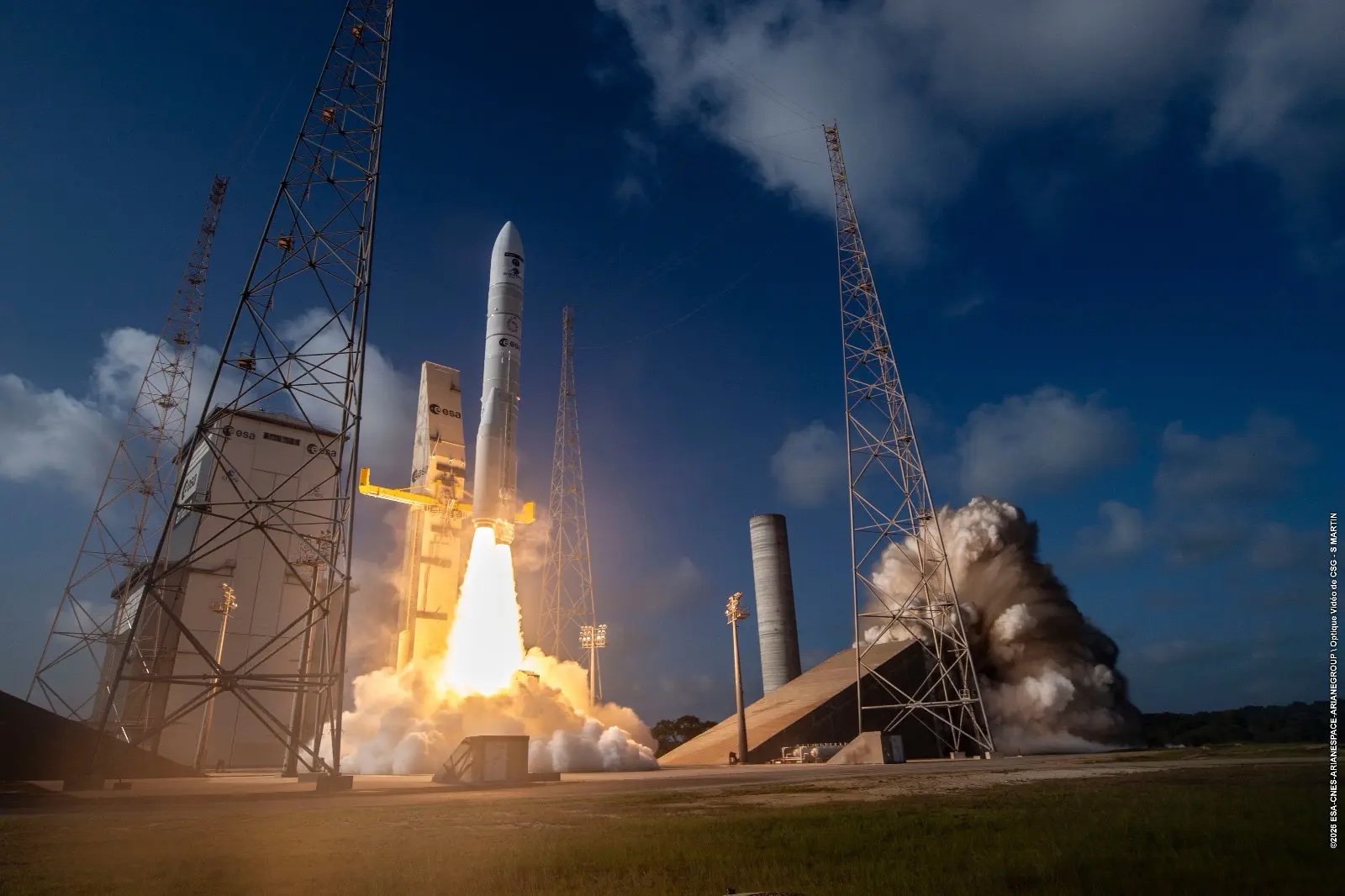
Start von Ariane-6 VA270 mit WEATHER SATELLITE MTG-I2
MTG-I2 weather satellite delivers first images
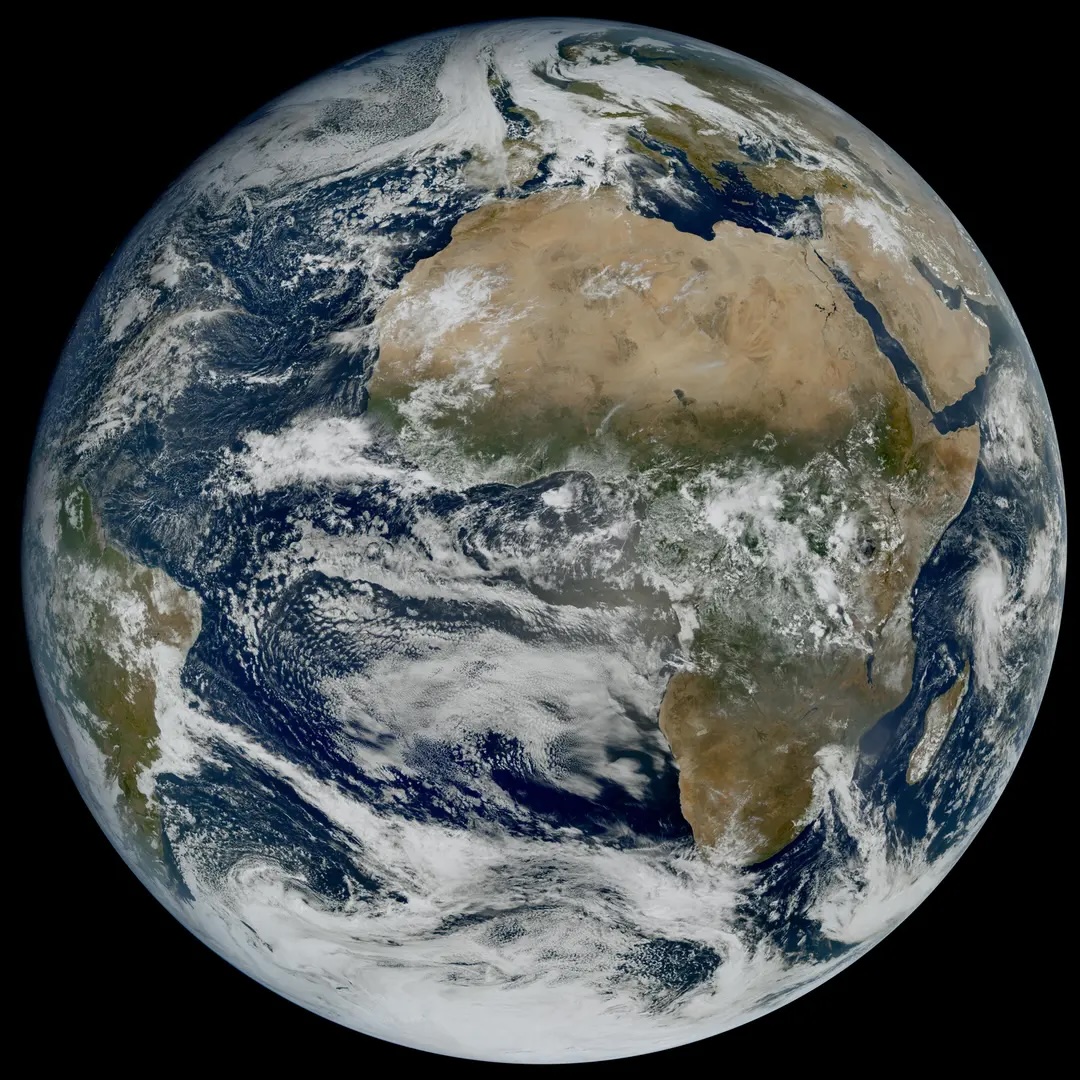
First view of Earth from MTG-I2
The Meteosat Third Generation (MTG) mission’s second Imager satellite has delivered its first images, showing weather patterns over Europe and Africa. When fully operational, the MTG-I2 satellite will use its Flexible Combined Imager in rapid scan mode, providing data over Europe and North Africa every 2.5 minutes.
This 2.5-minute repeat cycle is a game-changer for weather forecasting, enabling meteorologists to monitor the rapid development and evolution of weather systems in unprecedented detail. MTG's capability will enable more accurate forecasts and earlier prediction of severe weather events.
The animation below shows Europe and North Africa at 2.5-minute intervals over a 45-hour period starting on 3 November 2026. It reveals fog and low clouds lingering over central Europe, deep convective clouds developing over the Mediterranean, and clouds at different altitudes moving in opposite directions over the Atlantic Ocean. A smoke plume from a wildfire in central Portugal is also visible on 3 November.
MTG-I2 – just like its counterpart, the first MTG Imager – flies in geostationary orbit. This orbit is sometimes compared to a ‘hawk’s eye’ position because the satellite follows the same point on Earth’s surface as it rotates. Geostationary satellites monitor Earth from a distance of 36 000 km, roughly one-tenth of the distance to the Moon.
The satellite carries two powerful imaging instruments. One of the instruments is the Flexible Combined Imager, which can be operated in different scanning modes. On board MTG-I2, it provides the rapid scanning service over Europe. This complements the instrument carried by the first MTG Imager, which delivers an image of a full Earth hemisphere every 10 minutes.
In addition to providing a major increase in the quality, quantity and frequency of observations available for European weather forecasting, the instrument also provides valuable data for monitoring and understanding our climate.
MTG-I2 was launched on 27 August 2026, completing the first family of three satellites, and providing continuity and operational resilience for the mission.
From 2033, the second ‘family’ of MTG satellites will be launched in sequence to extend the mission’s duration beyond 2040.
The constellation also provides key information and imagery for monitoring hydrology, agriculture, environmental studies as well as risk prevention and disaster warnings.
The satellite is still undergoing calibration and validation to prepare it for operational service, which is expected to begin in the second quarter of 2027.
The satellite was developed by ESA through Thales Alenia Space, fulfilling the requirements set by EUMETSAT in consultation with the meteorological services of its Member States.
Quelle: ESA