
23.07.2026
STARSHIP'S THIRTEENTH FLIGHT TEST
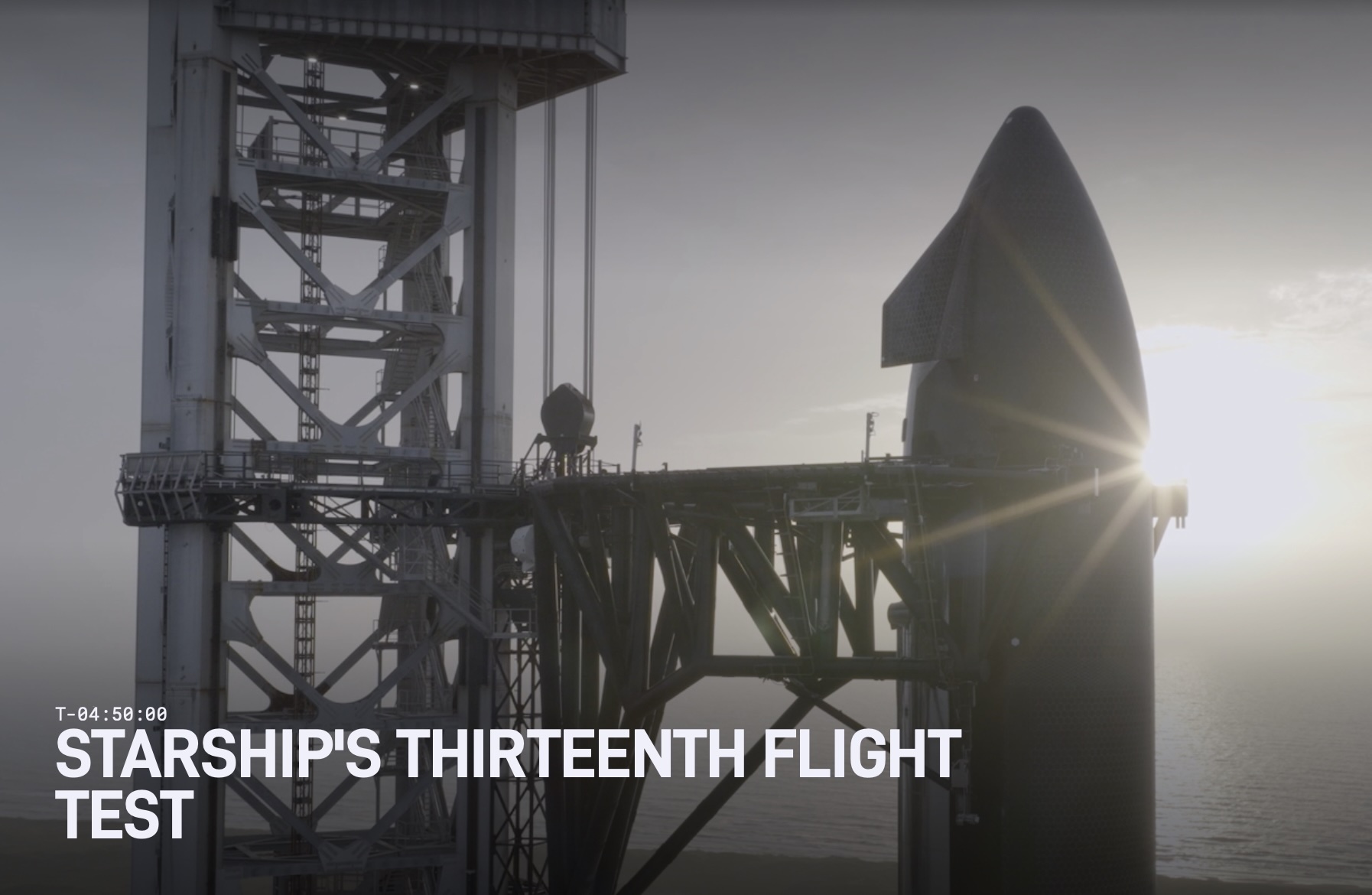
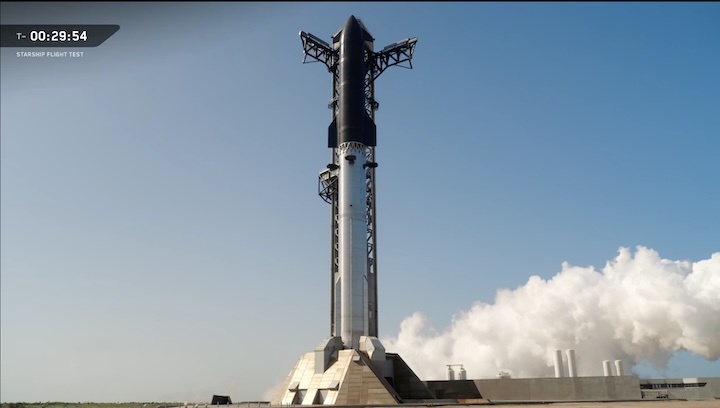
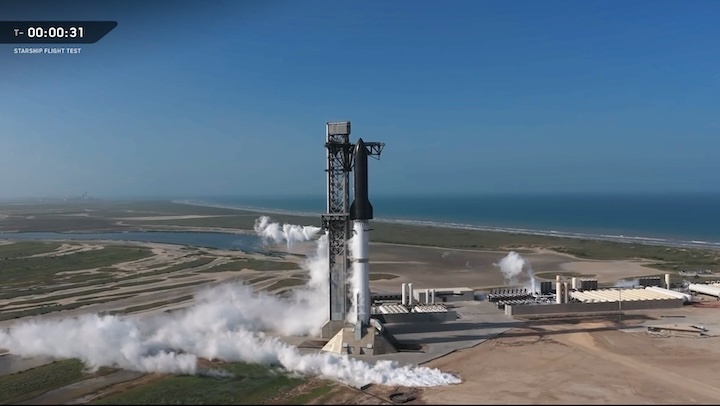
The thirteenth flight test of Starship is preparing to launch as early as Thursday, July 23. The 90-minute launch window will open at 5:45 p.m. CT.
A live webcast of the flight test will begin about 30 minutes before liftoff, which you can watch here and on X @SpaceX. As is the case with all developmental testing, the schedule is dynamic and likely to change, so be sure to check in here and stay tuned to our X account for updates.
The upcoming flight will aim to complete similar objectives targeted on the previous flight test, which debuted the Starship and Super Heavy V3 vehicles, while also carrying next-generation Starlink V3 satellites for the first time.
Watch “Critical Path”, the latest episode in the ongoing Starship series that followed SpaceX engineers and technicians through the final days before launch of the first Starship V3.
The booster’s primary test objective will be executing a successful launch, ascent, stage separation, boostback burn, and landing burn at an offshore landing point in the Gulf of America. There have been several modifications to hardware and software to address issues seen on the previous flight.
At stage separation on Flight 12, slight differences in engine startup on the ship caused the directional flip of the booster to be off by approximately 90 degrees. The startup sequence has been modified to be more robust to timing variability and more reliably flip in the desired direction, which is done to increase overall performance. After stage separation and the flip, the Super Heavy booster attempted its boostback burn. Five of its 33 engines experienced issues when attempting to re-light causing the boostback burn to end early. The Super Heavy on this upcoming flight has hardware modifications to improve re-light reliability along with updates to engine alarms and aborts to match the conditions seen in the multi-engine flight environment.
The Starship upper stage’s primary objectives include the deployment of 20 Starlink V3 satellites, a relight of a single Raptor engine while in space, and another controlled entry, descent, and splashdown in the Indian Ocean. There have also been several modifications to Starship’s propulsion system to address the engine out issue experienced on the previous flight.
Approximately 40 seconds after stage separation, Starship lost one of its three Raptor vacuum optimized engines. The vehicle was able to demonstrate its engine out capability and reach its planned suborbital trajectory. Several hardware and operational modifications have been made to address the interconnected causes with additional reliability improvements planned in upcoming versions of the Raptor engine.
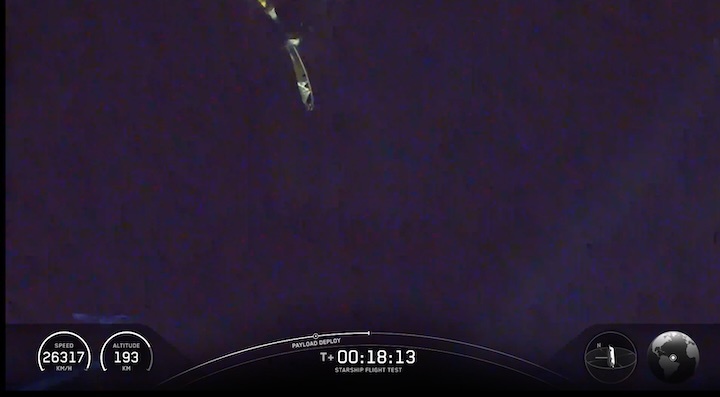
For the first time, Starship will carry V3 Starlink satellites to space, which aim to greatly expand the network's capacity and user speeds. As part of this initial test, Starship is planned to deploy 20 satellites which will extend solar arrays and antennas and will attempt to connect with the larger Starlink constellation via high-capacity lasers. The Starlink satellites will be on the same suborbital trajectory as Starship and are expected to demise upon reentry approximately 20 minutes after deployment.
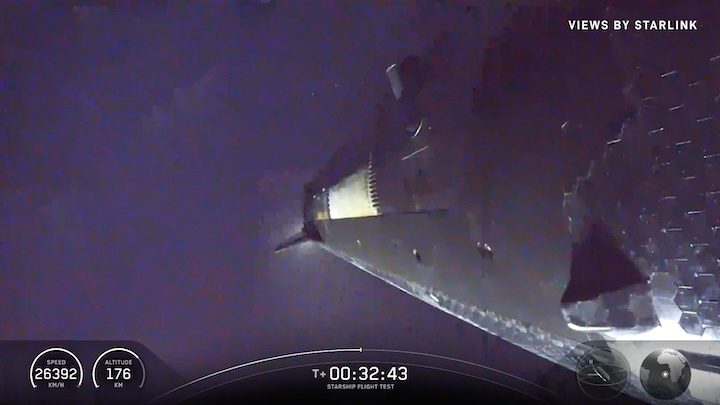
Six of the satellites have been modified with a suite of cameras to scan Starship’s heat shield and transmit imagery down to operators to continue testing methods of analyzing Starship’s heat shield readiness for return to launch site on future missions. Several tiles on Starship have been painted white to simulate missing tiles and serve as imaging targets in the test.
Several upgrades and experiments related to Starship’s heatshield will also be tested to continue iteration towards a fully and rapidly reusable design. Multiple tiles will be attached to the metallic side of Starship’s aft flaps along with modified tiles and attachment mechanisms in the heatshield covering the aft skirt to gather flight data on different attachment options. Finally, Starship’s heatshield will have load sensing tiles to take measurements as the vehicle experiences higher dynamic pressure on ascent than previous flights, putting added stress on the tile attachments in exchange for increased payload to orbit capability.
Quelle: SpaceX
+++
SpaceX set to attempt next Starship launch Thursday from Texas
SpaceX is targeting Thursday for the next launch attempt of its massive Starship from Starbase, Texas, after the first attempt ended in a rare post-ignition abort.
SpaceX replaced multiple Raptor engines on Starship's Super-Heavy booster after some failed to ignite and now is eying a launch time as early as 6:45 p.m. ET July 23 for the anticipated 13th test flight. There will be a 90-minute period in which the launch can occur.
While SpaceX confirmed it is targeting Thursday, the company noted that weather is a "significant watch item for launch."
It was during the July 16 launch attempt that the giant rocket lit its engines and then experienced a quick shutdown just as a liftoff from the Texas launch pad was imminent.
The SpaceX webcast showed that four of the Super Heavy booster’s engines failed to ignite at T-0. SpaceX CEO Elon Musk said on X that two of the Raptor engines were being replaced out of caution.
Starship test flight goals
When this second test flight of Starship V3 does happen, the goals are: successful launch, controlled booster landing, the ship coasting in space, a relight of a single ship engine, deployment of 20 Starlink satellites, and the ship's splashdown in the Indian Ocean.
Six of those Starlink satellites are outfitted with cameras to assess the ship’s heatshield while it coasts in space. SpaceX did something similar on Flight 12 in May, outfitting two Starlink “simulators” with cameras. On top of SpaceX gathering data, webcast viewers got live views of the ship as it flew above Earth.
The Super-Heavy booster will not be caught back at the launch site for this mission, as SpaceX is still testing the performance of the engines. It will instead be sent on a controlled splashdown in the Gulf of America, also known as the Gulf of Mexico, after stage separation.
Meanwhile, the ship is targeting a controlled landing in the Indian Ocean after its cruise in space. The past few test flights, SpaceX has released footage of the ship landing, and each flight the ship appeared to survive reentry more intact. In the near future SpaceX plans to catch and reuse the ships, yet it is unknown when that first test will come.
Starship coming to Florida
This 13th Starship test flight from Texas marks the second test overall of the new Starship V3 (Version 3), which is the same model of the ship expected to someday launch from NASA's Kennedy Space Center Pad 39A. Starship will later also launch from Cape Canaveral Space Force Station's Launch Complex 37, where SpaceX is building two launch pads — 37A and 37B.
Starship will play a vital role in the space industry, most notably in NASA’s Artemis return to the moon program. SpaceX is contracted by NASA to provide one of the two human lunar landers. The Starship HLS (Human Landing System) could support a crewed lunar landing as early as Artemis IV in 2028. Before then, a modified Starship V3 will dock with the Orion spacecraft in Earth orbit during the Artemis III mission, which is slated for some time in 2027. Blue Origin is contracted to provide the other human lander.
SpaceX claims that a debut Florida launch for Starship could come as early as later this year, however that depends on how well the upcoming 13th test flight goes and when the Kennedy Space Center launch pad is complete.
Quelle: Florida Today
----
Update: 25.07.2026
.
STARSHIP'S THIRTEENTH FLIGHT TEST
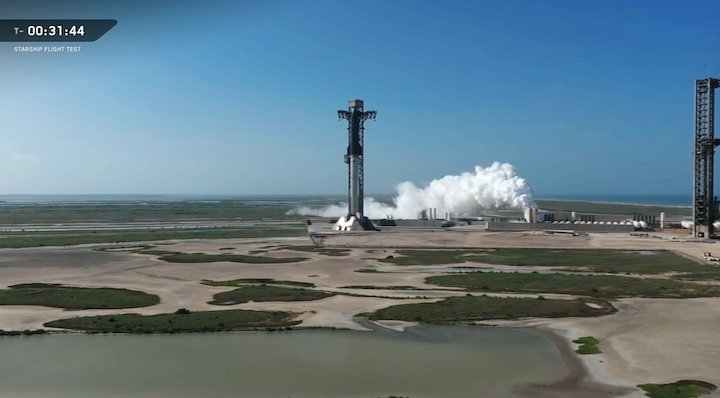
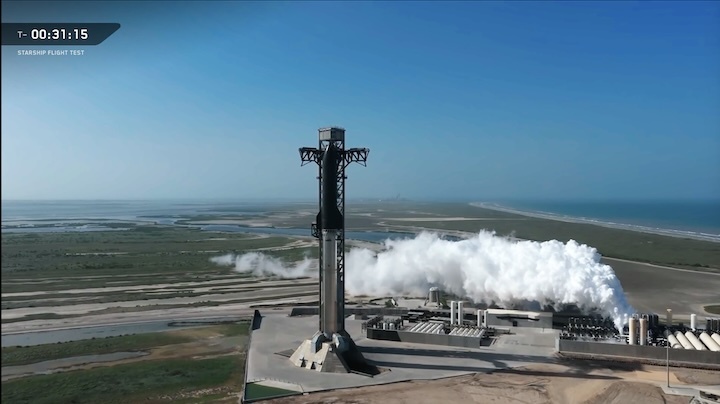
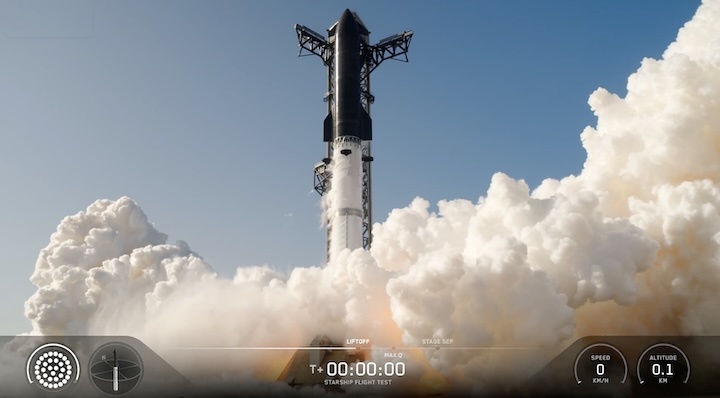
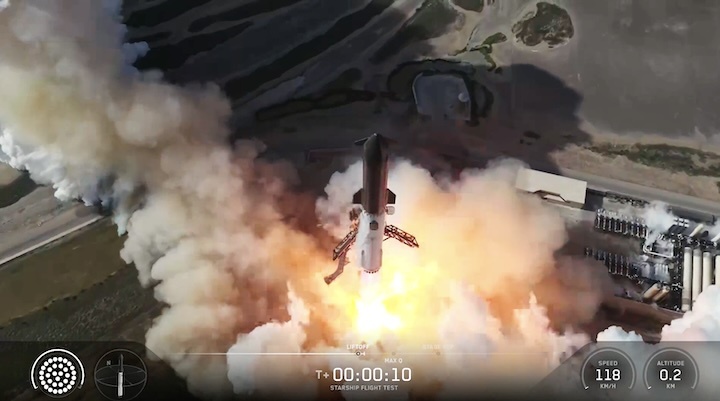
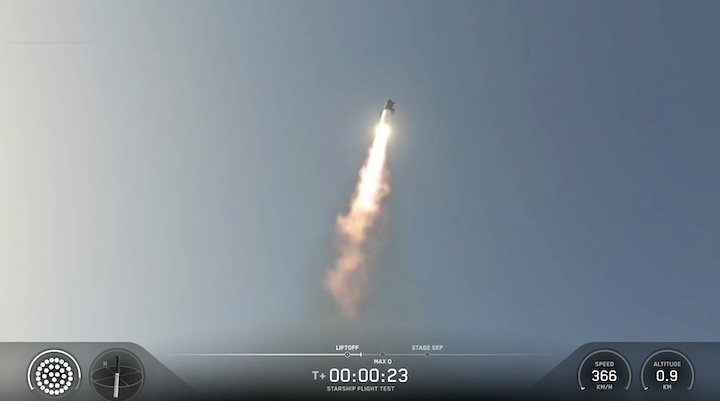
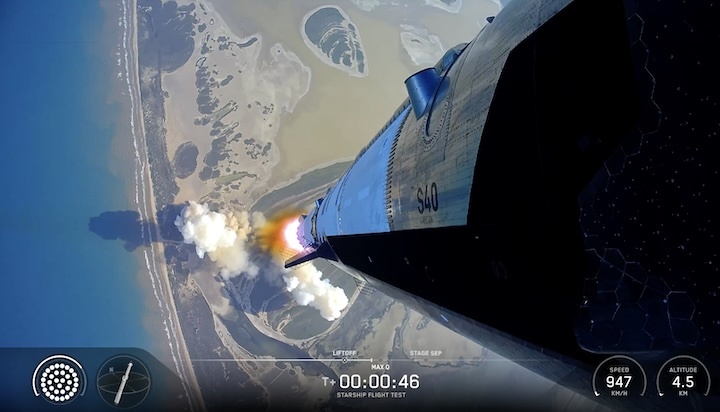
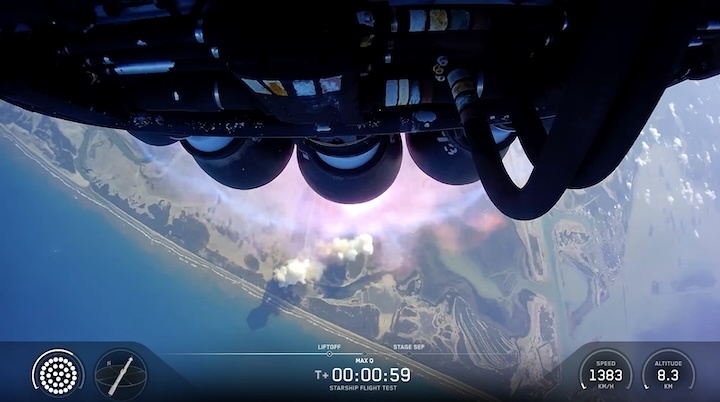
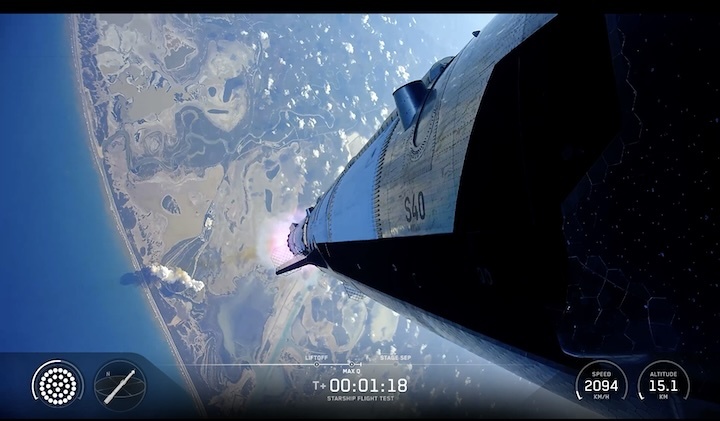
On Friday, July 24, 2026, at 5:51 p.m. CT, Starship lifted off from Starbase, Texas on its thirteenth flight test. This was the second flight of the Starship and Super Heavy V3 vehicles and the first Starship flight to deploy the next generation Starlink V3 satellites.
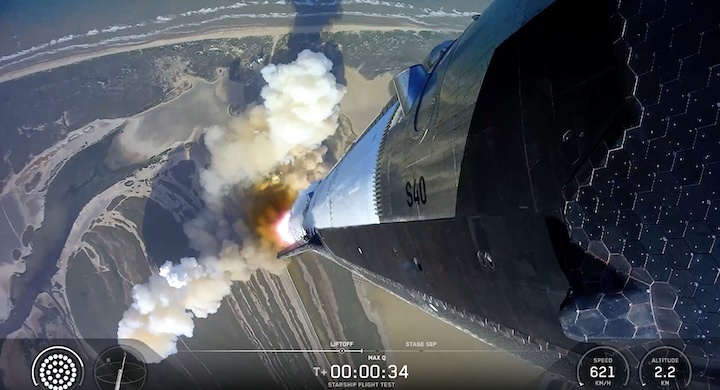
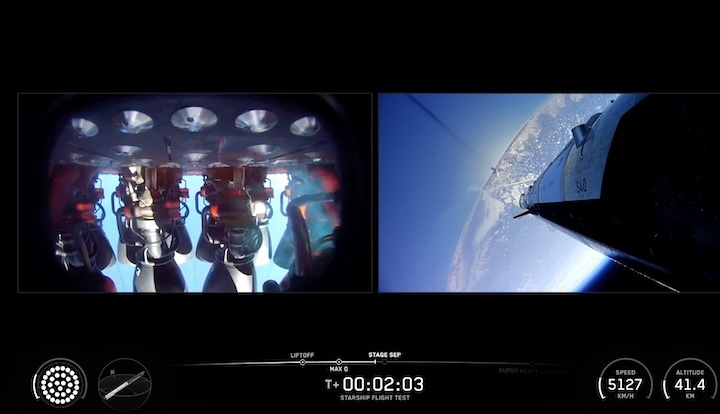
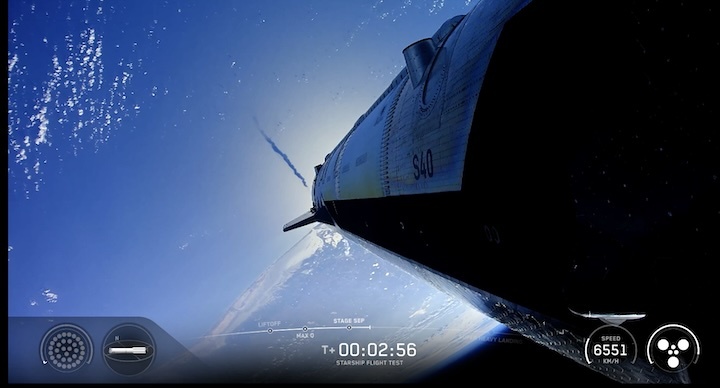
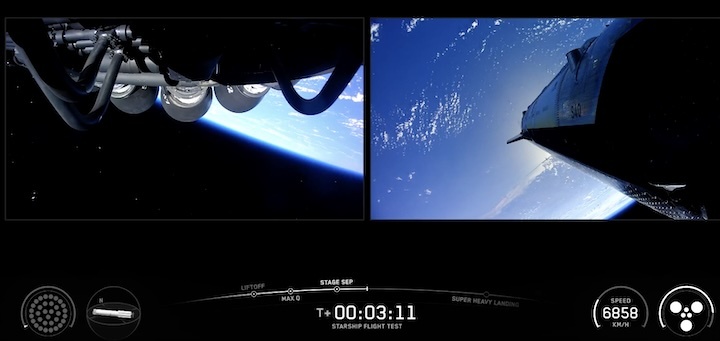
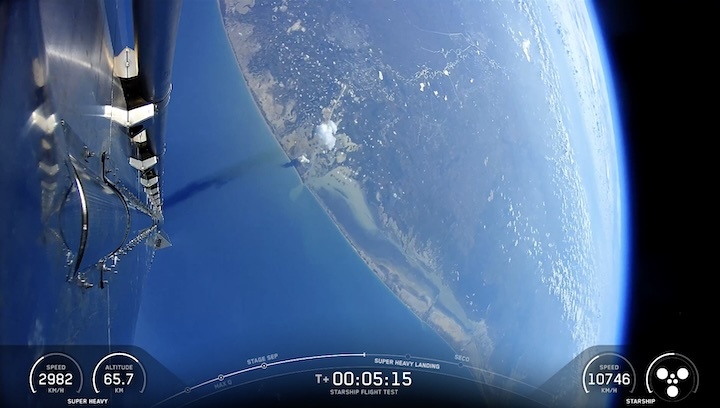
The flight test began with Super Heavy igniting all 33 Raptor 3 engines and ascending over the Gulf of America. The successful first-stage ascent was followed by a hot-staging maneuver, with Starship’s upper stage igniting its six Raptor engines to continue its flight to space.
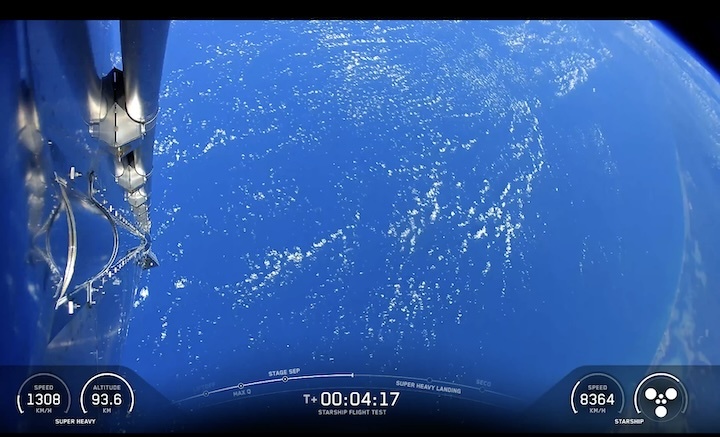
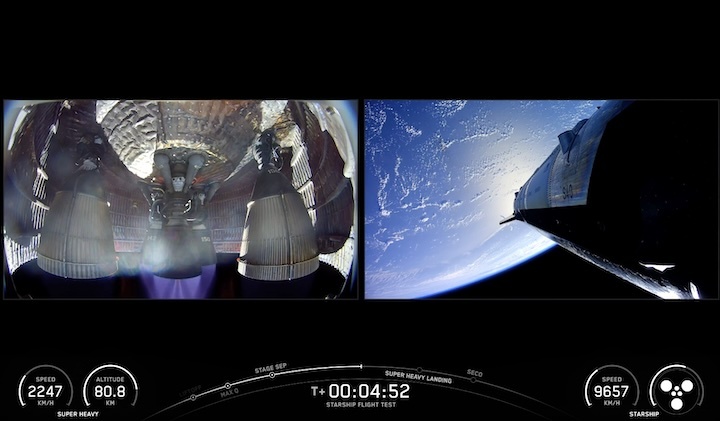
Following stage separation, the Super Heavy booster performed a directional flip maneuver. The startup sequence was modified for this flight to be more robust to timing variability in engine startup and flip in the desired direction, which is done to increase overall performance. The booster successfully completed the high thrust portion of the boostback burn with all 33 engines, the first time with a Super Heavy V3, before ending the burn early. It attempted to relight its engines for the landing burn, with a subset successfully igniting before experiencing a hard splashdown in the Gulf.
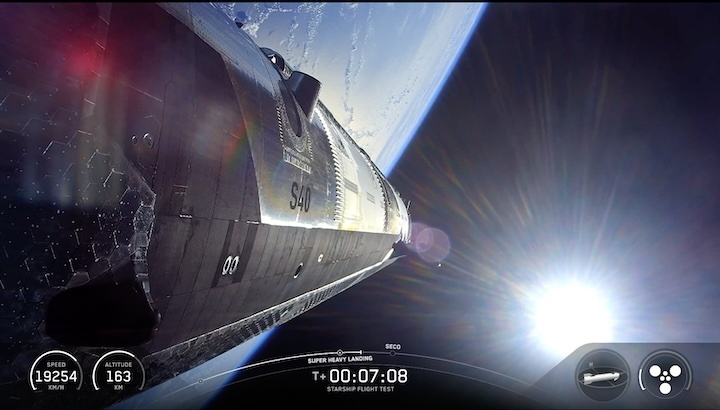
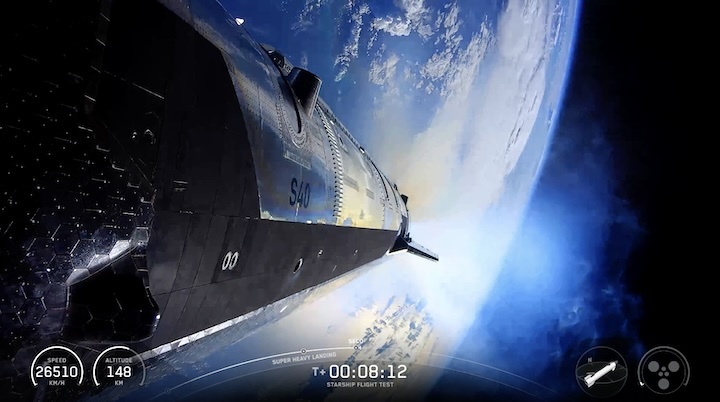
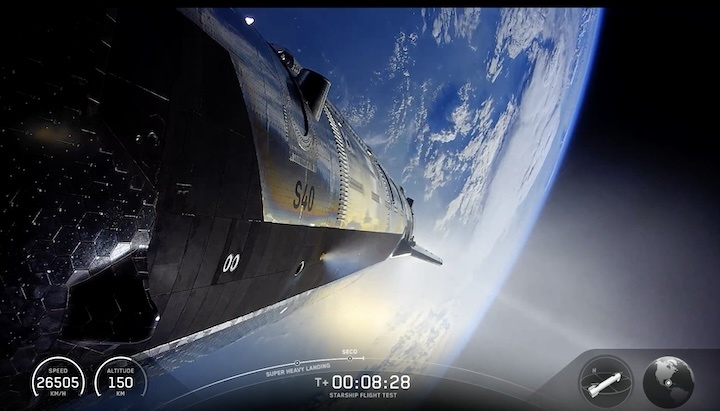
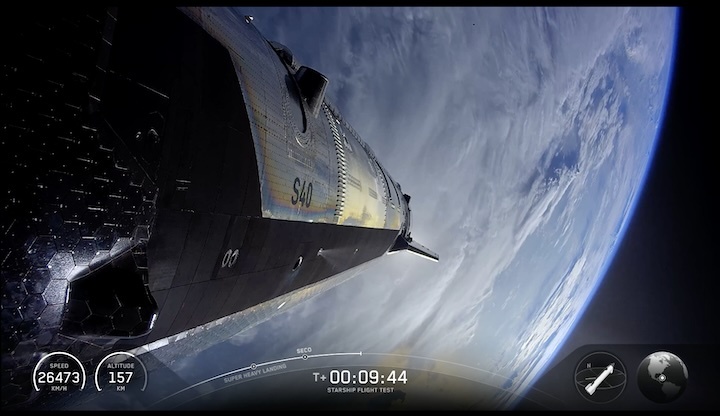
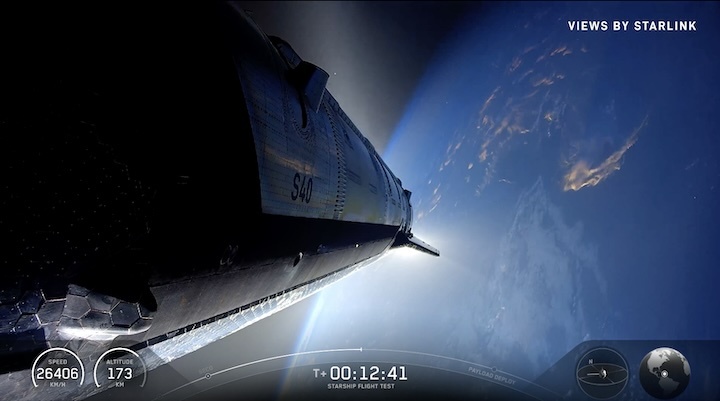
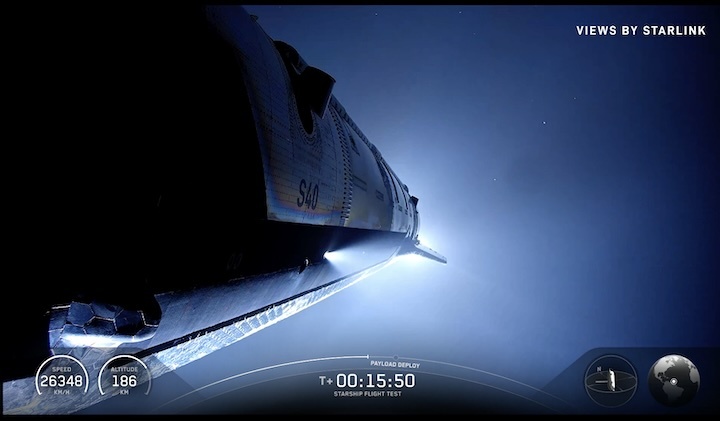
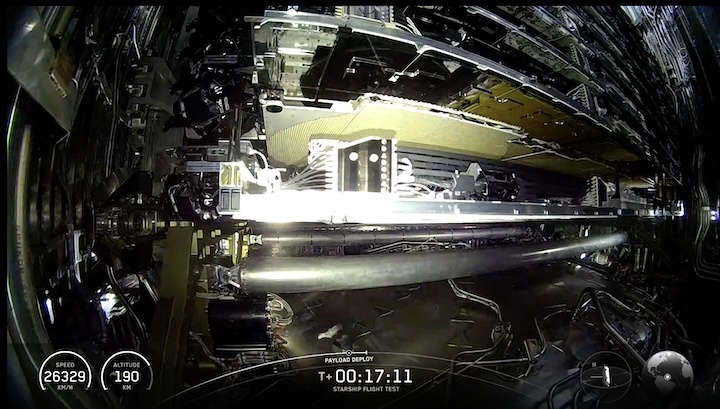
After completing a full-duration ascent burn on all six Raptor engines, Starship achieved its planned velocity and trajectory. Starship then successfully deployed all 20 Starlink V3 satellites. SpaceX engineers were able to successfully communicate with every satellite using radio frequency and laser links and downloaded key telemetry from the satellites. The Starlink satellites were deployed on the pre-planned trajectory and are expected to have demised upon reentry approximately 20 minutes after deployment.
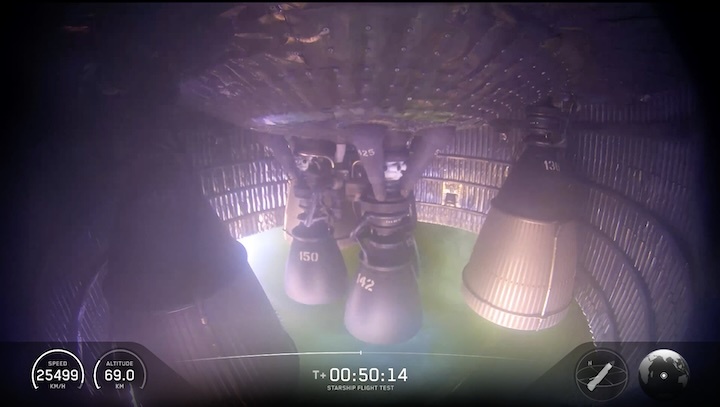
The vehicle also reignited a single Raptor engine in an in-space demonstration of a core capability for future orbital missions.
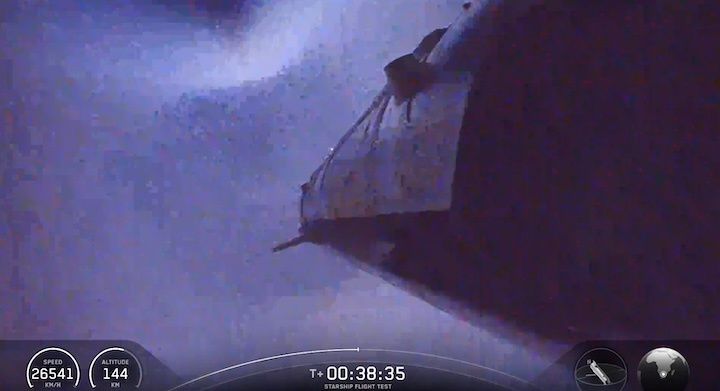
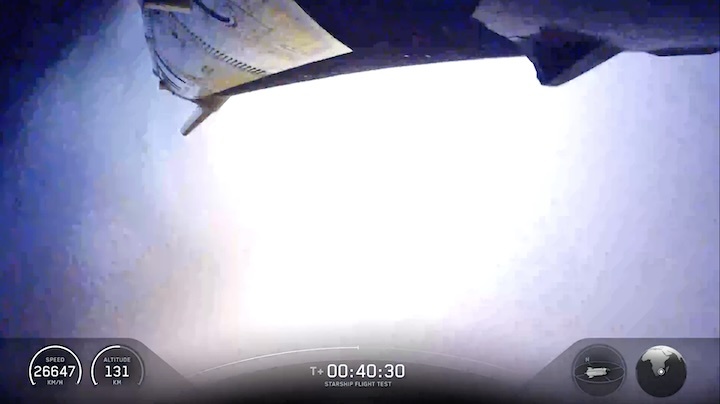
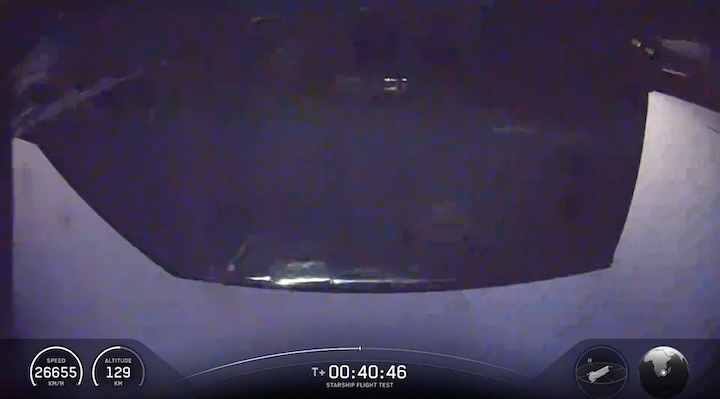
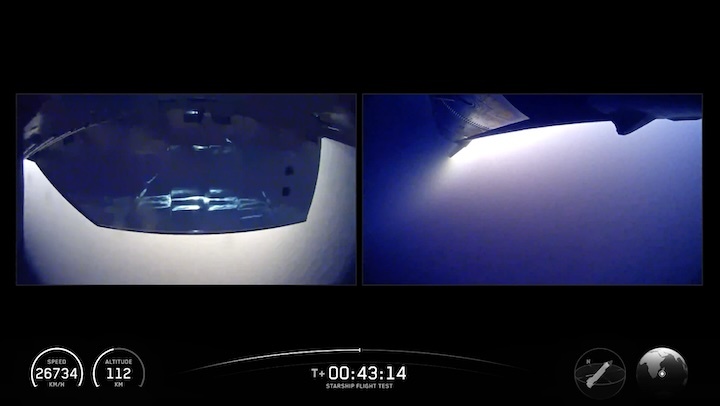
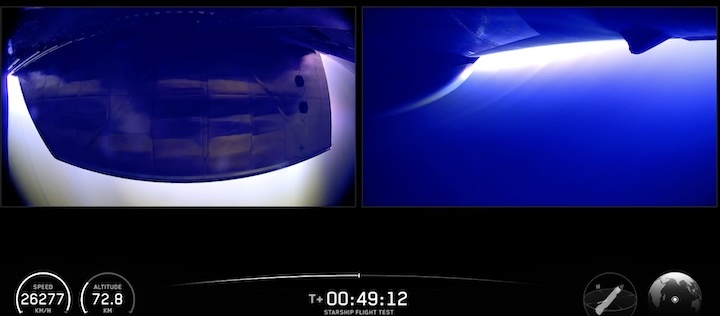
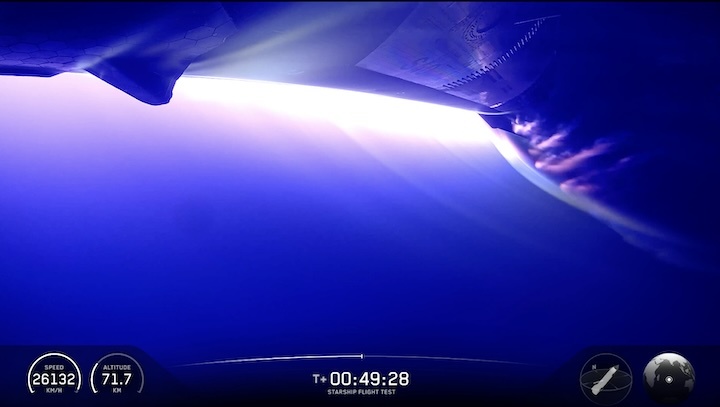
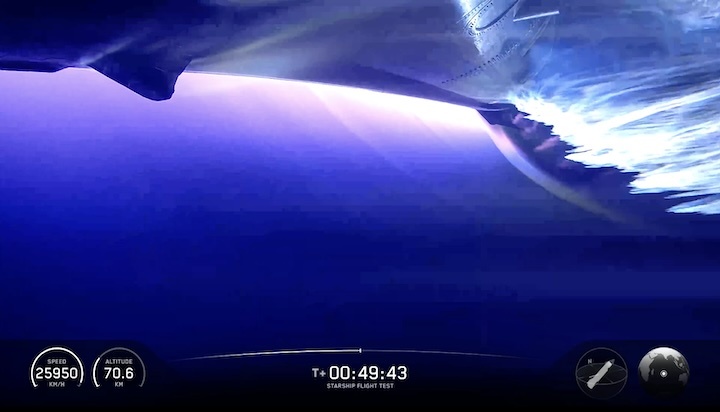
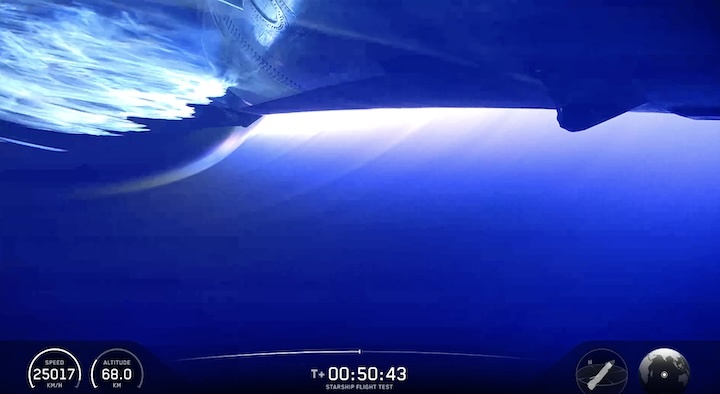
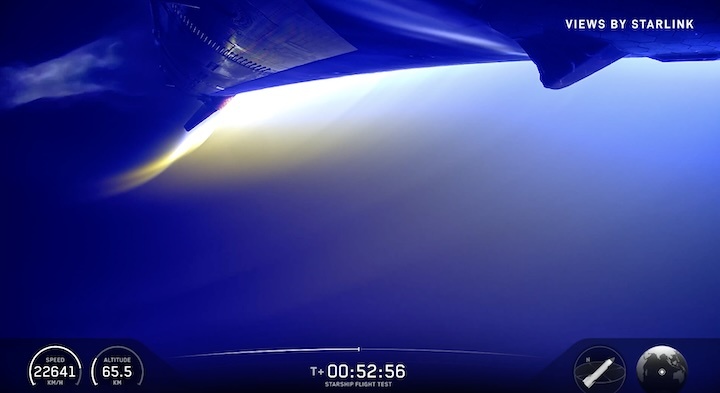
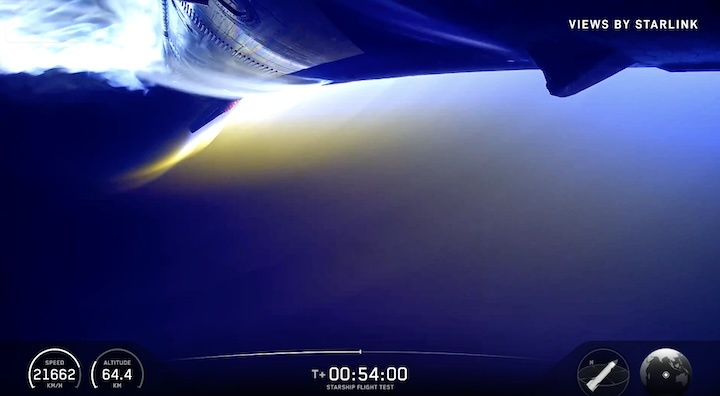
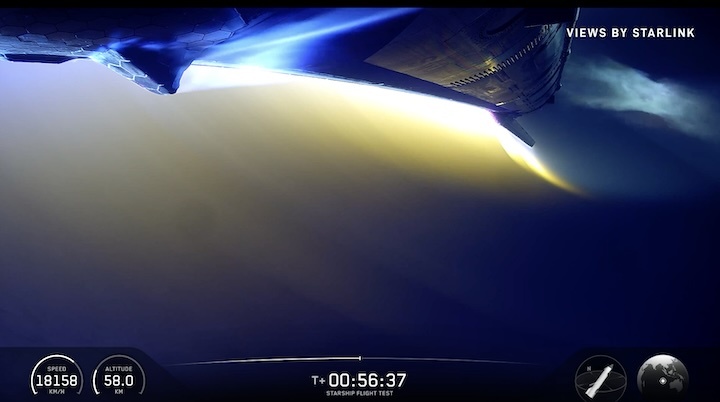
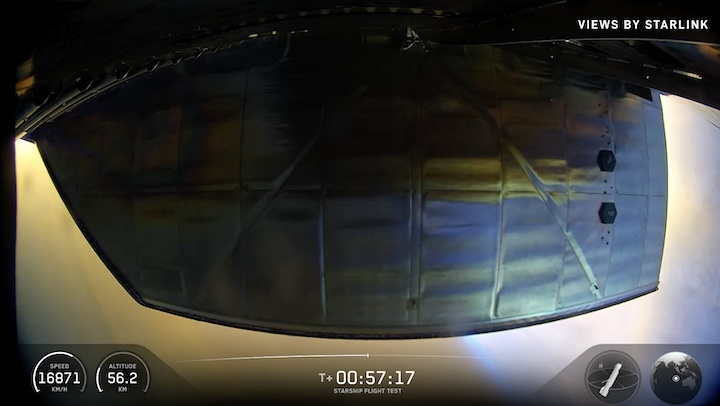
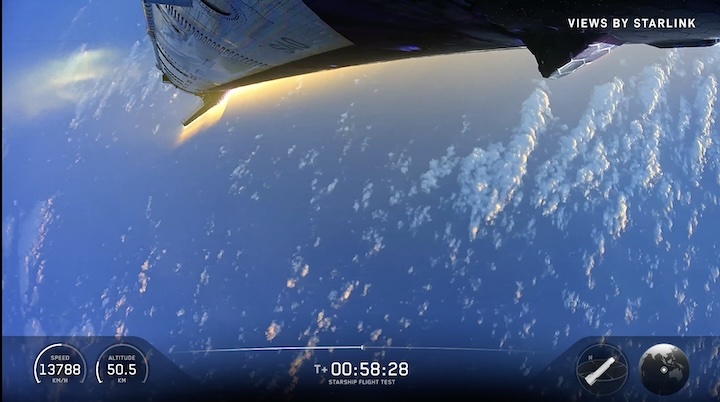
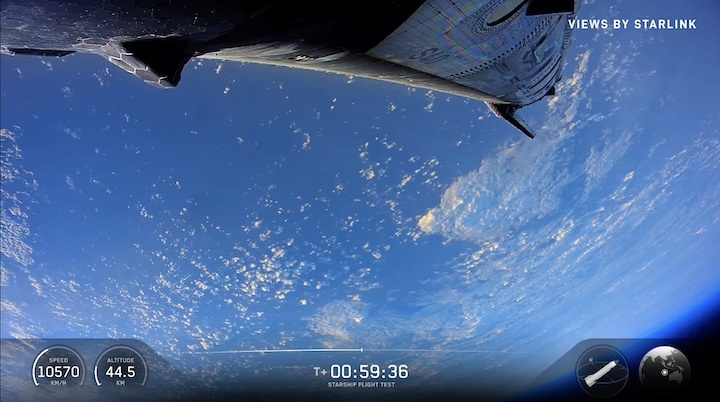
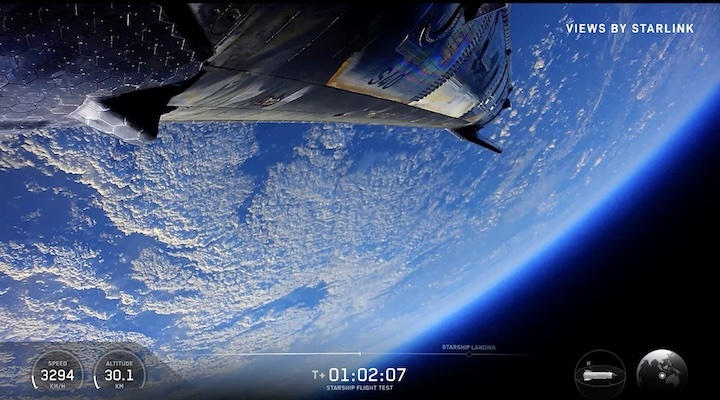
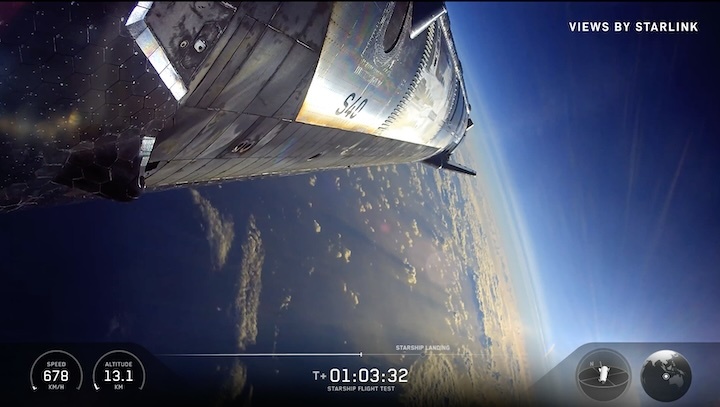
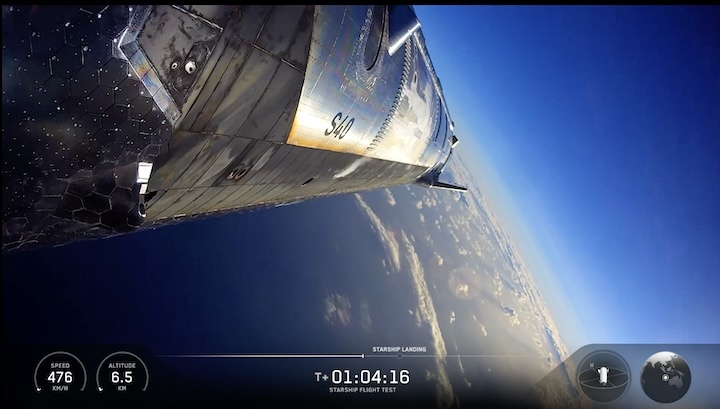
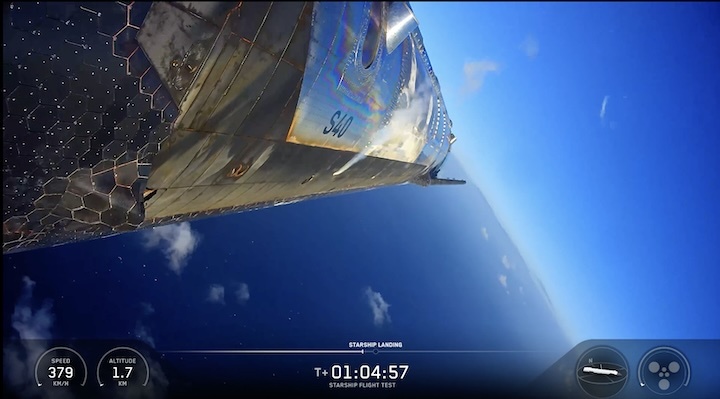
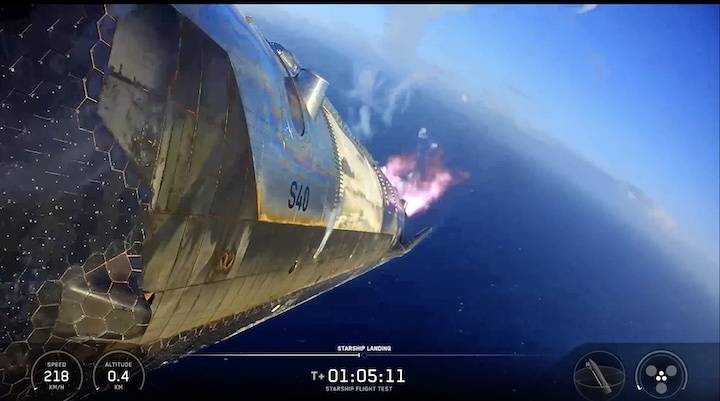
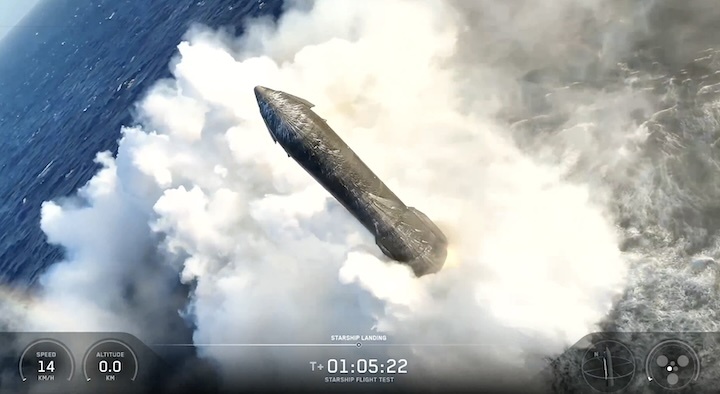
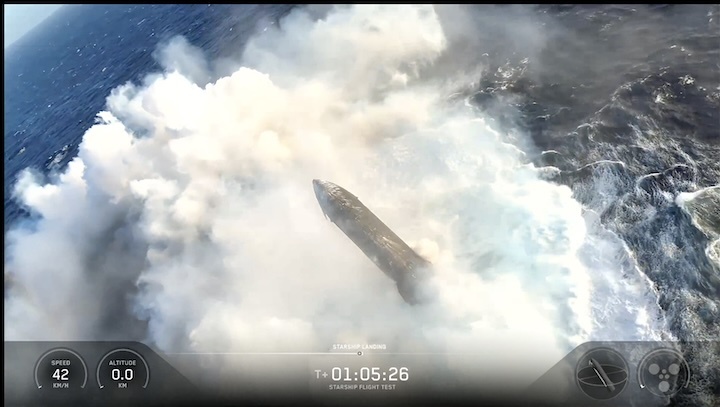
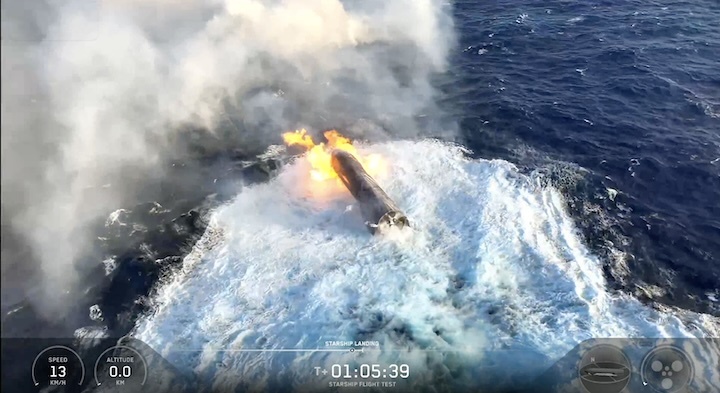
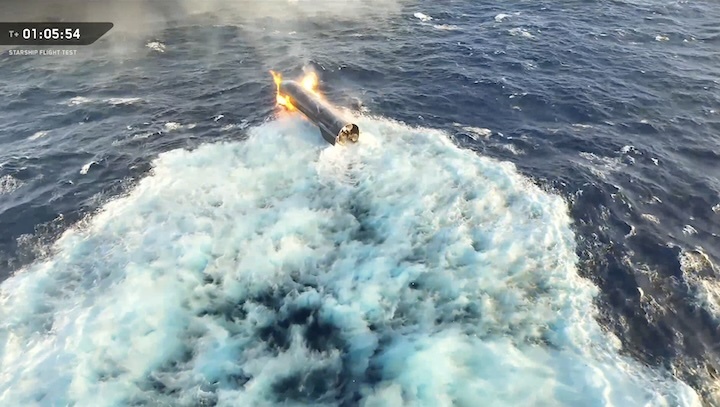
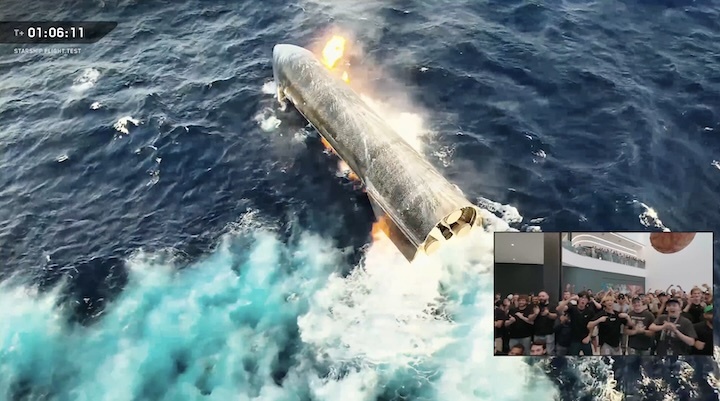
Starship re-entered the Earth’s atmosphere and was able to gather critical data on the performance of its heatshield before executing a dynamic banking move to mimic the trajectory that future missions returning to Starbase will fly. Starship then guided itself using its four flaps to the pre-planned splashdown zone in the Indian Ocean. After relighting all three Raptor engines, Starship executed a landing flip, landing burn, and soft splashdown, coming to rest intact in the Indian Ocean and providing critical views of an intact heatshield for the first time.
Aussetzen der Starlink-Satelliten


Quelle: SpaceX