
15.07.2026
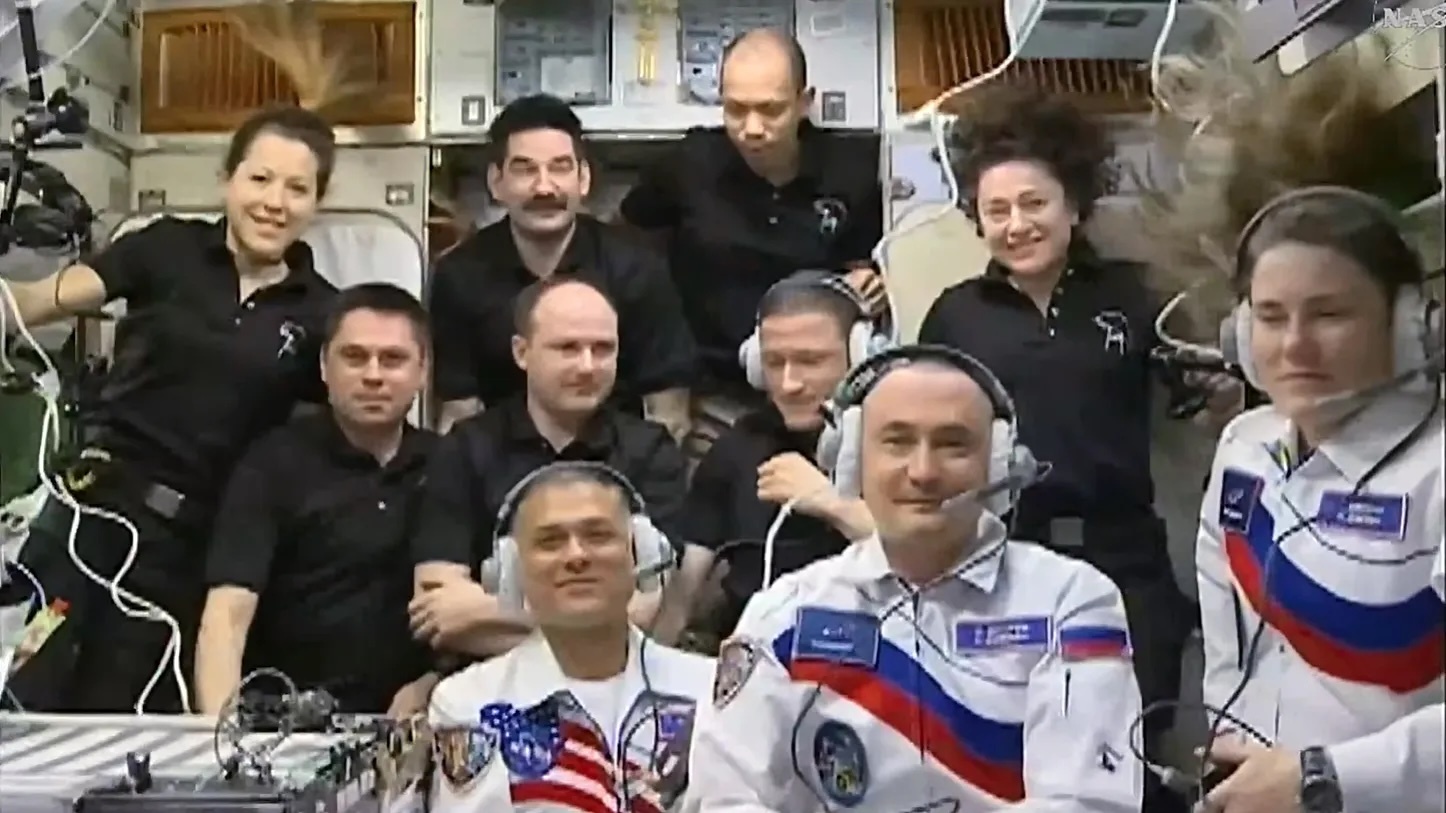
At 4:30 p.m. EDT, the hatch opened between the International Space Station and the Soyuz MS-29 spacecraft. NASA astronaut Anil Menon and Roscosmos cosmonauts Pyotr Dubrov and Anna Kikina have entered the station, where they will spend the next eight months living and working before returning to Earth in April 2027.
The spacecraft arrived at the station’s Prichal module at 1:52 p.m. after launching at 10:47 a.m. (7:47 p.m. Baikonur time) from the Baikonur Cosmodrome in Kazakhstan.
For continued coverage and more information about the mission, visit the International Space Station blog.
Quelle: NASA
+++
NASA Astronaut Anil Menon, Crewmates Arrive at Space Station
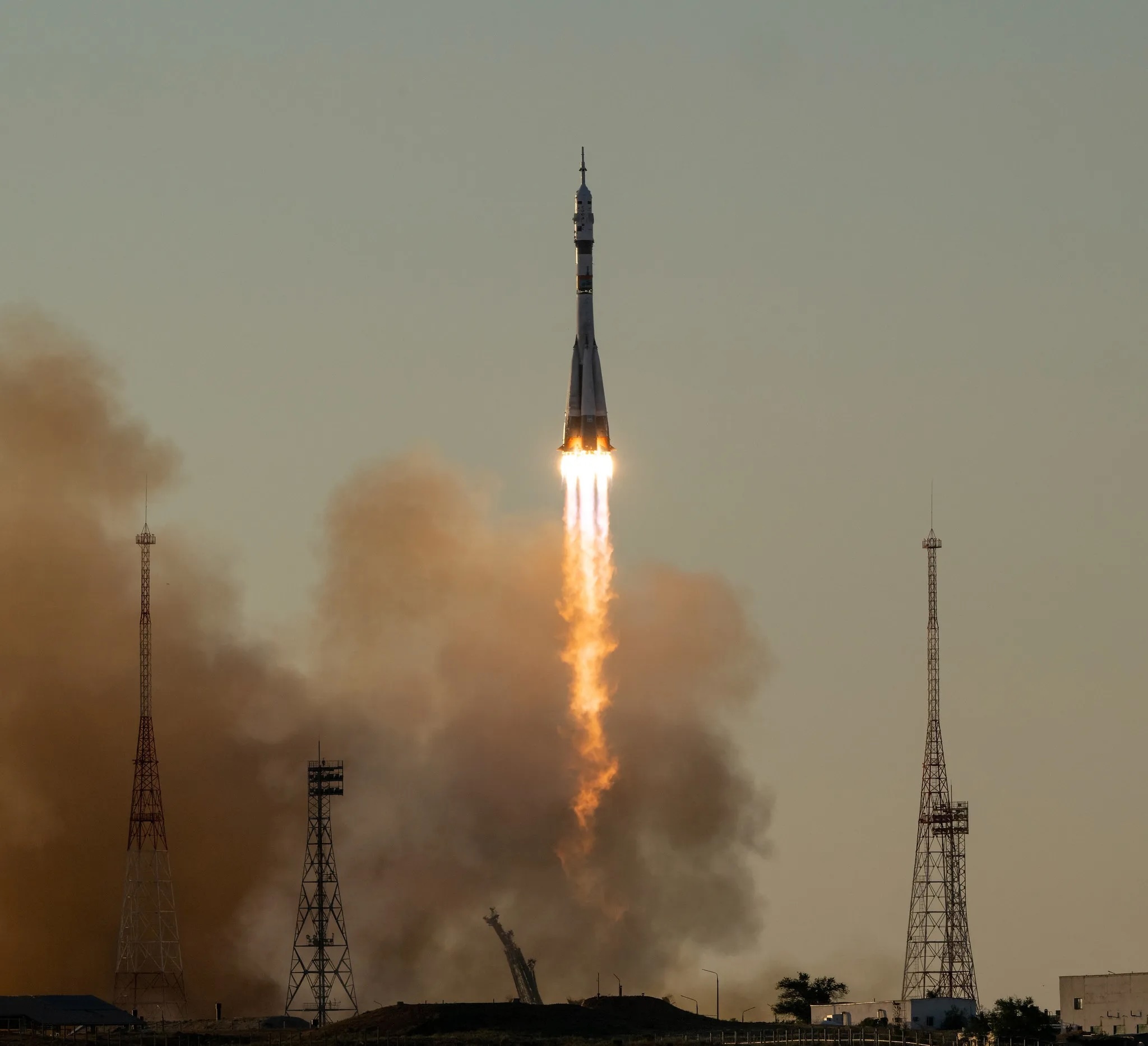
NASA astronaut Anil Menon, along with Roscosmos cosmonauts Pyotr Dubrov and Anna Kikina, arrived safely at the International Space Station Tuesday, bringing the orbiting laboratory’s crew to 10 for about the next two weeks.
The trio launched aboard the Soyuz MS-29 spacecraft at 10:47 a.m. EDT (7:47 p.m. local time) from the Baikonur Cosmodrome in Kazakhstan. After a three-hour, two-orbit journey, the spacecraft docked at 1:52 p.m. with the station’s Prichal module.
Following hatch opening, expected about 4 p.m., the new arrivals will be welcomed by the space station Expedition 74 crew: NASA astronauts Jessica Meir, Jack Hathaway, and Chris Williams; ESA (European Space Agency) astronaut Sophie Adenot; and Roscosmos cosmonauts Sergey Kud-Sverchkov, Sergei Mikaev, and Andrey Fedyaev.
NASA’s live coverage of hatch opening begins at 3:30 p.m. on NASA+, Amazon Prime, and YouTube. Learn how to watch NASA content through a variety of online platforms, including social media.
During his stay aboard the station, Menon will conduct scientific research and technology demonstrations aimed at advancing human space exploration and benefiting life on Earth. He will continue research to refine in-space production of semiconductor crystals to enable the large-scale manufacturing of components needed for high-performance computers, artificial intelligence, and improved medical devices. Menon also will perform ultrasound using augmented reality and artificial intelligence methods that could eliminate the need for medical support from Earth on future space missions. He will be a test subject helping researchers understand how blood flow is affected in space to protect future astronauts. He also will test bioprinting vascular constructs in microgravity to improve understanding of the aging process to advance therapeutic developments.
Expedition 75 is scheduled to begin on Sunday, July 26, following the departure of Williams, Kud-Sverchkov, and Mikaev, as they conclude an eight-month science mission aboard the orbital outpost.
Watch the change of command ceremony at 9:40 a.m. on Saturday, July 25, as station command transfers from Kud-Sverchkov to Meir, live on NASA+.
Quelle: NASA
----
Update: 22.07.2025
.
Expedition 74 Turns Attention to Departing Crewmates
Three Expedition 74 crew members are packing up cargo and handing over their responsibilities with less than one week to go before returning to Earth. The International Space Station’s three newest crewmates are already in the second week of their mission getting used to life on orbit and researching how microgravity affects the human body.
NASA astronaut Chris Williams and Roscosmos cosmonauts Sergey Kud-Sverchkov and Sergei Mikaev are nearing the end of their mission that began with a launch from Kazakhstan aboard the Soyuz MS-28 spacecraft on Nov. 27, 2025. The trio will undock from the Rassvet module in the Soyuz MS-28 over the weekend signifying the beginning of Expedition 75. They will take a short ride back to Earth for a parachute-assisted landing in Kazakhstan inside the Soyuz. NASA will soon release a Soyuz landing media advisory with official mission times, dates, and links to live NASA+ coverage.
Williams is handing over his mission responsibilities this week to NASA flight engineer Anil Menon who arrived at the orbital outpost on Tuesday, July 14 aboard the Soyuz MS-29 spacecraft. Williams is also helping Menon locate food, cargo, and medical supplies, practice safely moving around the space station, and operate the multitude of lab hardware and systems.
Kud Sverchkov and Mikaev continued testing the lower body negative pressure suit that my help the duo adapt quicker to Earth’s gravity after living and working in weightlessness for eight months. The experimental suit works by reversing the space-caused fluid shifts from a crew member’s head toward their feet helping their blood pressure adjust to gravity. The cosmonauts will also spend the rest of week packing the Soyuz MS-28 with cargo and handing over their responsibilities to Roscosmos flight engineers Pyotr Dubrov and Anna Kikina, who began their mission with Menon last week.
Menon, Dubrov, and Kikina are now transitioning from familiarization and orientation activities to full time space research and lab maintenance. Menon kicked off Monday with blood sample collections, blood pressure checks, and artery scans using the Ultrasound 3biomedical device. Dubrov and Kikina took turns wearing virtual reality goggles and responding to computerized stimuli testing how their sense of balance and direction is adapting to microgravity. The human research helps doctors keep crews healthy in space revealing how the body changes during a long-term spaceflight.
NASA flight engineer Jessica Meir, who will become station commander when Expedition 75 begins, started her shift assisting Menon with his health studies. After lunchtime, Meir serviced an external high-definition camera that will be installed outside of the orbiting lab. Flight engineer Jack Hathaway of NASA photographed tiny particles suspended in fluid that naturally arrange themselves into crystal‑like structures for a space physics investigation. Flight engineer Sophie Adenot of ESA (European Space Agency) tried on and tested two different suits on Monday—the EasyMotion-2 suit aims to increase the effectiveness of working out in microgravity, while the EuroSuit seeks to improve comfort and ergonomics aboard a spacecraft. Roscosmos flight engineer Andrey Fedyaev assisted his departing crewmates with the lower body negative pressure suit tests.
Quelle: NASA