
21.03.2026
NASA’s Roman Observatory Passes Final Major Prelaunch Tests
NASA’s Nancy Grace Roman Space Telescope team recently blasted the observatory with extreme sound, shook it, and listened to its electronic hum. Roman passed all three assessments, which aimed to confirm that the observatory will withstand launch conditions and function as expected in space. The achievement keeps the mission on track for launch as early as this fall.
“All of the testing went smoothly and progress is well ahead of schedule,” said Jack Marshall, the Roman observatory integration and testing lead at NASA’s Goddard Space Flight Center in Greenbelt, Maryland. “The team has done a great job putting the observatory together, and the tests show that everything is lining up with expectations.”
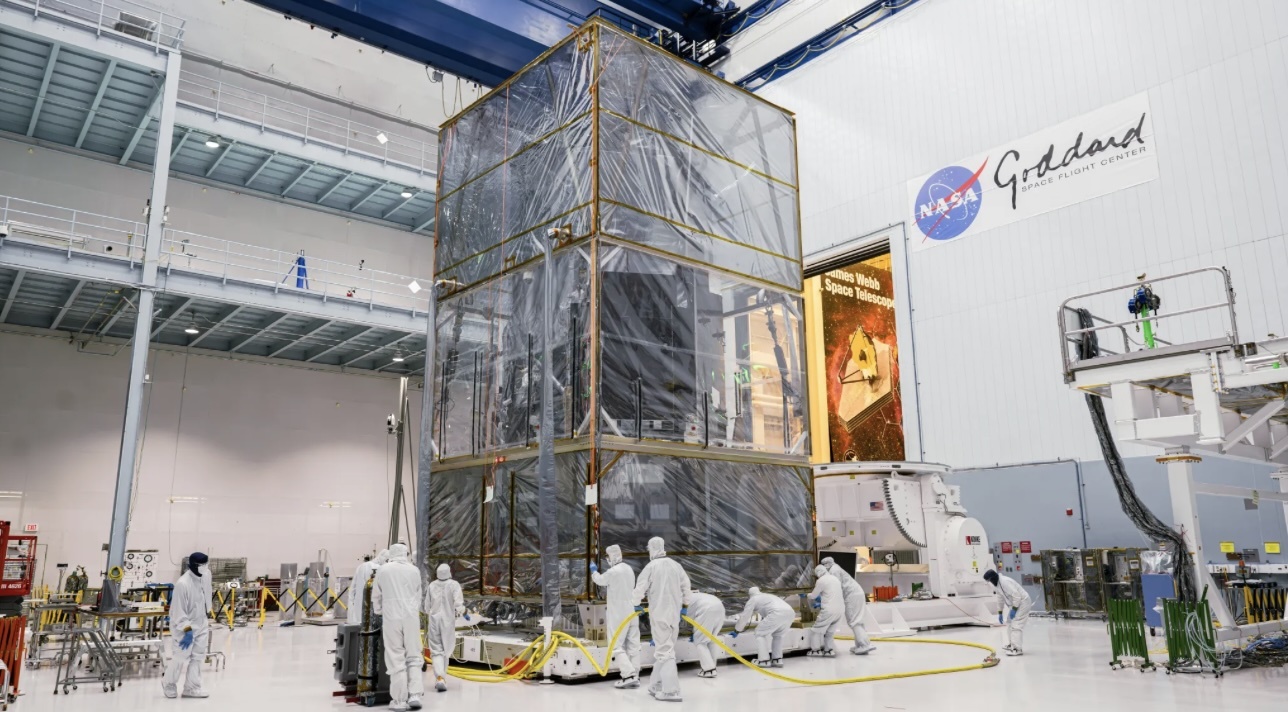
In January, the team set up an absorbent panel around the observatory for an electromagnetic interference test. This special configuration is designed to block external radio signals and absorb reflections inside the test facility.
Engineers powered on all of Roman’s electronics and measured the signals they generated, closely monitoring for any errors. Too much electrical noise could interfere with the observatory’s ability to detect faint infrared signals, but Roman passed with flying colors.
The team moved on to vibration testing in February. “Each time the observatory traveled between test facilities, it was placed in a custom-made portable clean room to protect it from contamination that could otherwise compromise scientific performance once in space,” said Joel Proebstle, a mechanical systems engineer who led the vibration and acoustic tests at NASA Goddard.
Engineers tested the observatory on a large shaker table to simulate the vibrations it will experience during launch, gradually building to higher frequencies. “Try to imagine sitting on that rocket and feeling all those vibrations,” said Cory Powell, the Roman structural analyst lead at NASA Goddard. “We simulated the shaking that the launch vehicle will produce to ensure the components and connections will all remain intact.”
In early March, the team conducted an acoustic test. The test took place in a state-of-the-art sound booth, where engineers ramped up the volume to 138 decibels — about as loud as a jet engine from 100 feet away.
“If you’ve ever been at a concert with an extremely loud bass, that load you felt was acoustic energy,” Powell said. “Now think about how loud a launch is. The acoustics can produce very high loads on a large structure like Roman.”
NASA’s Goddard Space Flight Center
Roman has now returned to the large clean room at Goddard where it will undergo a final series of smaller tests. The next one aims to replicate the shock Roman will experience shortly after launch when the observatory separates from the rocket. Then the team will deploy all of the elements that will initially be stowed (including the solar panels, “visor,” antenna, and “sunblock” shield), to verify that they’ll still work correctly even after launch and rocket separation.
Early this summer, the observatory will be transported to NASA’s Kennedy Space Center in Florida for launch preparations. There, engineers will verify that the observatory arrived fully intact and begin prepping the rocket — a SpaceX Falcon Heavy. The team expects Roman to be ready for launch within a few months after the observatory’s arrival at NASA Kennedy.
“We have a great team, great leadership, and with our successful testing we continue to set the standard for staying within budget and schedule while balancing difficult challenges,” Powell said. “Meeting cost and schedule commitments without compromise to technical standards is a major point of pride for the Roman team.”
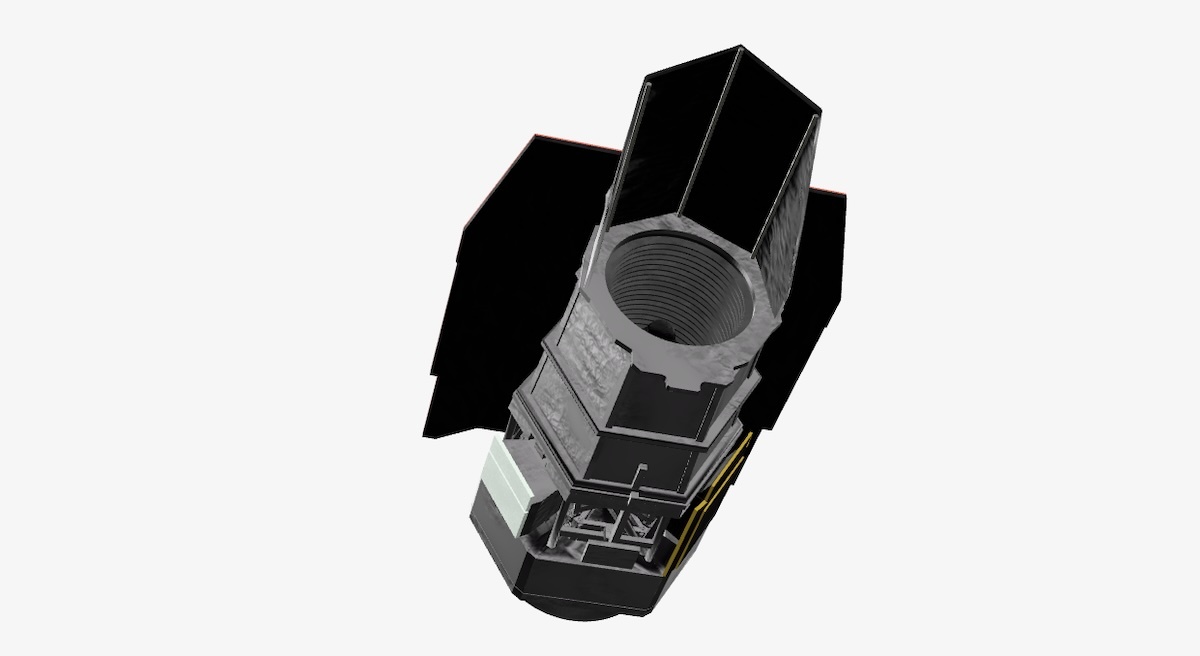
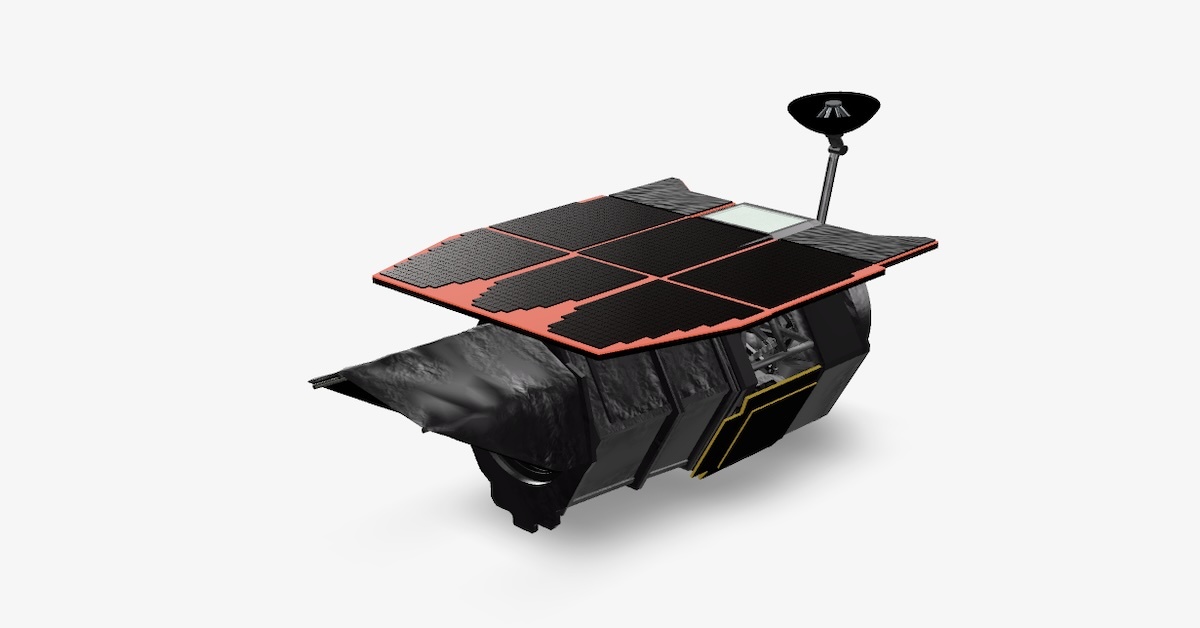
Roman Telecope 3D
Quelle: NASA
----
Update: 28.03.2026
.
NASA to Unveil Complete Roman Telescope, Host Media Briefing
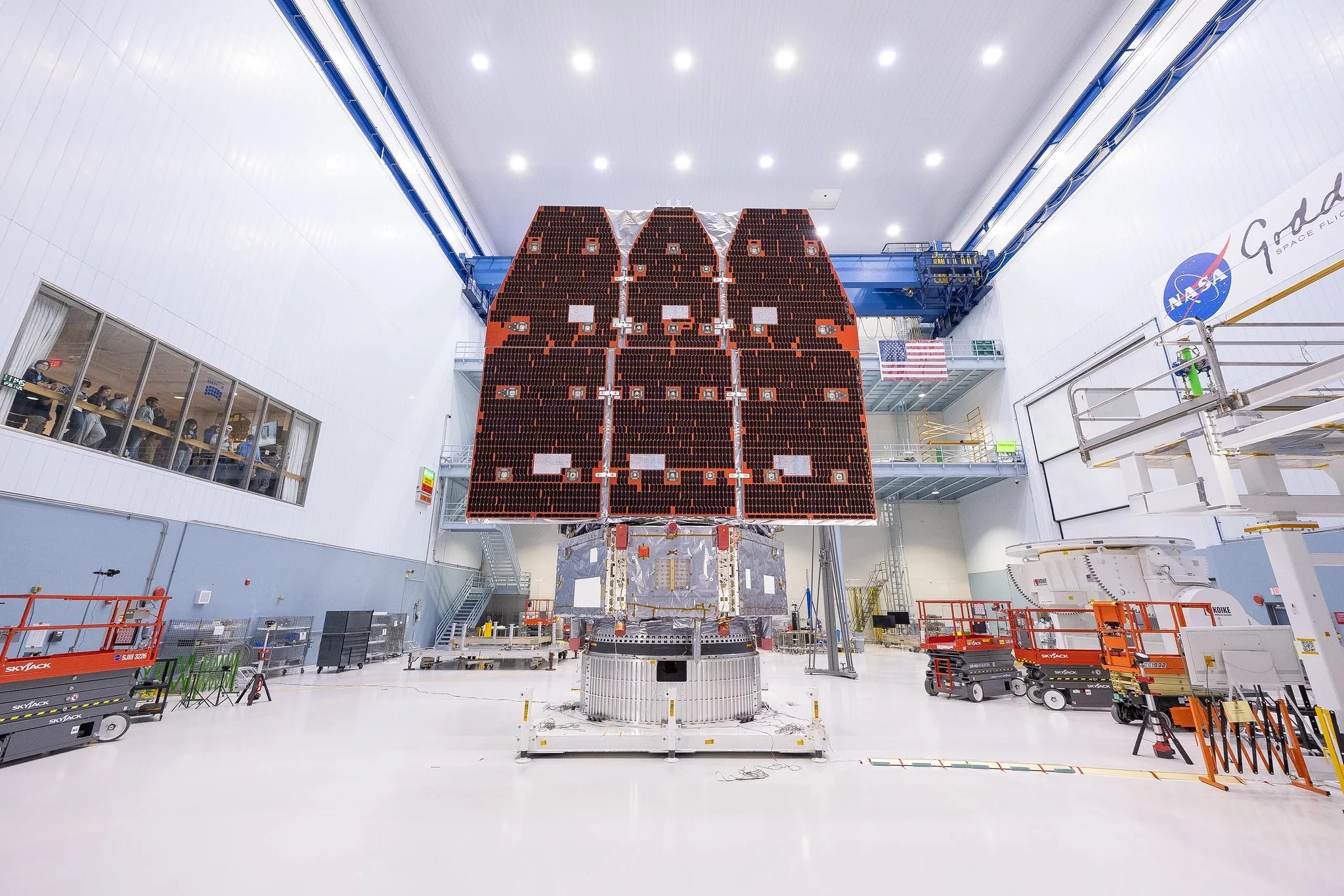
Media are invited Tuesday, April 21, to NASA’s Goddard Space Flight Center in Greenbelt, Maryland, for a look at the agency’s Nancy Grace Roman Space Telescope, which recently completed construction and is wrapping up prelaunch testing. This will be one of the last opportunities to view the fully integrated flagship telescope before it ships to NASA’s Kennedy Space Center in Florida ahead of a launch planned as early as this fall.
With NASA Goddard’s largest clean room as a backdrop, the event will include a news conference at 4 p.m. EDT, which will stream on NASA’s YouTube channel. Learn how to stream NASA content through a variety of online platforms, including social media.
NASA participants in the briefing include:
- NASA Administrator Jared Isaacman
- Nicky Fox, associate administrator, Science Mission Directorate, NASA Headquarters, Washington
- Jamie Dunn, Roman telescope project manager, NASA Goddard
- Julie McEnery, Roman telescope senior project scientist, NASA Goddard
Media interested in participating by phone must RSVP no later than two hours prior to the start of the briefing to Alise Fisher, alise.m.fisher@nasa.gov. A copy of NASA’s media accreditation policy is online.
Credentialed media in attendance also will have the opportunity to visit other center facilities and conduct interviews with subject matter experts on topics such as NASA’s Lunar Environment Monitoring Station candidate payload for the Artemis program, the DAVINCI mission to Venus, the Habitable Worlds Observatory mission concept, and the Dragonfly mission to Saturn’s moon Titan.
To be considered for on-site credentials, foreign national media must register by Wednesday, April 1; U.S. media must register by Friday, April 10. Any media RSVPs must be sent to Rob Garner, rob.garner@nasa.gov.
Named after NASA’s first chief astronomer, the Nancy Grace Roman Space Telescope will have a deep, panoramic view of the cosmos, generating never-before-seen pictures that will revolutionize our understanding of the universe. The observatory will usher in a new era of cosmic surveys, unveiling troves of celestial objects and shedding light on some of the universe’s most profound mysteries, including phenomena we can’t see. Roman will also showcase cutting-edge technology, including a test of the most advanced technology ever flown in space to directly image planets around nearby stars, a key step in NASA’s search for life on other worlds.
The Roman telescope is managed at NASA Goddard with participation by the agency’s Jet Propulsion Laboratory in Southern California; Caltech/IPAC in Pasadena, California; the Space Telescope Science Institute in Baltimore; and a science team comprising scientists from various research institutions. The primary industrial partners are BAE Systems Inc. in Boulder, Colorado; L3Harris Technologies in Rochester, New York; and Teledyne Scientific & Imaging in Thousand Oaks, California. Contributions to Roman also are made by ESA (European Space Agency), JAXA (Japan Aerospace Exploration Agency), the French space agency CNES (Centre National d’Études Spatiales), and the Max Planck Institute for Astronomy in Germany.
Quelle: NASA
----
Update: 23.04.2026
.
ROMAN SPACE TELESCOPE LAUNCHING IN SEPTEMBER
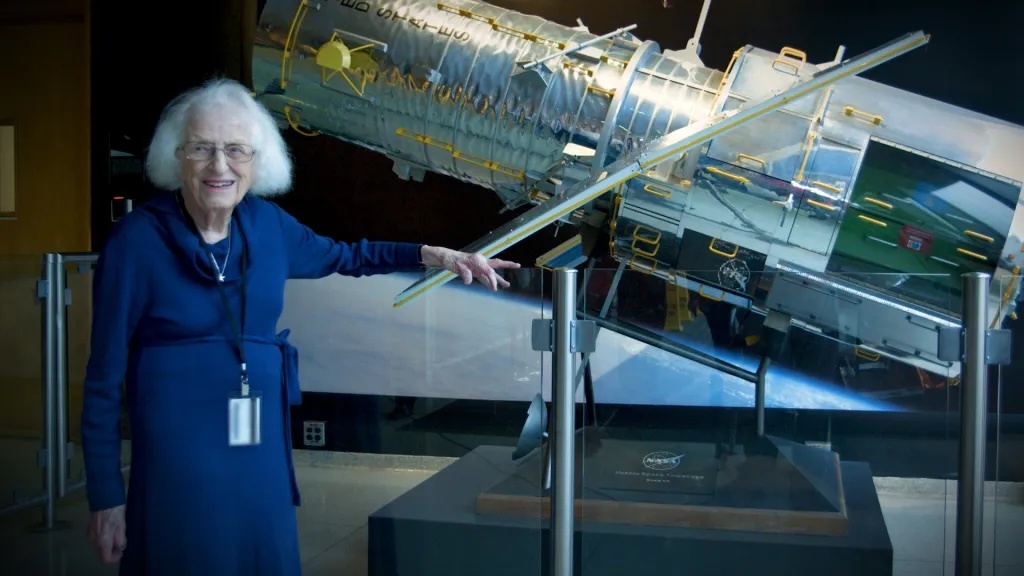
Nancy Grace Roman, who passed away in 2018 at the age of 93, stands next to a scale model of the Hubble Space Telescope outside the Hubble control center at NASA’s Goddard Space Flight Center in Greenbelt, Maryland in an undated photograph. NASA
NASA said today that the Nancy Grace Roman Space Telescope will launch in September, eight months ahead of schedule and under cost. Originally called the Wide-Field Infrared Space Telescope or WFIRST, it will survey the universe broadly rather than in the greater detail of the James Webb Space Telescope launched in 2021. The two complement each other, with Roman identifying targets that JWST can examine in greater detail, for example, but that is only part of what Roman will do.
The telescope is named after Nancy Grace Roman, NASA’s first Chief of Astronomy in the 1960s and 1970s and recognized as the “Mother of Hubble” — the beloved Hubble Space Telescope that just celebrated its 36th birthday.
Hubble primarily images the universe in the visible (optical) part of the spectrum plus some in the adjoining ultraviolet and infrared bands.
Roman and JWST are infrared telescopes. JWST has a narrow, detailed, field of view while Roman can look more broadly. NASA says together they can “reveal extraordinary new information about our universe such as primordial galaxies, black holes, and planets beyond our solar system.”
Roman has its own work to do, too. At a briefing today, Julie McEnery, Roman’s Senior Project Scientist, said “current observations hint that the standard model of the universe is incorrect” and “Roman will be able to confirm these and set us on a path to understanding what’s right.” For example, scientists now see evidence that the Hubble constant that measures the rate of the expansion of the universe “as inferred from very early times is not consistent with the Hubble constant that we measure closer to now.” In addition, “recently we’ve seen evidence that the cosmological constant might, in fact, not be constant.”
The Hubble constant (and the Hubble Space Telescope) refer to astronomer Edwin Hubble who discovered that the universe is expanding outwards. The cosmological constant explains dark energy — the unknown reason the universe’s expansion seems to be speeding up.
Roman has a Wide-Field Instrument plus a coronograph as a technology demonstration. Over its five-year primary mission, it is expected to discover tens of thousands of planets, billions of galaxies, and tens of billions of stars.
NASA Administrator Jared Isaacman said today Roman will launch in September. SpaceX’s Falcon Heavy rocket will send it to the Sun-Earth L-2 Lagrange point about 1 million miles (1.5 million kilometers) from Earth away from the Sun, the same region where JWST is located.
Isaacman and Science Mission Directorate head Nicky Fox praised Roman for being ahead of schedule and below cost. Asked how that came to be, Project Manager Jamie Dunn credited his team for designing it from the beginning with the understanding that success would be judged not only on scientific results, but staying within a cost cap. In return, they had funding stability from NASA Headquarters and Congress. “Year after year we did what we said we were going to do, and the resources, the support from them, was always there.”
Roman is the most recent in NASA’s series of flagship space telescopes referred to as “Great Observatories” that have been launched since 1990 including not only Hubble and JWST, but Compton (gamma ray), Spitzer (infrared) and Chandra (x-ray). Compton was deorbited in 2000. Spitzer was decommissioned in 2020.
Next up is the Habitable Worlds Observatory (HWO), in the planning stages now. An infrared/optical/ultraviolet telescope like Hubble, it will search for signs of life on planets elsewhere in the universe. The cost and timeline haven’t been determined yet. Fox said 2028 is a milestone when NASA will “step back and look and say is this mission possible.” If so, they will “sprint” to do it.
Quelle: SpacePolicyOnline.com
----
Update: 24.04.2026
.
NASA Targets Early September for Roman Space Telescope Launch
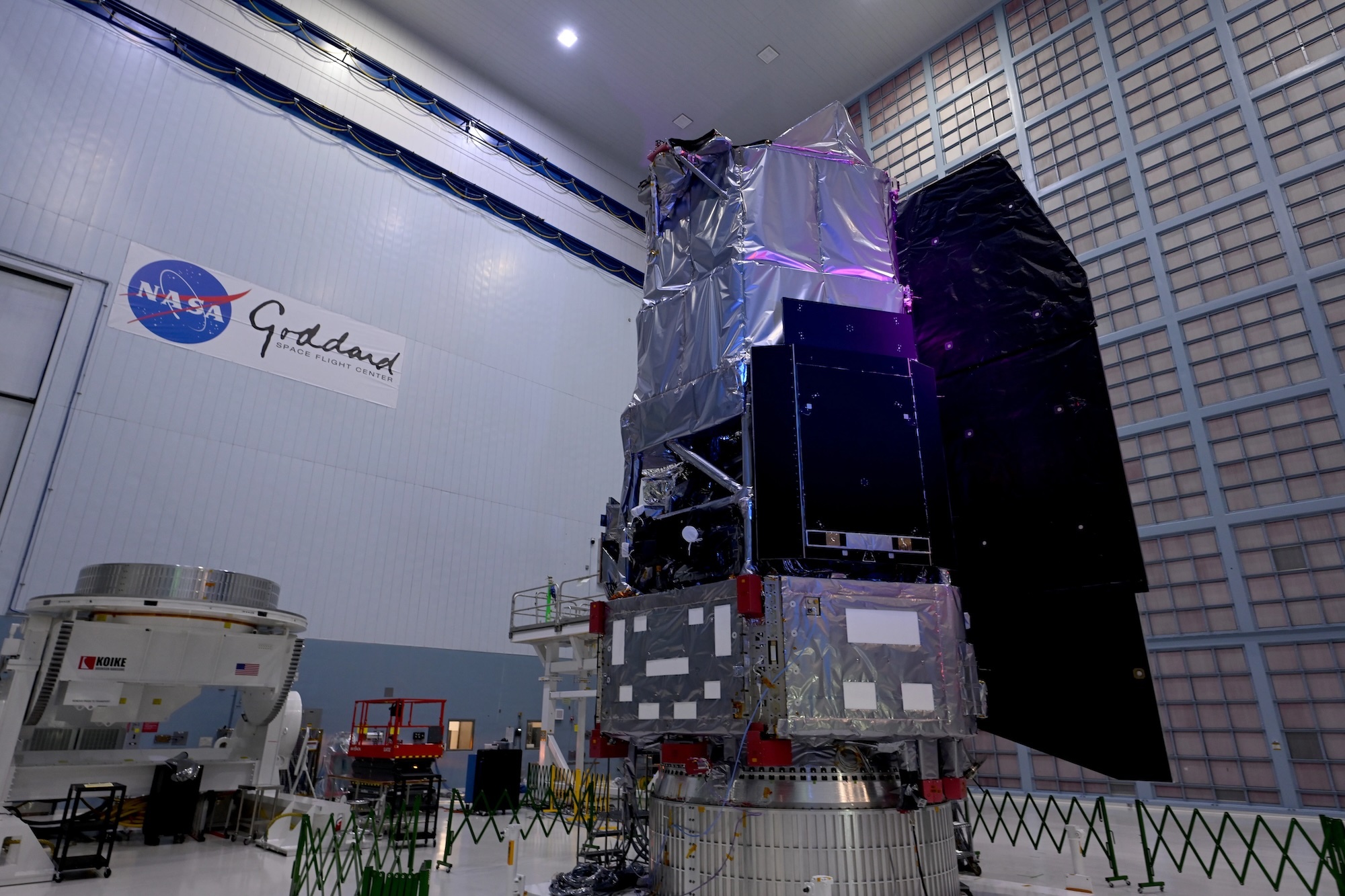
NASA’s Nancy Grace Roman Space Telescope team now is targeting as soon as early September 2026 for launch, ahead of the agency’s commitment to flight no later than May 2027.
“Roman’s accelerated development is a true success story of what we can achieve when public investment, institutional expertise, and private enterprise come together to take on the near-impossible missions that change the world,” said NASA Administrator Jared Isaacman, who announced the update at a news conference on April 21 at the agency’s Goddard Space Flight Center in Greenbelt, Maryland.
Roman will pair a large field of view with crisp infrared vision to survey deep, vast swaths of sky. While the mission was designed with dark energy, dark matter, and exoplanets in mind, Roman’s unprecedented observational capability will offer practically limitless opportunities for astronomers to explore all kinds of cosmic topics.
By the end of its five-year primary mission, Roman is expected to amass a 20,000-terabyte data archive. Scientists can draw on it to identify and study 100,000 exoplanets, hundreds of millions of galaxies, billions of stars, and rare objects and phenomena — including some that astronomers have never witnessed before.
Roman will launch on a SpaceX Falcon Heavy rocket from Launch Complex 39A at NASA’s Kennedy Space Center in Florida. NASA and SpaceX will share more information about a specific launch date, and the agency will continue to share updates concerning prelaunch preparations as new information becomes available.
The Nancy Grace Roman Space Telescope is managed at NASA’s Goddard Space Flight Center, with participation by NASA’s Jet Propulsion Laboratory and Caltech/IPAC in Southern California, the Space Telescope Science Institute (STScI) in Baltimore, and scientists from various research institutions.
Quelle: NASA
----
Update: 3.05.2026
.
Key Support Equipment Arrives at Kennedy for Roman Space Telescope
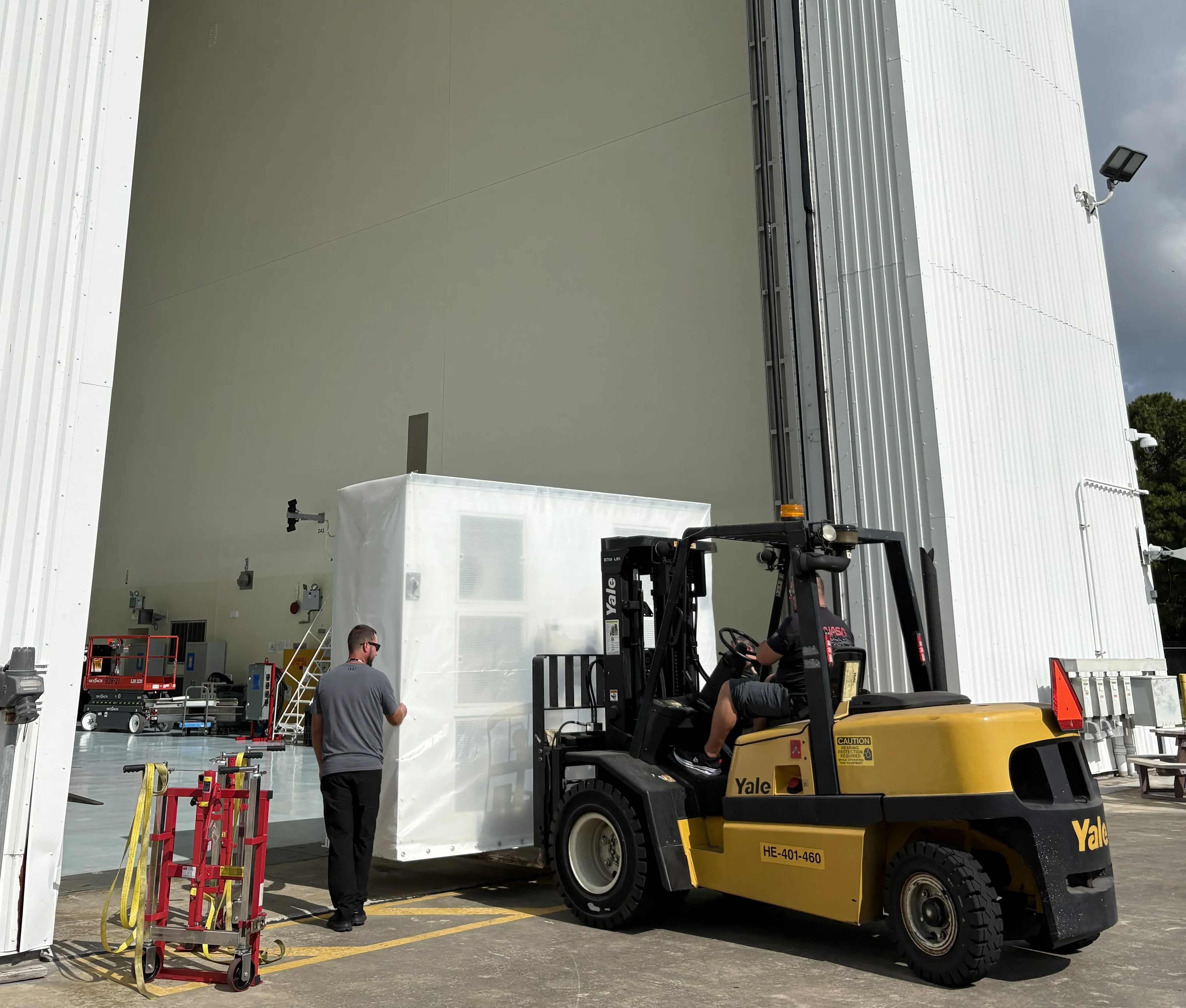
Technicians at NASA’s Payload Hazardous Servicing Facility (PHSF) at the agency’s Kennedy Space Center in Florida offloaded eight high-efficiency particulate air (HEPA) wall modules and other ground support equipment on April 27. The equipment will support launch processing of the agency’s Nancy Grace Roman Space Telescope.
Each 1,800-pound module enhances the PHSF’s clean room systems, helping meet the telescope’s stringent cleanliness requirements during its time in the facility, where the observatory will undergo key tasks such as spacecraft fueling prior to liftoff.
Roman will observe the universe in infrared light using its Wide Field Instrument and a Coronagraph Instrument technology demonstration. Its wide field of view will produce panoramic images that help astronomers investigate some of the greatest mysteries in the cosmos, including why the universe’s expansion appears to be accelerating.
By using multiple complementary techniques, Roman will chart how the universe has evolved over cosmic time and provide new insights into the nature of dark energy. Roman also will advance the study of exoplanets and map the structure and distribution of normal matter and dark matter across space and time.
Teams are targeting launch as soon as early September aboard a SpaceX Falcon Heavy rocket from Launch Complex 39A at NASA Kennedy.
Quelle: NASA
----
Update: 8.05.2026
.
NASA’s Roman Poised to Transform Hunt for Elusive Neutron Stars
Astronomers have long known that neutron stars, the crushed cores left behind after massive stars explode, should be scattered throughout the Milky Way galaxy. However, most of them are effectively invisible. A new study published in Astronomy and Astrophysics suggests NASA’s upcoming Nancy Grace Roman Space Telescope could spot them anyway.
Using detailed simulations of the Milky Way and Roman’s future observations, researchers showed the flagship observatory may be able to identify and characterize dozens of isolated neutron stars through a subtle effect called gravitational microlensing.
“Most neutron stars are relatively dim and on their own,” said Zofia Kaczmarek of Heidelberg University in Germany, who led the study. “They are incredibly hard to spot without some sort of help.”
Finding what’s invisible
Neutron stars pack more mass than the Sun into a sphere about the size of a city. Studying them helps us understand how stars live, die, and spread heavy elements throughout the universe. They also provide a chance to study what happens under the most extreme conditions (pressures and densities) imaginable.
Yet, unless they are pulsars that beam in radio wavelengths or glow in X-rays, they can remain hidden from even the most powerful telescopes.
Roman can search for them in a different way. When a massive object like a neutron star moves in front of a distant background star, its intense gravity warps spacetime and deflects the background star’s light. This microlensing effect briefly makes the background star brighter and appear offset from its true position in the sky.
While many telescopes can detect the temporary brightening, Roman can measure both the brightening (photometry) and the tiny positional shift (astrometry) of the lensed star with exceptional precision.
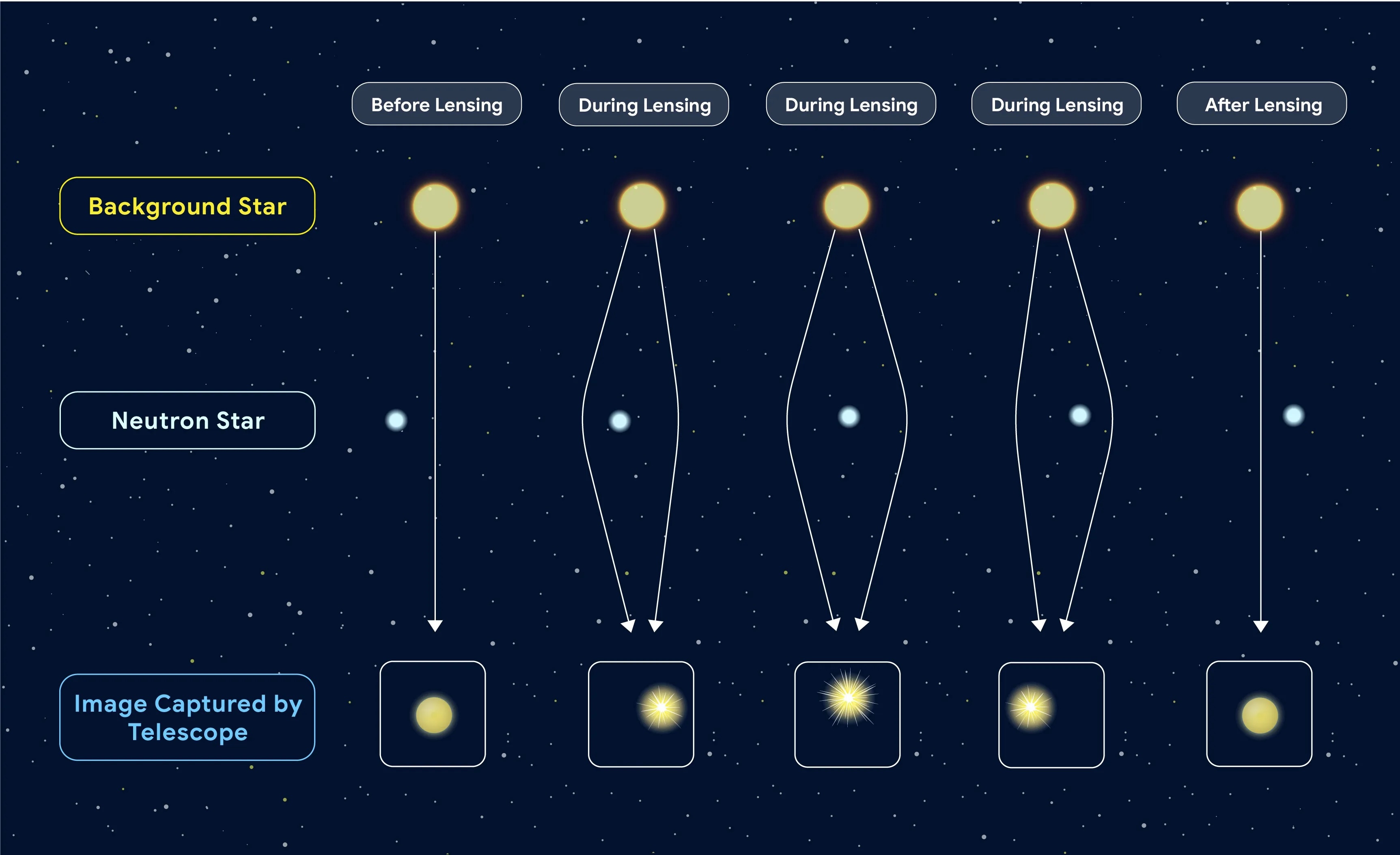
Because neutron stars are relatively massive, they produce a larger astrometric signal than lighter objects, allowing missions like Roman to not only detect them, but also weigh them in some cases, something that is nearly impossible with photometry alone.
“What’s really cool about using microlensing is that you can get direct mass measurements,” said paper co-author Peter McGill of Lawrence Livermore National Laboratory. “Photometry tells us that something passed in front of the star, but it’s the amount the star’s position shifts that tells us how massive that object is. By measuring that tiny deflection on the sky, we can directly weigh something that is otherwise unseen.”
Roman’s measurements could help astronomers determine whether there is a true gap between the masses of neutron stars and black holes and how fast neutron stars are moving.
Scientists are particularly interested in understanding the powerful “kicks” neutron stars receive when they are born in supernova explosions. These kicks can send them racing through the galaxy at hundreds of miles per second.
Huge surveys, high chance of payoff
The research team will utilize Roman’s future Galactic Bulge Time Domain Survey, which will monitor millions of stars at a time in vast images of the sky, taken at a high frequency.
“We’re going to get to work as soon as the data start coming in,” said McGill. “Even in the first months after commissioning, we expect to start identifying promising events.”
Even a relatively small number of confirmed detections could significantly improve models of stellar explosions and extreme matter.
“We don’t know the mass distribution of neutron stars, black holes, or where one ends and the other begins with any certainty,” McGill said. “Roman will really be a breakthrough in that.”
Although only a few thousand neutron stars have been detected so far, mostly as pulsars, scientists estimate there could be tens of millions to hundreds of millions in the Milky Way. Additionally, to date, researchers have only been able to measure the masses of neutron stars in binary pairings.
“We’re seeing a small sample that’s not representative of the big picture,” Kaczmarek said. “Even a single mass measurement would be very powerful. If we found just one isolated neutron star, it would already be incredibly stimulating to our research.”
Looking ahead
The study also highlights a creative use of the mission’s capabilities. While Roman’s survey is designed primarily to find exoplanets using photometric microlensing, its powerful astrometric capabilities open the door to entirely new discoveries with astrometric microlensing.
“This wasn’t part of the original plan,” said McGill. “But it turns out Roman’s astrometric capability is really good at detecting neutron stars and black holes, so we can add a whole new kind of science to Roman’s surveys.”
If the predictions hold true, the mission could provide the first large sample of isolated neutron stars discovered through their gravity alone, revealing a hidden population that has remained out of reach until now. Roman is expected to transform the study of microlensing and the hidden populations of objects in our galaxy, from rogue exoplanets to stellar remnants like neutron stars.
The Nancy Grace Roman Space Telescope is managed at NASA’s Goddard Space Flight Center in Greenbelt, Maryland, with participation by NASA’s Jet Propulsion Laboratory in Southern California; Caltech/IPAC in Pasadena, California; the Space Telescope Science Institute in Baltimore; and a science team comprising scientists from various research institutions. The primary industrial partners are BAE Systems Inc. in Boulder, Colorado; L3Harris Technologies in Rochester, New York; and Teledyne Scientific & Imaging in Thousand Oaks, California.
Quelle: NASA
----
Update: 30.05.2026
.
NASA’s Roman Mission Preps to Unveil New Populations of Faraway Worlds
NASA’s Nancy Grace Roman Space Telescope is poised to make a major leap in the hunt for worlds outside our solar system, known as exoplanets. Scientists expect the mission to reveal around 100,000 worlds — a staggering leap compared to the nearly 6,300 found so far thanks to NASA missions working in tandem with other observatories. And Roman will primarily find them in underexplored regions of the Milky Way.
“Our galaxy is home to a variety of different environments, but when it comes to hunting for exoplanets, we’ve really only explored one: our own neighborhood,” said Elisa Quintana, an exoplanet researcher at NASA’s Goddard Space Flight Center in Greenbelt, Maryland. Quintana leads a team focused on building software and simulations to help prepare for Roman’s exoplanet transit observations. “Roman will extend the search far enough to encompass other galactic habitats, which could help us learn how planet formation varies across different regions of the Milky Way.”
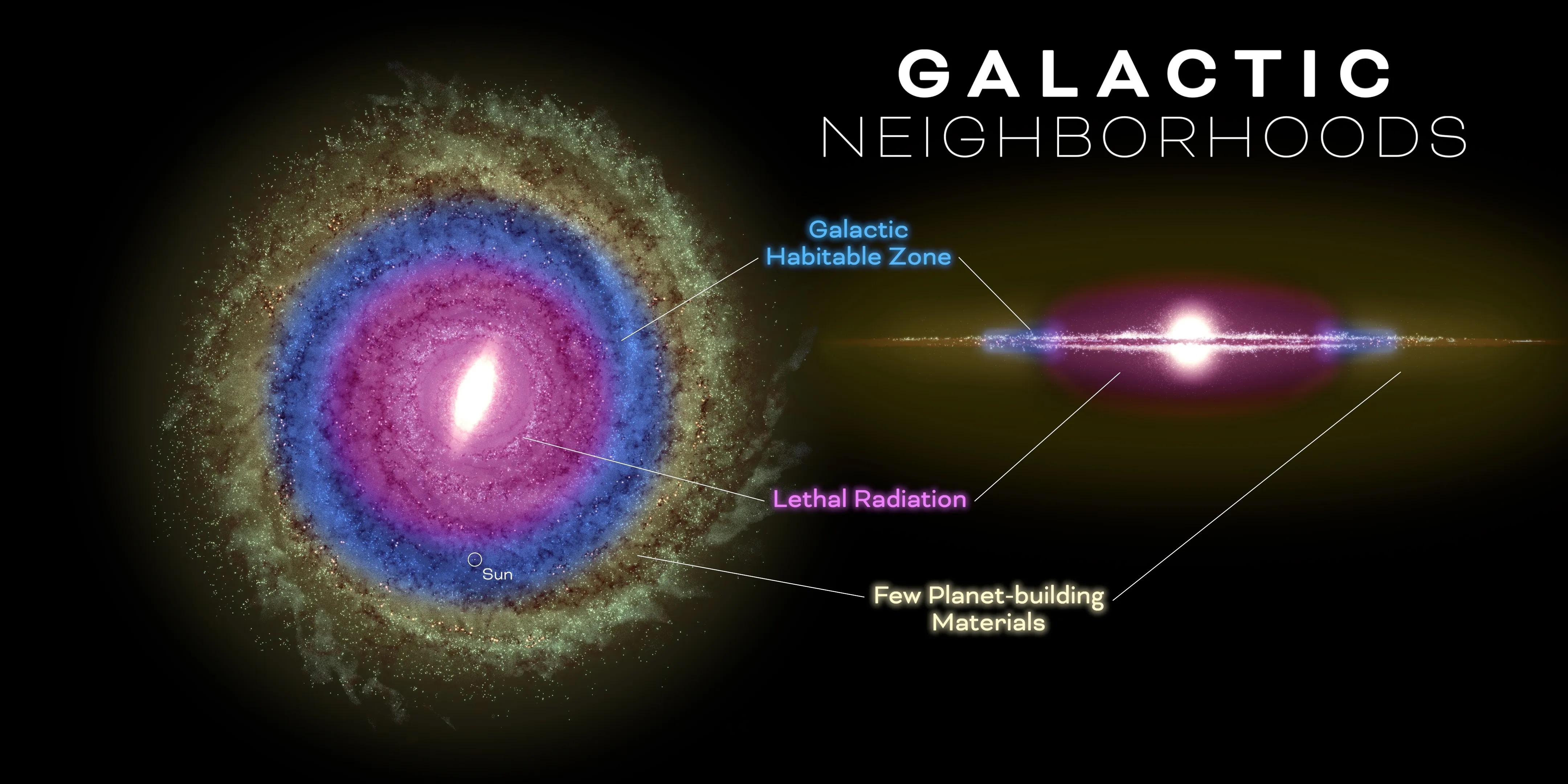
Most known exoplanets are located within a couple thousand light-years of Earth. But one of Roman’s core surveys will peer all the way through the Milky Way’s galactic bulge, the central hub where stars are packed more densely than anywhere else, to the fringes of the far side of the galaxy.
Exploring Earth’s birthplace
Roman will monitor stars scattered throughout a deep slice of the galaxy to watch for any that change in brightness. Some stars periodically dim as orbiting planets cross in front of, or transit, them. Others temporarily appear to brighten as the gravity of an intervening star and orbiting planets magnify a farther star’s light, thanks to a phenomenon called microlensing.
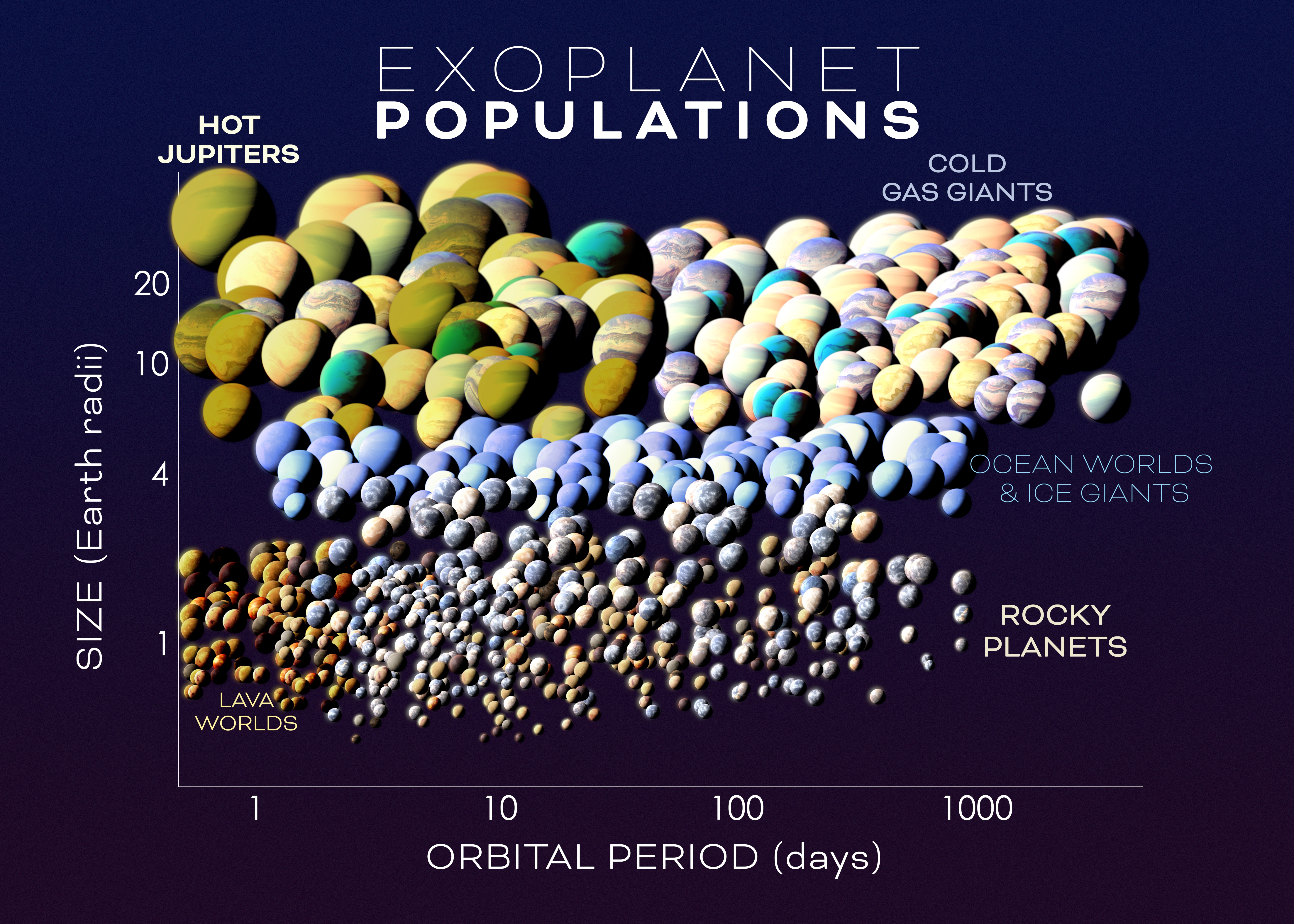
These two methods tend to reveal very different types of planets. The transit method, which Roman will use to reveal around 100,000 worlds, is best at finding gigantic, scorching worlds since they block the most starlight and transit more frequently.
Microlensing, which Roman will use to find more than 1,000 worlds, is better suited to finding planets with larger orbits, like those in our solar system, whose gravity can be more easily separated from the gravity of their host stars. Microlensing can find planets as small as Earth and Mars and can find them within their star’s habitable zone and even farther out. Such planets are almost undetectable by other methods and are virtually unknown outside of our own solar system. Pairing the two techniques will help astronomers explore planet formation throughout the galaxy, including Earth’s birthplace and beyond.
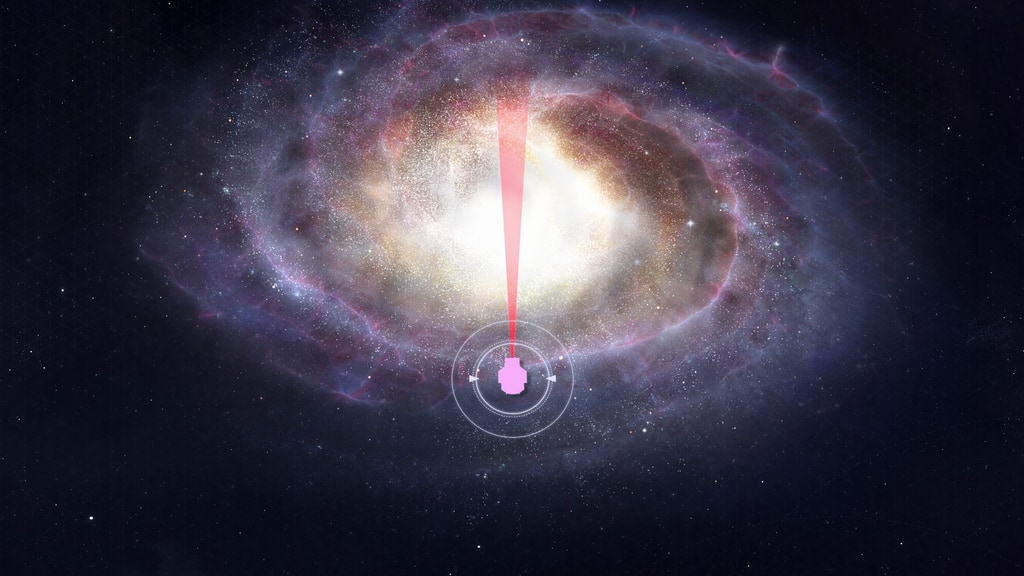
Today, our solar system is located about 27,000 light-years from the center of the Milky Way. However, scientists think it formed about 10,000 light-years closer in and then migrated out to its current position.
The Sun’s chemical makeup is the primary clue. Most stars that form in the outskirts of the galaxy are low in heavy elements, which is a blanket term for any elements other than hydrogen and helium, which formed with the birth of the universe. Heavy elements are forged by stars, so they’re more common in places that have seen successive generations of stars.
Stars in the galactic bulge are much older than those in the disk of the Milky Way and thus have a slightly different chemical mixture that is richer in elements like silicon, oxygen, and magnesium.
Those differences matter because planets form out of the same material as their host stars. Stars with different compositions may host planets that are different too, perhaps rockier or larger. It could even influence whether planets form at all, or how many coalesce with each star.
Astronomers have already seen hints of such connections nearby.
“Stars with more heavy elements tend to host more planets, especially giant ones,” said Robby Wilson, a postdoctoral fellow at NASA Goddard, who led a study about Roman’s expected transiting planet yield.
By sampling completely different populations of stars and planets, Roman will take these studies to a whole new level. Astronomers may soon uncover how common planetary systems like our own are throughout the Milky Way.
“Roman will be especially powerful because it will observe hundreds of millions of distant stars, letting scientists compare faraway planet populations to those found nearby,” said Wilson. “All of that data will give us a lot to comb through, so we’re prepping by creating synthetic data, detecting simulated planets, and using machine learning to filter out false positives. That way we’ll be ready to go right away when real data comes pouring in.” And since all Roman data will be publicly available, anyone can join the hunt for other worlds.
Otherworldly climates
Scientists also could study the atmospheres of perhaps a few thousand of the transiting planets Roman finds.
“Roman won’t analyze atmospheres in the same in-depth way as missions like NASA’s James Webb Space Telescope, but it will gather different information on a much larger scale,” Wilson said.
While telescopes like Webb search for detailed chemical fingerprints on individual targets, Roman will measure temperature patterns and climate behavior for thousands of planets. The mission will create a big-picture statistical view of exoplanet atmospheres, which Webb could follow-up on for further study.
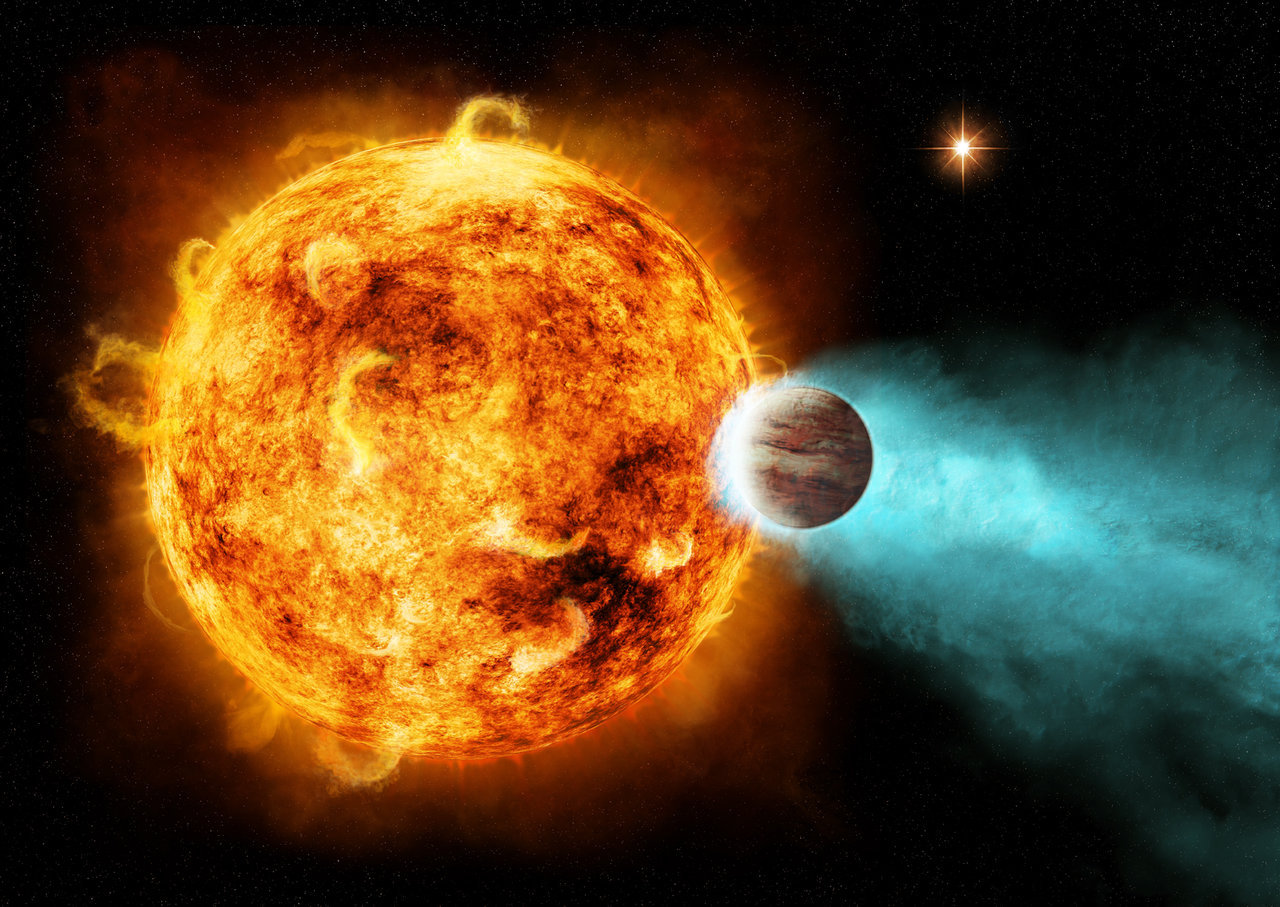
Roman’s infrared heat vision will detect glowing “hot Jupiters.” About as large as Jupiter, which is around 11 times as wide as Earth, hot Jupiters orbit their stars in only a few days. These worlds are warm enough to radiate a detectable amount of infrared light.
Planetary systems with transiting hot Jupiters can have two dimming episodes: one when they cross in front of the star, and a second smaller one when they pass behind it and the star blocks the planet’s light.
“That secondary dip tells us how bright, and therefore how hot, the planet is,” said Wilson. “By tracking how the planet’s brightness changes over its orbit, Roman can also see differences between the day side and night side, and even detect shifts in where the hottest region is on the planet. That tells us about atmospheric winds and heat circulation.”
“NASA’s now-retired Kepler mission’s survey of 100,000 stars revolutionized the field of exoplanets over a decade ago, and taught us that planets are even more common than stars in our galaxy,” said Jorge Martínez-Palomera, an astronomer at NASA Goddard who is helping prepare for Roman’s exoplanet data. “Roman’s galactic bulge survey will observe around 100 million stars and probe underexplored areas of our galaxy, which will provide a foundational dataset that will likewise revolutionize what we know about other worlds and our place in the universe.”
Quelle: NASA