
10.04.2026
With Orion still flying, NASA is nearing key decisions about Artemis III
“One of the questions is what the initial orbit will be for Artemis III.”
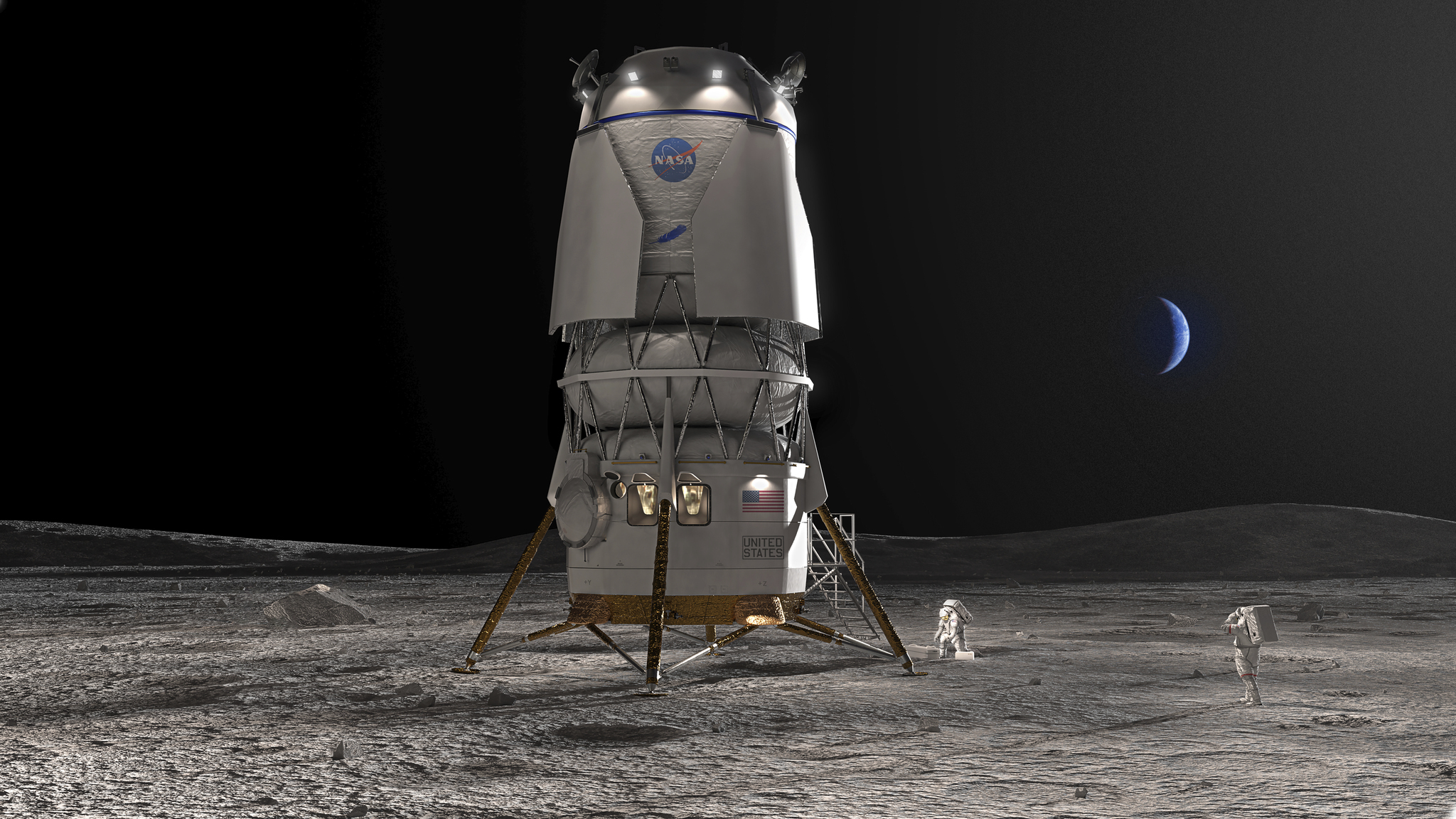
An artist's concept of Blue Origin's Blue Moon lunar lander. Credit: Blue Origin
NASA’s Artemis II mission has yet to return to Earth—it will do so on Friday evening, splashing down into the Pacific Ocean off the coast of San Diego—but the agency is already nearing some key decisions on the next Artemis mission.
The US space agency announced six weeks ago that it was modifying its Artemis timeline to insert a mission before beginning planned lunar landings. This new mission, designated Artemis III and intended to fly in Earth orbit rather than to the Moon, would attempt to “buy down” risk to give the lunar landing mission (now Artemis IV) a higher chance of success.
NASA Administrator Jared Isaacman said Tuesday afternoon that the space agency is debating about which orbit to fly Artemis III in before locking in a blueprint, noting that the first “senior level” Artemis III mission design discussion had taken place earlier in the day.
Where will it occur?
“One of the questions is what the initial orbit will be for Artemis III,” Isaacman said during a news conference. “Is it going to be LEO or HEO? There are pros and cons for each of them, for sure.”
Low-Earth orbit, or LEO, is designated as a distance of about 160 km to 2,000 km above the Earth’s surface. High-Earth orbit is considered to be greater than 36,000 km from the Earth’s surface, above geosynchronous orbit.
During Artemis III, the Orion spacecraft will launch (presumably with four astronauts) on a Space Launch System rocket from Florida. In Earth orbit, they will rendezvous with one or both of NASA’s Human Landing Systems. These are the Starship vehicle’s upper stage under development by SpaceX and a modified Blue Moon lander being built by Blue Origin.
A rendezvous in low-Earth orbit would potentially allow NASA to fly the SLS rocket without using an Interim Cryogenic Propulsion Stage, or ICPS. This is valuable because it could then save this final remaining ICPS stage for the Artemis IV mission (for future SLS missions, NASA would use a Centaur V upper stage, also provided by United Launch Alliance). For an Artemis III mission in a higher orbit, however, NASA would need the ICPS to push Orion there.
A rendezvous in high-Earth orbit would better mimic thermal and other conditions near the Moon, and this might be a more benign environment for the Orion spacecraft, which is sensitive to thruster pluming and other thermal issues. High-Earth orbit would also provide a stiffer test for Orion’s modified heat shield.
The closest Apollo analog to this plan, the Apollo 9 mission, during which the Apollo spacecraft tested rendezvous with the Lunar Module, took place in low-Earth orbit between 200 and 500km.
What will Orion dock with?
The other major unknown is which of the lunar landers Orion will dock with. NASA’s preference is to perform a test with both Starship and Blue Moon to get good data on their performance and confidence in their handling.
Isaacman seemed to think this was possible for a mission in 2027. “There are a lot of things based on the information we have available today, from feedback from our vendors, that we know are achievable,” he said.
But that will depend on the readiness of Starship and Blue Moon. Starship V3, the latest generation of SpaceX’s massive rocket, is undergoing final testing before a debut launch that could take place in about a month. And Blue Origin’s initial Blue Moon Mk. 1 lander is, Isaacman said, “wrapping up” vacuum-chamber testing at Johnson Space Center in Houston.
Isaacman said it is important for SpaceX’s Starship and Blue Origin’s New Glenn rocket to reach higher launch cadences to support not just Artemis III but many future missions to the lunar surface. NASA is clearly watching both closely.
“We’ll all have a sense of which path we’re going to go down based on launch cadence of our two HLS (human landing system) providers, both of which have launches coming up in the next month or less,” Isaacman said. “A big key to our strategy—to not just return to the Moon but to stay and build a base—is the rapid reusability of heavy-lift launch vehicles. The more they get experience doing that, the more options that are available to us for Artemis III.”
Quelle: arsTechnica
----
Update: 15.04.2026
.
NASA Invites Media to Rollout Event for Artemis III Moon Rocket Stage
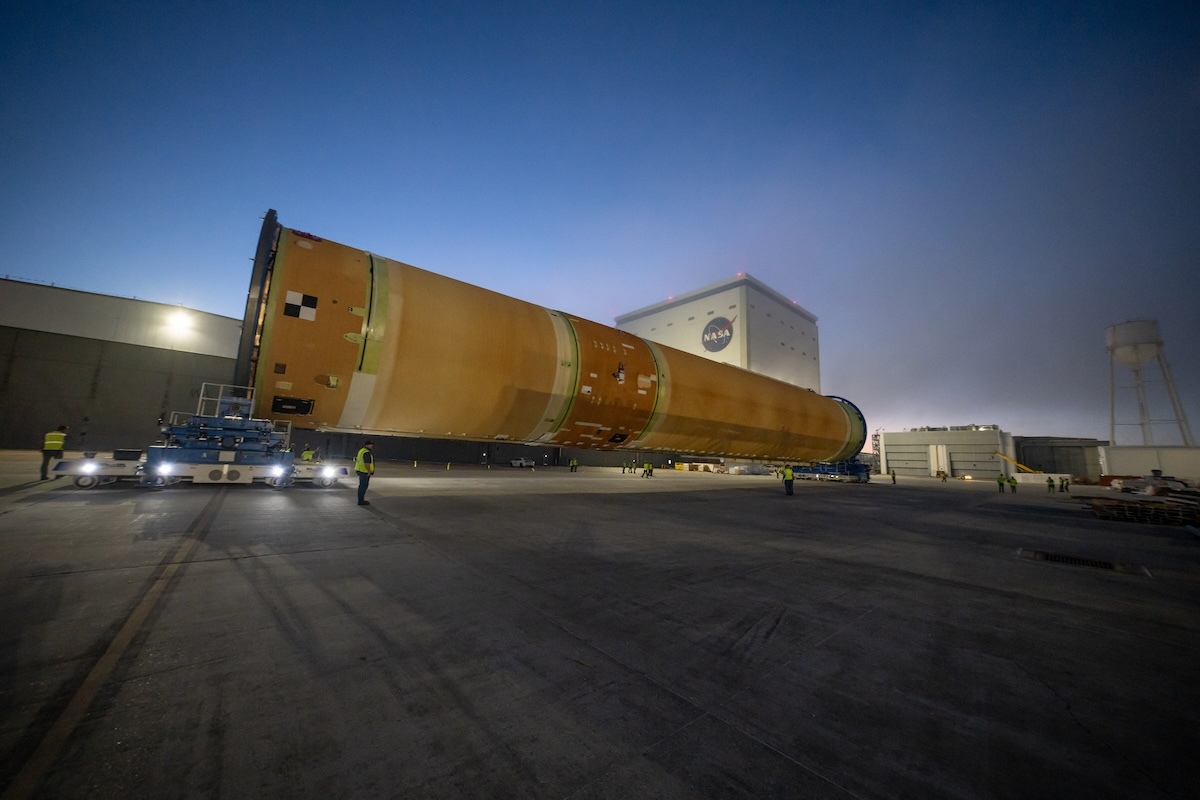
NASA will roll the largest section of the agency’s SLS (Space Launch System) rocket, which will launch the second crewed Artemis mission, out of the agency’s Michoud Assembly Facility in New Orleans on Monday, April 20. What’s called the top four-fifths of the SLS core stage – the section containing the liquid hydrogen tank, liquid oxygen tank, intertank, and forward skirt – will be loaded on the agency’s Pegasus barge for delivery to NASA’s Kennedy Space Center in Florida.
Media will have the opportunity to capture images and video, hear remarks from agency and industry leadership, and speak with NASA subject matter experts and Artemis industry partners as crews move the rocket stage to the Pegasus barge.
This event is open to U.S. media, who must apply by Wednesday, April 15. Interested media must contact Jonathan Deal at jonathan.e.deal@nasa.gov and Craig Betbeze at craig.c.betbeze@nasa.gov. Registered media will receive confirmation and additional information about the event by email. The agency’s media credentialing policy is available online.
Once at NASA Kennedy, teams will complete the stage outfitting and vertical integration before handing the hardware over to the agency’s Exploration Ground Systems Program that will handle stacking and launch preparations. The Artemis III SLS engine section and boat-tail, which protects the engines during launch, moved from the Space Systems Processing Facility at NASA Kennedy to the Vehicle Assembly Building in July 2025. The four core stage RS-25 engines are scheduled to ship from NASA’s Stennis Space Center in Bay St. Louis, Mississippi no later than July 2026 for integration into the engine section.
The rocket stage with its four RS-25 engines will provide more than 2 million pounds of thrust to send astronauts aboard the Orion spacecraft for the Artemis III mission. Artemis III currently is scheduled for launch in 2027, following the successful Artemis II test flight mission around the Moon that concluded April 10.
Building, assembling, and transporting the core stage is a collaborative process for NASA, Boeing, the core stage lead contractor, and lead RS-25 engines contractor L3Harris Technologies. The core stage is the backbone of the SLS rocket. All five major structures for the rocket stage are manufactured at NASA Michoud. By optimizing space at NASA Kennedy and NASA Michoud for production, integration, and outfitting, NASA and industry can streamline production for a standardized SLS configuration for NASA’s Artemis program.
The Artemis III mission will launch to Earth’s orbit American astronauts in the Orion spacecraft on top of the SLS rocket to test rendezvous and docking capabilities between Orion and commercial spacecraft needed to land astronauts on the Moon in 2028. The SLS rocket is the only rocket capable of sending Orion, astronauts, and supplies to the Moon in a single launch.
Artemis III is the second crewed mission under the agency’s Artemis program, where NASA is sending astronauts on increasingly difficult missions to explore more of the Moon for scientific discovery, economic benefits, establish an enduring human presence on the lunar surface, and build on our foundation for the first crewed missions to Mars.
Quelle: NASA
----
Update: 19.04.2026
.
NASA's giant crawler moves launch tower to prep for Artemis III moon mission
With sloth-like speed, NASA's mighty Crawler-Transporter 2 crept nearly imperceptibly into High Bay 3 at the Vehicle Assembly Building. Borne on its back: the 380-foot-tall mobile tower from the historic Artemis II moon-flyby launch.
The tremendous crawler completed its two-day commute from pad 39B to the VAB at 11:40 a.m. Friday, April 17, at NASA's Kennedy Space Center. Though the launch tower weighs more than 11 million pounds, the crawler's 4.2-mile journey was nearly bullseye-accurate.
"We missed our mark by three-quarters of an inch. And that was because our laser malfunctioned," said John Giles, engineering operations manager for NASA’s crawler-transporters.
"So we had to back out a little bit and come back in," Giles said.
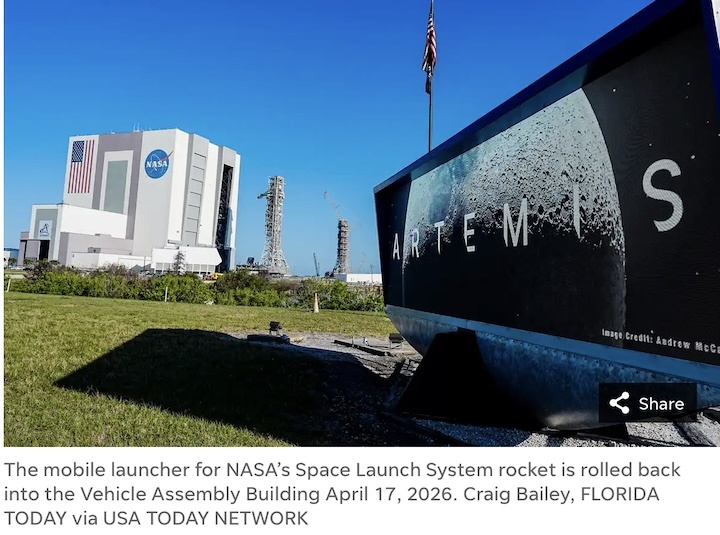
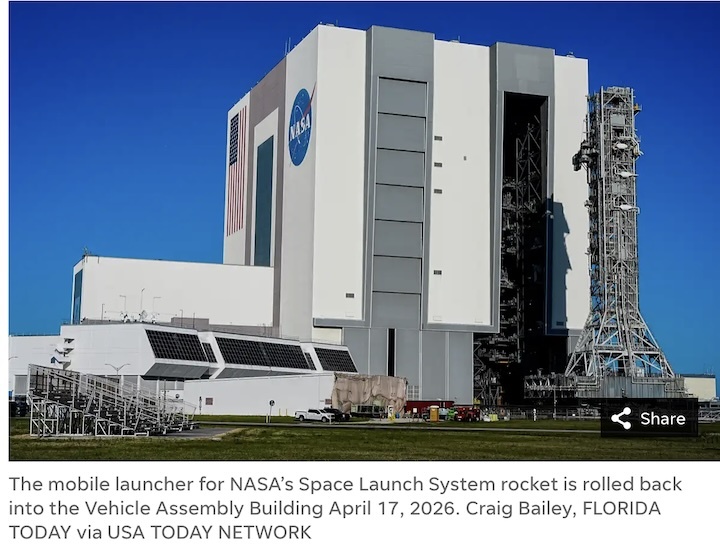
The Guinness World Records recognizes CT-2 as “the heaviest self-powered vehicle.” Pad 39B and the VAB are linked by a 130-foot-wide crawlerway. The crawler's treads roll along twin 40-foot lanes featuring 4 feet of crushed lime rock, topped by a layer of erosion-rounded river rock measuring 4 to 8 inches deep.
Top speed while loaded: 1 mph.
Giles described the Artemis II crawler operation as, "one of the best ones ever, as far as a rollback. Smooth. One quick stop."
That routine stop occurred when workers replaced a 55-gallon barrel filled with grease. The crawler utilizes a grease system that pumps the lubricant across various bearings, gears and sprockets. Giles said the trip between the VAB and pad 39B requires more than one barrel.
"This has been fantastic. So now, we start on things we can do better, things we can do faster. Try to get ready for rollout of Artemis III," Giles said.
NASA’s mobile launcher is now tucked inside the VAB ahead of rocket-stacking operations for Artemis III. Slated for liftoff sometime next year, that mission will launch astronauts aboard an Orion spacecraft into orbit to test rendezvous and docking capabilities with lunar landers built by Blue Origin and/or SpaceX. NASA has yet to release specifics.
On Monday, April 20, in Louisiana, crews will roll the bulk of the huge core stage of the Artemis III Space Launch System rocket out of out of NASA's Michoud Assembly Facility in New Orleans.
The orange rocket core section — which contains the liquid hydrogen tank, liquid oxygen tank, intertank and forward skirt — will be transported onto NASA's Pegasus barge, which will embark on a voyage to KSC for vertical stacking inside the VAB.
In the immediate future, Giles said personnel will embark on a CT-2 crawler-corrosion-control project that should take six to eight weeks to complete.
Quelle: Florida Today
----
Update: 22.04.2026
.
NASA Rolls Out Artemis III Moon Rocket Core Stage
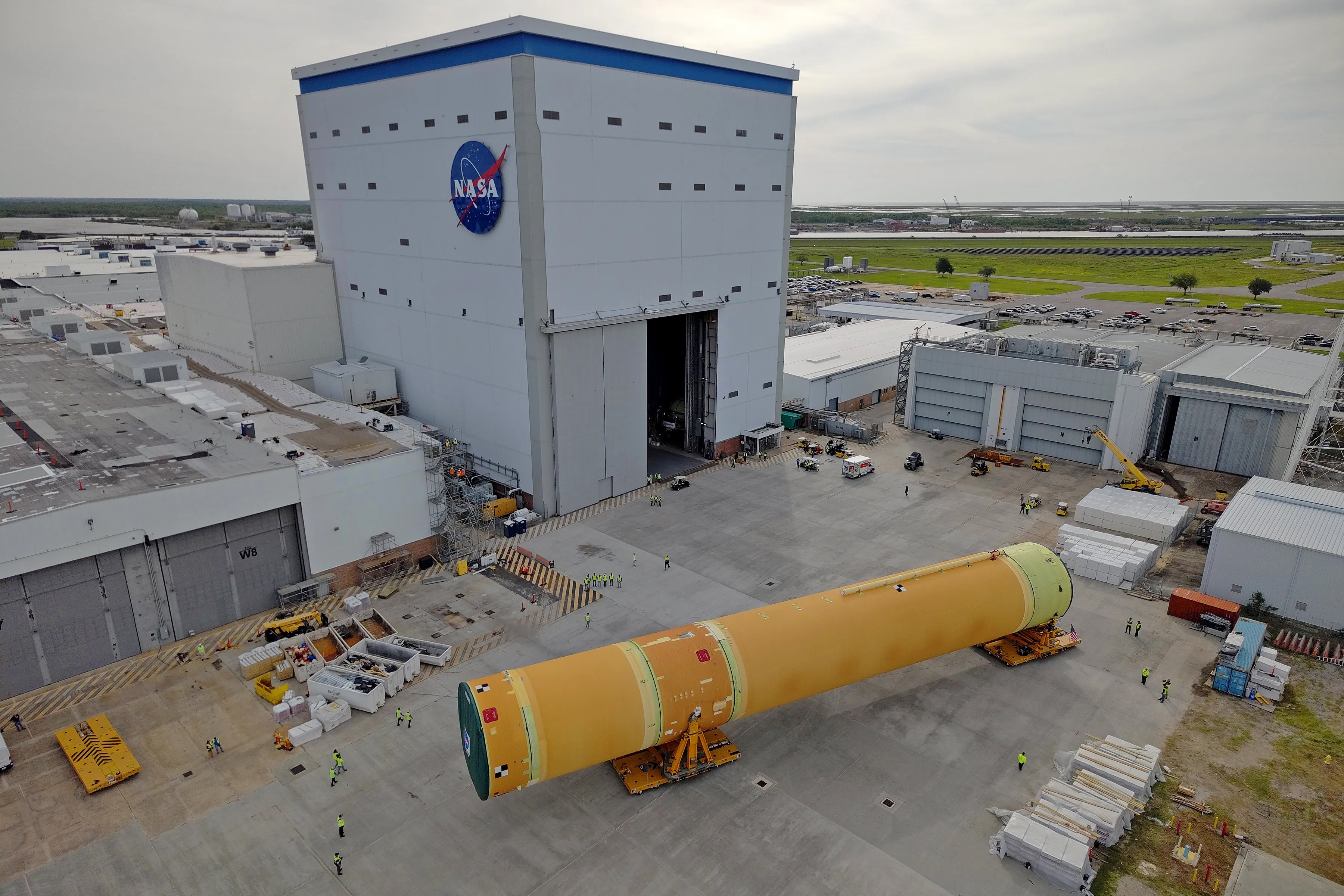
Following the recent successful test flight of NASA’s Artemis II mission around the Moon, NASA rolled out the core stage, or the largest section, of the agency’s SLS (Space Launch System) rocket that will launch the crewed Artemis III mission in 2027. The stage departed from the agency’s Michoud Assembly Facility in New Orleans on Monday for shipment to NASA’s Kennedy Space Center in Florida, marking key progress on the path to the agency’s first crewed lunar landing mission to the Moon under the Artemis program in two years.
Using highly specialized transporters, engineers maneuvered the top four-fifths of the SLS core stage, the section containing the liquid hydrogen tank, liquid oxygen tank, intertank, and forward skirt, from inside NASA Michoud to the agency’s Pegasus barge for delivery to NASA Kennedy. After arrival, teams will complete the stage outfitting and vertical integration, and the agency’s Exploration Ground Systems Program will stack the rocket’s components in preparation for launch.
“Seeing this SLS rocket hardware roll out is a powerful reminder of our progress toward returning humans to the lunar surface,” said Lori Glaze, acting associate administrator, Exploration Systems Development Mission Directorate at NASA Headquarters in Washington. “This is the backbone of Artemis III. As it heads to Florida for final integration, we are one step closer to testing the critical capabilities needed to land Americans on the Moon, and ultimately, paving the way for our first crewed missions to Mars.”
At 212 feet tall, the completed core stage will consist of the top four fifths of the rocket combined with its engine section. The top four-fifths include the two propellant tanks that collectively hold more than 733,000 gallons of super-chilled liquid propellant to fuel four RS-25 engines. During launch and flight, the fully integrated stage will operate for more than eight minutes, producing more than 2 million pounds of thrust to propel astronauts inside NASA’s Orion spacecraft into orbit.
Building, assembling, and transporting the core stage is a collaborative process for two of NASA’s prime contractors, Boeing and L3Harris Technologies. Boeing is responsible for the overall design and assembly of the core stage, and L3Harris manufactures the rocket’s RS-25 engines. Recent announcements by NASA Administrator Jared Isaacman enabled the agency to standardize the SLS configuration, streamline operations, and optimize production to accelerate the Artemis program.
Next year’s Artemis III mission will launch astronauts to Earth’s orbit aboard the Orion spacecraft on top of SLS to test rendezvous and docking capabilities between Orion and commercial spacecraft needed to land Artemis IV astronauts on the Moon in 2028. NASA’s SLS is the only rocket capable of sending Orion, astronauts, and supplies to the Moon in a single launch.
As part of the Golden Age of innovation and exploration, NASA will send Artemis astronauts on increasingly difficult missions to explore more of the Moon for scientific discovery, economic benefits, establish an enduring human presence on the lunar surface, and to build on our foundation for the first crewed missions to Mars.
Quelle: NASA
----
Update: 29.04.2026
.
NASA’s Artemis Core Stage Arrives at Kennedy
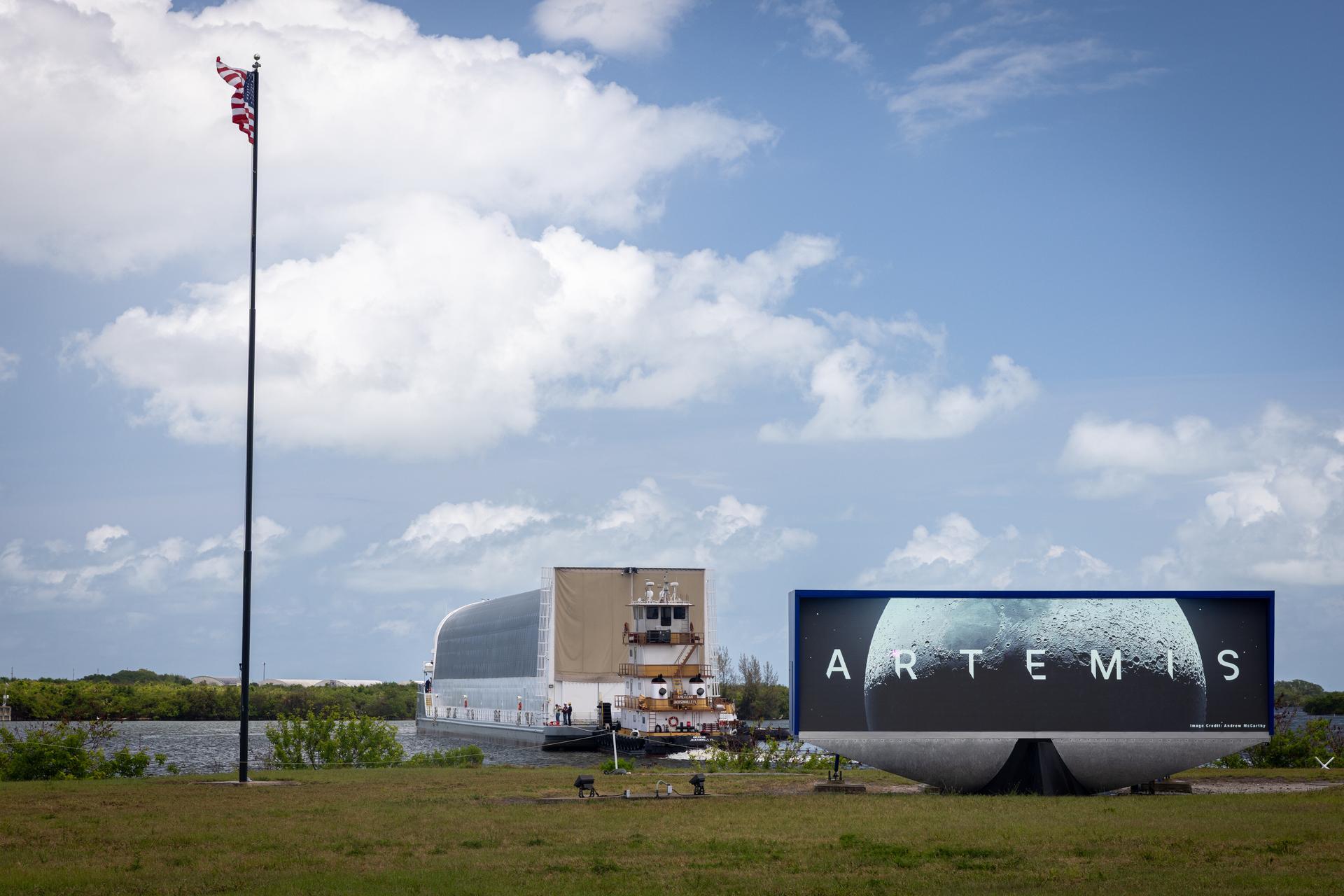
The largest rocket section for NASA’s Artemis III mission arrived at the agency’s Kennedy Space Center in Florida on April 27. The SLS (Space Launch System) core stage traveled 900 miles on the Pegasus barge from NASA’s Michoud Assembly Facility in New Orleans where the stage is manufactured, to complete assembly of the massive rocket at NASA Kennedy.
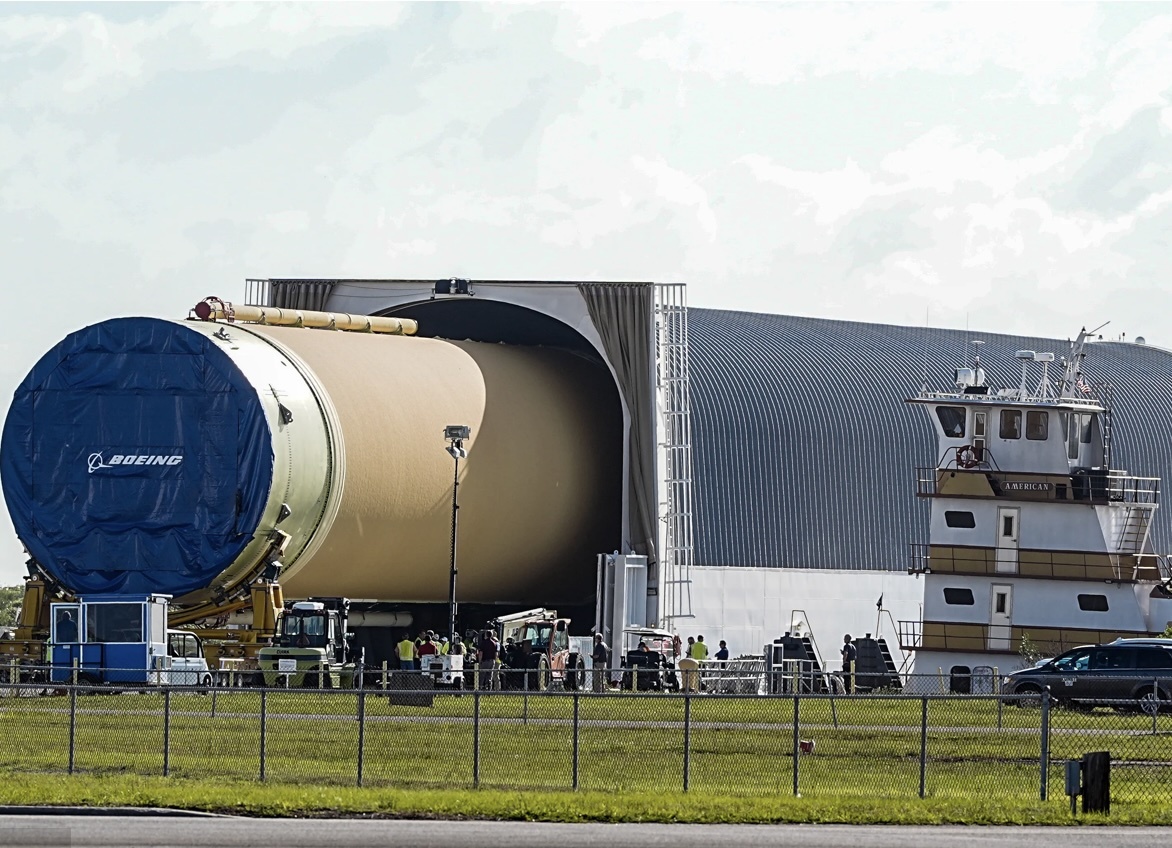
Teams will transport the top four-fifths of the 212-foot-long core stage, the section containing the liquid hydrogen tank, liquid oxygen tank, intertank, and forward skirt, on Tuesday, April 28 to NASA’s Vehicle Assembly Building to join the previously delivered boat-tail and engine section in the facility’s High Bay 2 for outfitting and vertical integration to complete the full stage.
Artemis III will launch crew aboard the Orion spacecraft on top of the SLS rocket to test rendezvous and docking capabilities between Orion and commercial spacecraft needed to land astronauts on the Moon.
Watch a livestream of the unloading and transporting of the core stage to the Vehicle Assembly Building at NASA Kennedy beginning at approximately 8 a.m. April 28.
Quelle: NASA
+++
Artemis III rocket core stage arrives at NASA's Kennedy Space Center
On April 27, the Pegasus barge sailed into NASA's Kennedy Space Center with the core stage of the Artemis III rocket
Following NASA Administrator Jared Isaacman's promise to increase the launch cadence of NASA’s SLS moon rocket, less than a month has passed between the launch of Artemis II and the arrival at Kennedy Space Center of the core stage for the Artemis III mission.
As poor weather moved through the area, NASA's Pegasus barge arrived at KSC Monday afternoon, carrying the massive orange core stage, which had been transported from NASA's Michoud Assembly Facility in New Orleans, Louisiana.
Work began early Tuesday to slowly offload the core stage from Pegasus and roll it into NASA's iconic Vehicle Assembly Building. Parts of the SLS’s solid rocket boosters are already at KSC.
But all this work is happening before the lunar landers, a key part of the Artemis III mission, are ready.
What's next for Artemis III
The Artemis III SLS (Space Launch System) rocket will now be stacked inside the VAB ahead of a planned launch in 2027. The mission will see the Orion spacecraft dock with either the SpaceX Starship HLS or Blue Origin Mark II lunar lander in low Earth orbit before a moon landing in 2028.
Isaacman recently presented a major overhaul of the Artemis mission lineup, delaying the moon landing to Artemis IV and changing the upcoming Artemis III to a less risky test docking in low Earth orbit.
This switch is also an effort to get the SLS rocket flying more frequently. Isaacman had said the gap between the uncrewed Artemis I launch in 2022 and the crewed Artemis II launch on April 1 was too long.
“That is a very complicated rocket, five private contractors — I don't know how many subcontractors in it — on decades old design hardware that people aren't as familiar with,” Isaacman said during an April 2026 full committee hearing on NASA’s budget proposal. “You need muscle memory to do that.”
The program also scrapped the over-budget Boeing-built Exploration Upper Stage (EUS) as well as the moon-orbiting Lunar Gateway in favor of a future moon base.
But he kept the plan to tap private companies to provide lunar landers, with Blue Origin and SpaceX winning the contracts.
“I think that people often ask what's different from the 1960s moon race versus the present? And there's certainly a lot of differences, but one of which is that the taxpayers don't have to foot the entire bill,” Isaacman said.
“You have some of the wealthiest individuals and companies in the world contributing their resources to a capability essential for American leadership in space, and, frankly, for all of humankind. And if they want to come and invest in launch infrastructure that can help enable a capability critical for national security, I welcome it.”
Ahead of Artemis III, Blue Origin and SpaceX lunar landers to be tested
While Blue Origin continues work on their uncrewed Mark I lander, it has not made its debut flight yet. Mark I will be the payload-carrying predecessor to the crewed Mark II variant tapped for Artemis.
Blue Origin’s lander will be launched on its New Glenn rocket, which just saw its third flight from Cape Canaveral, as well as its second first-stage booster landing and recovery.
That third flight did suffer an issue, as the rocket’s upper stage experienced a mishap where the AST SpaceMobile satellite it was carrying deployed in an off-nominal orbit, leading to the loss of the satellite.
Blue Origin and the FAA launched an investigation into the accident, causing fears among the space community of the upcoming Mark I lander being delayed.
Greg Autry, associate provost for space commercialization and strategy at the University of Central Florida told FLORIDA TODAY he does not consider the upper stage malfunction to be a large setback to Blue Origin.
“I think they’ll identify this issue to solve it, and you’ve got a super solid, capable rocket available for next year,” said Autry. “They’ll be able to launch their lander — if their lander is ready.”
Blue Origin’s CEO Dave Limp has been consistently posting about the testing progress being made with the first uncrewed Mark I lander, named Endurance.
Quelle: Florida Today
----
Update: 4.05.2026
.
Artemis 3 plans remain uncertain as schedule slips

WASHINGTON — More than two months after NASA announced revised plans for the Artemis 3 mission, the agency has provided few details about the mission itself amid signs its schedule may be slipping.
NASA announced Feb. 27 it was revising its plans for future Artemis missions, with Artemis 3 — originally planned to be the program’s first crewed landing attempt on the moon — converted into a test flight in low Earth orbit, where Orion will rendezvous with lunar landers being developed by Blue Origin and SpaceX.
NASA billed the mission as an analog to Apollo 9, the early 1969 mission that tested the Lunar Module in low Earth orbit before the Apollo 11 landing later that year. The agency said a successful Artemis 3 would set up landing attempts on Artemis 4 in early 2028 and Artemis 5 in late 2028.
Many of the elements needed for Artemis 3 are coming together at the Kennedy Space Center. Most of the core module of the Space Launch System arrived at the center and was moved into the Vehicle Assembly Building April 28. There, workers will attach the core stage’s engine section, which arrived at the center last summer.
Segments for the SLS solid rocket boosters started arriving at KSC in April, with the remainder expected to arrive by train from Northrop Grumman’s Utah factory in the summer. Work continues on the Orion spacecraft for Artemis 3, including mating its crew capsule and service module in the summer.
But while those preparations continue, the agency has provided few details about the revised mission profile. Even high-level details, like the planned orbit for the mission and its duration, have yet to be announced by NASA.
The change in the mission from a lunar flight to one in LEO is unlikely to require significant changes to Orion itself. “From an Orion perspective, it’s not much different,” said Howard Hu, NASA Orion program manager, in an interview shortly before the Artemis 2 launch. Most of the work, he said, involved reanalyzing various abort scenarios and ensuring sufficient power and thermal control for the spacecraft in Earth orbit.
There may be changes, though, to SLS. Artemis 3 was to use the final Interim Cryogenic Propulsion Stage, or ICPS, a stage based on the Delta 4 upper stage. With NASA canceling the Exploration Upper Stage intended for later SLS launches, and with Artemis 3 now remaining in low Earth orbit, there has been discussion about flying SLS without an upper stage, preserving the ICPS for Artemis 4 and giving engineers more time to modify the Centaur upper stage for later Artemis missions.
The concept of operations for the Artemis 3 mission remains uncertain. “What our ultimate goal would be is to be able to do the orbital rendezvous, proxops, maybe docking with both providers,” Kent Chojnacki, deputy program manager for NASA’s Human Landing System (HLS) program, said in another interview just before the Artemis 2 launch.
That coordination will be challenging. “We have to find a common orbit. We have to find a common launch opportunity, and orchestrating a launch of an SLS, two HLSs will be some kind of feat,” he said. “We’re working on what the art of the possible is there.”
When NASA announced the revised Artemis 3 mission, the agency said another objective of the mission would be to test lunar spacesuits being developed by Axiom Space. However, the company said at the Space Symposium in April it was still awaiting details about how those tests would work.
“We’ve provided the agency with a number of options” for testing the suit on Artemis 3, said Russell Ralston, senior vice president and general manager of extravehicular activity at Axiom. “It would certainly be a valuable exercise, but we just don’t have the specifics at this time.”
That test could instead take place on the space station. “The agency has made it clear we’re going to fly a suit next year,” said Jonathan Cirtain, president and chief executive of Axiom Space. “Is that to the International Space Station? Is that with the HLS providers? To be determined.”
Another unknown is the crew for Artemis 3. NASA announced the Artemis 2 crew in April 2023 ahead of a launch then planned for late 2024. The agency, though, has not revealed a crew for the mission.
“I believe we’re not far away from announcing the Artemis 3 crew,” NASA Administrator Jared Isaacman said in an April 30 ABC News interview. “When you think about your timing, when you’re a year-plus out from a mission, that’s when you want to get them into training.”
All those uncertainties have raised doubts about the schedule for Artemis 3. NASA said in February it was targeting a launch by mid-2027.
“Our direction is no earlier than March, no later than June” of 2027, Chojnacki said of the Artemis 3 schedule.
More recently, though, Isaacman has suggested the mission would slip to late 2027. “I’ve received responses from both [HLS] vendors, both SpaceX and Blue Origin, to meet our needs for a late 2027 rendezvous and docking, and test the interoperability of both landers, in advance of a landing attempt in 2028,” he said at a hearing of a House appropriations subcommittee April 27.
“You’re talking some time mid to late 2027 when Artemis 3 would launch,” he said in the ABC News interview.
A slip to late 2027 would make it unlikely that NASA could attempt two human lunar landing missions in 2028. In the announcement about the revised Artemis 3 plans in February, the agency talked about launching missions on a cadence of every 10 months. However, if the launch of Artemis 3 slips beyond April 2027, the agency won’t be able to fly both Artemis 4 and 5 in 2028 even if it manages to launch later missions every 10 months.
Isaacman, at the House hearing, stuck to the goal of two crewed lunar landing attempts in 2028, saying the agency had sufficient funding to do so. “Maybe two at bats in 2028,” he said.
Quelle: SN
----
Update: 15.05.2026
.
NASA Outlines Preliminary Artemis III Mission Plans
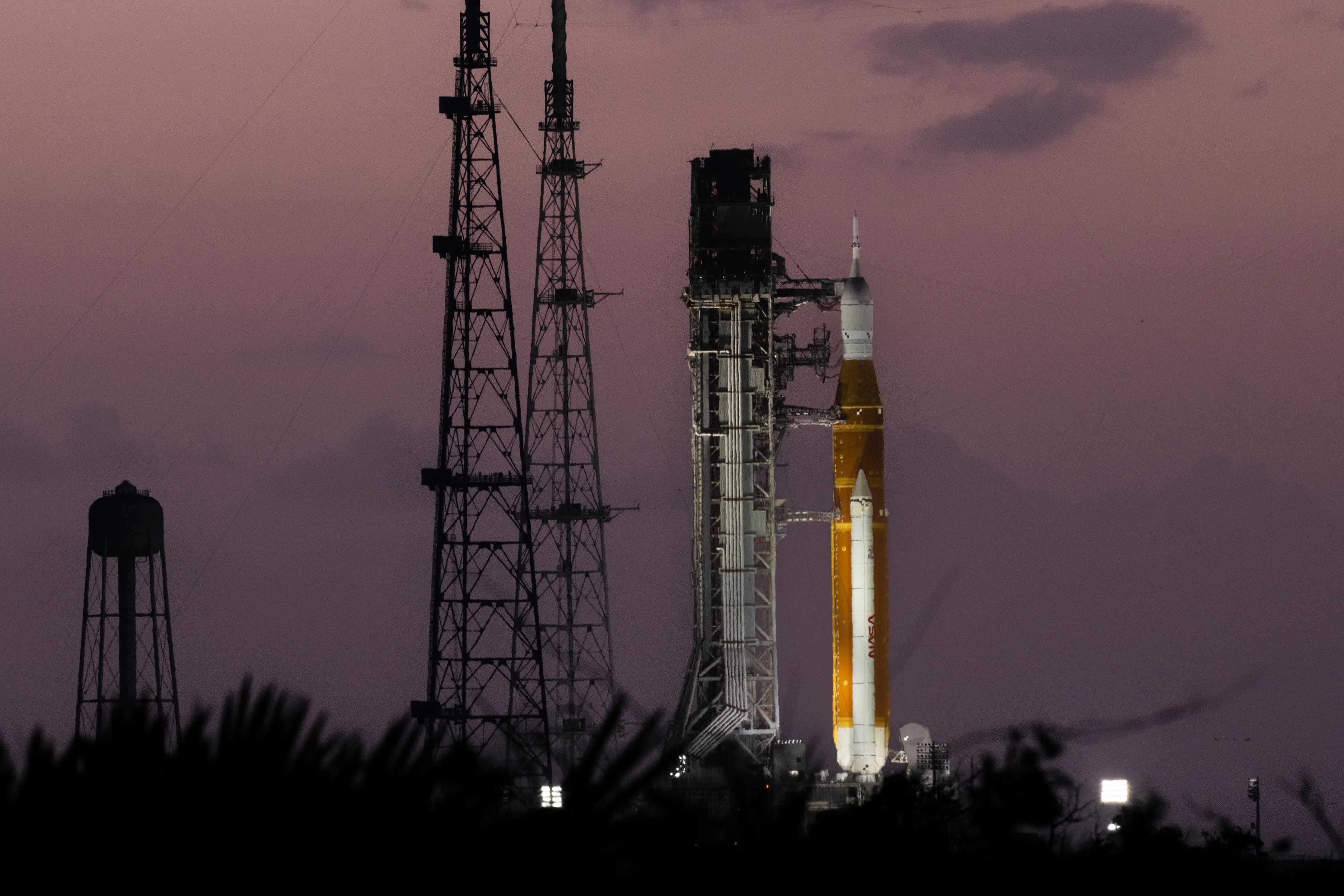
NASA is moving quickly to define next year’s Artemis III mission in Earth orbit, a crewed flight that will test rendezvous and docking capabilities between the agency’s Orion spacecraft and commercial landers from Blue Origin and SpaceX. Since a February announcement adding an Artemis mission ahead of crewed landing missions to the Moon’s South Pole region, engineers have been evaluating mission profile options and operational considerations for Artemis III to ensure the test flight helps the agency and its partners reduce risk ahead of the next Americans landing on the Moon during Artemis IV.
“While this is a mission to Earth orbit, it is an important stepping stone to successfully landing on the Moon with Artemis IV. Artemis III is one of the most highly complex missions NASA has undertaken,” said Jeremy Parsons, Moon to Mars acting assistant deputy administrator, NASA’s Exploration Systems Development Mission Directorate in Washington. “For the first time, NASA will coordinate a launch campaign involving multiple spacecraft integrating new capabilities into Artemis operations. We’re integrating more partners and interrelated operations into this mission by design, which will help us learn how Orion, the crew, and ground teams all interact together with hardware and teams from both lander providers before we send astronauts to the Moon’s surface and build a Moon Base there.”
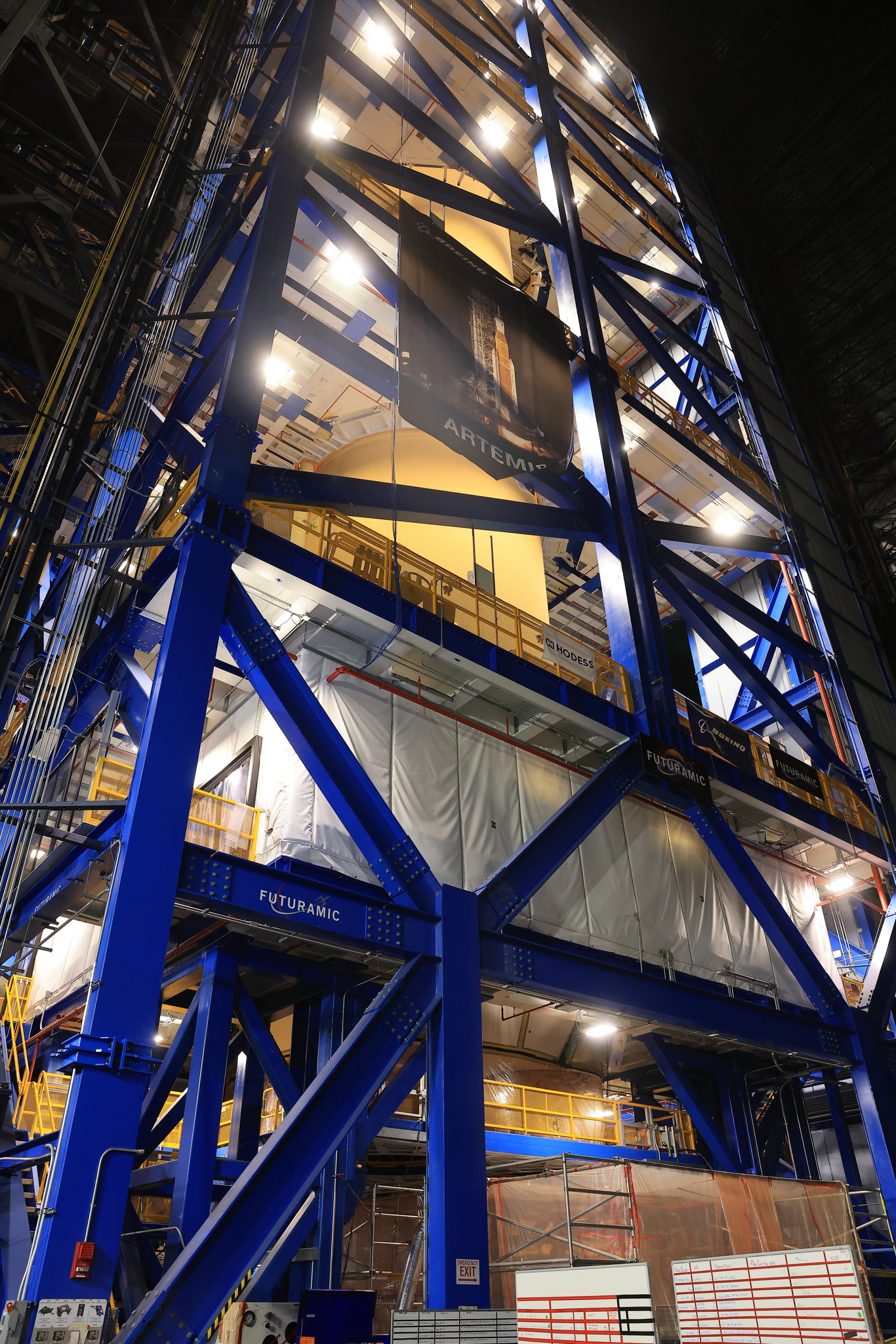
The mission is planned to carry out a series of objectives designed to demonstrate critical systems needed for a future lunar landing. During the Artemis III mission, the SLS (Space Launch System) rocket will launch the Orion spacecraft from NASA’s Kennedy Space Center in Florida with four crew members. Instead of using the interim cryogenic propulsion stage as the upper stage of the rocket, NASA will use a “spacer,” a representation of the mass and overall dimensions of an upper stage but without propulsive capabilities. The spacer will maintain the same overall dimensions and interface connection points as the upper stage between the Orion stage adapter and launch vehicle stage adapter.
Design and fabrication activities for the spacer are progressing rapidly at NASA’s Marshall Space Flight Center in Huntsville, Alabama. Material for the barrel section and the upper and lower rings is currently being machined at Marshall in preparation for upcoming welding operations.
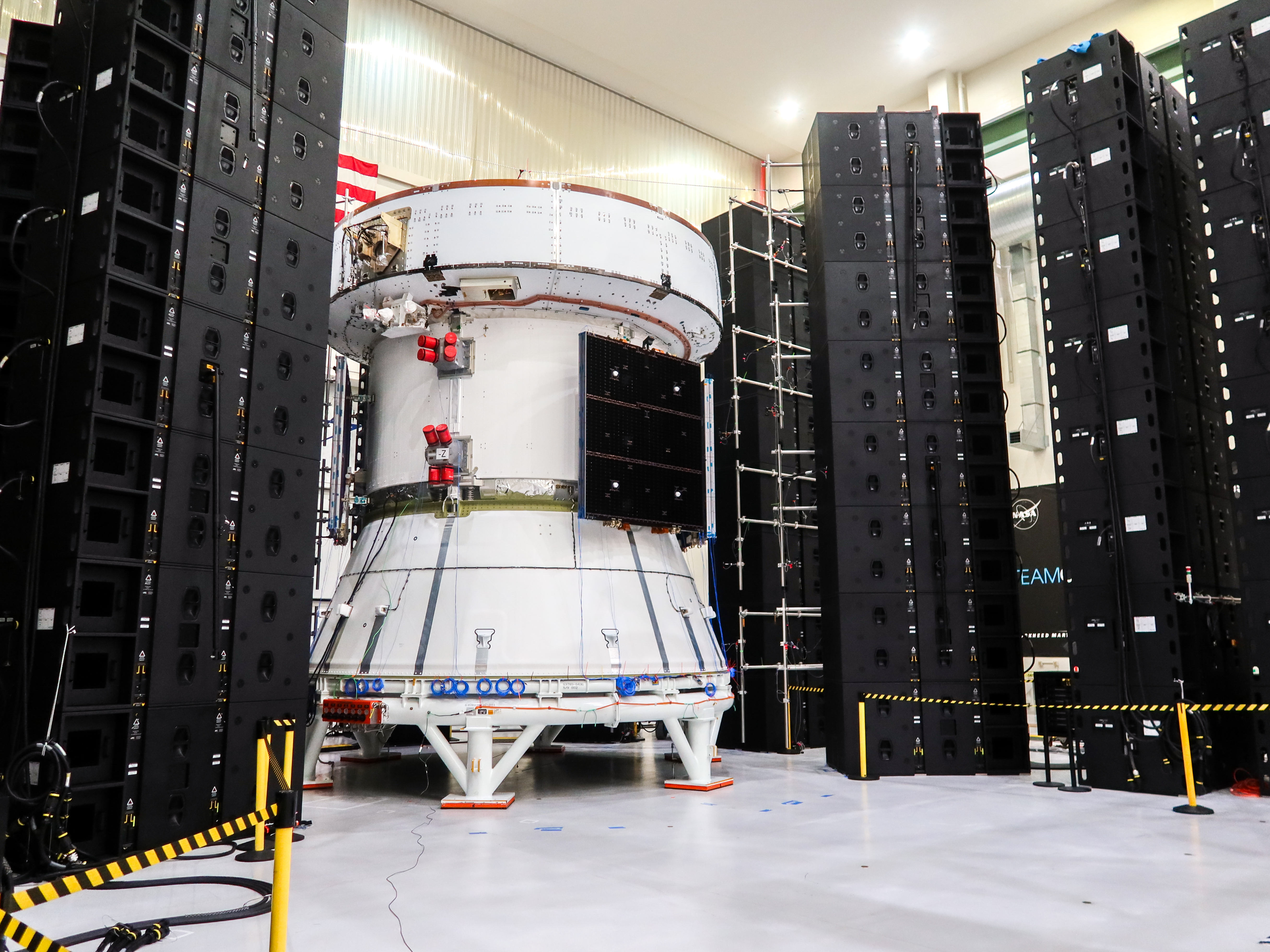
After the rocket delivers Orion to orbit, the spacecraft’s European-built service module will provide propulsion to circularize Orion’s orbit around the planet in low Earth orbit. This orbit increases overall mission success by allowing more launch opportunities for each element as compared to a lunar mission — SLS carrying Orion and its crew, SpaceX’s Starship human landing system pathfinder, and Blue Origin’s Blue Moon Mark 2 human landing system pathfinder.
Informed by Blue Origin and SpaceX capabilities, NASA also is defining the concept of operations for the mission. While some decisions are yet to be determined, astronauts could potentially enter at least one lander test article.
The crew will spend more time aboard Orion than during Artemis II, further advancing the evaluation of life support systems, and for the first time will demonstrate the docking system performance. The mission will inform lander rendezvous and habitation concepts and mission operations in preparation for future surface missions. The agency also plans to test an upgraded heat shield during Orion’s return to Earth to enable more flexible and robust reentry profiles for future missions.
Over the coming weeks, NASA will continue to refine specific plans for the flight, including a timeline for identifying astronauts to train for mission operations, options to evaluate Axiom’s AxEMU spacesuit lander interfaces ahead of lunar surface missions, mission duration, and potential science operations for the flight. NASA has asked for industry input on potential solutions to improve the communications with the ground during the mission since the Deep Space Network will not be used. The agency also is seeking both international and domestic interest in potentially flying CubeSats to deploy in Earth orbit, and may share other opportunities as the concept of operations for the mission is further defined.
As part of the Golden Age of innovation and exploration, NASA will send Artemis astronauts on increasingly difficult missions to explore more of the Moon for scientific discovery, economic benefits, establish an enduring human presence on the lunar surface, and to build on our foundation for the first crewed missions to Mars.
Quelle: NASA
----
Update: 21.05.2026
.
NASA, Lockheed Martin say Artemis III advancing, facing milestones this year
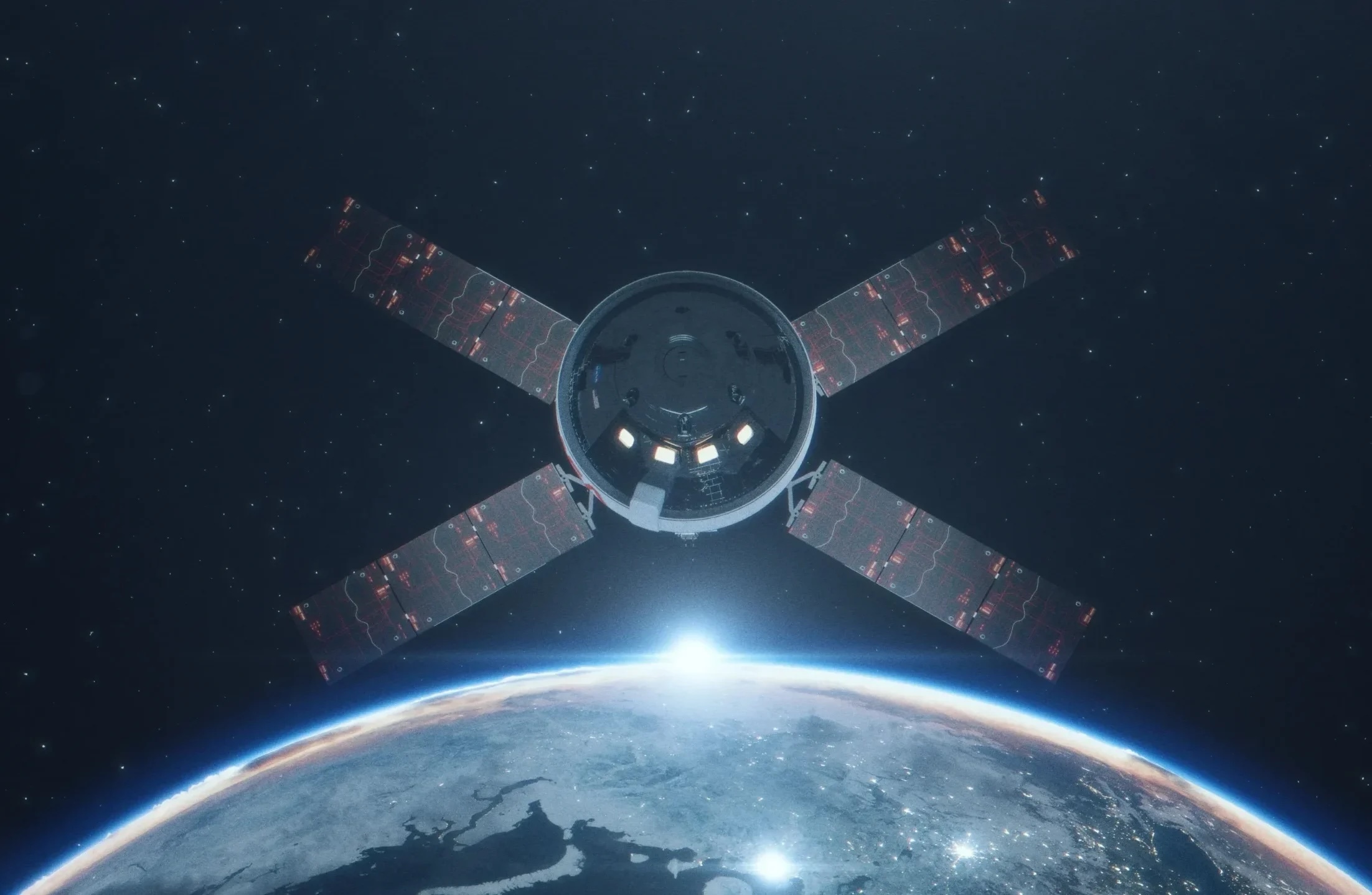
An illustration of the Artemis III low-Earth orbit mission. Credit: NASA
AIAA ASCEND, Washington, D.C. — NASA and its contractors, moving forward with manufacturing components for the Artemis III mission, now expect several key milestones to occur this calendar year.
“We’re looking at stacking in the next two months,” Administrator Jared Isaacman told the audience here during a Tuesday morning keynote, referring to the SLS rocket for Artemis III.
The agency last week released new details about this 2027 mission, in which an Orion capsule is to practice rendezvous and docking with pathfinder versions of one or both lunar landers in development: a SpaceX Starship and Blue Origin Blue Moon Mark 2. Among the updates was that Orion will be launched to low-Earth orbit carrying a crew of four astronauts.
Components for their SLS are already at NASA’s Kennedy Space Center in Florida, including the largest component of the rocket’s core stage and segments for the two solid rocket boosters. “
We’re aiming to get a kind of preliminary partial wet dress [rehearsal] done before the end of the year,” Isaacman said today.
He did not elaborate on what that rehearsal would include. Before Artemis I in 2022, the agency conducted a series of “green run” tests with the core stage of that rocket, including loading a limited amount of liquid hydrogen fuel to practice loading procedures. Before both Artemis I and Artemis II, the agency also conducted full wet dress rehearsals to practice fueling and other launch day operations.
In parallel, Lockheed Martin is on track to deliver the Artemis III Orion to NASA “at the end of the calendar year,” Kirk Shireman, the company’s Orion program manager, told attendees during a session following Isaacman’s remarks.
That amounts to a “15% [schedule] reduction,” he said, and the capsules for the planned Artemis IV and V lunar landings are already being built. Those missions are slated for 2028.
Lockheed Martin is also taking steps to increase Orion production long-term, he said, including adding another clean room and test cell to the Operations & Checkout Building at NASA Kennedy, where Orions are manufactured.
“The fact is, it’s a cultural shift, frankly, for us and I think for a lot of people,” Shireman said of the accelerated schedule. “It’s this notion that every hour matters — every hour, every day matters.”
Quelle: Aerospace America
----
Update: 6.06.2025
.
Final Artemis III SLS Booster Segments En Route to NASA Kennedy
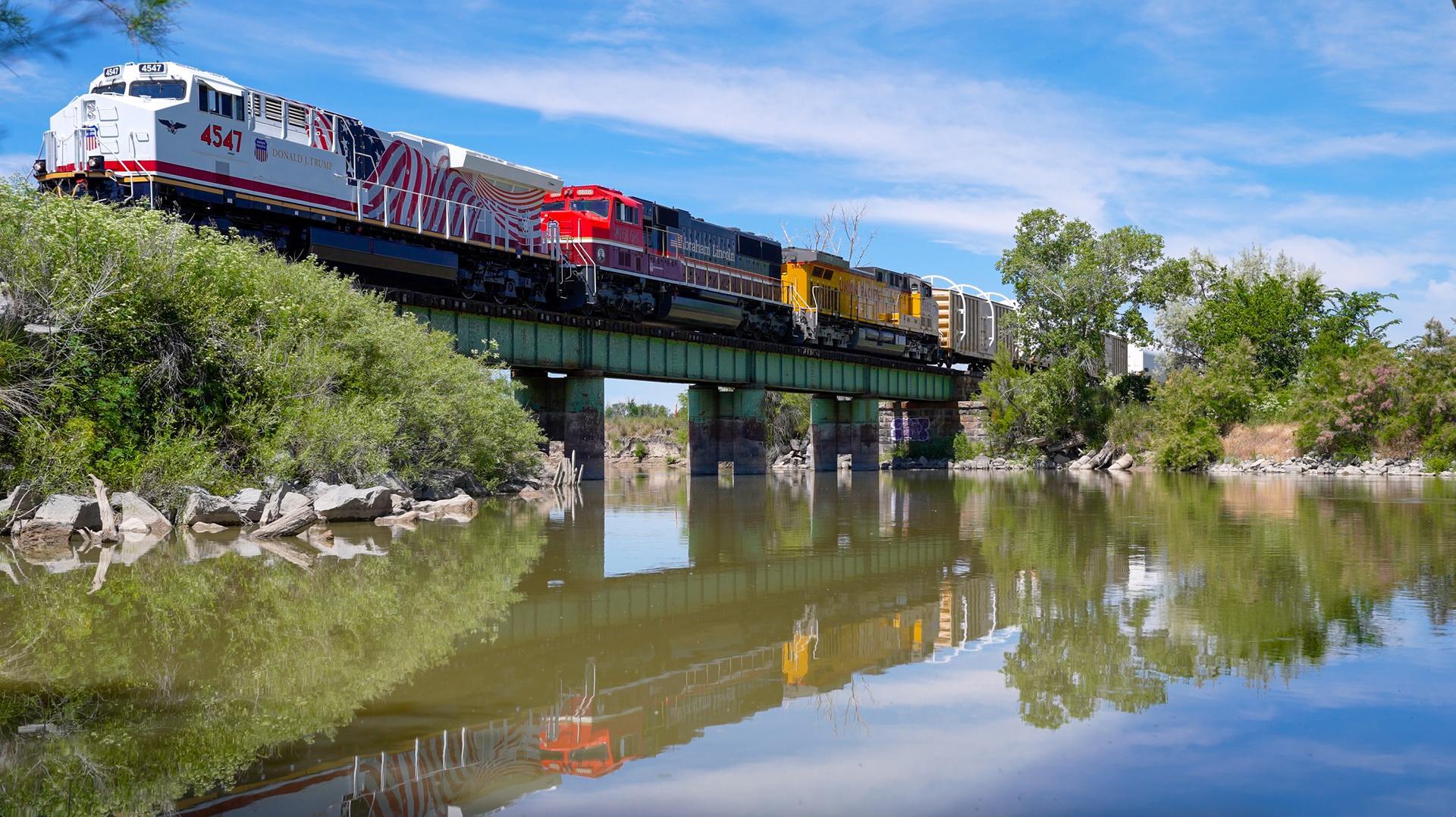
The final booster motor segments for NASA’s SLS (Space Launch System) rocket that will help propel Artemis III astronauts on their journey to space shipped from Northrop Grumman’s Railyard Shipping Facility in Corinne, Utah on June 2. The eight booster motor segments are on their way to NASA’s Kennedy Space Center in Florida where they will form the SLS rocket’s twin, five-segment solid rocket boosters, which produce more than 75% of the total thrust at liftoff.
Manufactured by SLS booster lead contractor Northrop Grumman in Utah, the solid rocket boosters have three major assemblies with the motor segment being the largest portion of the booster. Together, the SLS rocket’s twin boosters and the core stage’s four RS-25 engines produce more than 8.8 million pounds of thrust. The eight booster motor segments travel in specialized transporters to the spaceport.
Artemis III will launch four astronauts from NASA’s Kennedy Space Center in Florida aboard the Orion spacecraft on the SLS rocket. The mission will test critical rendezvous and docking capabilities between Orion and commercial human landing systems needed to deliver astronauts to the lunar surface on future missions.
Quelle: NASA
----
Update: 11.06.2026
.
NASA unveils Artemis III astronauts to test technology for a future moon landing
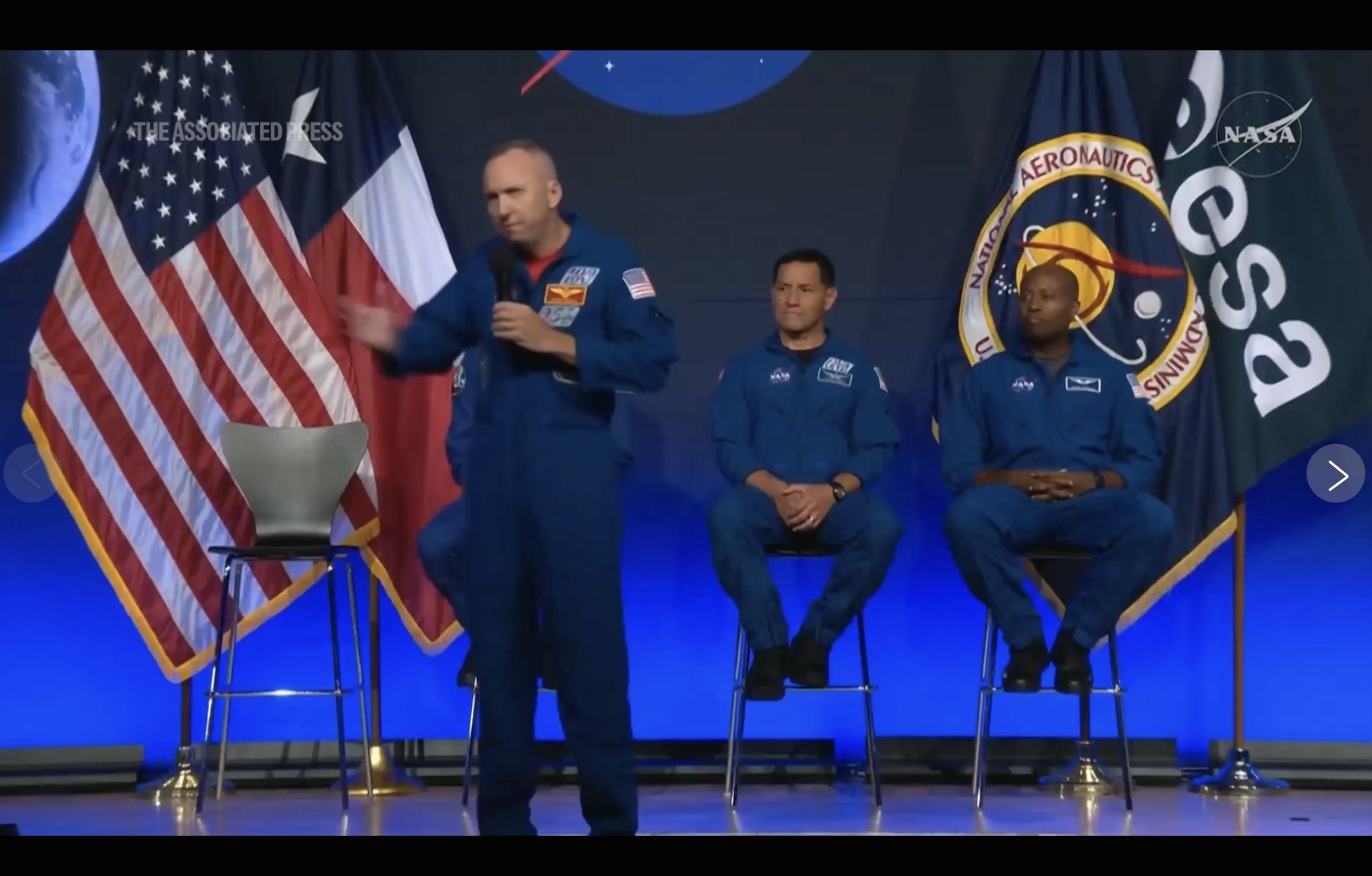
NASA on Tuesday revealed the crew for its Artemis III mission, the next step in the space agency’s plan to eventually land astronauts on the moon.
The announcement came two months after Artemis II’s record-breaking trip around the moon that surpassed the distance record of Apollo 13.
NASA’s Randy Bresnik, Frank Rubio, Andre Douglas and the European Space Agency’s Luca Parmitano won’t fly to the moon or land on the surface. Instead, they’ll orbit Earth while practicing docking their Orion capsule with two lunar landers.
“To the Artemis III crew, we wish you Godspeed on the journey ahead,” said NASA administrator Jared Isaacman.
Elon Musk’s SpaceX and Jeff Bezos’ Blue Origin are racing to deliver the lunar landers. The two-week demo is targeted for 2027. Blue Origin suffered a recent setback when its massive rocket exploded during an engine-firing test on the launch pad in Florida, shaking nearby homes and illuminating the sky with an orange fireball.
NASA’s Jeremy Parsons said the setback is a learning opportunity and that the space agency is confident Blue Origin’s rocket will be ready in time.

NASA’s Artemis program aims to return astronauts to the moon’s surface for the first time since the 1970s. A recent revamp of the program announced by Isaacman aims to fast-track it similarly to the Apollo era, adding the upcoming spaceflight around Earth before eyeing a lunar landing in 2028.
“We are certainly humbled as a crew to be able to be your crew that executes this Artemis III mission in space,” said Bresnik, Artemis III commander.
Added Douglas, mission specialist: “My brain — it is going a mile a minute right now. But my heart, it is so warm. It is so full.”
In May, NASA awarded hundreds of millions of dollars in contracts to four companies, including Blue Origin, to build landers, rovers and drones for a future moon base. Isaacman said the goal of the moon base is to lay the foundation for a Mars expedition.
Quelle: AP
+++
NASA Marches Toward Artemis III Mission in 2027, Names Crew Members
Taking another step toward one of the most complex human spaceflight missions in recent history, NASA on Tuesday provided new Artemis III details and announced the four prime crew members and a backup for the test flight. The mission will undertake a series of challenging tests in Earth orbit in 2027, essential for Artemis IV, the first planned crewed mission to the lunar South Pole in 2028.
During Artemis III, the agency’s SLS (Space Launch System) rocket will launch the Orion spacecraft and its crew from NASA’s Kennedy Space Center in Florida to low Earth orbit. After Orion systems checkouts, the spacecraft will, for the first time, demonstrate rendezvous and docking capabilities with test versions from one, or both, American commercial human landing systems in development by Blue Origin and SpaceX. This highly choreographed mission includes a dramatic multi-launch campaign of the world’s most powerful rockets, testing integrated hardware between Orion and the landers, including system interfaces, software, propulsion, and communications.
Crew assignments are as follows:
- NASA astronaut Randy Bresnik, commander
- ESA (European Space Agency) astronaut Luca Parmitano, pilot
- NASA astronaut Andre Douglas, mission specialist
- NASA astronaut Frank Rubio, mission specialist
As part of Tuesday’s event, NASA astronaut Bob Hines was named as a backup crew member. The crew will begin training immediately on Orion spacecraft systems, as well as assist in the development and operations of the test versions of Blue Origin and SpaceX landers.
“Today we take another bold step in humanity’s return to the Moon, building on the extraordinary foundation laid by the Artemis II astronauts,” said NASA Administrator Jared Isaacman. “Their achievements reignited global excitement for exploration, and now they pass the torch to the Artemis III team, Randy, Luca, Frank, and Andre. Artemis III will demonstrate the power of American innovation and international partnership as we test complex rendezvous and docking operations and advance the technologies that will one day carry us deeper into the solar system. This mission will require the most awe-inspiring coordination of heavy-lift rocket launches in history, drawing on the talent and capability of teams across government and the spaceflight community. The Artemis III astronauts, alongside ESA and our international partners, and the tens of thousands of the best and brightest across the agency and industry, are ushering in a new Golden Age of exploration carrying forward the hopes and dreams of the next generation just as the Apollo astronauts did for so many of us.”
This also is the first time an ESA astronaut has been assigned an Artemis mission.
“Artemis III will push the boundaries of spacecraft operations in orbit. Luca’s assignment as pilot reflects the depth of European expertise in human spaceflight and draws on his extensive operational experience in high-pressure situations,” said Josef Aschbacher, ESA’s director general. “At the same time, ESA’s European Service Module will once again provide the critical capabilities that power Orion, demonstrating Europe’s enduring role at the very heart of the Artemis program. The news out of Houston today is a powerful recognition of ESA’s role in enabling humanity’s return to the Moon – and a key advancement in our partnership with NASA. Europeans can take pride in being part of this exciting journey.”
Mission progress
NASA and its partners are making progress preparing for the test flight.
Engineers will connect the Orion crew module and service module this summer and integrate the spacecraft’s docking system, which will fly for the first time. Heat shield testing continues with individual blocks having undergone ultra-sonic inspections and installation onto the heat shield structure.
Rocket processing also is well underway. Technicians for SLS are integrating the engine section to the rest of the core stage ahead of installing the four RS-25 engines this summer. With all solid rocket booster segments now at NASA Kennedy and mobile launcher refurbishments on track, rocket stacking also is scheduled to begin this summer. NASA continues design and fabrication of a spacer that will replace the upper stage on Artemis III.
Blue Origin is developing a crewed lunar version of the company’s Blue Moon lander, while SpaceX is developing a crewed lunar lander version of the company’s Starship, with both companies building test articles for Artemis III. NASA is supporting both lander providers hands-on throughout design, development, testing, and evaluation, including sharing agency expertise and capabilities gained from previous missions.
In addition to status updates from NASA and both commercial partners, the agency discussed details during the event about the planned operations for Artemis III, which will support an increased mission cadence, ramp up production, and drive supply chain improvements for the Artemis program.
The Artemis III mission builds on the successful Artemis II flight completed in April and will help the agency prepare to send the first astronauts, Americans, to Mars.
Artemis III includes launching the world’s most powerful rockets in short order. Blue Origin’s lander pathfinder, which is able to stay in orbit for multiple weeks, will launch first and await the crew. NASA will send the astronauts aboard Orion by SLS to orbit Earth, before rendezvousing in space with the company’s lander test article and spending about two days docked together for tests and technology demonstrations, including entering the lander.
After completing docked operations with Blue Origin, Orion will detach and await Starship. SpaceX’s Starship pathfinder will launch and meet up with Orion to spend about a day connected for checkouts and testing. After that, Orion and its crew will undock and return home, splashing safely down in the Pacific Ocean where a team from the U.S. Navy and NASA will recover the astronauts.
In total, the crew is expected to remain in space for about two weeks, with exact mission length to be determined in real-time based on launch, rendezvous, and docked operations.
Learn more about Artemis III crew members
This will be the third mission to space for Bresnik, having launched aboard space shuttle Atlantis on the STS-129 mission to the International Space Station in 2009. He later flew on the Soyuz MS-05 spacecraft from the Baikonur Cosmodrome in Kazakhstan to the space station, serving as a flight engineer for the station’s Expedition 52 and commander of Expedition 53. A California native, he graduated from The Citadel with a degree in mathematics and was selected by NASA in the 2004 astronaut candidate class. A retired U.S. Marine colonel, he has logged more than 7,000 hours in 95 types of aircraft and is a fellow in the Society of Experimental Test Pilots. Since 2018, he has served as assistant to the chief of the Astronaut Office for exploration, overseeing the development and testing of the spacecraft and systems that will operate during Artemis missions.
Artemis III also will be the third spaceflight for Parmitano. Selected by ESA as an astronaut in 2009, he first served as a flight engineer on the Italian Space Agency’s (ASI) first long-duration mission to the space station, launching on a Soyuz from Baikonur in 2013. He returned to the orbital laboratory in 2019 aboard Soyuz MS-13 for his second mission, during which he served as commander of Expedition 61, becoming the third European, and the first Italian, to command the station. Parmitano earned a bachelor’s degree in political sciences from the University of Naples Federico II and a master’s degree in experimental flight test engineering from the Institut Supérieur de l’Aéronautique et de l’Espace in Toulouse, France. A graduate of the Italian Air Force Academy, he became a test pilot in 2007 and was promoted to colonel in 2019. He has logged more than 2,000 flight hours across 40 types of aircraft.
Rubio is making his second trip to space. He launched aboard the Soyuz MS-22 spacecraft from Baikonur to the space station on Sept. 21, 2022, and returned on Sept. 27, 2023, breaking the record for the longest single-duration spaceflight by an American astronaut with 371 days in orbit. Rubio was selected by NASA in the 2017 astronaut candidate class. A Florida native, he graduated from the U.S. Military Academy in 1998, earned a doctor of medicine from the Uniformed Services University of the Health Sciences in 2010, and has served for more than 28 years in the U.S. Army as an aviator, a physician, and an astronaut.
The mission is Douglas’ first spaceflight. Selected by NASA in the 2021 astronaut candidate class, he previously served as a backup and closeout crew member for the agency’s Artemis II mission. A Virginia native, Douglas earned a bachelor’s degree in mechanical engineering from the U.S. Coast Guard Academy and four postgraduate degrees from various institutions, including a doctorate in systems engineering from George Washington University. During his time in the Coast Guard, he conducted search and rescue, maritime salvage, and drug interdiction operations. Additionally, his time at the Johns Hopkins University Applied Physics Laboratory involved designing and testing multidomain autonomous vehicles, space exploration systems, and numerous undersea warfare platforms.
Serving as a backup crew member, Hines will train alongside Bresnik, Parmitano, Rubio, and Douglas. Should a primary crew member be unable to participate in the mission, he would join the Artemis III crew. Hines previously served as pilot of NASA’s SpaceX Crew-4 mission to the International Space Station. Selected by NASA in the 2017 astronaut candidate class, he served as a research pilot at the agency’s Johnson Space Center prior to his selection. He is a colonel in the U.S. Air Force with more than 27 years of service as an instructor pilot, fighter pilot, and test pilot.
As part of the Golden Age of innovation and exploration, NASA will send Artemis astronauts on increasingly difficult missions to explore more of the Moon for scientific discovery, economic benefits, establish an enduring human presence on the lunar surface, and to build on our foundation for the first crewed missions to Mars.
Quelle: NASA