
24.04.2026
In-depth

Space Rider is set to be the first reusable European spacecraft. The uncrewed robotic laboratory will stay in low orbit for about two months. Space Rider’s cargo bay will allow for all manner of experiments and operations to be run. At the end of its missions, Space Rider reentry module will return to Earth, gliding under a parafoil to land on a runway.
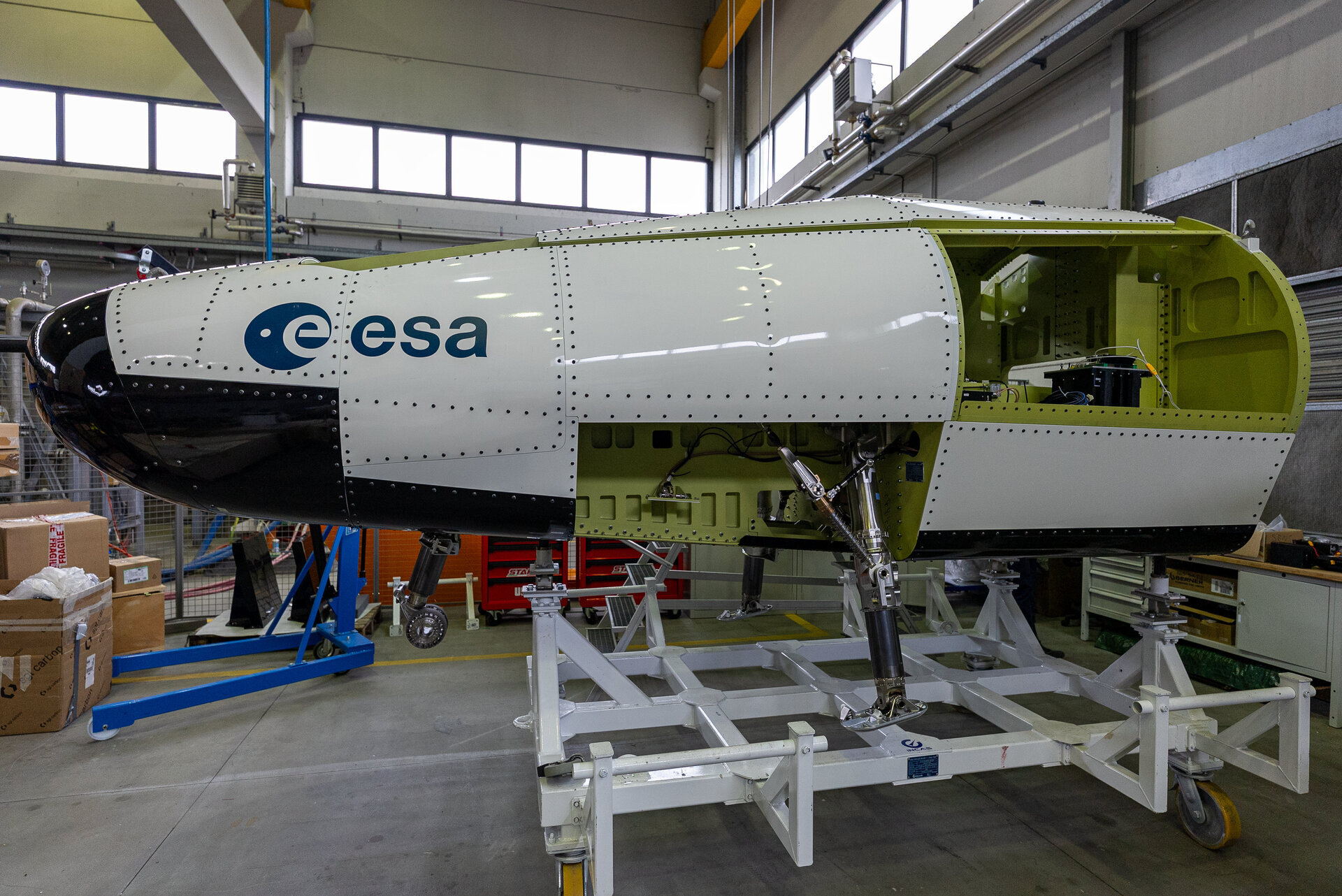
No operational spacecraft has ever been designed for a targeted landing with a parafoil, so extensive tests are being prepared. The drop-test model was built in Craiova, Romania, at Romania’s National Institute for Aerospace Research ‘Elie Carafoli’ (INCAS) before being shipped to the Italian Aerospace Research Centre (CIRA) in Capua, Italy. CIRA is responsible for the design, integration, and implementation of the drop test.

The avionics – Space Rider’s ‘brain’ – were installed in the second week of March. This computer hosts the Guidance, Navigation and Control algorithms that will steer the parafoil, adapting to the wind – including any gusts– to guide Space Rider to a soft landing.
Roughly the size of a mini-van, the drop-test model is a full-size stand-in for the 4.6-m long reentry module, Space Rider lands on skis with the landing gear permanently open on this model as the mechanism is not part of the drop test.
Perfectly folded
To complete the drop test model, the parafoil was folded and integrated. The enormous parafoil is 27 m long and 10 m wide – around 10 times larger than a human paraglider would need – as it needs to support Space Rider’s 2950 kg as it glides to Earth.

The intricate folding and integration took three weeks using a custom-built machine to press and pack the parachutes and parafoils – if the unfurling and deployment goes wrong during free-fall kilometres above Earth there will be no soft touchdown for Space Rider.
Two winches pull the parafoil’s steering lines that are completely controlled by the spacecraft’s avionics: no human’s involved.
“It is wonderful to see Space Rider reentry module taking shape like this, the teams have been working years on this project and although this is a test model, it looks and weighs much like the real thing,” says ESA’s Space Rider Space Segment manager Aldo Scaccia, “the teams cannot wait to put this model through its paces and see it model fly and glide.”
To test the final landing approach Space Rider will be dropped multiple times later this year from a helicopter flying up to 3 km altitude over the test range of Salto di Quirra in Sardinia, Italy.
Thales Alenia Space Italy is the industrial lead for the tests and co-prime together with Avio for the Space Rider Programme.


Access the video
Plasma-hot Space Rider tests for belly and flaps
In-depth
Space Rider is set to be the first reusable European spacecraft. The uncrewed robotic laboratory will stay in low orbit for about two months. Space Rider’s cargo bay will allow for all manner of experiments and operations to be run. At the end of its missions, the reentry module will return to Earth, landing through an automated parafoil glide.
Any spacecraft returning from Earth hits our atmosphere at speeds of over 27 000 km/h. At these speeds the particles in our upper atmosphere hit spacecraft so intensely that heat from friction builds up – the gases become ionised and all spacecraft are enveloped in a burning ball of plasma with temperatures easily exceeding 1600 °C.
Ceramic tile testing

Spacecraft that return to Earth – such as Space Rider – have to protect themselves from these intense temperatures, and Space Rider uses reusable ceramic tiles on its belly and nose to insulate from the heat.
Space Rider has 21 tiles, made in ISiComp, a ceramic material developed by the Italian Aerospace Research Centre (CIRA) and Petroceramics, that form lightweight and resilient skin. The tiles were first put to the test in February when they were subjected to the severe vibrations generated by the Vega-C rocket’s powerful engines, simulated on a 200 kN shaker.
Flaps for hypersonic heated control

Space Rider’s reentry module is unique as it can generate lift like an aircraft and target a precise landing point – but instead of wings Space Rider’s body itself provides lift.
The Space Rider reentry module has two flaps to steer the spacecraft during reentry, weighing just 10 kg and at just 90 x 70 cm they steer the 3000 kg module as it flies into Earth’s atmosphere at hypersonic speeds. Made of the same ISiComp ceramic material the thermal protection is fixed with titanium alloy supports printed in additive layers. They are controlled by the spaceraft’s avionics “brain”.
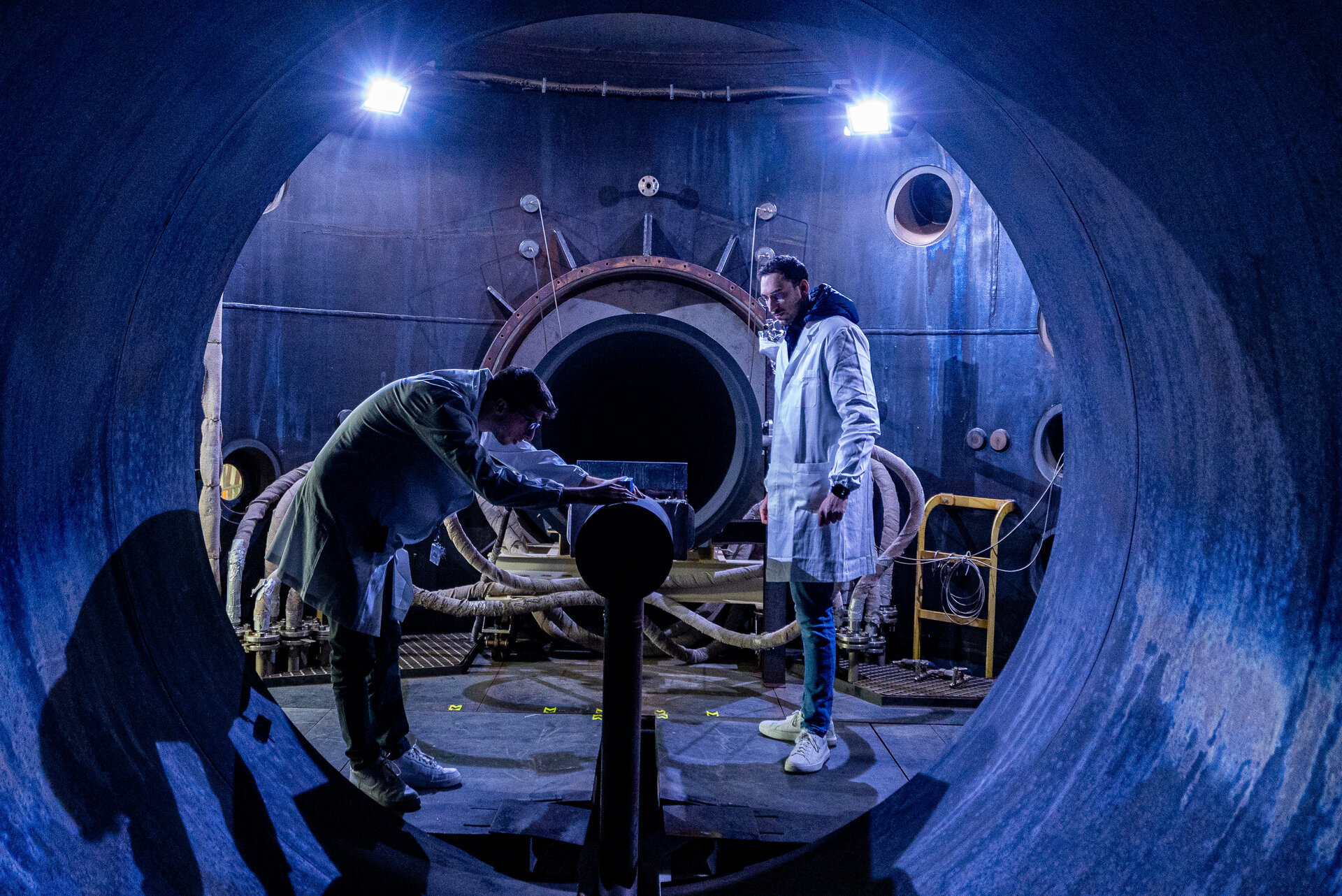
To test the flaps as if they were in flight, CIRA subjected them to their plasma wind tunnel, the world’s largest. The flaps were hit with an arc jet of gas bombarding them at ten times the speed of sound.
Space Rider has been acing its tests so far, even surviving the conditions of reentry with a purposefully damaged tile – just in case Space Rider were to be hit by a micro-meterorite while in orbit.
More tests await Space Rider’s thermal protection system and guidance system before they are qualified for spaceflight – and reentry.
Access the video
Europe's 1st reusable spacecraft 'Space Rider' clears key hurdles on the road to launch
The full-scale test article will simulate the final landing phase of ESA's first reusable spacecraft.
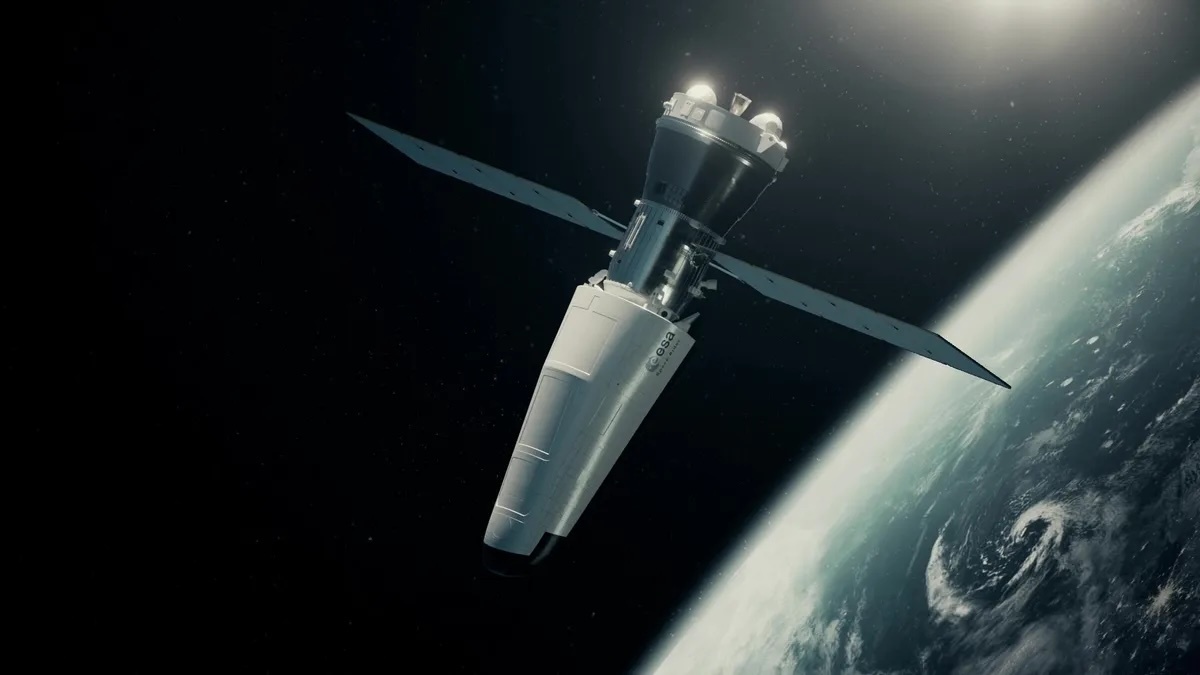
Render of ESA's Space Rider orbiter. (Image credit: European Space Agency)
Before Europe's new spacecraft design can lift off on its first mission, the European Space Agency must first test the hardest parts of bringing it home.
Space Rider, a novel spacecraft concept from the European Space Agency (ESA), is advancing toward its first flight, with new milestones tackling two of the vehicle's biggest challenges: surviving the heat of reentry and executing a precise landing back on Earth.
Engineers recently pushed the spacecraft's thermal protection system to extreme conditions while also completing assembly of a full-size drop-test model that will soon undergo a guided landing attempt. Together, the progress marks a shift from component-level validation toward mission simulation, as Europe moves closer to flying its first reusable orbital vehicle later this decade.
Space Rider is designed as an uncrewed laboratory that can stay in low Earth orbit for about two months before returning experiments and cargo to Earth. It can support microgravity research, technology demonstrations and on-orbit validation work, with the ability to return its contents for analysis back on the ground.
Instead of splashing down or drifting under parachutes, the vehicle uses a lifting-body design (without wings) and will land under a steerable parafoil for a runway-style touchdown — a flight system unlike any that has matured to operability on a spacecraft to date. It's a design meant to allow for more precise landing predictions and faster recovery.
The minivan-sized drop model includes the spacecraft's avionics system, which can autonomously control the parafoil once deployed. It carries onboard guidance, navigation and control software that will actively steer the descent during each drop, reacting to wind and changing conditions in real time.
ESA plans to conduct multiple helicopter drop tests over theSalto di Quirra range, on the Italian island of Sardinia, later this year, releasing the model from altitude and tracking its full descent profile. The campaign will not replicate orbital reentry, but it will target the final phase of flight — the portion most directly tied to recovery and reuse.
To reach that point on an actual mission, though, Space Rider must also survive atmospheric reentry, which is why ESA also recently completed plasma wind tunnel testing of the vehicle's thermal protection system, exposing materials to temperatures around 2,900 degrees Fahrenheit (1,600 degrees Celsius).
The spacecraft's unique lifting-body shape features 21 tiles on its underside and control flaps that are made of "ISiComp," a ceramic material developed by the Italian Aerospace Research Centre (CIRA) and Petroceramics.
To test the thermal system under flight conditions, CIRA used its own in-house plasma wind tunnel — the largest in the world — to bombard the components with a jet of gas blasted at 10 times the speed of sound.
Separate tests examined how the thermal protection system performs when its surface is damaged, simulating impacts from debris or micrometeoroids. To do this, engineers introduced defects into the material and then exposed it to reentry-like conditions inside the plasma tunnel to better understand how the system functions under off-nominal conditions.
The prototype "has been acing its tests so far," according to an ESA statement on April 29.
"It is wonderful to see Space Rider reentry module taking shape like this; the teams have been working years on this project," said Aldo Scaccia, ESA's Space Rider Space Segment manager, in the statement.
Quelle: SC