
30.08.2026
Mercury’s Crust Formed by Extreme Volcanism
From tiny glass beads and a moon map to Mercury: A new study uses an indirect approach to determine the silicon dioxide content of Mercury’s surface.
To the point:
- Planetary Formation: Mercury’s crust likely formed from volcanic material that was more thoroughly melted than previously assumed.
- Silicon dioxide: New laboratory experiments and analyses of observational data reveal a surprisingly low proportion of silicon dioxide on Mercury’s surface.
- Mercury mission: More precise findings will be provided by the ESA/JAXA spacecraft BepiColombo, which will enter orbit around the planet in November of this year. Already next week, BepiColombo will be separated from the transport module.
- Geology from Space: The new study lays the groundwork for reliably determining the silicon dioxide content of Mercury’s surface based on infrared data from the probe.
The evolutionary histories of Earth and Mercury differ fundamentally. The smallest planet, closest to the Sun, likely began cooling early on, much like a setting pudding: As early as about one billion years after its formation, Mercury’s volcanic activity came to a halt, and a solid, continuous “rock skin” formed on the planet’s surface. Earth’s crust, on the other hand, is still in motion: volcanism and plate tectonics are constantly stirring up the “Earth pudding.” Exactly what Mercury’s unique volcanic past looked like and how it shaped its current appearance remains unclear. However, researchers can gain important clues from the composition of its surface.
In a new study, researchers from the Max Planck Institute for Solar System Research in Germany and the Universities of Münster and Göttingen, also Germany, have now determined the proportion of silicon dioxide on Mercury’s surface with greater accuracy than ever before. Their findings are published now in the journal Planetary Research, which, as a Diamond Open Access journal, is freely available to all interested readers. The study reveals a surprise: with a mass fraction of about 37 percent, silicon dioxide on Mercury is up to 25 percent less abundant than previously thought. On Earth, however, the compound consisting of one silicon atom and two oxygen atoms is virtually ubiquitous: in its pure form as sand, and in large quantities in all volcanic rocks such as basalt, andesite, and granite, which contain up to 75 percent silicon dioxide.
“Our findings suggest that the volcanic rocks on Mercury formed from more deeply melted mantle material than previously assumed,” said Christian Renggli, lead author of the new study and head of the “Experimental Laboratory Magma Ocean” research group at the MPS. Silicon dioxide gradually accumulates in the molten mantle of a young planet – that is, the layer beneath the solidified crust. This is because, as the mantle cools, the first rocks to form extract comparatively little silicon dioxide from the melt. The hot lava that wells up to the surface therefore becomes increasingly rich in silicon dioxide over time. If this compound is present in small amounts on the surface, it indicates high temperatures in the interior.
It is also possible that Mercury once had more silicon dioxide in its crust but gradually lost its oxygen.
From tiny glass beads to a map of the Moon…
It is difficult to make statements about the surface composition of Mercury. No lander has ever touched down on its surface; there are no rock samples from there. Researchers therefore have no choice but to infer its composition from remote sensing data – that is, from telescopes on Earth or from space probes. The infrared radiation from Mercury’s surface contains revealing information in this regard.
To make the infrared measurement data usable, the researchers’ first step took them into the laboratory. There, they produced tiny glass beads – only about half a millimeter in size – with precisely defined proportions of silicon dioxide and determined the exact properties of their infrared radiation. “The glass beads serve a similar function to calibration weights on a scale,” explains Iris Weber from the University of Münster. “Their weight is known precisely. They therefore allow us to correctly interpret the scale’s balance. Similarly, the glass beads allow us to draw the correct conclusions from the properties of the infrared radiation.”
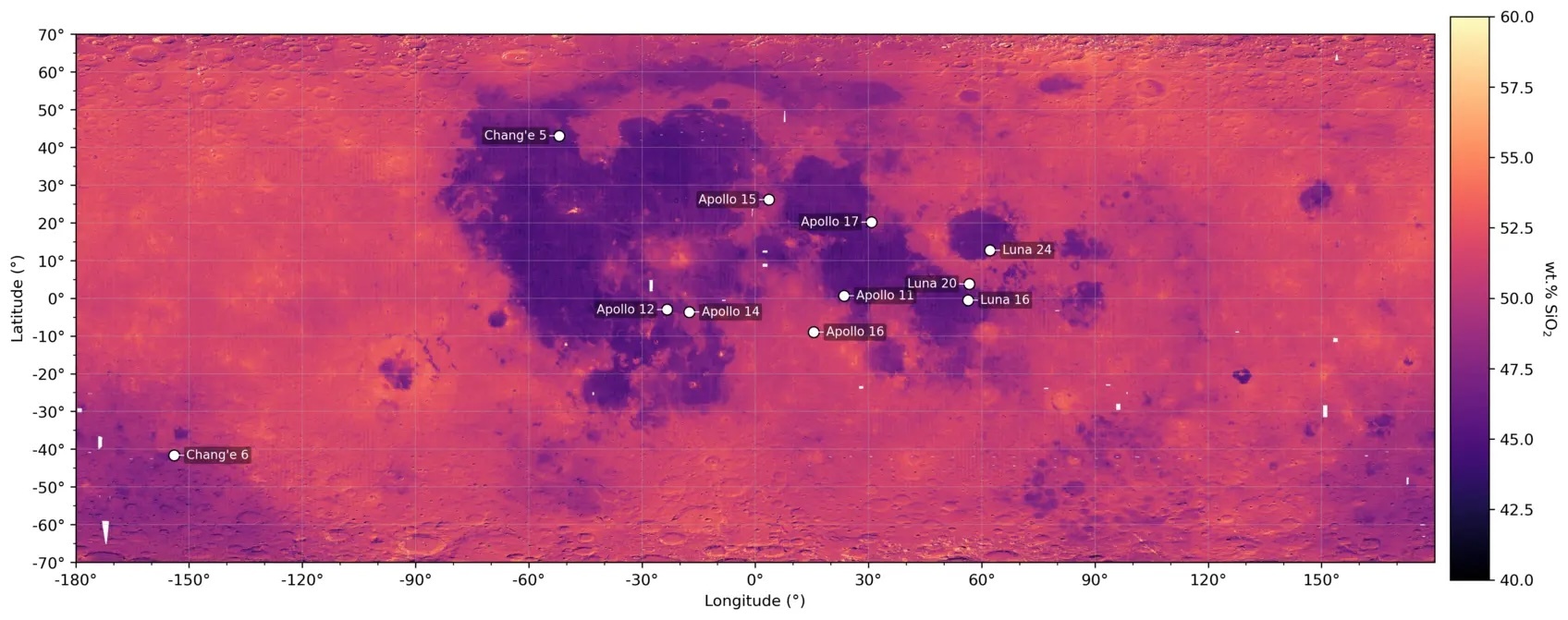
To be absolutely certain, the team tested its newly discovered calibration relationship between silicon dioxide content and infrared radiation in a second step on a natural – and significantly larger – object: the Moon. It offers ideal conditions for this: NASA’s Lunar Reconnaissance Orbiter has been orbiting the Moon since 2009 and has measured the infrared radiation emanating from its surface with high spatial resolution. From this data, the researchers were able to create the first complete map of the silicon dioxide content of the Moon’s surface. Rock samples brought back to Earth from various regions of the Moon’s surface as part of both astronautic and unmanned missions made it possible to verify the results.
…and on to Mercury
Only after successfully passing the “Moon test” did the researchers turn their attention to infrared data from Mercury in the third and final step of their investigation. Such data were collected, for example, at the Bok Telescope at Steward Observatory in the U.S. state of Arizona.
 " alt="BepiColombo approaching Mercury" data-src="/8793098/original-1787907946.jpg?t=ZXlKM2FXUjBhQ0k2TXpReExDSm1hV3hsWDJWNGRHVnVjMmx2YmlJNkltcHdaeUlzSW05aWFsOXBaQ0k2T0RjNU16QTVPSDA9LS1iYWFlYTJiNzk2MzdhYTc5Y2NiY2ZlZjJhNDhjODVjNzgzNmM0NDUx" />
The team now hopes to confirm the low silicon dioxide content of Mercury’s surface using data from the ESA’s BepiColombo mission. In November of this year, the spacecraft, consisting of two separatable probes provided by ESA and JAXA respectively, is scheduled to enter orbit around the small planet. The first step in this process – separating both probes from the transport module – is scheduled for next Thursday, September 3, 2026. BepiColombo’s MERTIS instrument, which was developed and built under the leadership of the DLR together with the Institute for Planetology at the University of Münster, will then record significantly more precise and higher-resolution infrared data. “Our study lays the groundwork for deriving the most accurate information possible about the silicon dioxide content of Mercury’s surface from BepiColombo’s measurements,” said Christian Renggli.
Quelle: Max-Planck-Gesellschaft
----
Update: 3.09.2026
.
2 spacecraft headed to Mercury are about to begin their long-awaited arrival for Europe and Japan — watch it live today
The BepiColombo mission's two science orbiters will separate from their transfer module at around 8 a.m. EDT on Thursday (Sept. 3).
The BepiColombo mission is finally getting ready to arrive at its exotic destination.
BepiColombo launched in October 2018 and took a long, looping and highly circuitous route toward Mercury our solar system's innermost planet. That journey is now nearly over, and the mission is gearing up for arrival.
BepiColombo's two science orbiters — one run by the European Space Agency (ESA) and the other by the Japan Aerospace Exploration Agency (JAXA) — will separate from their power and propulsion module on Thursday (Sept. 3) at around 8 a.m. EDT (1200 GMT). You can watch that milestone live here at Space.com, courtesy of ESA, starting at 7:45 a.m. EDT (1145 GMT).
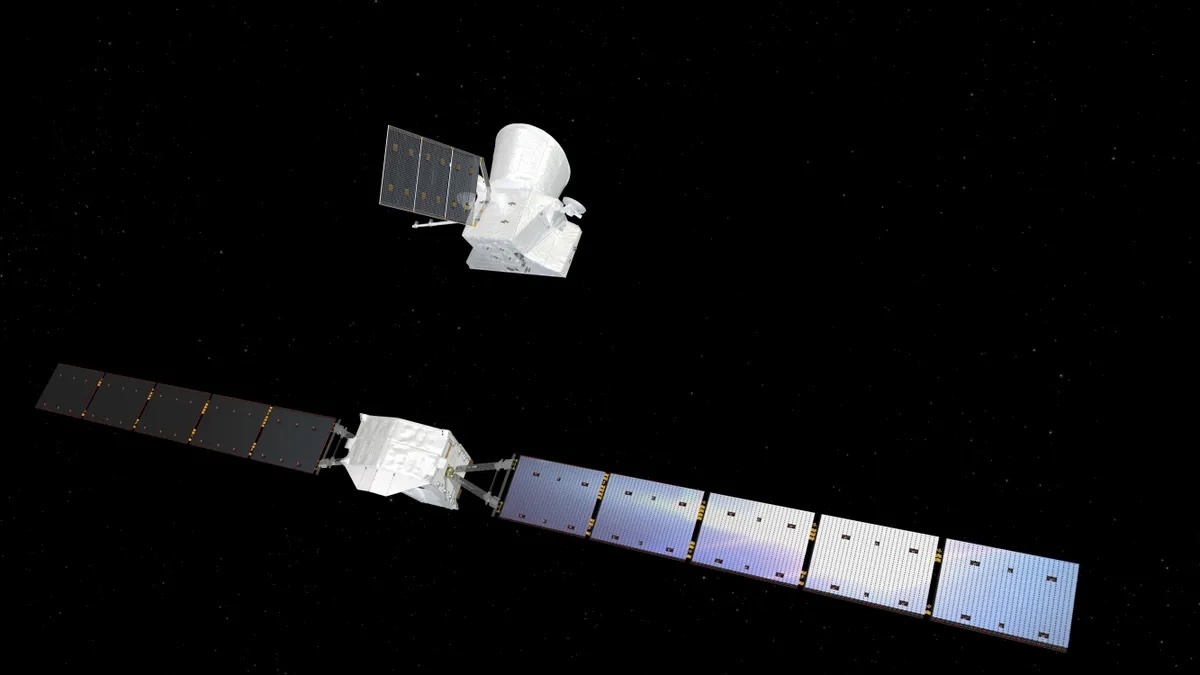
Artist's impression showing the Mercury Transfer Module (at bottom) separate from the BepiColombo Mercury Planetary Orbiter (MPO) and Mercury Magnetospheric Orbiter (MMO) composite spacecraft. (Image credit: ESA/ATG medialab)
ESA will pause the webcast at 8:30 a.m. EDT (1230 GMT), then resume it an hour later to cover the mission teams' acquisition of signals from the newly free-flying orbiters.
Those communications links are expected to be established no earlier than 9:53 a.m. EDT (1353 GMT), according to ESA officials. The webcast will chronicle that activity, as well as some spacecraft status checks, before ending between 10:15 and 10:45 a.m. EDT (1415 to 1445 GMT).
The separation is just the beginning of BepiColombo's Mercury-arrival phase. For example, the two science orbiters — ESA's Mercury Planetary Orbiter (MPO) and JAXA's Mercury Magnetospheric Orbiter (MMO, or Mio) — won't be captured by the planet's gravity until Nov. 21.
The duo will still be linked up on that date. If all goes according to plan, MPO will release Mio into its final orbit — a highly elliptical one that gets as close as 367 miles (590 kilometers) to Mercury and as far away as 7,233 miles (11,640 km) — on Dec. 9 or Dec. 10, then start moving toward its own designated path a week later.
MPO is scheduled to reach its final orbit — an ellipse with altitude extremes of 298 miles and 932 miles (480 by 1,500 km) on March 10, 2027. The science phase of the BepiColombo mission (which is named after Italian mathematician and engineer Giuseppe "Bepi" Colombo) will begin on April 6.
That science work — performed over the course of at least one Earth year — should be intriguing and rewarding. MPO will map Mercury and Mio will study its magnetosphere, working together to shed light on "the least explored planet in the inner solar system," ESA officials wrote in a BepiColombo mission description.
"Among several investigations, BepiColombo will make a complete map of Mercury at different wavelengths," they added. "It will chart the planet's mineralogy and elemental composition, determine whether the interior of the planet is molten or not, and investigate the extent and origin of Mercury’s magnetic field."
Quelle: SC
----
Update: 5.09.2026
.
2 spacecraft will soon reach Mercury after 8 years in space. Here's what BepiColombo can do
The tiny planet hides big mysteries that scientists can't wait to tackle.
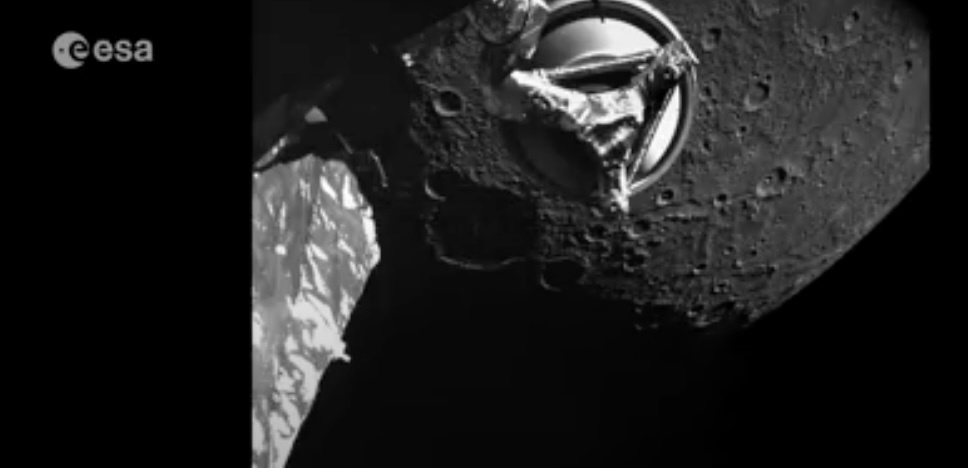
This image was taken by the BepiColombo mission on Jan. 8, 2025 as the spacecraft sped by Mercury for its sixth and final gravity assist at the planet. (Image credit: ESA/BepiColombo/MTM
Mercury, the tiniest and least-explored planet in the inner solar system, is hiding mysteries far larger than itself — and finally, scientists will soon be getting not one but two spacecraft designed to decode the strange world.
That's thanks to the BepiColombo mission, a joint project of the European Space Agency (ESA) and Japan Aerospace Exploration Agency (JAXA) that launched in October 2018. After a harrowing journey through the inner solar system, the mission is tackling a crucial maneuver on Thursday (Sept. 3): separating its science equipment from the transport that carried it all that way. By April 2027, scientists hope the mission's two instrument-heavy probes will be gathering a slew of observations that could help solve puzzles about Mercury — and maybe even the solar system we call home.
"I think being able to see new data come out about Mercury is going to be so fantastic," Rachel Klima, a planetary geologist at the Johns Hopkins University Applied Physics Laboratory, told Space.com. The planet, she says, is "just so weird and beautiful and interesting."
An enigmatic planet
For now, Mercury holds the dubious honor of being the least-explored planet in the inner solar system, visited by only two missions to date. NASA's Mariner 10 spacecraft made a trio of zippy flybys in 1974 and 1975, giving scientists their first glimpses of the planet's cracked and cratered surface, as well as confirming the world has both a very tenuous atmosphere and a magnetic field.
"It really gave us our first close-up view of Mercury," Sean Solomon, a planetary scientist at Columbia University, told Space.com. "But it left a lot of pages blank."
And for decades, that was it. Scientists didn't return to Mercury until 2011, when NASA's MESSENGER spacecraft, with Solomon as its principal investigator, arrived at the tiny world. (Mercury has a radius of 1,516 miles, or 2,440 kilometers, meaning its width is just over a third of Earth's.) The spacecraft was packed with tools tailored to the job, such as spectrometers tuned to gamma-rays, X-rays and neutrons, and instruments to sniff out the atmosphere and measure the magnetic field, and it was there to stay. Four years of observations with MESSENGER showed scientists Mercury's complete surface for the first time, and by late in its mission, the spacecraft was passing just 15.5 miles (24.9 km) above the planet's surface.
But even MESSENGER wasn't sophisticated enough to crack Mercury's puzzles or unveil the strange planet's beginnings. "I think the jury's still out on exactly how Mercury got assembled," Solomon said.
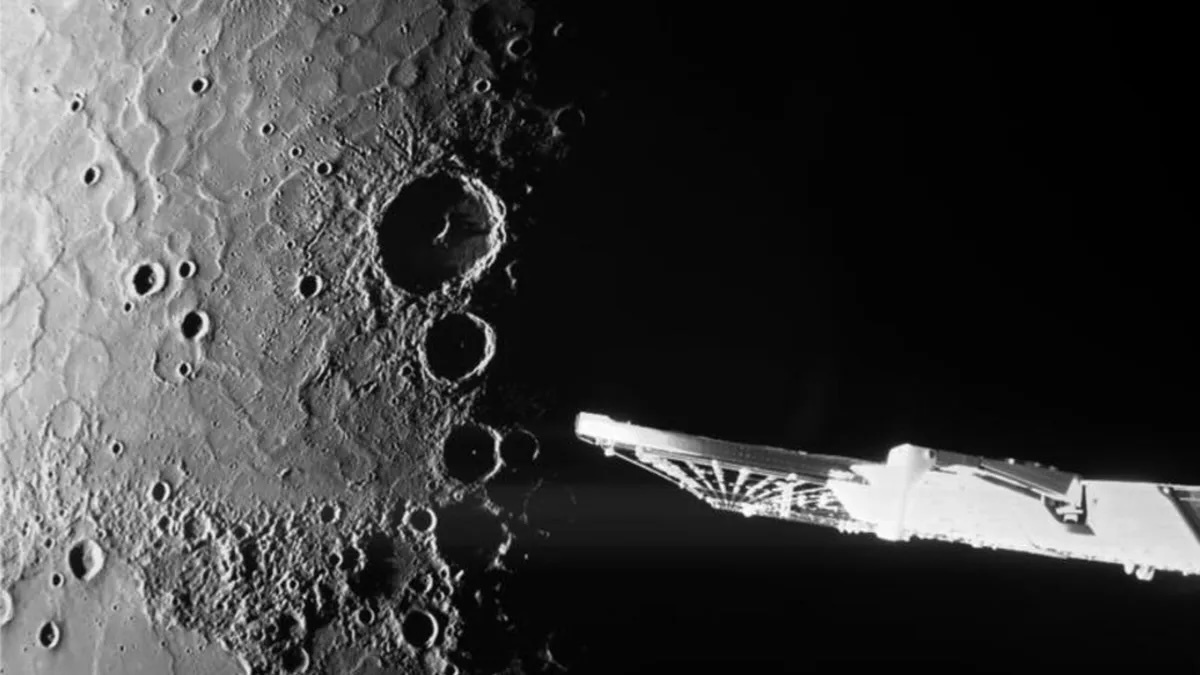
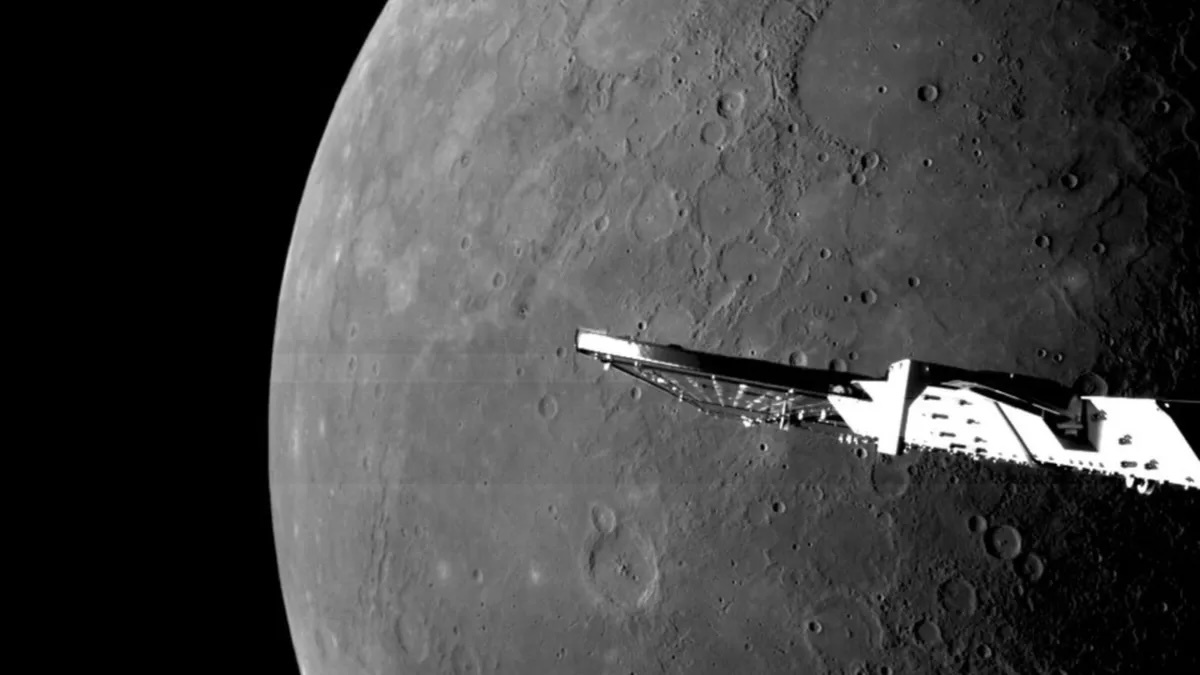
Flying over Mercury's north pole gave BepiColombo's monitoring camera 1 (M-CAM 1) a unique opportunity to peer down into the shadowy polar craters on Jan. 8, 2025. (Image credit: ESA/BepiColombo/MTM)
MESSENGER opened up some smaller mysteries, too. It discovered bright, steep-sided pits that scientists dubbed "hollows." It found a suite of elements — that planetary scientists call "volatiles" for their tendency to slip free of rock — somehow more prevalent in Mercury's surface than Earth's. It calculated that the center of the planet's magnetic field is wildly offset from the planet's core. Plus, MESSENGER's tricky orbit also meant the spacecraft never saw the southern half of the planet as sharply as the northern half, leaving one side shadowed in doubt.
The arrival of BepiColombo
It's these mysteries that the ambitious BepiColombo mission hopes to tackle. By April, if all goes well, the mission will consist of two separate spacecraft gathering independent but coordinated data about Mercury.
Europe's Mercury Planetary Orbiter, or MPO, will focus on the planet proper. It's packed with 11 science instruments that will map the terrain, minerals in the crust, and the gravity field, investigate the hollows and volcanic deposits, and observe how the barrage of charged particles from the sun affects this innermost planet.
Japan's Mercury Magnetospheric Orbiter, or Mio, meanwhile, will focus on the planet's surroundings — its magnetosphere and wispy atmosphere, as well as the dust cluttering up its neighborhood.
Both spacecraft also carry instruments to measure the planet's magnetic field, offering simultaneous observations of different parts of the field to scientists who typically make do with data gathered from just one location at a time.
In fact, some of these instruments have been able to gather observations during BepiColombo's long trek to Mercury and its six quick flybys of the planet so far. But because of how the spacecraft were configured for the journey, most of the instruments have not — and will not — get to work until after MPO and Mio have separated. That is expected to happen in December.
The mission's science, then, has begun only in dribbles, while the bulk of its promise still lies ahead. "There is a growing literature of new results that have come from the BepiColombo flybys, but I expect that will explode once they go into orbit," Solomon said.
He's especially excited to see the spacecraft's sharp views of the southern hemisphere, and particularly find hidden deposits of water ice across the area. These deposits would exist in deep craters that never feel the sun's heat. In examining this region of the planet, scientists will be able to reduce the northerly bias of MESSENGER's data and better see Mercury's complete picture.
Meanwhile, Klima is most eagerly awaiting MPO's work to map elements and minerals in the planet's surface. This work eluded MESSENGER, which used a technique that relied on these rocks being rich in iron and similar materials — but as it turned out, those elements were absent, leaving scientists stymied. MPO carries different technology that will be able to read rocks on the world even without iron, which Klima said could help reveal how Mercury — and our whole solar system, as a matter of fact — formed.
Klima says she hopes BepiColombo can get people excited about Mercury, the overlooked terrestrial planet of the solar system: "It certainly doesn't get the love and attention that Mars and Venus and everywhere else gets."
Quelle: Space.com
+++
Latest updates: BepiColombo's arrival at Mercury
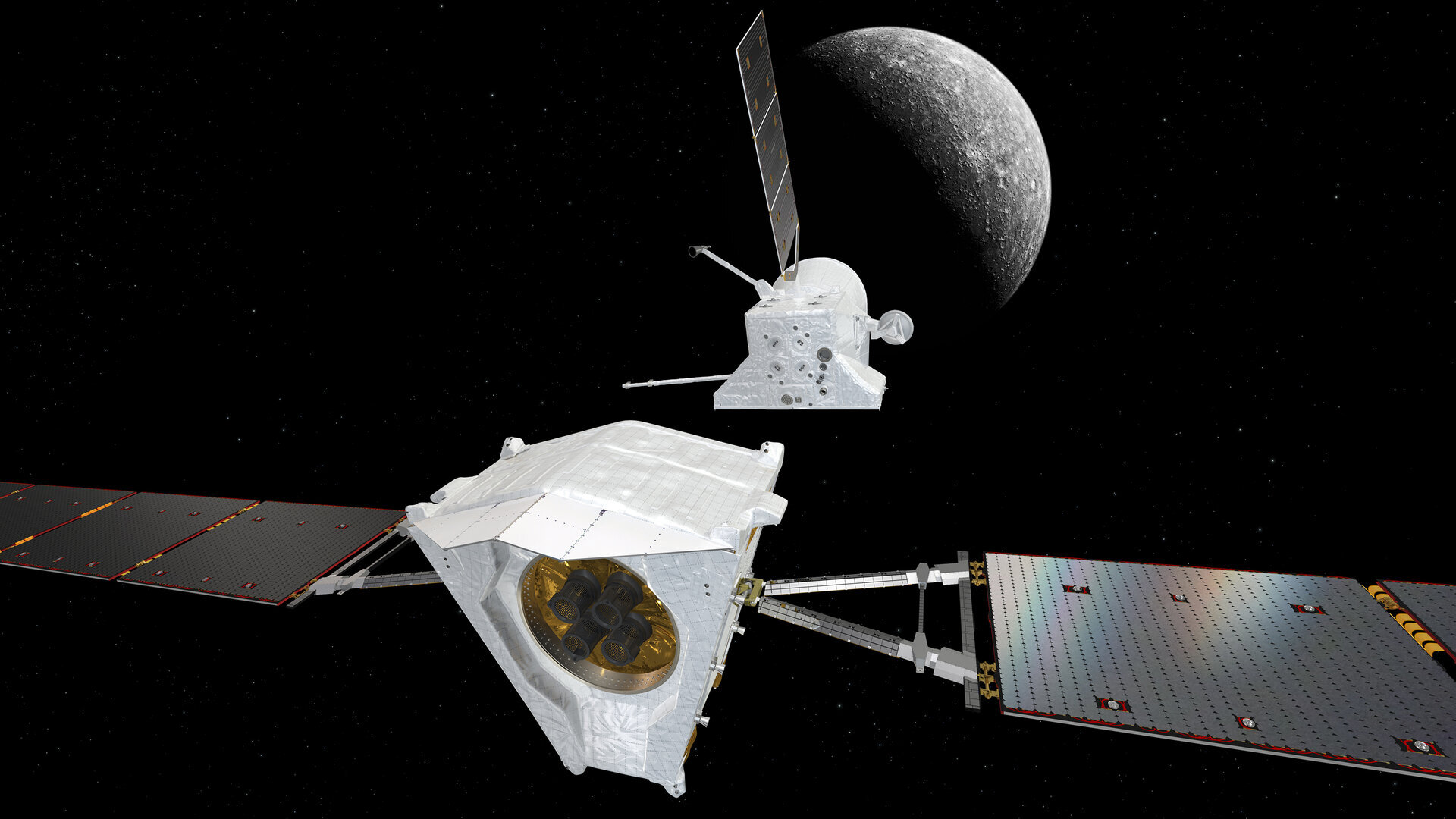
After eight years of travelling through the inner Solar System, BepiColombo is arriving at Mercury. This page will show the latest updates throughout the mission's arrival.
BepiColombo is a world-class science mission led by the European Space Agency (ESA) in close collaboration with the Japan Aerospace Exploration Agency (JAXA). It will be the first mission to orbit Mercury with two spacecraft, with ESA’s Mercury Planetary Orbiter (MPO) and JAXA’s Mercury Magnetospheric Orbiter (Mio) orbiting the planet at the same time.
The 'arrival phase' begins with the separation of the Mercury Transfer Module (MTM) from the spacecraft stack on 3 September 2026. The composite spacecraft will enter orbit around Mercury on 21 November 2026, and MPO and Mio will separate from each other on 9–10 December 2026. The mission’s science phase is set to begin in April 2027.
3 September 2026
14:52 BST / 15:52 CEST
Acquisition of signal via two Estrack deep space antennas, in Cebreros (Spain) and Malargüe (Argentina), have confirmed the successful separation of BepiColombo's Mercury Transfer Module (MTM) from the spacecraft stack. Current telemetry indicates all systems are nominal, and MPO's solar panels are charging the spacecraft's batteries.
Behind today's success are years of preparation by teams across the BepiColombo mission. Executing a critical separation more than 200 million kilometres from Earth demands precise planning, navigation and commanding, with no opportunity for real-time intervention.
After nearly eight years in space and billions of kilometres travelled, BepiColombo's two science orbiters, ESA's MPO and JAXA's Mio, are now on their way towards orbit insertion around Mercury. MPO will power the spacecraft stack until Mio separates on 9–10 December 2026.
13:41 BST / 14:41 CEST
We have detected the preliminary Doppler signal indicating that MTM has separated from the BepiColombo spacecraft stack. The Doppler signal is a variation in the radio frequency established between Earth and the spacecraft. When the spacecraft changes velocity, the frequency of the signal changes. It is the same principle that makes us hear a change in pitch in the siren sound when an ambulance moves towards us or away from us.
The initial Doppler signal is consistent with the planned MTM separation sequence. For full confirmation of the separation being successful, we're awaiting a signal from the MPO spacecraft at around 14:53 BST / 15:53 CEST.
13:00 BST / 14:00 CEST
BepiColombo's Mercury Transfer Module should have now separated from the spacecraft, a key step in the mission's journey towards orbiting Mercury. Now expecting acquisition of signal confirming separation no earlier than 14:53 BST / 15:53 CEST.
12:45 BST / 13:45 CEST
ESA's livestream has started! You can watch it here.
Information about ESA's livestream
11:03 BST / 12:03 CEST
"Roll call completed, GO for separation" – the Mission Control Team has the green light to proceed with BepiColombo's MTM separation. The spacecraft is checked and configured, the ground stations are prepared, and the team at ESA’s European Space Operations Centre (ESOC) is ready.
Quelle: ESA
----
Update: 11.09.2026
.
BepiColombo measured Mercury's particle bombardment up close
The results help assess the impact of space storms on Mercury's surface and on Earth's atmosphere. These are the first Mercury results from the SIXS instrument, which was designed and built in Finland.
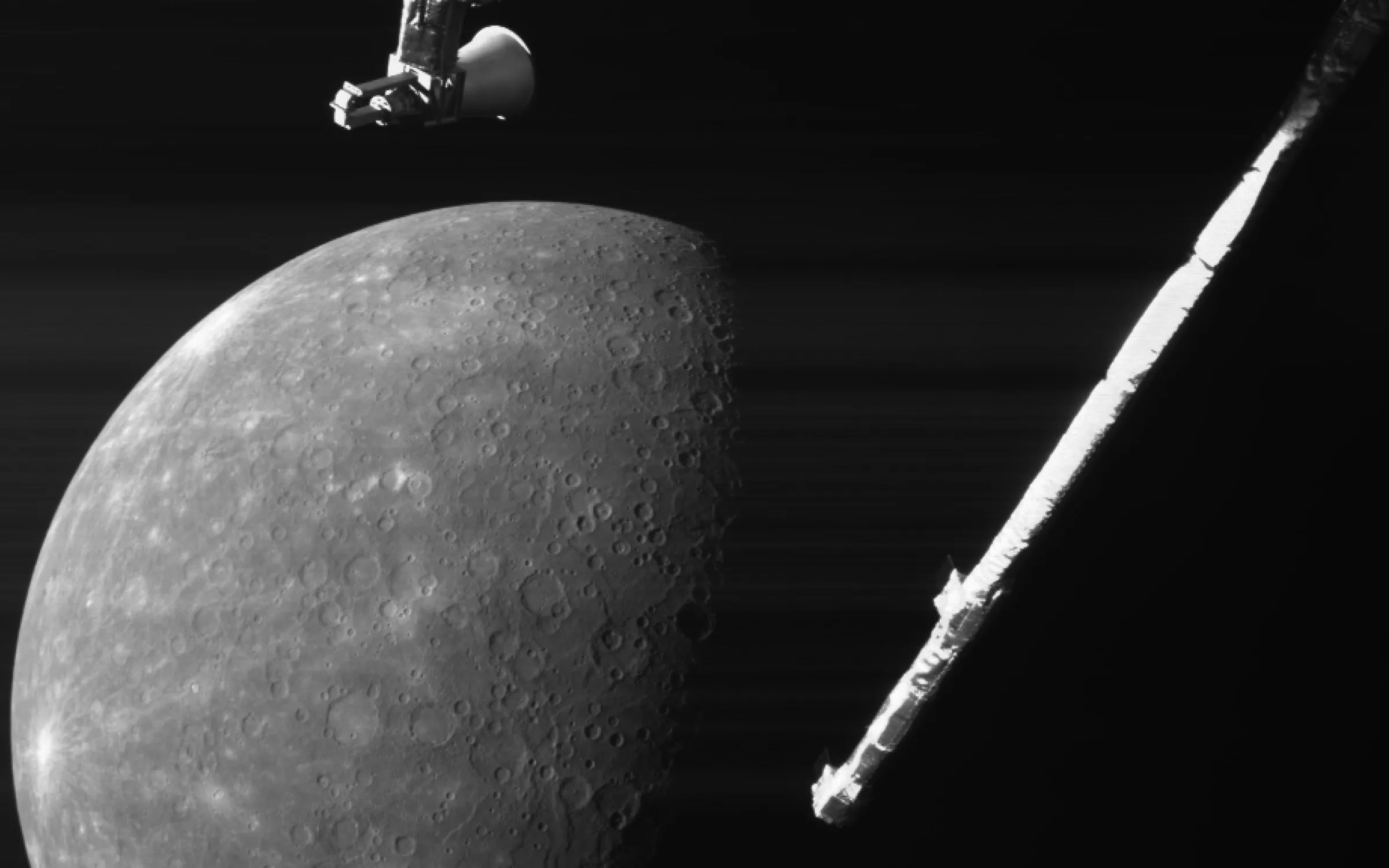
BepiColombo photographed Mercurius during a flyby on 4th of September 2024. (Image: ESA)
The joint BepiColombo missionOpens in a new tab of the European Space Agency (ESA) and the Japan Aerospace Exploration Agency (JAXA) is settling into orbit around Mercury after an eight-year journey. In early September, BepiColombo's two orbiters, the Mercury Planetary Orbiter and the Mercury Magnetospheric Orbiter, separated from the transfer module. The orbiters will enter Mercury's orbit in November and separate from each other in December.
During its eight-year journey, the spacecraft has already flown past Mercury at close range six times. During its fourth flyby in September 2024, BepiColombo came remarkably close to the surface, at a distance of just 165 kilometers. During the flyby, electrons and protons accelerated by a solar eruption bombarded the planet.The SIXS particle and X-ray detectorOpens in a new tab, designed and built in Finland for BepiColombo, detected how these particles penetrated the planet's magnetic field and rained down onto its surface.
What the particles reveal about the surface
These measurements from the SIXS instrument have now been published in the prestigious Nature Astronomy journalOpens in a new tab.
"The fourth flyby was truly unique," says Emilia Kilpua, principal investigator of SIXS and professor of space physics at the University of Helsinki.
"The spacecraft came much closer to the surface than it will be on its final orbit, and we were lucky that a major particle eruption occurred on the Sun at exactly that moment."
SIXS revealed that during such an eruption, a large number of highly energetic particles reach Mercury's surface across a wide area. The planet has no significant atmosphere to protect it.
The high-energy particles that rain down on the surface knock atoms and molecules loose from Mercury's surface and generate X-ray radiation. These processes provide insights into Mercury's surface composition and how the planet has evolved. When in orbit, several instruments can study these processes together.
Helping predict space weather at Earth
"Mercury's magnetic field is weaker than Earth's, and its magnetosphere is much smaller than Earth's," says Rami Vainio, co-Principal Investigator (co-PI) of SIXS and professor of space physics at the University of Turku.
The conditions at Mercury resemble those that would occur on Earth when a powerful solar storm compresses its magnetosphere.
"SIXS's observations help us assess how destructive particle radiation would penetrate Earth's near-space environment and atmosphere during the most powerful space storms," Vainio says. The SIXS observations will also be used inthe Center of Excellence in Space Resilience (2026–2033), funded by the Research Council of Finland, in which Kilpua's and Vainio's research groups participate.
BepiColombo Mission
BepiColombo is a joint mission of the European and Japanese space agencies. The spacecraft was launched in October 2018. SIXS, designed and built in Finland, measures X-ray radiation and high-energy particles from the Sun. Finland is also strongly involved in the MIXS instrument, which measures X-ray radiation coming from Mercury's surface. In total, BepiColombo's two orbiters carry 16 scientific instruments.
Mercury is the planet closest to the Sun, making it exceptionally strongly affected by solar activity. BepiColombo is only the third spacecraft to study Mercury at close range, and Europe's first mission to the planet. Previously, only two American spacecraft, Mariner 10 and MESSENGER, have studied the planet..
Quelle: University of Helsinki