
29.08.2026
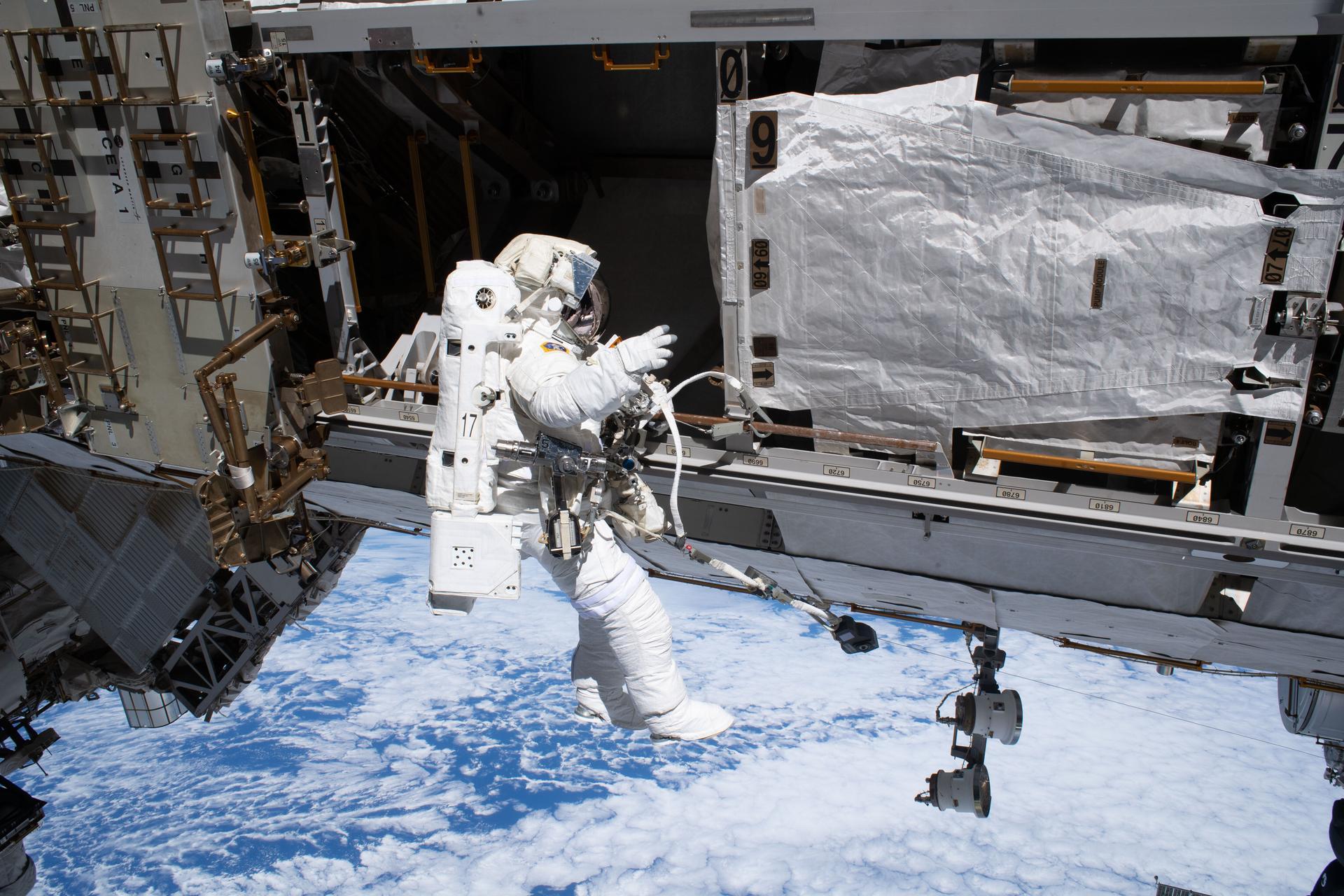
Preparations are ongoing for a spacewalk next week to continue external maintenance on the International Space Station. The Expedition 75 residents are also keeping up biomedical research while maintaining orbital outpost systems. Also, a U.S. cargo craft fired it thrusters on Thursday boosting the station’s orbit.
Flight engineer Sophie Adenot of ESA (European Space Agency) and station commander Jessica Meir of NASA are studying the procedures they will use when they conduct a spacewalk scheduled for 7:30 a.m. EDT on Tuesday, Sept. 1. Adenot and Meir will spend about six-and-a-half hours in the vacuum of space replacing a spacecraft navigational aid, preparing a cosmic particle detector for future upgrades, installing jumper cables to boost data-relay systems, and other tasks.
The astronauts joined NASA flight engineers Anil Menon and Jack Hathaway during the procedure reviews on Thursday and called down to mission controllers to discuss details and answer questions for next week’s spacewalk. Menon, along with his three crewmates, also studied the Canadarm2 robotic arm procedures he will use to maneuver Meir as she conducts her spacewalking tasks.
Life science was booked into the crew’s schedule on Thursday helping doctors continuously monitor crew health to detect potential space-caused issues and ensure a successful long-duration spaceflight. Meir scanned Menon’s jugular veins using the Ultrasound 3 device and measured his blood pressure as researchers on the ground monitored in real time. Adenot exercised wearing the EasyMotion-2 suit that sends electrical impulses and triggers muscle contractions to supplement a space workout. Hathaway took inventory of medical supply kits inside the Human Research Facility-1 and Human Research Facility-2 racks.
Roscosmos cosmonaut Anna Kikina wrapped up a 24-hour monitoring session and removed electrodes that tracked her heart rate and blood pressure while she worked and slept. Flight engineer Pyotr Dubrov spent his shift on life support maintenance replacing components inside the Vozdukh carbon dioxide removal device. Flight engineer Andrey Fedyaev started his shift on computer hardware and firmware updates. At the end of the day, Meir joined Fedyaev and scanned his veins with the Ultrasound 3 for more insight into microgravity’s effect on blood flow.
Northrop Grumman’s Cygnus XL cargo spacecraft fired its thrusters for 20 minutes, 43 seconds today while berthed to the Unity module lifting the International Space Station’s orbit. The orbital reboost places the orbiting lab at the correct altitude for the rendezvous and docking of the Progress 96 resupply ship due to launch in early September.
Learn more about station activities by following the space station blog, @space_station on X, as well as the ISS Facebook and ISS Instagram accounts.
Quelle: NASA
+++
NASA, Northrop Grumman Complete Cygnus XL Space Station Reboost
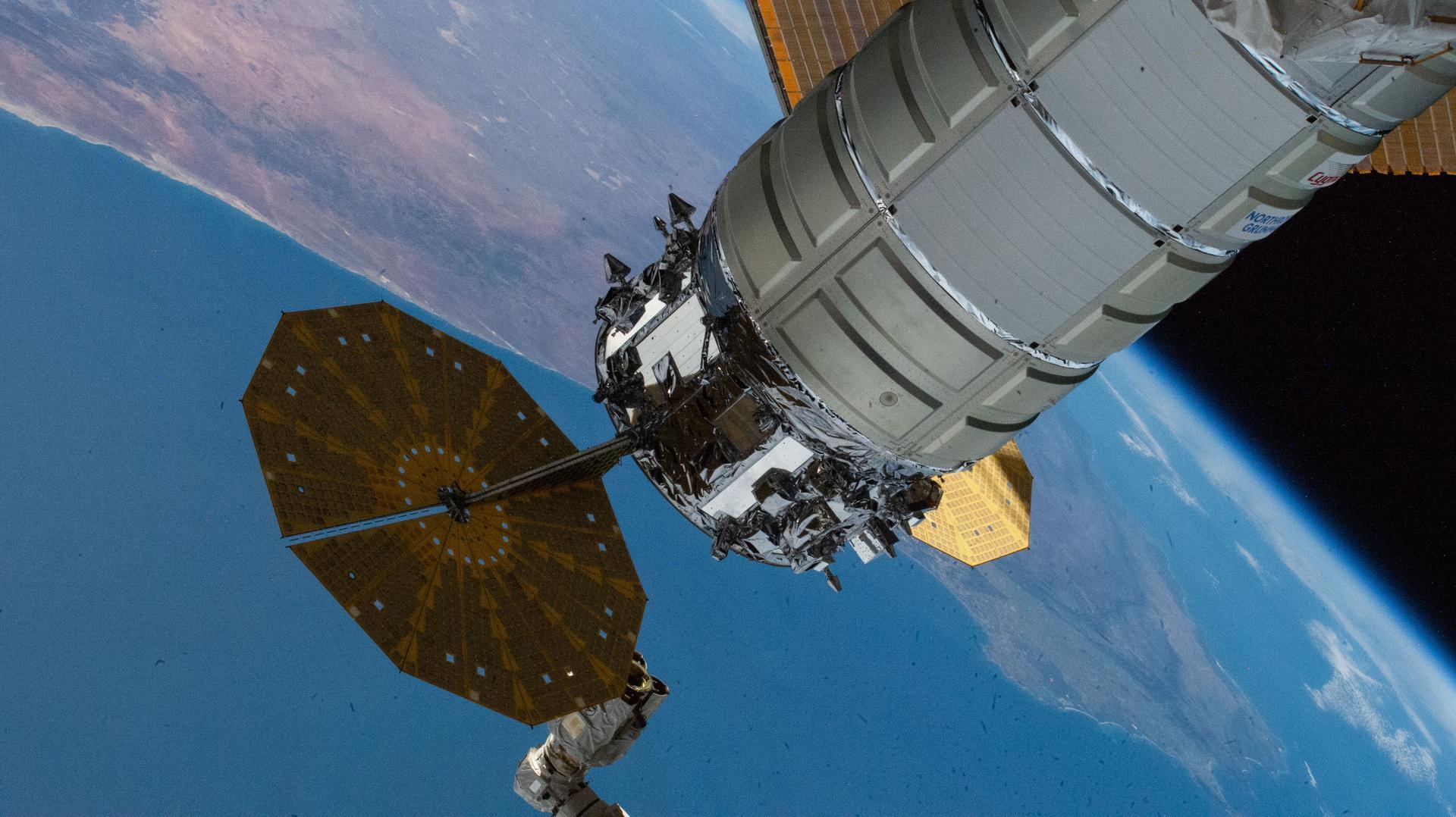
Northrop Grumman’s Cygnus XL spacecraft today fired its thrusters for 20 mins, 43 seconds boosting the International Space Station’s orbit.
The Cygnus XL’s gimbaled delta velocity engine was used to adjust the space station’s altitude by 2/10-of-a-mile at apogee, or highest point of station’s orbit, and 2.6 miles at perigee, or lowest point of station’s orbit, placing the station in an orbit of 266.5 x 254.9 miles.
The Cygnus XL spacecraft, which is supporting NASA’s Northrop Grumman Commercial Resupply Services 24 mission, arrived at the orbital complex on April 13, delivering more than 11,000 pounds of science and supplies to the space station. Cygnus will remain berthed to space station until October when it will be filled with disposal cargo, unberthed from station, and then harmlessly burn up during its destructive reentry into Earth’s atmosphere.
This reboost sets up the phasing for Progress 96 launch in early September.
Quelle: NASA