
2.08.2026
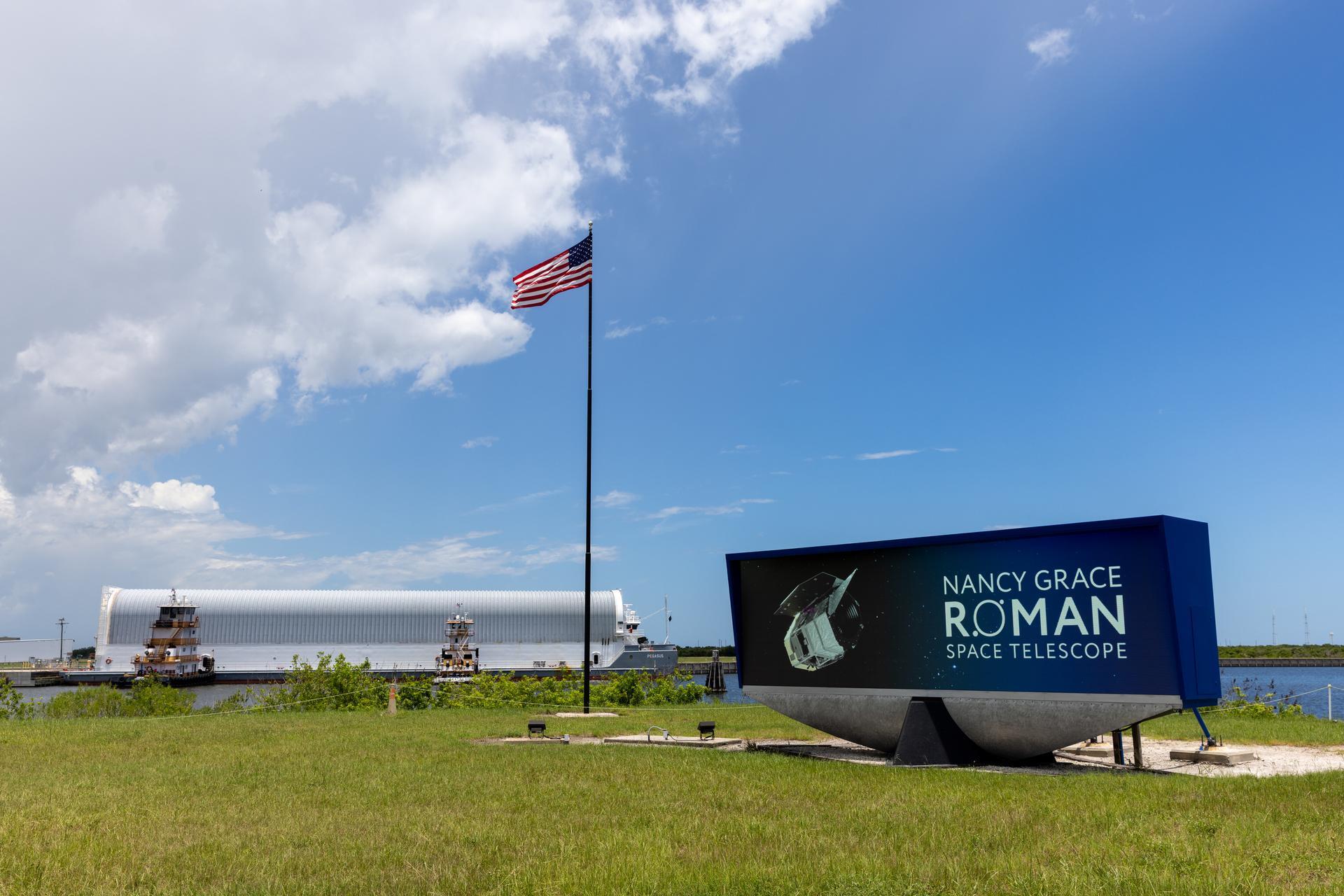
NASA’s Roman Telescope to Carry 1.35 Million Names to Deep Space
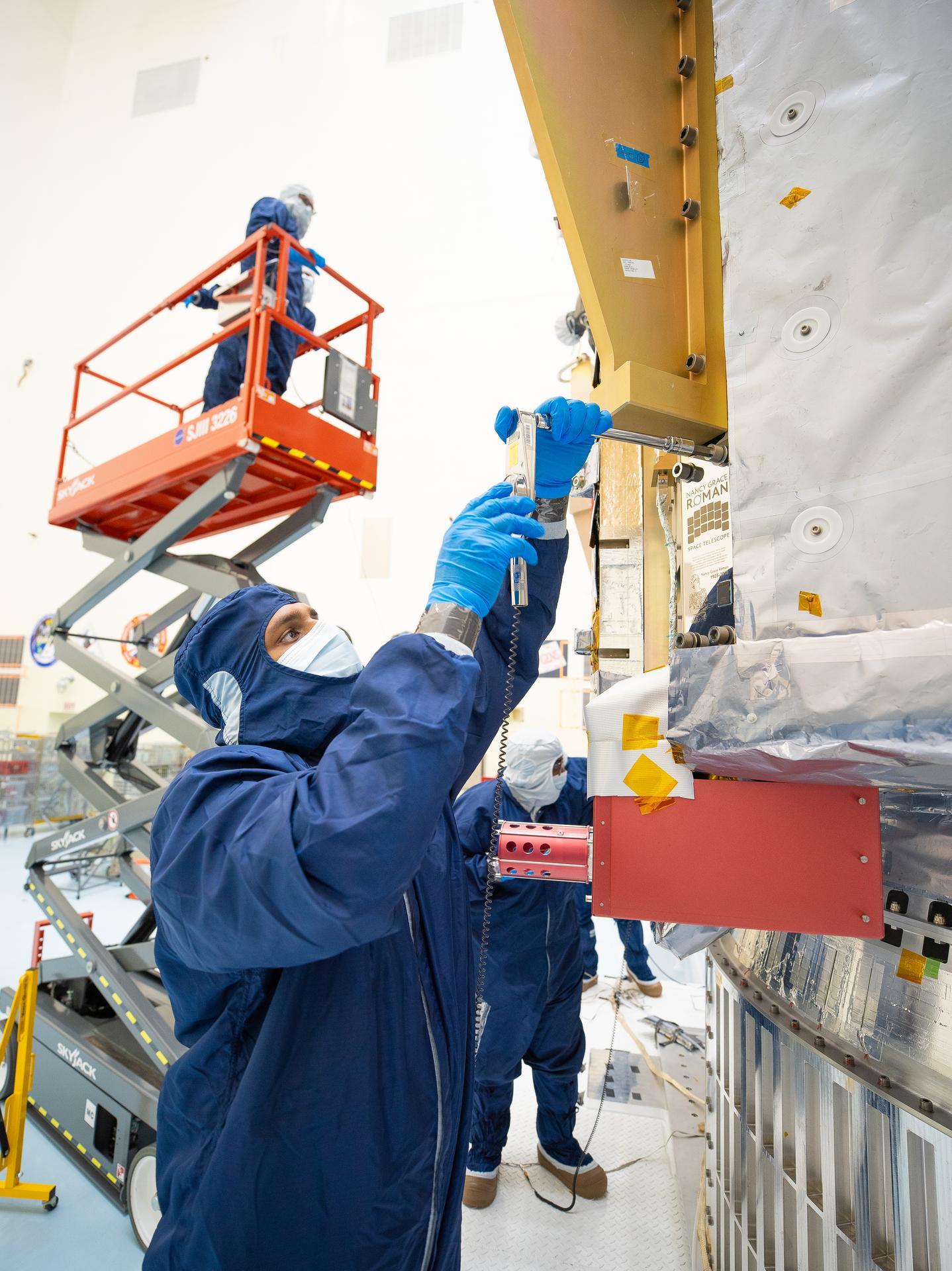
On July 27, technicians at NASA’s Kennedy Space Center in Florida installed a memory card containing 1,350,144 names as part of a commemorative plaque on the Nancy Grace Roman Space Telescope. The names were submitted by people globally, including astronauts from Artemis II and Artemis III. The memory card will travel with the Roman observatory to the Sun-Earth Lagrange point 2, or L2, about one million miles from Earth, where the Sun’s and Earth’s gravity balance out.
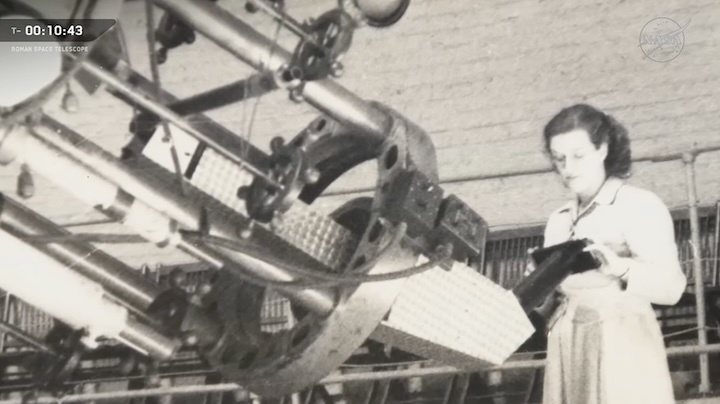
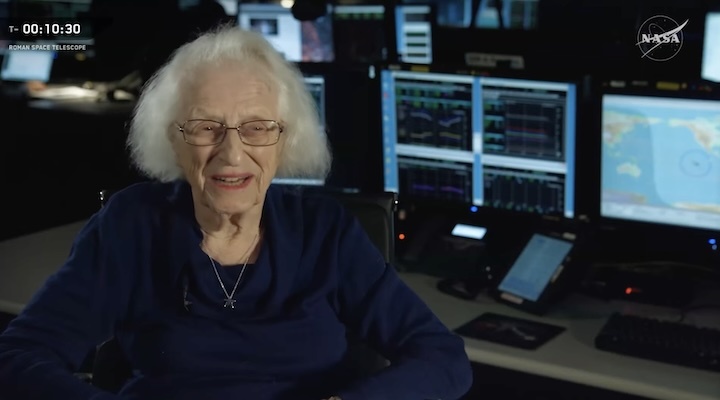
Roman is named after Dr. Nancy Grace Roman, NASA’s first chief astronomer and one of the architects of the agency’s modern science program. Roman championed space-based observatories that could study the universe from above Earth’s hazy atmosphere while making their data broadly available to the scientific community.
NASA and SpaceX are targeting launch for no earlier than 7:26 a.m. EDT Sunday, Aug. 30 aboard a SpaceX Falcon Heavy from Launch Complex 39A at Kennedy.
Quelle: NASA
----
Update: 22.08.2026
.
Launch Dress Rehearsal Complete Ahead of NASA Roman Space Telescope Liftoff
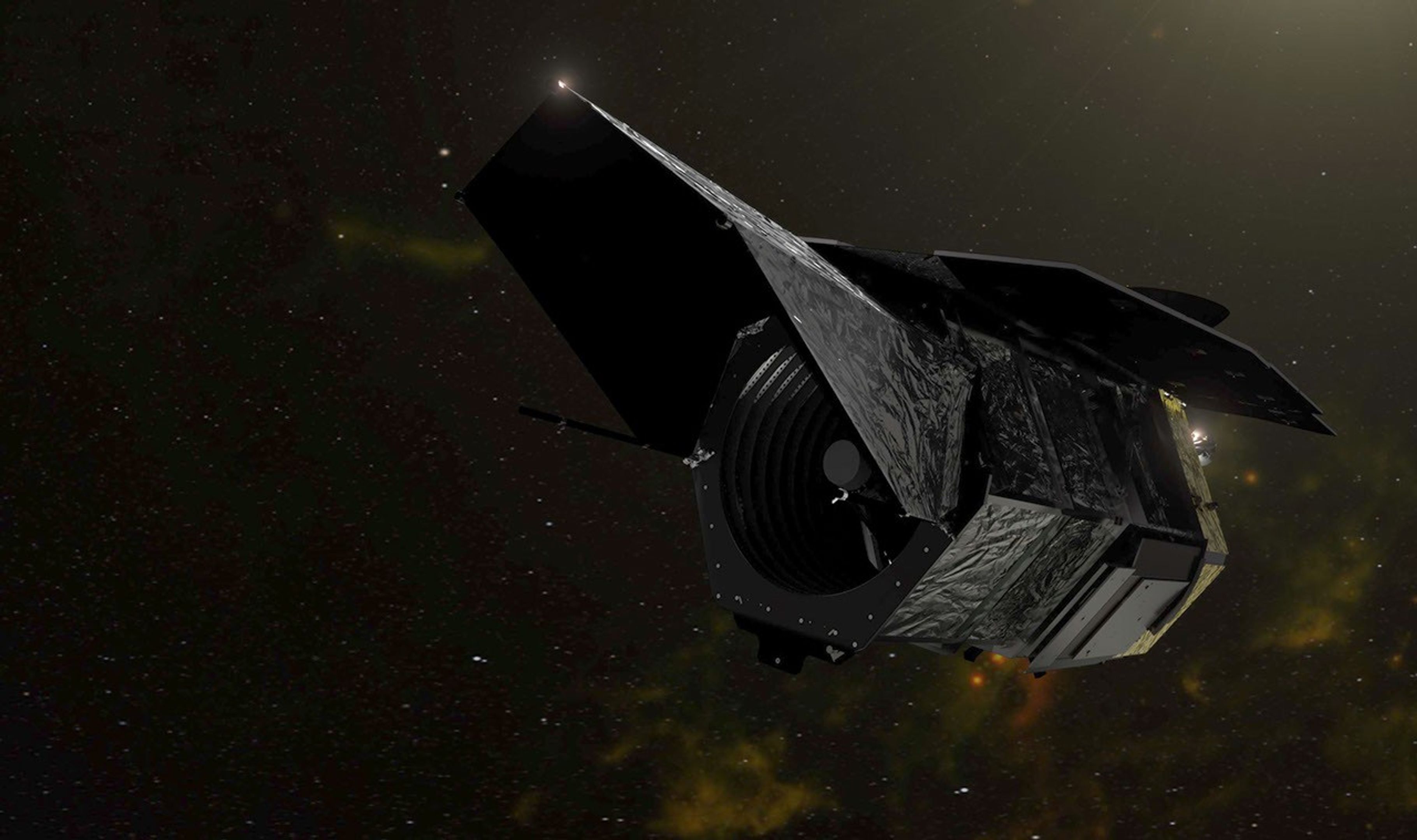
Nancy Grace Roman Space Telescope Illustration
The team preparing to launch NASA’s Nancy Grace Roman Space Telescope completed a mission dress rehearsal on Thursday from Florida’s space coast.
During the exercise, Roman teams ran through a full end-to-end simulation of launch-day operations leading up to liftoff. They practiced powering up the spacecraft, simulated fueling operations for the SpaceX Falcon Heavy rocket, conducted mock weather briefings, and practiced troubleshooting a variety of scenarios.
This rehearsal is a standard part of preparation and contributes to mission success, especially since NASA missions often involve unique requirements specific to a given spacecraft. During the simulation, the team was on console at NASA and SpaceX facilities at Cape Canaveral Space Force Station and at SpaceX facilities at the agency’s Kennedy Space Center, where they tested and demonstrated proficiency on everything from communications to mission systems.
Completing the rehearsal brings the team one step closer to sending Roman on its mission to address essential questions about dark energy, planets outside our solar system, and infrared astrophysics. By conducting wide-field surveys, the telescope will explore the universe’s structure, evolution, and composition.
NASA and SpaceX are targeting launch no earlier than 7:26 a.m. EDT on Sunday, Aug. 30, from Launch Complex 39A at Kennedy aboard a SpaceX Falcon Heavy.
Quelle: NASA
+++
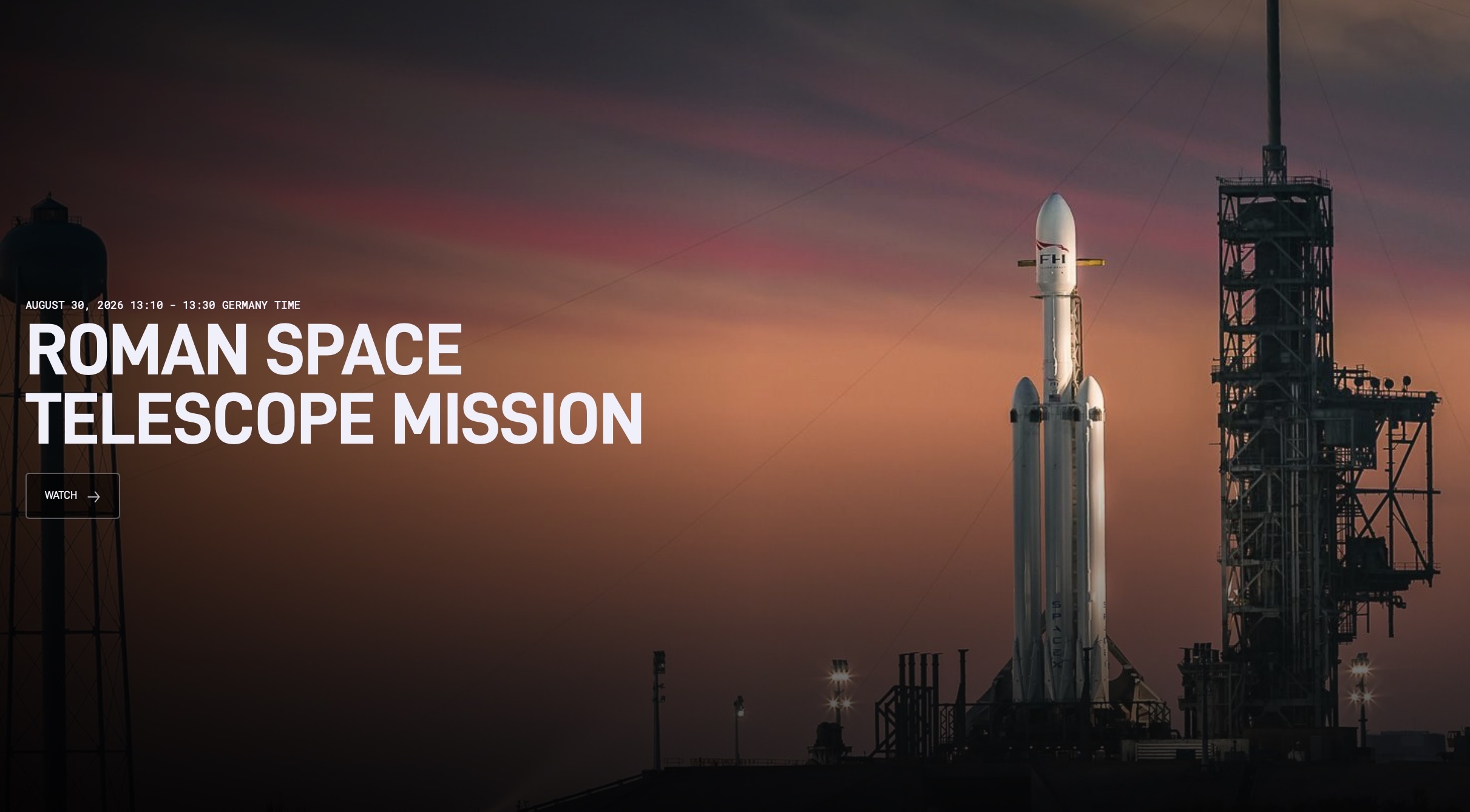
SpaceX is targeting Sunday, August 30 for Falcon Heavy’s launch of NASA’s Roman Space Telescope from Launch Complex 39A (LC-39A) at NASA’s Kennedy Space Center in Florida. Liftoff is targeted for 7:26 a.m. ET, with a backup opportunity available on Monday, August 31 at 7:22 a.m. ET.
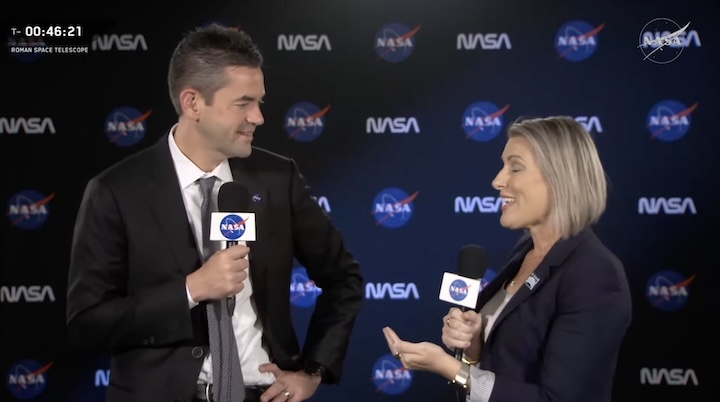
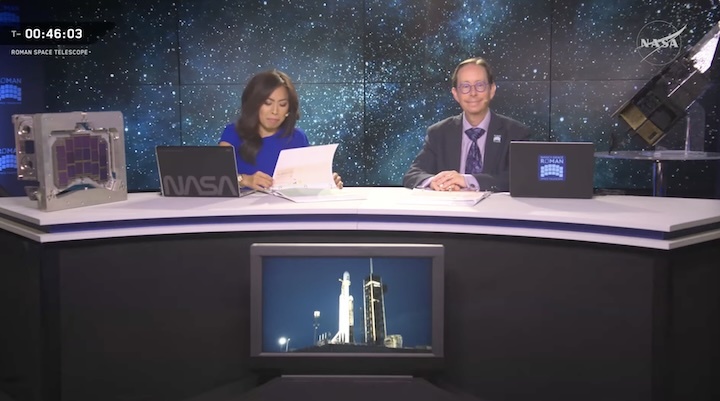
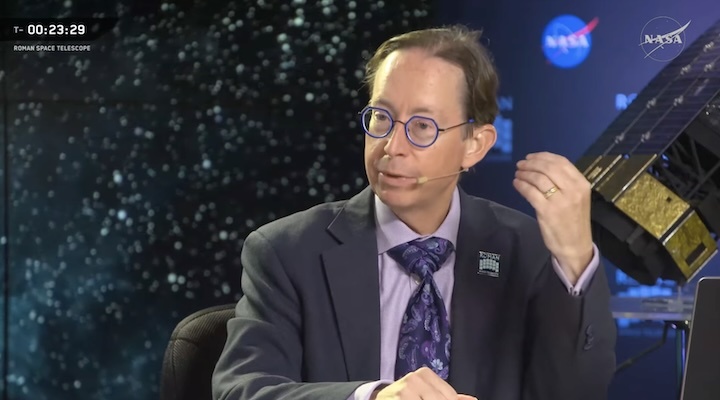
A live webcast of this mission will begin about one hour prior to liftoff, which you can watch here and on X @SpaceX.
This is the first and third flight for the two first stage side boosters supporting this mission, which previously launched the GOES-U and Viasat-3 F3 missions.
The Roman Space Telescope is a NASA flagship observatory designed to study dark energy and dark matter to help scientists unravel mysteries of the universe. Once at its final destination at Sun-Earth Lagrange Point 2, Roman will have an unobstructed view of the universe, and with a wide field of view at least 100 times larger than the Hubble Space Telescope, Roman will be able to map billions of galaxies, discover new exoplanets, study black holes, and more.
Quelle: SpaceX
----
Update: 26.08.2026
.
NASA Sets Coverage for Roman Space Telescope Launch from Florida
Coverage plans are ready for NASA’s Nancy Grace Roman Space Telescope prelaunch and launch activities. Roman is NASA’s next-generation observatory designed to explore some of the universe’s biggest mysteries, including dark energy.
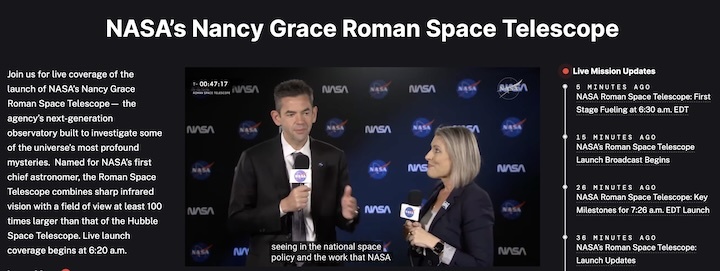
NASA and SpaceX are targeting Roman’s liftoff for no earlier than 7:26 a.m. EDT Sunday, Aug. 30, aboard a SpaceX Falcon Heavy rocket from Launch Complex 39A at the agency’s Kennedy Space Center in Florida. Launch coverage begins at 6:20 a.m.
Live coverage of these events will stream through a variety of platforms. Learn where to watch online:
Named for NASA’s first chief astronomer, the Nancy Grace Roman Space Telescope will pair sharp infrared vision with a field of view at least 100 times larger than the agency’s Hubble Space Telescope. Its crisp, sweeping surveys will help scientists investigate dark energy and dark matter, discover and characterize exoplanets, map billions of galaxies, study black holes, and explore objects from our own solar system to the edge of the observable universe.
After launch and separation from the rocket, Roman will travel to the second Sun-Earth Lagrange point, or L2, about one million miles from Earth. The mission has a five-year primary lifetime with a goal of operating for 10 years, and Roman’s science data will be publicly available after processing.
NASA’s mission coverage is as follows (all times are Eastern and subject to change based on real-time operations):
Saturday, Aug. 29
9 a.m.: NASA’s Roman Space Telescope Mission Science Briefing: The briefing will take place in the NASA Kennedy Press Site auditorium with the following participants:
- Shawn Domagal-Goldman, director, Astrophysics Division, NASA Headquarters
- Julie McEnery, Roman telescope senior project scientist, NASA Goddard Space Flight Center
- Vanessa Bailey, Roman Coronagraph Instrument scientist, NASA Jet Propulsion Laboratory
- Kristen McQuinn, Roman Science Operations Center lead, Space Telescope Science Institute
- Lee Armus, Roman Science Support Center lead, Caltech/IPAC
Media may ask questions in person or by phone. Limited auditorium space will be available for in-person participation. For the dial-in number and passcode, media should contact the NASA Kennedy newsroom no later than one hour before the briefing at: ksc-newsroom@mail.nasa.gov.
10:30 a.m.: NASA’s Roman Space Telescope Prelaunch News Conference: The news conference will take place in the NASA Kennedy Press Site auditorium with the following participants:
- Nicky Fox, associate administrator, Science Mission Directorate, NASA Headquarters
- Lucas Paganini, Roman telescope program executive, NASA Headquarters
- Jackie Townsend, Roman telescope project manager, NASA Goddard
- Denton Gibson, launch director, NASA’s Launch Services Program, NASA Kennedy
- Julianna Scheiman, director, NASA Science and Dragon Programs, SpaceX
- Justin McReynolds, launch weather officer, 45th Weather Squadron, U.S. Space Force
Media may ask questions in person or by phone. Limited auditorium space will be available for in-person participation. For the dial-in number and passcode, media should contact the NASA Kennedy newsroom no later than one hour before the briefing at: ksc-newsroom@mail.nasa.gov.
11:45 a.m.: NASA Administrator Jared Isaacman is expected to fly past the Nancy Grace Roman Space Telescope and Falcon Heavy rocket on the launchpad in his jet. The flyby will be shown live on the same stream as the prelaunch news conference, with a view of the launch pad during the transition. The flyby is subject to weather and operational considerations.
12 p.m.: In-person interviews will take place in the NASA Kennedy Press News Center:
- Nicky Fox, associate administrator, Science Mission Directorate, NASA Headquarters
- Lucas Paganini, Roman telescope program executive, NASA Headquarters
- Dalia Kirschbaum, acting director, Sciences and Exploration Directorate, NASA Goddard
- Josh Schlieder, Roman telescope project scientist, NASA Goddard
- Jason Hylan, Roman telescope flight segment and observatory manager, NASA Goddard
- Bertrand Mennesson, Roman Coronagraph Instrument project scientist, NASA JPL
- Jeff Hanke, president, Space Systems, Space and Mission Systems, L3Harris Technologies
- Wendy Minotti, program manager, Exquisite Imaging, Space and Mission Systems, L3Harris Technologies
- Bonnie Patterson, vice president and general manager, Civil Space, Space and Mission Systems, BAE Systems
- Sarah Lipscy, director, Strategic Operations, Space and Mission Systems, BAE Systems
Previously credentialed media interested in scheduling an interview should contact the NASA Kennedy newsroom at: ksc-newsroom@mail.nasa.gov.
Sunday, Aug. 30
6:20 a.m.: Launch coverage begins.
7:26 a.m.: Launch
9:30 a.m.: Postlaunch news conference with the following participants:
- NASA Administrator Jared Isaacman
- Nicky Fox, associate administrator, Science Mission Directorate, NASA Headquarters
- Jackie Townsend, Roman telescope project manager, NASA Goddard
- Julie McEnery, Roman telescope senior project scientist, NASA Goddard
- Denton Gibson, launch director, NASA’s Launch Services Program, NASA Kennedy
Media may ask questions in person or by phone. Limited auditorium space will be available for in-person participation. For the dial-in number and passcode, media should contact the NASA Kennedy newsroom no later than one hour before the news conference at: ksc-newsroom@mail.nasa.gov.
Audio-only coverage
Audio-only coverage of the launch will be carried on the NASA “V” circuits, accessible by dialing 321-867-1220 or 321-867-1240. On launch day, mission audio countdown activities without NASA broadcast commentary will be carried on 321-867-7135.
Launch audio also will be available on Launch Information Service and Amateur Television System’s VHF radio frequency 146.940 MHz and KSC Amateur Radio Club’s UHF radio frequency 444.925 MHz, FM mode, heard within Brevard County on the Space Coast.
NASA website launch coverage
Launch day coverage will be available on the NASA website, including the livestream and blog updates as countdown milestones occur. On-demand streaming video and launch photos will be available shortly after liftoff. Follow mission updates on the Roman launch blog.
Attend launch virtually
Members of the public may register to attend the Roman launch virtually. NASA’s Virtual Guest Program includes curated launch resources, notifications about related opportunities or schedule changes, and a stamp for the NASA virtual guest passport following launch.
The Roman telescope is managed at NASA Goddard with participation by the agency’s Jet Propulsion Laboratory in Southern California; Caltech/IPAC in Pasadena, California; the Space Telescope Science Institute in Baltimore; and a team of scientists from various research institutions. The primary industrial partners are BAE Systems Inc., L3Harris Technologies, and Teledyne Scientific & Imaging. Contributions to Roman also are made by ESA (European Space Agency), JAXA (Japan Aerospace Exploration Agency), the French space agency CNES (Centre National d’Études Spatiales), and the Max Planck Institute for Astronomy in Germany. NASA’s Launch Services Program, based at Kennedy, manages the launch service for the Roman mission.
Quelle: NASA
+++
NASA’s Roman Telescope Enclosed in SpaceX Falcon Heavy Rocket Fairing
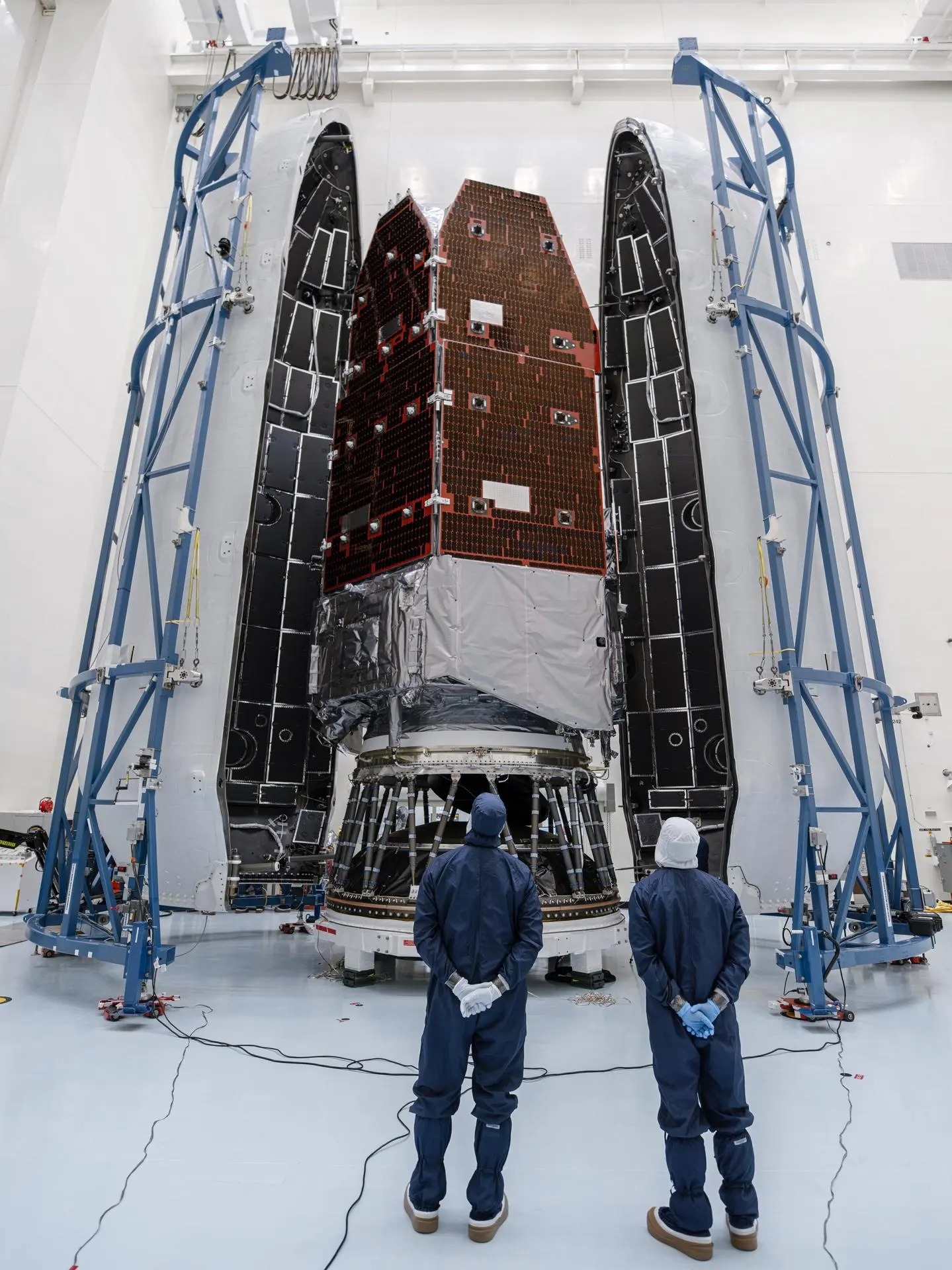
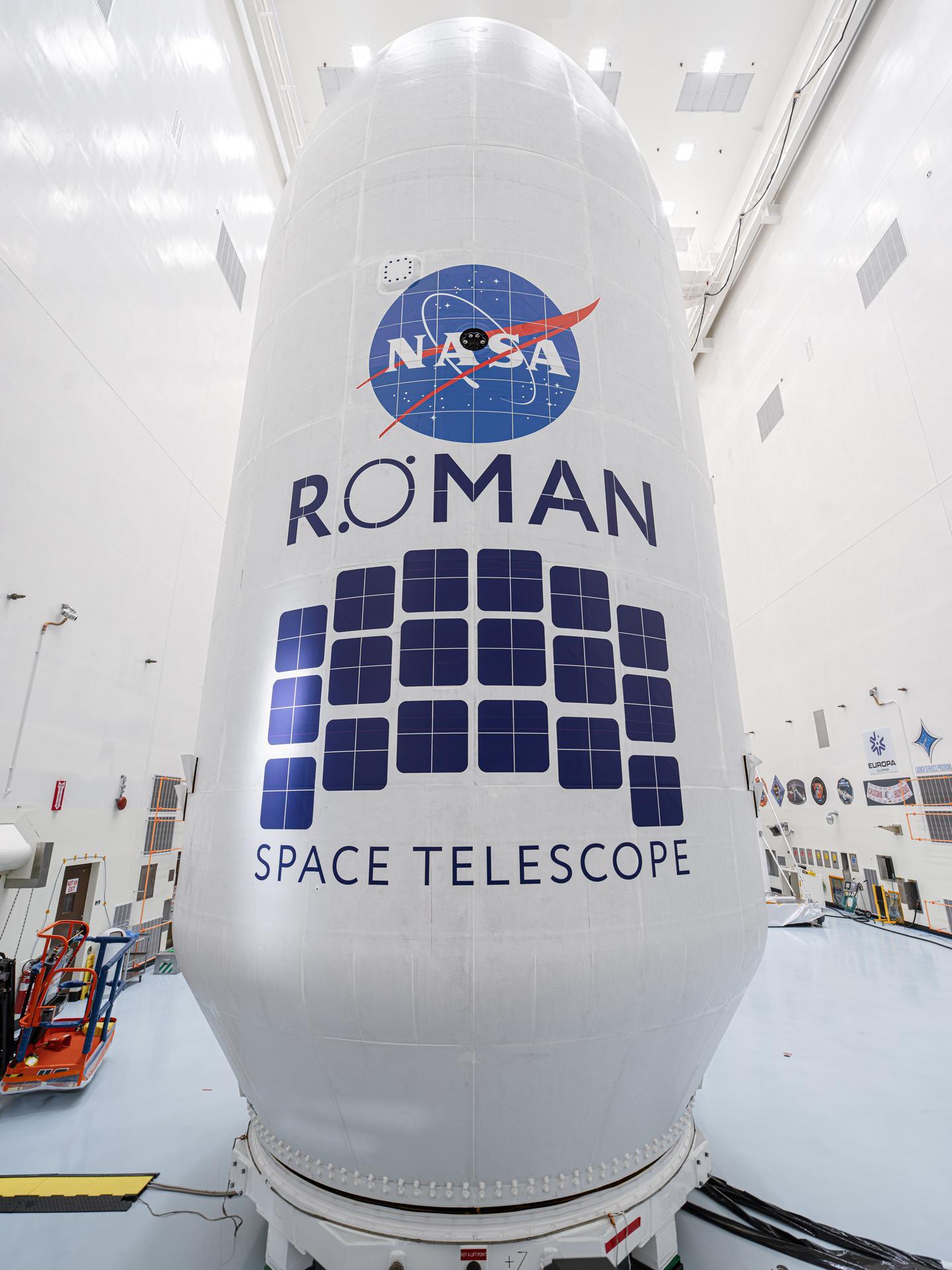
Teams have finished preparing NASA’s Nancy Grace Roman Space Telescope for launch. On Aug. 21, the team encapsulated the observatory inside the SpaceX Falcon Heavy rocket’s fairing in the Payload Hazardous Servicing Facility at NASA’s Kennedy Space Center in Florida.
The 43-foot-tall fairing encloses the spacecraft and is mounted atop the Falcon Heavy rocket. On the ground, the fairing and its ground support equipment maintain a safe, controlled environment for Roman and allow the team to transport it out of the facility.
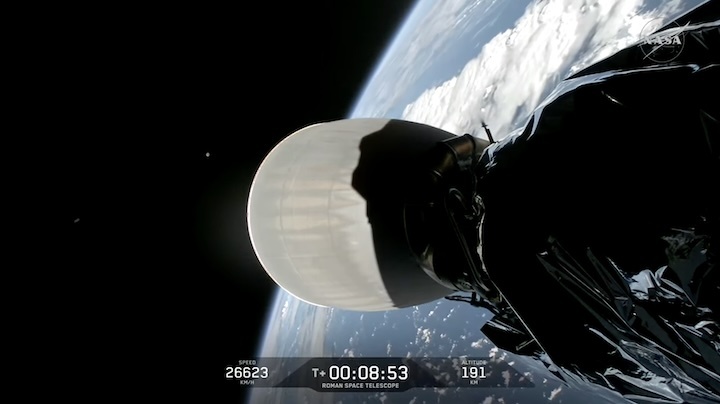
During ascent, the fairing protects Roman from acoustic vibrations, aerodynamic pressure, and heating as the rocket travels through Earth’s atmosphere. A few minutes into the flight, once conditions are safe, the fairing separates, allowing Roman to continue its journey toward its destination at Sun-Earth Lagrange point 2 (L2). Meanwhile, the two fairing halves will return to Earth and be recovered by SpaceX.
Teams soon will transport Roman to SpaceX’s hangar at Launch Pad 39A, where the encapsulated payload will be mated to Falcon Heavy before rollout to the pad at Launch Complex 39A. NASA and SpaceX are targeting no earlier than 7:26 a.m. EDT Sunday, Aug. 30, for Roman’s launch.
Researchers are eager to study thousands of exoplanets Roman will discover, hoping to understand how closely some may resemble planets in our solar system. They also will use Roman to study the mysteries of dark matter and dark energy, probing the forces driving the universe’s accelerated expansion over time.
NASA’s Nancy Grace Roman Space Telescope Arrives at Hangar
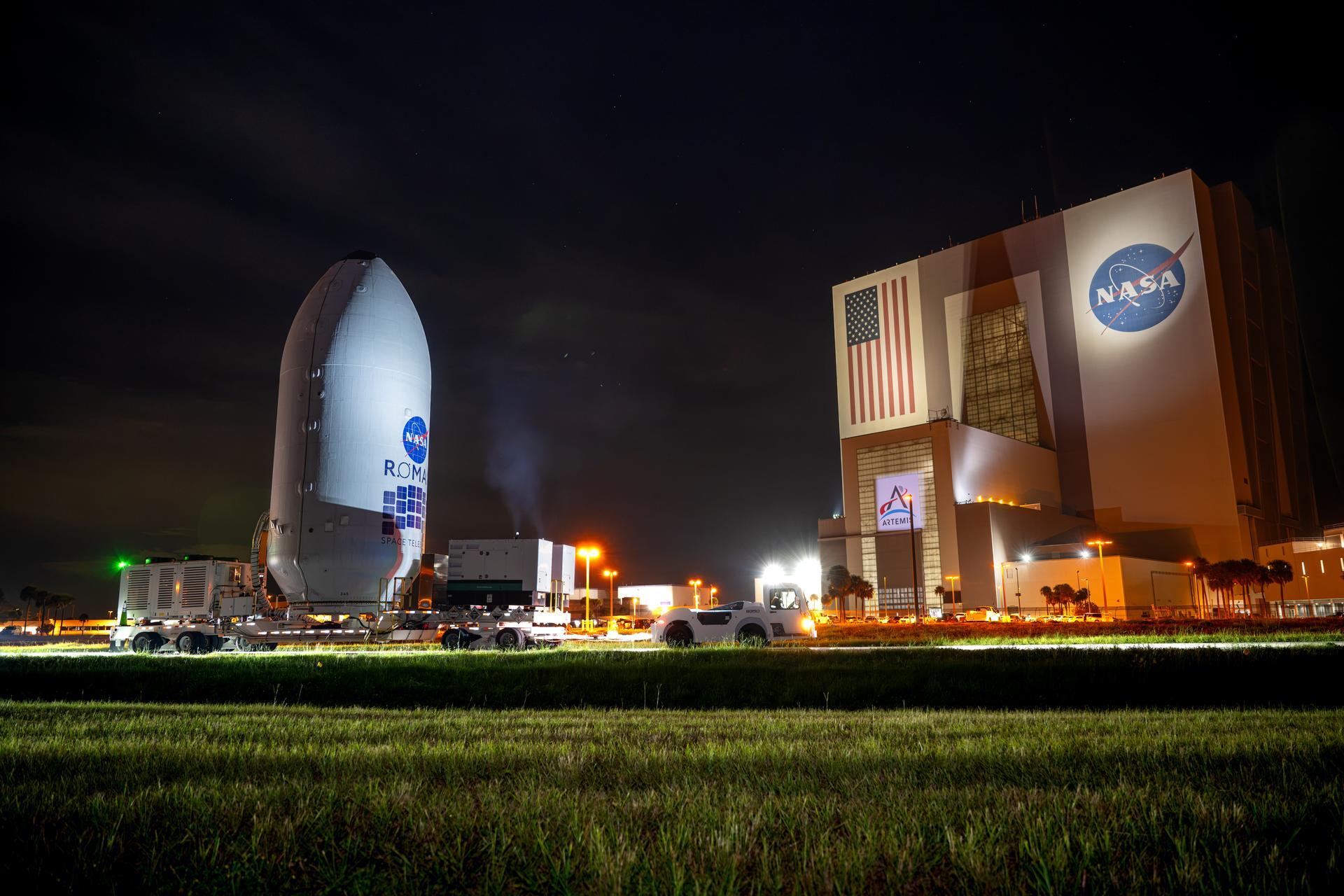
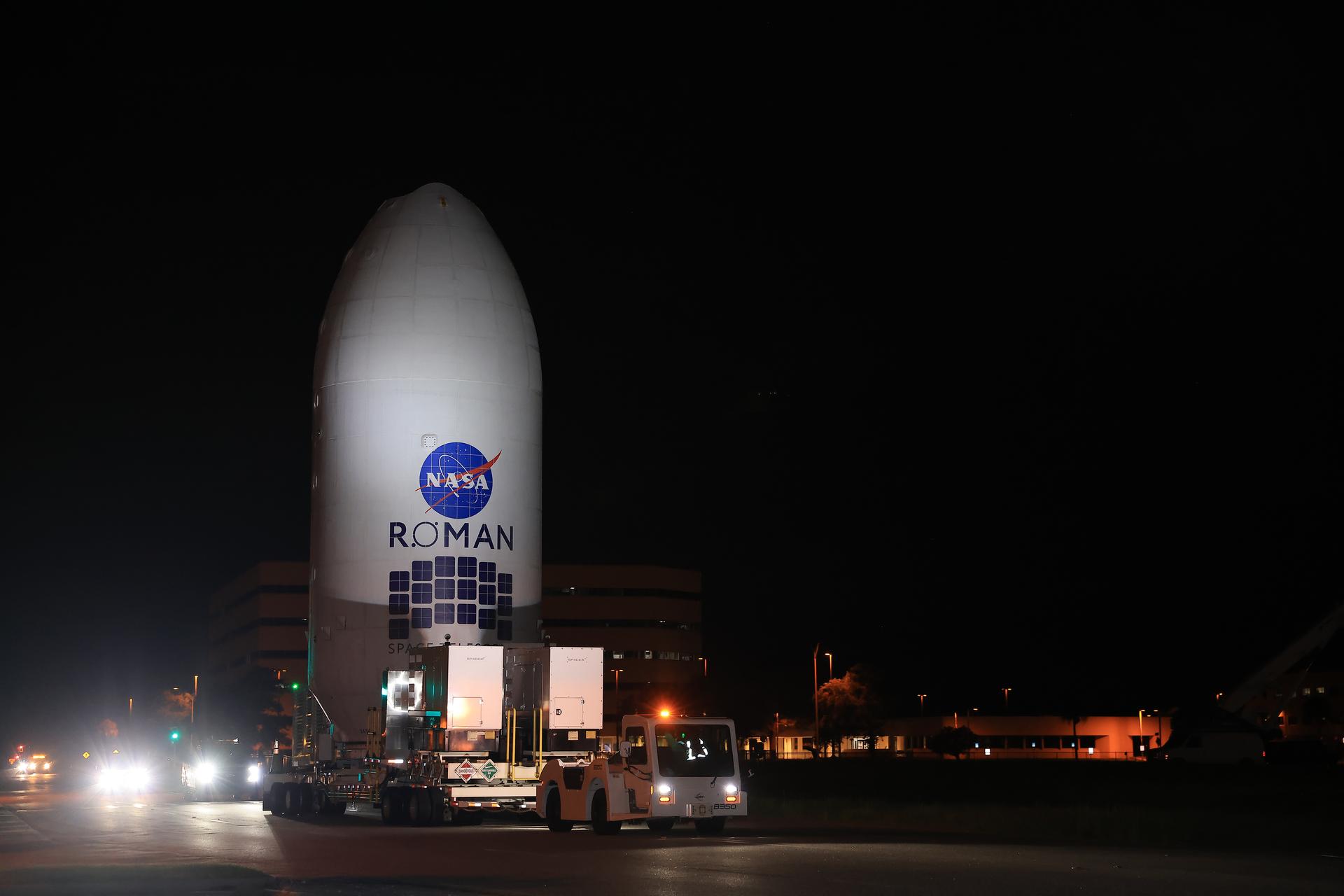
NASA’s Nancy Grace Roman Space Telescope arrived Tuesday to the SpaceX hangar at Launch Complex 39A at Kennedy Space Center in Florida, just days before its scheduled launch.
Roman began its overnight trip on Aug. 24, departing from the Payload Hazardous Servicing Facility, where it has been undergoing prelaunch processing since June. A convoy of vehicles escorted Roman, inside Falcon Heavy’s fairing, to the hangar, monitoring it along the way to ensure normal operations.
In the coming days, the team will mate Roman to the SpaceX Falcon Heavy rocket in the hangar. NASA’s Launch Services is managing the mission’s launch preparations, marking the program’s fourth primary payload launched on a Falcon Heavy rocket following Psyche, GOES-U (Geostationary Operational Environmental Satellite U), and Europa Clipper. One of Roman’s side boosters for Roman previously flew on the GOES-U mission.
NASA, Roman, and SpaceX teams will host a Launch Readiness Review on Friday, Aug. 28 to conduct the final “go/no go” poll ahead of the planned 7:26 a.m. EDT launch on Sunday, Aug. 30, from Launch Complex 39A at Kennedy.
Launching nine months ahead of schedule, Roman is expected to transform the way we see the universe and settle essential questions about some of the biggest mysteries out there. Roman has a wide field of view that will rapidly capture huge swaths of sky full of stars and galaxies once it reaches second Sun-Earth Lagrange point 2, or L2.
Roman is designed to investigate dark energy, the mysterious force accelerating the universe’s expansion. It will also map how galaxies form, cluster, and evolve by tracing the influence of dark matter. In addition, Roman will discover and study planets beyond our solar system with the precision needed to compete a statistical census of planetary systems in our galaxy.
NASA Ames’ Contributions to Roman’s Mission
Set to launch on Sunday, Aug. 30, NASA’s Nancy Grace Roman Space Telescope will empower astronomers to explore vast regions of the cosmos and settle essential questions in the areas of dark energy, dark matter, planets outside our solar system, and the formation and growth of galaxies over cosmic time. Key contributions to Roman’s mission made by researchers at NASA’s Ames Research Center in California’s Silicon Valley will advance Roman’s science using the center’s facilities, expertise, and innovations.
Tools to predict, remove glare
Roman’s main camera, the Wide Field Instrument, will capture expansive high-resolution pictures of the universe in optical and near-infrared light. These unprecedented images will enable astronomers to decode some of the deepest mysteries of the cosmos.
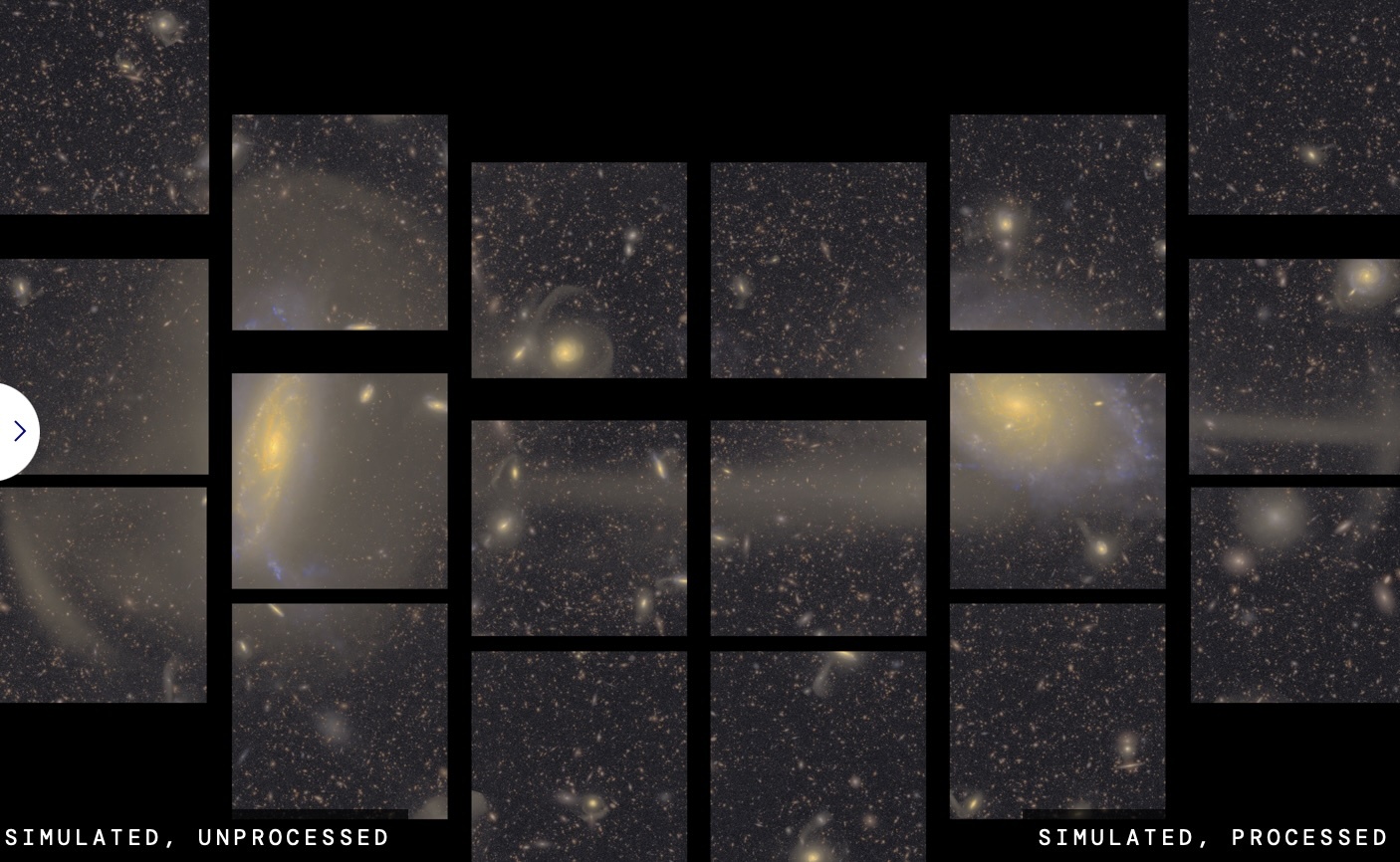
Forms of glare that Roman’s camera collects diminish image quality and thereby reduce the ability of astronomers to characterize certain cosmic structures. Innovative software developed by a team at NASA Ames, with collaborators at NASA’s Goddard Space Flight Center in Greenbelt, Maryland, and IPAC/Caltech in Pasadena, California, will improve Roman’s images and optimize observing plans. Called ROSALIA (Roman Sky Analyst for Low Surface Brightness Imaging and Astronomy), the software predicts and removes unwanted light from astronomical images captured by Roman’s Wide Field Instrument.
Contaminating stray light occurs when photons scatter inside the telescope’s optical system. Resulting light glints can produce deceptive image artifacts that mimic the appearance of real planets or nebulae. The ROSALIA software will allow astronomers to adjust their observation plans to limit glints from contaminating science targets in Roman’s images.
In addition to bright glints, stray light can also appear as a diffuse background. This form of stray light interferes with observations of the darkest regions of the universe, which is critical to understanding how large structures in the universe were formed.
Another major contributor to obscuring background light is produced by nature itself: zodiacal light. Zodiacal emission originates from the scattering of sunlight by interplanetary dust particles in our solar system. The ROSALIA software predicts and strips away background contamination, including zodiacal and stray light from images, exposing the faint, diffuse emissions at galaxy edges where cosmic evolutionary histories are hidden.
New ‘multi-star’ tech to see exoplanets
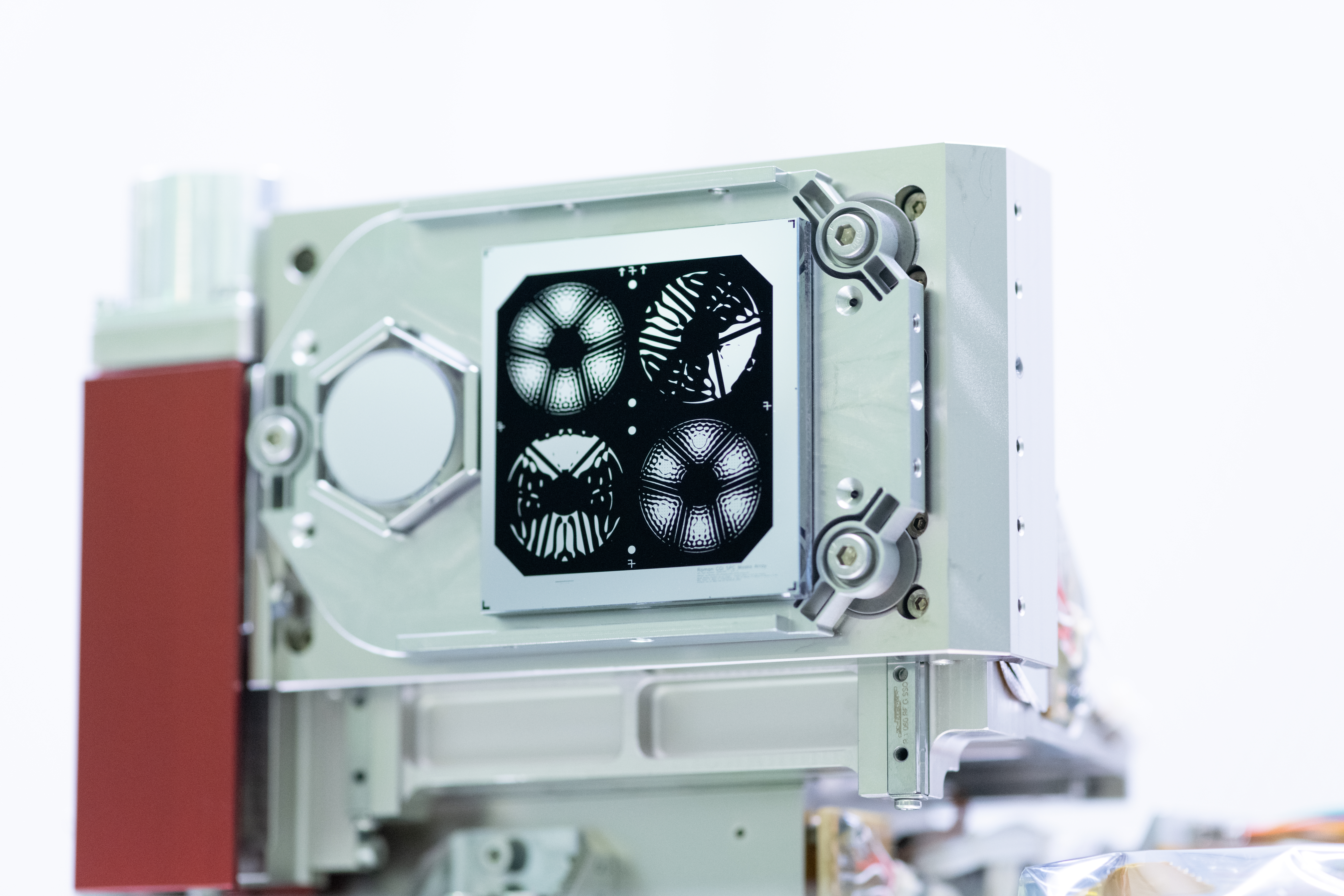
The Roman Coronagraph Instrument is one of two instruments flying on Roman. It will demonstrate the most advanced technologies ever flown in space for directly imaging planets around other stars. The Roman Coronagraph uses a series of masks and mirrors, including two deformable mirrors, to suppress starlight. By precisely controlling the shape of the deformable mirrors, it creates a “dark zone” around the star where observers can see the faint reflected light from orbiting planets.
The baseline operating mode of the Roman Coronagraph Instrument supports observation of exoplanets only in single star systems, as current coronagraph instruments cannot typically suppress the additional contaminating starlight in multi-star systems, such as binary star systems.
Our solar system has a single star, the Sun. But roughly half of Sun-like stars are in multi-star systems. Having the ability to directly image exoplanets in multi-star systems will increase the likelihood of detecting life beyond our solar system and will expand our knowledge about how exoplanets form and evolve, since there are major differences in how those processes unfold in single star versus multi-star systems. Eliminating overlapping glares from multiple stars is the key challenge that must be overcome to image planets in such systems.
Researchers at NASA Ames are meeting that challenge with an innovative technology called Multi-Star Wavefront Control (MSWC). This technology includes custom light-blocking masks and accompanying software designed to suppress the light from multiple stars and reveal hidden exoplanets. Through a collaboration with NASA’s Jet Propulsion Laboratory in Southern California, the MSWC masks are included on the Roman Coronagraph’s flight instrument as an added capability beyond Roman’s baseline observation modes. They could be used if additional observation time is granted to the coronagraph team after the primary technology demonstration phase is completed.
The nearest star system to our solar system, Alpha Centauri, is one of the nearest multi-star systems to Earth, at only four light-years away. This triple-star system contains a binary of Sun-like stars – Alpha Centauri AB – orbited by a much smaller and dimmer star – Proxima Centauri. Although no exoplanets are confirmed around the Sun-like stars in this system, a planet candidate has been identified by NASA’s James Webb Space Telescope in the habitable zone of Alpha Centauri A. Researchers, including the Ames MSWC team, are working to develop the capabilities needed to observe this system.
NASA Ames also provides leadership and support for the hardware working group as part of the Roman Coronagraph Participation Program. This program allows international teams of researchers to enable additional capabilities to the Roman Coronagraph beyond its baseline modes; this includes the multi-star modes being developed at NASA Ames that use different masks beyond the baseline or new wavefront control and sensing algorithms.
Advanced supercomputing
Experts at NASA’s Advanced Supercomputing Division at Ames are advancing Roman’s science by bringing extensive experience in data pipelines and mission operations to provide advice and guidance to the Roman project through key mission development phases. This ensures reliable performance of ground-based systems and operations so that science data processing is efficient and the quality and integrity of the resulting science data products is high.
NASA Advanced Supercomputing researchers collaborated with the Ames MSWC team to develop high-performance computing tools for multi-star wavefront control simulations and to conduct studies to assess the feasibility of the MSWC technique.
Quelle: NASA
+++
9 Things to Know About NASA’s Nancy Grace Roman Space Telescope
NASA’s Nancy Grace Roman Space Telescope is set to launch at 7:26 a.m. EDT on Sunday, Aug. 30. While you wait to watch the launch, brush up on some key facts about this wide-view mission.
-
01
The mission is named after NASA’s first chief astronomer, Dr. Nancy Grace Roman.
Roman is named after Dr. Nancy Grace Roman (1925–2018), NASA’s first chief of astronomy. She championed space-based observatories that could study the universe above Earth’s hazy atmosphere while making their data broadly available to the scientific community.
While she’s known as the “mother” of the Hubble Space Telescope, Roman played an even broader role as the driving force behind NASA’s entire Great Observatories program, which included Hubble along with the Chandra X-ray Observatory and the retired Compton Gamma Ray Observatory and Spitzer Space Telescope.
Her vision and leadership helped establish NASA as a world-class scientific institution and laid the foundation for generations of space telescopes that continue to expand humanity’s understanding of the cosmos. -
02
Roman will transform our view of the cosmos by showing us the bigger picture.
Roman will pair a large field of view with crisp infrared vision to scan vast, deep swaths of sky. This flagship mission is designed to help astronomers explore dark matter, dark energy, and planets outside our solar system, called exoplanets.
Since each of Roman’s surveys will sample such a large volume of the cosmos, the mission will also offer practically limitless opportunities for astronomers to conduct a broad range of additional science. From objects in our outer solar system and exploding stars to growing black holes and galaxies by the billions, very little will be beyond Roman’s reach. Roman’s data will be made public as soon as it’s processed, allowing many teams to analyze it simultaneously. -
03
The observatory will journey a million miles to join Webb at Lagrange point 2.
Roman will orbit 1 million miles away at the second Sun-Earth Lagrange point (L2), the same location as NASA’s James Webb Space Telescope. At L2, gravity from the Sun and Earth works together with an object’s motion around the Sun to hold it roughly in place. This balance will give Roman a relatively steady orbit without using much fuel.
Like Webb, Roman will trace out a large orbit around the actual L2 point — much larger than the Moon’s orbit around Earth — and the two will easily be kept far apart. -
04
The spacecraft carries the names of more than a million people.
This summer, everyone was invited to submit their name to be added to a memory card attached to a plaque on the Roman spacecraft. More than 1.3 million people did so and will have their names carried all the way to L2.
-
05
Roman will scan the skies for at least five years.
Roman will have a primary mission lifetime of five years and is designed to support an additional five-year extended mission. Fuel is expected to be the mission’s life-limiting resource, and while NASA does not currently have an ability to service observatories at L2, Roman is designed to be refuelable.
-
06
Two instruments will enable myriad discoveries.
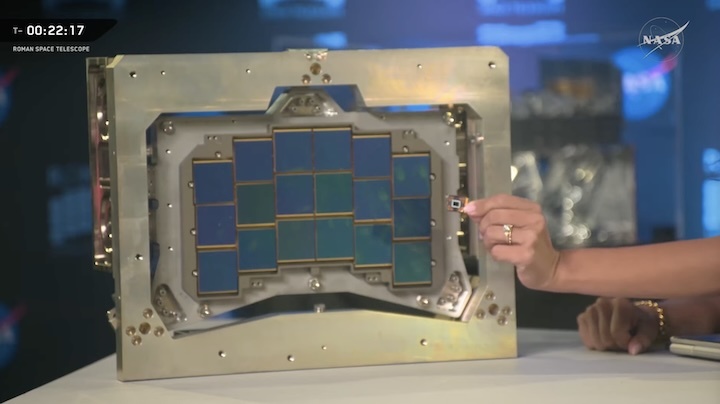
The observatory’s Wide Field Instrument is a 300-megapixel infrared camera that will give Roman the same sharpness (angular resolution) as Hubble but with a field of view at least 100 times larger. Using this instrument, each Roman image will capture a patch of the sky about 1.5 times bigger than the apparent size of a full Moon.
Roman’s Coronagraph Instrument is designed to demonstrate the most advanced technologies ever flown in space for directly imaging planets around other stars. It will block the glare from stars and make it possible for scientists to see the faint reflected light from planets in orbit around them, revealing giant worlds that are older, colder, and in closer orbits than the hot, young super-Jupiters direct imaging has mainly revealed so far. -
07
Roman joins an international cohort of teamworking telescopes.
Roman will work in tandem with many other NASA-led and international missions to provide the most complete view of our universe yet. Roman’s large panoramas will uncover interesting targets that Hubble could follow up on using infrared, visible, and ultraviolet light to offer a more comprehensive view. NASA’s James Webb Space Telescope can then use its larger mirror and more powerful vision to deliver even more detailed, ultra-sharp observations. And Roman can view regions around objects Hubble or Webb observe to offer context.
Euclid, an ESA (European Space Agency) mission with key contributions from NASA, will observe a larger area of the sky than Roman, though with less detail. Since their survey areas will overlap, scientists can use Roman’s higher-quality data to apply corrections to Euclid’s, then extend these refinements over Euclid’s much larger area.
Scientists can also pair Roman’s infrared data with visible-light observations from the ground-based Vera C. Rubin Observatory, a National Science Foundation–Department of Energy collaboration. That will allow astronomers to inch closer to achieving Roman-like quality over Rubin’s much greater sky coverage.
By showcasing technology to directly photograph Jupiter-like exoplanets, Roman will also provide a crucial stepping stone for NASA’s Habitable Worlds Observatory concept, a flagship space telescope that would be designed to photograph Earth-like planets in other solar systems for the first time ever. -
08
Watch the Roman launch live from anywhere.
NASA will stream this event live through a variety of platforms. Learn where to watch online: nasa.gov/live. The launch broadcast will continue until approximately one hour past launch to follow the first several critical milestones post-launch.
-
NASA expects to share Roman’s first images by early 2027.
The Roman team will complete a carefully orchestrated series of deployments, calibrations, and tests in the three months following launch before the observatory reaches its final orbit. Science operations begin once this commissioning period is completed, starting with the release of Roman’s first science images.
Quelle: NASA
----
Update: 30.08.2026
.
NASA’s Roman Space Telescope ‘Go’ for Launch
NASA’s Nancy Grace Roman Space Telescope is “go” for launch following completion of the agency and SpaceX’s Launch Readiness Review Friday at NASA’s Kennedy Space Center in Florida.
The Launch Readiness Review is the final review before proceeding into launch countdown. It confirms if Falcon Heavy, the Roman observatory, weather, and supporting teams are ready for liftoff.
Meteorologists with the U.S. Space Force’s Space Launch Delta 45 Weather Squadron are predicting a 60% chance of favorable weather conditions for launch, which is targeted for 7:26 a.m. EDT on Sunday, Aug. 30 from Launch Complex 39A at Kennedy.
This will be the sixth NASA primary mission with SpaceX to launch on a Falcon rocket from Kennedy, after IXPE (Imaging X-ray Polarimetry Explorer), Psyche, NOAA’s GOES-U(Geostationary Operational Environmental Satellite U), Europa Clipper, and IMAP (Interstellar Mapping and Acceleration Probe).
Roman’s deep, sweeping surveys will help investigate dark energy and dark matter, discover and characterize planets beyond our solar system, map billions of galaxies, study black holes, and share enormous amounts of data with both scientists and the public.
Quelle: NASA
+++
Update: 14:00 MESZ
ROMAN SPACE TELESCOPE MISSION
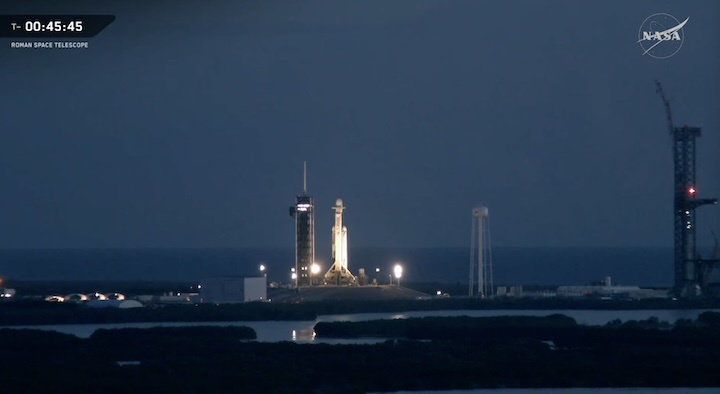
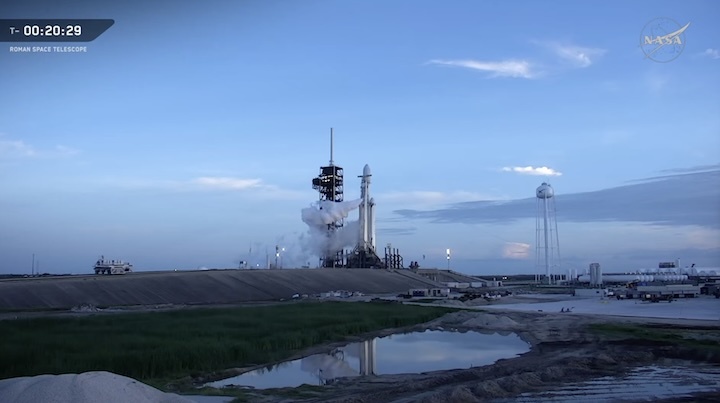
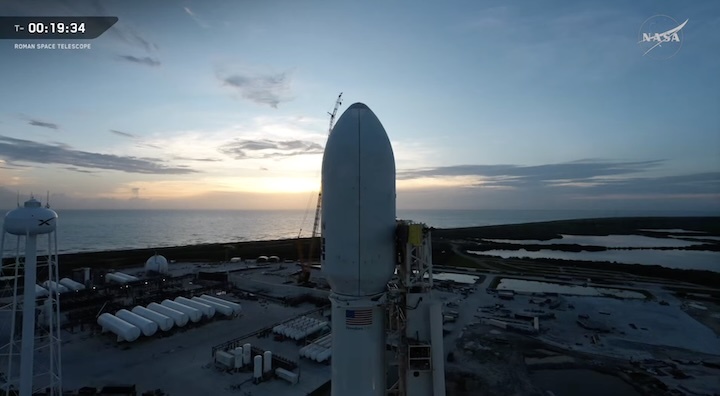
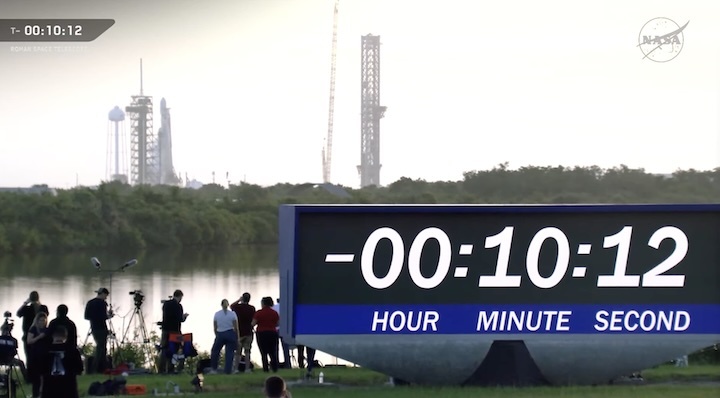
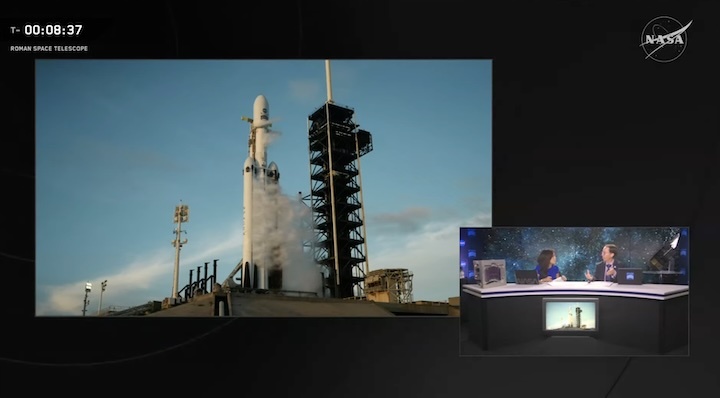
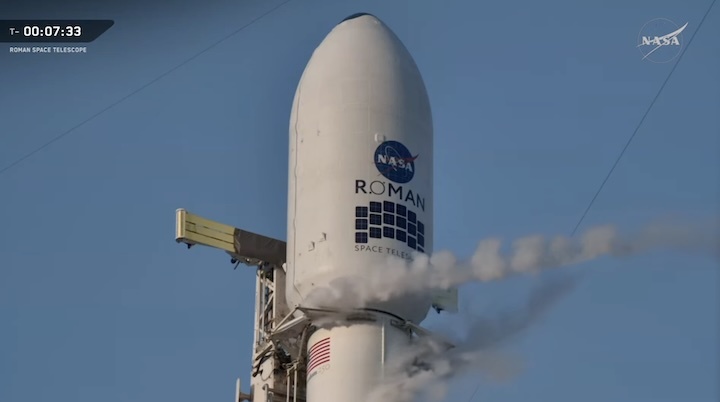
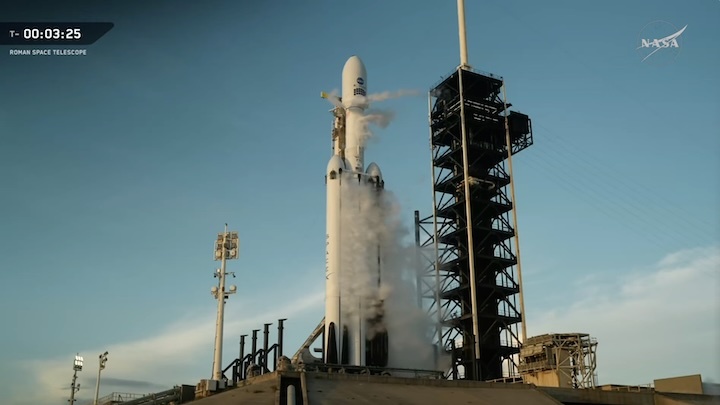
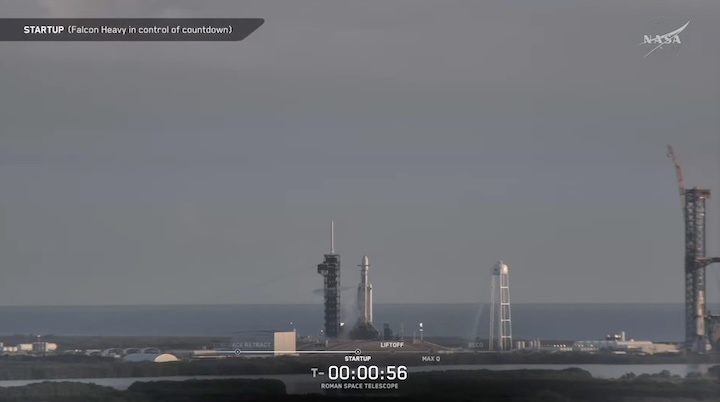
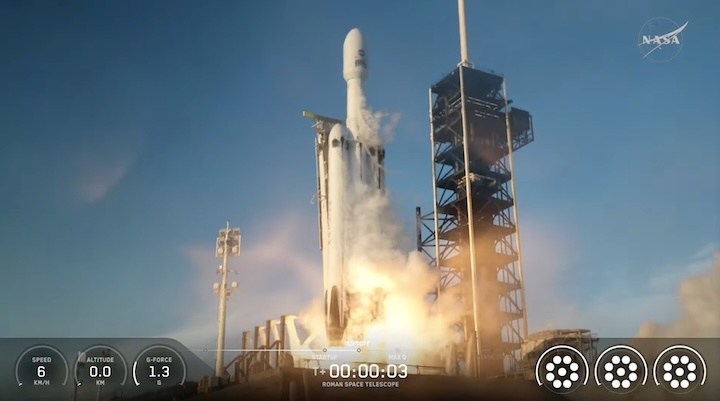
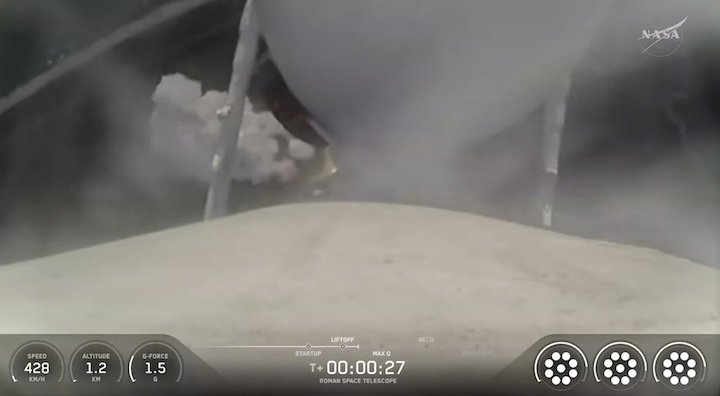
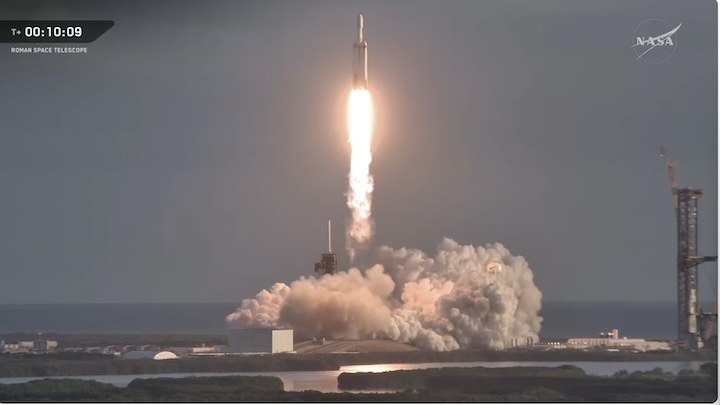
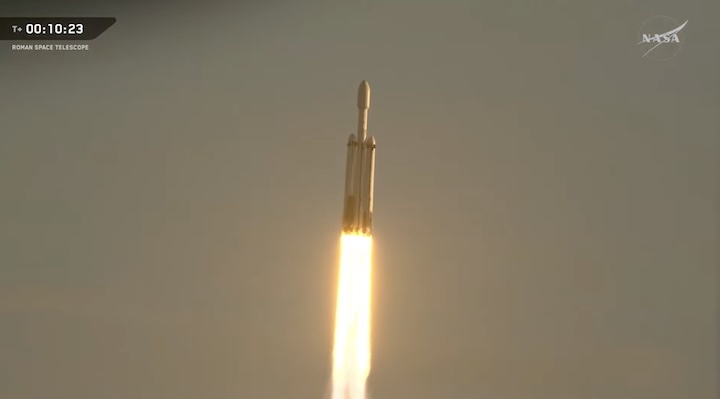
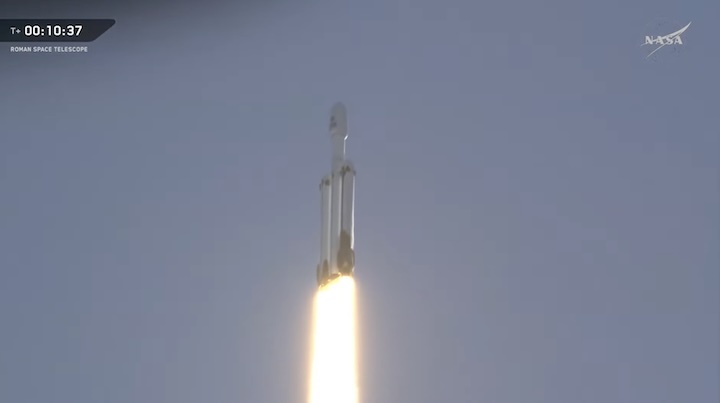
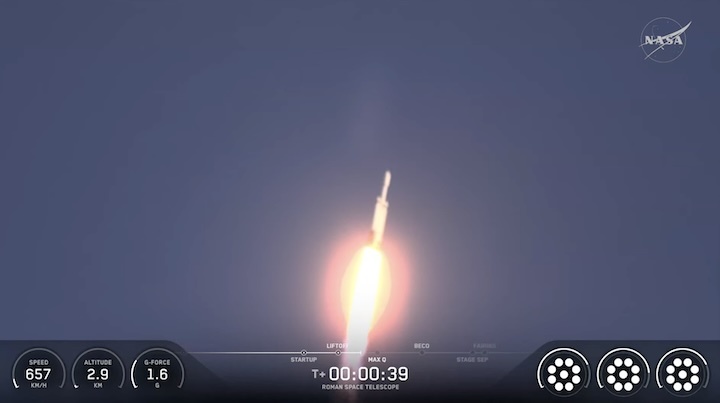
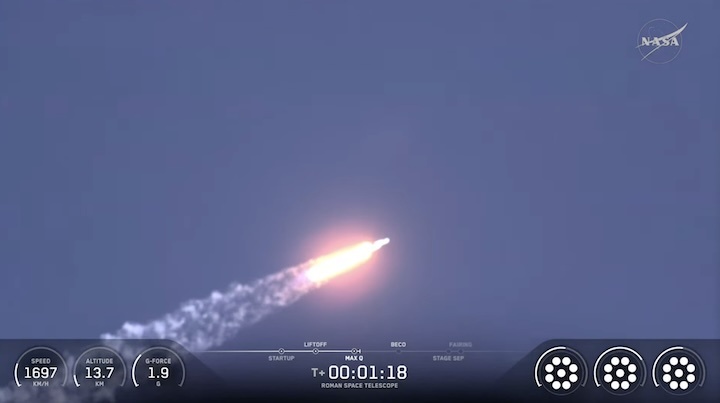
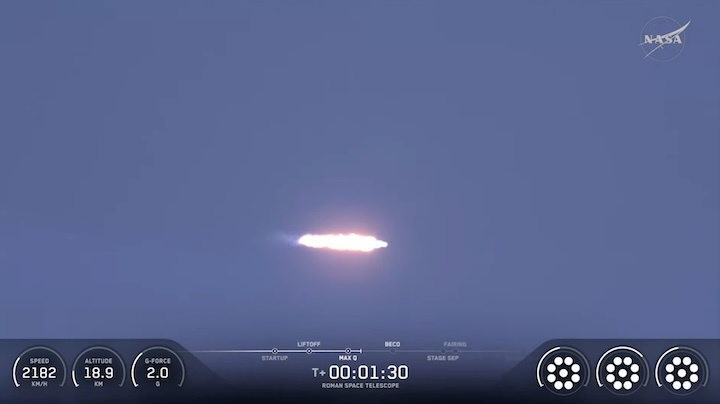
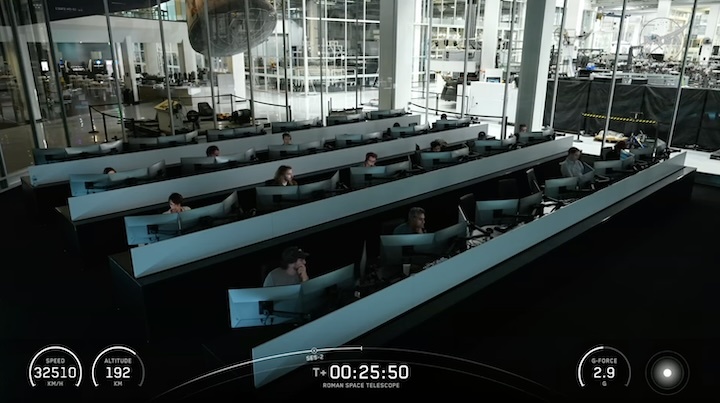
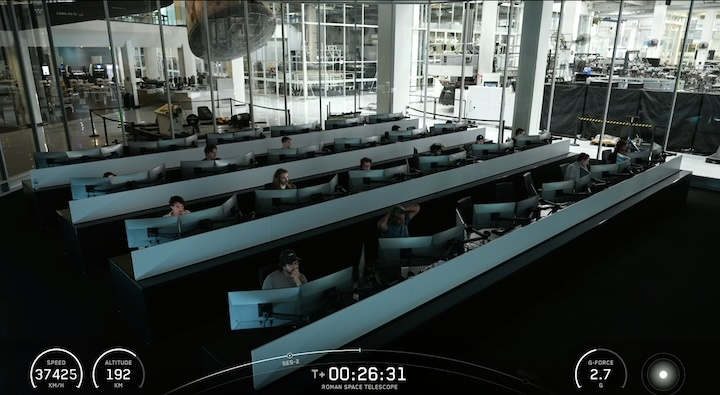
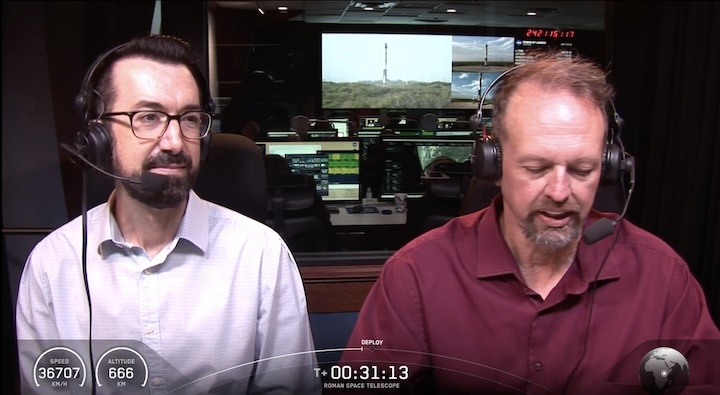
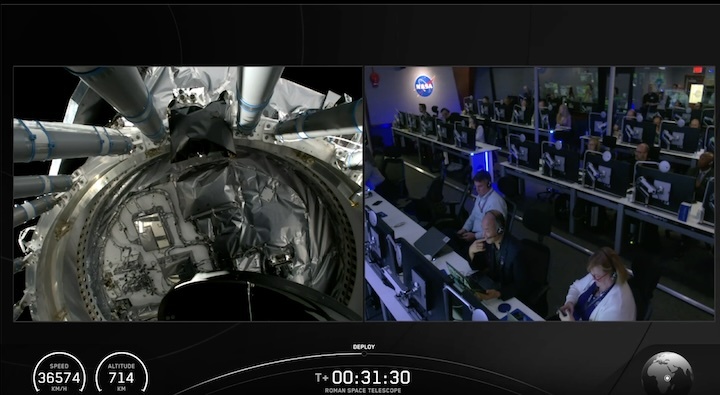
SpaceX is targeting Sunday, August 30 for Falcon Heavy’s launch of NASA’s Roman Space Telescope mission from Launch Complex 39A (LC-39A) at NASA’s Kennedy Space Center in Florida. Liftoff is targeted for 7:26 a.m. ET, with a backup opportunity available on Monday, August 31 at 7:22 a.m. ET.
A live webcast of this mission will begin about one hour prior to liftoff, which you can watch here and on X @SpaceX.
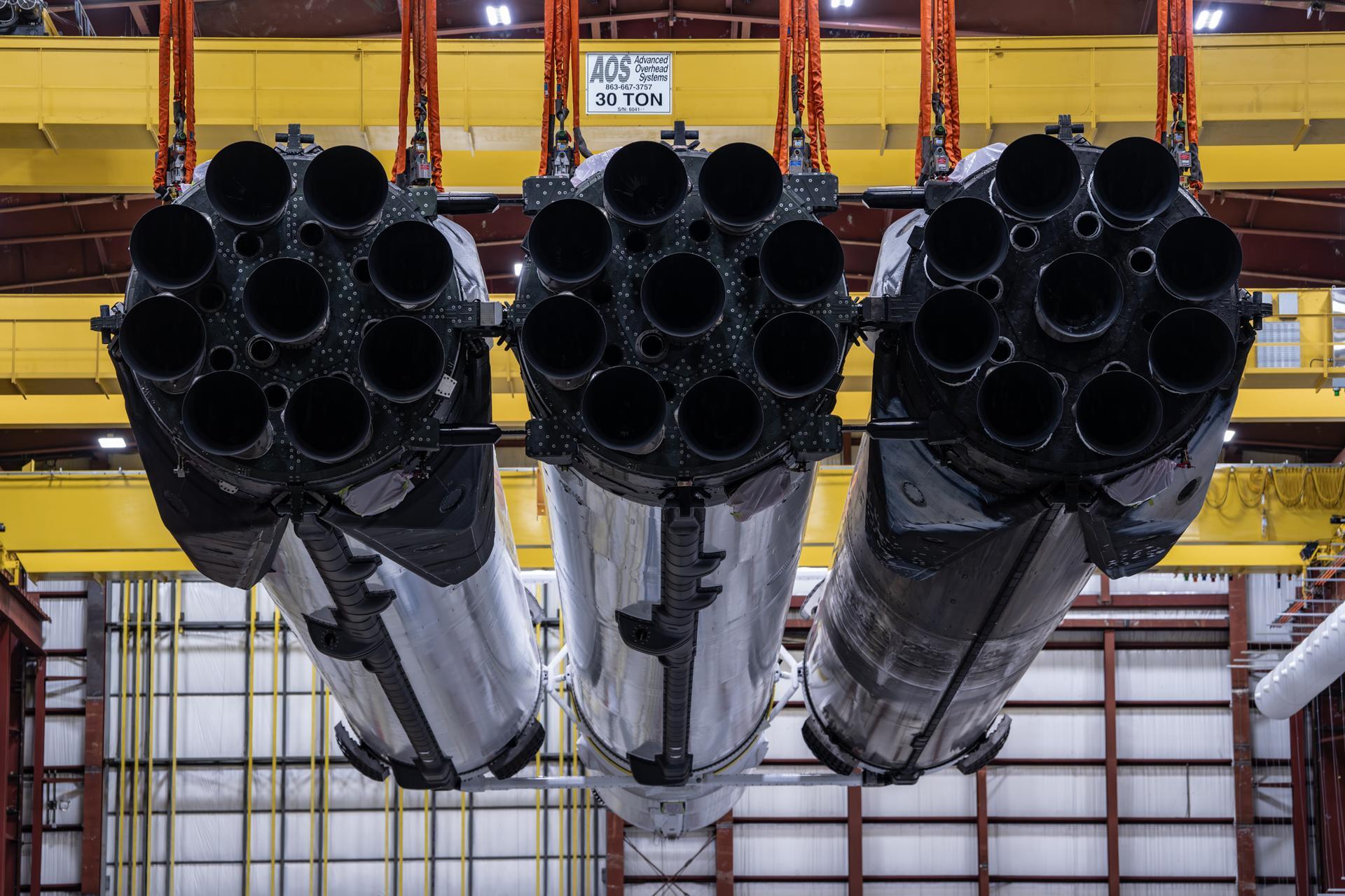
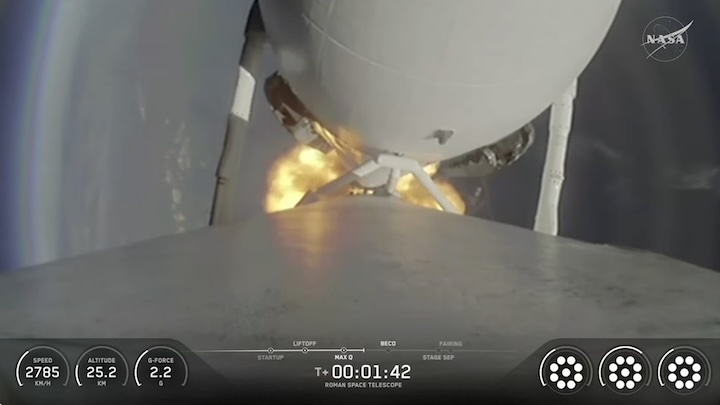
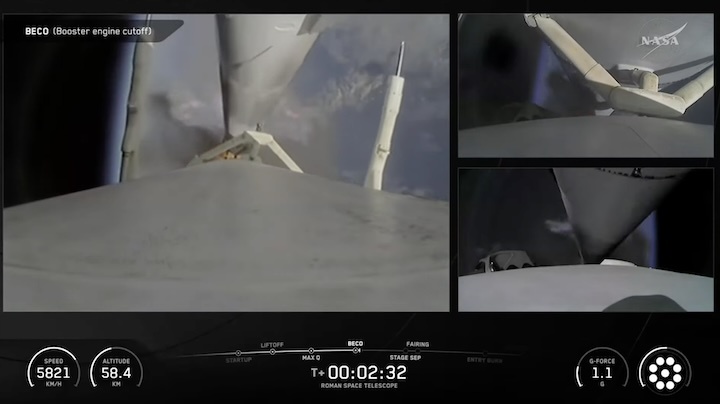
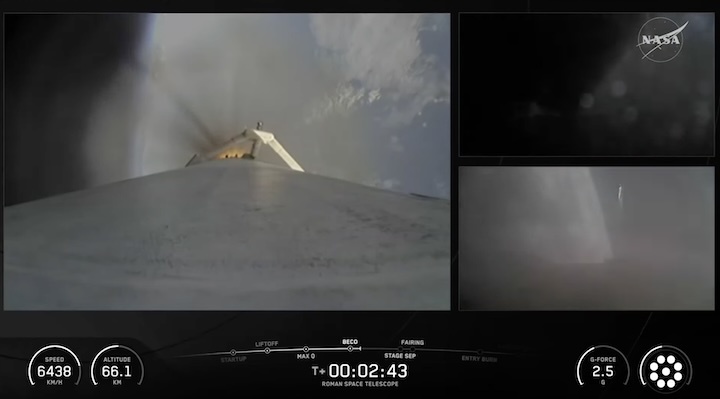
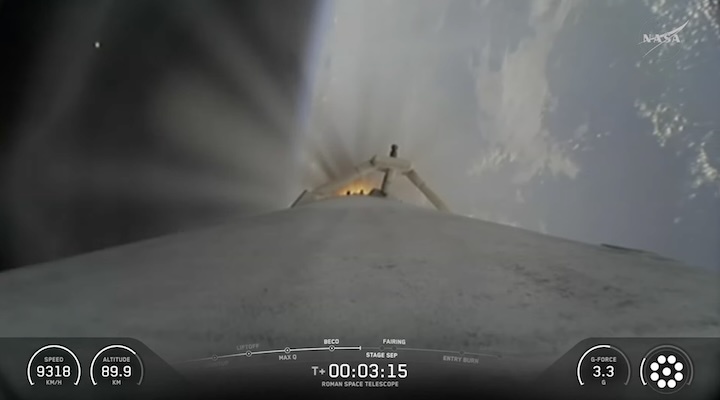
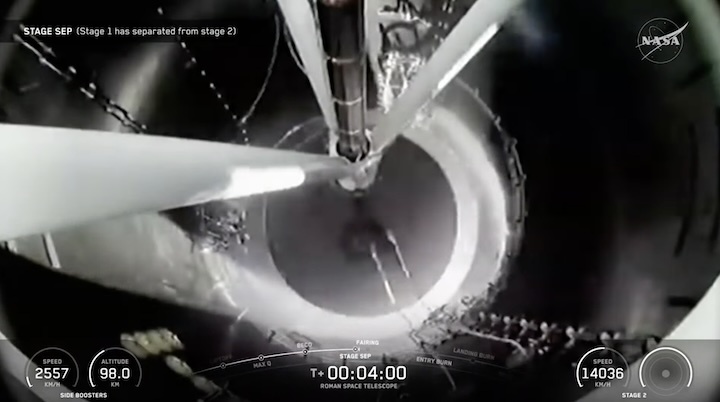
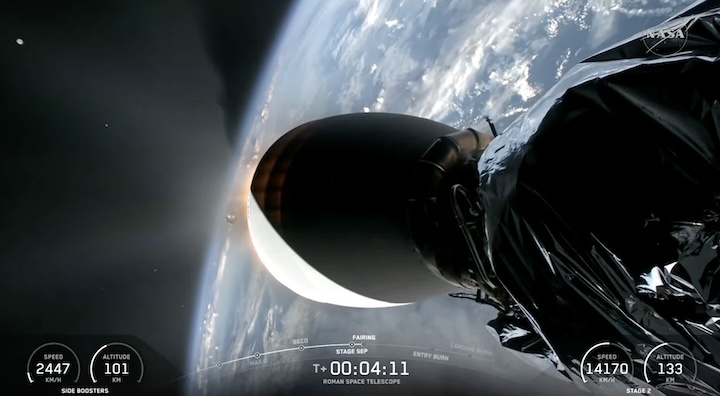
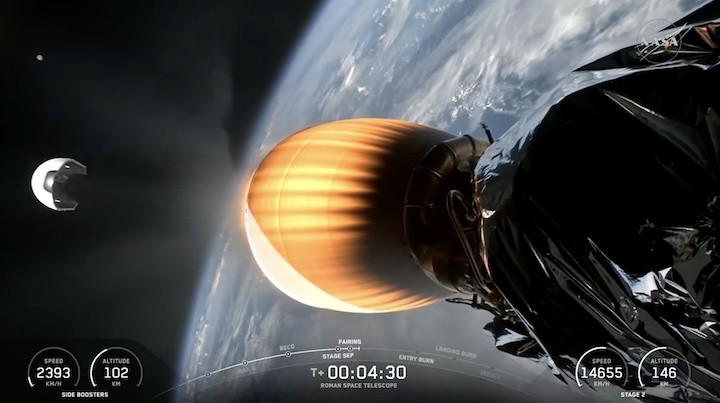
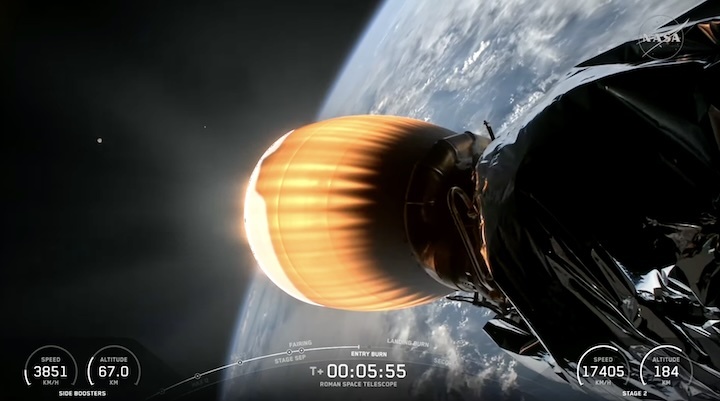
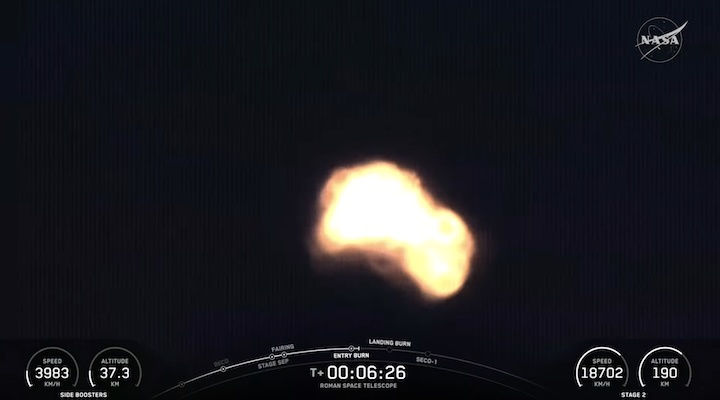
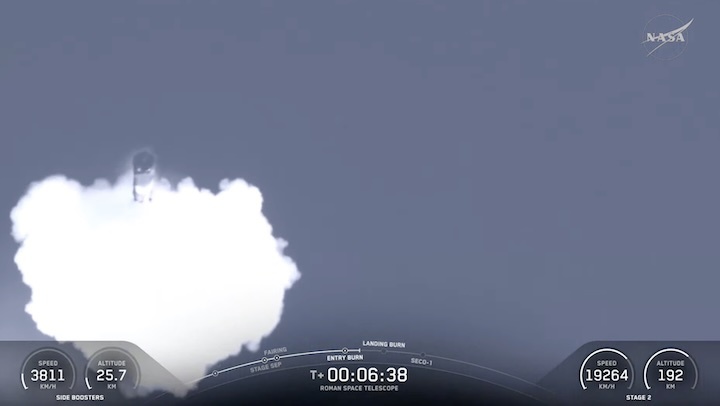
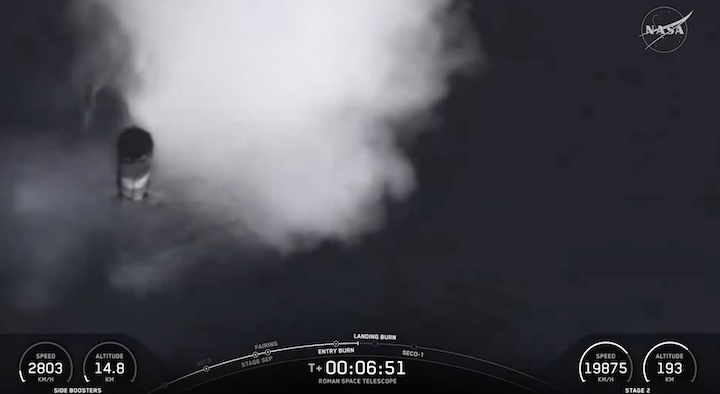
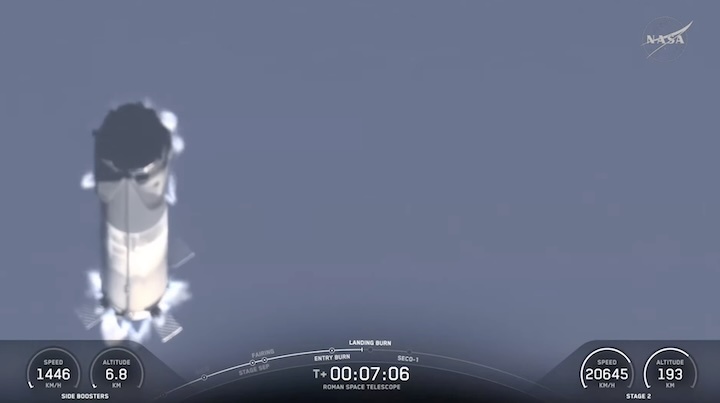
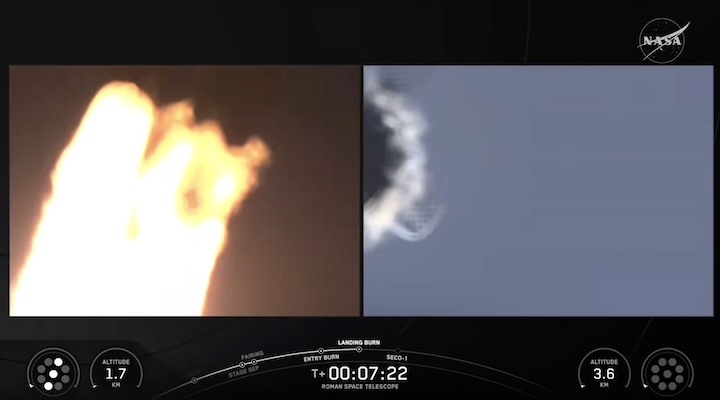
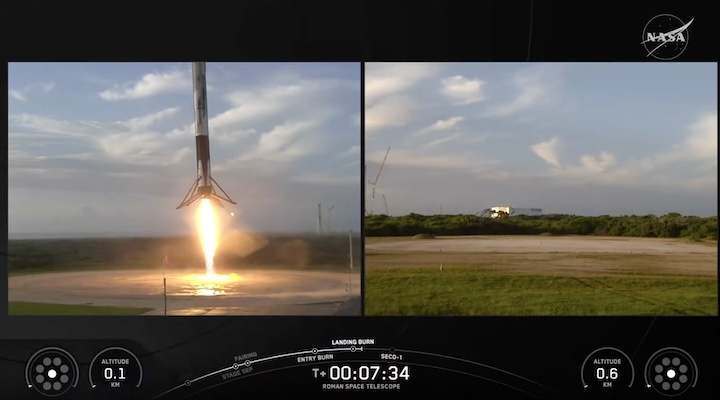
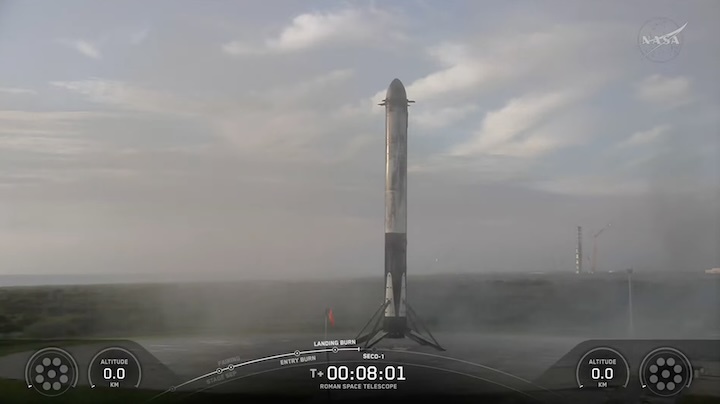
This is the first and third flight for the two first stage side boosters supporting this mission, which previously launched the GOES-U and Viasat-3 F3 missions. Following stage separation, Falcon Heavy’s two side boosters will land on SpaceX’s Landing Zones 2 and 40 (LZ-2 and LZ-40) at Cape Canaveral Space Force Station in Florida.
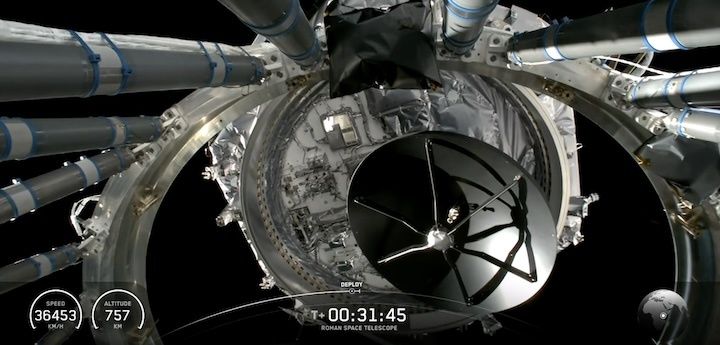
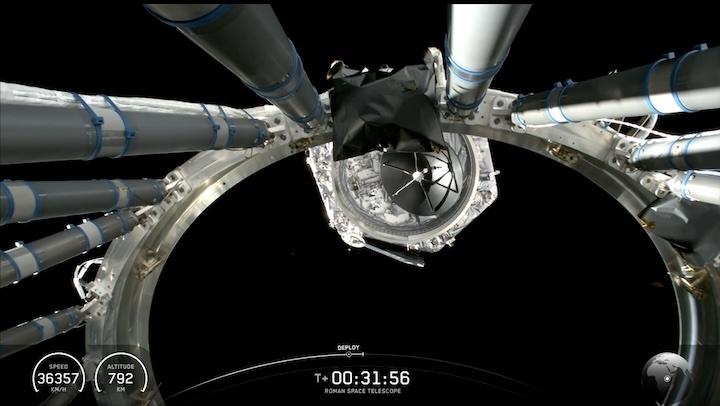
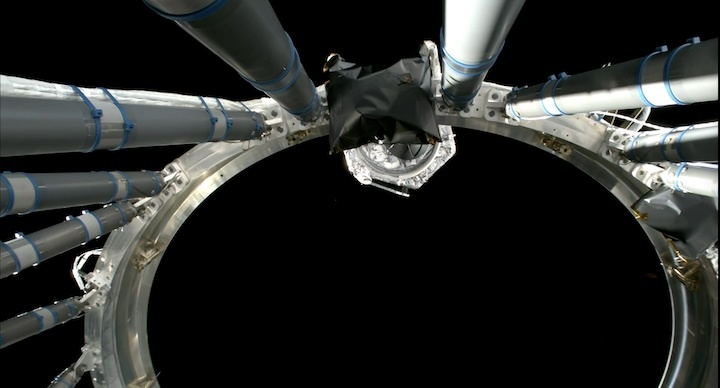
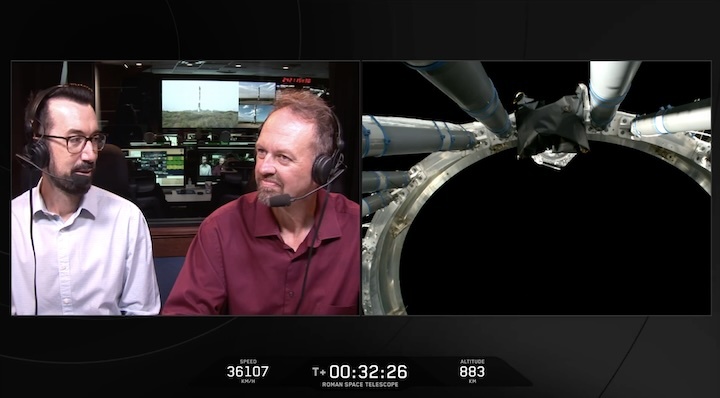
The Roman Space Telescope is a NASA flagship observatory designed to study dark energy and dark matter to help scientists unravel mysteries of the universe. Once at its final destination at Sun-Earth Lagrange Point 2, Roman will have an unobstructed view of the universe, and with a wide field of view at least 100 times larger than the Hubble Space Telescope, Roman will be able to map billions of galaxies, discover new exoplanets, study black holes, and more.
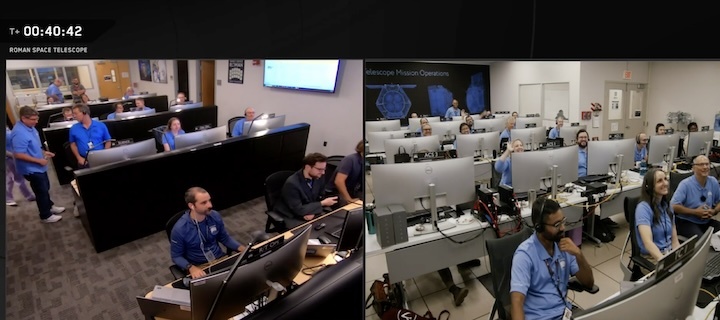
Quelle: NASA, SpaceX