
3.09.2026
NASA Roman’s Planet Imager Has Powered On
NASA’s Nancy Grace Roman Space Telescope team has successfully activated the mission’s Coronagraph Instrument, which will block starlight to view planets and dusty disks around nearby stars. Now the instrument will undergo a monthslong series of calibrations and tests prior to beginning full science operations.
The coronagraph power-on began at 7:27 a.m. EDT and completed at 8:22 a.m. on Sept. 1.
The Roman Coronagraph is a system of optics, masks, self-flexing mirrors, and sensors designed to demonstrate the most advanced technologies ever flown in space for directly imaging planets around other stars. It will block the glare from stars and make it possible for scientists to see the faint reflected light from planets in orbit around them.
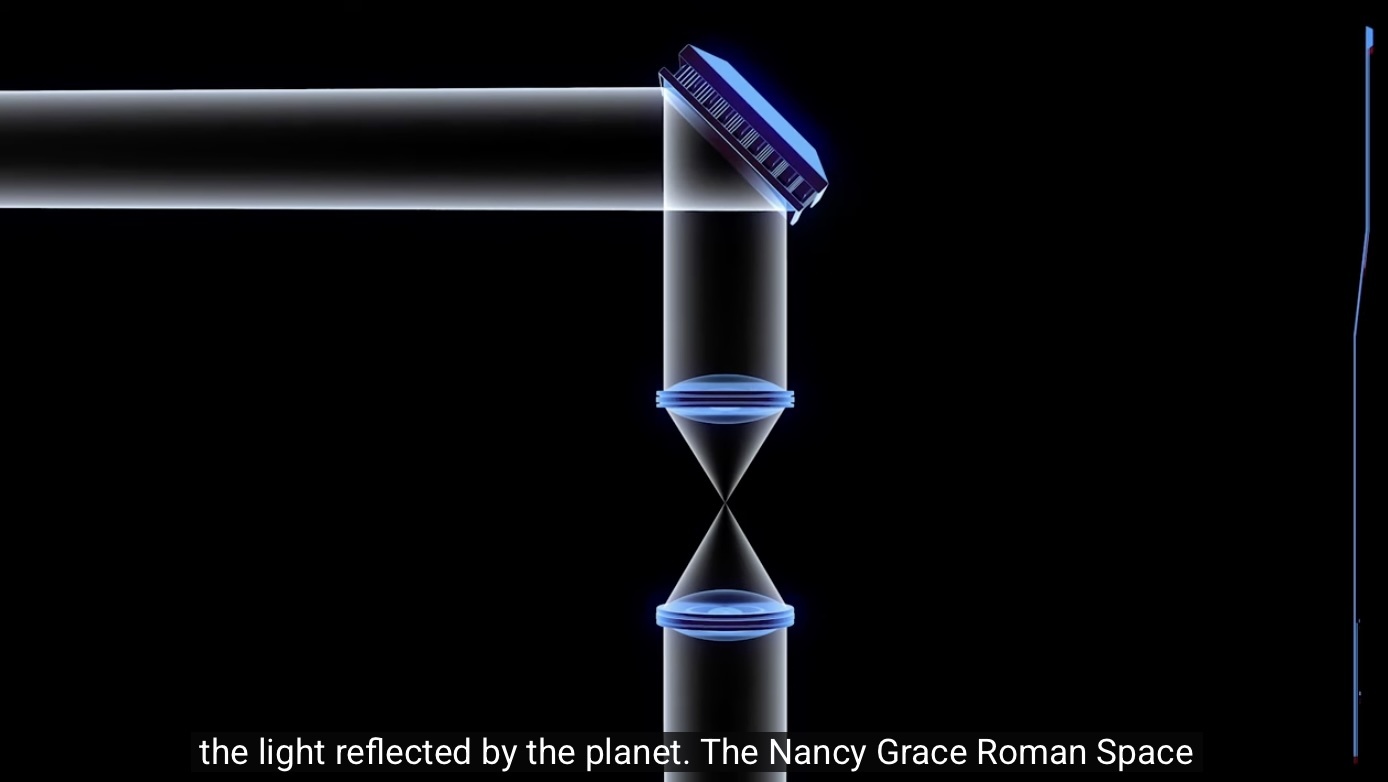
Using the coronagraph, scientists will photograph worlds and dusty disks in visible light to help us see giant planets that are older, colder, and in closer orbits than the hot, young super-Jupiters direct imaging has mainly revealed so far. The Roman coronagraph team will conduct a series of pre-planned observations for a total of three months spread across the mission’s first year-and-a-half of operations.
In addition to direct imaging, Roman will also find planets via the microlensing and transitmethods.
Quelle: NASA
+++
NASA Roman Space Telescope’s Antenna, ‘Visor’ Deployed
Roman’s antenna and visor-like sunshade have successfully deployed.
Roman will downlink the highest data volume of any NASA astrophysics mission so far via its high-gain antenna, which measures 5.6 feet wide yet only weighs 24 pounds. It’s made of a carbon composite material that weighs very little but will still withstand the spacecraft’s wide temperature fluctuations. Its large size will help Roman send radio signals across a million miles of intervening space to Earth.
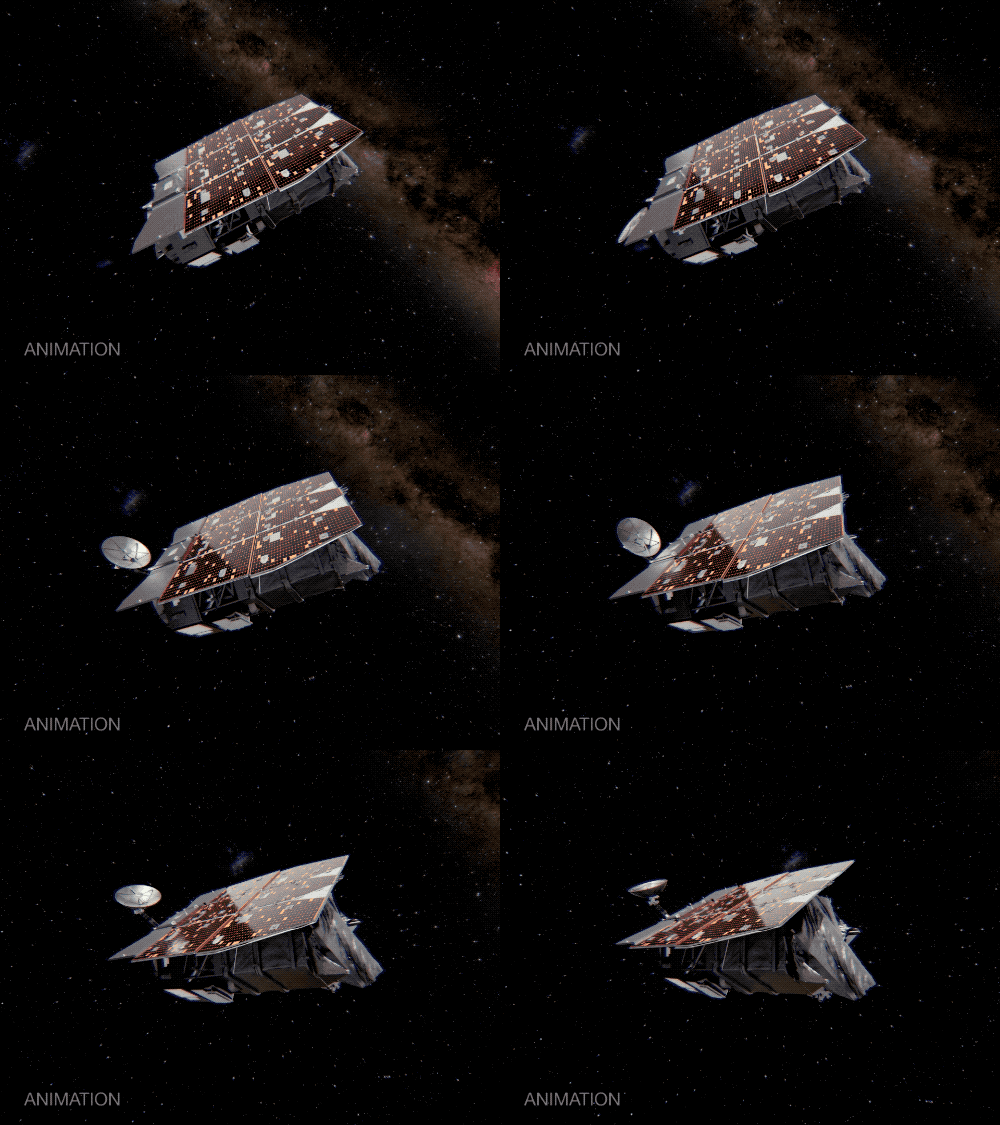
At one frequency, the dual-band antenna will receive commands and send back information about the spacecraft’s health and location. It will use another frequency to transmit a deluge of data at up to 500 megabits per second to ground stations in New Mexico, Australia, and Japan. These locations are spread out so the Roman team will consistently be able to communicate with the spacecraft. The antenna deployment lasted about 4 minutes and concluded at 2:03 p.m. EDT on Aug. 31.
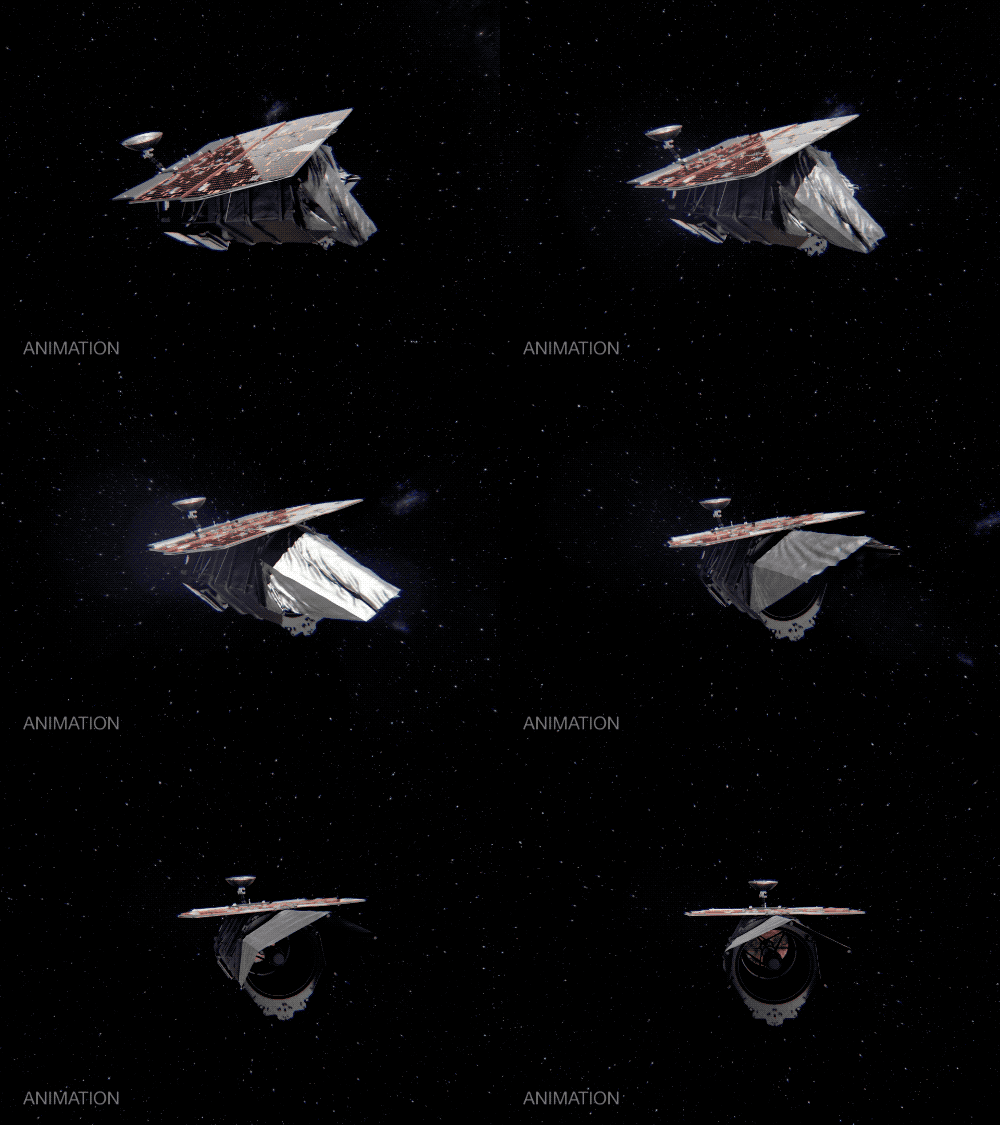
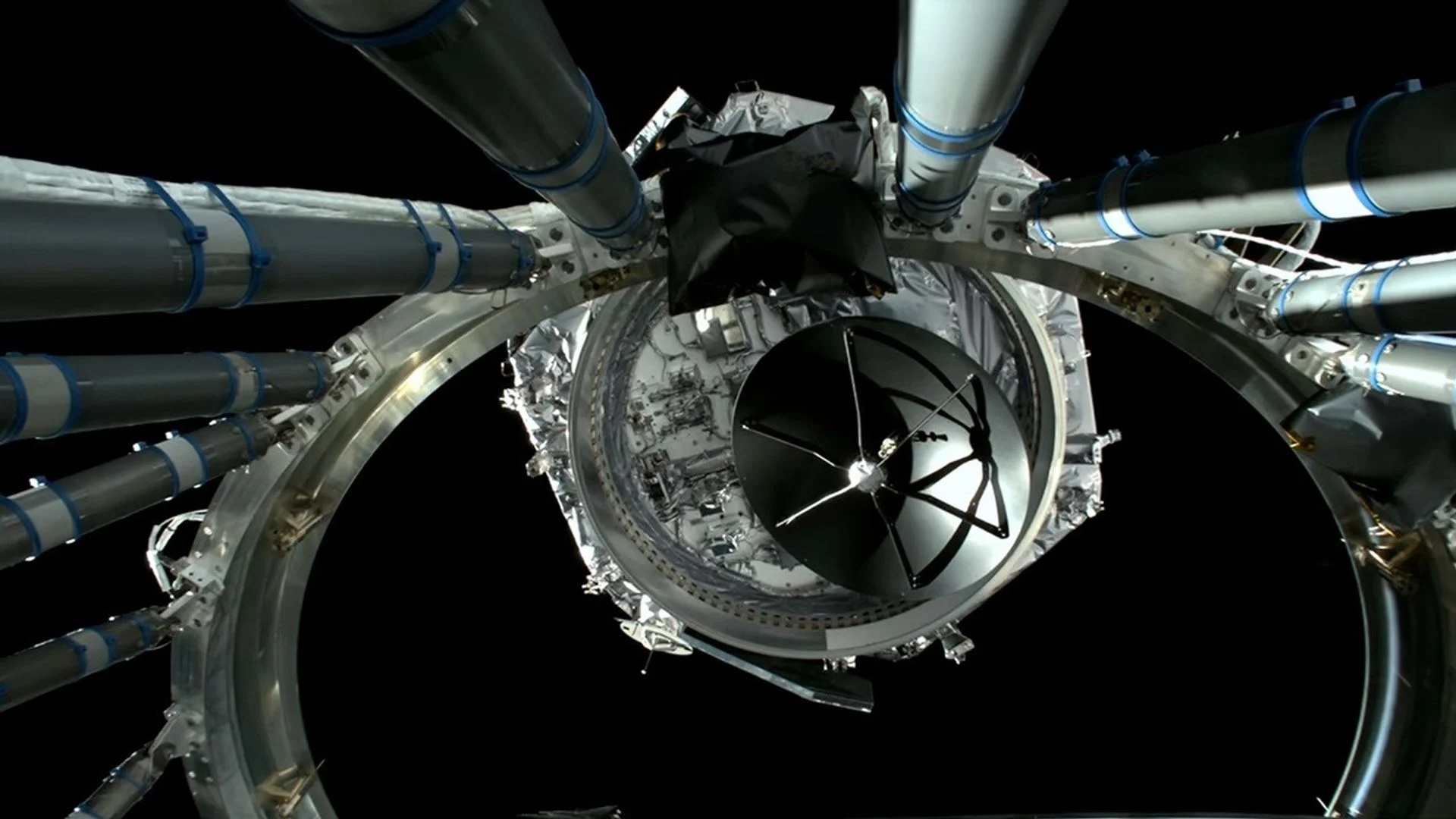
The deployable aperture cover, which is a large sunshade designed to keep unwanted light out of the telescope, was released next. It deployed via three booms that were triggered electronically to spring upward. It lasted about 8 minutes and was successfully completed at 6:05 a.m. EDT on Sept. 1.
Roman’s next major milestone is the Coronagraph Instrument activation. In a couple of weeks, the Wide Field Instrument will power on. Both instruments will run through a series of calibrations and tests throughout the rest of Roman’s three-month commissioning period. NASA anticipates releasing Roman’s first images by early 2027.
Quelle: NASA
----
Update: 5.09.2026
.
How Roman’s coronagraph will pave the way for NASA’s next flagship telescope
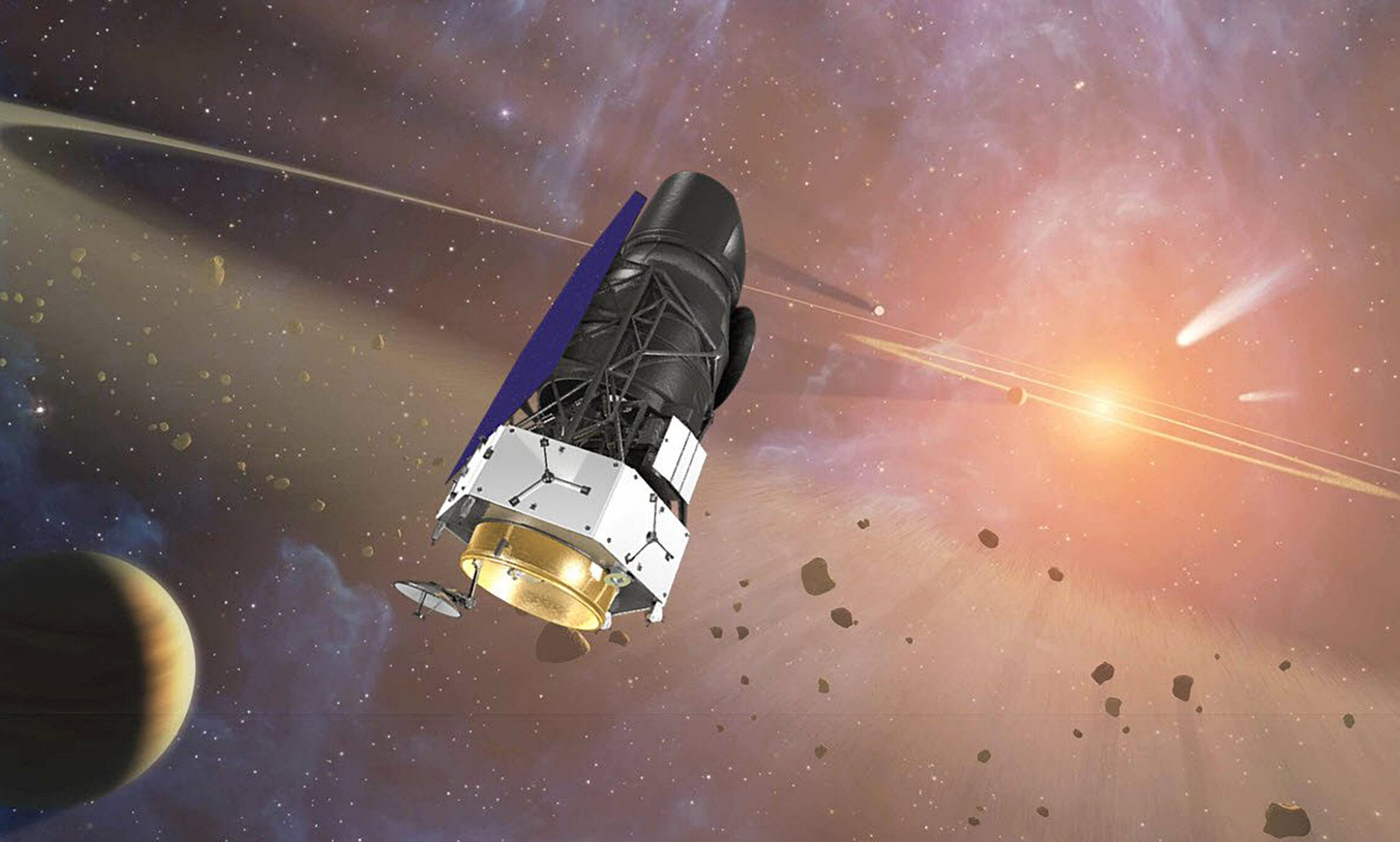
An illustration of the Nancy Grace Roman Space Telescope. Credit: NASA
KENNEDY SPACE CENTER, Fla. — Now that the Nancy Grace Roman Space Telescope is on its way to its intended orbit in deep space, NASA scientists are looking to early 2027 when the first science imagery is expected. And they’re anticipating more than just fresh views of the cosmos.
With its wide field of view, Roman is designed to survey expanses of the sky many times more vast than any previous space telescope, revealing new information about dark matter and dark energy, among other phenomena. The telescope also carries an experimental coronagraph, whose observations will help shape the design and operations of the one slated to be aboard NASA’s next flagship telescope: the Habitable Worlds Observatory (HWO), planned for launch in the mid-2040s.
At its most basic level, a coronagraph is a masking device that partially blocks the blinding light from host stars so that a telescope can detect the fainter glow emitted by nearby planets. Previous telescopes have had such instruments, but none as sophisticated as Roman’s coronagraph, which was designed to directly image Jupiter-sized exoplanets for the first time. The instrument is to serve as a pathfinder for the one aboard HWO that will attempt to directly image Earth-sized planets, which scientists consider the best chance of identifying life beyond our solar system.
To that end, Roman’s coronagraph will test a new star-dimming technique: deformable mirrors for what NASA describes as “adaptive optics,” to correct imperfections or interference imparted by the telescope’s own vibration or heat.
“Every mission that we fly sort of stands on the shoulders of the mission that came before it,” Nicola “Nicky” Fox, associate administrator for NASA’s Science Mission Directorate, told me in an interview before Roman’s launch on Aug. 30. “Habitable Worlds will have a coronagraph based on the one that is flying on Roman. We now have this unbelievable deformable mirror technology, and Roman is a demonstration of that technique.”
Based on the performance of the mirrors, which were developed at NASA’s Jet Propulsion Laboratory in California, NASA will refine the technology for HWO, said Vanessa Bailey, JPL Roman coronagraph scientist.
The specific mirrors for HWO “may not be exactly the same as what we’re doing” for Roman, she said, “but the big picture concept has a lot of similarities.”
Roman’s coronagraph contains two deformable mirrors about 5 centimeters in diameter, each equipped with more than 2,000 tiny pistons, or piezoelectric actuators. These devices can mold and shape the mirrors’ surfaces to correct for imperfections created by the telescope’s own lenses, or by vibrations generated by Roman’s motors and reaction wheels as the telescope repositions itself.
Roman doesn’t have the onboard computing power to calculate precisely how the mirrors must be deformed for each image; instead, operators on Earth will make those calculations.
First, the telescope will take a picture of a reference star that is near the intended target. That image will be sent to Earth, where operators will run it through software. The computed instructions will then be sent back to Roman so it can image the target.
Just as eyeglasses can be shaped to correct for vision problems, the coronagraph’s mirrors can be adjusted to make an image sharper, said Bailey. For instance, the mirrors might be shaped into something resembling a Pringles chip or parabola.
She’s anticipating at least one update for the coronagraph that will fly aboard HWO: “Almost certainly, Habitable Worlds will need more actuators than we have. They’ll need finer control than we have,” Bailey said.
NASA has compared Roman’s task of imaging Jupiter-sized exoplanets to attempting to view a firefly next to a flood lamp from across the entire United States. HWO’s coronagraph will need even more clarity and precision to image the smaller Earth-like planets, said Joshua Schlieder, a research astrophysicist in the Exoplanets and Stellar Astrophysics Laboratory at NASA’s Goddard Space Flight Center.
“What we learn in the process will be critical for a next-generation coronagraph instrument that’s designed to be even more sensitive and more precise, which is where we have to go for this ultimate goal of directly imaging a small planet like the Earth around a nearby star,” Schlieder said. “The Roman coronagraph will be a huge leap in that direction.”
Quelle: Aerospace America
----
Update: 12.09.2026
.
Roman telescope deploys solar array and communication systems, powers on Coronagraph Instrument
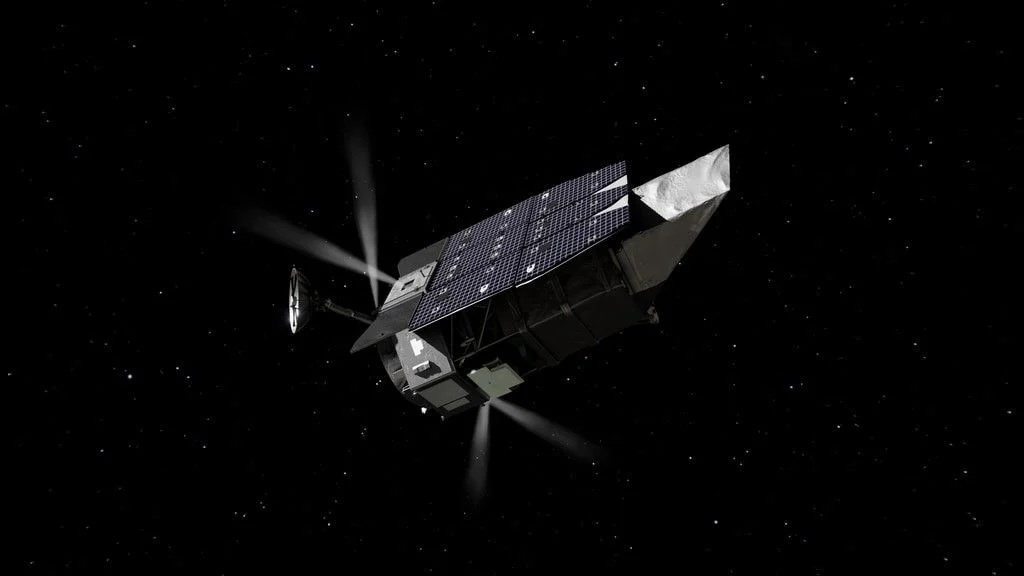
NASA’s Nancy Grace Roman Space Telescope successfully launched on Sunday, Aug. 30, atop a SpaceX Falcon Heavy rocket from the Kennedy Space Center in Florida. While the telescope still has several weeks of travel before reaching its orbital destination at the Sun-Earth Lagrange Point 2 (L2), teams have been busy commissioning the telescope — activating communications systems, bringing instruments online, and more.
Roman’s launch on Falcon Heavy — which came nine months ahead of schedule and on-budget — occurred at 7:26 AM EDT (11:26 UTC) from Launch Complex 39A (LC-39A). Weather had been a significant concern for launch, with pre-launch forecasts from the 45th Weather Squadron giving the mission a 50% chance of launch. Fortunately, this forecast improved to 70% “go” around two hours before launch, paving the way for what was ultimately a smooth countdown and launch.
Following booster separation and center core separation, the fairings encapsulating Roman separated, exposing the telescope to the vacuum of space for the first time. While the two side boosters returned to land at SpaceX’s Landing Zone 2 (LZ-2) and Landing Zone 40 (LZ-40), Roman teams worked to establish communications with the telescope, as fairing separation provided their first opportunity to do so.
A satellite within NASA’s Tracking and Data Relay Satellite System (TDRSS) successfully acquired Roman’s communications signal at 7:33 AM EDT (11:33 UTC), approximately seven minutes after launch. TDRSS was not planned to sustain Roman’s communications for long, as NASA’s Near Space Network and Deep Space Network took over to handle science data transmission and telescope trajectory tracking, respectively. The European Space Agency’s New Norcia ground station and the Japanese Aerospace Exploration Agency’s Misasa ground station will also support Roman’s communications with Earth once it reaches L2.
After an additional burn by the Falcon Heavy second stage, Roman was deployed at 7:57 AM EDT (11:57 UTC), beginning its 1.5 million km journey to L2. Approximately 30 minutes after deployment, Roman commanded its Solar Array Sun Shield to deploy, providing the telescope with power and thermal management. The four movable panels of the Solar Array Sun Shield were successfully deployed, and teams later confirmed that the observatory was quickly power-positive.
Roman then coasted toward L2 for over a day, until the first of the two planned mid-course correction burns was executed at 12:02 PM EDT (16:02 UTC) on Aug. 31. The three-minute burn ensured Roman was on the proper trajectory to L2.
Later that day, the telescope’s high-gain antenna was successfully deployed at 2:03 PM EDT (18:03 UTC) over a four-minute deployment sequence. Constructed from a carbon composite material and massing around 11 kg with a diameter of 1.71 m, Roman’s high-gain antenna will allow the telescope to downlink the highest volume of data of any NASA astrophysics mission to date. A dual-band antenna, the high-gain antenna will use one frequency to receive commands from Earth and send information about telescope health and location back to Earth. The other frequency will be used to transmit observation data at rates of up to 500 megabits per second.
The following day, on Sept. 1, Roman’s deployable aperture cover was deployed. The eight-minute deployment completed at 6:05 AM EDT (10:05 UTC), with three spring-loaded booms being commanded to extend upward and away from the telescope’s mirror assembly opening. The shade will block unwanted light — like light from the Sun, Earth, or the Moon — from reaching Roman’s mirror, ensuring observations are clear and useful.
The deployment of the aperture cover marked the final physical subsystem deployment for the telescope, with the remaining commissioning activities involving the activation of Roman’s two instruments: the Wide Field Instrument (WFI) and the Coronagraph Instrument (CGI). The WFI and CGI are located within the telescope bus itself and thus do not require any external deployments.

(Caption: Animation showing the deployment of the deployable aperture cover. Credit: NASA’s Goddard Space Flight Center Conceptual Image Lab)
Just an hour and a half after the aperture cover deployment, Roman teams began activating the CGI. Power-on began at 7:27 AM EDT (11:27 UTC) and lasted for 55 minutes, concluding at 8:22 AM EDT (12:22 UTC). The first major task following CGI activation is called “coronagraph decontamination,” a process that prevents outgassing molecules and dust from the telescope from coating the CGI’s precise optical systems. The decontamination period lasts until around 12 days after launch.
Once the CGI decontamination period wraps up, Roman teams will activate and begin cooling down the WFI. The WFI cool down will last until about T+15 days, after which teams will conduct normal commissioning activities for both the WFI and CGI until T+26 days.
From T+27 to T+42 days, the two instruments will undergo focusing and alignment procedures, with alignment expected over a two-day period from T+32 to T+33 days. Finally, from T+43 days until the telescope’s arrival at L2, Roman’s science teams will calibrate the WFI and CGI and confirm that the data they are receiving from the telescope is scientifically usable. A brief three-day period from T+73 to T+76 days will be used to characterize and calibrate the telescope’s reaction wheels, allowing the telescope to point itself.
Roman is expected to insert itself into orbit at L2 around 100 days after launch, concluding a 1.5 million km journey. According to Roman’s team, observations are expected to begin almost immediately upon reaching L2, thanks to the telescope’s well-planned and assumedly well-executed commissioning period.
Quelle: NSF
----
Update: 16.09.2026
.
NASA’s Roman Space Telescope will use gravity as a magnifying glass to find distant planets
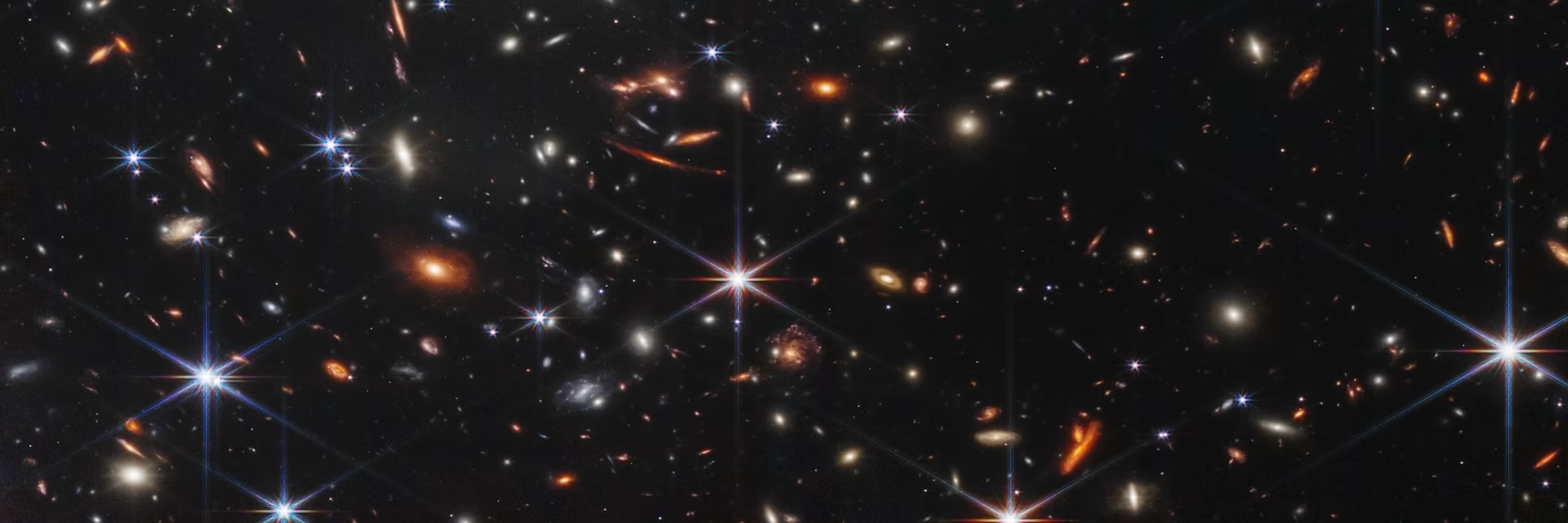
NASA’s Nancy Grace Roman Space Telescope launched on Aug. 30, 2026, beginning a journey that will take it about a million miles from the Earth. Once there, Roman will study some of the biggest mysteries in astronomy, from dark energy to the formation of galaxies. It will also search for planets around other stars, called exoplanets, but in a rather unusual way.
Roman will be able to find many of these exotic worlds without seeing the planets themselves. Instead, it will watch for distant stars that temporarily become brighter.

The reason this strategy works is one of the stranger consequences of Einstein’s theory of gravity: Gravity can bend light. Under the right circumstances, a star – or even a planet – can behave like a natural magnifying glass. The phenomenon is called gravitational microlensing.
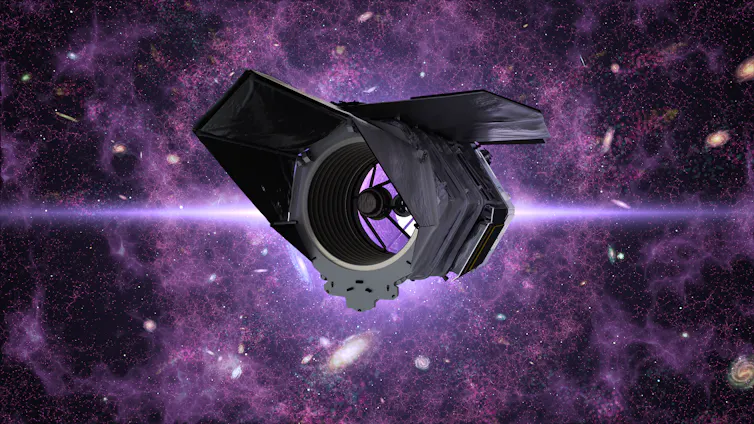
As an exoplanet scientist, I study how to detect and learn about worlds far beyond our solar system. One challenge in this field is that no single observing technique can reveal every type of planet. Microlensing is exciting because it functions as a tool that can help astronomers find planets that are difficult to find in other ways.
How can gravity act like a magnifying glass?
Imagine you are looking at a very distant star. Somewhere between you and that star, another star happens to pass almost directly across your line of sight. The two stars may actually be thousands of light-years apart, but from your viewpoint, they appear to line up.
According to Einstein’s theory of general relativity, an object’s mass curves the space around it. Light traveling through that curved space also follows a curved path. So when the foreground star passes almost exactly in front of the more distant one, its gravity bends some of the background star’s light toward you.
The result is surprising: Instead of hiding the distant star, the star in the foreground can make it appear brighter.
It is like looking though a magnifying glass, except there is no glass. The lens is gravity itself.
Because stars are constantly moving through our galaxy, the two will align only temporarily. The background star gradually brightens and then fades as the two stars move out of alignment.
Now, add a planet.
If the foreground star has a planet orbiting it, the planet’s gravity also affects the light from the distant star. It can produce an additional short disturbance in the otherwise smooth brightening pattern. Astronomers measure these changes in brightness and can use that small deviation to infer that a planet is there.
Remarkably, this technique can work even if the planet itself is far too faint and distant to see directly.
Roman will watch hundreds of millions of stars
There is a catch to microlensing: Astronomers cannot simply choose a star and wait for it to lens another one.
The necessary alignment happens by chance, and once an event is over, exactly that same alignment will generally never occur again.
The solution is therefore to watch a huge number of stars, over and over again. This is exactly what Roman will do.
As part of its Galactic Bulge Time-Domain Survey, Roman will repeatedly observe six fields of view toward the crowded center of the Milky Way. It will monitor hundreds of millions of stars, observing its main survey fields roughly once every 12 minutes during six intensive observing seasons.
Roman does not know which two stars will happen to line up. Instead, it will watch so many stars so frequently that large numbers of these rare alignments should occur in its field of view.
NASA expects the survey to discover more than 1,000 planets on relatively wide orbits through microlensing. That category is particularly valuable because most exoplanets known today orbit close to their stars; Roman will probe the colder, more distant regions of planetary systems that remain much less explored.
Roman is particularly well suited to this task because it combinesthe sharp infrared vision of a space telescope with an unusually wide field of view. That combination allows it to repeatedly image huge numbers of stars, even in extremely crowded regions toward the center of our galaxy.
Hunting for planets
Roman provides a strong example of how different planet-hunting techniques complement each other. While the telescope’s Galactic Bulge survey is designed to primarily search for microlensing events, Roman will also repeatedly measure the brightness of hundreds of millions of stars along the way. Those observations should reveal around 100,000 transiting planets.

This is a very different way of finding a planet: A transit occurs when a planet passes in front of its star from our point of view, blocking a small fraction of the star’s light and causing it to dim slightly.
The two populations – planets discovered through microlensing and transiting planets – should look very different. Transits favor planets orbiting close to their stars, particularly large planets that block more starlight and complete their orbits frequently. Microlensing, in contrast, is particularly sensitive to colder worlds on wider orbits, including planets resembling those in our outer solar system.
So Roman will effectively use the same sequence of images in two opposite ways. A star that periodically gets dimmer may reveal a transiting planet, while a star that temporarily gets brighter may reveal a gravitational lens.
But there is more. Microlensing can reveal planets that do not orbit a star at all. These so-called free-floating or rogue planetsmay have been ejected from the planetary systems where they formed and now travel through the galaxy alone. Because microlensing relies on gravity rather than light from the planet or its host star, even these dark, isolated worlds can reveal themselves when they pass in front of a distant background star.
Building a census of planetary systems
Ultimately, Roman serves as an example of why using several planet-hunting techniques matters. The thousands of exoplanets scientists have discovered so far are not an unbiased sample of all the planets in our galaxy. What they find depends partly on what telescopes are best able to detect.
Roman’s microlensing survey will fill in an important part of that picture by measuring the population of planets on wider orbits that previous surveys have explored much less completely. Combined with Roman’s enormous sample of transiting planets and discoveries from other telescopes, the observations will help astronomers answer one of the most fundamental questions in exoplanet science: What kinds of planetary systems does nature actually make?
Roman will do that using one of nature’s own telescopes: gravity itself.
Quelle: The Conversation