
31.08.2025
Space Agency JAXA to Partner for Chandrayaan-5 Mission: PM Modi
During his visit to Tokyo, Prime Minister Narendra Modi announced a new collaboration between ISRO and Japan’s JAXA for the Chandrayaan-5 mission, highlighting expanded cooperation in space.
isro-and-japanese-space-agency-jaxa-to-partner-for-chandrayaan-5
Tokyo: In a significant move that underscores deepening bilateral cooperation, Prime Minister Narendra Modi announced a landmark collaboration between the Indian Space Research Organisation (ISRO) and the Japan Aerospace Exploration Agency (JAXA) for the upcoming Chandrayaan-5 lunar mission. The announcement was made during PM Modi's address at the India-Japan Joint Economic Forum in Tokyo on Tuesday.
“We welcome the collaboration between ISRO and JAXA for the Chandrayaan-5 mission. Our active participation has gone beyond the limits of the earth and will become a symbol of mankind's progress in space,” PM Modi stated. The announcement, made alongside Japanese leaders, highlights the growing strategic and scientific partnership between the two Asian democracies and marks a new chapter in their multi-faceted relationship.
Prime Minister Narendra Modi’s first standalone visit to Japan in nearly seven years was a powerful reaffirmation of a relationship built on mutual trust and a shared vision for the future. The visit served to elevate cooperation across the entire spectrum of economic, technological, and diplomatic engagement.
An Economic Powerhouse in the Making
Central to the discussions was India's undeniable economic momentum. PM Modi positioned India not just as an investment destination but as a reliable, strategic partner for global growth. “The world is not just watching India, it is counting on India,” he declared, pointing to over USD 40 billion in Japanese investments as a foundation for future collaboration.
He underscored the country's unique advantages for investors, stating, “Today, India has political stability, economic stability, transparency in policy, and predictability. Today, India is the fastest-growing major economy in the world. And, very soon, it is going to become the third-largest economy in the world.”
Unlocking Next-Generation Collaboration: Nuclear, Defence, and Space
The partnership is boldly expanding into frontiers once considered off-limits. In a historic policy shift, PM Modi announced the opening of India’s nuclear energy sector to private participation, following similar reforms in defence and space. This move unlocks unprecedented opportunities for technological exchange and joint innovation between Indian and Japanese firms.
The new ISRO-JAXA pact for Chandrayaan-5 is the flagship example of this new ambition, taking a bilateral relationship literally out of this world.
Securing the Indo-Pacific: The Quad and Beyond
The leaders' talks strategically addressed broader regional security. The nations’ commitment to the Quad framework was emphasized as essential for ensuring a free, open, and stable Indo-Pacific. This alignment on regional security architecture is a cornerstone of their evolving strategic dialogue.
Building Together: From Infrastructure to Human Capital
The India-Japan partnership is notably holistic, creating tangible impact on the ground:
- Foundational Investments: Japanese expertise and funding have been pivotal in building India's modern infrastructure, from urban metro networks to manufacturing hubs.
- Future-Proofing with Technology: Collaborations are now focused on frontier technologies like semiconductors, AI, and robotics, ensuring both nations remain competitive.
- Investing in People: Programs like the India-Japan Talent Bridge are fostering a crucial exchange of skills and knowledge, strengthening the human foundation of the relationship.
- Green Growth Alliance: Joint projects in clean energy, such as biogas, are addressing sustainability goals while empowering rural communities.
The robust economic figures tell a compelling story: USD 21 billion in bilateral trade in just three quarters of FY 2024-25 and Japan's position as India’s fifth-largest source of FDI. As PM Modi affirmed, Japan has been a steadfast partner in India's development journey, a partnership now being upgraded for a new era of global challenges and opportunities.
Quelle: REPUBLIC
----
Update: 30.07.2026
.
Chandrayaan-5 update: Isro, Jaxa teams meet to decide what it will do on the Moon
Isro and Jaxa scientists met in Bengaluru to firm up Chandrayaan-5 lander-rover interfaces and payload plans. The work will shape LUPEX's search for lunar water ice and broader Moon studies.
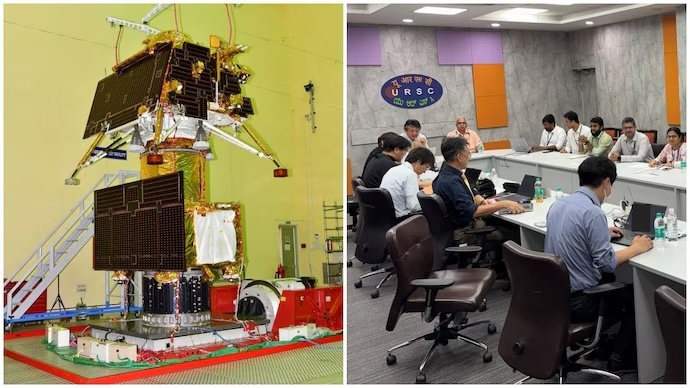
The teams are reviewing the suite of science instruments that will be carried aboard the Japanese rover. (Photo: Jaxa)
India's ambitious Chandrayaan-5 mission has taken another step forward as scientists from the Indian Space Research Organisation (Isro) and the Japan Aerospace Exploration Agency (Jaxa) met in Bengaluru to advance technical preparations for the joint lunar exploration mission.
Technical coordination is currently underway at Isro's U R Rao Satellite Centre (URSC), where engineers and scientists from both agencies are working on key mission interfaces and scientific instruments that will fly aboard the Lunar Polar Exploration (LUPEX) mission, also known as Chandrayaan-5.
Discussions are centred on the Interface Control Specification (ICS) between the Indian-built lunar lander and the Japanese rover, a critical component that will ensure seamless communication, power exchange and operational compatibility between the two spacecraft after landing on the Moon.
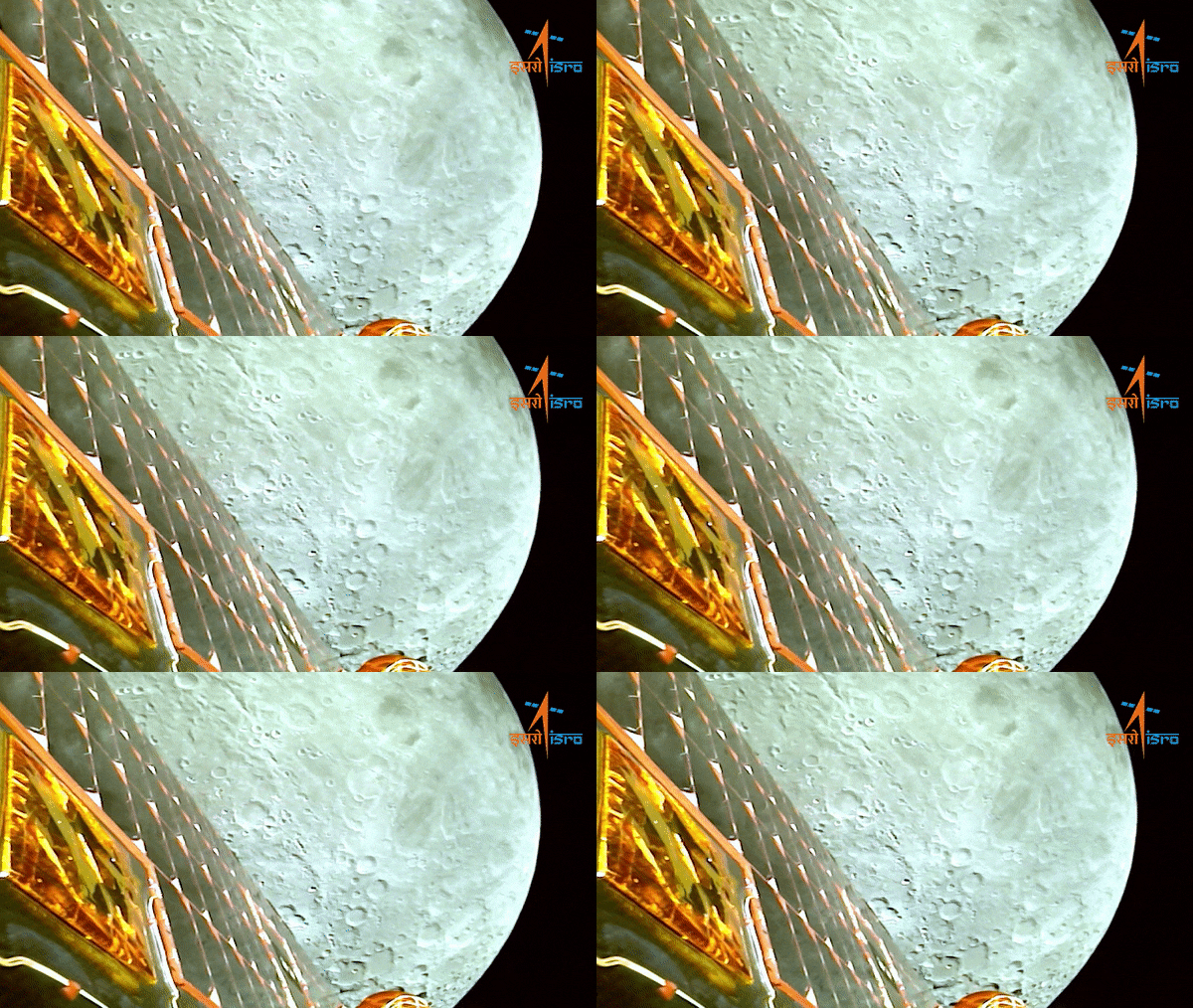
The teams are also reviewing the suite of science instruments that will be carried aboard the Japanese rover.
These payloads are expected to investigate the lunar surface and search for water ice deposits in the Moon's south polar region, one of the most scientificallyimportant locations for future human exploration.
The meeting highlights the growing collaboration between Isro and Jaxa, with engineers from both space agencies working closely to integrate hardware and mission operations ahead of the launch.
LUPEX will build on the success of Chandrayaan-3, which made India the first nation to achieve a soft landing near the Moon's south pole in August 2023.
While Chandrayaan-3 demonstrated landing technology and conducted short-duration scientific experiments, Chandrayaan-5 is expected to carry a larger, more capable rover designed to travel longer distances and perform detailed investigations of permanently shadowed regions.
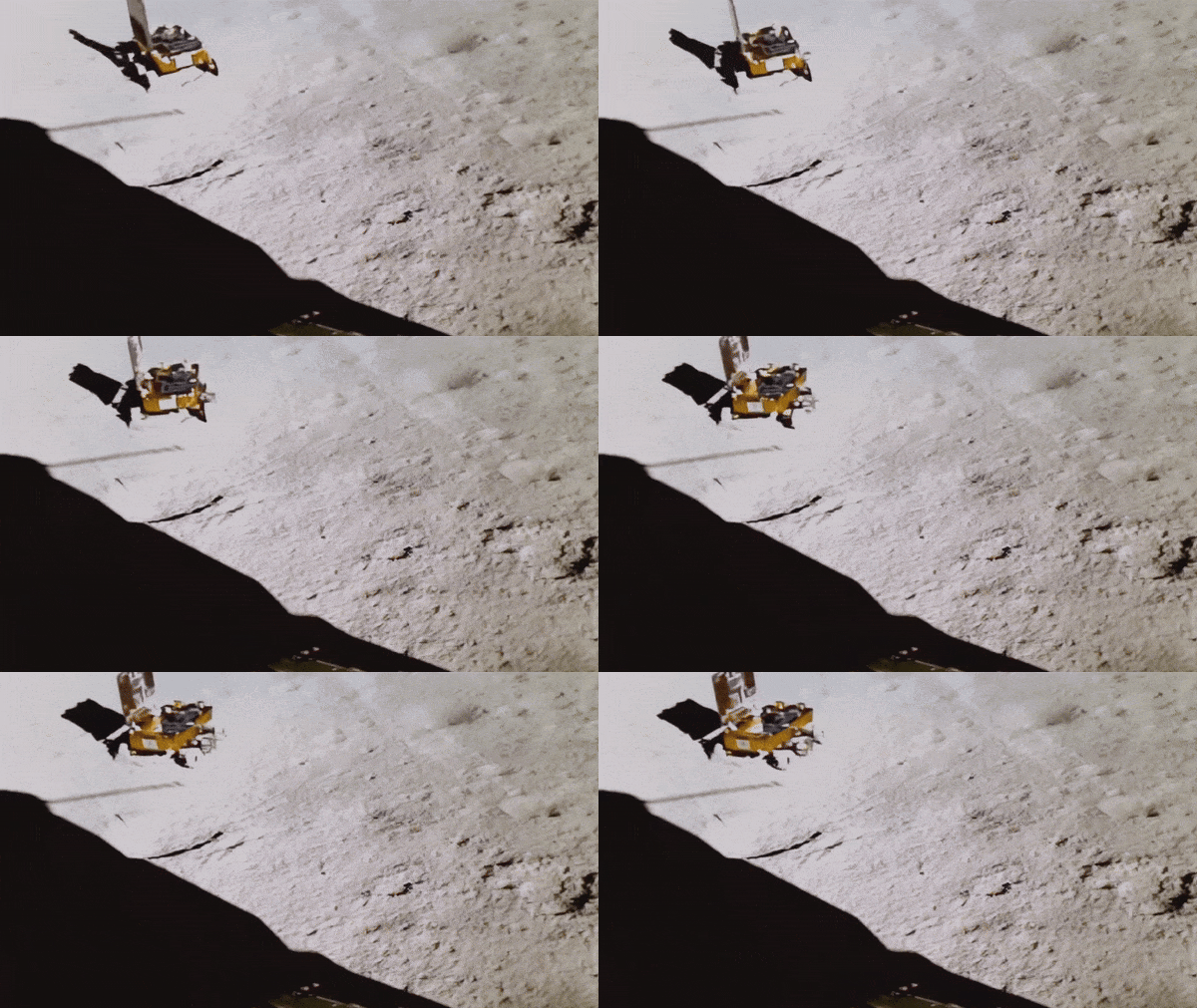
Scientists believe these regions may contain frozen water accumulated over billions of years, a resource considered vital for future lunar bases and long-duration human missions.
The mission aims to study the quantity, distribution and accessibility of lunar water ice while improving understanding of the Moon's geological history.
With technical coordination progressing at URSC, the Isro-Jaxa partnership continues to move closer to one of the most ambitious robotic lunar exploration missions planned by the two countries, paving the way for deeper international cooperation in future space exploration.
Quelle: INDIA TODAY