
18.04.2026

Artemis II astronauts praise their moonship’s performance, especially the heat shield
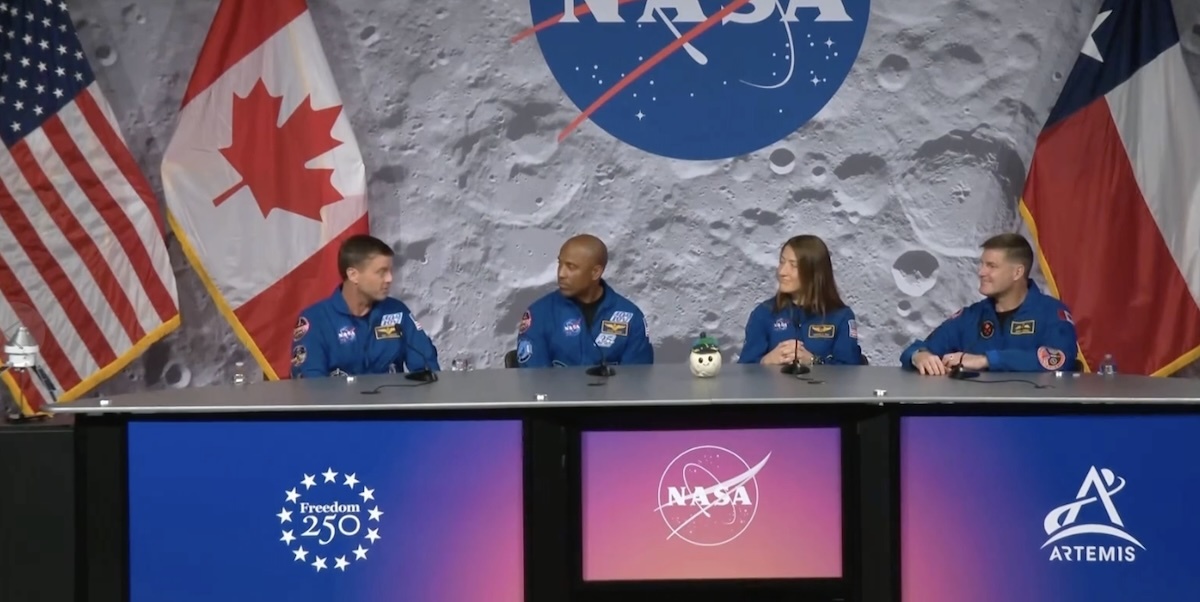
The Artemis II astronauts who ignited a lunar renaissance gave high marks Thursday to their moonship, especially the heat shield, for its performance during reentry.
In their first news conference since returning to Earth, the three Americans and one Canadian said their lunar flyby puts NASA in a much better position for a moon landing by a crew in two years and an eventual moon base. They spoke from NASA’s Johnson Space Center in Houston, their home base.
Commander Reid Wiseman later told The Associated Press that he’s been so busy since getting back that he hasn’t had time to gaze up at the moon, let alone Carroll Crater, the name suggested by the crew for a bright lunar crater in honor of his late wife. They shared two daughters whose anxieties and fears over their father’s journey ended with his safe splashdown late last week.
“Being 252,000 miles away from home was the most majestic, gorgeous thing that human eyes will ever witness,” he said in an interview with the AP. But hurtling back through the atmosphere at 39 times the speed of sound, “that is scary and that is risky.” That’s why he yearned for home midway through his flight. “You just want to hold your kids and you just want them to know that you’re safe.”
Wiseman, pilot Victor Glover, Christina Koch and Canada’s Jeremy Hansen launched to the moon from Florida on April 1, NASA’s first lunar crew in more than a half-century and by far the most diverse.
They became the most distant travelers ever — breaking Apollo 13’s record — as they whipped around the lunar far side, illuminated enough to reveal features never viewed before by the human eye. The sight of a total lunar eclipse added to the wonderment.
Their Orion capsule, which they named Integrity, parachuted into the Pacific last Friday to close out the nearly 10-day voyage. Artemis II’s Houston homecoming the next day coincided with the 56th anniversary of the launch of Apollo 13.
Wiseman said he and Glover “maybe saw two moments of a touch of char loss” to the heat shield as Integrity plunged through the fastest, hottest part of reentry. Once aboard the recovery ship, they peered at the bottom of the capsule as best they could, leaning over to view any signs of damage. They spotted a little loss of charred material on the shoulder, where the heat shield meets the capsule.
“For four humans just looking at the heat shield, it looked wonderful to us. It looked great, and that ride in was really amazing,” Wiseman said.
He cautioned that detailed analyses still need to be conducted. “We are going to fine-tooth comb every single, not even every molecule, probably every atom on this heat shield,” he said.
The heat shield on the first Artemis test flight in 2022 — with no one aboard — came back so pockmarked and gouged that it pushed Artemis II back by months if not years. Instead of redoing it, NASA opted to change the capsule’s entry path to minimize heating. Future capsules will sport a new design.
As the parachutes released right before splashdown, Glover said he felt like he was in freefall — like diving backward off a skyscraper. “That’s what it felt like for five seconds,” he said, adding when the ride smoothed out: “It was glorious.”
Since their return, the four astronauts have endured round after round of medical testing to check their balance, vision, muscle strength and coordination, and overall health. They even put on spacewalking suits for exercises under conditions simulating the moon’s one-sixth gravity of Earth to see how much endurance and dexterity future moonwalkers might have upon lunar touchdown.
NASA already is working on Artemis III, the next step in its grand moon base-building plans. The platform from which the rocket launches headed back Thursday to Kennedy Space Center’s Vehicle Assembly Building, where it will be prepped for next year’s Artemis launch.
Still awaiting an assigned crew, Artemis III will remain in orbit around Earth as astronauts practice docking their Orion capsule with one or two lunar landers in development by Elon Musk’s SpaceX and Jeff Bezos’ Blue Origin.
Artemis IV will follow in 2028 under NASA’s latest schedule, with two astronauts landing near the moon’s south pole.
NASA is aiming for a sustainable moon presence this time around. During the Apollo moonshots, astronauts kept their visits short. Twelve astronauts explored the lunar surface, beginning with Apollo 11’s Neil Armstrong and Buzz Aldrin in 1969 and ending with Apollo 17’s Gene Cernan and Harrison Schmitt in 1972.
Koch said that since returning, she and her crewmates are “feeling even more excited and just ready to take that on as an agency.”
“We made it happen,” she added.
Everyone will need to accept extra risk to achieve all this and trust that any future problems can be figured out in real time, Hansen noted. “We’re not going to be able to pound everything flat before we go. We’re going to have to trust each other,” he said.
While everything went smoothly for them, “it was also very clear to us that it can get pretty bumpy,” he said. Future crews will have to “understand it can get real bumpy real fast.”
Quelle: AP
+++
'Powerful together' Artemis II astronauts reflect on moon journey
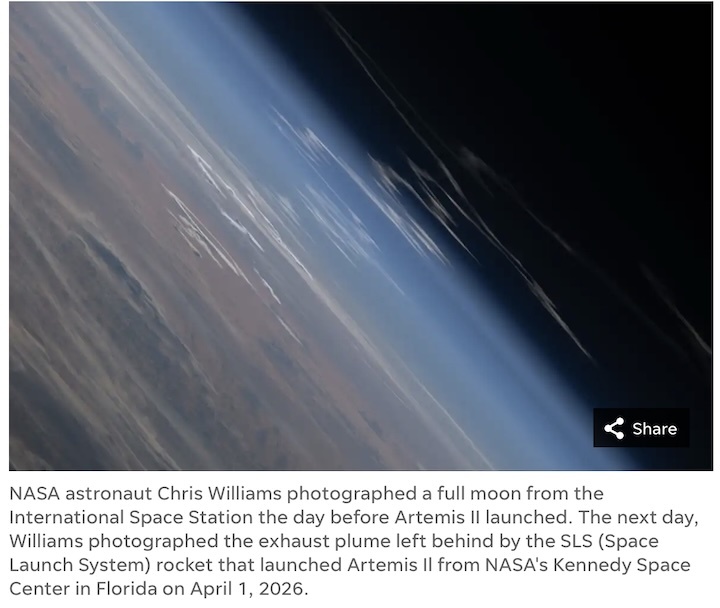
Just a week after returning from their ground-breaking 10-day journey around the moon, the Artemis II astronauts say they've been overwhelmed by how closely people on Earth followed their mission — and how much it meant to everyone.
And they're still trying to fully grasp what their trip father into space than any other humans meant to them.
Hansen mentioned that he and his crewmates constantly shared a sense of smelling small as they ventured further into space.
“I kept seeing that same thing and that same feeling: small and powerless, yet powerful together,” said Mission Specialist Jeremey Hansen from the Canadian Space Agency.
During the flight, commander Reid Wiseman, pilot Victor Glover, and missions specialists Christina Koch and Hansen broke a human spaceflight distance record, performed science and lunar observations, and wowed the world with stunning images and heartfelt moments — all to set the stage for a future Artemis mission that will land humans back on the moon.
After a docking test with one or both lunar landers in Earth orbit next year during Artemis III, the Artemis IV mission is poised to land a crew on the moon. And from there, NASA vows an extensive moon base as a permanent lunar presence.
'Global outpouring of support' for crew
“When we came home, we were shocked at the global outpouring of support, of pride of ownership of this mission,” Wiseman said. “And really, I think at the beginning, that's what the four of us wanted. We wanted to go out and try to do something that would bring the world together — to unite the world."
When asked if they knew the impact the Artemis II mission was having, the astronauts said they really didn't at the time. The crew noted that they were talking to Mission Control and all had a few calls with their families. They were focused on doing their jobs.
Koch noted that she doesn't like being the center of attention; she doesn't even like people celebrating her birthday. When her husband realized she was being thrust into global spotlight, he called her siblings to discuss just who was going to break the news to her when she returned.
“Because we didn't know. And in fact, what we were told really — through talking with a couple times with our families — was that there was an impact,” said Koch. “Not necessarily the number of viewers or anything like that, but that there was a positive impact.”
On a video call when Koch was still in space, her husband broke the news to her that the mission was creating a positive global impact.
“It brought tears to my eyes, and I said, ‘that's all we ever wanted’,” Koch said.
“We took your hearts with us, and your hearts lifted our hearts,” said Koch.
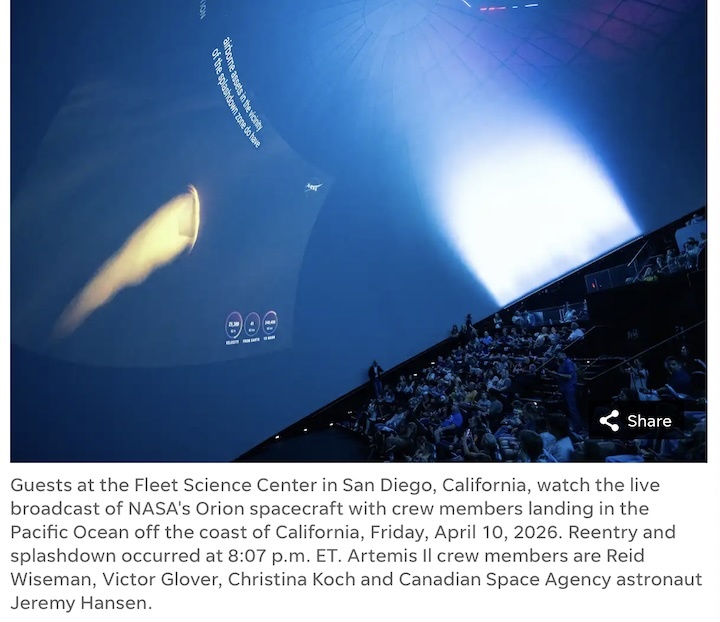
Artemis II astronauts reflect on shift in perspective
While the four saw stunning views while deep in space, they had a mission to accomplish. But Wiseman admitted sometimes the view was powerful enough to pull his attention away from the work at hand.
“Whenever someone would slip out, it was amazing to watch the other three pull them back in,” he said.
Packed schedule aside, all admitted the views were not just life changing, but difficult to put into words and even to comprehend.
This was especially true when the four were the first to witness the moon eclipse the sun from that distance and vantage point in space.
Upon returning to Earth, Wiseman, who described himself as not particularly religious, requested to speak with the chaplain on the Navy ship. When Wiseman laid eyes on the chaplain and saw the cross he was wearing, Wiseman said he shed tears.
“There was just no other avenue for me to explain anything or to experience anything,” he said.
As for what they saw, Hansen said it was hard to choose a favorite. What kept grabbing his attention was the three-dimensional depth to the galaxy and where the stars, moon and Earth were.
“And that the sense I had was the sense of fragility and feeling small, infinitesimally small — but yet this very powerful feeling as a human being, like as a group,” said Hansen.
Artemis crew say they returned as best friends
Koch joked that initially during their first time sleeping in Integrity, she wanted them all to be closer together.
“The astronauts’ creed is always to launch as friends, as land and land as friends. And when you live together in a small group for as long as you do on the space station, or even 10 days, it's a challenge,” said Wiseman. “But I am here to tell the world we launched as friends and we came back as best friends.”
“We are just we are bonded forever. I mean, that's the closest four humans can be and not be a family," he said.
Artemis II astronauts reflect on Orion spacecraft performance
Wiseman said the Orion spacecraft handled extremely well during flight.
“They fixed everything that we asked,” said Wiseman.
Glover noted that all four of them got a chance to fly the spacecraft.
“It flew better than the sim in all areas,” he said.
They were asked about little hiccups during the mission, such as with the toilet. At one point, Koch played the role of “space plumber”, working with Mission Control to get the toilet fully operational. Wiseman explained that while the toilet flushed just fine but the issue was a clog in the vent line.
“I just want to say 100% point blank, that was a wonderful toilet,” he said.
The toilet could only hold so much before it had to be dumped into space.
“That is an interesting thing to see out the window,” Wiseman laughed. “It’s just like a billion little, tiny flecks of ice heading out into deep space.”
As for the spacecraft’s heatshield, which prompted concerns and triggered an investigation after the uncrewed Artemis I Orion spacecraft saw charring during reentry, the crew and NASA both report initial satisfaction with what they saw.
Wiseman said before boarding the helicopters on the night of splashdown, the crew collectively took a look at their spacecraft. Slight charring was seen where the spacecraft’s heatshield meets the cone structure, yet the crew was satisfied with how the full bottom of the heatshield held up.
“It looked wonderful to us,” said Wiseman. “It looked great. And that ride in was really amazing.”
NASA plans to fully study how the spacecraft held up and release findings to the public.
Quelle: Florida Today
----
Update: 20.04.2026
.
Canadian astronaut’s bon mots help heal wounds from French language row
Jeremy Hansen praised for speaking French in space after Air Canada chief’s linguistic snub exposed tensions and drew rebuke from PM
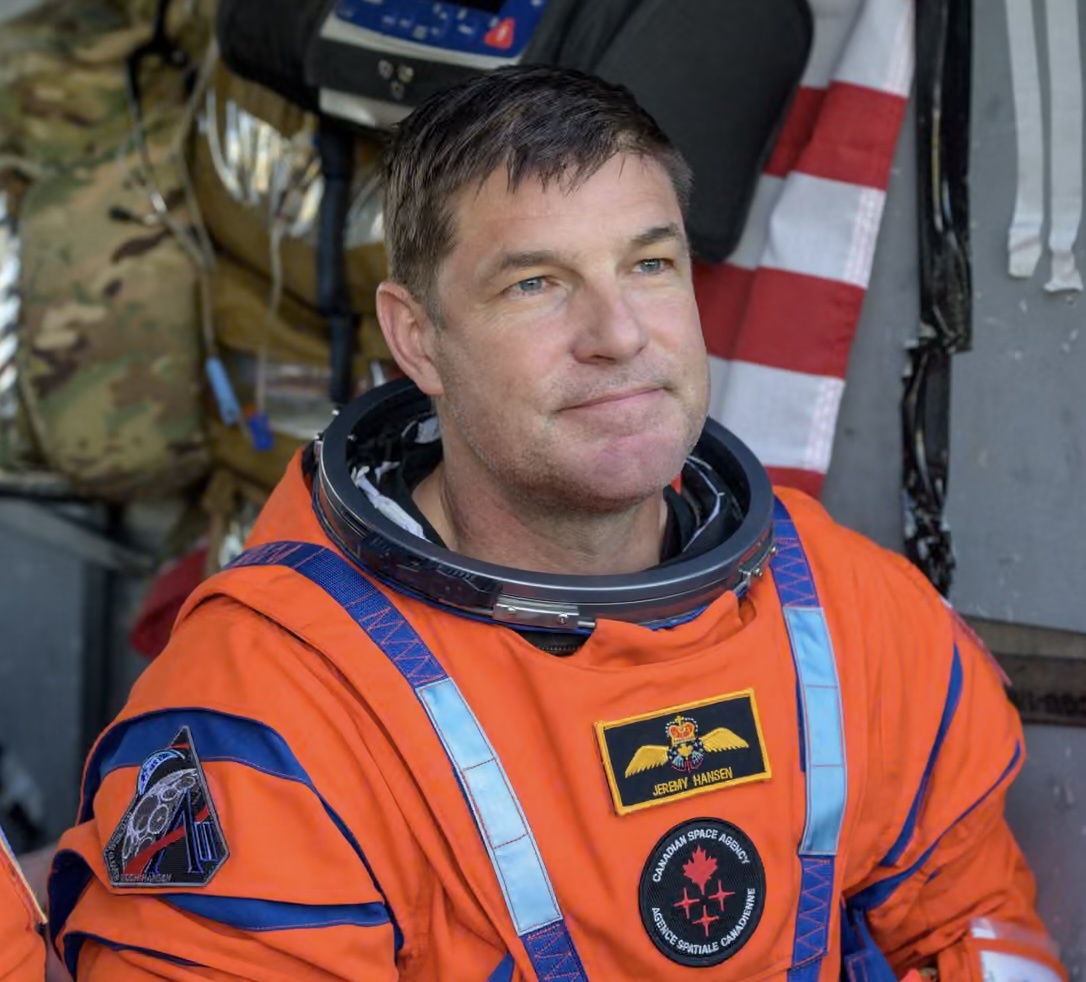
Few people foresaw humanity’s quest for the moon as accurately as the 19th-century French author Jules Verne, whose two works –From the Earth to the Moon and Around the Moon – anticipated many of the features of modern lunar exploration.
But Verne’s language had never been spoken in deep space until the Canadian astronaut Jeremy Hansen uttered four words during Nasa’s recent Artemis II mission.
On day three of the mission, as the Integrity spacecraft hurtled towards the moon, Jeremy Hansen turned to a camera. “Bonjour tout le monde,” he said from nearly 125,000 miles away – a greeting with a literal translation that captured the immensity of the journey: hello all of the world.
“For the first time in history, our language, the French language, was expressed en route to the moon,” posted a Canadian parliamentarian. “Never had French been spoken from so far away.”
Hansen’s decision to speak French, during the mission and at a Nasa press conference on his return to the Earth, came shortly after a linguistic row – and public relations nightmare – for Canada’s flagship airline, that underscored how deeply the language is linked to the country’s politics and culture.

The Air Canada chief Michael Rousseau was forced to resign last month amid a storm of indignation after he spoke just two words of French in a video tribute to two pilots killed in a fatal collision. One of the pilots was a native French speaker, and Air Canada is based in Montreal, and Rousseau’s failure to speak the language – despite having a francophone mother and wife – has been seen as a snub to the 80% of Quebec’s population who do.
Even Canada’s prime minster waded into the dispute, saying the video showed a “lack of judgment, a lack of compassion”.
Weeks later, Mark Carney had nothing but praise for Hansen as the Artemis crew hurtled towards the moon.
“Canadians are so proud of you for a number of reasons, of course, but it was incredible to hear you speak French for the first time in space,” he said while speaking French to the astronaut. “Proud of what you’re doing … We’ve all been watching and inspired by what you’re doing.”
The conversation between two anglophones – addressing each other in heavily accented French – prompted widespread praise among many Canadians.
“Francophones in Canada will celebrate those efforts. Neither of those men speak perfect French. They likely never will. But to see them make that effort publicly and very openly resonates with francophones across the country,” said Stéphanie Chouinard, a professor of political science at Canada’s Royal Military College, the postsecondary institution Hansen attended. “The expectation here is not perfection, it’s effort and respect.”
Hansen learned French earlier in school and had to reach a high level of proficiency, in order to graduate from the RMC. He still frequently uses French in public outreach events and often answers questions from Canadians bilingually. For many, Hansen appears to treat French as part of the job of representing Canada and Air Canada’s chief seemed to treat the language as optional.
“Aside from firefighters, astronauts are probably the profession that children most look up to. And for Hansen to put himself out there and to make that effort – and to show that it’s always a work in progress – is the best kind of role modeling you can hope for” said Chouinard. “French doesn’t go a long way in the hallways of Nasa. [But] he knows he represents Canada – and sees it as something worth showcasing as important. This speaks volumes.”
Online forums have discussed the astronaut’s heavily accented French, with most agreeing it was impressive. And many flagged the obvious: it was the opposite level of effort to Air Canada’s outgoing CEO.
Hansen has spoken publicly about his desire to represent the people who live in Canada as best he can. He has forged close relationships with Indigenous elders to better understand the cultural importance of the 13 moon calendar, shared by the Anishinaabe, Cree and Haudenosaunee cultures, that guides planting, harvesting, hunting and gathering.
The Artemis II mission left Earth during Ziisbaakdoke Giizis, which means the sugar marking moon in Anishinaabemowin – a time widely seen as a time of renewal when the maple sap runs.
Hansen’s custom patch, which he wore for the mission, was designed by the Anishinaabe artist Henry Guimond. Part of the image shows Artemis launching her arrow with the astronauts, sending them around “Grandmother Moon” who reflects the “cycle of life”.
“Sit with your elders and ask questions,” Hansen said from space. “Every time I’ve listened, I’ve learned amazing things.”
Upon return to Earth, the Artemis crew appeared moved by the deeply human experience of leaving the planet. Hansen later said it made him realize humans were “small and powerless – yet powerful together”.
Recent developments in artificial intelligence and wearable technology have led some to suggest that learning a second language is no longer important. But the Canadian astronaut’s decision to deliberately speak French, with the world watching reflected the deep cultural component embedded in learning and respecting another language.
“Of course, language is a tool of information, exchange and communication. But it’s so much more than that. Anyone who decides to learn to speak another language than their own, realizes the extent to which any language comes with a specific conception of the world and the universe around us,” said Chouinard. “It’s really a way to learn to see the world – our world – through a different lens.”
Quelle: The Guardian
----
Update: 22.04.2026
.
NASA on Track for Future Missions with Initial Artemis II Assessments
Following NASA’s Artemis II mission successfully splashing down on Earth, engineers started diving into detailed analysis of data to assess how key systems and subsystems on the Orion spacecraft, SLS (Space Launch System) rocket, and systems at the launch pad at the agency’s Kennedy Space Center in Florida performed. The Artemis II test flight successfully began a new era of exploration, laying the groundwork for the third Artemis mission next year, lunar surface missions, a Moon base, and future missions to Mars.
Orion spacecraft
After its 694,481-mile journey around the Moon and back, the agency’s Orion spacecraft successfully reentered Earth’s atmosphere and splashed down off the coast of San Diego on April 10. The crew and spacecraft were safeguarded by Orion’s thermal protection system as they traveled nearly 35 times the speed of sound during reentry. Initial inspections of the system found it performed as expected, with no unusual conditions identified. Diver imagery of the spacecraft’s heat shield initially taken after splashdown and further inspections on the recovery ship found the char loss behavior observed on Artemis I was significantly reduced, both in terms of quantity and size. Performance also was consistent with arc jet facility ground testing performed after Artemis I.
Airborne imagery of Orion’s crew module also was obtained during re-entry and will be reviewed in the coming weeks. This imagery will provide insight into the timing of when minimal char loss occurred as well as other heat shield data.
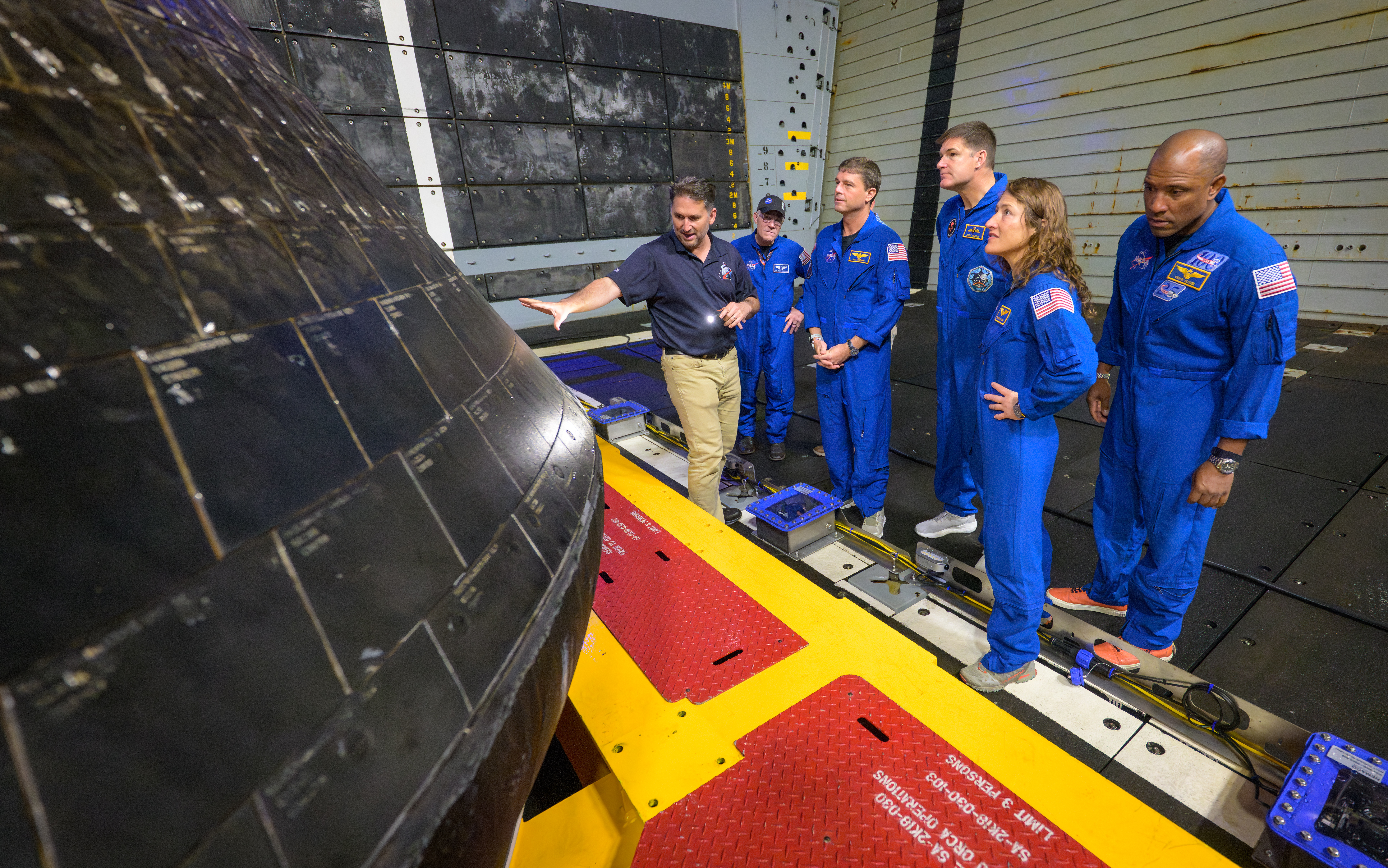
The crew module is expected to return to NASA Kennedy this month for additional examination of the heat shield during Orion de-servicing in the Multi-Payload Processing Facility. Teams will conduct detailed inspections, retrieve post-flight data, remove reusable components such as avionics, and eliminate remaining hazards such as excess fuel and coolant.
Over the summer, the heat shield will be transported to NASA’s Marshall Space Flight Center in Huntsville, Alabama, for sample extraction and internal x-ray scans to provide further insight into the system and material behavior.
The ceramic tiles on the upper conical backshell of the crew module also performed as expected. Reflective thermal tape, which is expected to burn off upon re-entry, is still present in numerous locations. This reflective tape is used to help control vehicle temperatures while in space and serves no function for thermal protection upon re-entry.
Orion splashed down with precision, just 2.9 miles from the targeted landing site. Initial assessments showed entry interface velocity was within one mile-per-hour of predictions.
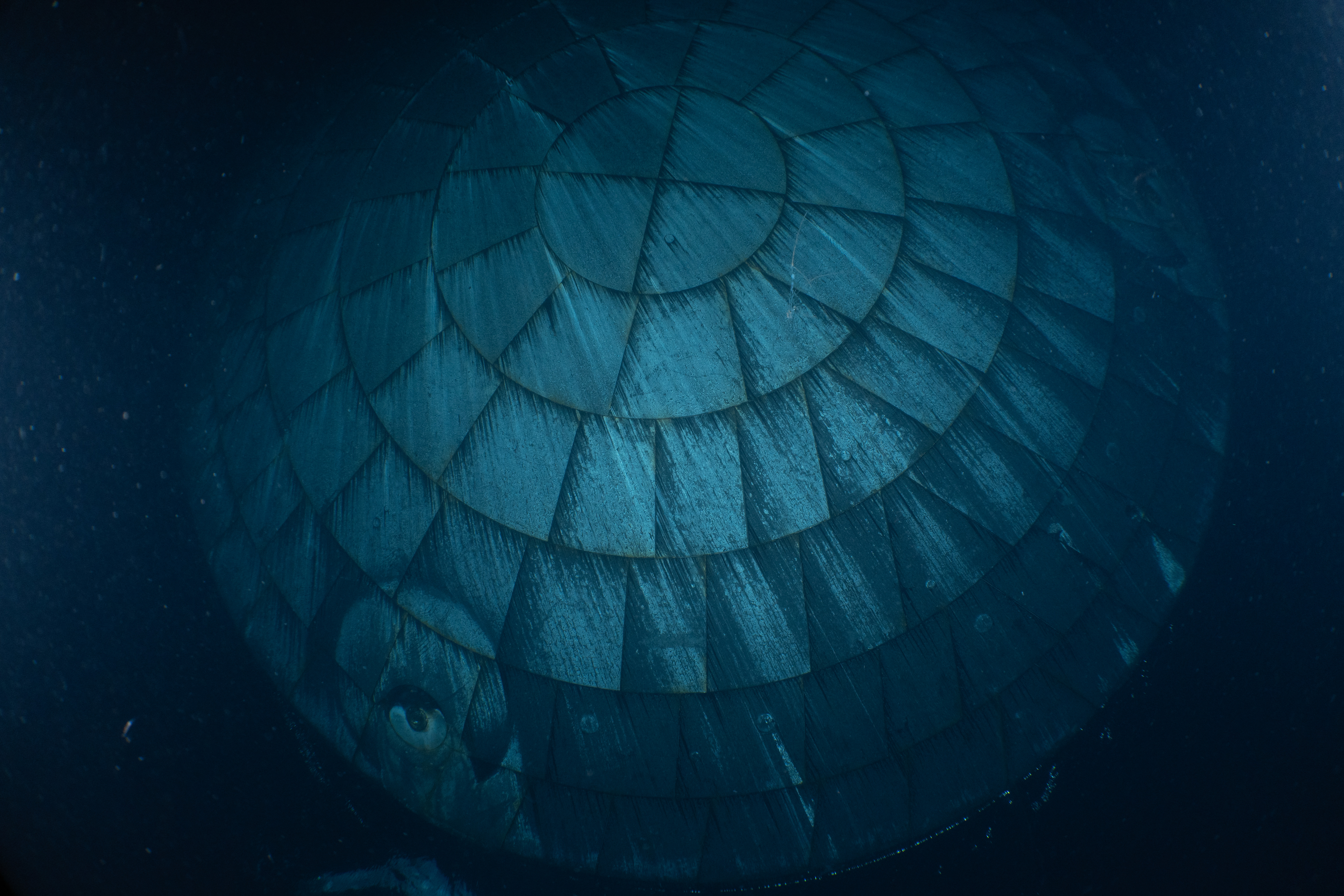
After splashdown, several Orion components were removed in San Diego for post flight analysis and future reuse prior to the spacecraft’s return to Kennedy. These items included seats, video processing units, crew module camera controllers, stowage containers and bags, and Orion Crew Survival System suit umbilicals.
The team currently is assessing the hardware and gathering data to support the post flight investigation of the urine vent line issue during the Artemis II mission. Teams will work to identify root cause and initiate corrective action for Artemis III.
America’s Moon rocket
The SLS rocket that launched the Artemis II mission also performed well, meeting its mission objectives for the test flight. While engineers continue studying the data, an early assessment indicates the rocket accurately placed Orion where it needed to be in space. At main engine cutoff, when the core stage’s RS-25 liquid engines shutdown, the spacecraft was traveling at over 18,000 miles per hour, achieving its insertion velocity for orbit, and executing a precise bullseye for its intended location.
Exploration Ground Systems
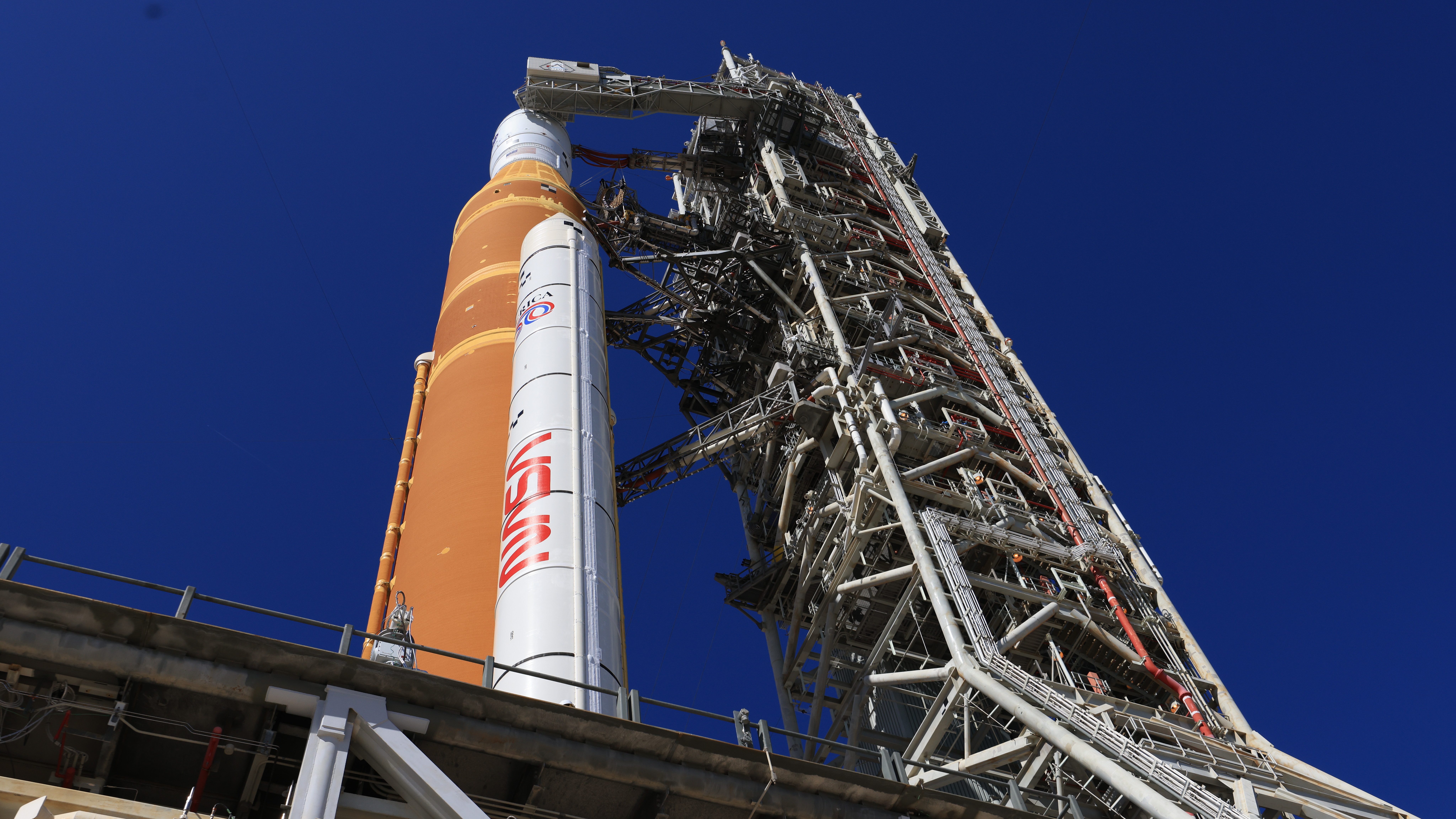
Engineers conducted a detailed post-launch pad and mobile launcher assessment, following the launch of the Artemis II crew and rocket. Application of lessons learned from Artemis I to harden and reinforce ground support equipment at the pad proved successful as the mobile launcher and launch pad sustained minimal damage in the wake of the powerful booster ignition.
In addition to performing washdowns of the mobile launcher and pad ground systems immediately following launch, some components were made more rigid, like elevator doors, while others were made more compliant, such as gaseous distribution panels in the base of the mobile launcher, modified to flex with the blast effects. Other components were protected with blast-resistant walls or covers. These allowed the pneumatics system, which involves air and gas, to remain operational postlaunch and the critical cooling and washdown water flows to proceed.
Teams returned NASA’s mobile launcher that supported the integration and launch of the Artemis II rocket to NASA Kennedy’s Vehicle Assembly Building to undergo repairs and prepare for support of future Artemis missions.
The agency’s recovery teams, alongside their military partners, successfully conducted recovery operations after the safe splashdown of the crew inside their spacecraft. Navy divers retrieved each crew member and brought them aboard USS John P. Murtha before helping to recover the Orion spacecraft and return to Naval Base San Diego.
Using data from the first crewed mission under the Artemis program, NASA continues preparing the hardware and teams to launch and fly the Artemis III mission in 2027 ahead of subsequent missions to the Moon’s surface beginning in 2028.
Quelle: NASA