
21.03.2026
NASA’s Roman Observatory Passes Final Major Prelaunch Tests
NASA’s Nancy Grace Roman Space Telescope team recently blasted the observatory with extreme sound, shook it, and listened to its electronic hum. Roman passed all three assessments, which aimed to confirm that the observatory will withstand launch conditions and function as expected in space. The achievement keeps the mission on track for launch as early as this fall.
“All of the testing went smoothly and progress is well ahead of schedule,” said Jack Marshall, the Roman observatory integration and testing lead at NASA’s Goddard Space Flight Center in Greenbelt, Maryland. “The team has done a great job putting the observatory together, and the tests show that everything is lining up with expectations.”
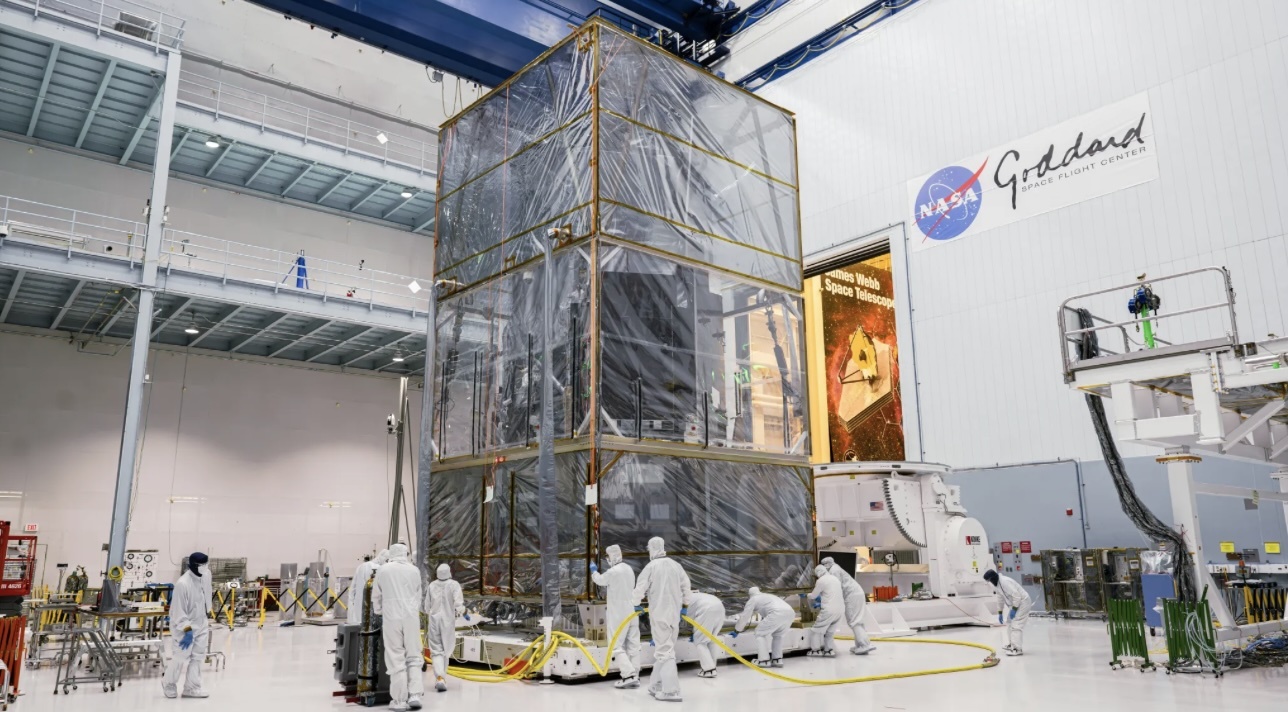
In January, the team set up an absorbent panel around the observatory for an electromagnetic interference test. This special configuration is designed to block external radio signals and absorb reflections inside the test facility.
Engineers powered on all of Roman’s electronics and measured the signals they generated, closely monitoring for any errors. Too much electrical noise could interfere with the observatory’s ability to detect faint infrared signals, but Roman passed with flying colors.
The team moved on to vibration testing in February. “Each time the observatory traveled between test facilities, it was placed in a custom-made portable clean room to protect it from contamination that could otherwise compromise scientific performance once in space,” said Joel Proebstle, a mechanical systems engineer who led the vibration and acoustic tests at NASA Goddard.
Engineers tested the observatory on a large shaker table to simulate the vibrations it will experience during launch, gradually building to higher frequencies. “Try to imagine sitting on that rocket and feeling all those vibrations,” said Cory Powell, the Roman structural analyst lead at NASA Goddard. “We simulated the shaking that the launch vehicle will produce to ensure the components and connections will all remain intact.”
In early March, the team conducted an acoustic test. The test took place in a state-of-the-art sound booth, where engineers ramped up the volume to 138 decibels — about as loud as a jet engine from 100 feet away.
“If you’ve ever been at a concert with an extremely loud bass, that load you felt was acoustic energy,” Powell said. “Now think about how loud a launch is. The acoustics can produce very high loads on a large structure like Roman.”
NASA’s Goddard Space Flight Center
Roman has now returned to the large clean room at Goddard where it will undergo a final series of smaller tests. The next one aims to replicate the shock Roman will experience shortly after launch when the observatory separates from the rocket. Then the team will deploy all of the elements that will initially be stowed (including the solar panels, “visor,” antenna, and “sunblock” shield), to verify that they’ll still work correctly even after launch and rocket separation.
Early this summer, the observatory will be transported to NASA’s Kennedy Space Center in Florida for launch preparations. There, engineers will verify that the observatory arrived fully intact and begin prepping the rocket — a SpaceX Falcon Heavy. The team expects Roman to be ready for launch within a few months after the observatory’s arrival at NASA Kennedy.
“We have a great team, great leadership, and with our successful testing we continue to set the standard for staying within budget and schedule while balancing difficult challenges,” Powell said. “Meeting cost and schedule commitments without compromise to technical standards is a major point of pride for the Roman team.”
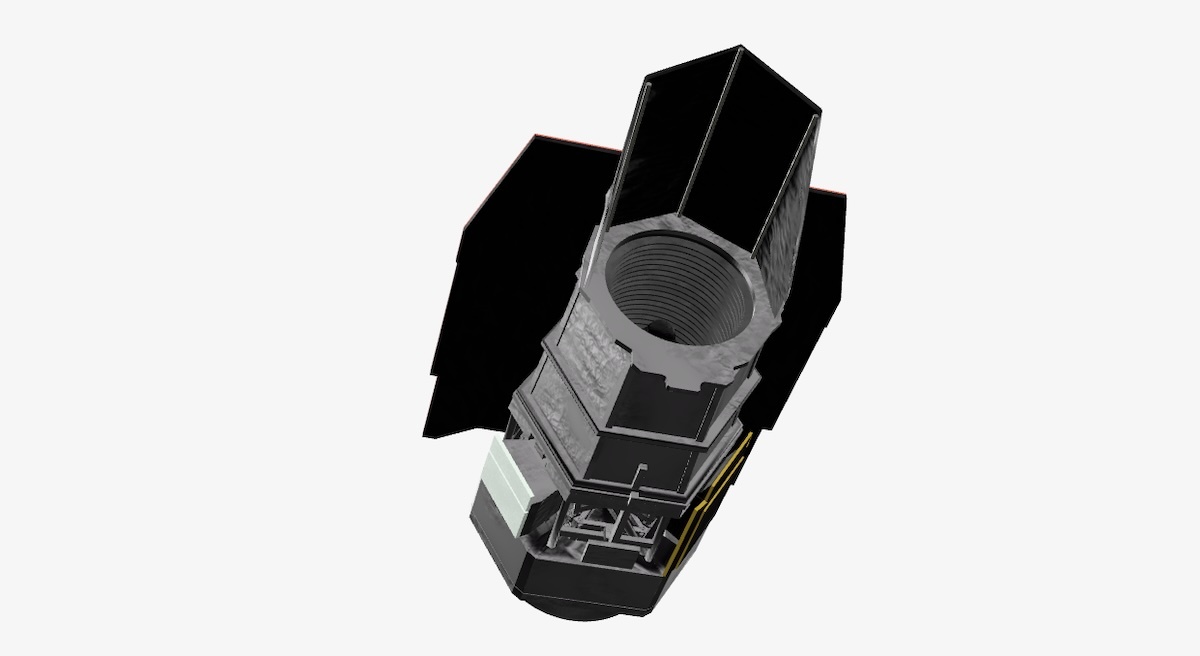
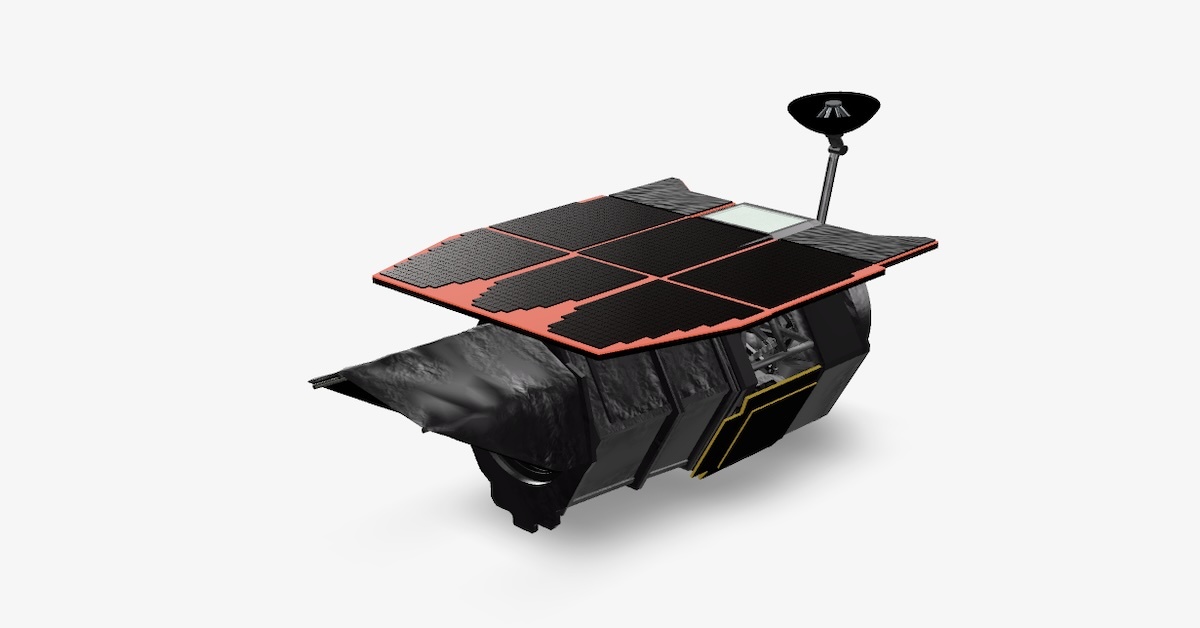
Roman Telecope 3D
Quelle: NASA
----
Update: 28.03.2026
.
NASA to Unveil Complete Roman Telescope, Host Media Briefing
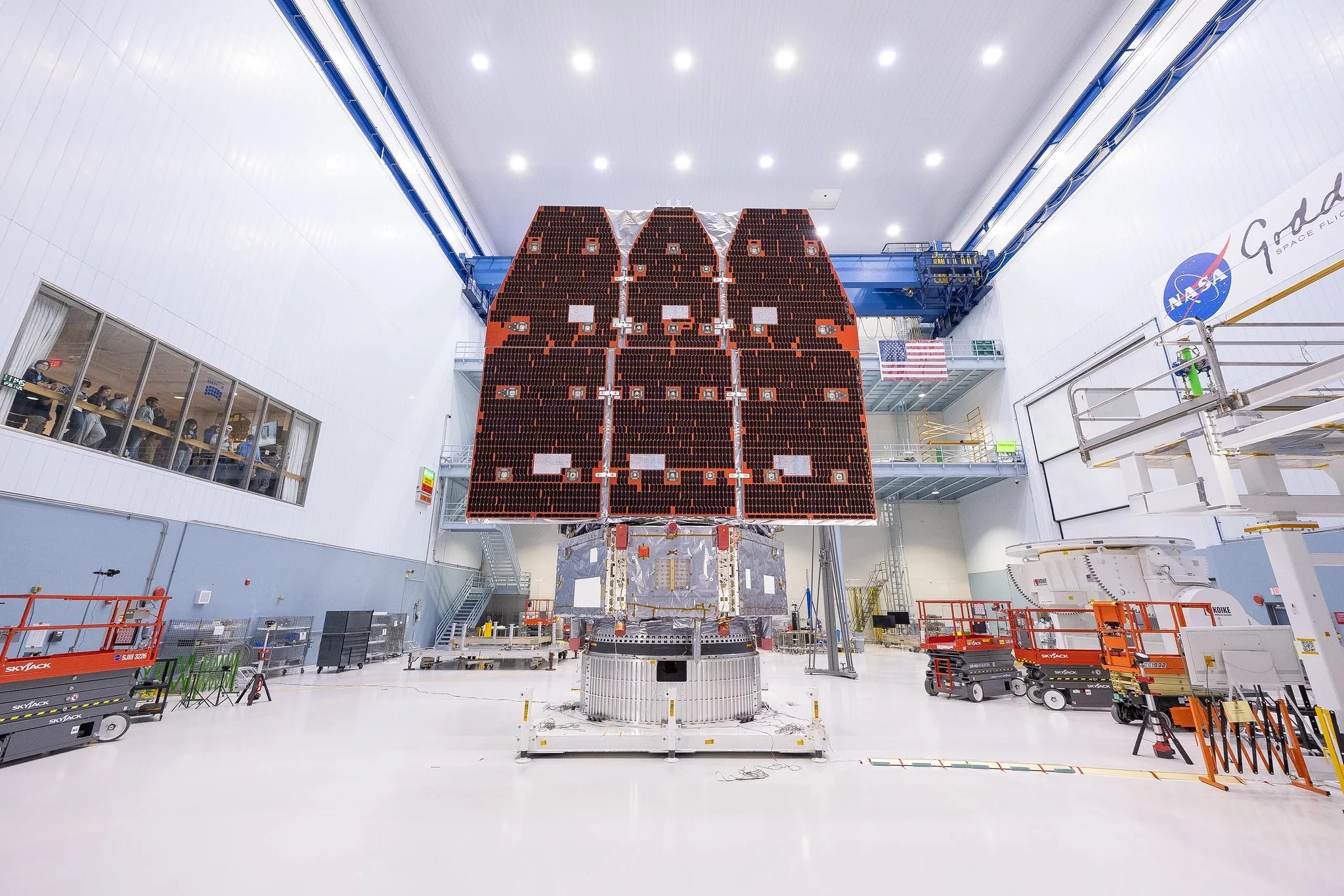
Media are invited Tuesday, April 21, to NASA’s Goddard Space Flight Center in Greenbelt, Maryland, for a look at the agency’s Nancy Grace Roman Space Telescope, which recently completed construction and is wrapping up prelaunch testing. This will be one of the last opportunities to view the fully integrated flagship telescope before it ships to NASA’s Kennedy Space Center in Florida ahead of a launch planned as early as this fall.
With NASA Goddard’s largest clean room as a backdrop, the event will include a news conference at 4 p.m. EDT, which will stream on NASA’s YouTube channel. Learn how to stream NASA content through a variety of online platforms, including social media.
NASA participants in the briefing include:
- NASA Administrator Jared Isaacman
- Nicky Fox, associate administrator, Science Mission Directorate, NASA Headquarters, Washington
- Jamie Dunn, Roman telescope project manager, NASA Goddard
- Julie McEnery, Roman telescope senior project scientist, NASA Goddard
Media interested in participating by phone must RSVP no later than two hours prior to the start of the briefing to Alise Fisher, alise.m.fisher@nasa.gov. A copy of NASA’s media accreditation policy is online.
Credentialed media in attendance also will have the opportunity to visit other center facilities and conduct interviews with subject matter experts on topics such as NASA’s Lunar Environment Monitoring Station candidate payload for the Artemis program, the DAVINCI mission to Venus, the Habitable Worlds Observatory mission concept, and the Dragonfly mission to Saturn’s moon Titan.
To be considered for on-site credentials, foreign national media must register by Wednesday, April 1; U.S. media must register by Friday, April 10. Any media RSVPs must be sent to Rob Garner, rob.garner@nasa.gov.
Named after NASA’s first chief astronomer, the Nancy Grace Roman Space Telescope will have a deep, panoramic view of the cosmos, generating never-before-seen pictures that will revolutionize our understanding of the universe. The observatory will usher in a new era of cosmic surveys, unveiling troves of celestial objects and shedding light on some of the universe’s most profound mysteries, including phenomena we can’t see. Roman will also showcase cutting-edge technology, including a test of the most advanced technology ever flown in space to directly image planets around nearby stars, a key step in NASA’s search for life on other worlds.
The Roman telescope is managed at NASA Goddard with participation by the agency’s Jet Propulsion Laboratory in Southern California; Caltech/IPAC in Pasadena, California; the Space Telescope Science Institute in Baltimore; and a science team comprising scientists from various research institutions. The primary industrial partners are BAE Systems Inc. in Boulder, Colorado; L3Harris Technologies in Rochester, New York; and Teledyne Scientific & Imaging in Thousand Oaks, California. Contributions to Roman also are made by ESA (European Space Agency), JAXA (Japan Aerospace Exploration Agency), the French space agency CNES (Centre National d’Études Spatiales), and the Max Planck Institute for Astronomy in Germany.
Quelle: NASA