
22.07.2025
CHEOPS discovers exoplanet triggering explosive flares on host star
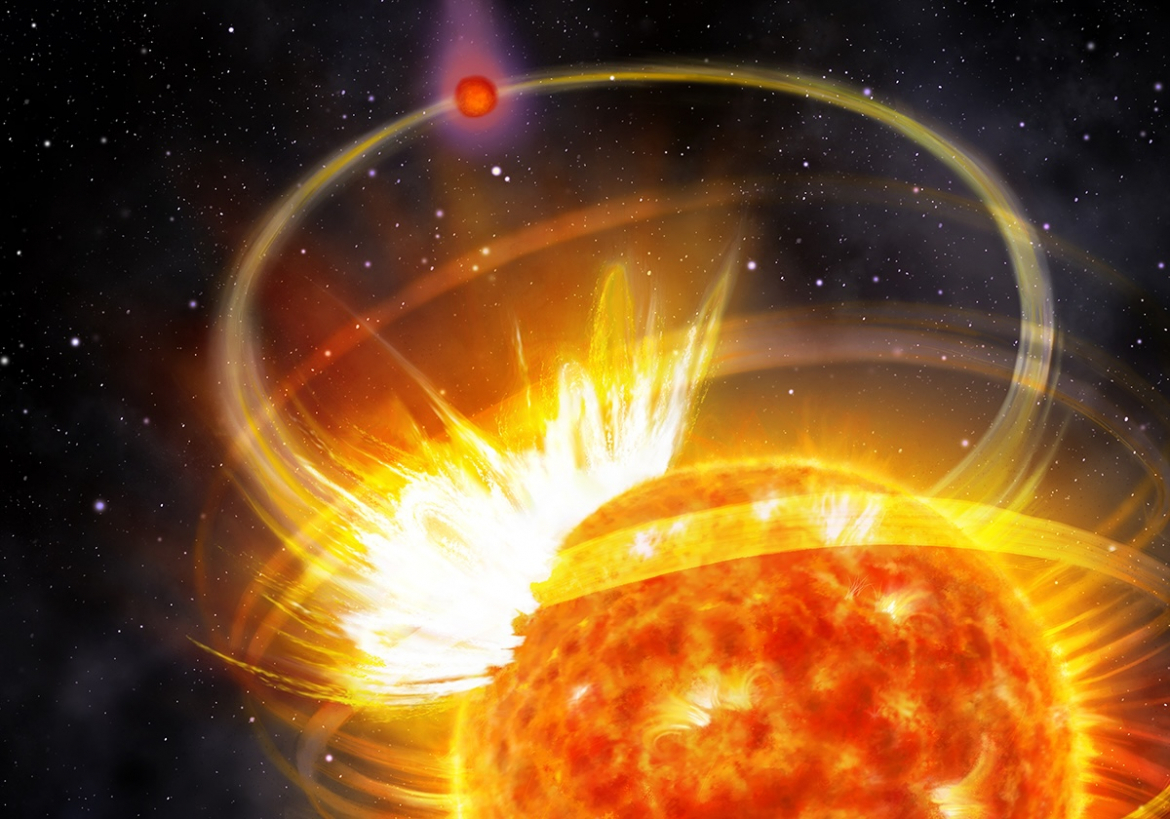
Using the European Space Agency’s Characterizing Exoplanets Satellite (CHEOPS) telescope, a team of astronomers has discovered an exoplanet that may be triggering its host star to release massive flares of radiation. These flares are similar to the coronal mass ejection our Sun produces, and the harsh radiation emitted from the flares is slowly blowing away the exoplanet’s atmosphere.
While scientists have predicted this phenomenon for decades, this is the first evidence of an exoplanet triggering flares. Interestingly, the flares observed by CHEOPS are 100 times more energetic than scientists predicted they would be.
The star, named HIP 67522, and its two exoplanets have been studied by other space telescopes prior to CHEOPS, with the James Webb Space Telescope and the Transiting Exoplanet Survey Satellite (TESS) having previously observed the system. From these observations, scientists have learned that HIP 67522 is slightly larger and cooler than our Sun, but is significantly younger. Our Sun is approximately 4.5 billion years old, while HIP 67522 is only 17 million years old.
The exoplanet igniting flares on HIP 67522 is named HIP 67522 b, and is the closer of the star’s two exoplanets. HIP 67522 orbits HIP 67522 extremely fast, taking just seven days to complete one orbit around the star.
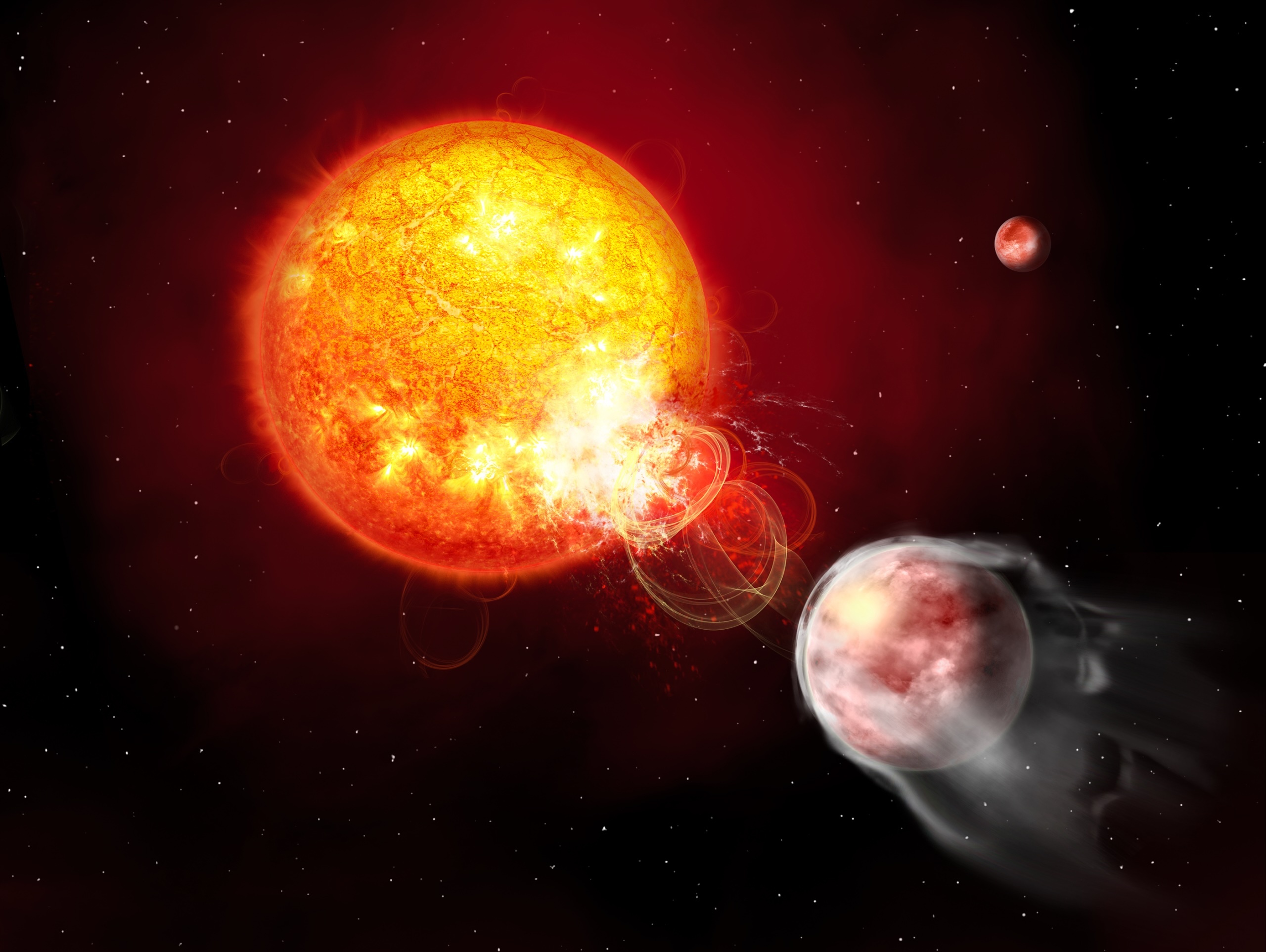
Due to HIP 67522’s size and young age, astronomers expected the star to be highly active and energetically churn and spin with a powerful magnetic field. This magnetic field can lead to bursts of flares when twisted magnetic field lines are released by the star, emitting a range of radiation, including radio waves, visible light, gamma rays, and more. Such a phenomenon has been extensively observed and studied on our Sun, which, while similar in size to HIP 67522, features a smaller and less energetic magnetic field.
As mentioned, astronomers have long theorized that exoplanets can induce flares from their host stars if they orbit close enough to disturb their stars’ magnetic fields. After many questions, papers, and studies into the feasibility of this theory, a team of scientists led by Ekaterina Ilin at the Netherlands Institute for Radio Astronomy (ASTRON) utilized modern-day telescopes to learn more.
“We hadn’t seen any systems like HIP 67522 before; when the planet was found, it was the youngest planet known to be orbiting its host star in less than 10 days,” Ilin said.
Ilin et al. began by using NASA’s TESS telescope to perform a large “sweep” of stars that were known to be active and featured exoplanets orbiting close enough to trigger flares. HIP 67522 immediately stood out to the team when they received the results from TESS, and they decided to investigate the HIP 67522 system further using CHEOPS, which is specifically designed to characterize and investigate exoplanets.
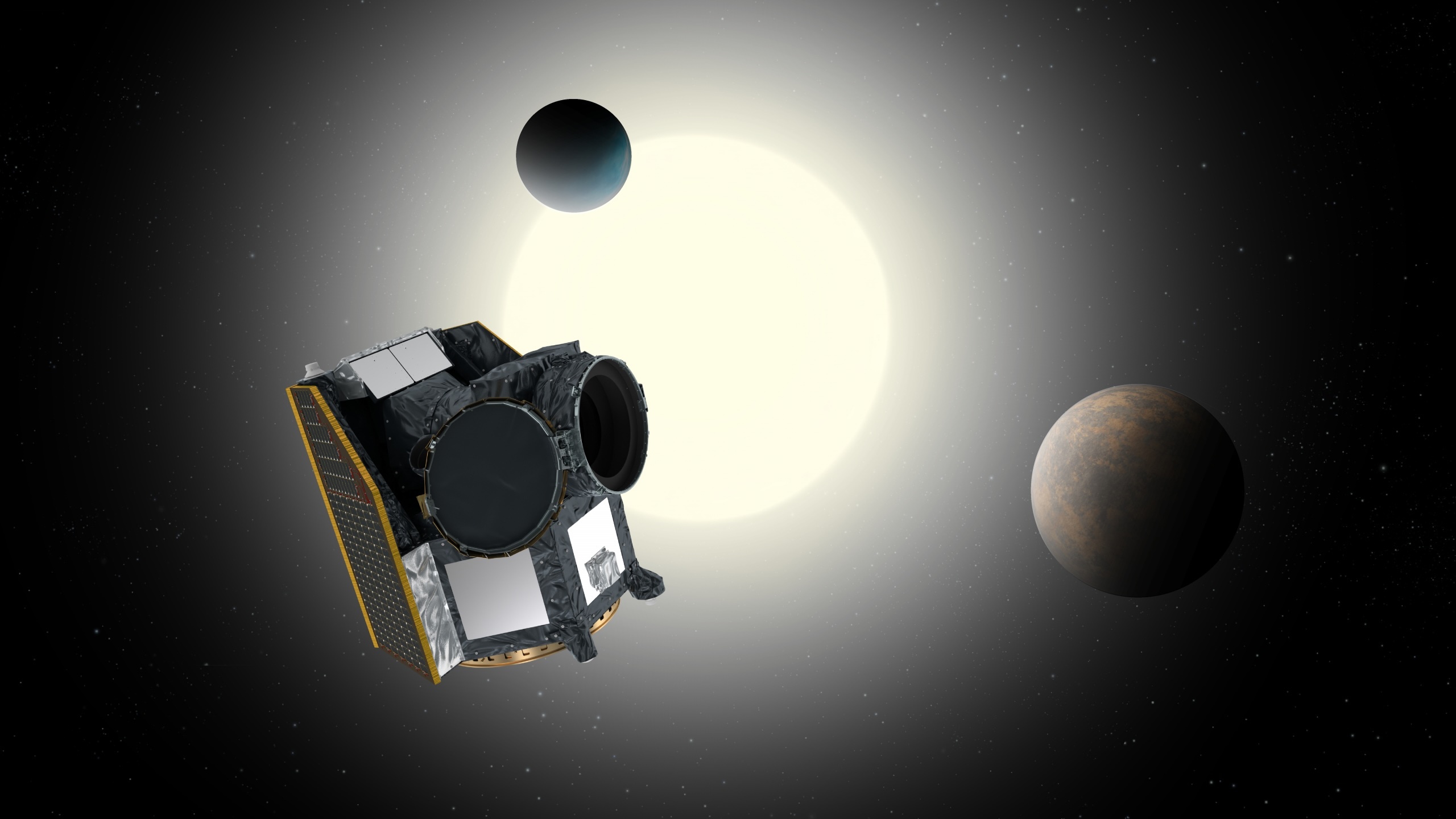
“We quickly requested observing time with CHEOPS, which can target individual stars on demand, ultra-precisely. With CHEOPS, we saw more flares, taking the total count to 15, almost all coming in our direction as the planet transited in front of the star as seen from Earth,” said Ilin.
CHEOPS’s observation of flares being emitted toward Earth as HIP 67522 b was transiting was great news, as it meant the planet was very likely inducing flares on HIP 67522.
While seeing a star flare is nothing new for astronomers, the radiation emitted by the star normally is emitted along its own magnetic field lines with no interaction from surrounding planets. However, given HIP 67522 b’s extreme proximity to HIP 67522, the planet’s own magnetic field may be interfering with the star’s.
As the planet orbits HIP 67522, it collects energy and directs it back toward HIP 67522 along the star’s magnetic field lines as a massive wave. When this wave of energy eventually makes its way to the star’s surface after traveling along a magnetic field line, a massive flare is triggered — similar to a rope being whipped.
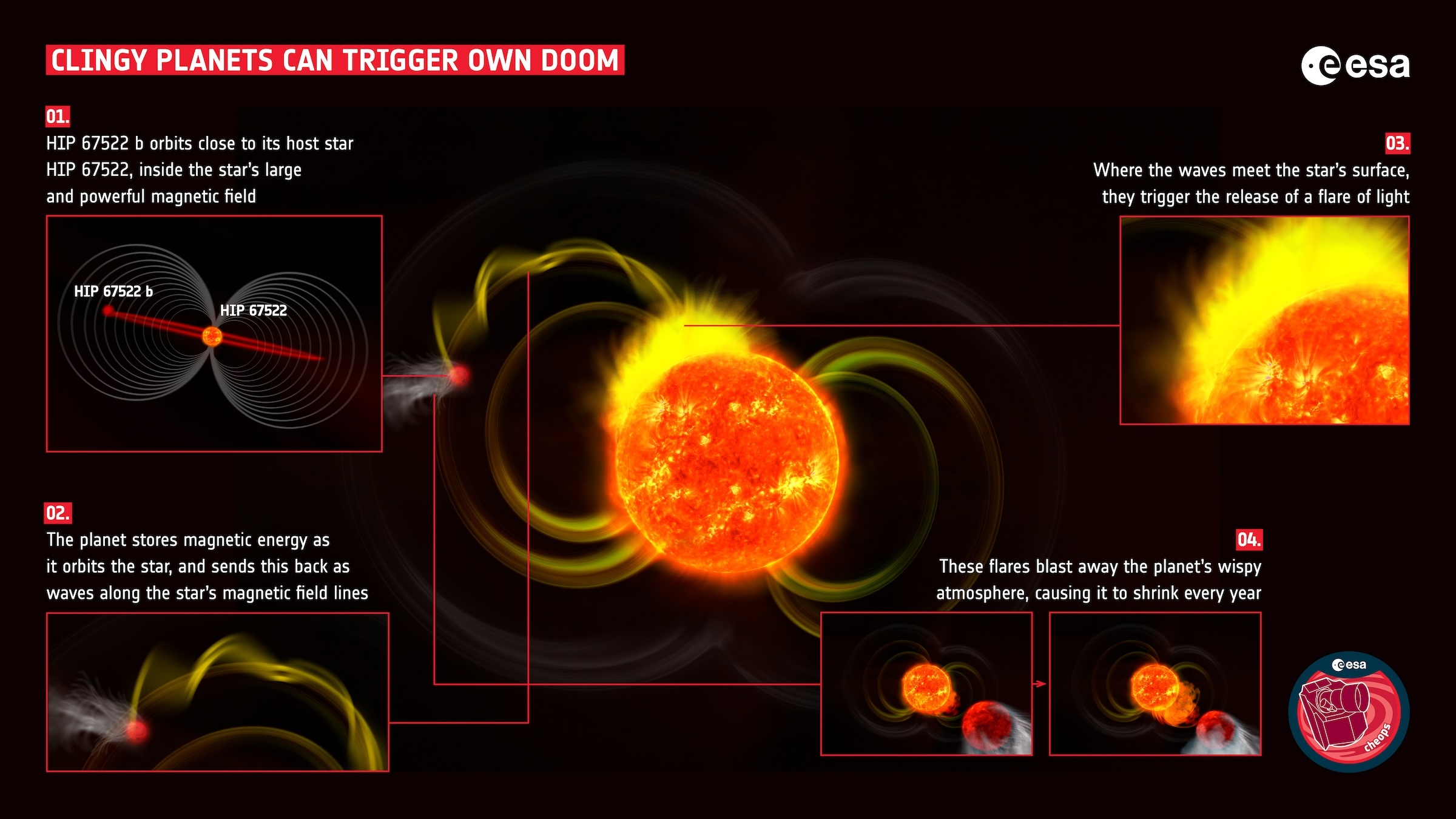
“The planet seems to be triggering particularly energetic flares. The waves it sends along the star’s magnetic field lines kick off flares at specific moments. But the energy of the flares is much higher than the energy of the waves. We think that the waves are setting off explosions that are waiting to happen,” Ilin explained.
This is the first time such an event has been directly observed by a telescope, and the first time a planet has ever been seen to be influencing its host star. Until now, it was widely accepted that stars dominate their planets and act independently.
What’s more, every time HIP 67522 b triggers a flare on HIP 67522, the flare is emitted back directly toward HIP 67522 b. Due to this, the exoplanet is exposed to six times more radiation than it would if it orbited at a “normal” distance.
Unsurprisingly, experiencing six times the normal amount of radiation has some negative effects on HIP 67522 b. The planet, which is similar in size to Jupiter, hosts a massive atmosphere but is as dense as cotton candy. As these flares repeatedly bombard HIP 67522 b, its atmosphere is slowly eroded, leading to the planet losing mass at a much faster rate than is normally expected for a planet of its size. In fact, if it continues to trigger flares from HIP 67522, it may shrink from a Jupiter-sized exoplanet to a smaller Neptune-sized exoplanet within the next 100 million years.
While HIP 67522 is the first observation of this phenomenon, Ilin et al. have already identified other, similar systems to HIP 67522 that may be experiencing the same events. The team plans to utilize dedicated exoplanet telescopes, such as CHEOPS and TESS, to investigate these systems and gain a deeper understanding of the physics and nature of the phenomenon. “I have a million questions because this is a completely new phenomenon, so the details are still not clear,” said Ilin.
“There are two things that I think are most important to do now. The first is to follow up in different wavelengths to find out what kind of energy is being released in these flares — for example, ultraviolet and X-rays are especially bad news for the exoplanet. The second is to find and study other similar star-planet systems; by moving from a single case to a group of 10–100 systems, theoretical astronomers will have something to work with,” Ilin explained.
Members of the CHEOPS team never expected the telescope to be used to investigate such a phenomenon.The telescope’s mission is to characterize exoplanets by determining their size, which, in turn, enables scientists to determine their mass, composition, density, and other properties.
“Cheops was designed to characterise the sizes and atmospheres of exoplanets, not to look for flares. It’s really beautiful to see the mission contributing to this and other results that go so far beyond what it was envisioned to do,” said CHEOPS project scientist Maximillian Günther of the European Space Agency (ESA).
Following its launch in late 2026, ESA’s upcoming Planetary Transits and Oscillations of stars (PLATO) telescope is expected to observe stars like HIP 67522 and observe flares in even greater detail. PLATO will be able to capture flares that are significantly smaller than the flares observed by CHEOPS, which will allow Ilin et al. to confirm their results.
Quelle: NSF
----
Update: 16.02.2026
.
CHEOPS detects a new planetary "disorder"
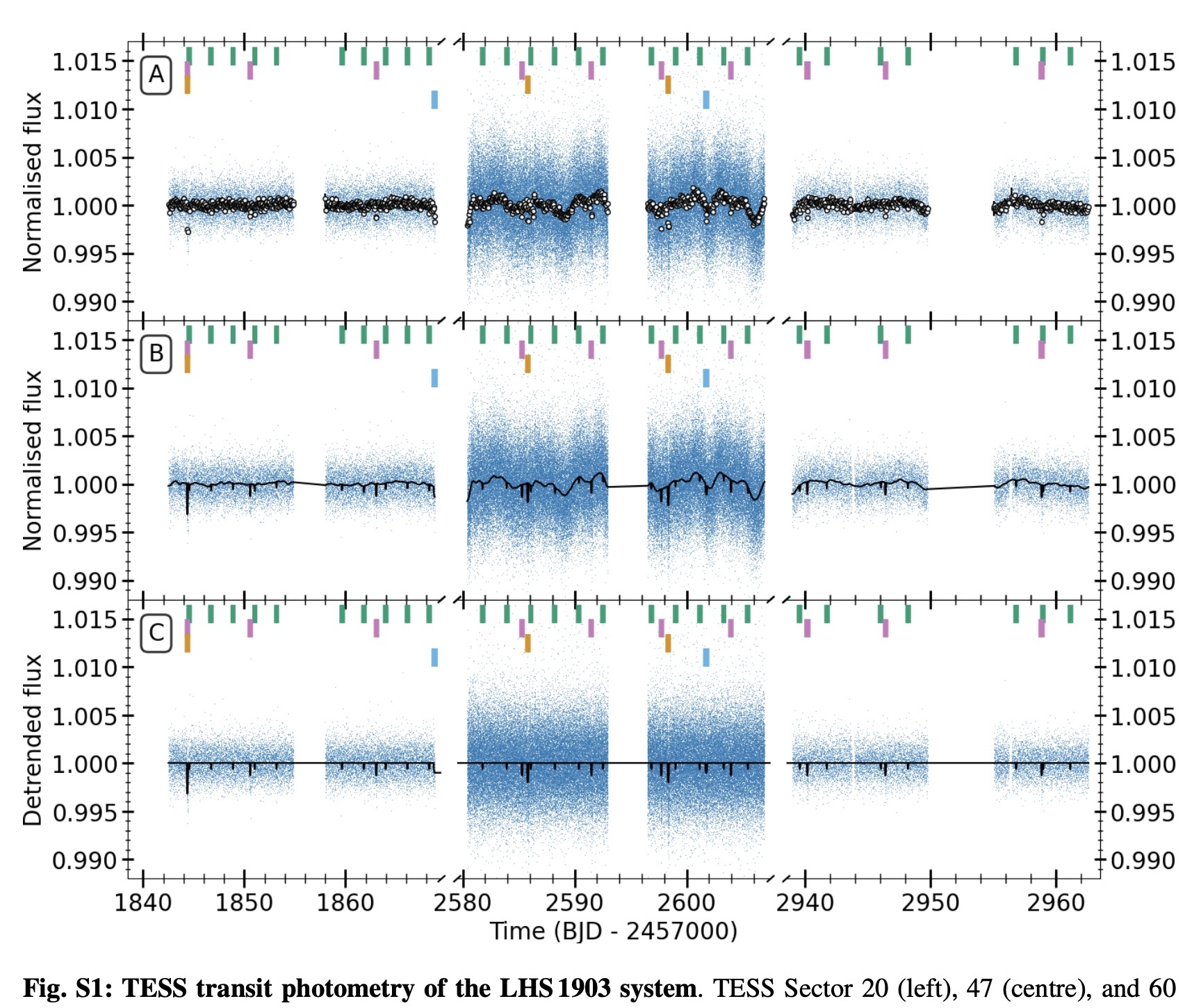
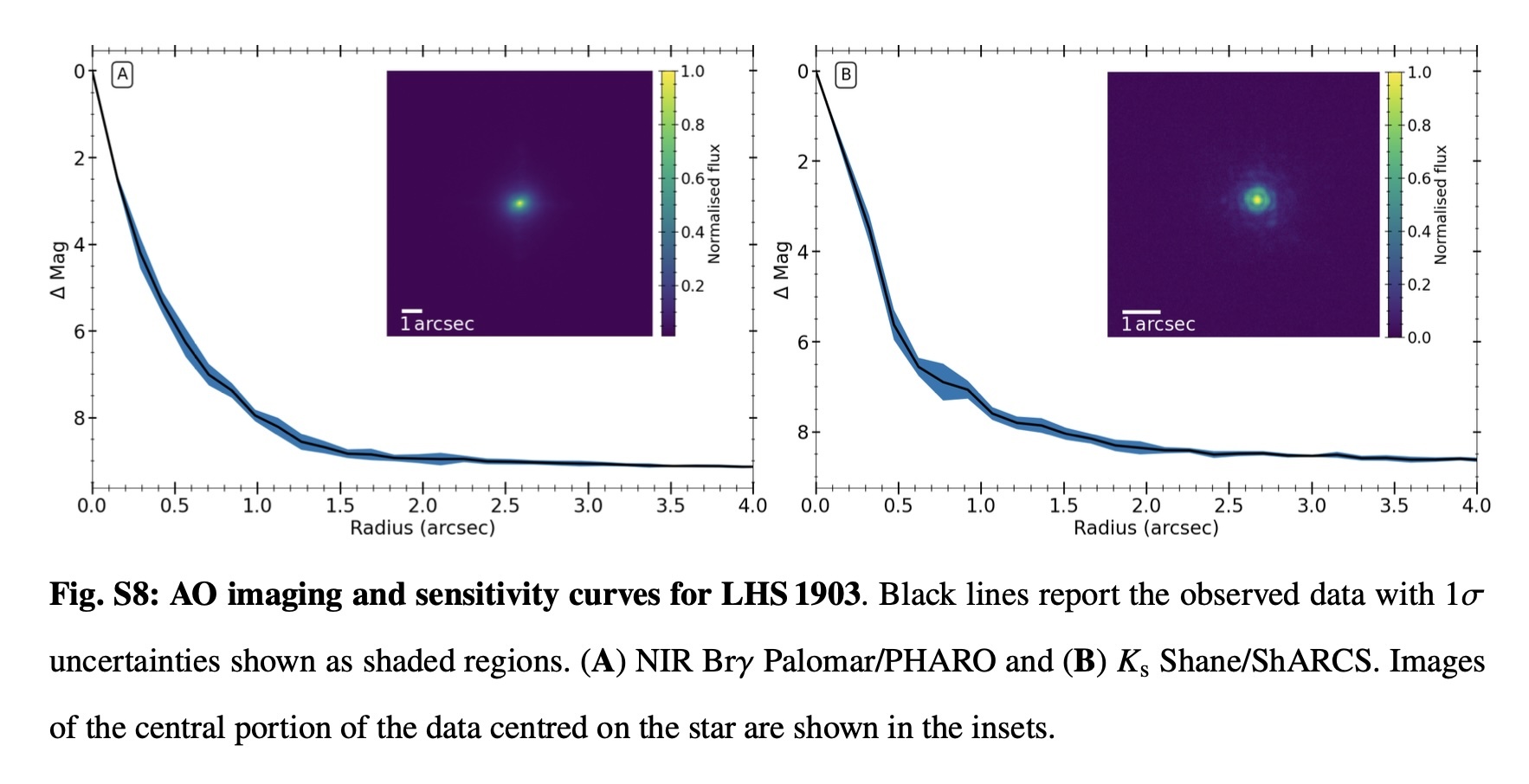
First the rocky planets, very close to their star, then the gas giants: this is the order in which scientists have hitherto conceived of the hierarchy of planets. A conception that corresponds to our Solar System but also to most of the planetary systems identified to date. However, the recent discovery of a new planet around the star LHS 1903 by the CHEOPS space telescope is now challenging this theory. The international team of astronomers behind the discovery includes scientists from the University of Bern and the University of Geneva who are also members of the National Centre of Competence in Research PlanetS.
The eight planets of our Solar System are classified into two types: rocky and gaseous. The inner planets closest to the Sun – Mercury to Mars – are rocky, while the outer planets – Jupiter to Neptune – are gaseous. This configuration is commonly observed in our Galaxy. However, the discovery of a planetary system around a star called LHS 1903, located 116 light-years from Earth, has overturned this understanding.
LHS 1903 is a small red dwarf star of type M, cooler and less luminous than our Sun. Three planets – respecting the established order – had initially been detected around the star. Using the European Space Agency's (ESA) CHEOPS satellite scientists including researchers from the University of Bern and the University of Geneva who are also members of the NCCR PlanetS have now made a strange discovery: a fourth planet, the most distant from LHS 1903, which appears to be rocky. The findings have just been published in Science.
The precision of CHEOPS reveals a rule‑breaking planet
CHEOPS is a joint mission by the European Space Agency ESA and Switzerland, under the leadership of the University of Bern in collaboration with the University of Geneva, where its operations center is located within the Department of Astronomy. “It is thanks to the precision of CHEOPS that we were able to detect this new planet,” says Monika Lendl, associate professor in the Department of Astronomy at the Faculty of Science of the University of Geneva, mission scientist of the CHEOPS mission and co-author of the study. “Since rocky planets do not usually form beyond gas giants, this one completely overturns our theories!”
Near the star, the very high temperature in the protoplanetary disk – where planets form – prevents the formation of a gaseous envelope around the rocky cores of the planets. Conversely, far from the star, the temperature is low enough for a thick atmosphere to accumulate, persist, and form a permanent gas planet. This fourth planet, LHS 1903 e, should therefore be a gas planet.
A late bloomer defying expectations
Before questioning the established model, the team of scientists ruled out several hypotheses: was the planet, for example, struck at some point in its history by a giant asteroid, a comet, or another large object that would have swept away its atmosphere? Did the planets around LHS 1903 change position at some point during their evolution?
The accepted explanation is even more intriguing: the planets formed one after the other, rather than simultaneously as current theories suggest. This idea, known as inside-out planet formation, was proposed by scientists about ten years ago but had never been proven.
“Based on the planetary formation simulations we’ve been developing at the University of Bern for several decades, we were able to show that LHS 1903 e must have formed much later than its two gas giant siblings,” explains Yann Alibert, professor at the Space Research and Planetary Sciences Division (WP) at the University of Bern and co-author of the study. “Indeed, the fourth planet – with a mass equivalent to that of the third, which contains a massive envelope of gas – should have accumulated and retained a large amount of gas. Our hypothesis is therefore that it formed after the gas disappeared from the protoplanetary disk, and thus after the second and third planets of the system, which are gas giants.”
Diversity of planetary systems
As instruments improve, scientists continue to discover more and more "strange" planetary systems that force them to question established theories about planet formation. Ultimately, these discoveries also help us understand how the solar system fits into the diverse family of planetary systems.
“CHEOPS demonstrates here how new ultra-precise instruments can lead us to revise our understanding of the Universe. The diversity of planetary systems confirms that our Solar System does not appear to be a universal model,” concludes David Ehrenreich, associate professor in the Department of Astronomy at the Faculty of Science of the University of Geneva, Chairman of the Science Team of the CHEOPS mission and co-author of the study.
Quelle: University of Bern
----
Update: 15.06.2026
.
CHEOPS Space Mission extended
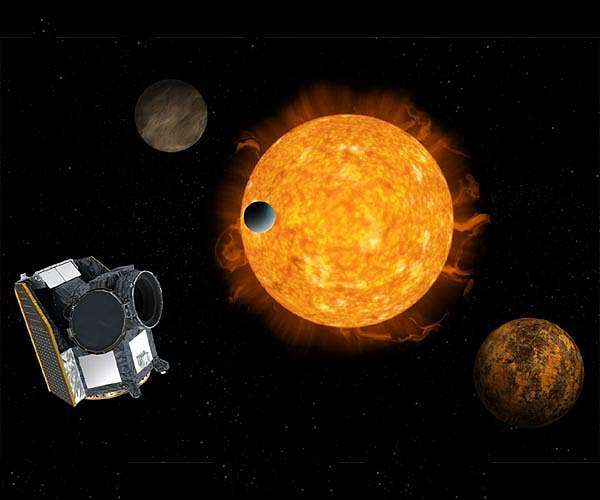
Following the remarkable scientific achievements of the space telescope CHEOPS, the European Space Agency (ESA) has decided to extend the mission once again. The space telescope, which was built at the University of Bern and whose science operations center is located at the University of Geneva, will now continue to operate until the end of 2029. This decision underscores the outstanding performance and scientific value of CHEOPS in exoplanet research.
CHEOPS is a joint mission of the European Space Agency (ESA) and Switzerland, led by the University of Bern in collaboration with the University of Geneva. Under the leadership of the University of Bern and ESA, a consortium of more than a hundred scientists and engineers from eleven European nations spent five years building the satellite. The CHEOPS science operations center is located at the Department of Astronomy of the University of Geneva. Since its launch from the European Spaceport in French Guiana on December 18, 2019, CHEOPS has revealed the properties of numerous fascinating planets outside our solar system, known as exoplanets. After ESA had already extended the mission by three years in 2023, its Science Programme Committee has now decided on a further extension until the end of 2029.
Dr. Christopher Broeg, principal investigator of the CHEOPS mission and head of the CHEOPS consortium at the Center for Space and Habitability (CSH) at the University of Bern, explains: “The precision of CHEOPS has exceeded all expectations, and the space telescope has become a key component in the arsenal of exoplanet research for astronomers in Europe and worldwide. It bridges the gap between early discovery missions such as Kepler and TESS and next-generation missions such as PLATO, as well as missions designed to characterize exoplanet atmospheres, such as JWST and, in the future, Ariel. The renewed extension of the mission is proof of this and of CHEOPS’ scientific success.” Dr. Andrea Fortier, CHEOPS Mission Manager and from the CSH at the University of Bern as well, adds: “We can now look forward to three and a half more years of exquisite science and fascinating discoveries.”
An unorderly planetary system and a deformed exoplanet
Prof. David Ehrenreich of the Department of Astronomy at the University of Geneva is heading the international team of over a hundred scientists involved in analyzing the mission data. He says: “We are delighted with the scientific insights we have gained thanks to CHEOPS. For example, CHEOPS’s discovery of a new planet orbiting the star LHS 1903 challenges the prevailing theory of how planets are arranged within a system.”
With the help of CHEOPS, the deformation of an exoplanet was detected for the first time. Prof. Monika Lendl from the Department of Astronomy at the University of Geneva and CHEOPS Mission Scientist explains: “Although the planet WASP-103b had already been observed previously using the NASA/ESA Hubble Space Telescope, it was only high-precision measurements taken with CHEOPS that led to an astonishing discovery. Based on small anomalies during the planet’s transit in front of its host star, we were able to determine that it is literally being pulled apart by strong tidal forces. Its shape resembles a rugby ball rather than a sphere."
Over the next years, CHEOPS is set to build on these successes. “With the mission extension, we can continue long-term observation programs, examine new planetary systems in detail, and target rare phenomena that can only be discovered with a long-term approach,” says Broeg.
Synergies with international space missions
Close coordination with other space missions plays a central role. CHEOPS already works in tandem with telescopes such as the James Webb Space Telescope (JWST): While CHEOPS determines the size, orbit, and sheds light on the structure of exoplanets with its precise brightness measurements, JWST’s spectrographs provide a glimpse into their atmospheres. “Thanks to CHEOPS, we can identify particularly exciting targets for JWSTand select the very best ones – that is how we get the most out of both missions,” explains Ehrenreich.
The mission extension also opens up opportunities for new, innovative observational methods. CHEOPS will continue to fulfil its core tasks while simultaneously serving as a laboratory in space to test new techniques, such as searching for moons around exoplanets or achieving even more precise determination of the exoplanets’ internal structure. “We hope this will give us a much more comprehensive picture of how planetary systems form, evolve, and how diverse they can be,” says Lendl.
Strengthening Switzerland as a hub for research and innovation
Through the efficient use of existing resources and close collaboration between universities, industry partners, and ESA, CHEOPS is sustainably strengthening Switzerland as a hub for research and technology. “High-precision technologies, software developments, and data analysis methods created as part of space missions are incorporated into other projects – from future space telescopes to applications outside the space sector, generating technological innovation while strengthening international scientific and industrial partnerships,” explains Fortier. “The renewed extension of the mission through 2029 underscores Switzerland’s leading role in exoplanet research. CHEOPS thus remains a cornerstone for the transition from exoplanet discovery to their detailed characterization,” Broeg concludes.
CHEOPS – in search of potential habitable planetsThe CHEOPS mission (CHaracterising ExOPlanets Satellite) is an ESA “S-class missions” – small-class missions with an ESA budget much smaller than that of large- and medium-size missions, and a shorter timespan from project inception to launch. CHEOPS is dedicated to characterizing the transits of exoplanets. It measures the changes in the brightness of a star when a planet passes in front of that star. This measured value allows the size of the planet to be derived, and for its density to be determined on the basis of existing data. This provides important information on these planets – for example, whether they are predominantly rocky, are composed of gases, or if they have deep oceans. This, in turn, is an important step in determining whether a planet has conditions that are hospitable to life. CHEOPS was developed as part of a partnership between the European Space Agency (ESA) and Switzerland. Under the leadership of the University of Bern and ESA, a consortium of more than a hundred scientists and engineers from eleven European states was involved in constructing the satellite over five years. CHEOPS began its journey into space on Wednesday, December 18, 2019 on board a Soyuz Fregat rocket from the European spaceport in Kourou, French Guiana. Since then, it has been orbiting the Earth on a polar orbit in roughly an hour and a half at an altitude of 700 kilometers following the terminator. As a member state of the European Space Agency (ESA), Switzerland is participating in the CHEOPS telescope as part of the ESA Science Program and the PRODEX program (PROgramme de Développement d'EXpériences scientifiques). This program enables Swiss project teams from research and industry to participate in scientific missions through instruments they develop and build, and it funds these missions.This transfer of knowledge and technology between science and industry ultimately also gives Switzerland a structural competitive advantage as a business location – and enables technologies, processes and products to flow into other markets and thus generate added value for our economy. More information: https://cheops.unibe.ch/ |
Bernese space exploration: With the world’s elite since the first moon landingWhen the second man, "Buzz" Aldrin, stepped out of the lunar module on July 21, 1969, the first task he did was to set up the Bernese Solar Wind Composition experiment (SWC) also known as the “solar wind sail” by planting it in the ground of the moon, even before the American flag. This experiment, which was planned, built and the results analyzed by Prof. Dr. Johannes Geiss and his team from the Physics Institute of the University of Bern, was the first great highlight in the history of Bernese space exploration. Ever since Bernese space exploration has been among the world’s elite, and the University of Bern has been participating in space missions of the major space organizations, such as ESA, NASA, and JAXA. With CHEOPS the University of Bern shares responsibility with ESA for a whole mission. In addition, Bernese researchers are among the world leaders when it comes to models and simulations of the formation and development of planets. The successful work of the Department of Space Research and Planetary Sciences (WP)from the Physics Institute of the University of Bern was consolidated by the foundation of a university competence center, the Center for Space and Habitability (CSH). The Swiss National Fund also awarded the University of Bern the National Center of Competence in Research (NCCR) PlanetS, which it managed together with the University of Geneva from 2014 to 2026. The newly established Swiss Institute for Planetary Sciences (SIPS) is set to replace the NFS PlanetS. The universities of Bern, Geneva, and Zurich, as well as ETH Zurich, are once again involved in the initiative. |
Exoplanet research in Geneva: 30 years of expertise awarded a Nobel PrizeThe first exoplanet around a Sun-like star was discovered in 1995 by two researchers from the University of Geneva, Michel Mayor and Didier Queloz, laureates of the 2019 Nobel Prize in Physics. This discovery allowed the Department of Astronomy of the University of Geneva to be at the forefront of research in the field, with the construction and installation of HARPS at the ESO 3.6m telescope in La Silla in 2003. For two decades, this spectrograph was the most efficient in the world for determining the mass of exoplanets. However, HARPS was surpassed in 2018 by ESPRESSO, another spectrograph built in Geneva and installed at the Very Large Telescope (VLT) in Paranal, Chile. Switzerland has also been involved in space-based observations of exoplanets with the CHEOPS mission, the result of two national expertises: the space know-how of the University of Bern in collaboration with its Geneva counterpart, and the ground-based experience of the University of Geneva assisted by its colleague in the Swiss capital. These two scientific and technical skills have also made it possible to create the National Center of Competence in Research (NCCR) PlanetS which has been managed by the University of Bern with the University of Geneva from 2014 to 2026. The newly established Swiss Institute for Planetary Sciences (SIPS) is set to replace the NFS PlanetS. The universities of Bern, Geneva, and Zurich, as well as ETH Zurich, are once again involved in the initiative. Quelle: University of Bern |