
6.10.2026
Submission of SEBIT First Test Flight Early Termination Root Cause Analysis Report to CENIPA and Ongoing Joint Investigation
INNOSPACE Submits Internal Root-Cause Analysis Report on Early Termination of SEBIT’s First Test Flight to CENIPA
Joint investigation with Brazil’s Aeronautical Accidents Investigation and Prevention Center (CENIPA) underway
● Flight data analysis identifies areas for improvement in SEBIT’s fin control algorithm; corrective actions and verification activities underway
● Proprietary non-pyrotechnic Flight Termination System (FTS) operated as designed, successfully validating the technology
● SEBIT targets growing commercial, defense and aerospace demand; follow-on verification flight to accelerate commercialization
● INNOSPACE discussing schedule adjustment with ALADA and the Brazilian Air Force, targeting SEBIT in November and HANBIT-Nano in the first half of next year
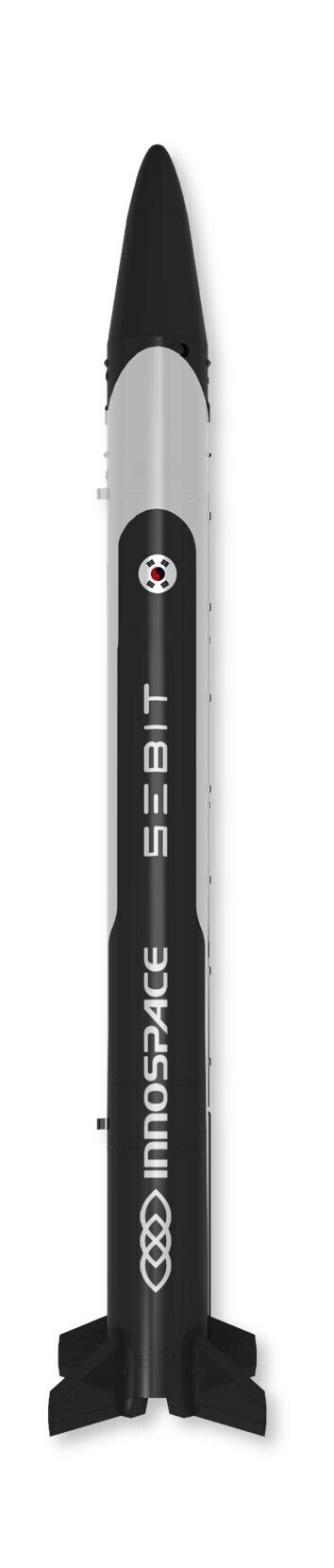
SEJONG, South Korea, September 30, 2026 – INNOSPACE (KQ:462350), a private South Korean space launch company, announced today that it has submitted its internal root-cause analysis report on the early termination of the first test flight of its multipurpose suborbital rocket SEBIT to Brazil’s Aeronautical Accidents Investigation and Prevention Center (“CENIPA”) and is currently participating in the joint investigation.
SEBIT conducted its first test flight at the Alcântara Space Center in Brazil at 4:30 p.m. local time on August 19, 2026. The mission was designed to comprehensively evaluate the rocket’s flight performance and operational safety while accumulating flight data and operational experience required to establish reliable and safe suborbital testing and validation services.
Based on telemetry collected during the flight, INNOSPACE conducted its own technical analysis of the early flight termination and identified areas requiring improvement in the control algorithm governing the four fins mounted at the lower section of the vehicle. The fins are used to control the rocket’s attitude and direction during flight. The analysis identified discrepancies between predicted design behavior and actual flight performance during the low-speed phase of flight. INNOSPACE is now using the in-flight data to refine the fin control algorithm as well as related design and test procedures for application to the next verification flight.
In parallel, INNOSPACE continues to actively support CENIPA’s investigation by providing additional analytical materials and participating in technical discussions as required. Any additional findings identified through the official investigation will also be incorporated into the company’s corrective actions and subsequent verification activities.
The test flight also provided an opportunity to validate one of SEBIT’s key technologies: INNOSPACE’s proprietary non-pyrotechnic Flight Termination System (FTS). The system terminates propulsion by shutting off the oxidizer supply upon receipt of a flight termination command and subsequently separates the rocket to bring the flight to a safe conclusion. During the SEBIT test flight, the FTS operated normally in accordance with its designed sequence. The Brazilian Air Force, which is responsible for operations at the launch site, also recognized that the flight termination procedure was executed safely. Because the system does not use pyrotechnic devices, it can reduce handling and transportation restrictions as well as associated costs. INNOSPACE expects the technology to contribute to greater operational efficiency and enhanced competitiveness of its launch and flight-test services.
“SEBIT is a multipurpose suborbital platform designed to address demand for technology demonstrations in high-altitude and microgravity environments, with potential applications spanning both commercial and defense sectors,” said Soojong Kim, Founder and CEO of INNOSPACE. “With a comparatively short path to commercialization and revenue generation, we intend to resume the follow-on flight as soon as practicable, complete the required technical verification, and accelerate commercialization.”
“Taking into account the ongoing CENIPA investigation, the status of technical improvements and verification, launch-site operating conditions, and our overall business strategy, we are pursuing a plan to resume SEBIT’s verification flight in November and adjust the launch of HANBIT-Nano to the first half of next year. We are currently discussing the feasibility of this schedule adjustment with relevant Brazilian authorities, including ALADA and the Brazilian Air Force (FAB). Specific launch dates will be finalized based on the outcome of those discussions,” Kim added.
Unlike launch vehicles that place satellites into Earth orbit, SEBIT’ is a multipurpose suborbital rocket developed to carry customer payloads to altitudes of up to 100 km or below and to perform technology testing and verification and scientific research missions in high-altitude and microgravity environments. Building on the data secured through this first test flight, INNOSPACE plans to further advance its technology, define its service operations framework and continuously strengthen reliability and operational stability through repeated launches.
The responsibility for the facility lies with the Brazilian Air Force (FAB). For the first time, the commercial agreement for the use of Alcântara Space Center for SEBIT flight was facilitated by ALADA – Brazilian Aerospace Projects Company, which was established in 2025 to drive and expand commercial activities involving Brazil's state-owned aerospace infrastructure.
Quelle: INNOSPACE