
1.09.2026
STARLINK MISSION
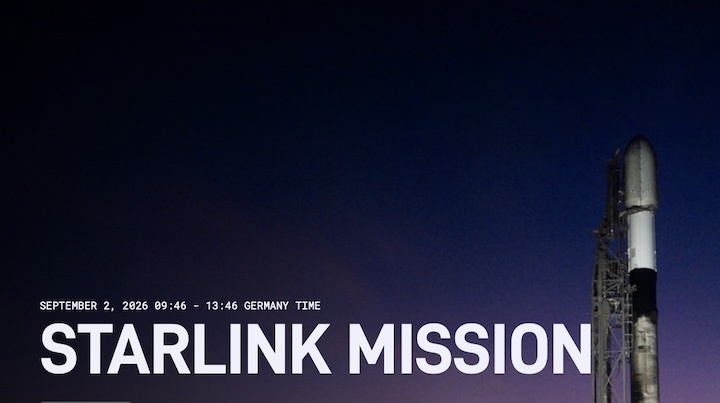
SpaceX’s Falcon 9 is targeting the launch of 27 Starlink satellites to low-Earth orbit from Space Launch Complex 4 East (SLC-4E) at Vandenberg Space Force Base in California.
A live webcast of this mission will begin about 10 minutes prior to liftoff, which you can watch here and on X @SpaceX.
This will be the 35th flight for the first stage booster supporting this mission, which previously launched Sentinel-6 Michael Freilich, DART, Transporter-7, Iridium OneWeb, SDA-0B, NROL-113, NROL-167, NROL-149, NAOS, and 25 Starlink missions. Following stage separation, the first stage will land on the Of Course I Still Love You droneship, which will be stationed in the Pacific Ocean.
Quelle: SpaceX
----
Update: 2.09.2026
.
SpaceX Falcon 9 rocket launches Starlink satellites to orbit on its 35th flight
Booster 1063 is just two flights shy of SpaceX's reuse record.
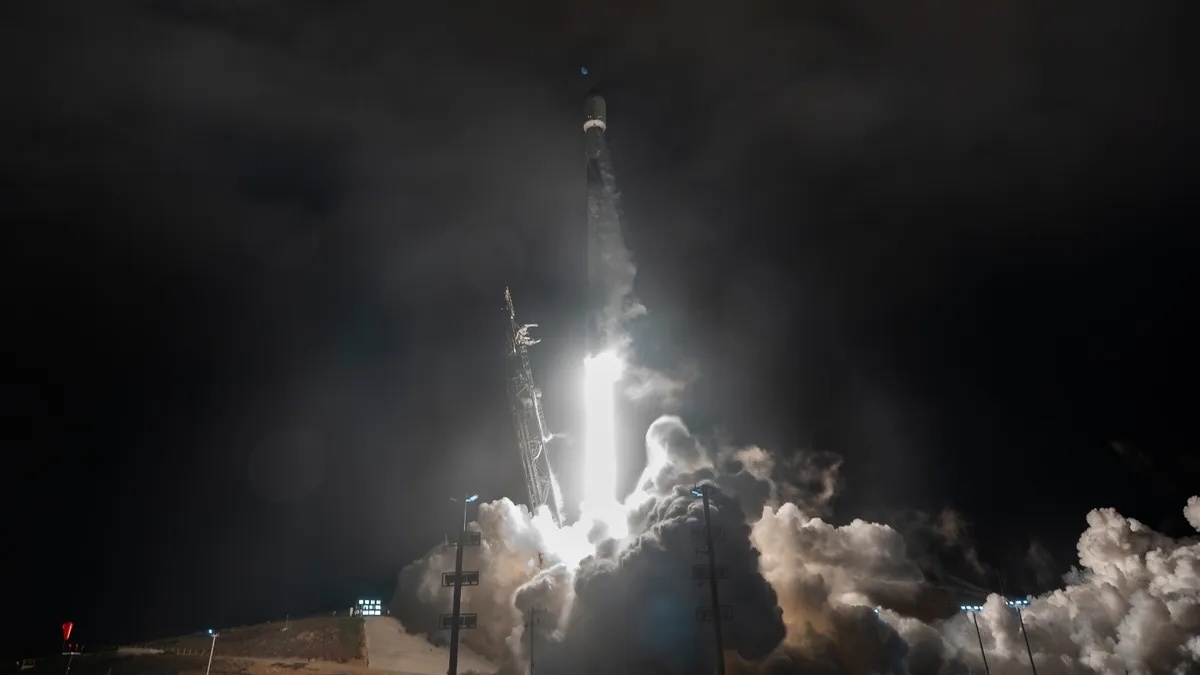
The Starlink missions keep on coming.
A SpaceX Falcon 9 rocket launched 27 of the company's internet satellites to orbit this morning (Sept. 2), lifting off from California's Vandenberg Space Force Base at 4:42 a.m. EDT (0842 GMT; 1:42 a.m. local California time).
It was the 35th flight for this Falcon 9's first stage, which is known as Booster 1063. That's just two shy of the SpaceX reuse record, which was set by B1067 last week.
And B1063 will almost certainly fly again: It came back to Earthsuccessfully today, landing in the Pacific Ocean on the SpaceX drone ship "Of Course I Still Love You" about 8.5 minutes after launch.
The rocket's upper stage did its part as well, deploying the 27 Starlinksatellites into low Earth orbit 62 minutes after launch. They're joining the largest satellite constellation ever assembled, which currently consists of more than 11,000 active spacecraft.
This morning's launch was the 102nd Falcon 9 flight of the year, 79 of which have been dedicated to building out the Starlink megaconstellation.
SpaceX has launched four other times in 2026 as well, conducting two missions of its Falcon Heavy rocket and two suborbital test flights of its Starship megarocket, which remains in development. The second Falcon Heavy launch of the year occurred on Sunday (Aug. 30); it sent up NASA's next flagship observatory, the Nancy Grace Roman Space Telescope.
Quelle: SC