
28.06.2026
SpaceX's next Starship breathes fire for 1st time in prelaunch test
Starship Flight 13 shouldn't be too far off.
About a month has passed since the first launch of SpaceX's "Version 3" Starship rocket, and the spaceflight company has already begun testing on its next such vehicle.
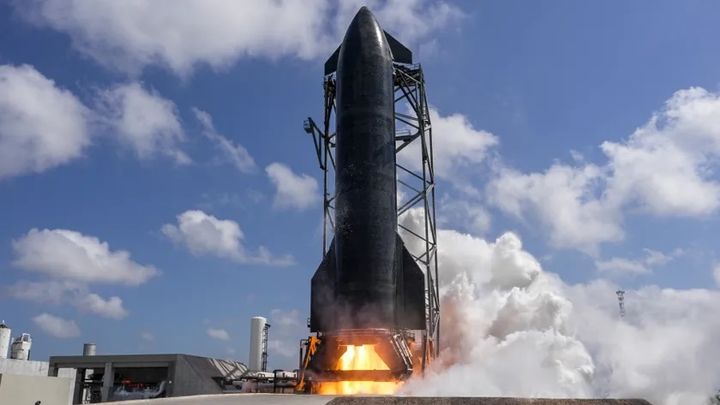
SpaceX recently transported Ship 40, the upper stage in line to launch Starship's upcoming Flight 13 demonstration mission, to the Massey test site at its facilities in Starbase, Texas. Secured at its base, Starshipperformed a full-duration burn of one of its central Raptor 3 enginesthat lasted about 15 seconds.
The test, called a static fire, is meant to confirm that the spacecraft's engines are in working order ahead of an actual launch. SpaceX posted a video of the test on X today (June 26). The Ship upper stage is equipped with six Raptor 3 engines — three sea-level engines, and three configured for optimized flight in the vacuum of space. The vehicle uses all six during ascent, but only a single sea-level engine during the final phase of its landing burn.
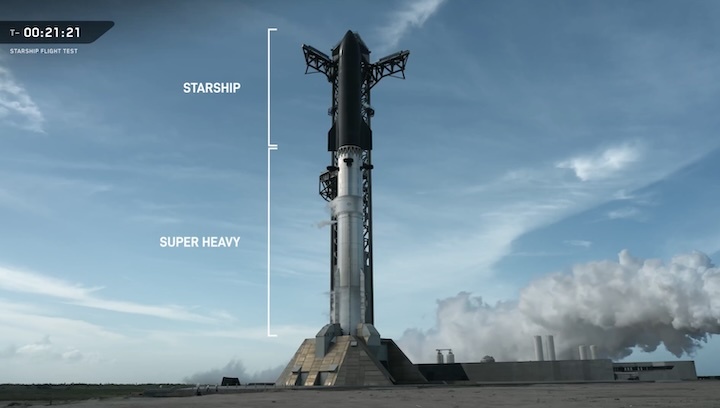
Starship is SpaceX's super-heavy lift rocket, designed to be completely reusable. Its most recent test flight launched on May 22, completing a mostly successful demonstration of the vehicle's upgraded V3 hardware. At 408 feet (124.4 meters) tall, Starship V3 is the biggest, most powerful iteration of the launch vehicle to date, and is the first to sport SpaceX's new Raptor 3 engines.
Despite a few malfunctions during the V3 debut last month, including failure of the rocket's Super Heavy booster to maneuver its way to a soft ocean splashdown as planned, SpaceX deemed the launch a successful test of the upgraded vehicle's new systems. In addition to the full outfit of Raptor 3s, V3 is equipped with enhanced aerodynamic grid fins, refined thermal protections, an increased fuel capacity and docking nodes to facilitate propellant transfer in space.
That last capability is especially critical for Starship's success. Ship is capable of reaching low Earth orbit (LEO) using its onboard fuel, after Super Heavy lofts the stage through Earth's atmosphere, but once there, it can't fly much farther. (Note: Starship hasn't actually reached orbit yet. All of its launches to date have been suborbital.) To fly beyond LEO, Ship requires refueling from additional Starship launches designed to top off its tanks, a critical function of the giant spacecraft that SpaceX has yet to demonstrate, but that's expected to change this year.
SpaceX has been contracted by NASA to provide Ship as the lander to deliver astronauts to the moon as a part of the agency's Artemis program. To get there, NASA says the spacecraft will require at least 15 refueling flights. The first of those landing missions, Artemis 4, is scheduled for late 2028. Ship is also scheduled to launch as part of Artemis 3, during which astronauts aboard NASA's Orion spacecraft will dock with the lander to practice maneuvers with the mated vehicles, but is not expected to require refueling flights for that mission.
The recent static fire with Ship 40 means SpaceX is progressing toward Starship's next full flight campaign, which will feature engine tests with all six of Ship 40's Raptors and all 33 of Super Heavy's. The company hasn't yet released any details about the upcoming Flight 13, but the company will likely attempt to launch the mission before the end of the summer.
Quelle: SC
----
Update: 12.07.2026
.
CRITICAL PATH
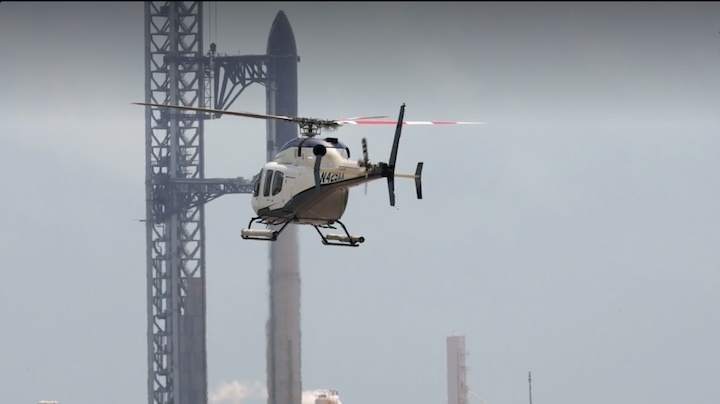
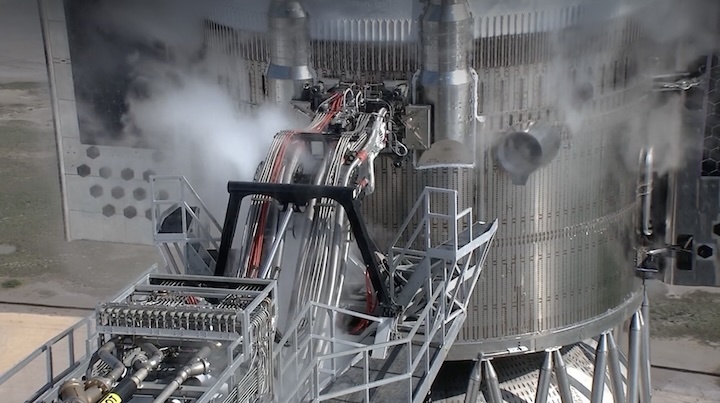
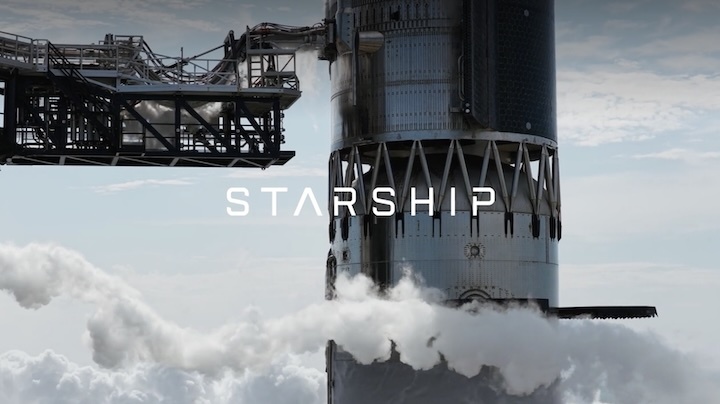
The path to launch is filled with obstacles and success is only possible through the tireless efforts of many working together towards a common goal. “Critical Path” continues the ongoing Starship series, following SpaceX engineers through the final days before launch of the first Starship V3 and the challenges that come with development of the world’s most powerful and fully reusable rocket.
Quelle: SpaceX
+++
SpaceX ignites all 33 powerful engines on Starship booster ahead of Flight 13 launch
We're potentially just days away from the next Starship launch.
It looks like SpaceX's next Starship flight is on the horizon, and it may lift off sooner than you might think.
SpaceX today (July 10) completed a brief static fire of the Starship Super Heavy booster tapped to launch the 13th test flight of the massive, mega-lift vehicle.
Booster 20 — the latest Super Heavy to roll off the assembly line — was transported to the pad at SpaceX's Starbase, Texas, facility yesterday (July 9) and hoisted onto its support stand using the launch tower's stalwart "Mechazilla" chopstick arms. By early Friday, SpaceX began preparations leading up to the prelaunch engine test, including closing Boca Chica beach around 8 a.m. EDT (1200 GMT) and transferring fuel to the pad's tank farm ahead of loading propellant onto the vehicle.
This is the second "Version 3" (V3) booster to reach the pad at Starbase for testing, and is equipped with 33 of SpaceX's upgraded Raptor 3 engines. Those engines ignited in a blazing heat on Friday just before 11 a.m. EDT (1500 GMT), and underwent a roughly 25-second burn simulating on the launch stand the duration and flight conditions for an actual launch.
The successful completion of Booster 20's static test fire paves the way for Starship's upcoming test launch, Flight 13. That could launch as early as Wednesday (July 15), according to a notice from the Federal Aviation Administration.
Compared to Version 2 (V2), Starship V3 packs a much stronger punch. The rocket was upgraded with enhanced avionics to reduce mass and increase launch capacity, a taller fuel tank with a larger volume, and equipment for transferring propellant between spacecraft, which will be needed to fulfill many of the missions Starship is being designed to carry out.
A handful of those missions will be for NASA's Artemis program, and the agency's plans to return to the moon. Starship is one of two lunar landers currently contracted to deliver astronauts to the lunar surface, so, its success and timely demonstration of the technologies needed to do so are coming under a microscope as the timeline for those missions shrinks.
Flight 13 will follow the same basic timeline as Flight 12, which lifted off in May with mixed success. Flight 12 was the first launch of Starship V3, and prompted SpaceX to fly a slightly more conservative mission than many previous tests, which have built on previous successes with increasingly expanding goals. Starship's last flight sent the vehicle's upper stage, Ship, on a suborbital trajectory with a soft splashdown in the Indian Ocean. SpaceX ran into some issues, though, when the rocket's Super Heavy booster (Booster 19) failed to maneuver itself for a soft ocean splashdown of its own. Ship (Ship 39) also ran into an engine anomaly that caused SpaceX to forgo the stage's in-space engine relight demonstration.
Ship 40 and Booster 20, the Starship vehicles that will fly on Flight 13, will follow the same set of mission objectives to shake out the remainder of kinks in Starship V3. Spacex hopes the mission will pave the way for further technology demonstration tests the vehicle needs to complete before reaching full operational status. That includes the retrieval of both stages back at their Starbase launch pad, for refurbishment and reuse on future flights.
Starship is designed to be fully reusable, and capable of delivering over 100 tons to low Earth orbit. Once the rocket begins regularly delivering payloads, Ship and Super Heavy will be able to both return to Starbase to be caught by the Mechazilla arms on both of the site's two launch towers. SpaceX has succeeded in a handful of V2 Super Heavy catches during its previous flight tests, and managed to launch two of those recovered boosters on subsequent missions, but has not yet attempted to do the same with a Ship upper stage.
That's because landing Ship is much different than landing Super Heavy. SpaceX has a lot of practice landing and reflying rocket boosters. The company's workhorse Falcon 9 rocket launches several times a month, and is routinely recovered, refurbished and reflown within a short few weeks. A batch of Starlink satellites recently launched on one of SpaceX's most-flown Falcon 9 boosters, which broke a reflight record as it touched down for the 36th time after delivering its payloads to orbit. Though it lacks the landing legs of Falcon 9, Super Heavy's descent back to Earth is very similar to a Falcon 9 booster, and therefore less complex an engineering question to have to solve compared to Starship's upper stage.
Ship drops through the atmosphere belly-first, allowing the black, hexagonal heat shield tiles that cover half the vehicle to absorb the blazing temperatures of reentry. Fins near the spacecraft's nose and base control its orientation and attitude, which remains mostly horizontal during its freefall. To an extent, Ship's descent profile is not very unlike the space shuttles, except for its actual touchdown, which differs significantly.
As Ship's altitude decreases toward sea level, the vehicle performs a "flip and burn" maneuver that swings the whole stage upright and arrests its descent for a soft touchdown — eventually back at the Starbase pad on future launches, but once again in the Indian Ocean for Starship's upcoming mission.
Flight 13 will give SpaceX a chance to demonstrate that descent profile again using Ship 40, while also working through the booster and engine issues encountered during Flight 12. If all goes according to plan, the launch will bring Starship V3 closer to more ambitious tests, including orbital insertion, propellant transfer and the recovery of both stages back at Starbase.
Quelle: SC
----
Update: 14.07.2026
.
SpaceX gears up for Starship Flight 13
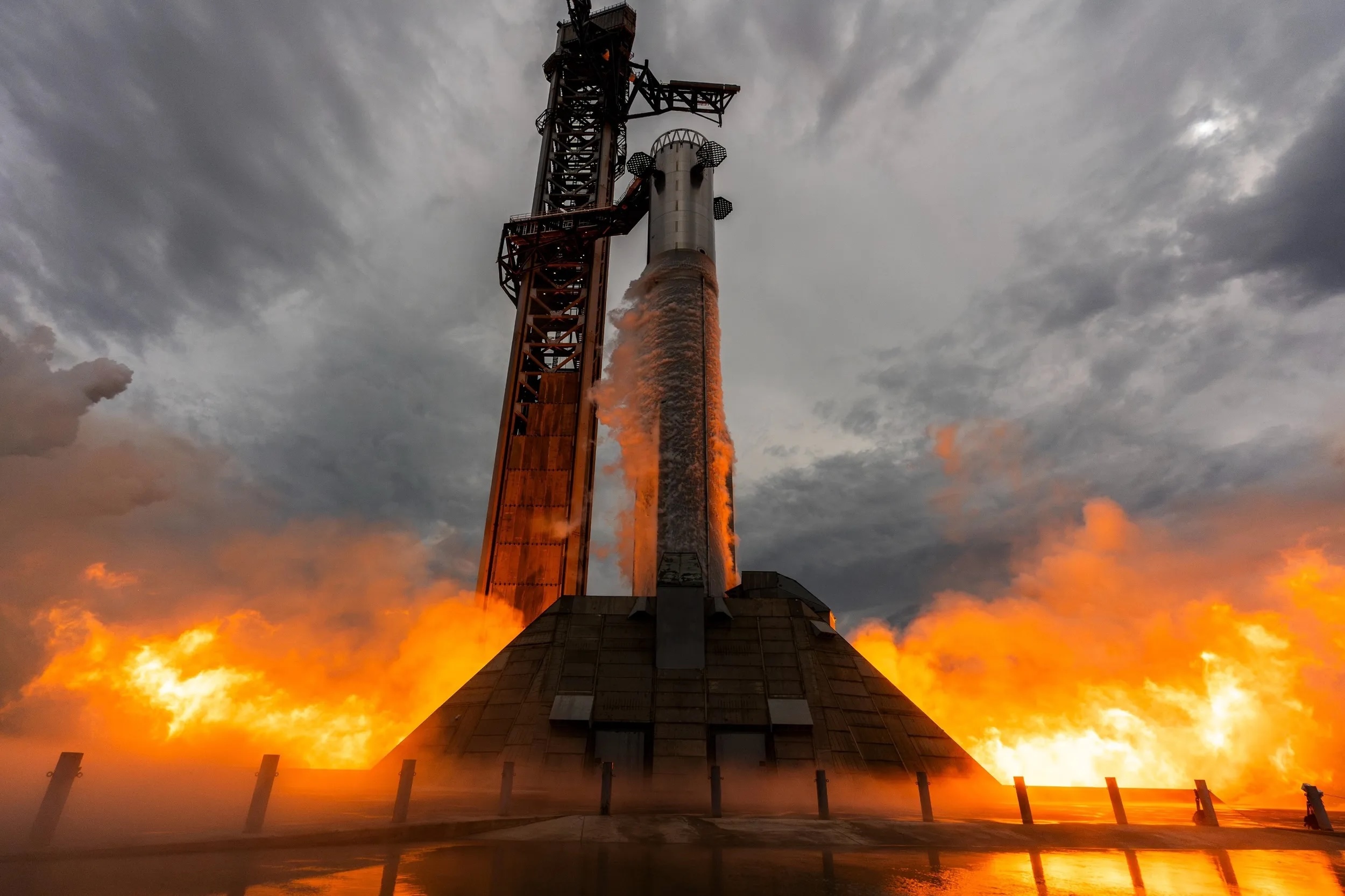
The Super Heavy booster for Starship Flight 13 performs a static fire July 10. Credit: SpaceX
WASHINGTON — SpaceX plans to conduct its next Starship launch as soon as July 16 to test fixes to issues from the previous flight and deploy functioning Starlink satellites.
The company said July 11 it is targeting a launch of the Flight 13 mission in a 90-minute window that opens at 6:45 p.m. Eastern from its Starbase, Texas, site. The announcement came a day after completing a static fire of the Super Heavy booster that will launch the mission.
The upcoming mission will fly a similar 65-minute suborbital profile as Flight 12 on May 22. That was the first flight of the upgraded version 3 of the vehicle and was mostly successful, although it experienced some anomalies.
The biggest issue was the failure of the Super Heavy booster to perform a controlled “soft” splashdown in the Gulf of Mexico. SpaceX said it traced the issue to how the engines in the Starship upper stage, or ship, ignited while still attached to the booster.
“At stage separation on Flight 12, slight differences in engine startup on the ship caused the directional flip of the booster to be off by approximately 90 degrees,” the company stated in its preview of Flight 13. Five Raptor engines failed to ignite for a boostback burn, causing the burn to shut down early. The company did not elaborate on how the change in the flip direction affected the startup of the boostback burn.
“The startup sequence has been modified to be more robust to timing variability and more reliably flip in the desired direction, which is done to increase overall performance,” SpaceX stated. “The Super Heavy on this upcoming flight has hardware modifications to improve relight reliability, along with updates to engine alarms and aborts to match the conditions seen in the multi-engine flight environment.”
Flight 12 also suffered a Raptor engine failure during the booster’s ascent, as well as one on the ship. “Several hardware and operational modifications have been made to address the interconnected causes, with additional reliability improvements planned in upcoming versions of the Raptor engine,” the company said, but did not explain what those interconnected causes were.
Another change for Flight 13 involves the payloads that it will deploy from the upper stage during the suborbital flight. While several previous launches deployed mass simulators of Starlink V3 satellites, SpaceX said this mission will deploy 20 functioning Starlink V3 satellites.
SpaceX said the satellites will deploy solar arrays and antennas and then attempt to connect with both a South African ground station and other Starlink satellites. Those demonstrations will be brief since the satellites will be on the same suborbital trajectory as Starship and will reenter after a handful of minutes in space.
One factor in the timing of Flight 13 is the completion of a mishap investigation mandated by the Federal Aviation Administration after Flight 12. As of July 10, the FAA had not announced the completion of the investigation, which focused on the failure of Super Heavy to perform a soft splashdown.
If Flight 13 is successful, it may allow SpaceX to perform the first orbital launch of Starship on the next flight. SpaceX is pushing to get Starship into service to deploy Starlink V3 satellites, as well as for Starship’s use as a lunar lander for NASA’s Artemis lunar exploration campaign.
Quelle: SN
----
Update: 17.07.2026
.
STARSHIP'S THIRTEENTH FLIGHT TEST
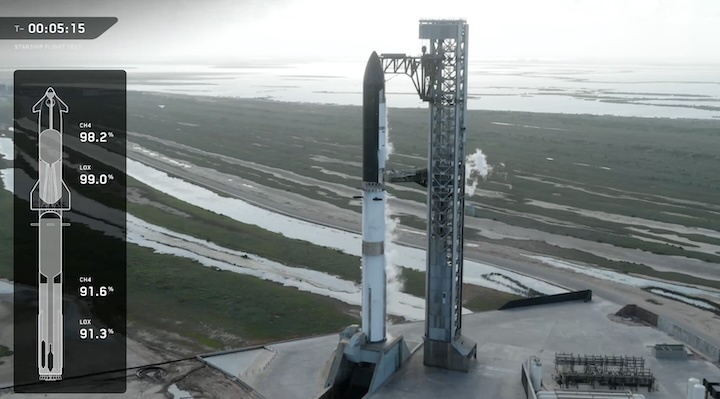
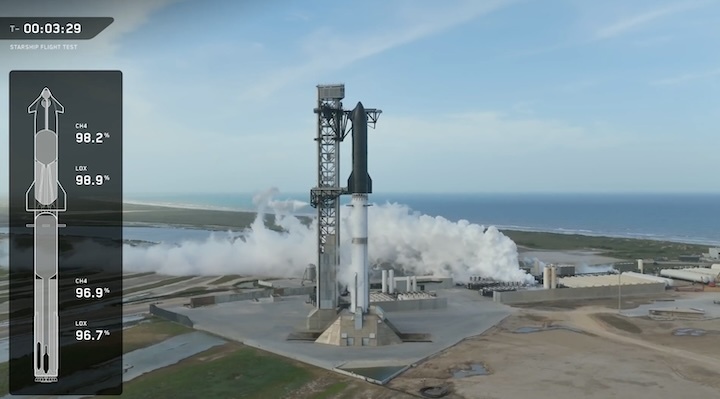
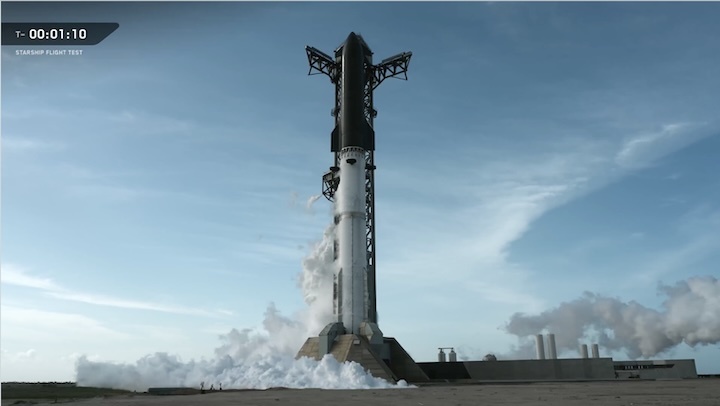
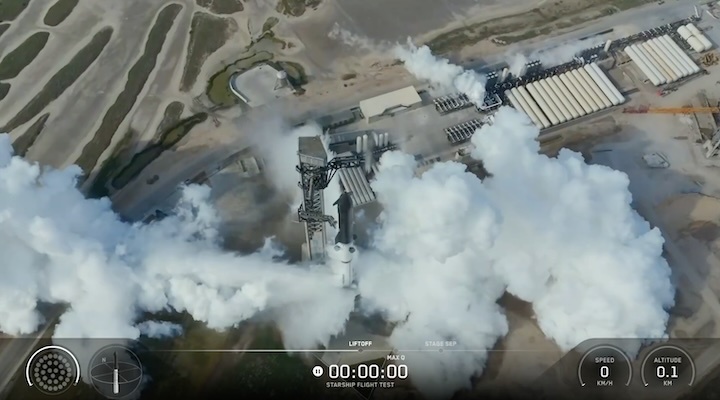
The thirteenth flight test of Starship is preparing to launch as early as next week. When a launch date is set, the 90-minute launch window will open at 5:45 p.m. CT.
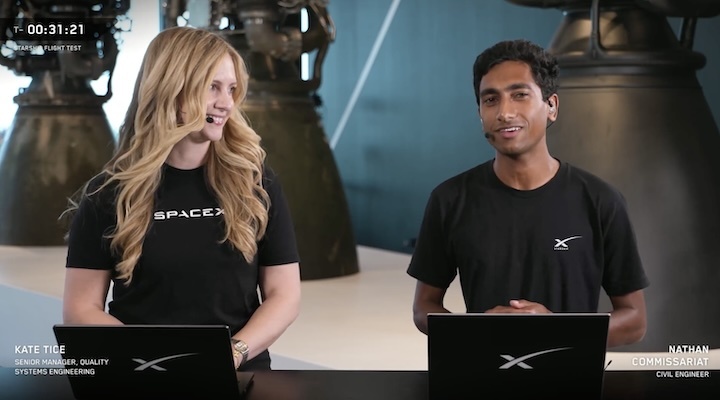
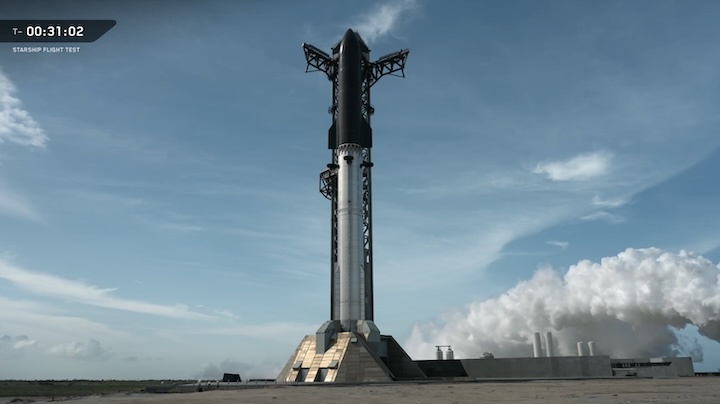
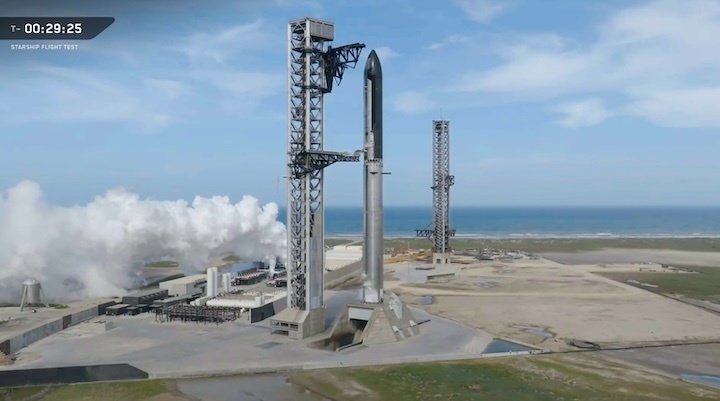
A live webcast of the flight test will begin about 30 minutes before liftoff, which you can watch here and on X @SpaceX. As is the case with all developmental testing, the schedule is dynamic and likely to change, so be sure to check in here and stay tuned to our X account for updates.
The upcoming flight will aim to complete similar objectives targeted on the previous flight test, which debuted the Starship and Super Heavy V3 vehicles, while also carrying next-generation Starlink V3 satellites for the first time.
Watch “Critical Path”, the latest episode in the ongoing Starship series that followed SpaceX engineers and technicians through the final days before launch of the first Starship V3.
The booster’s primary test objective will be executing a successful launch, ascent, stage separation, boostback burn, and landing burn at an offshore landing point in the Gulf of America. There have been several modifications to hardware and software to address issues seen on the previous flight.
At stage separation on Flight 12, slight differences in engine startup on the ship caused the directional flip of the booster to be off by approximately 90 degrees. The startup sequence has been modified to be more robust to timing variability and more reliably flip in the desired direction, which is done to increase overall performance. After stage separation and the flip, the Super Heavy booster attempted its boostback burn. Five of its 33 engines experienced issues when attempting to re-light causing the boostback burn to end early. The Super Heavy on this upcoming flight has hardware modifications to improve re-light reliability along with updates to engine alarms and aborts to match the conditions seen in the multi-engine flight environment.
The Starship upper stage’s primary objectives include the deployment of 20 Starlink V3 satellites, a relight of a single Raptor engine while in space, and another controlled entry, descent, and splashdown in the Indian Ocean. There have also been several modifications to Starship’s propulsion system to address the engine out issue experienced on the previous flight.
Approximately 40 seconds after stage separation, Starship lost one of its three Raptor vacuum optimized engines. The vehicle was able to demonstrate its engine out capability and reach its planned suborbital trajectory. Several hardware and operational modifications have been made to address the interconnected causes with additional reliability improvements planned in upcoming versions of the Raptor engine.
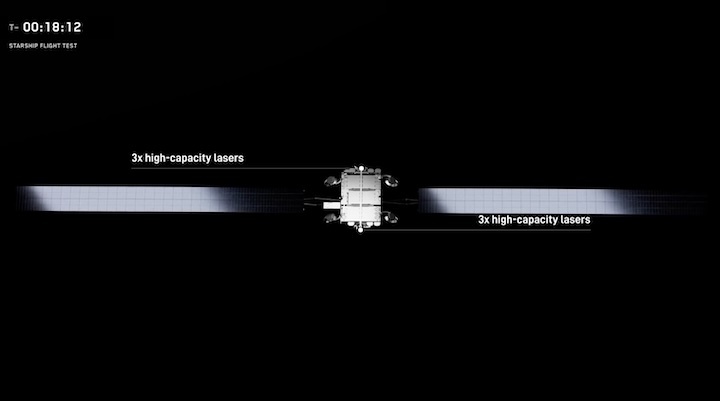
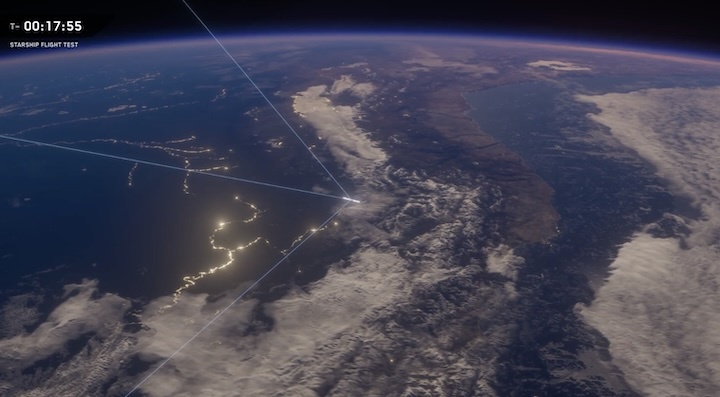
For the first time, Starship will carry V3 Starlink satellites to space, which aim to greatly expand the network's capacity and user speeds. As part of this initial test, Starship is planned to deploy 20 satellites which will extend solar arrays and antennas and will attempt to connect with the larger Starlink constellation via high-capacity lasers. The Starlink satellites will be on the same suborbital trajectory as Starship and are expected to demise upon reentry approximately 20 minutes after deployment.
Six of the satellites have been modified with a suite of cameras to scan Starship’s heat shield and transmit imagery down to operators to continue testing methods of analyzing Starship’s heat shield readiness for return to launch site on future missions. Several tiles on Starship have been painted white to simulate missing tiles and serve as imaging targets in the test.
Several upgrades and experiments related to Starship’s heatshield will also be tested to continue iteration towards a fully and rapidly reusable design. Multiple tiles will be attached to the metallic side of Starship’s aft flaps along with modified tiles and attachment mechanisms in the heatshield covering the aft skirt to gather flight data on different attachment options. Finally, Starship’s heatshield will have load sensing tiles to take measurements as the vehicle experiences higher dynamic pressure on ascent than previous flights, putting added stress on the tile attachments in exchange for increased payload to orbit capability.
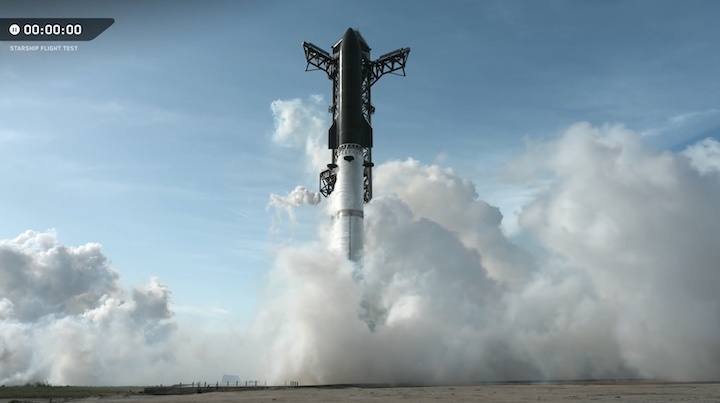
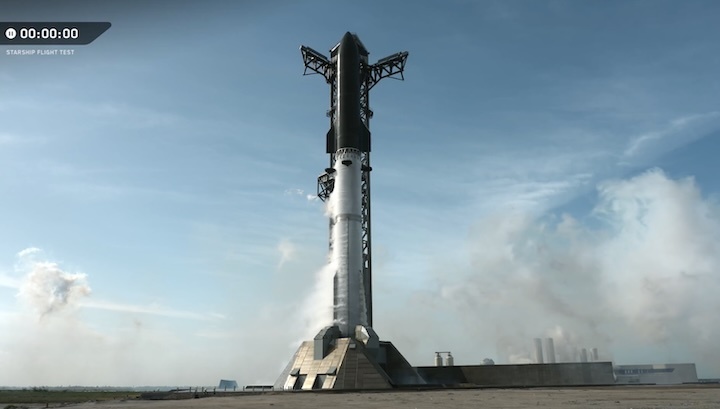
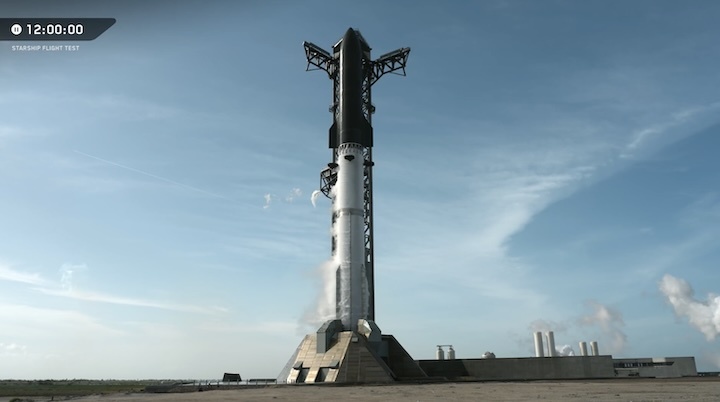
Quelle: SpaceX
+++
SpaceX aborts Starship test flight, sending stock lower
SpaceX scrubbed the launch of its Starship mega rocket on Thursday, with CEO Elon Musk pledging to make another attempt “hopefully in a few days.”
A 90-minute launch window opened at 6:45 p.m. ET, and within minutes, the reusable rocket maker announced on a livestream that it was standing down for the day.
“Some of the engines didn’t start, triggering an automatic launch abort,” Musk wrote in a post on X. He added later in another X post: “To be confident of a good flight, 2 Raptors will be removed & replaced. Most probable launch timing is early next week.”
Shares of SpaceX fell more than 3% in extended trading, sinking further beneath its IPO price of $135. The stock is on a five-day losing streak.
The rocket was poised for takeoff from SpaceX’s Starbase complex in South Texas when a hold was triggered on the booster, which “shut down the engines right as they were starting to ignite,” a SpaceX employee said on the livestream.
It would’ve been the first test flight of Starship V3, an upgraded version of its roughly 400-foot-tall rocket, since SpaceX’s blockbuster initial public offering last month.
An earlier V3 test launch in May did not go perfectly.
After a successful liftoff, several engines in the bottom stage of the rocket failed to reignite to help guide it to a soft landing, causing it to plummet into the Gulf of Mexico.
The Federal Aviation Administration ordered SpaceX to investigate the anomaly, and on Monday, the agency cleared Starship to fly again.
“The final mishap report cites two most probable root causes for the loss of the Super Heavy booster as heat effects on propulsion system components during the ascent and erroneous engine alarm system settings,” the FAA said in a statement.
SpaceX identified four corrective actions, including vehicle hardware and software updates, “to prevent a reoccurrence of the event,” the agency said.
As part of Thursday’s mission, Starship planned to ferry 20 functioning, next-generation Starlink satellites, which were expected to extend their solar arrays and antennas, then attempt to connect with the broader Starlink constellation, SpaceX said. The satellites are expected to “demise upon reentry approximately 20 minutes after deployment,” the company noted.
Investors are closely watching the 13th Starship test flight as the giant rocket is key to SpaceX ambitions to scale its Starlink satellite internet service, and to complete Artemis test flights with NASA as it aims for the U.S. space agency’s next moon landing.
Since they hit the public markets last month, SpaceX shares have skyrocketed, then fallen, and briefly dipped below their $135 IPO price on Wednesday. The stock continued to fall on Thursday, sliding more than 3% to close at $131.11.
With the IPO, SpaceX raised a total of $85.7 billion, including the underwriters’ option, making it the largest IPO on record.
Quelle: CNBC