
9.04.2026

Sill Life
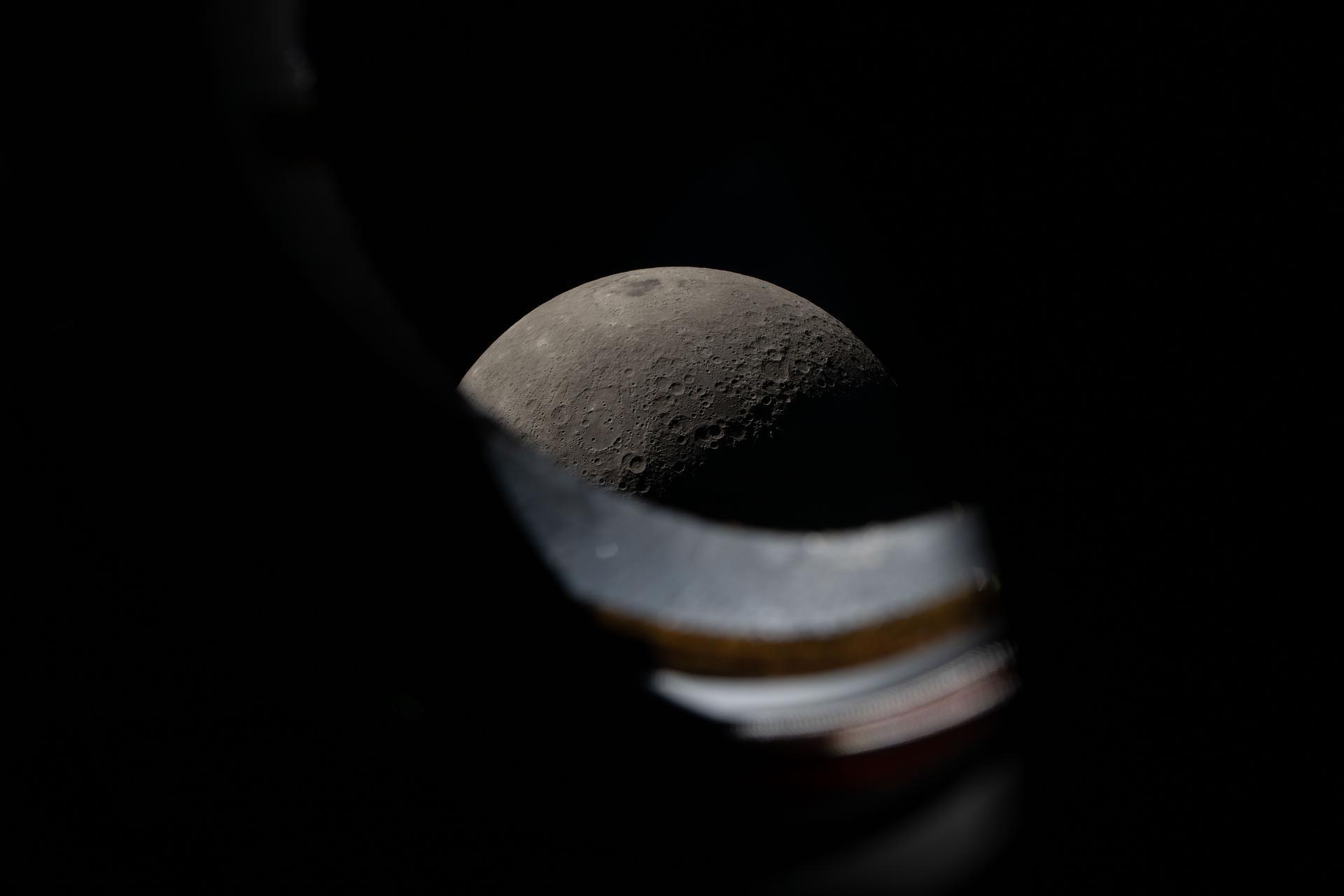
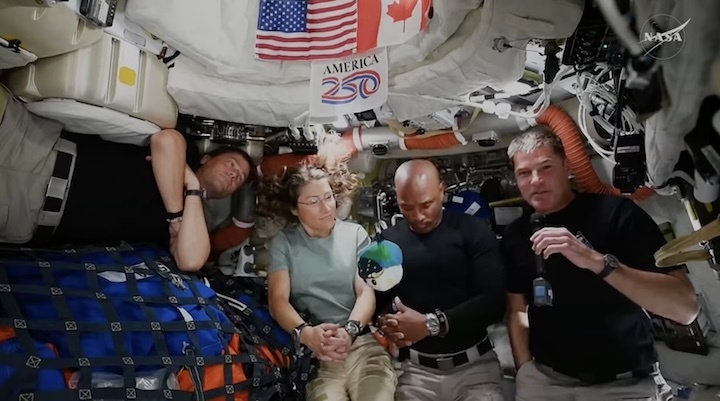
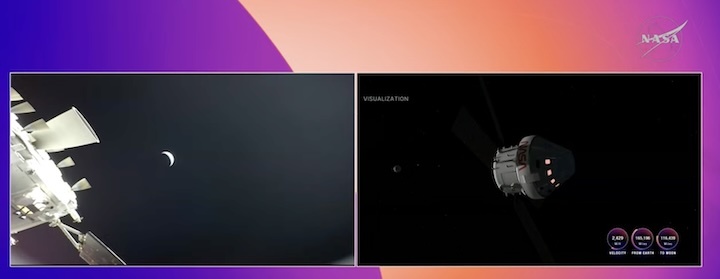
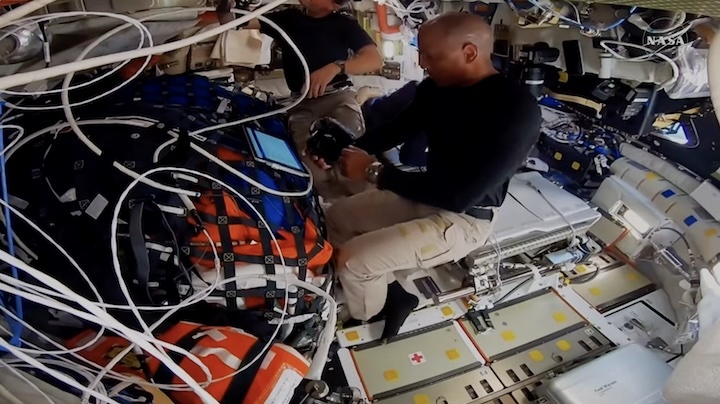
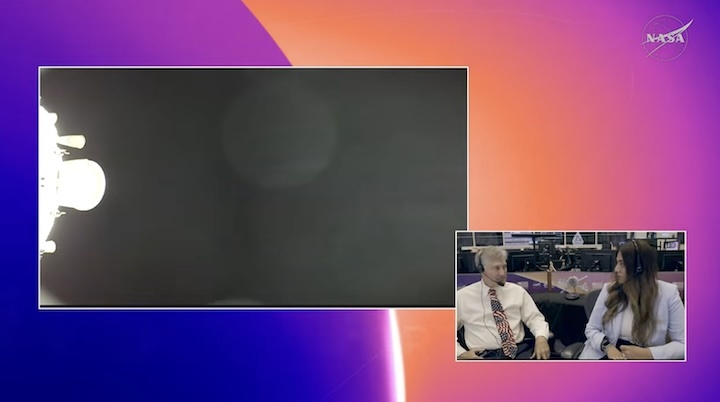
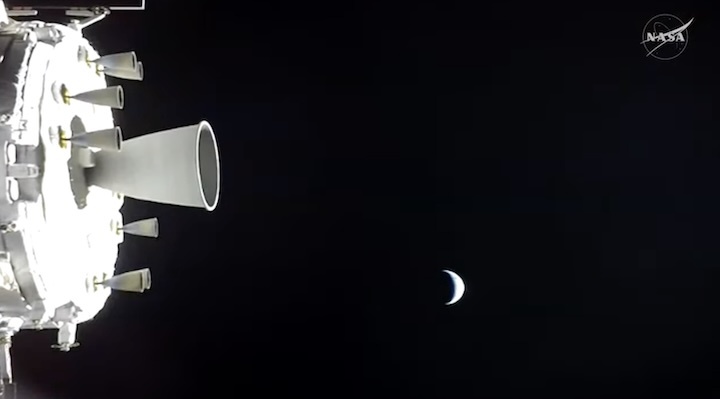
Lunar Flyby Observations – NASA astronaut Victor Glover
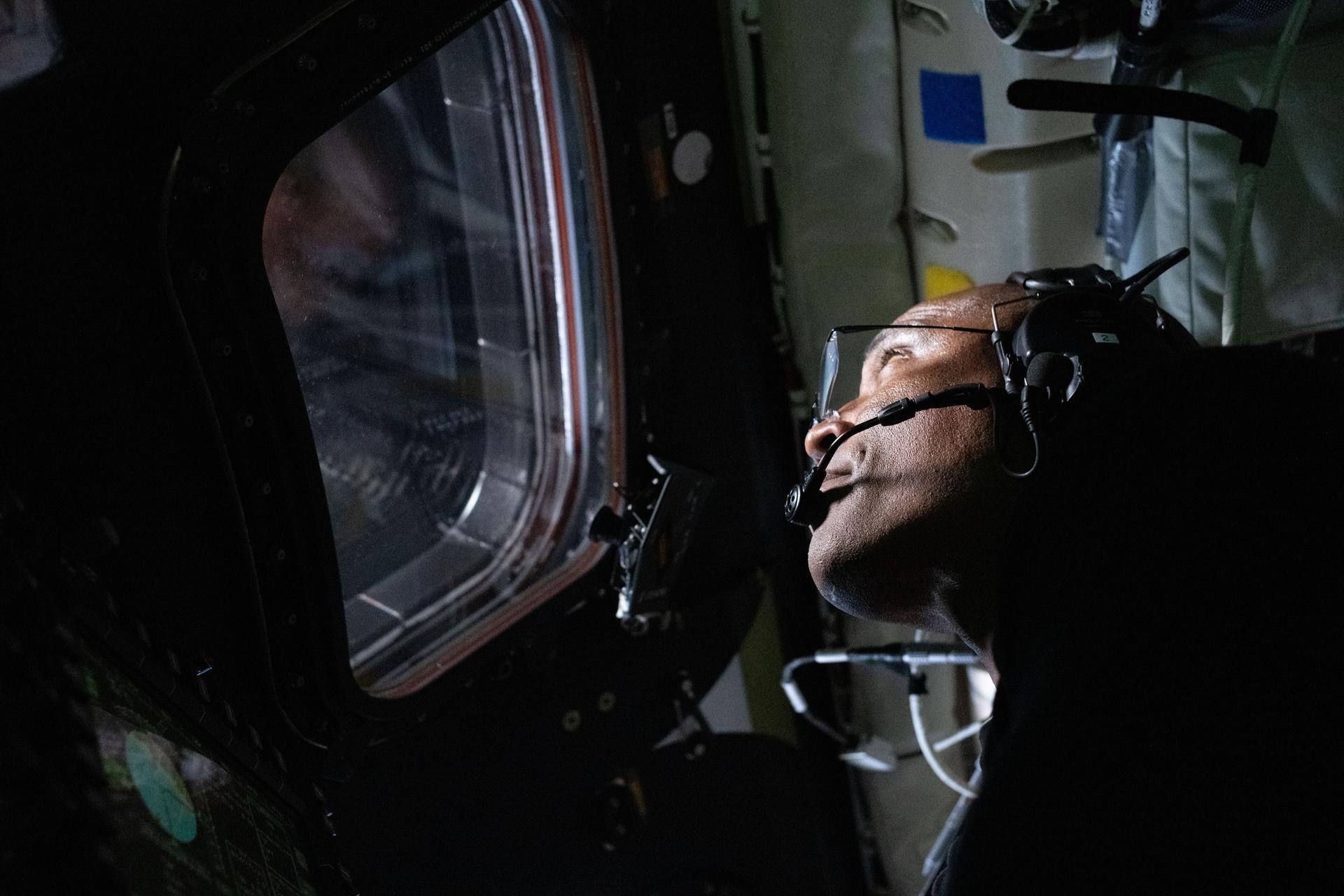
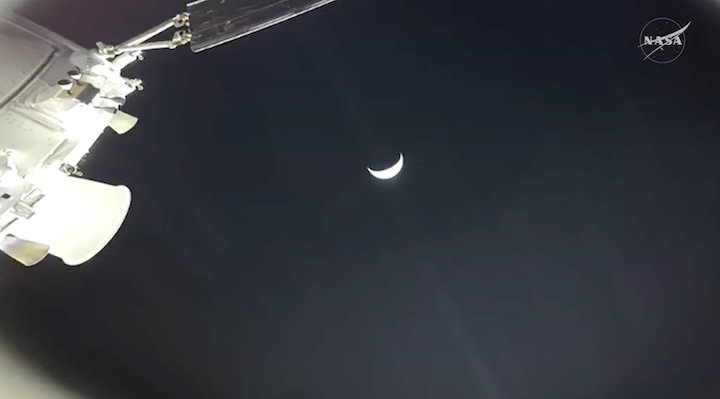
Drawn by the Moon
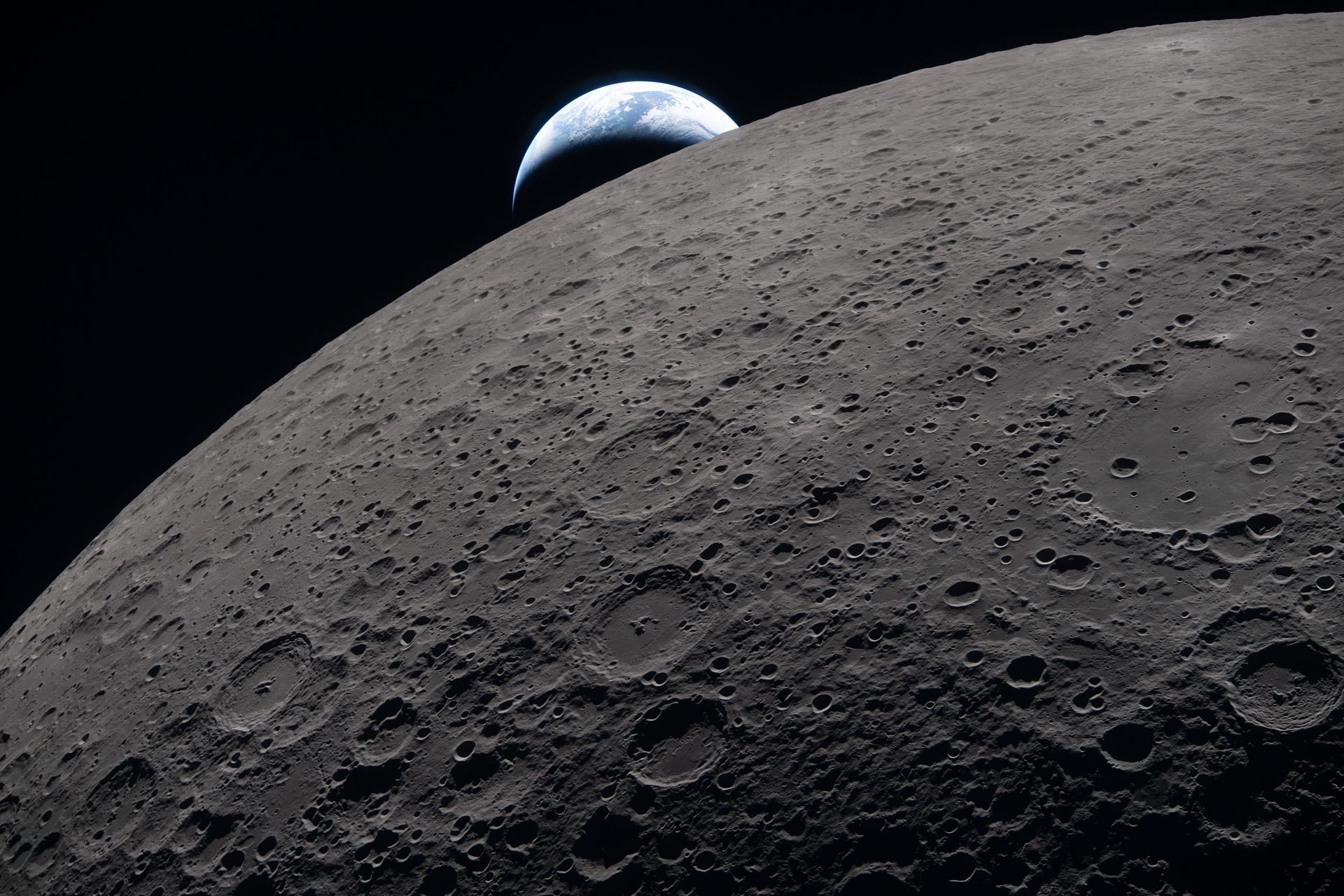
A Setting Earth
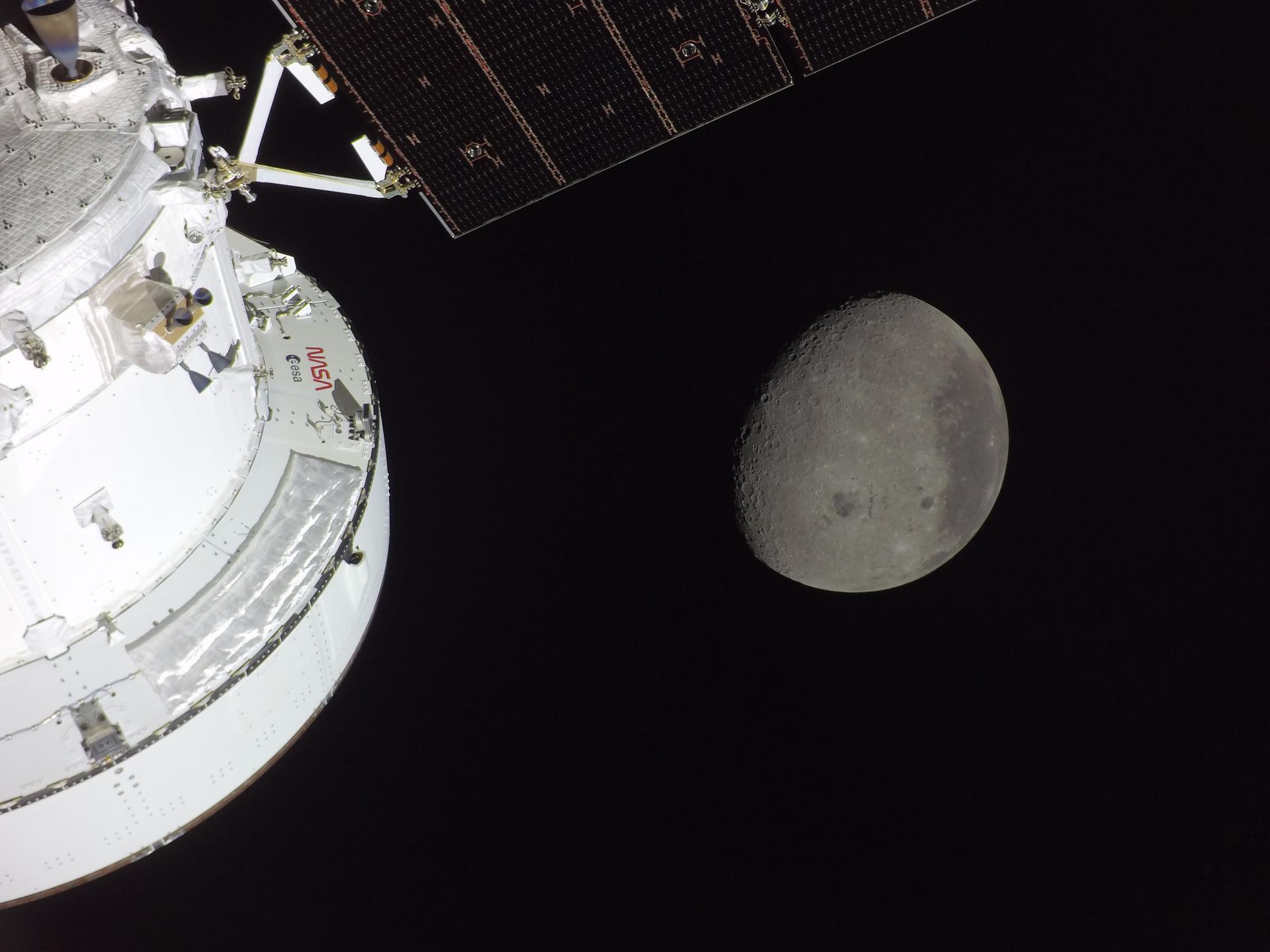
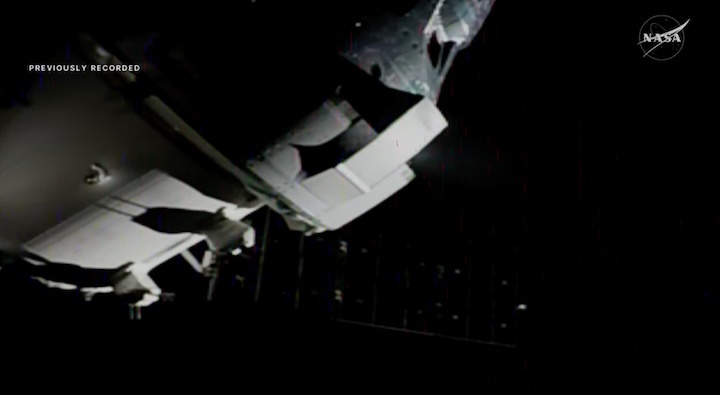
Orion in the Spotlight
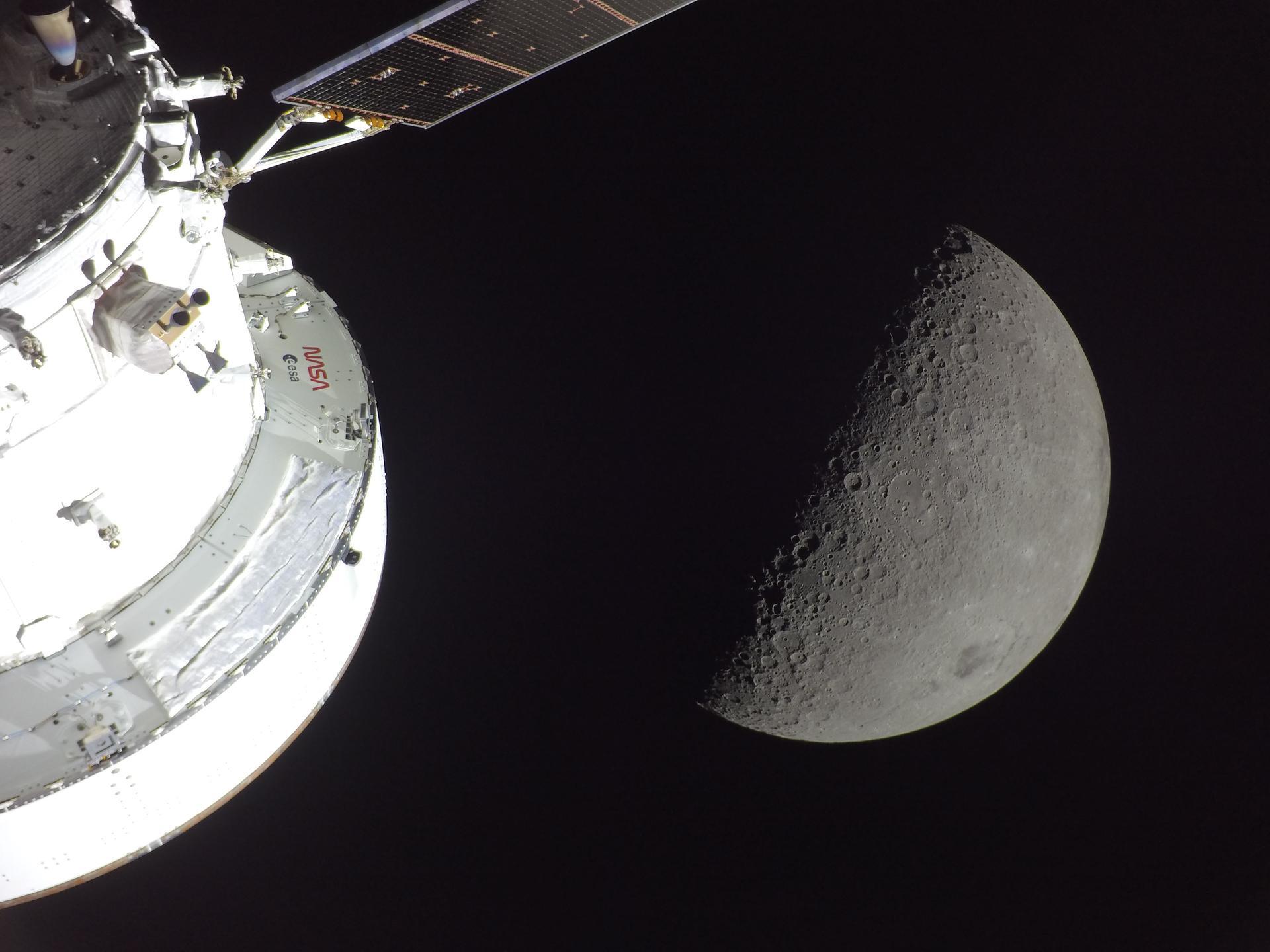
NASA’s Artemis II Mission Around the Moon
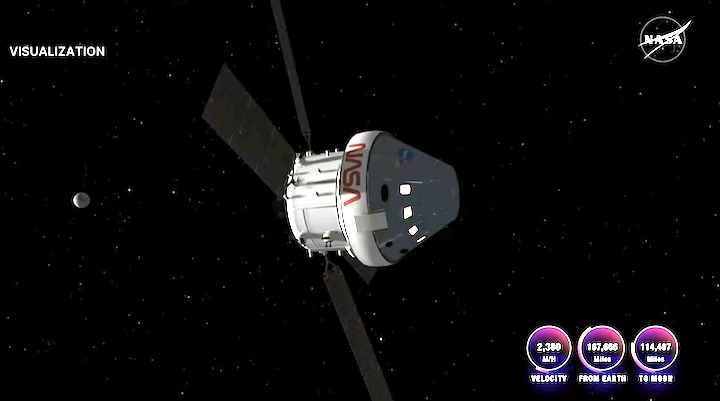
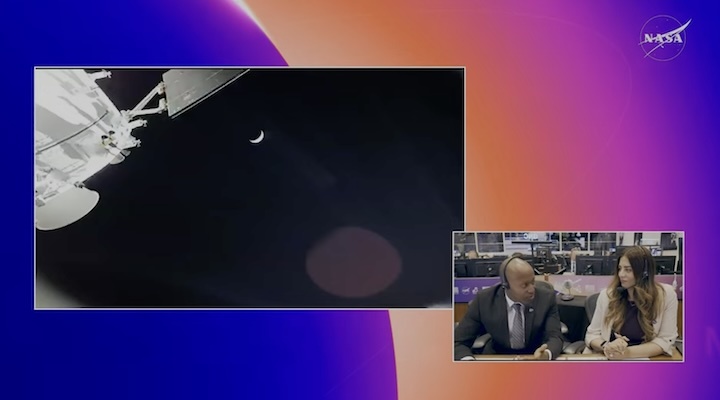
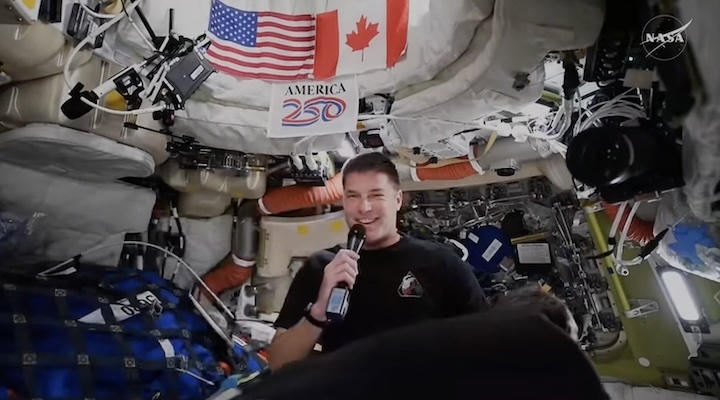
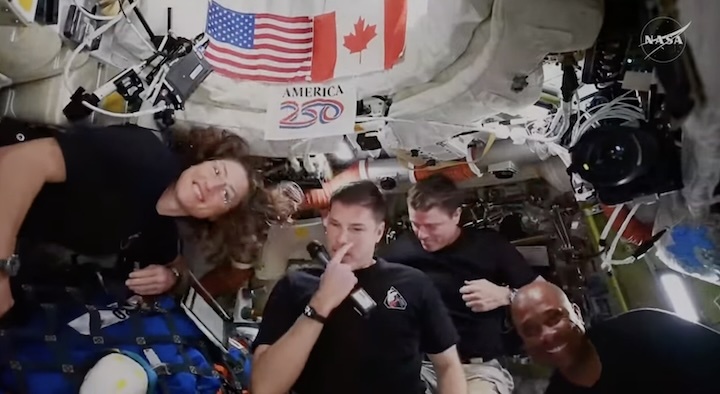
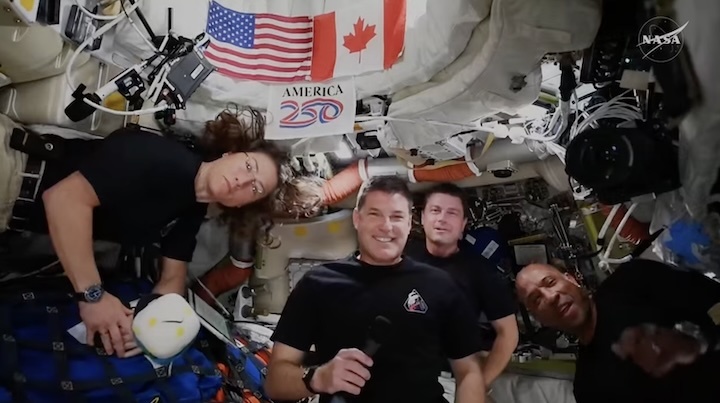
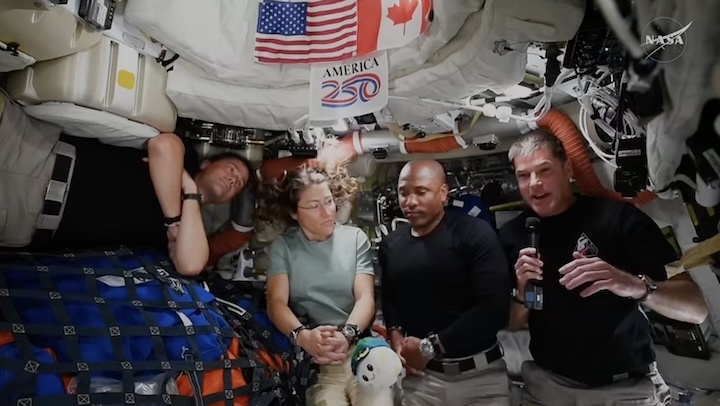

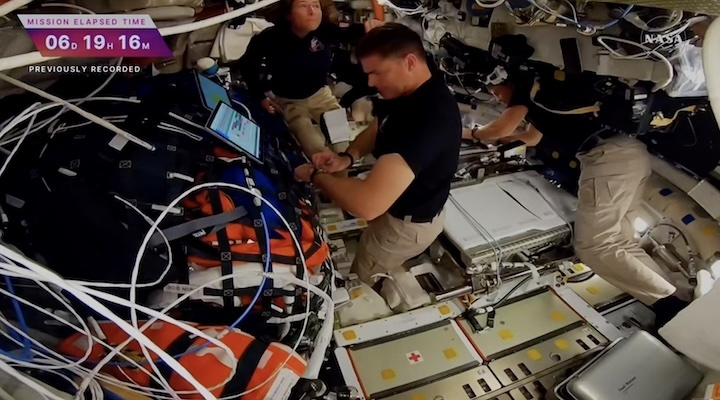
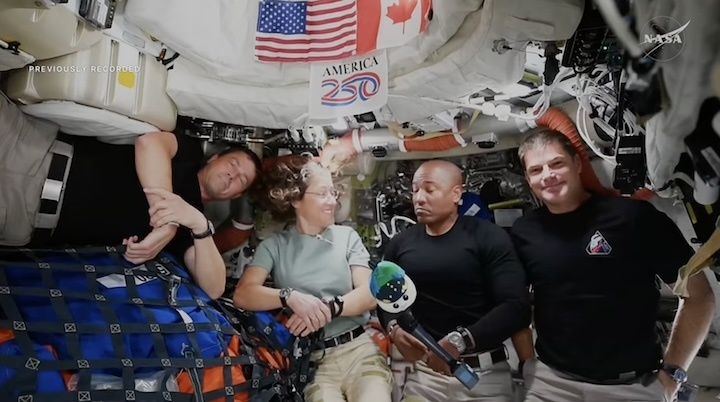
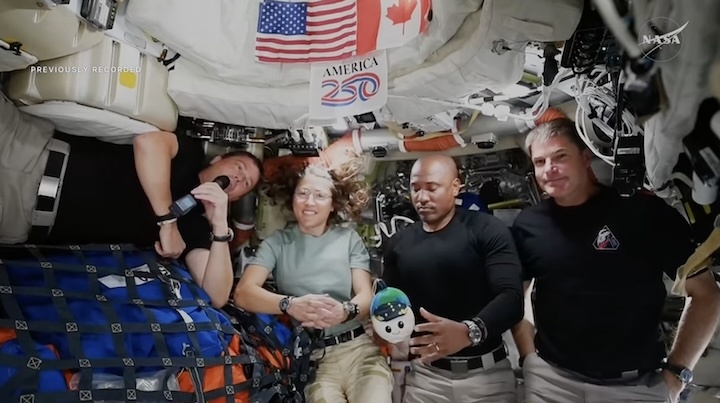
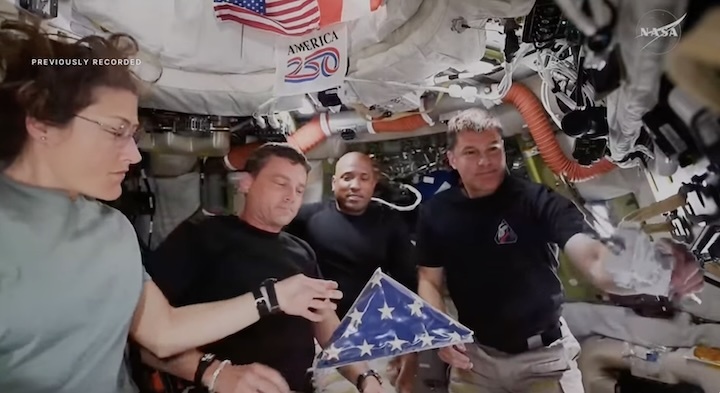

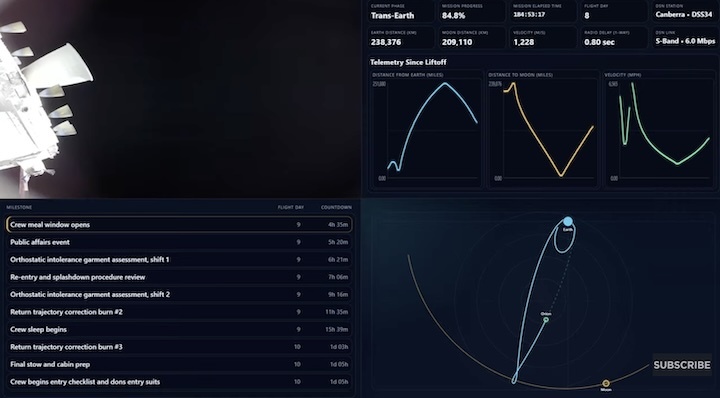
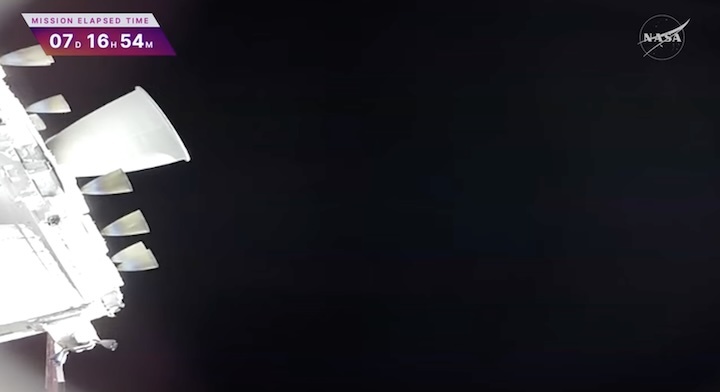
Quelle: NASA
+++
Artemis II's moon mission is the 1st in more than 50 years. Why did it take the US so long to return?
The Artemis II crew completed a historic lunar flyby this week, becoming the first astronauts in nearly 54 years to visit the moon.
The crew broke the record for the farthest distance humans have ever traveled from Earth and saw more of the far side of the moon than anyone has witnessed.
Given the more than half a century since NASA sent a crew on a moon mission, many are wondering: why did it take so long to return?
Astronomy experts and space historians told ABC News that the U.S. has always has the technological capabilities to return to the moon, but factors including cost and shifting priorities have delayed a lunar mission.
"Ultimately, the main reason it's taken so long is it's cost a lot of money," Patricia Reiff, a professor of physics and astronomy at Rice University in Houston, told ABC News. "When we did Apollo, we dedicated 5% of the federal budget to make Apollo go and be safe in a very short time. Right now, NASA's budget isn't 5% of the federal budget, it's less than a half of 1% of federal budget ... and so you just can't afford everything NASA wants to do."
How the U.S. first got to the moon
In May 1961, in an address to a joint session of Congress, President John F. Kennedy Jr. committed the U.S. to the goal of landing a man on the moon and returning him safely back on Earth before the end of the decade.
The U.S. was in a space race with the Soviet Union amid the Cold War, and the Soviet Union was making significant advancements, Amy Shira Teitel, a spaceflight historian, told ABC News.
First was Sputnik 1, the world's first artificial satellite, which launched Oct. 4, 1957, and then Sputnik 2 a month later, which carried Laika the dog into space – the first animal to orbit the Earth.
Then, on April 12, 1961, Soviet cosmonaut Yuri Alekseyevich Gagarin performed the first successful crewed spaceflight when he rode the Vostok 1 rocket and capsule on a single orbit around the Earth.
Teitel said the Cold War drove America's efforts then to reach the moon, a pressure the U.S. isn't facing today.
"If it hadn't been for the Cold War, we wouldn't have [landed on the moon] because it was an insane thing to do," Teitel said. "It was a Cold War pissing contest, the coolest pissing contest of all time but it was a Cold War pissing contest. ... The Soviet Union got all the firsts. It was very clear that the Soviets were developing biological systems to keep passengers alive."
Apollo 11 accomplished Kennedy's goal, famously landing American astronauts on the moon on July 20, 1969. During the landing, Mission Control in Houston flashed Kennedy's speech announcing the commitment to the moon on its big screen, followed by the words: "TASK ACCOMPLISHED, July 1969."
After the Apollo missions
Americans went on to land five more times on the moon with the last being the Apollo 17 mission in December 1972, crewed by Gene Cernan, Ronald Evans and Harrison Schmitt.
Apollo 17 initially was not meant to be the last mission – there had been lunar landings scheduled through Apollo 20. But with budget cuts, the last three Apollo missions had already been cancelled two years before Apollo 17's launch, and the U.S. space program changed its priorities.
"There is a misperception that after the Apollo program, the space program wound down, but it's actually switched direction and switched focus," Teasel Muir-Harmony, curator of the Apollo collection at the Smithsonian National Air and Space Museum, told ABC News. "And it did change from becoming the national priority to one of many national priorities under the Nixon administration."
"It was decided that it was going to be important for the country to pursue space exploration in a more economically modest way," she added.
President Richard Nixon directed NASA to focus less on deep space exploration and more on low-Earth orbit missions. Among these was Skylab, America's first orbiting space station, which launched on May 14, 1973.
During this period, NASA also developed and ran the Space Shuttle program – officially known as the STS, or Space Transportation System – the world's first reusable spacecraft, to transport crew and cargo for low Earth orbit missions. First envisioned in 1968, the shuttle program was authorized in 1972 and the first crewed launch into space took place April 12, 1981, when Columbia carried an inaugural crew of two into orbit aboard STS 1. There were 135 crewed shuttle missions in all, the last on July 8, 2011, when the program was retired.
In 1989, President George H.W. Bush announced the Space Exploration Initiative with the goals of going back to the moon "to stay" and, eventually, missions to Mars, Muir-Harmony said. The initiative was ended by Bush's successor, President Bill Clinton, due to costs and in favor of less expensive missions.
The Clinton administration focused on converting plans for a modular space station called Freedom into the International Space Station., The largest human-made object to ever orbit the Earth, the ISS was constructed with the assistance of the Canadian, European and Japanese space agencies and 14 other countries. It launched on Nov. 20, 1998, and is still in use.
In 2004, President George W. Bush revisited his father's space aspirations by presenting the Vision for Space Exploration Program, which included among its goals returning to the moon by 2020 and eventually sending a crewed mission to Mars.
NASA's Constellation Program was created in response to the goals laid out in the Vision for Space Exploration. However, after a 2009 report found the program was so behind schedule and over budget that its goals were likely not feasible, it was canceled by Bush's successor, President Barack Obama, in 2010.
Obama's space policy shifted away from plans to return to the moon and instead proposed more funding for NASA and the development of a program that could eventually lead to crewed missions to Mars and other destinations.
"It's taken so long to go back to the moon because look at all of these large-scale programs behind schedule and over budget, like a theme here," Teitel said. "So, we're seeing all of these big programs, 'Oh, it's too expensive. It's over budget. It's behind schedule. We can't spend this kind of money.'"
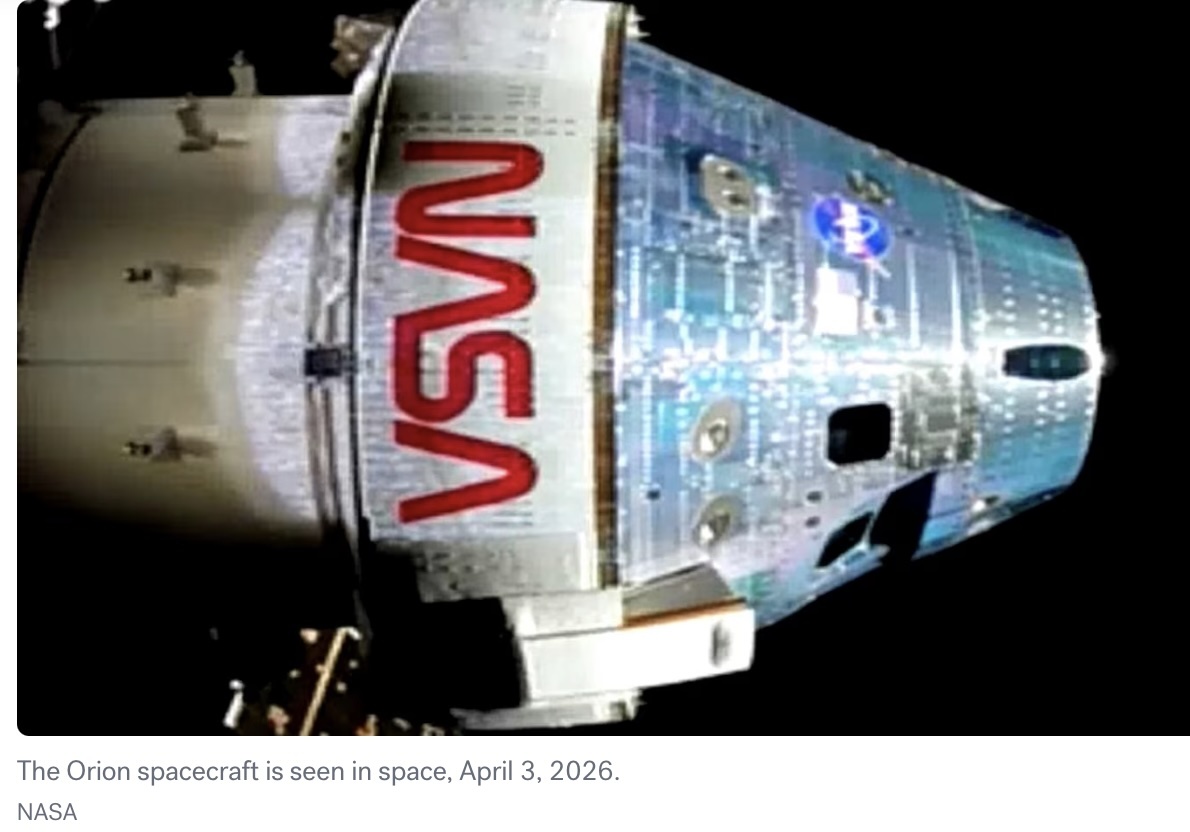
Despite the Constellation Program being canceled, its legacy survives with the Orion spacecraft. Initially designed for the Constellation Program for use in low Earth orbit, it became the crew module used for the Artemis missions.
NASA launches the Artemis program
Dorit Donoviel, executive director of the Translational Research Institute for Space Health at Baylor College of Medicine, told ABC News that having several administrations with consistent priorities and requests of NASA is another factor that helped get the U.S. back to the moon.
In December 2017, the first Trump administration signed a directive refocusing the space program on sending American astronauts back to the moon, followed by missions to Mars and potentially even farther. In May 2019, NASA named the program Artemis – in Greek mythology, the twin sister of Apollo and the goddess of the moon.
This priority continued under the Biden administration. In November 2022, Artemis I successfully completed a 25-day uncrewed flight that came within just 60 miles of the moon.
Artemis I, which tested the integrated Orion spacecraft and Space Launch System (SLS) rocket, set the stage for Artemis II, which is the first crewed flight of Orion.
"I have to give [Trump] credit," Donoviel said. "He had the vision to get us back there. And obviously, he's been out of office in between, but he's come back to that vision. He could have changed his mind. He could have said, 'No, I don't want to go to the moon. I want to go to Mars or I want to look at an asteroid again, or I want to really focus on just low Earth orbit.' He could have done all those things, but he stuck with his original plan."
Muir-Harmony agreed that when multiple administrations from different political parties support lunar exploration, it's easier for a project to get off the ground. She cited as examples the Kennedy, Johnson and Nixon administrations supporting Apollo and the Trump and Biden administrations supporting Artemis.
"That same political support, especially at the presidential level, is pretty critical," she said. "It's important to emphasize that there were other presidential proposals to send humans to the moon before Artemis ... [but] one of the really important factors that you see that's similar about Apollo and about Artemis is that they have maintained sustained political support through multiple presidential administrations."
Quelle: abc News
+++
Artemis II crew recovery: Here's what to expect from Friday splashdown
After a 10-day mission of flying around the moon and venturing deeper into space than any humans in history, the Artemis II crew are set to return to Earth on April 10 — triggering a full-scale recovery operation that involves a U.S. Navy ship and four helicopters.
The Orion spacecraft is expected to descend under parachutes before a splashdown off the California coast near San Diego at approximately 8:07 p.m. eastern time, within a geographic area spanning nearly 550 miles.
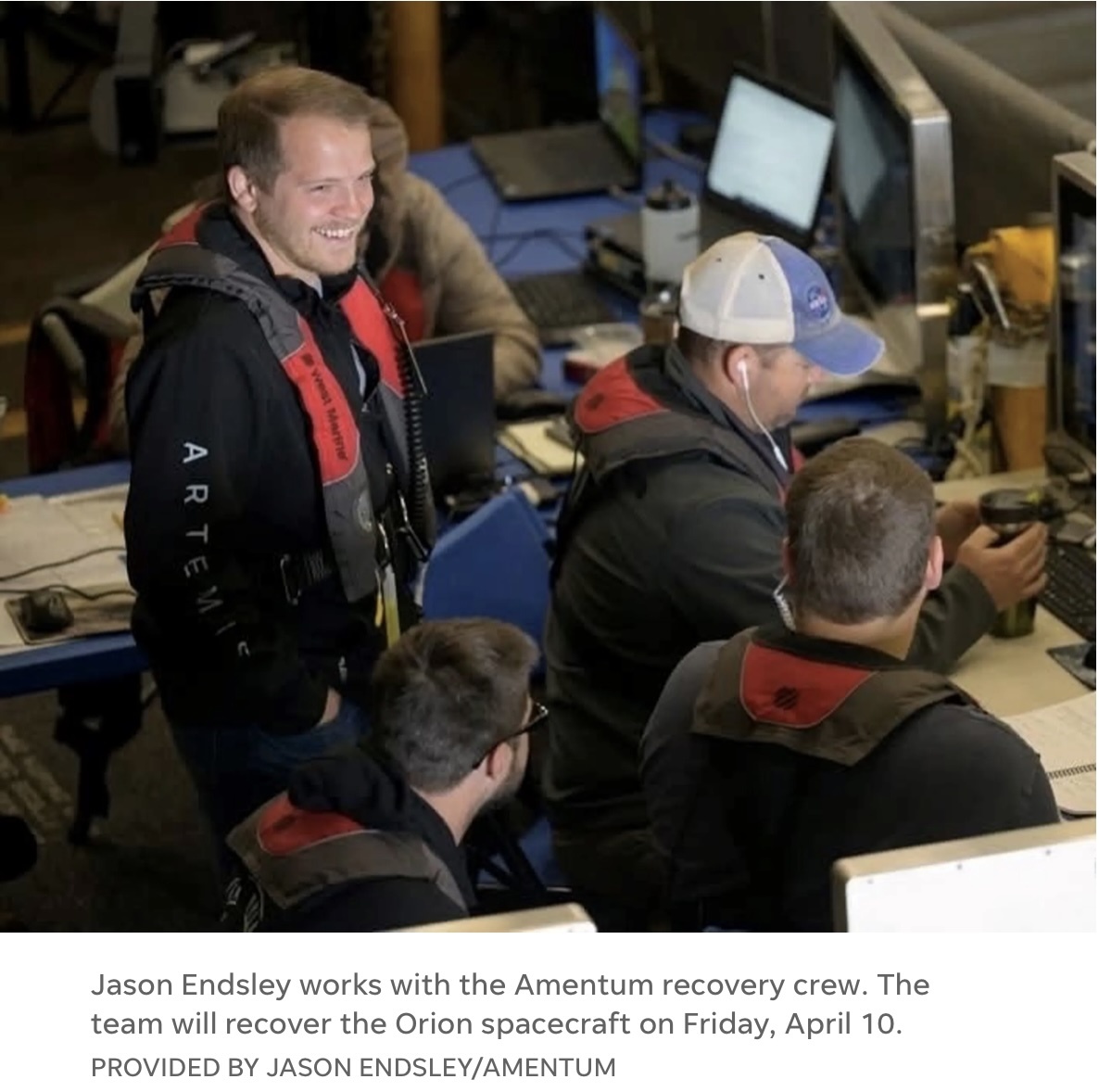
Jason Endsley, the lead ground instrumentation engineer with Amentum, which is NASA's advanced engineering partner with some responsibilities for splashdown, walked FLORIDA TODAY through how Friday's splashdown will play out.
“What I’m really looking forward to is that first moment of splashdown. That really solidifies that the U.S. is back," said Endsley, whose primary role is to monitor data to learn from Friday's operation. "The U.S. space supremacy is really moving forward. This is our first major step into crewed deep space exploration.”
Amentum will use a Navy ship with a well deck to handle the entire astronaut retrieval process, from navigating rough waters to transferring the crew directly to the medical bay. The recovery mission's guiding principles: recovery, precision, safety, and efficient execution, Endsley said.
Rick Henfling, Artemis II entry flight director, said April 7 that the USS John P. Murtha — an amphibious transport ship — had left port and was steaming out to a midway point in advance of the splashdown.
Artemis II splashdown weather
Weather and sea conditions will play a significant role on recovery day.
“We also have to be concerned about sea states, as wave heights and splashing waves, and things like that – it makes it a more complex and difficult operation to recover the crew module,” Endsley said.
“We have a contingency plan in place. We plan for everything in practice,” said Endsley. “So if I notice increasing sea states based in instrumentation I have installed on the navel vessel, I could also inform the test team of that — maybe go to a different area that has better sea states.”
If the Pacific Ocean conditions are particularly rough, they could pause recovery options until the waters calm down.
"Weather near San Diego looks favorable. So I'm optimistic that we'll be able to land close to the shore," Henfling said during an April 7 news conference.
Getting the Artemis II astronauts out
Once the astronauts splash down, it's the Department of War's job together with NASA's Johnson Space Center to get the astronauts out of Orion.
“If you look back at Apollo recovery, it may look familiar,” said Endsley. “We have a stabilizing collar that’s put around the crew module.”
This stabilizing collar helps keep the Orion spacecraft floating upright in the water. Once stable, teams will install a large inflatable “front porch." The personnel get the astronauts out of the Orion spacecraft and safely onto this floating platform.
A team of four helicopters — two for primary rescue and two for imaging — will fly in circles over the area. Once ready, a basket will be lowered to hoist the first astronaut up into the first helicopter. The second helicopter will follow and bring up a second astronaut. By the time this second astronaut is recovered, the first helicopter is already coming back around with the basket. Then finally, that second helicopter comes back for the fourth astronaut.
The helicopters transport the crew to the naval vessel where a medical bay is waiting. The astronauts will be given a quick checkup after their ride back from space. Once all is well, they will be transported back to Houston.
Getting the Orion spacecraft back to shore
“Then that’s where my job comes in, of recovering the crew module alongside all the other NASA and Amentum employees we have on the ship,” said Endsley.
Those familiar with SpaceX Dragon recoveries will find Orion recovery looks a bit different. Instead of hoisting the spacecraft right onto the ship, it is floated onboard.
“We use that naval, amphibious floating dock. And there’s a big thing called the wellgate —it’s a big gate in the back of the ship. That is lowered down, and then the back of that ship is filled up with water,” Endsley said.
The Orion spacecraft is then brought onboard the naval vessel and placed in a recovery stand. The water is removed from the wellgate by a process called deballasting.
Once back at shore, Amentum will then secure the Orion in a container to protect it from the elements before shipping it via truck back to Kennedy Space Center.
What do you say to astronauts who flew around the moon
Endsley knows the astronauts personally having worked with them during training. He said he's thought through what he intends to tell them.
“I want to shake their hand and say ‘I’m glad to have you back’. And I’d probably ask them what it was like seeing Earth so far away, seeing the moon up close,” said Endsley. “And congratulate them on such a huge milestone in American space history.”
Quelle: Florida Today
+++
Artemis II astronauts to conduct Orion steering, solar radiation tests on Day 8
Today marks the eighth day of NASA's 10-day Artemis II mission. And the crew will continue traveling back toward Earth inside their Orion spacecraft as the world marvels at the photos captured during their historic lunar flyby.
NASA has scheduled two primary activities for Day 8. The four astronauts will build a shelter out of supplies and equipment to assess their ability to protect themselves from solar flares and other high-radiation events in deep space.
Then the crew will steer the spacecraft while testing Orion’s manual piloting capability.
"They’ll center a chosen target in Orion’s windows, move into a tail-to-Sun attitude, and perform attitude maneuvers comparing the craft’s six-degree-of-freedom and three-degree-of-freedom attitude control modes," a NASA daily mission agenda said.
Artemis II mission winding down
This marks the Artemis II astronauts' next-to-last full day in space. Looking ahead, they will re-enter Earth's atmosphere and splash down in the Pacific Ocean off the California coast near San Diego about 8:07 p.m. EDT Friday, April 10.
Artemis II marks the first crewed return voyage to the moon since Apollo 17 in December 1972. Crew members are NASA astronauts Reid Wiseman (commander), Victor Glover (pilot) and Christina Koch (mission specialist) and Canadian Space Agency astronaut Jeremy Hansen (mission specialist).
President Donald Trump and NASA Administrator Jared Isaacman chatted with the astronauts on Monday, April 6, after they swung around the far side of the moon and viewed a nearly hourlong solar eclipse.
Artemis II also established a new human spaceflight record Monday by reaching a maximum distance from Earth of 252,756 miles.
Quelle: Florida Today
+++
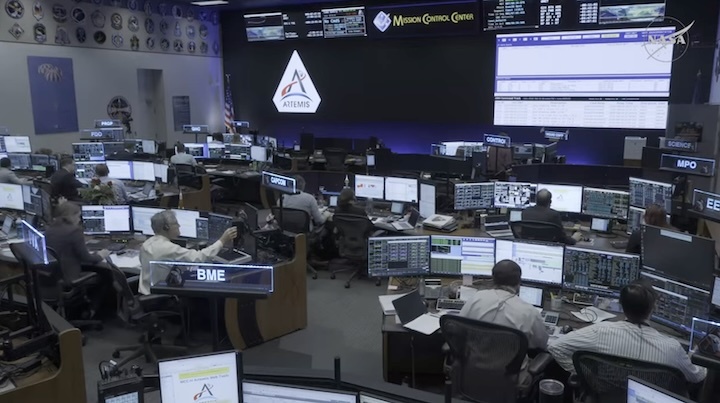
Twin NASA Control Rooms Support Artemis Safety, Success
Twin control rooms at NASA’s Marshall Space Flight Center in Huntsville, Alabama, are actively supporting real-time mission operations in lunar orbit as part of the agency’s Artemis II mission, helping ensure astronaut safety and mission success as the crew prepares to return to Earth Friday, April 10.
The LUCA (Lunar Utilization Control Area) and LESA (Lander Engineering Support Area) rooms are part of the Huntsville Operations Support Center at NASA Marshall. While the spaces look nearly identical, the two are more like fraternal twins in their focus areas: LUCA primarily supports Artemis science operations, while LESA will provide engineering support for landing astronauts on the Moon.

“The Huntsville Operations Support Center at NASA Marshall can be adapted to the needs of the agency’s missions, and LUCA and LESA are some of our newest configurable control rooms for the Artemis campaign,” said Harish Chandranath, Payload and Mission Operations Division Human Landing Systems project lead at Marshall. “In addition to supporting Artemis, our Huntsville Operations Support Center teams also support the Commercial Crew Program, the SLS (Space Launch System) rocket, and International Space Station science operations.”
Support center services include work to manage spacecraft command and telemetry, local and remote voice services for international connections, live and recorded video services, and a telescience resource kit – special software that makes sure two computers far apart can communicate without missing any information and without human help. All Huntsville Operations Support Center services can be tied into both the LUCA and LESA rooms, giving operators the capability to use data and communicate with scientists and experts around the world.
During Artemis II, teams in LUCA are supporting first-of-their-kind science operations designed to better understand the effects of deep space – such as microgravity and radiation – on crew physiology, immune response, and performance. The data gathered during the mission will inform future crewed flights to the Moon.
Meanwhile, teams in LESA are observing Artemis II mission operations in real time, which is a critical opportunity to refine processes and prepare for future crewed landings on the Moon’s surface. For Artemis missions, members of NASA’s Human Landing System Mission Insight Support Team – including engineers, safety leads, flight operations experts, and technical authorities – will operate from LESA to monitor lander systems and support key decision-making.
Through the Artemis program, NASA is returning humans to the Moon for scientific discovery, economic opportunity, and to build the foundation for the first crewed missions to Mars – for the benefit of all.
Quelle: NASA
+++
Artemis II Flight Day 8: Crew Conducts Key Tests on Return to Earth
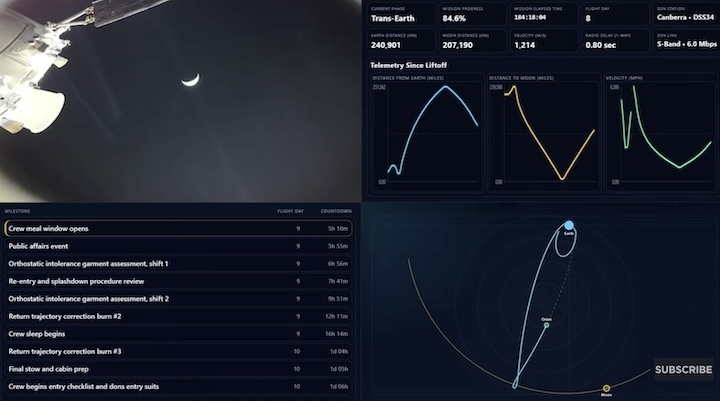
Aboard the Orion spacecraft, named Integrity, the Artemis II crew kicked off Flight Day 8 with “Under Pressure,” by Queen and David Bowie, and will prepare for two test objectives on their way home. At wakeup, they were 200,278 miles from Earth and 83,549 miles from the Moon. The crew also received a message from CSA (Canadian Space Agency).
Staying healthy
NASA astronauts Reid Wiseman, Victor Glover, and Christina Koch, and CSA astronaut Jeremy Hansen, will complete their daily flywheel exercise session as part of the mission’s fitness regimen. The flywheel uses a cable‑based system that supports both aerobic workouts, like rowing, and resistive movements, including squats and deadlifts.
Orthostatic intolerance garment testing
All four crew members will take turns testing and evaluating the orthostatic intolerance garment worn under the Orion Crew Survival System suit, which helps astronauts maintain blood pressure and circulation during the transition back to Earth’s gravity. After extended time in microgravity, some astronauts experience orthostatic intolerance, a condition that can make it difficult to stand upright without dizziness or fainting. The garment applies lower‑body compression to counteract this effect and support a safe return.
Hello from Artemis II
Media will have an opportunity at 10:45 p.m. EDT to speak with the crew following their historic flyby around the Moon. To join the call virtually, media must RSVP no later than 1 p.m.
Taking control of Orion
After their midday meal, crew will take control of Orion around 10:55 p.m. for another manual piloting demonstration.
Using Orion’s field of view window, the crew will center a designated target and then guide the spacecraft to a tail‑to‑Sun attitude. The test more data about the handling qualities and guidance, navigation, and control systems. By manually piloting the capsule to a tail-to-sun attitude, the crew can manage thermal conditions and power generation.
The crew completed a similar piloting demonstration earlier in the mission and also during the proximity operations demonstration.
Preparing for splashdown
Looking ahead to Thursday, the crew and flight control teams will begin preparing the cabin and studying entry procedures ahead of splashdown. The crew will start stowing equipment and installing their seats to ensure all items are secured for re-entry.
To prepare the cabin for entry, the teams opted to forego the originally planned shielding deployment demonstration.
NASA is targeting splashdown at 8:07 p.m. (5:07 p.m. PDT) Friday, April 10, off the coast of San Diego. The agency will continue to provide updates on splashdown during the daily mission briefing. Wednesday’s briefing is at 5 p.m. and can be seen on NASA’s 24/7 coverage on the agency’s YouTube channel.
Watch live return coverage on NASA+, Amazon Prime, Apple TV, Netflix, HBO Max, Discovery+, Peacock and Roku starting at 6:30 p.m. Learn how to stream NASA content through a variety of online platforms, including social media. Coverage will continue until NASA and Department of War personnel safely assist the crew out of Orion and transport them to the USS John P. Murtha.
Quelle: NASA
+++
Why NASA sends hot sauce into space
NASA sent five hot sauce varieties on Artemis II, deeming the spicy staple an essential item.
Why it matters: Even in space, flavor matters.
The big picture: Tabasco, Sriracha, Cholula, Frank's RedHot and Heinz Hot Taco Sauce are on the New Orleans-made rocket, according to Victoria Segovia, a public affairs specialist at Johnson Space Center in Houston.
- She says NASA doesn't endorse any of the brands, though.
- Spicy condiments aren't new in space. Wasabi, Louisiana Hot Sauce, Sriracha and Tabasco are already popular on the International Space Station, along with shrimp cocktail, which has freeze-dried shrimp and horseradish, PBS says.
How it works: Hot sauce serves practical and behavioral health functions in space, Segovia says.
- "In microgravity, astronauts often experience less acute olfactory senses due to fluid shift — similar to having a mild congestion — which can dull flavor perceptions," she tells Axios.
- "Spicy and bold" condiments help enhance taste, she says.
How they choose: The hot sauces are selected in collaboration with astronauts and NASA's food scientists at the Johnson Space Center Food Lab, she said.
- Astronauts taste-test and provide input on flavor preferences, variety and compatibility with the menu.
- Selections are also evaluated for safety, shelf stability, nutritional value and suitability for the spaceflight environment.
- Condiments on Artemis II are typically in single-serve packets, she said.
Zoom out: Hot sauce has historically been part of the variety of condiments available to astronauts, Segovia says.
- Sauces on Artemis II include spicy mustard, honey and maple syrup, NASA says.
- Menu items include spicy green beans, barbecued beef brisket and mango salad. See the food highlights below.
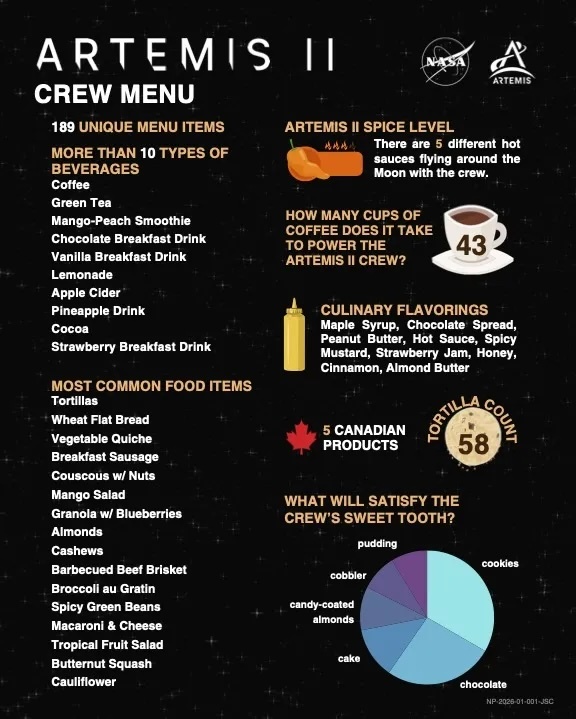
The menu on Artemis II. Image: NASA
Quelle: AXIOS