
8.04.2026

NASA’s Artemis II Crew Offers New Perspectives On Lunar Surface
HOUSTON — Astronauts aboard the Orion spacecraft Integrity swung around the far side of the Moon April 6, offering insights and observations of lunar surface features, including regions never before seen by human eyes.
The 6.5-hr. flyby, which began at 2:45 p.m., was the highlight of the ongoing nine-day Artemis II flight test, which primarily is intended as a trial run of a Lockheed Martin-built Orion spacecraft with crew.
NASA plans to follow Artemis II with a mid-2027 crewed mission in low Earth orbit to test Orion’s ability to rendezvous, dock and undock with lunar landers needed to ferry astronauts to and from the surface of the Moon beginning in 2028.
NASA astronauts Reid Wiseman, pilot Victor Glover, mission specialist Christina Koch and the Canadian Space Agency’s Jeremy Hansen successfully combined Artemis II science and flight test objectives as they swept behind the far side of the Moon for unprecedented human observations of the lunar terrain.
Shortly before the start of the science surveys, Integrity broke the distance record for a human spaceflight set by the Apollo 13 crew in 1970. “As we surpass the furthest distance humans have ever traveled from planet Earth, we do so in honoring the extraordinary efforts and feats of our predecessors in human space exploration,” Wiseman radioed to Mission Control in Houston.
“We challenge this generation, and the next, to make sure this record is not long-lived,” he added.
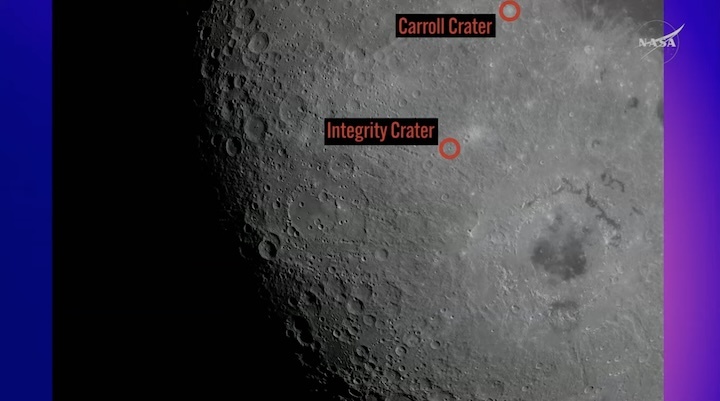
The crew also proposed to name two craters on the Moon, one after their spaceship Integrity and the other after Wiseman’s late wife, Carroll Wiseman, who died of cancer in 2020.
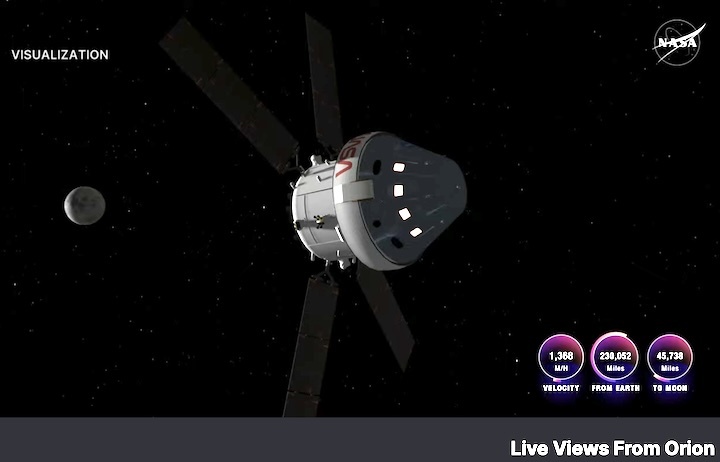
Integrity was on track to continue its outbound journey for another 4,111 mi., before gravitational forces of the Moon and Earth begin tugging Orion back for a four-day return journey ending with splashdown in the Pacific Ocean off the coast of San Diego at 8:06 p.m. EDT April 10.
Artemis II launched at 6:35 p.m. EDT April, returning NASA to deep-space crewed exploration for the first time since the 1969-72 Apollo program.
“I sent a note to the workforce at NASA and all our partners … thanking everyone who contributed to getting the vehicle ready to get out on the pad to launch—acknowledging the contributions that will come from Mission Control and our teams, the recovery forces that will bring these astronauts home, out of the water and back home,” NASA Administrator Jared Isaacman told reporters in Wichita, Kansas, where he was touring some Artemis program suppliers’ facilities.
“For everybody else,” he added, “I said it’s time to start thinking about Artemis III. During the Apollo era, on Apollo 10, when those astronauts were orbiting just miles above the Moon, you had everybody else getting ready for Apollo 11 that launched two months later, right?”
Working with a team of scientists at the Johnson Space Center, the Artemis II astronauts had a Lunar Targeting Plan that included observations of the color, albedo, topography and surface texture of up to 35 targets of interest on the lunar near and far side. The regions include the dual craters Glushko and Ohm, the Aristarchus Plateau, a gathering of bright surface swirls known as Reiner Gamma and the Orientale basin—the youngest large impact basin on the Moon.
“When you look at the Moon, all the really bright new craters—some of them are super tiny, most of them are pretty small, and there’s a couple that really stand out—look like a lampshade that has tiny pinprick holes and the light shining through,” Koch radioed to the Artemis II science team. “They’re so bright compared to the rest of the Moon.”
The astronauts also had opportunities to respond to targets of their choosing for observations.
Glover, for instance, noted what he described as a challenging terrain at the lunar south pole, a region NASA has prioritized for the first Artemis-era landing with astronauts, Artemis IV, in 2028. The region is believed to contain substantial subsurface water ice deposits that could support future lunar exploration and development efforts.
“You are describing new views of a Moon in more ways than one,” Kelsey Young, NASA’s Artemis II lunar science lead, told Glover.
“We are very excited to get these observations, particularly how humans on board get to complement the robotic exploration that goes on by NASA,” NASA’s Lori Glaze, the agency’s Artemis Program lead, told reporters ahead of the April 6 lunar flyby.
“The Moon and Earth are fundamentally made of the same material. In the way back, the Earth was hit by a Mars-sized object and it was a massive collision that left a lot of debris out in space and coalesced into what is now the Earth and Moon.
“Our whole Earth/Moon system is literally made up of the same materials. Although Earth has gone through lots of evolution with plate tectonics and weathering, the Moon has been there as a witness plate to see everything that has happened over the 4.5 billion years we have been around,” she said.
Quelle: AVIATION WEEK
+++
Artemis II NASA astronaut names moon crater 'Carroll' for commander's late wife
During a historic lunar flyby, the Artemis II crew proposed naming two newly discovered moon craters —one in honor of their spacecraft and the other in memory of the commander's late wife, adding an emotional touch to the moment.
Commander Reid Wiseman, Pilot Victor Glover, Mission Specialist Christina Koch and Canadian Space Agency astronaut Jeremy Hansen flew past the moon on Monday, April 6, at a distance that broke the former record held by NASA's 1970 Apollo 13 mission.
As they surpassed that record, 248,655 miles away from Earth, the crew called down to Mission Control in a touching moment that was broadcast live on NASA TV.
“Our science team helped us out with a couple of relatively fresh craters on the moon that have not been previously named. And our crew would like to propose a couple of potential names,” Hansen said.
“We spent a bit of time this morning looking out the window and were able to see them both with our naked eye and through the long lens, so we feel this is a good time to send this down.”
The name given to the first was Integrity, the name of the Artemis II Orion spacecraft.
“If you were to look at on the far side and draw a line straight up to Ohm in the far side, relatively in the middle is a unnamed crater, and we’d like to suggest it be called Integrity in the future,” Hansen said.
The second crater got a name that was very personal.
“A number of years ago we started this journey, in our closeknit astronaut family we lost a loved one,” Hansen said. “There’s a feature in a really neat place on the moon."
Hansen said it's a bright spot visible from Earth during certain times of the lunar cycle.
“We would like to call it Carroll,” he said, his voice full of emotion as his crewmates quickly embraced.
Carroll Taylor Wiseman passed away in 2020 after a five-year battle with cancer, leaving behind Wiseman and their daughters Katie and Ellie.
Now a crater will stand in her honor — her husband naming it as he flew past.
"Integrity and Carroll Crater, loud and clear," Jenni Gibbons, the backup astronaut working in Mission Control, radioed back.
Quelle: Florida Today
+++
Blackouts, broken records and a message from the past: five key moments from Artemis II’s lunar flyby
Crew of Orion capsule spent emotional day documenting surface of moon – and paying homage to astronauts who paved the way
n the sixth day of a lunar mission that has rekindled global interest in space exploration and reinvigorated Nasa’s aims to return to the moon, the astronauts of Artemis II flew further from Earth than any human before them.
Across a six-hour flyby, the crew of the Orion capsule captured views of the moon’s far side that have never been seen before – while honouring the astronauts who paved the way for their record-breaking mission.
Here are some key moments from the day:
1. Breaking a 56-year-old record
The four astronauts broke the distance record set by the 1970 Apollo 13 mission when they reached the journey’s furthest anticipated distance from Earth: 406,778km (252,760 miles). It’s expected that they broke the previous record by 6,606km.
While the Artemis II crew travelled further from Earth than any human previously, and despite it being one of the most notable moments of the mission, the Canadian astronaut Jeremy Hansen appeared to have his sights fixed on missions to come. After breaking the record, he challenged “this generation and the next to make sure this record is not long-lived”.
-
-
Artemis II is following broadly the same trajectory as Apollo 13 after its “Houston, we’ve had a problem” moment, which wiped out any hope that that mission would land on the moon.
Known as a free-return lunar trajectory, this route takes advantage of gravity from the Earth and moon, reducing the need for fuel. It’s a figure-of-eight path that will put the astronauts on course for home, once they emerge from behind the moon.
2. Documenting the moon
The crew had more than six-hours to observe and document the lunar surface, bringing a human perspective to features of the moon that we have until now only known through photographs taken by robots.
The astronauts provided a running commentary to scientists back in Houston on what they were seeing. “Such a majestic view out here,” Reid Wiseman said as he took pictures.
In this image from video provided by Nasa, the Orion spacecraft, the Earth and the moon are seen together. Photograph: AP Some peaks were so bright, the pilot Victor Glover said, they looked as if they were covered in snow. Mission specialist Christina Koch described lunar craters as looking like a “lampshade with tiny pinprick holes and the light shining through”.
Besides photographing the scenes with high-powered Nikon cameras, the astronauts also used their iPhones for impromptu shots.
The crew are expected to return with thousands of pictures – among them, the Apollo 12 and 14 landing sites from 1969 and 1971, as well as fringes of the south polar region, the preferred location for a future touchdown.
3. ‘We will see you on the other side’
Hours after the Artemis crew set their distance record, the capsule passed across the far side of the moon, starting a communications blackout that lasted about 40 minutes.
“We will see you on the other side,” said Glover, minutes before the connection was lost.
During the blackout, the craft made its closest approach to the moon and reached its maximum distance from Earth.
A view of the moon taken by an Artemis II crew member through the window of the Orion spacecraft. Photograph: Nasa/Reuters Astronomy professor Derek Buzasi cast the astronauts’ period of solitude as “exciting, in a slightly scary way”, recalling that the same thing would happen during the Apollo missions of the 60s and 70s and “we all held our breaths a little bit”.
As mission control in Houston regained communications with Artemis, the first comments from the capsule came from Koch, who said: “We will always choose Earth, we will always choose each other.”
4. A message from the past
The crew began the momentous day with the voice of Jim Lovell, the Apollo 13 commander, who recorded a wake-up message two months before his death last August.
“Welcome to my old neighbourhood,” said Lovell, who also flew on Apollo 8, humanity’s first lunar visit. “It’s a historic day and I know how busy you’ll be, but don’t forget to enjoy the view.”
The crew were travelling with the Apollo 8 silk patch that accompanied Lovell to the moon, and showed it off as the crucial flyby approached. “It’s just a real honour to have that on board with us,” said Wiseman. “Let’s go have a great day.”
-
-
-


5. An emotional moment
Moments after breaking Apollo 13’s record, the astronauts asked permission to name two fresh lunar craters already observed. They proposed Integrity, their capsule’s name, and Carroll, in honour of commander Reid Wiseman’s wife who died of cancer in 2020. Wiseman, a former fighter pilot, has been raising their two daughters on his own since then.
“It’s a bright spot on the moon. And we would like to call it Carroll,” Hansen said. Wiseman wept as the Canadian astronaut put in the request to mission control, and all four astronauts embraced in tears.
A Nasa spokesperson in Houston said the names proposed by the Artemis crew would be passed along to the International Astronomical Union, the body responsible for naming celestial bodies and features.
Artemis II Flight Day 6: Lunar Flyby Updates
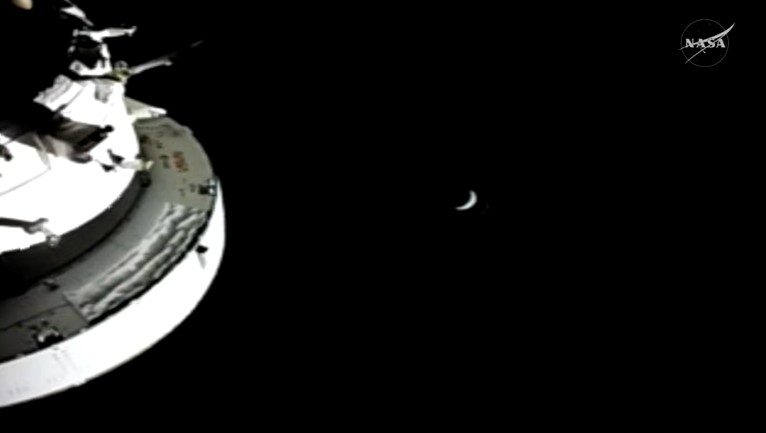
Live lunar flyby updates for NASA’s Artemis II mission will be published on this page. All times are Eastern.
9:35 p.m.
The Artemis II crew has completed the mission’s lunar observation period and is now beginning the return trip home. On Tuesday, April 7, Orion will exit the lunar sphere of influence at approximately 1:25 p.m., at a distance of 41,072 miles from the Moon.
8:35 p.m.
Artemis II is now entering a solar eclipse that will last for about an hour as Orion, the Moon and the Sun align. During this phase, the crew will see the Sun disappear behind a mostly darkened Moon.
The crew will use the opportunity to study the solar corona — the Sun’s outermost atmosphere — as it glows around the lunar edge. They also will watch for flashes of light from meteoroids striking the surface, which could offer insight into potential hazards on the Moon.
7:24 p.m.
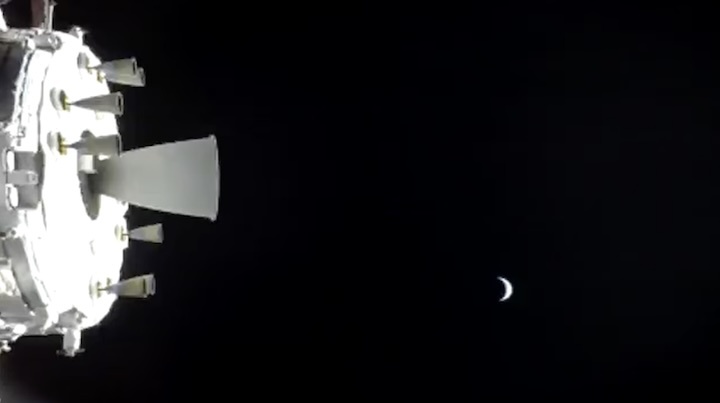
The Artemis II crew witnessed an Earthrise as Orion emerged from behind the Moon, moments before the Deep Space Network reacquired the spacecraft’s signal and restored communications.
7:02 p.m.
The Artemis II crew has reached the mission’s maximum distance from Earth at 252,756 miles, setting a new record for human spaceflight. This milestone places the crew 4,111 miles farther from Earth than the Apollo 13 mission in 1970.
7:00 p.m.
Orion has reached its closest approach to the Moon at about 4,067 miles above the lunar surface. At this point, the spacecraft is traveling about 60,863 miles an hour relative to Earth, but only 3,139 miles an hour relative to the Moon.
6:44 p.m.
As we prepare to go out of radio communication, we’re still going to feel your love from Earth. And to all of you down there on Earth and around Earth, we love you, from the Moon. We will see you on the other side.

VICTOR GLOVER
Artemis II Pilot
The Orion spacecraft has entered a planned communications blackout as it passes behind the Moon. For about 40 minutes, the lunar surface blocks the radio signals from NASA’s Deep Space Network on Earth needed to stay in contact with the crew.
Similar blackouts occurred during the Artemis I and Apollo missions and are expected when using an Earth-based communications system. Once Orion emerges from behind the Moon, the network will quickly reacquire the signal and restore communications with mission control.
6:41 p.m.
As Orion traveled behind the Moon, the crew witnessed an “Earthset” — the moment Earth dropped below the lunar horizon — marking another milestone in the mission’s lunar flyby.
The Earth will re-emerge at “Earthrise” from the opposite edge of the Moon in about 40 minutes.
4:40 p.m.
A lively stream of science observations from the crew throughout the flyby has been received with grins, nods, and lots of chatter in the Science Evaluation Room, where lunar scientists are supporting the observations in mission control. The crew reported color nuances, which will help enhance scientific understandings of the Moon. Shades of browns and blues that can be picked out with human eyes can help reveal the mineral composition of a feature and its age. As crew reports are received, the science team is updating the observation plan based on their follow up questions and sending up new guidance to the crew.
2:45 p.m.
Due to last approximately seven hours, the lunar observation period is the duration of time that the crew is close enough to the Moon to make impactful science observations (4,070 miles altitude at closest approach) and the spacecraft is oriented such that the windows are pointed at the Moon.
At the beginning of the window, as Orion approaches the Moon on the near side, the side we can see from Earth, people in parts of the eastern hemisphere can view some of the same features the astronauts will observe. These include future CLPS landing site Reiner Gamma, a bright, mysterious swirl the origin of which scientists are still trying to understand, and Glushko, a bright, 27-mile-wide crater known for the white streaks that shoot out from it for up to 500 miles.
1:56 p.m.
The Artemis II crew of NASA astronauts Reid Wiseman, Victor Glover, and Christina Koch, along with CSA (Canadian Space Agency) astronaut Jeremy Hansen have set the record for the farthest distance from Earth traveled by a human mission, surpassing the Apollo 13 record of 248,655 miles set in 1970.
As we surpass the furthest distance humans have ever traveled from planet Earth, we do so in honoring the extraordinary efforts and feats of our predecessors in human space exploration. We will continue our journey even further into space before Mother Earth succeeds in pulling us back to everything that we hold dear. But we most importantly choose this moment to challenge this generation and the next to make sure this record is not long-lived.
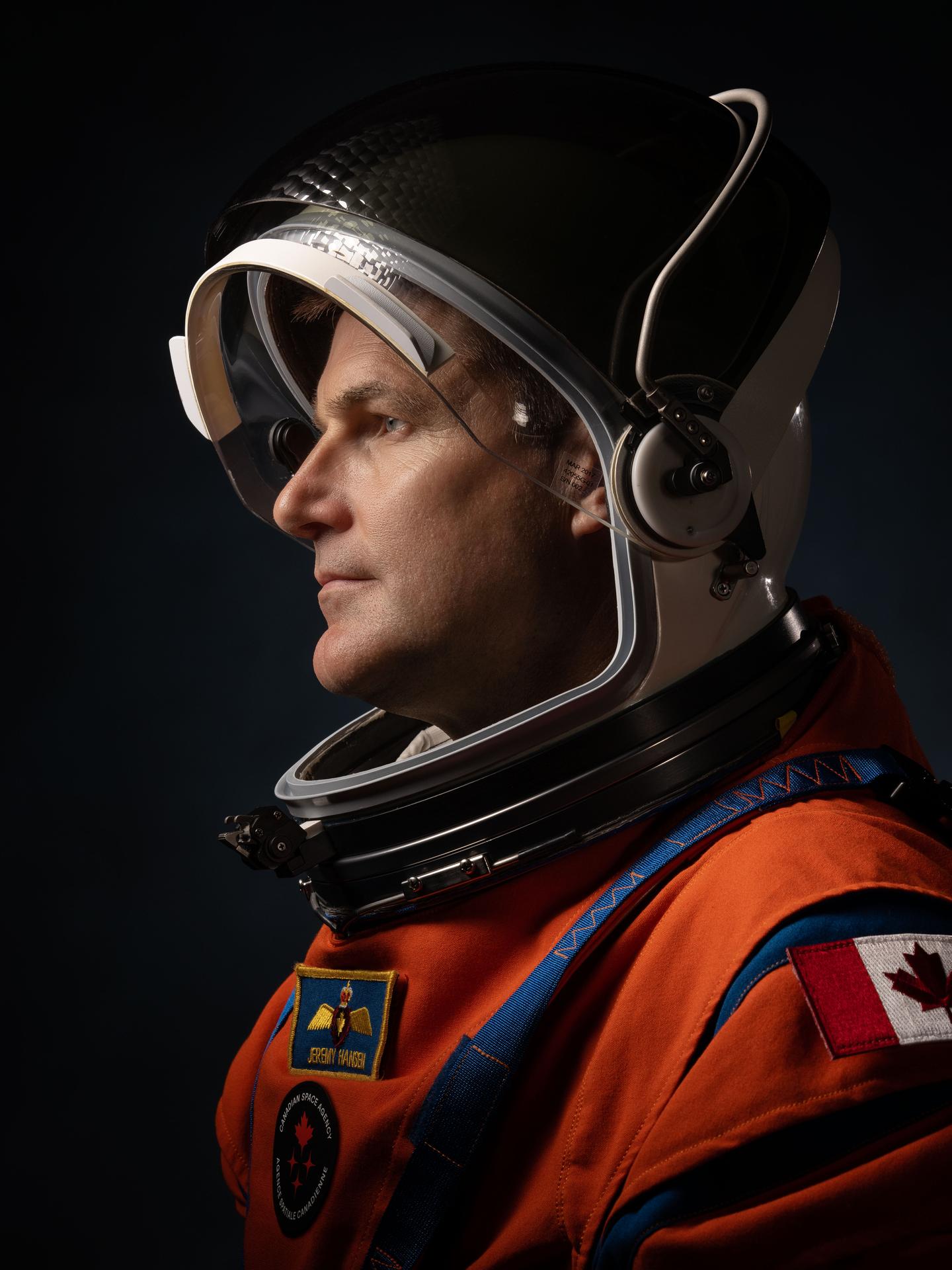
JEREMY HANSEN
Canadian Space Agency (CSA) Astronaut and Artemis II Mission Specialist
NASA Flight Director Brandon Lloyd, Capsule Communicator Amy Dill, and Command and Handling Data Officer Brandon Borter also marked a lighthearted milestone today by emailing the crew what is now assumed to be the longest person-to-person message ever sent in human history.
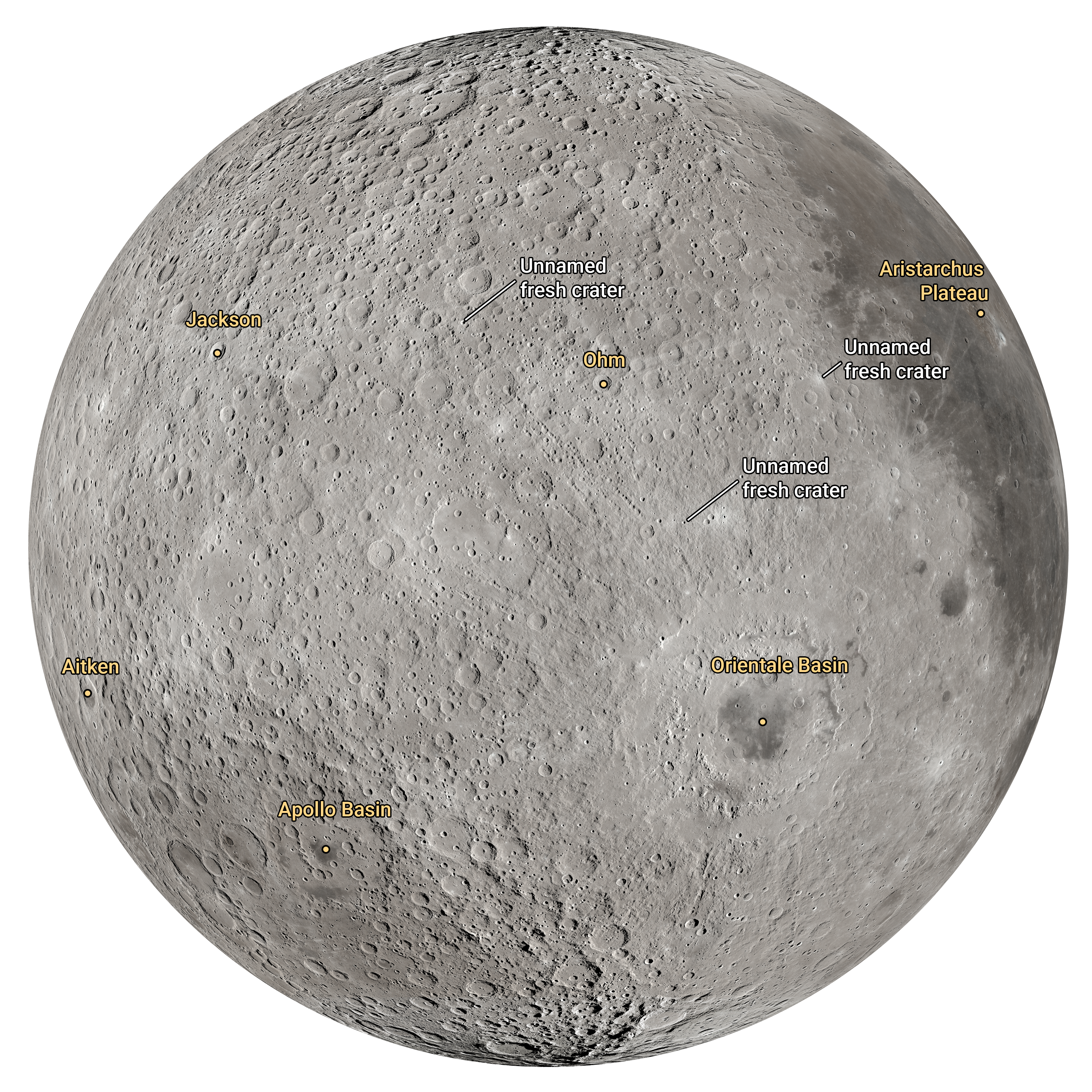
After breaking the record for human spaceflight, crew also took a moment to provisionally name a couple of craters on the Moon, noting they were able to see them with their naked eye.
Just northwest of Orientale basin highlighted above is a crater they would like to name Integrity after their spacecraft and this historic mission. Just northeast of Integrity, on the near and far side boundary, and sometimes visible from Earth, the crew suggested Carroll crater in honor of Reid Wiseman’s late wife, Carroll Taylor Wiseman. After this mission is complete, the crater name proposals will be formally submitted to the International Astronomical Union, the organization that governs the naming of celestial bodies and their surface features.

1:30 p.m.
NASA’s lunar science officer briefed the crew on their science objectives for the upcoming lunar observation period.
On April 5, the science team sent the crew the final list of 30 lunar surface targets, including the Orientale basin, a nearly 600-mile-wide crater that straddles the Moon’s near and far sides. This 3.8-billion-year-old crater formed when a large object struck the lunar surface and retains clear evidence of that collision, including dramatic topography in its rings. The crew will study Orientale’s features up close and from multiple angles as they pass by.
Hertzsprung basin also is on the crew’s list of targets. Northwest of Orientale, it is a nearly 400-mile-wide crater on the Moon’s far side. An older ringed basin, Hertzsprung offers a unique contrast to Orientale because its features have been degraded by subsequent impacts. By comparing the topography of the two craters, the crew’s observations will help scientists gain insight into how lunar features evolve over geologic timescales.
Quelle: NASA
+++




Quelle: NASA
+++
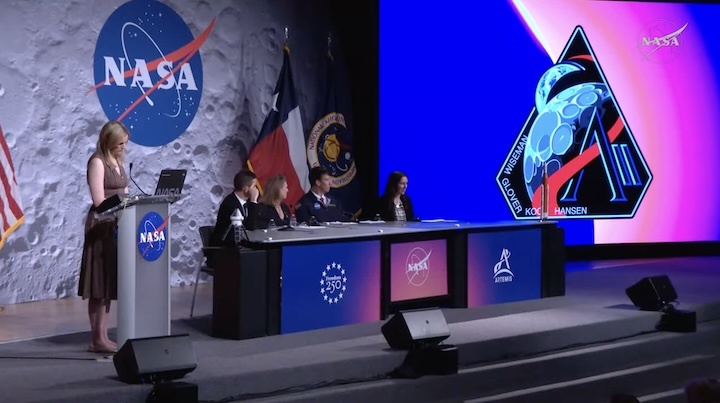
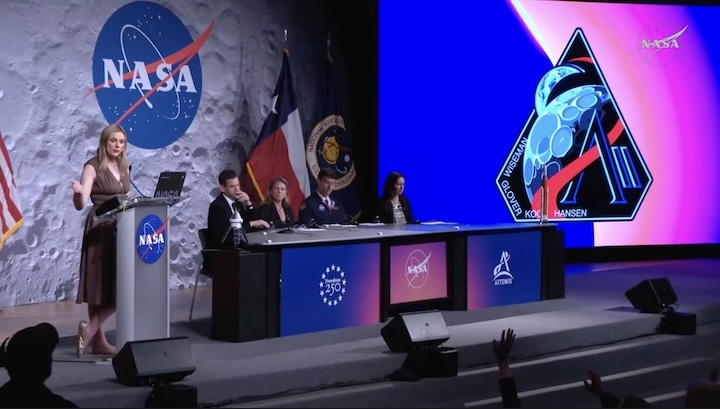
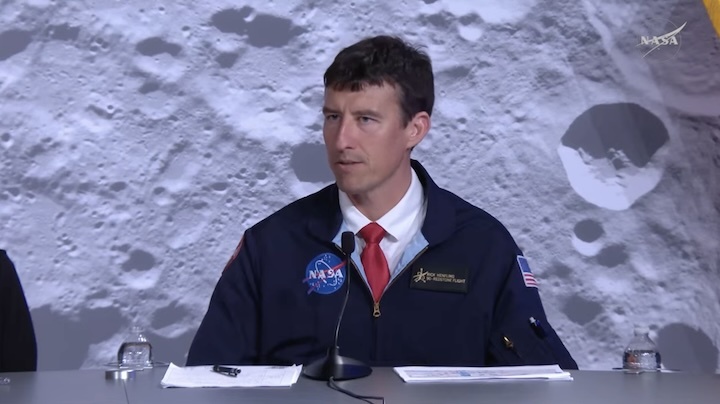
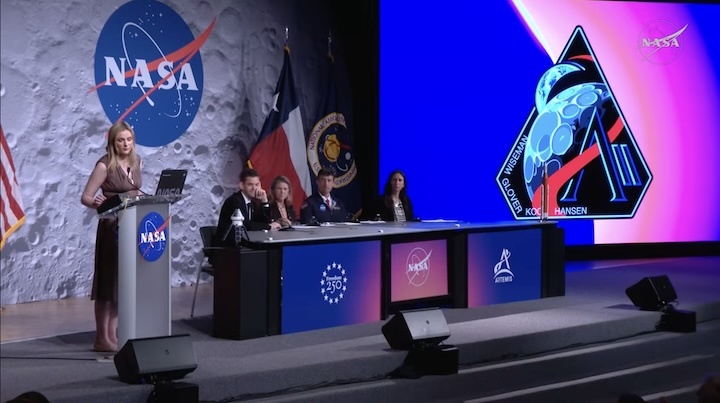
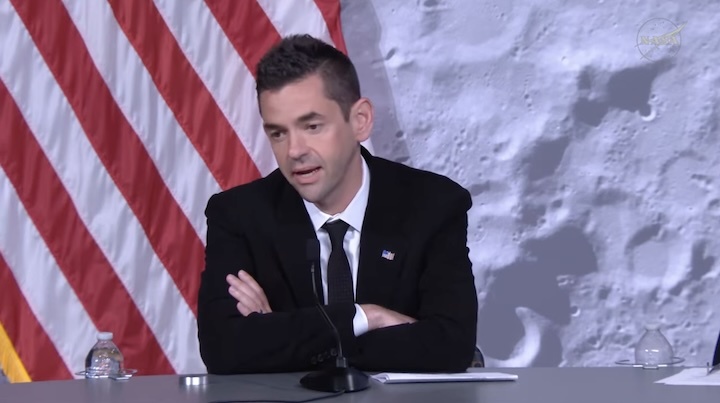
Presse-Konferenz 7.04.2026 / 23:00 MESZ



Quelle: NASA