
17.02.2026
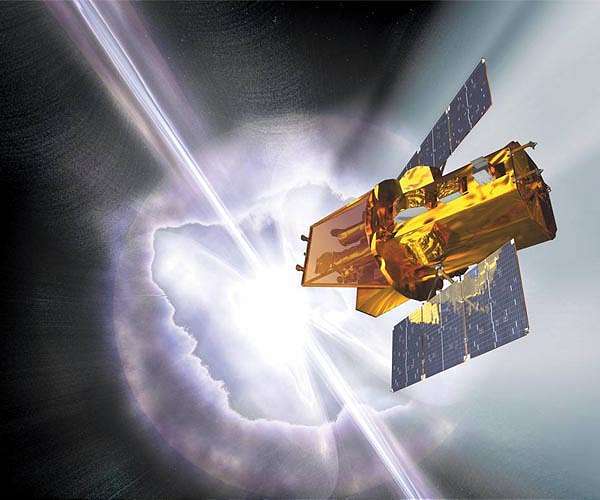
NASA has adjusted operations of the Neil Gehrels Swift Observatory to reduce atmospheric drag and prepare the spacecraft for a planned orbit-raising mission. On Feb. 11 the mission team temporarily suspended most science activities so controllers can keep the satellite in an orientation that minimizes drag and slows its gradual loss of altitude.
Swift normally slews rapidly to observe transient targets such as gamma ray bursts with its suite of telescopes. Principal investigator S. Bradley Cenko at NASA's Goddard Space Flight Center said that while the Burst Alert Telescope will continue detecting gamma ray bursts, the spacecraft will no longer slew to follow up these events with its other instruments. This change limits Swift's ability to carry out multiwavelength observations but helps preserve the observatory for a future reboost.
Enhanced solar activity heats Earth's upper atmosphere and causes it to expand, increasing drag on spacecraft in low Earth orbit and slowly lowering their altitude over time. Swift has operated in orbit for about 21 years, and its average altitude has been steadily declining as a result of this atmospheric drag. Many missions eventually reenter the atmosphere at the end of their lifetimes, but NASA is pursuing a different path for Swift.
The agency has contracted Katalyst Space Technologies of Flagstaff, Arizona, to carry out a mission that will boost Swift into a higher orbit. The planned servicing effort aims to extend the observatory's scientific lifetime while demonstrating an orbital reboost capability that could be applied to a broader class of spacecraft. NASA sees satellite servicing and orbit-raising as an important step toward maintaining valuable space assets and reducing the need for replacement missions.
To maximize the chances of a successful reboost, Swift's average altitude must remain above about 185 miles, or roughly 300 kilometers. As of early February the spacecraft's orbit had already dropped below about 250 miles, around 400 kilometers, prompting the team to modify operations to slow the descent. By keeping the observatory in a drag-minimizing attitude and limiting slews, the mission team is working to preserve sufficient altitude for the upcoming servicing flight.
Mission planners anticipate that the reboost spacecraft will launch in the summer. Cenko said the team is transitioning Swift's operations now to provide the widest possible margin for the servicing mission. If successful, the boost to a higher orbit will allow Swift to continue its role in rapidly detecting and studying changes in the high energy universe.
Swift studies gamma ray bursts, which are among the most powerful explosions known, along with other energetic cosmic phenomena. The observatory has provided nearly daily observations of these fleeting events and has helped scientists investigate their origins and environments. Extending the mission's life would enable continued rapid-response observations and maintain a key asset for time sensitive astrophysics.
NASA encourages the public and scientific community to follow developments as the reboost mission approaches. The agency notes that the Swift mission remains an important part of its portfolio for studying the dynamic universe, even while operations are constrained to support orbital preservation. Additional information about the observatory and its science is available through the mission's web resources.
Quelle: SD
----
Update: 28.05.2026
.
NASA Predicts Swift Spacecraft’s Location for Boost Mission
Neil Gehrels Swift Observatory
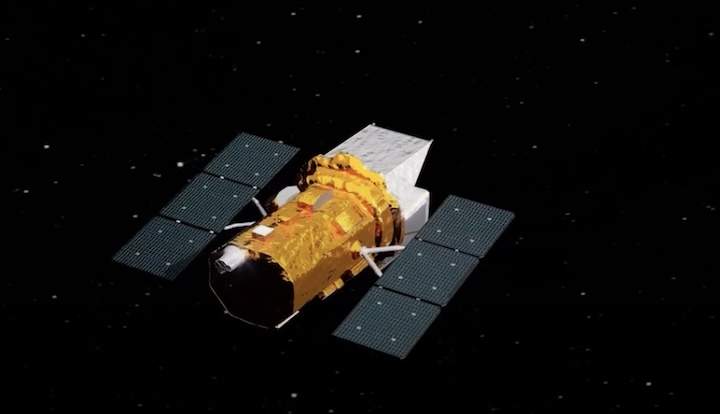
NASA's Neil Gehrels Swift Observatory is a satellite that studies gamma-ray bursts, the most powerful explosions in the universe, and other cosmic objects and events.
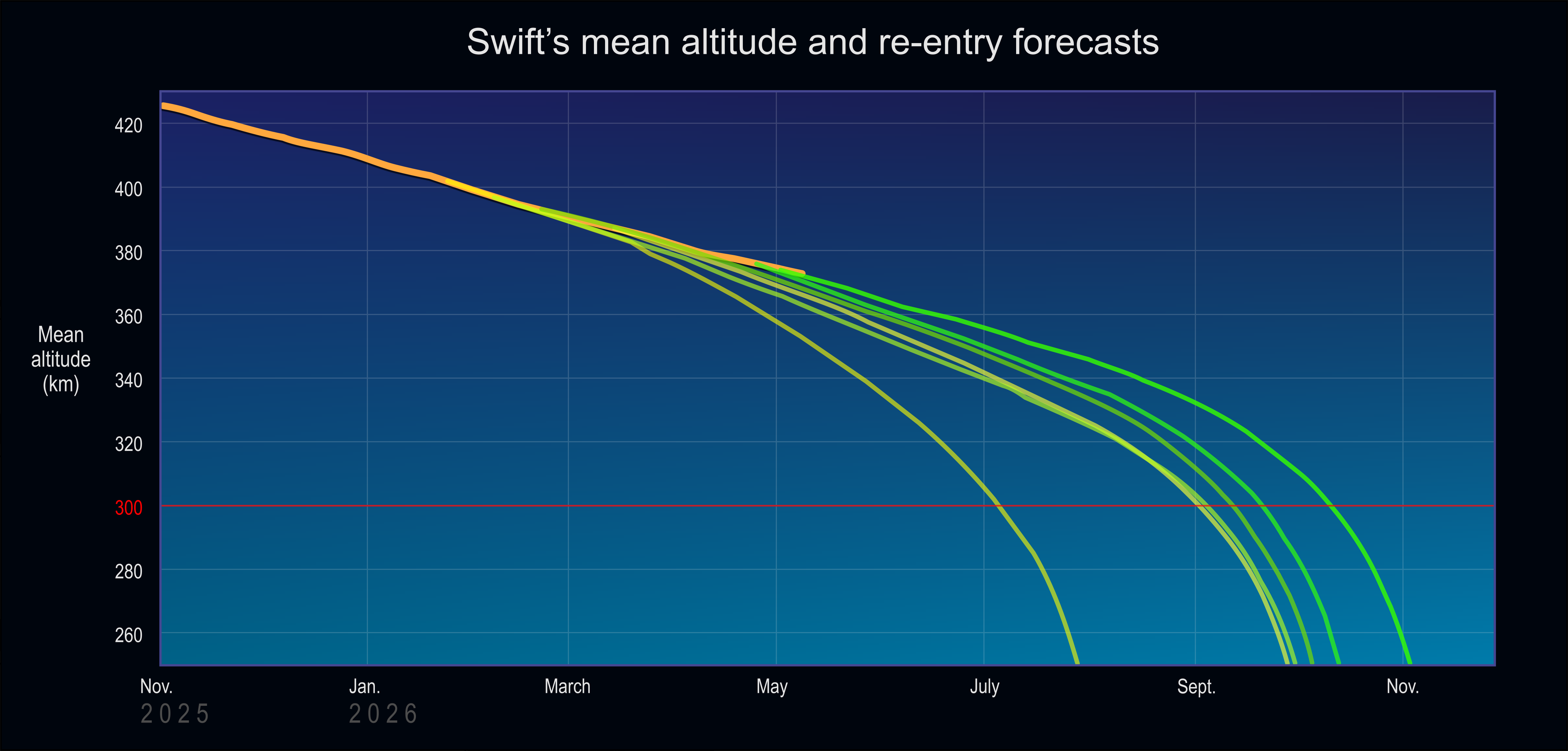
NASA analysts and engineers have been closely tracking the agency’s sinking Neil Gehrel’s Swift Observatory as part of a fast-paced plan to raise it to a higher orbit.
Teams have been generating models to forecast the spacecraft’s altitude in the coming weeks and months, as Katalyst Space readies its LINK robotic servicing satellite to launch and rendezvous for the lift maneuver.
“These predictions evolve over time, based on space weather forecasts and other factors like Swift’s current height and orientation,” said Michael Shoemaker, deputy flight dynamics lead in SSMO (Space Science Missions Operations) at NASA’s Goddard Space Flight Center in Greenbelt, Maryland. “It’s also an iterative process with members of Swift’s operations team. They determine new ways to point the spacecraft to reduce drag, and we do some new computations to see how much extra time that buys them.”
All spacecraft in low Earth orbit experience drag caused by our planet’s atmosphere, which solar storms can magnify. Many satellites, like Swift, don’t have propulsion systems to maintain their orbits, so the drag gradually reduces their altitudes.
Shoemaker and his colleagues create annual predictions for dozens of spacecraft in this situation, some that are still active and others that have been decommissioned.
They use orbital data from the U.S. Space Force, solar activity research from NASA and the National Oceanic and Atmospheric Administration’s Space Weather Prediction Center, and operational details from each satellite team.
After most models forecast that a mission will re-enter Earth’s atmosphere within two years, the team generates altitude predictions more frequently.
Swift’s November 2023 yearly model showed a split in the possibilities, with some potential re-entries falling within the two-year window, but a similar number stretched far beyond it, into the 2030s.
In 2024, the Sun reached its solar maximum phase, triggering intense space weather that was more active than expected. The activity caused Earth’s atmosphere to expand slightly and increased its drag on Swift. By early 2025, almost all the models had Swift re-entering by the summer of 2026.

NASA awarded Katalyst, based in Flagstaff, Arizona, a contract to attempt to boost Swift to a higher altitude in September 2025. The Swift team started looking for ways to slow Swift’s orbital decay to give Katalyst as much time as possible to complete the lift maneuver. For the best chance of success, Swift needs to be at least 185 miles (300 kilometers) above Earth.
Shoemaker and his colleagues started generating weekly orbital predictions, which the Swift team used to make decisions about when to halt science observations and how to steer the spacecraft to reduce drag as much as possible. This innovative new approach to operating Swift has allowed them to successfully slow its orbital decay.
According to the most recent predictions, the Swift team’s actions will likely keep the spacecraft above the critical altitude into early fall.
“We’re also working on predictions for where Swift will be when LINK is set to launch in June aboard a Northrop Grumman Pegasus rocket,” said Russell Carpenter, the deputy project manager in SSMO. “The project to re-boost Swift has generated intense interest across the flight dynamics community. The Swift team is grateful that so many people have been willing to pitch in to help with refining these predictions.”
Quelle: NASA
----
Update: 28.06.2026
.
Partners, NASA Ready for June Launch of Swift Boost Mission
A mission to raise the orbit of NASA’s Neil Gehrels Swift Observatory is poised for launch no earlier than Tuesday, June 30, 6:23 a.m. EDT (10:23 p.m. UTC+12), from Kwajalein Atoll, part of the Republic of the Marshall Islands in the South Pacific Ocean.
A robotic servicing satellite called LINK, built by Katalyst Space, will blast into orbit on a Northrop Grumman Pegasus XL rocket. LINK will rendezvous with, grapple, and slowly raise Swift’s altitude over several months, preventing it from re-entering Earth’s atmosphere later this year.
“Swift is NASA’s multitool when it comes to studying the cosmos,” said S. Bradley Cenko, principal investigator, Swift, NASA’s Goddard Space Flight Center in Greenbelt, Maryland. “It observes the sky using a wide range of light and rapidly points at short-lived outbursts, alerting other facilities in space and on the ground to help coordinate follow-up observations. For the last two decades, Swift has been a key player in NASA’s efforts to understand how the universe works, and we’re looking forward to getting back to that work after the boost is complete.”

Our planet’s atmosphere creates drag on all spacecraft in low Earth orbit, gradually reducing their altitudes if they don’t have propulsion systems to counteract the effect.
A recent bout of increased solar activity magnified this impact on Swift, which launched in November 2004.
Rather than allowing Swift to re-enter the atmosphere as many missions do, NASA is using the opportunity to advance the U.S. commercial satellite servicing industry.
In September, the agency contracted Katalyst to attempt to boost the observatory. The company would have less than one year to design, build, test, and launch a satellite to meet, grab, and lift Swift to nearly its original orbit.
"Swift wasn't designed to be serviced," said Ghonhee Lee, CEO of Katalyst. "By demonstrating we can quickly and cost-effectively extend its lifetime, we're creating a blueprint for servicing spacecraft that were never designed for on-orbit maintenance. If we're going to build an enduring presence beyond Earth, we need the capability to manipulate our environment in space. That means deploying robotic spacecraft that can reposition, repair, refuel, and refit satellites after launch.”
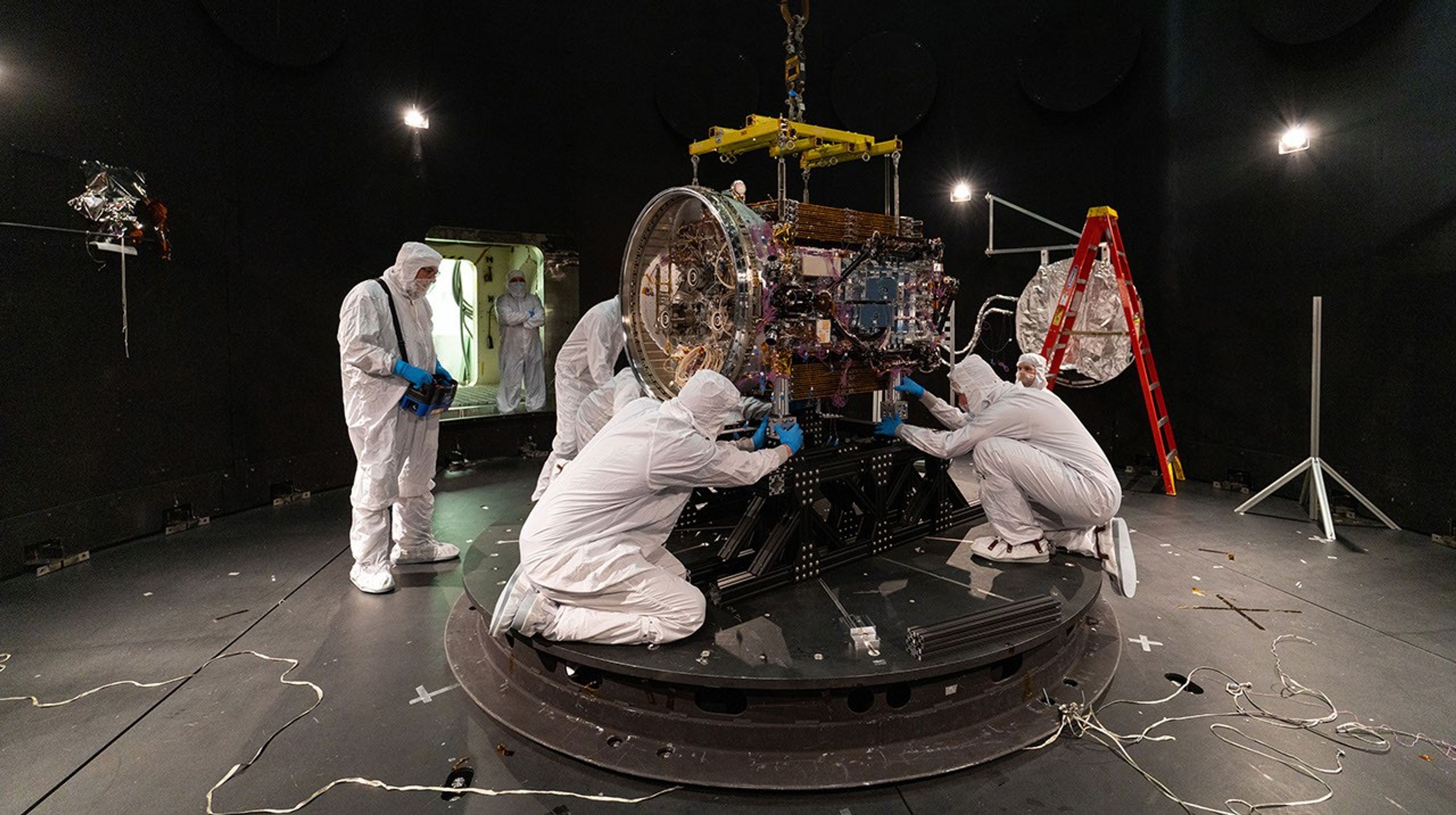
The LINK spacecraft weighs about 880 pounds and stands about 5 feet tall, about a third of Swift’s overall size. Nearly 20 feet of solar panels will power three ion thrusters and a trio of robotic arms.
LINK completed environmental testing that mimicked launch and space-like conditions at NASA Goddard this spring, as well as additional preflight assessments at Katalyst’s facility in Broomfield, Colorado.
For the boost to have its best chance of success, Swift needs to stay above an altitude of about 185 miles.
By the end of last year, however, orbital predictions generated by NASA showed the observatory reaching that threshold as early as July.
To slow Swift’s descent, the operations team at Penn State’s Eberly College of Science altered how they managed and oriented the spacecraft.
Unlike during normal operating procedures, where Swift looks at spots on the sky that are scientifically interesting, the team now selects targets that steer Swift into the most streamlined position. They also reduced power consumption as much as possible to place the satellite’s large solar panels in a more aerodynamic orientation.
Recent orbital predictions show these changes will keep Swift above critical altitude until this fall.
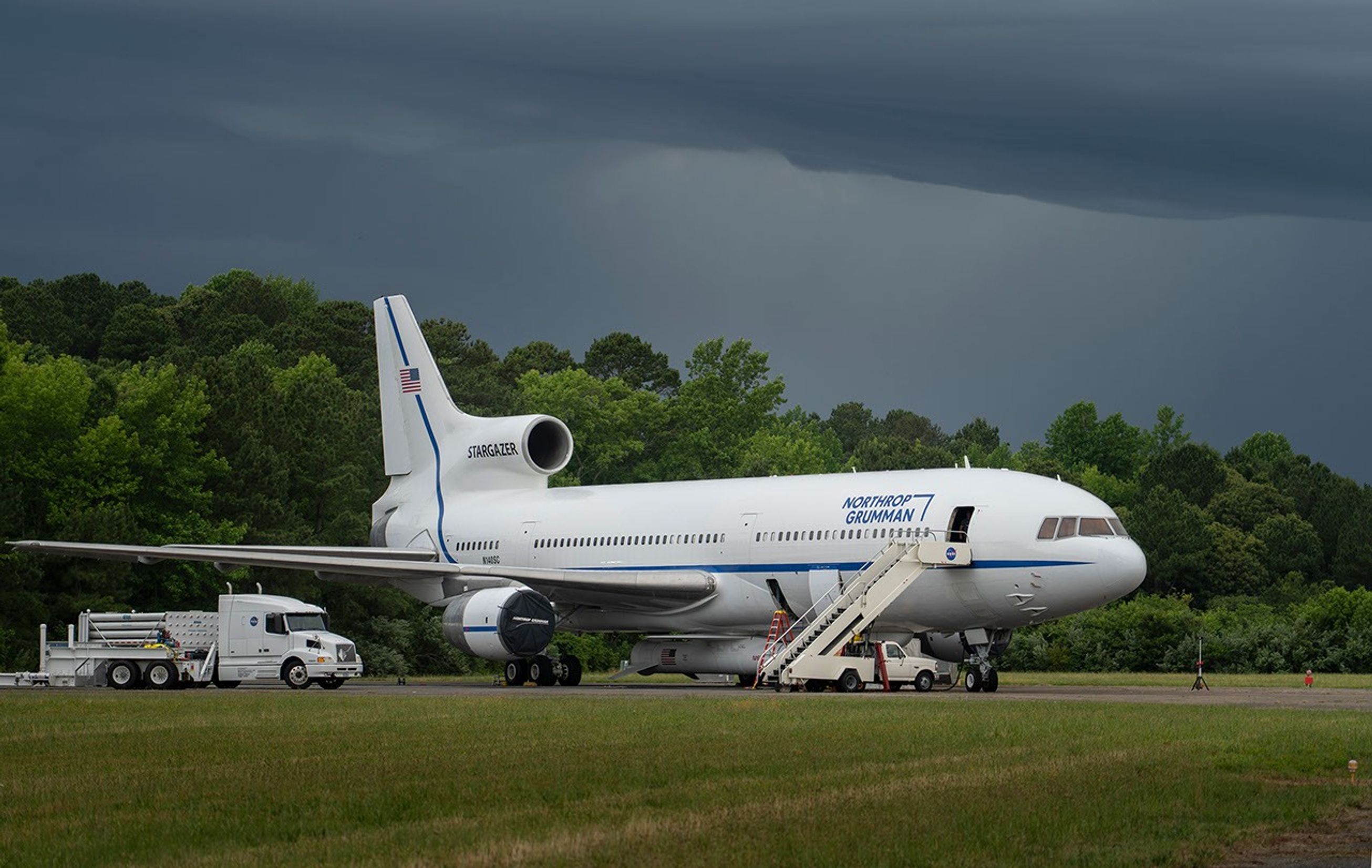
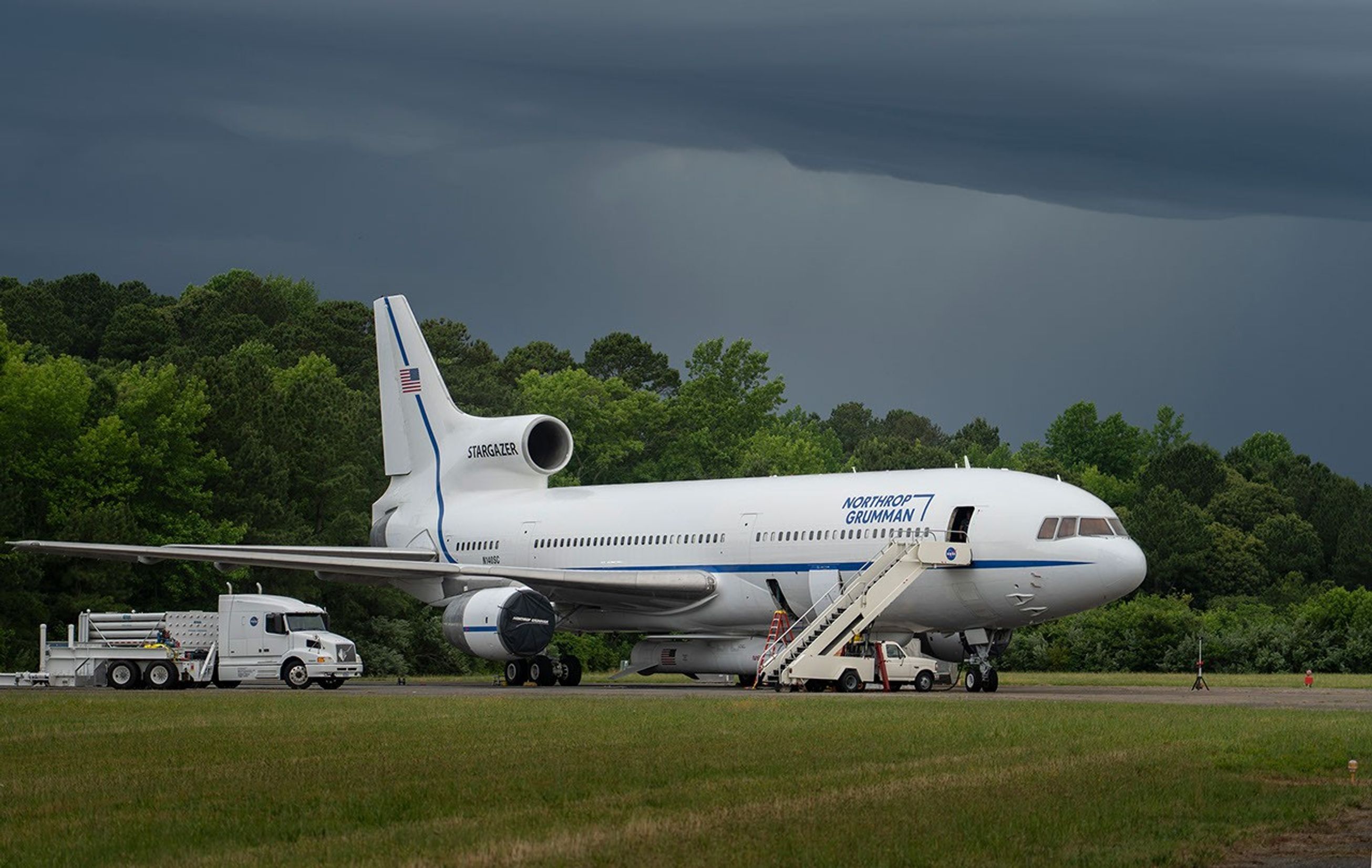
The satellite will launch aboard the Pegasus XL.
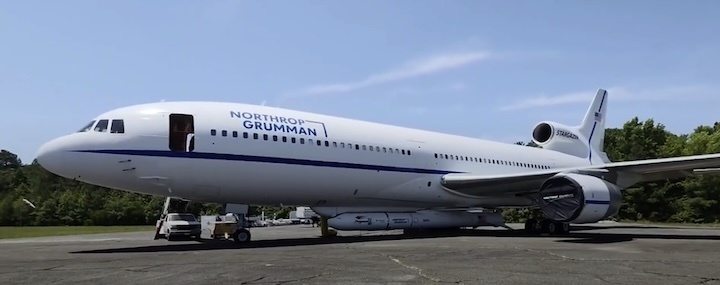
“We can deploy Pegasus from almost anywhere in the world using our Stargazer, a modified L-1011 aircraft,” said Wes Collier, vice president of launch systems at Northrop Grumman. “That combination of flexibility and responsive access to space will help LINK quickly reach Swift, giving the teams time to complete the boost.”
Earlier this month, engineers loaded LINK into the Pegasus XL and attached the rocket to Stargazer at NASA’s Wallops Flight Facility in Virginia. The aircraft and its payload departed for Kwajalein Atoll on Thursday, June 18, where it now awaits launch.
Once in orbit, LINK will undergo several weeks of commissioning as Katalyst evaluates the spacecraft’s propulsion, navigation, and sensor systems. It then will slowly approach and survey Swift before grabbing the observatory with its robotic arms and slowly raising the orbit to nearly 370 miles.
“This is a high-risk, high-reward mission,” said Shawn Domagal-Goldman, division director, Astrophysics, NASA Headquarters in Washington. “Swift plays a notable role in our fleet. We have much to gain by attempting this boost, which is more affordable than trying to replace Swift’s capabilities and allows NASA to advance the nation’s satellite servicing industry, for the benefit of all.”
Quelle: NASA
----
Update: 30.06.2026
.
NASA races to save Swift telescope from falling back to Earth with daring rescue mission
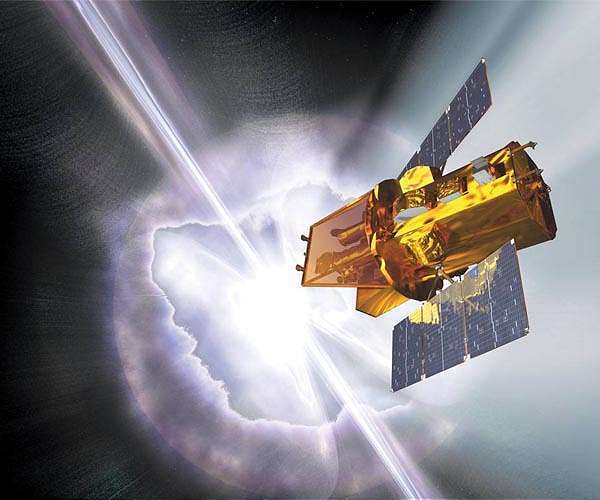
NASA is racing to save an aging telescope from falling back to Earth with a daring rescue mission.
The $30 million salvage operation gets underway as soon as this week with the planned launch of a robotic lifesaver.
NASA hired startup Katalyst Space Technologies to boost the Swift Observatory to a higher orbit where it can continue hunting for some of the universe’s biggest explosions. A three-armed spacecraft built by Katalyst will chase after Swift once it takes off from an atoll in the Pacific’s Marshall Islands aboard an airplane-launched Pegasus rocket. Liftoff could occur as early as Tuesday.
Scanning the cosmos since its launch in 2004, Swift has been sinking faster and faster because of recent intense solar activity. It needs to get to a higher, more stable orbit as soon as possible to survive.
Like Swift, Hubble is losing altitude as the sun erupts with one flare after another. Katalyst Space CEO Ghonhee Lee said his company’s next-generation robot, still in development, could save the day for the much bigger Hubble in a couple years.
Only China has attempted a mission like the upcoming one, successfully boosting a satellite into a higher graveyard orbit four years ago.
“This is the first American space robot to go up and do anything like this,” Lee told The Associated Press. “NASA has all these big senior observatories … all of them can benefit from a service like this. So what we’re proving with this mission is this is a new play in the playbook that’s available.”
It will take Katalyst’s autonomous spacecraft, named Link, about a month to rendezvous with Swift and catch it, and another couple months to raise its orbit from the current 224 miles (360 kilometers) to the desired 373 miles (600 kilometers).
The 1.6-ton (1.4-metric ton) gamma ray observatory must be above 185 miles (300 kilometers) for the rescue to work. It’s expected to reach that point of no return in October, according to the latest estimates
Roughly the size of a small kitchen refrigerator with a 40-foot (12-meter) solar wingspan, Link sports three arms with a reach of just over 3 feet (1 meter). Each arm has two finger-like pinching grippers that resemble the hands of a Lego mini figure.
If all goes well, Swift could be back in business by September, according to Lee.
Worth hundreds of millions of dollars, Swift was never designed to be repaired, let alone retrieved by hands — human or otherwise. That’s what makes this so challenging, according to company officials, who stress there is no guarantee it will work.
NASA signed a contract with Katalyst last September with only two requests: It has to be a rush job, but please don’t make things worse. Nine months later, the company is ready to rumble.
“I have to be honest. No one thought it was going to be possible. No one thought we would get as far as we’ve already gotten today,” said Shawn Domagal-Goldman, NASA’s astrophysics director.
NASA has bought a little more time for Swift, turning off all scientific instruments to slow its descent. Observations ceased in February.
NASA’s science mission chief Nicky Fox said it’s worth the effort.
“If we let Swift reenter, we would lose that telescope. We would lose a lot of capability,” she said. “We don’t currently have the budget to build another one to replace that.”
While everything cannot be saved in space, Swift is special, said Domagal-Goldman.
True to its name, Swift is designed to pivot quickly to capture late-breaking astronomical events such as gamma ray bursts and exploding stars. With more discoveries expected by the Webb Space Telescope and soon-to-launch Roman Space Telescope, Swift, if saved, would be busier than ever as “NASA’s first responder.”
Katalyst sees Swift as the jumping-off point for a new repair business in space. The company’s next-generation robotic rescuer, scheduled to fly next year, will tackle satellites as high as 22,300 miles (35,800 kilometers) up. Lee envisions hundreds of robots in orbit one day, not only fixing and hoisting satellites but also refueling them and building solar farms, data centers and other platforms.
Thirty-six-year-old Hubble, which received repeat servicing by spacewalking astronauts during the shuttle era, could follow in 2028 with a life-extending Katalyst boost.
“It’s a national treasure,” Fox said. “People love Hubble.”
Quelle: AP
----
Update: 1.07.2026
.
What to Expect: Commercial Mission to Boost NASA’s Swift
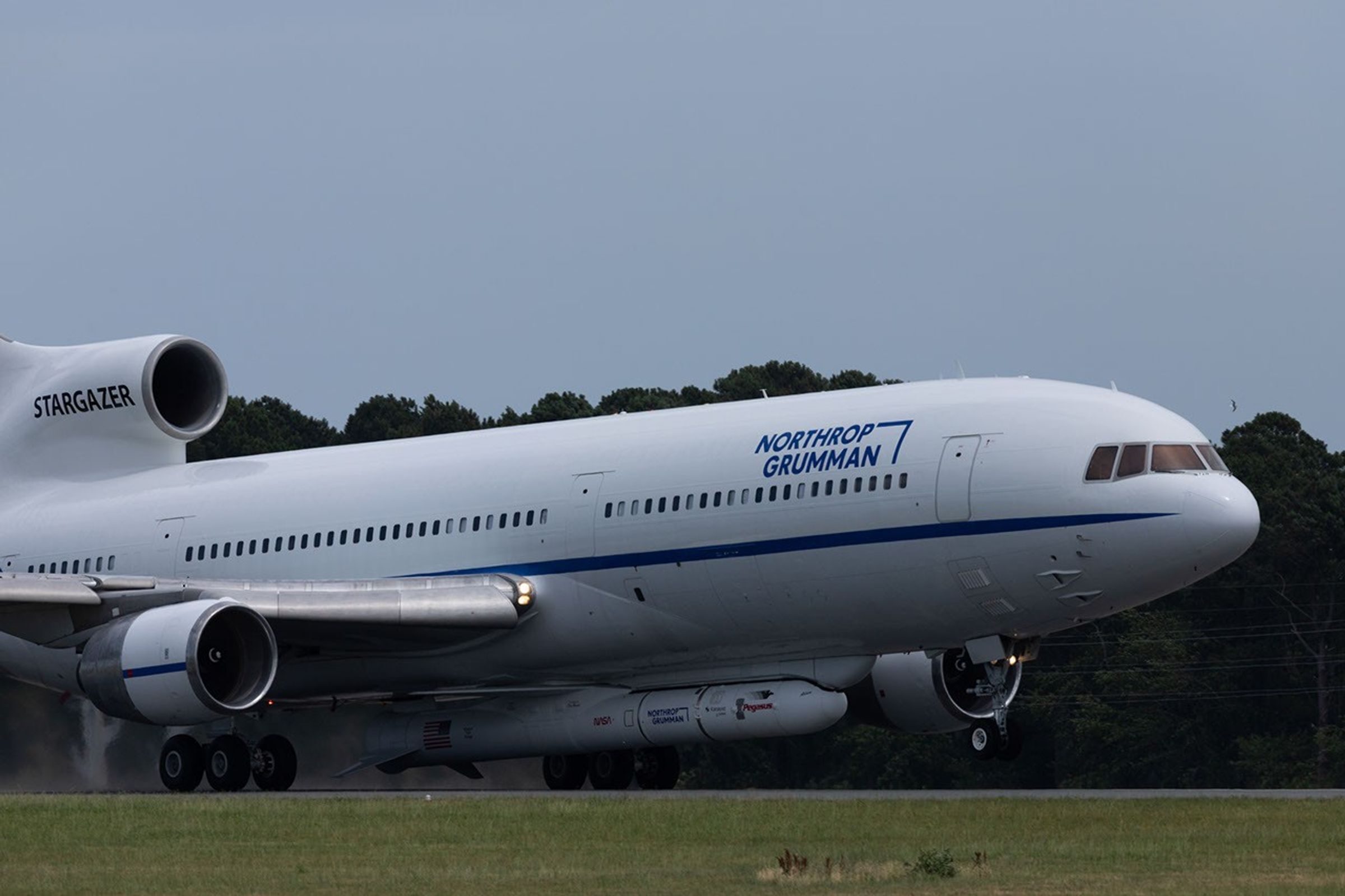
At launch
A mission to boost the orbit of NASA’s sinking Neil Gehrels Swift Observatory is targeted to launch no earlier than Tuesday, June 30, at 10:17 p.m. UTC+12 (6:17 a.m. EDT), from Kwajalein Atoll in the Marshall Islands.
LINK, a robotic servicing spacecraft built by American startup Katalyst Space for this mission to extend Swift’s science lifetime, will launch on a Northrop Grumman Pegasus XLrocket.
While there is no livestream available for launch, NASA will continue to provide written updates on the agency’s Swift blog.
After launch
After LINK reaches orbit, the Katalyst team’s first step is to acquire a signal from the spacecraft, confirming its solar panels have deployed and the power systems are working. Then the spacecraft will go through several weeks of checkouts, a process called commissioning, where controllers on the ground turn on and test various systems to ensure everything is working.
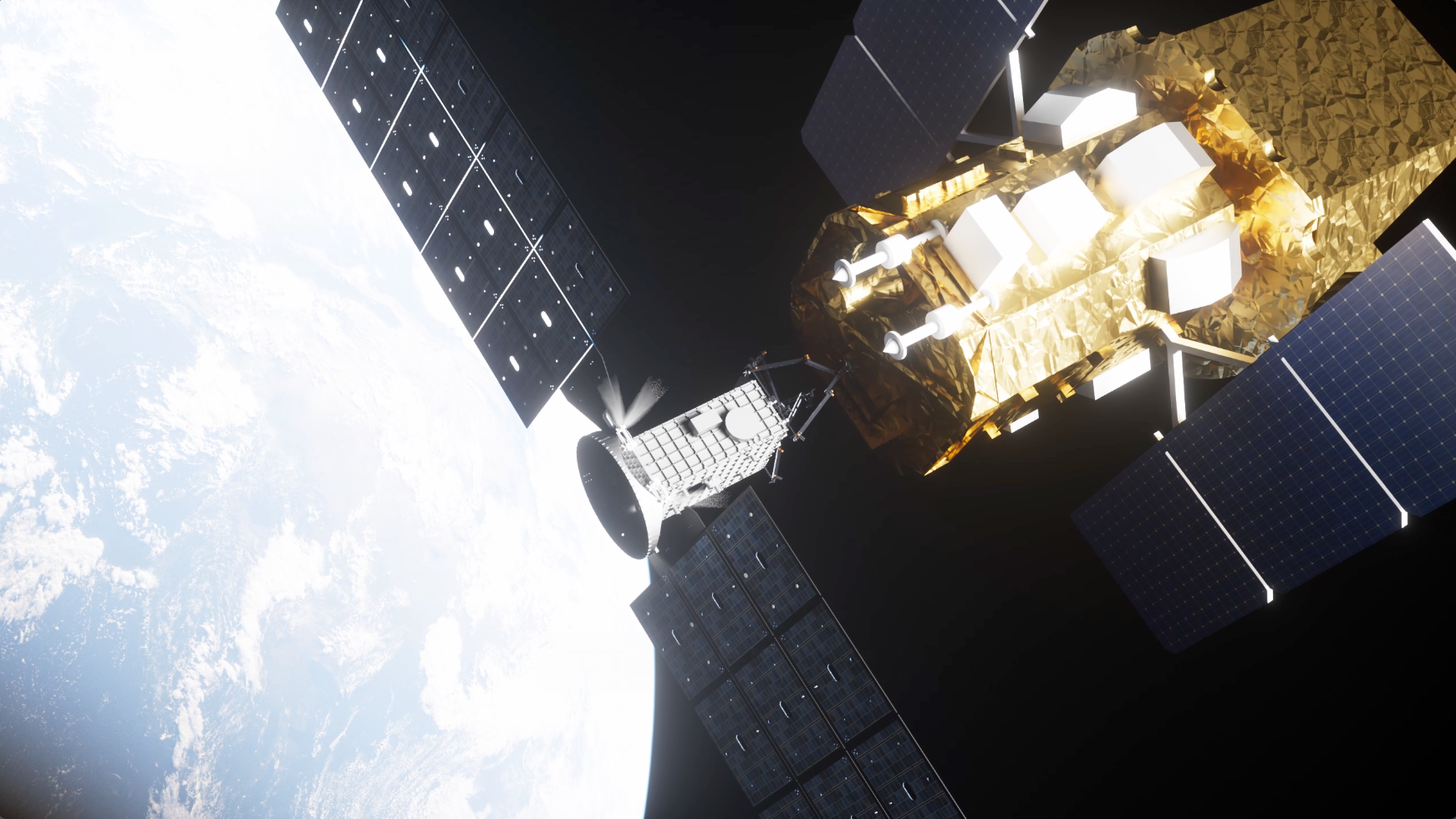
With commissioning complete, the team can then maneuver LINK toward Swift. As it approaches, LINK will collect and send images of Swift to the ground, where teams at Katalyst and NASA will assess the planned grab points. This rendezvous and capture will be a slow and careful process that could take about a month.
Once its robotic arms are attached to Swift, LINK can begin to slowly push Swift upward. Over the course of a few months, LINK will attempt to return Swift close to its original launch altitude. Then, LINK will detach, leaving Swift in its new orbit.
After boost
After the orbit boost, NASA can restart the observatory’s full system and telescope operations in a process like the one Swift went through after its launch in 2004. It could take a month or more to return to its full science capabilities.
These estimated timeframes may vary. Flexibility is built into the teams’ approach to allow them to pause, assess data, and adjust as needed.
Quelle: NASA
+++
Launch of Mission to Boost NASA’s Swift Scrubs Due to Weather
The launch of Katalyst Space’s robotic servicing spacecraft LINK, designed to boost the orbit of NASA’s Neil Gehrels Swift Observatory, was postponed Tuesday due to unfavorable weather conditions. The next launch attempt is targeted for no earlier than Wednesday, July 1, at 9:43 p.m. UTC+12 (5:43 a.m. EDT), on Northrop Grumman’s Pegasus XL rocket from Kwajalein Atoll, Marshall Islands.
Quelle: NASA
----
Update: 4.07.2026
.
NASA launches rescue mission to save Swift space telescope from burning up in Earth's atmosphere
This is the final flight of the historic Pegasus rocket.
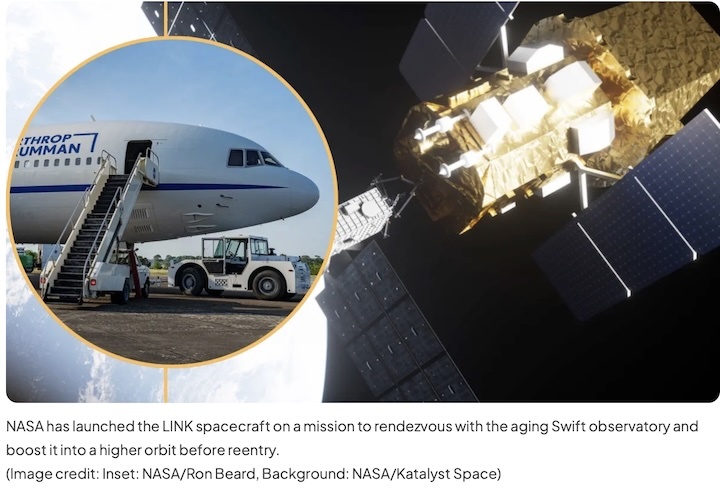

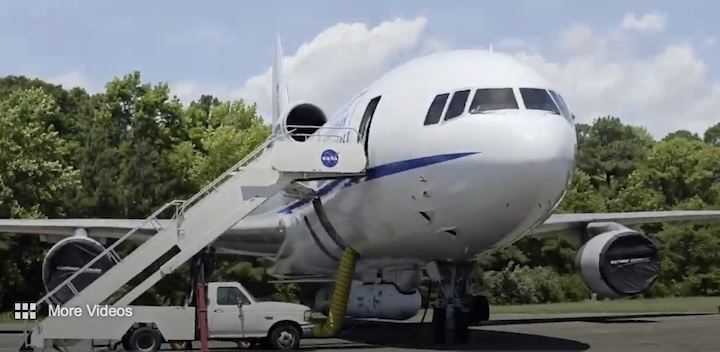
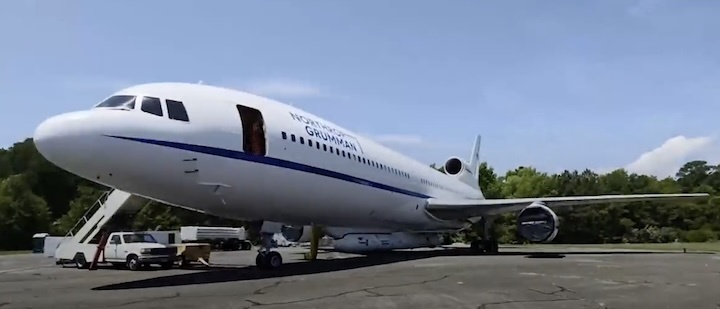
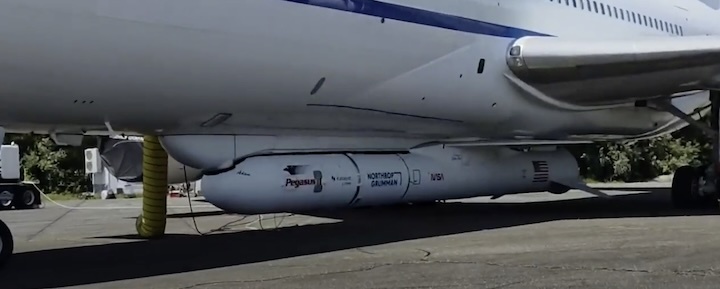
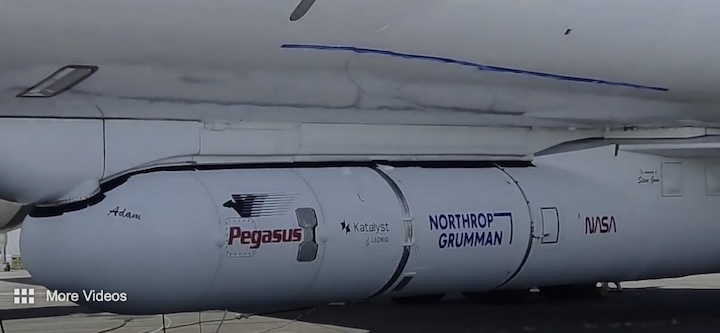
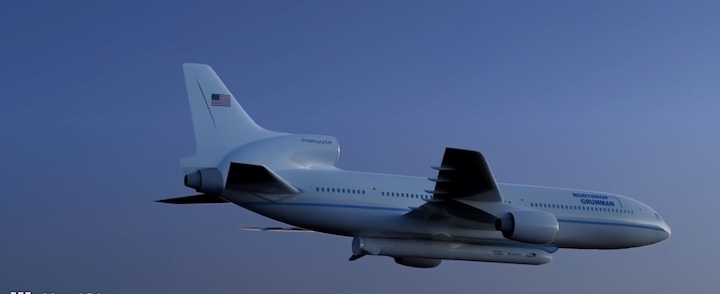
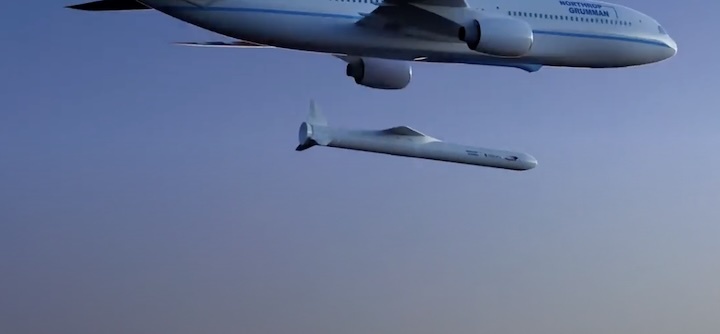
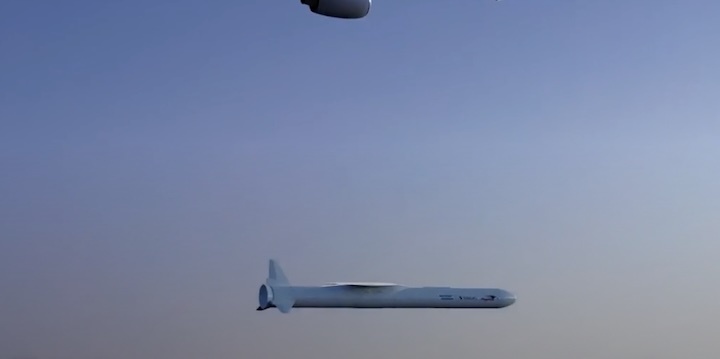
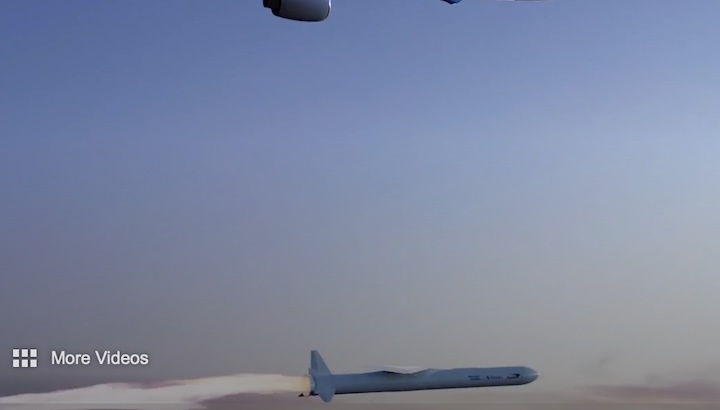
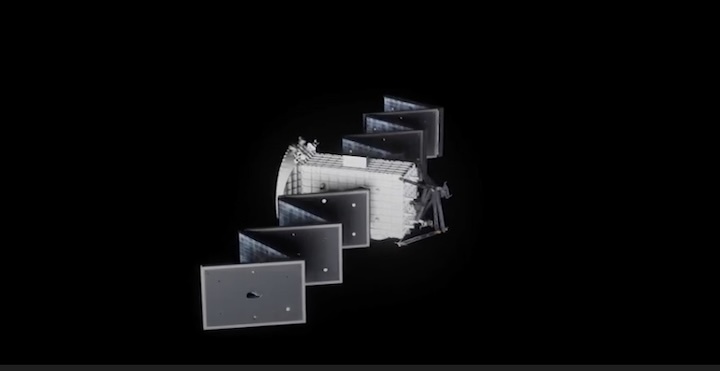
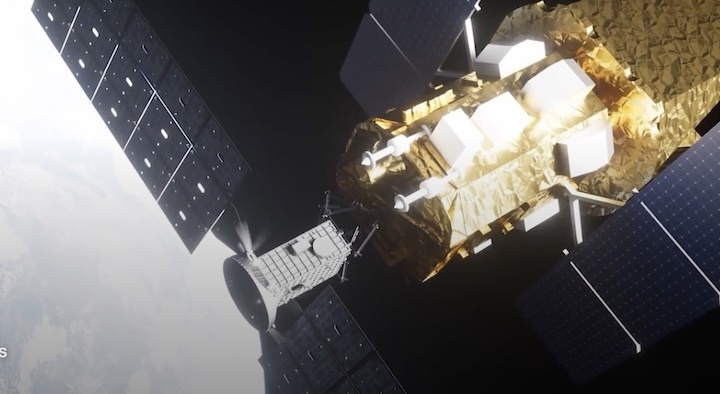
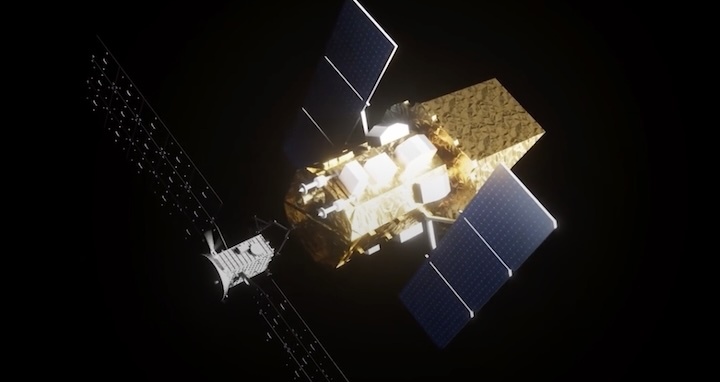
An air-launched Northrop Grumman Pegasus XL rocket has flown for the very last time, sending a private spacecraft on a rescue mission to save one of NASA's most iconic space telescopes from falling back to Earth.
The Swift Boost mission successfully launched the LINK satellite, built by Arizona-based Katalyst Space Technologies, on Friday (July 3) at 4:36 a.m. EDT (0836 GMT), according to NASA. LINK will rendezvous with NASA's Neil Gehrels Swift Observatory and tow it to a stable orbit, saving it from impending destruction as its trajectory dips farther into the atmosphere.
The Pegasus XL rocket was released from Northrop Grumman's L-1011 Stargazer jet above the Marshall Islands before igniting its engine and carrying LINK into orbit. The successful launch came after previous attempts were called off due to weather and a software issue affecting the rocket's navigation system.
Pegasus is a three-stage, solid rocket-propelled launch vehicle that measures 55 feet in length (16.9 meters), capable of delivering up to 1,000 pounds (454 kg) into low-earth orbit (LEO). Following its separation from the Stargazer, the rocket's stages are ignited in sequence to reach its intended altitude in about 10 minutes.
Pegasus debuted in 1990, and has since flown 45 missions. Its aerial deployment and flexibility to take off from different airfields allows the rocket to enter hard-to-reach orbital inclinations that are inaccessible from many major spaceports. That's one of the reasons Pegasus is launching LINK, a robotic servicing satellite that can reach Swift's low 20.6-degree inclination relative to Earth's equator.
Another reason NASA chose the Pegasus rocket for this mission was time, which is running out for Swift. The $500 million Swift Observatory was launched in November 2004 to study gamma-ray bursts and other high-energy events across the universe. And, despite its more than 20 years of operation, Swift is still providing scientific value.
Its orbit, though, has begun to dip dangerously low, where recent solar activity has increased atmospheric drag at higher LEO altitudes and will soon overcome the spacecraft, dragging it to its ultimate demise. Swift, unfortunately, was not designed to be serviced, and wasn't built with the thrusters it needs to raise its own orbit.
After its release from Pegasus' payload bay and initial systems checkouts, the Katalyst spacecraft will begin its long course to rendezvous with Swift. Before beginning its final approach, LINK will spend two to three weeks performing observations of Swift to assess optimal grapple points on the observatory.
LINK measures about 4.9 feet (1.5 m) tall, and is equipped with three robotic arms that will be used to capture Swift, which stretches about 12.7 feet (3.9 m). Once a grab-point is chosen and Swift secured, LINK will fire a set of gentle ion thrusters that will slowly raise the pair's orbit over the next several months.
LINK is poised to be the first private spacecraft to attempt to capture an uncrewed U.S. government satellite. NASA selected Katalyst for the task in September 2025, with less than a year to carry out LINK's design, manufacture and testing. Despite its urgency and the relative short notice to get LINK in orbit, the entire Swift rescue mission and launch only cost NASA $30 million.
"While NASA could have allowed Swift to re-enter the atmosphere, the situation presented an opportunity to demonstrate a key capability for the future of space exploration. This daring approach also extends Swift’s scientific lifetime and is more affordable than replacing the observatory’s unique capabilities," NASA states on the Swift Boost mission page.
The goal is to return Swift to its original altitude of about 373 miles (600 km), which will extend the observatory's life expectancy by a number of years, provided its systems continue to operate as designed.
Quelle: SC