
2.07.2026
Rocket Lab aborts launch of Japanese Earth-observing radar satellite at last second
It's unclear when the company will try again.
Update for 11 p.m. ET on June 30: Rocket Lab tried to launch "The Grain Goddess Provides" mission at 9 p.m. EDT on June 30 but aborted the attempt at the last second. It's unclear at the moment what caused the abort or when the company will try to fly again.
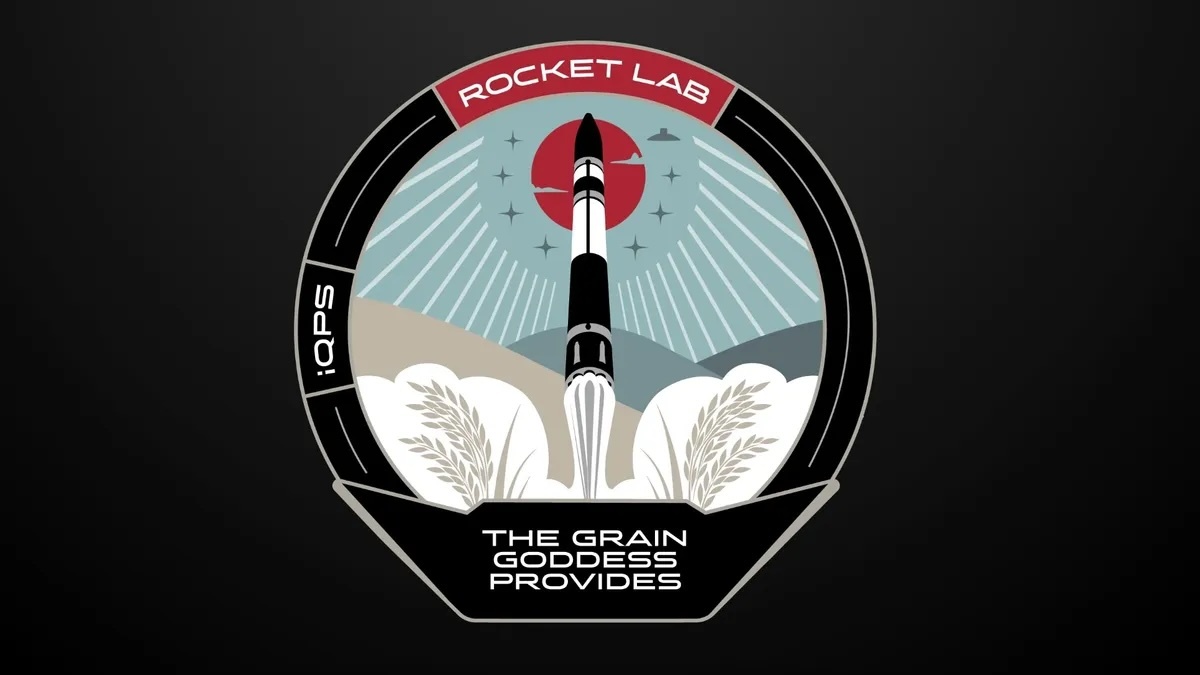
The patch for Rocket Lab's "The Grain Goddess Provides" mission, which is scheduled to launch on June 30, 2026. (Image credit: Rocket Lab)
Rocket Lab will launch a Japanese Earth-observing radar satellite to orbit tonight (June 30), and you can watch the action live.
An Electron rocket carrying the QPS-SAR-13 satellite is scheduled to lift off from Rocket Lab's New Zealand site tonight at 9 p.m. EDT (0100 GMT and 1 p.m. local New Zealand time on July 1).
You can watch the launch live here at Space.com courtesy of Rocket Lab, or directly via the company. Coverage will begin about 30 minutes before liftoff.
apan-based iQPS is building a constellation of 36 satellites in low Earth orbit that study Earth using high-resolution synthetic aperture radar (SAR). SAR spacecraft can peer through clouds and gather data at night as well as during the day.
Tonight's launch, which Rocket Lab calls "The Grain Goddess Provides," will be the eighth, out of a total of 15, that it will perform to assemble iQPS' constellation.
If all goes according to plan tonight, Electron will deploy the iQPS satellite — which is nicknamed Mikura-I, after a Japanese goddess associated with abundance and prosperity — about 50 minutes after liftoff, into a circular orbit 357 miles (575 kilometers) above Earth.
"The Grain Goddess Provides" will be Rocket Lab's 92nd mission to date and its 13th of 2026 already. The vast majority of these launches have involved the 59-foot-tall (18-meter-tall) Electron, which gives small satellites dedicated rides to orbit. A small number have been performed by HASTE , a suborbital version of Electron that helps customers test hypersonic technologies.
Tonight's launch will come just a day after Rocket Lab made a big business move: On Monday (June 29), Rocket Lab announced that it's acquiring the communications company Iridium for $8 billion.
"By combining our launch capability and satellite manufacturing with @IridiumComm’s global satellite communications network and rare spectrum, Rocket Lab becomes a fully integrated, self-launching, tier-1 space power, delivering critical communications capability to millions of users worldwide," Rocket Lab said via X on Monday.
Quelle: SC
----
Update: 9.08.2026
.
ROCKET LAB SUCCESSFULLY COMPLETES 92ND ELECTRON MISSION, 8TH LAUNCH FOR IQPS EARTH-IMAGING CONSTELLATION
MAHIA, New Zealand, Aug. 06, 2026 - Rocket Lab Corporation (Nasdaq: RKLB), a global leader in launch services and space systems, today successfully launched its 13th Electron rocket of the year to deploy the latest satellite to space for multi-launch customer Institute for Q-shu Pioneers of Space, Inc. (iQPS), operators of the QPS-SAR Earth-imaging constellation.
‘The Grain Goddess Provides’ mission launched from Rocket Lab Launch Complex 1 in New Zealand at 9:18 p.m. NZST on August 6, 2026 to deploy the QPS-SAR-13 satellite to space for iQPS that will join its synthetic aperture radar (SAR) constellation providing near-real time imagery across twelve different orbits.
This mission was the eighth deployment of a QPS-SAR satellite with 100% mission success by Rocket Lab as Electron continues to serve the iQPS constellation as its primary launch provider. Another 10 dedicated launches are booked on Electron by iQPS to complete their constellation before 2030, showcasing the trust and confidence they have in Rocket Lab’s reliability and performance to deploy the iQPS constellation at scale.
‘The Grain Goddess Provides’ mission was Rocket Lab’s 92nd overall Electron mission. Rocket Lab’s next Electron launch will carry another QPS-SAR satellite on a mission called “The Lightning God Defends”, which is scheduled to take place later this month from LC-1.
Quelle: Rocket Lab