
7.03.2026
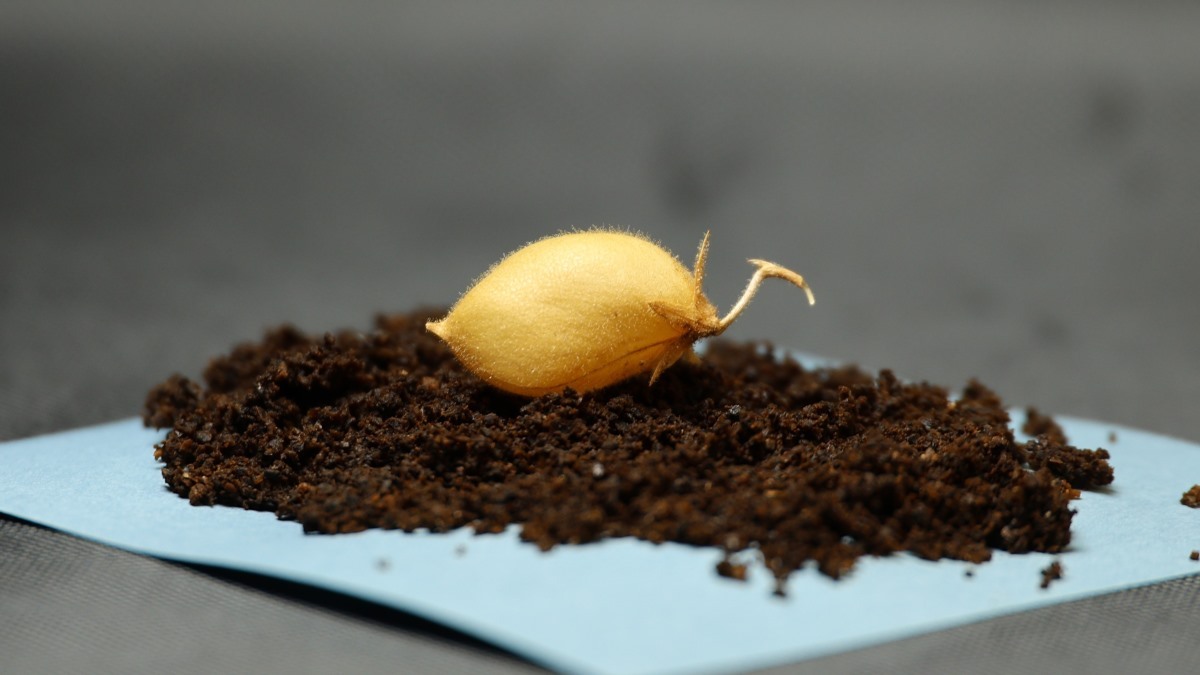
The compact size of the ‘Myles’ variety of chickpea supports crop production in space-limited mission environments. Credit: University of Texas Institute for Geophysics
Chickpeas might be on the menu when humans return to the Moon on NASA’s Artemis mission.
Long-term lunar habitation will come with a host of challenges associated with keeping humans alive– from building habitats to harvesting water and growing food.
Bringing along soil from Earth isn’t feasible, so astronauts will have to make use of available resources such as lunar regolith – the loose, fragmented rocky material covering the Moon’s surface.
“To return humans to the Moon and establish a lunar presence, we must maximise in situ resources and use lunar regolith (LR) and regenerative processes to provide a sustainable support substrate for horticultural crops,” write the authors of a study published in Scientific Reports.
“The use of LR as the sole growing medium presents challenges due to toxic [heavy metal] elements, exposure to cosmic and solar radiation, lack of organic materials, absence of rhizosphere [root soil] microorganisms and poor structural properties.
“However, LR contains essential nutrients for plant growth, including phosphorus (P), potassium (K), calcium (Ca), magnesium (Mg) and iron (Fe). In addition, silicon (Si) and titanium (Ti), abundant in LR, can benefit plants by enhancing structural integrity and promoting stress tolerance.
“A key nutrient, nitrogen (N) is scarce and will require supplementation.”
While Lunar regolith contains essential nutrients, the researchers say most are bound in mineral forms that are not easily available to plants.
“The research is about understanding the viability of growing crops on the moon,” says co-author Sara Santos of the University of Texas Institute for Geophysics, USA.
“How do we transform this regolith into soil? What kinds of natural mechanisms can cause this conversion?”
Santos and collaborators cultivated chickpeas in mixtures of vermicompost – a byproduct of red wiggler earthworms which is rich in essential plant nutrients, minerals and microbes – and dirt created to simulate the composition of lunar samples brought back by Apollo astronauts.
The team coated chickpeas in a type of fungus, arbuscular mycorrhizal fungi, which penetrates the roots of vascular plants and helps capture nutrients from the soil while reducing the uptake of heavy metals.
They found that mixtures of up to 75% moon dirt successfully produced harvestable chickpeas.
“Although these are promising results, all plants showed signs of stress including chlorophyll deficiency, stunting, reduced leaf area and limited shoot branching,” they caution.
Stressed plants inoculated with fungi survived longer than those that weren’t. The fungi also colonised and survived in the simulated lunar regolith, suggesting they would only need to be introduced once.
None of the harvested chickpeas have been sampled by the researchers… yet.
Questions around their taste, nutritional content and safety remain.
"We want to understand their feasibility as a food source,” says first author Jessica Atkin from Texas A&M University. “How healthy are they? Do they have the nutrients astronauts need? If they aren’t safe to eat, how many generations until they are?”
The researchers say significant challenges remain, including “optimising regolith conditioning processes, mitigating plant stress responses and exploring long-term soil microbe-plant interactions under lunar conditions”.
“Future studies can build on this foundation by enhancing regolith fertility and resilience, exploring diverse crop systems to support sustainable food production for lunar missions and incorporating community-level microbiological analyses of rhizosphere and bulk soil species,” they write.
“Our approach recasts the challenges of utilising lunar regolith into opportunities for creating a sustainable lunar habitat.”
Quelle: CONNECTSCI