
14.02.2026
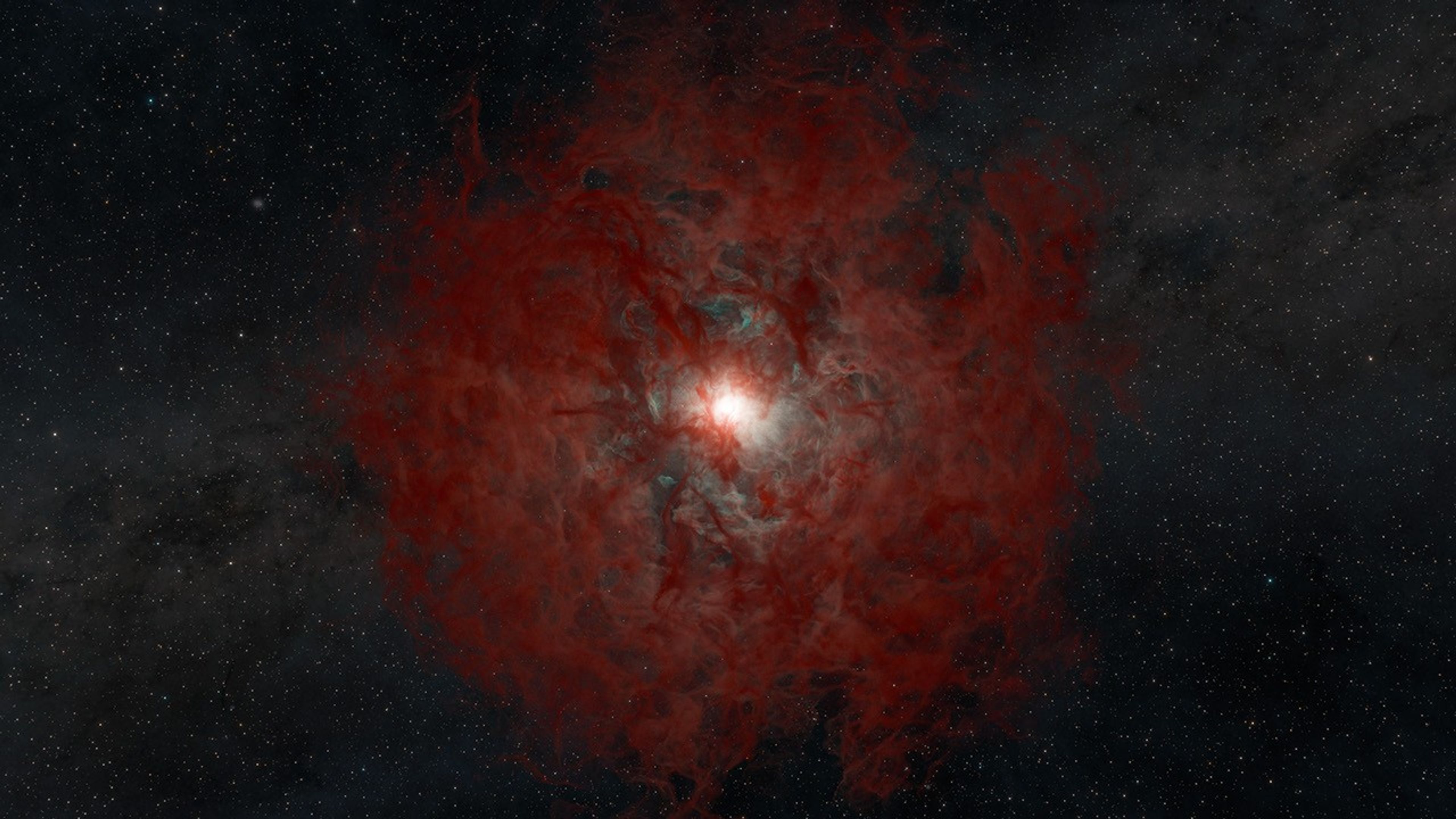
Massive stars are often known to go out with a bang: The core collapses, and a wave of subatomic particles called neutrinos erupt outward, causing the star to explode as a supernova that can outshine an entire galaxy. But 2.5 million light-years away from Earth, in the Andromeda galaxy, a dying star named M31-2014-DS1 did something unusual and it was captured by a NASA telescope. Rather than exploding, the star blinked out, leaving behind a shroud of hot gas and dust — and something else.
Using archival data from NASA’s NEOWISE (Near-Earth Object Wide-field Infrared Survey Explorer) mission along with data from other space and ground-based observatories from 2005 to 2023, astronomers pieced together the mystery of this “failed” supernova, providing the most intimate look yet at how a black hole can be born from a fizz instead of fireworks. The research, which was supported by NASA’s Astrophysics Data Analysis Program, is described in a study published Thursday in the journal Science.
The archival data revealed the star suddenly brightened in infrared light in 2014, but by 2023, M31-2014-DS1 dimmed in visible light by more than a factor of 10,000. The researchers concluded that the infrared brightening was caused by the star shedding its outermost layers as its inner core ran out of fuel at the end of its life. Unable to be pushed outward by a weak shockwave, most of the stellar material collapsed under its immense gravity, turning into a black hole.
The team has now identified another massive star that may have met the same fate as M31-2014-DS1, so this work could help uncover a common mechanism for black holes to form from dying stars that fade quietly into a cloud of hot gas and dust.
Quelle: NASA