
5.04.2026

NASA Artemis II astronauts to prep for moon photography, geography on Day 4
NASA's historic return journey to the moon is well underway. The four Artemis II astronauts have preparations and photography scheduled on Saturday, April 4, during their epic trek toward the moon and deep space.
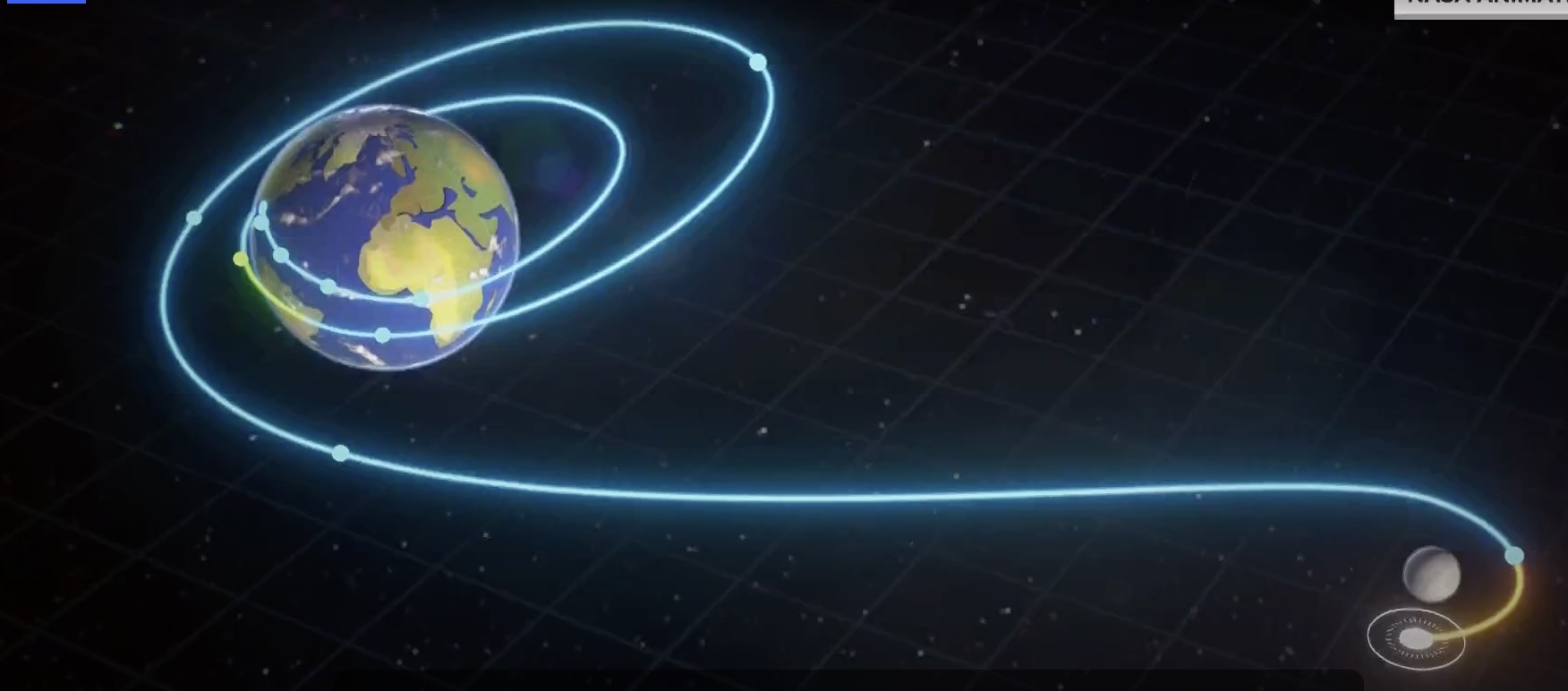
After Wednesday's picturesque launch from NASA's Kennedy Space Center, the astronauts' Orion spacecraft departed high-Earth orbit after the main engine fired up for five minutes and 50 seconds during a successful translunar injection burn at 7:49 p.m. Thursday.
Per NASA's daily agenda for Saturday, April 4 — Day 4 of the mission — the Orion will perform an outbound trajectory correction burn to refine the spacecraft's path to the moon.
Few other tasks are listed. NASA astronauts Reid Wiseman (commander), Victor Glover (pilot) and Christina Koch (mission specialist) and Canadian Space Agency astronaut Jeremy Hansen (mission specialist) will each devote one hour to reviewing lunar geography targets for imaging during their Day 6 moon flyby.
In addition — "although they will likely take photos and video out of Orion’s windows often" — the astronauts will have 20 minutes earmarked on Saturday's schedule for taking photos of celestial bodies from Orion’s windows.
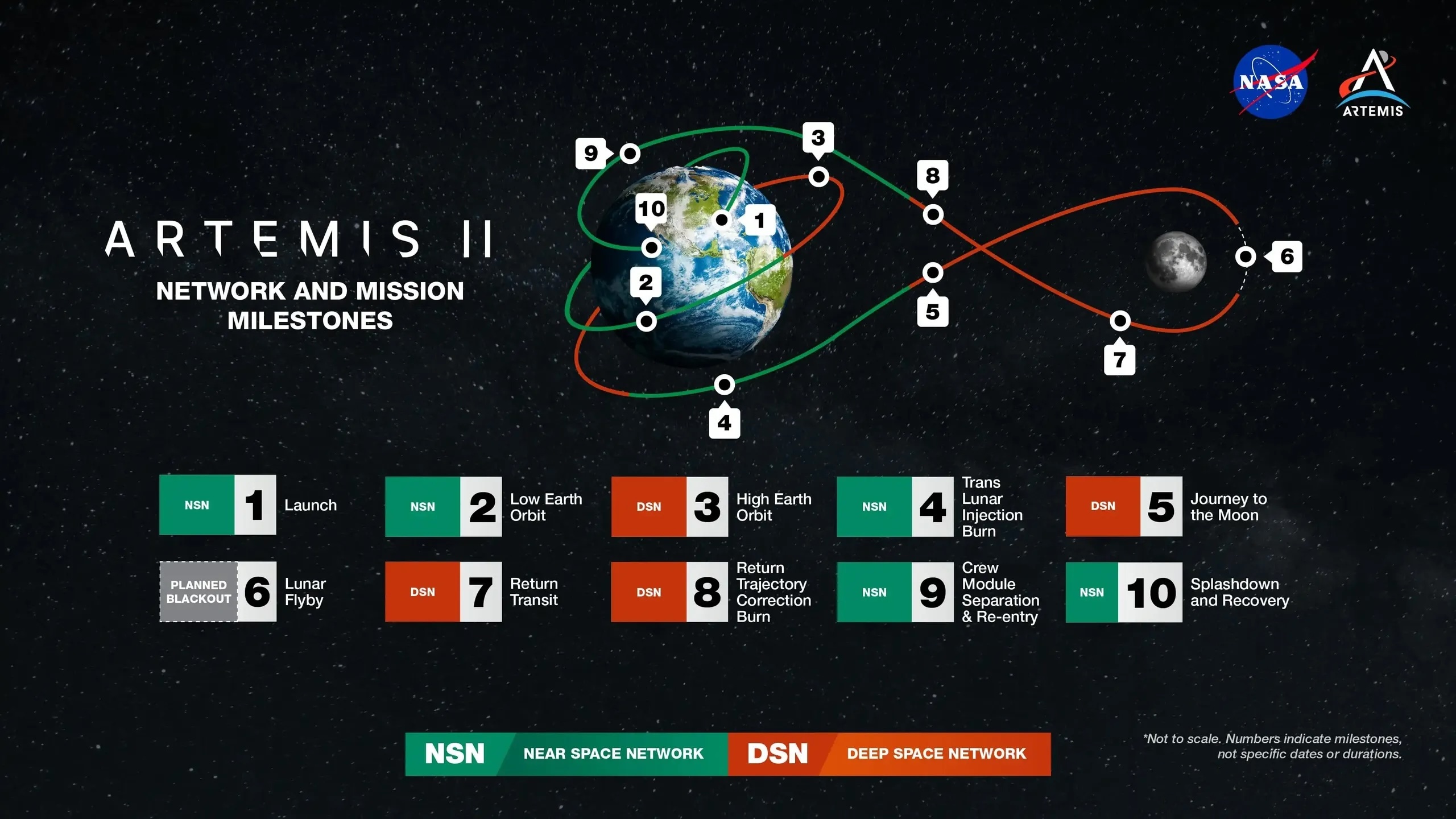
After testing their spacesuits, the Artemis II crew should swing around the far side of the moon on Monday, April 6, which marks the sixth day of the mission. Afterward, the Orion will turn back and begin its four-day journey home to Earth.
For the latest news from Cape Canaveral Space Force Station and NASA's Kennedy Space Center, visit floridatoday.com/space. Another easy way: Click here to sign up for our weekly 321 Launch space newsletter.
Quelle: Florida Today
+++
See the 'amazing' photos of Earth taken on historic Artemis II moon mission

A zodiacal light is also visible at the bottom right as the Earth eclipses the sun, she said.
Another photo of Earth, also taken by Wiseman, shows a terminator line, meaning the line separating daylight and nighttime on the planet.
“What an amazing shot that he shared with us here,” she said.
The photos were taken after completing the translunar injection burn Thursday.
Hawkins said Friday, the third day of the Artemis II mission, that so far systems are normal and “the crew is in great spirit.”

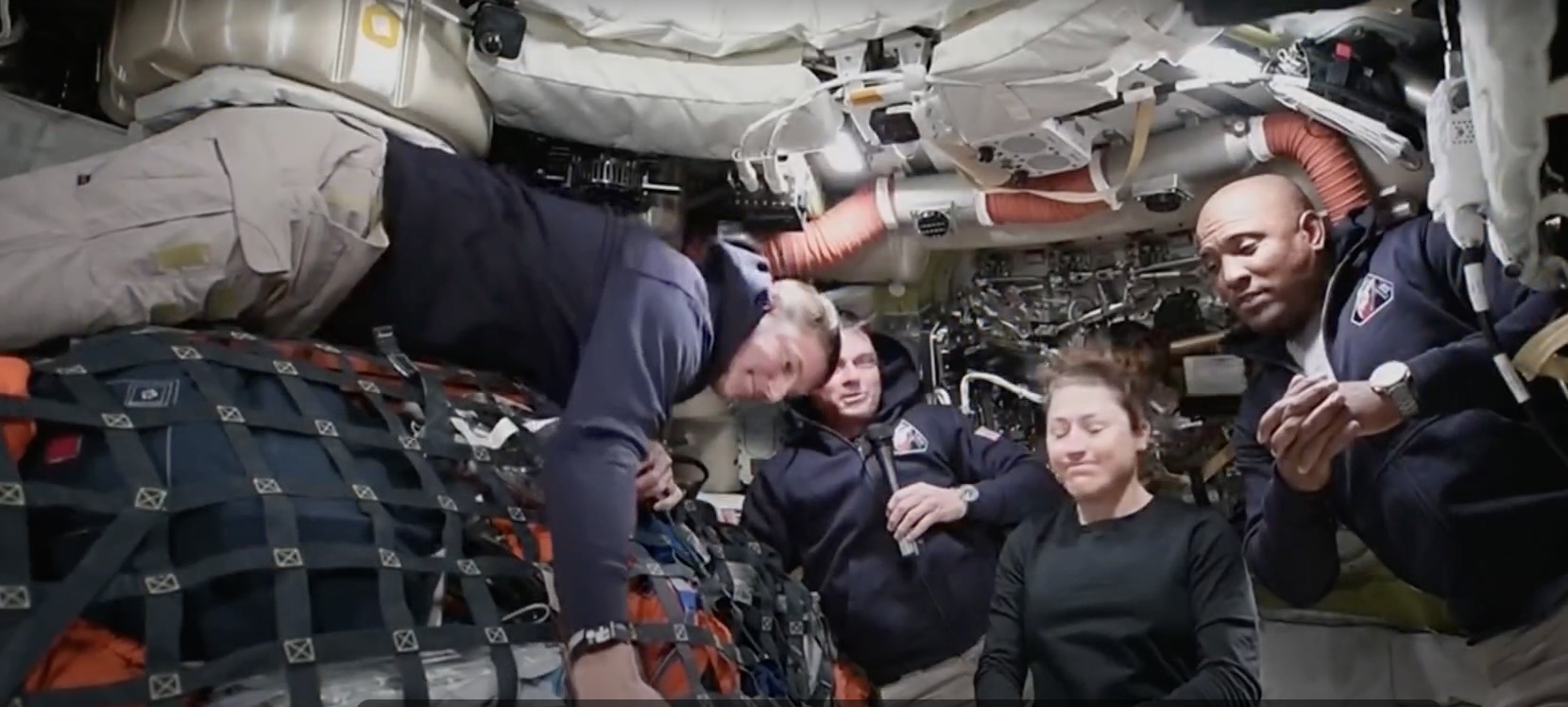
The four crew members — NASA astronauts Wiseman, Christina Koch and Victor Glover and Canadian astronaut Jeremy Hansen — launched Wednesday on the 10-day mission.
As of Friday, the crew is more than 100,000 miles from Earth, with about 150,000 miles to go to the moon.
The mission does not include a lunar landing, but is designed as a step toward a landing in 2028.
The next major milestone for the space pioneers will be Monday, when the crew is expected to fly around the moon.
That flyby could mark the farthest venture from Earth made by humans, surpassing the distance record of 248,655 miles set by the Apollo 13 astronauts in 1970.
Quelle: NBC NEWS
+++
Artemis II Flight Day 3: Crew Prepares Cabin for Lunar Flyby
The Artemis II mission is more than halfway to the Moon.
We all had a collective expression of joy at that… We can see the Moon out of the docking hatch right now. It's a beautiful sight.

CHRISTINA KOCH
NASA Astronaut
After cancellation of the first outbound trajectory correction burn, the Artemis II crew began preparing the Orion spacecraft’s cabin for the lunar observation period on Monday, April 6, at approximately 2:30 p.m. Additionally, crew members have been exercising, practicing medical response procedures, and testing the spacecraft’s emergency communications system in deep space.
The crew is scheduled to begin getting ready for bed soon, and will begin their sleep period around 3 a.m. CDT. The ground team will wake them up to begin Flight Day 4 at 11:35 a.m. on Saturday, April 4.
View the latest imagery from the Artemis II mission on our Artemis II Multimedia Resource Page. Please follow @NASAArtemis on X, Facebook, and Instagram for real-time updates. Live mission coverage is available on NASA’s YouTube channel.
Quelle: NASA
+++
Artemis II Flight Day 3: Crew Prepares for First Correction Burn, Readies to Receive Lunar Observation Assignment
After a successful translunar injection burn on April 2 and a roughly eight-hour crew rest period, the Artemis II crew began their second full day in space, settling into the rhythm of deep‑space operations. Upon burn completion, NASA astronauts Reid Wiseman, Victor Glover, and Christina Koch, along with CSA (Canadian Space Agency) astronaut Jeremy Hansen, became the first people to leave Earth’s orbit since the Apollo program in 1972.
The team in the Mission Control Center at NASA’s Johnson Space Center in Houston, woke the crew at 1 p.m. EDT, playing “…In a Daydream,” by the Freddy Jones Band to begin the day’s schedule. Today’s activities include the first outbound trajectory correction burn (OTC), Orion spacecraft operations, lunar science prep, and crew health demonstrations. At wakeup, the spacecraft and its crew were approximately 99,900 statute miles from Earth and approaching the Moon at 161,750 statute miles.
Refining the path to the Moon
Later Friday, the crew will prepare for their first OTC burn, currently scheduled for 6:49 p.m. The burn will last approximately eight seconds and change Orion’s velocity by 0.7 feet per second. Trajectory correction burns are planned firings that fine‑tune the Orion spacecraft’s path after major maneuvers. Using Orion’s thrusters, the OTC burn adjusts velocity and trajectory to ensure the spacecraft reaches the precise point in space needed for upcoming lunar operations.
Moon illumination and cabin setup for lunar flyby
The lunar science team in mission control is selecting geologic features on the Moon’s surface that will be visible to the crew as Orion loops around it on Monday, April 6. During the six-hour lunar science observation period, the Sun, Moon, and the Orion spacecraft will be aligned such that the crew will see about 20% of the Moon’s far side, the hemisphere not visible from Earth, lit by the Sun. Visible far-side features will include several never before seen with unaided eyes, such as the full Orientale basin, Pierazzo crater, and Ohm crater.
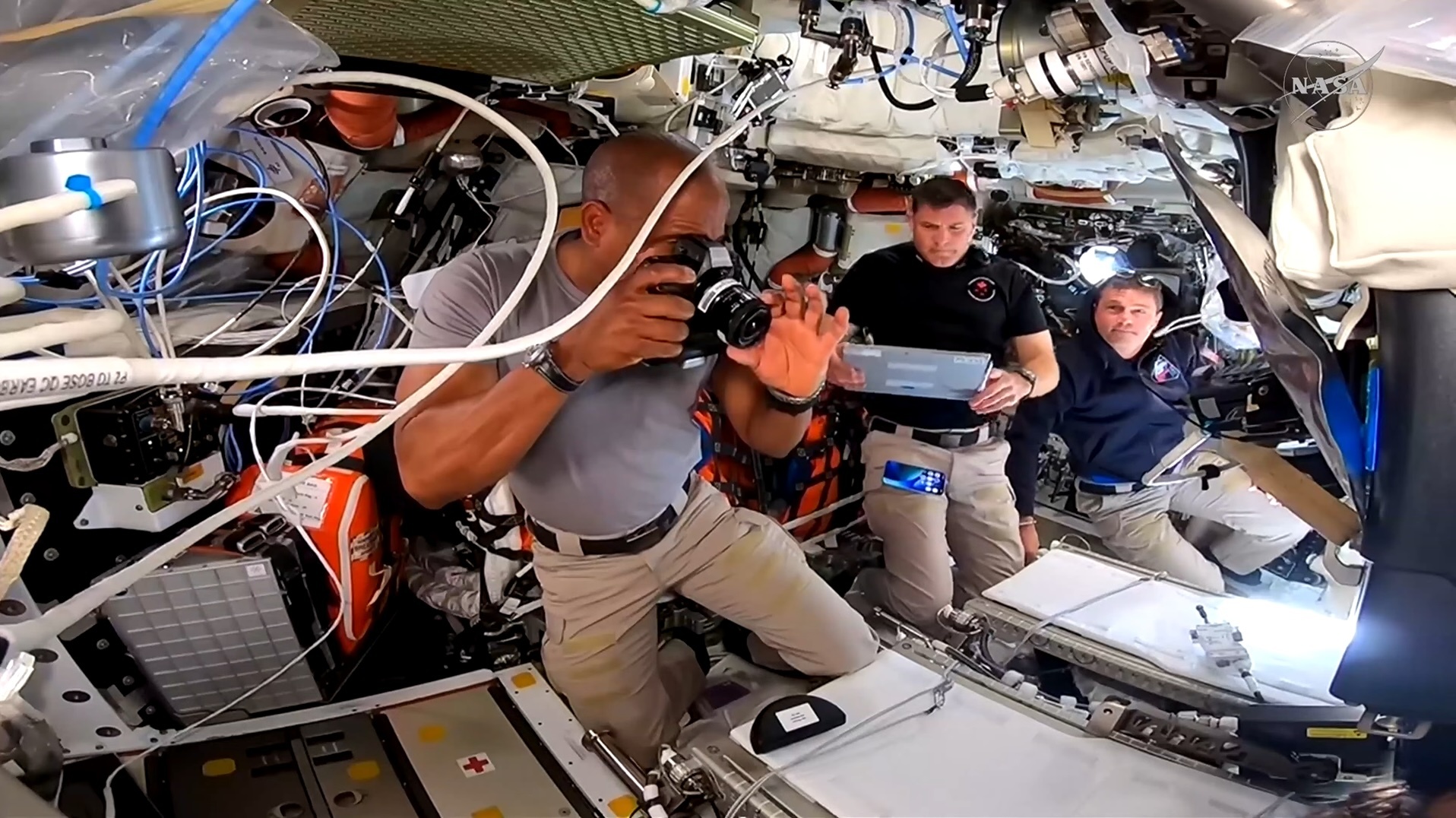
Inside Orion, the four crew members will practice preparing the cabin for lunar observations. This includes stowing equipment, setting up cameras, and practicing the choreography of moving in microgravity within a space about the size of two minivans.
They will configure their handheld cameras with the 80-400-millimeter and 14-24-millimeter lenses that will be used during Monday’s lunar flyby.
Health and space communications demonstrations
The crew also will conduct a CPR and choking‑response demonstration to evaluate emergency medical procedures aboard the spacecraft. All four crewmembers also will continue regular exercise sessions using Orion’s flywheel device to maintain cardiovascular conditioning.
In the second half of the day, Koch will test Orion’s emergency communications system on the Deep Space Network, verifying its performance as the spacecraft travels farther from Earth. The Orion Artemis II Optical Communications System connected with its two U.S.-based ground stations, transmitting high-definition video and other mission data from the capsule to Earth. This data was immediately relayed to mission control in Houston.
View the latest imagery from the Artemis II mission on our Artemis II Multimedia Resource Page. Please follow @NASAArtemis on X, Facebook, and Instagram for real-time updates. Live mission coverage is available on NASA’s YouTube channel.
Quelle: NASA
+++
Meet NASA’s New Artemis II Science Officers
Business attire, headsets, and multiple computer monitors are a much different backdrop than hiking gear, rock hammers, and the volcanic fields of Iceland. For Kelsey Young of NASA's Goddard Space Flight Center in Greenbelt, Maryland, and Trevor Graff and Angela Garcia of NASA's Johnson Space Center in Houston, comfort and skill across both environments have made them uniquely suited to be certified as NASA’s first Artemis II science officers.
The integration of science operations into human spaceflight dates back to Apollo, but Artemisintroduces a new dedicated position in NASA's Mission Control, marking an evolution of how science is embedded in mission operations.
“The science officer is the senior flight controller responsible for lunar science and geology objectives during Artemis missions,” said Young, who also serves as NASA's Artemis II lunar science lead. “They will integrate with all the other console disciplines and ensure NASA’s lunar science objectives are seamlessly integrated into mission execution.”

The front room of Mission Control is filled with consoles, or workstations, each dedicated to a particular system or function of the mission. Flight controllers at each console monitor areas such as communications, life support, propulsion, and now, science. Many of the console positions are supported by larger teams of experts who work from either different “back rooms” at NASA’s Johnson Space Center in Houston, or other locations.
Young, Garcia, and Graff completed months of flight controller training, testing, and certification simulations in Mission Control, while also executing geology and lunar observation trainings and integrated simulations with the astronauts.
One of the most exciting, challenging, and rewarding components of the process are the simulations, where we tested our skills and knowledge while immersed in very realistic mission scenarios.
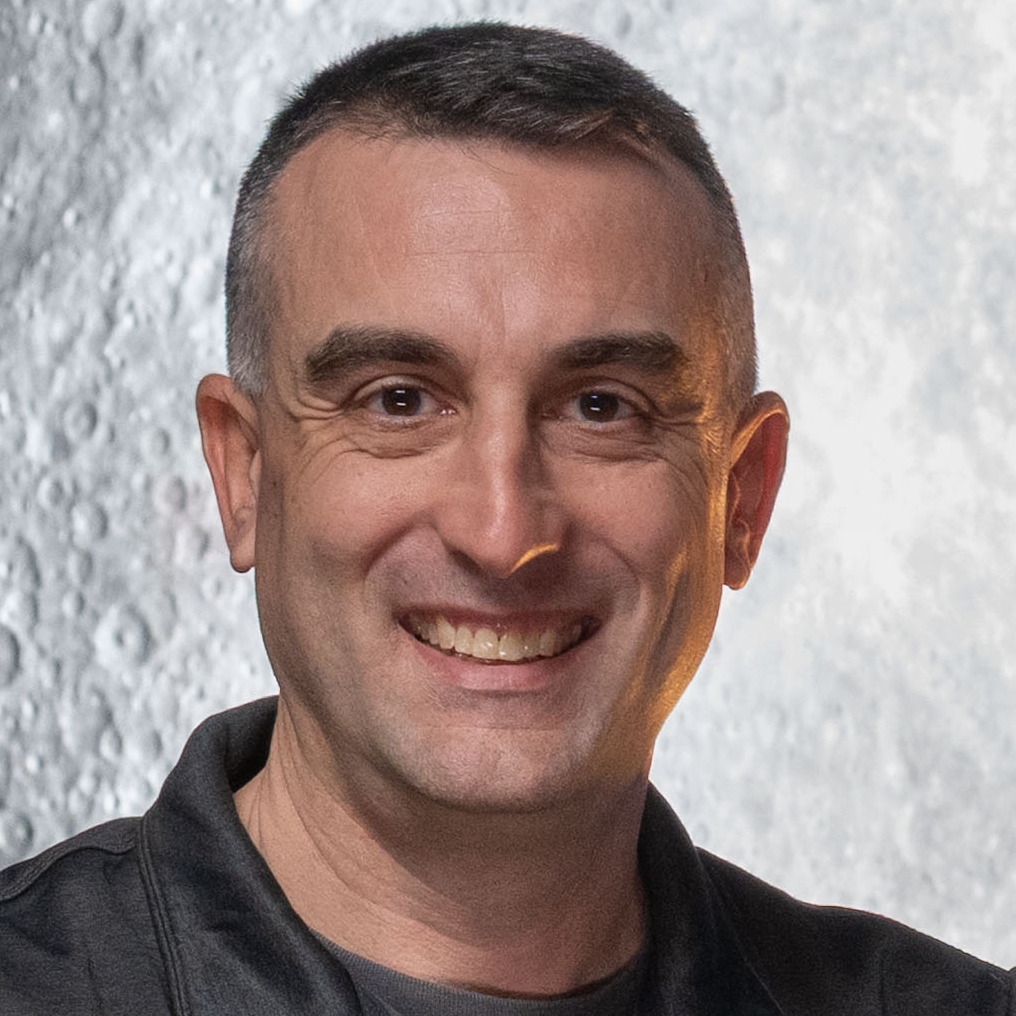
TREVOR GRAFF
Artemis Science Officer
“One of the most exciting, challenging, and rewarding components of the process are the simulations, where we tested our skills and knowledge while immersed in very realistic mission scenarios,” said Graff.
The simulations often included the Artemis II astronauts and covered the lunar flyby portion of the mission, planned for Monday, April 6, during which time the crew will take photographs of the Moon and record audio of their observations. They will be the eyes of the lunar scientists on Earth and have gone through geology training in the classroom and in the field to be able to capture as much information as possible during their pass around the far side of the Moon. Young said the astronauts have worked incredibly hard at building their lunar science toolboxes, studying lunar geography, traipsing across lunar-like landscapes in Iceland, and cultivating their ability to provide scientifically impactful descriptions of the Moon.

Listen to this audio clip from Kelsey Young talking about how the Artemis II astronauts have studied lunar geography to prepare for their mission. Credit: NASA's Curious Universe
“After so many months of hearing their descriptions of lunar visualizations during simulations, I’m most excited for the very first time I hear them describing the actual Moon out of the Orion windows,” said Young. “Hearing the excitement and scientific meaning behind their descriptions will be an incredible moment.”
Human eyes and brains are highly sensitive to subtle changes in color, texture, and other surface characteristics. Having astronaut eyes observe the lunar surface directly, in combination with the context of all the advances that scientists have made about the Moon over the last several decades, may uncover new discoveries and a more nuanced appreciation for the features on the surface of the Moon. While Artemis II will not land on the lunar surface, its contributions to lunar science are significant.
“The crew will be exploring through observation—a foundational scientific tool,” said Garcia.
As the astronauts make those observations, their photos and recorded audio will be fed down to two science back rooms at NASA Johnson, the Science Evaluation Room and Science Mission Operations Room. Experts in these rooms will provide data analysis and strategic guidance in real time to the science officer in Mission Control. These processes represent a major component of Artemis II as a test flight: refining science mission operations.
This mission will test the lunar science team’s workflows, technical requirements, and integration into Mission Control. Lessons learned during Artemis II will pave the way for lunar science operations for future Artemis missions. Young explained that science integration into human spaceflight has a long, rich history. While there was no science representative in the front room of Mission Control during Apollo, there was a geology back room onsite at Johnson. As Apollo missions progressed, the structure of integrating with the rest of the flight control team evolved and the footprint expanded as the science capability of each mission grew.
Garcia said she is humbled, honored, and grateful to be a part of the flight control team and to have trained the astronauts. The Moon is something everyone, everywhere, can see and connect with, according to Young.
“I hope people all over the world can be inspired by this push away from our planet,” said Young, “I also hope they remember the Moon, how much we still have to learn about our nearest neighbor but also the special place it holds to people everywhere.”
Quelle: NASA
+++
Hello, World
Quelle: NASA
+++