
3.04.2026

Artemis II Lifts Off, Aiming For Lunar Flyby
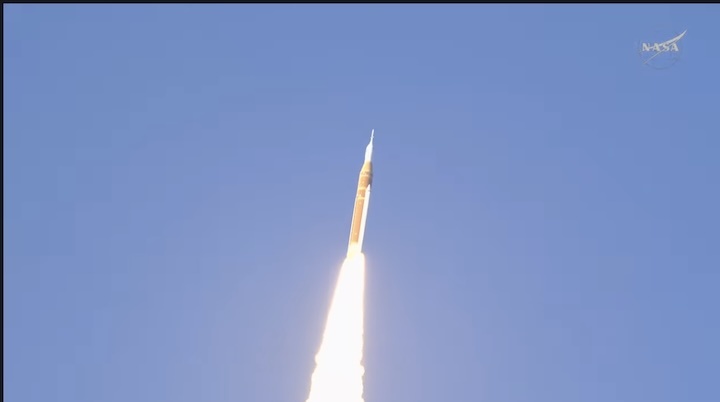
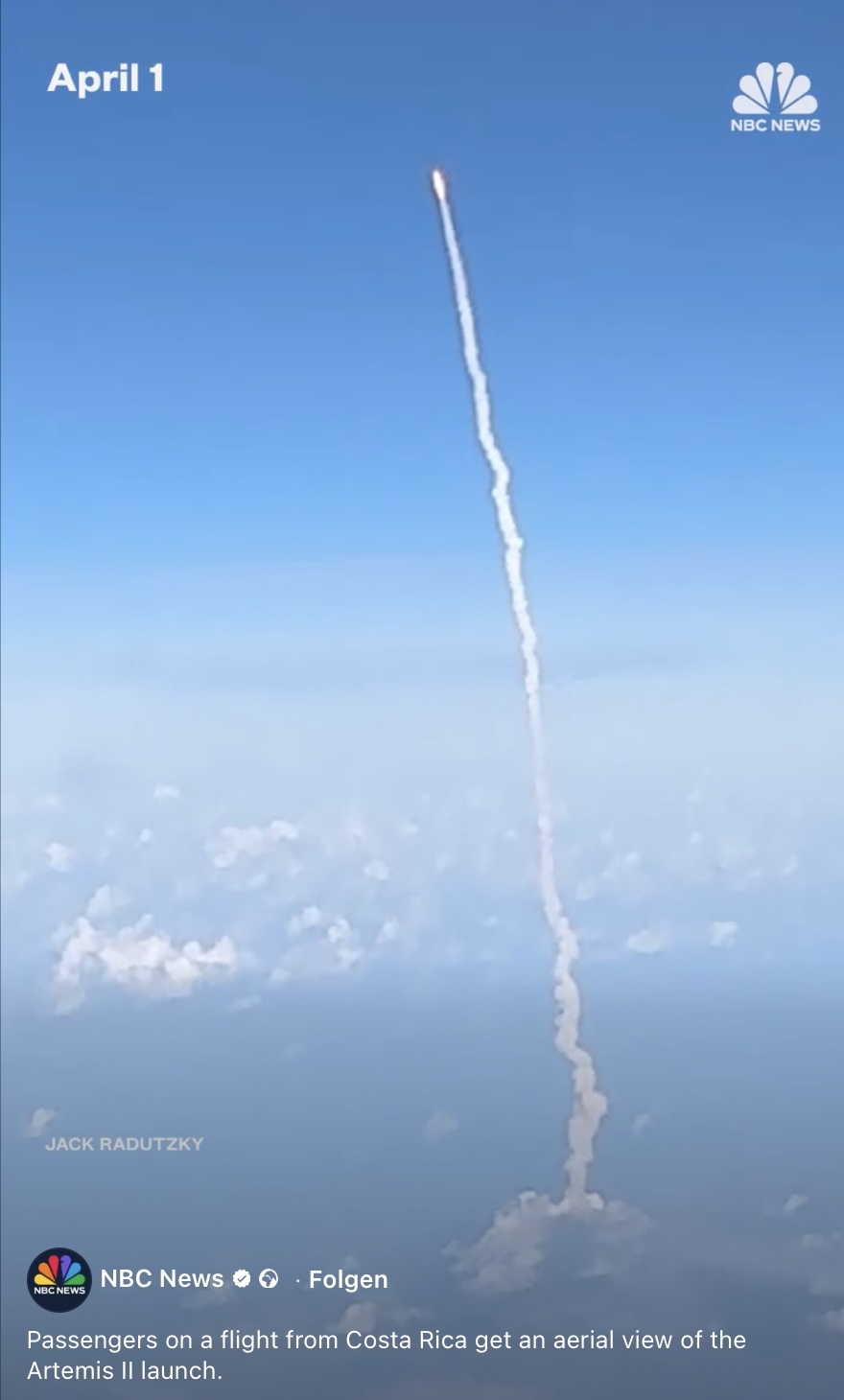
CAPE CANAVERAL—After decades of development and false starts, NASA on April 1 launched the first crew in more than 50 years on a mission to leave Earth orbit and travel to the vicinity of the Moon.
The agency’s Space Launch System (SLS) rocket—flying for just the second time—lifted off at 6:35 p.m. EDT from Kennedy Space Center Launch Complex 39B, kicking off a planned series of flights in the newly revamped Artemis lunar exploration initiative.
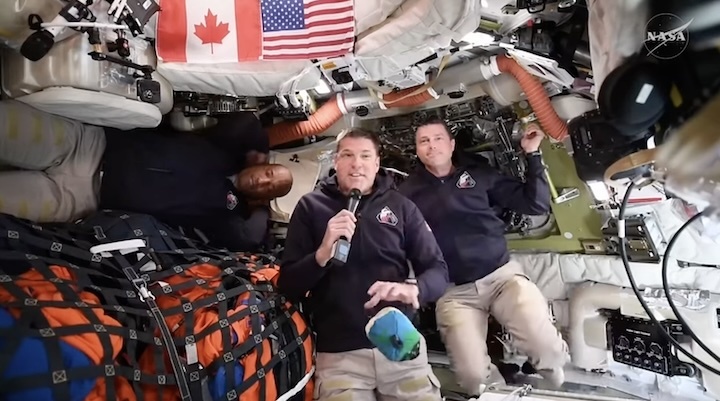
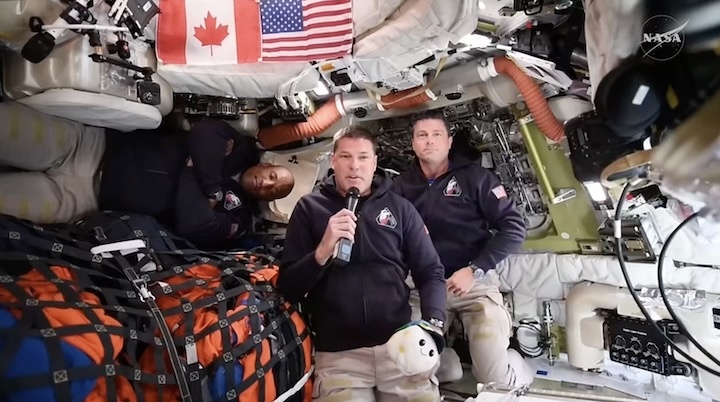
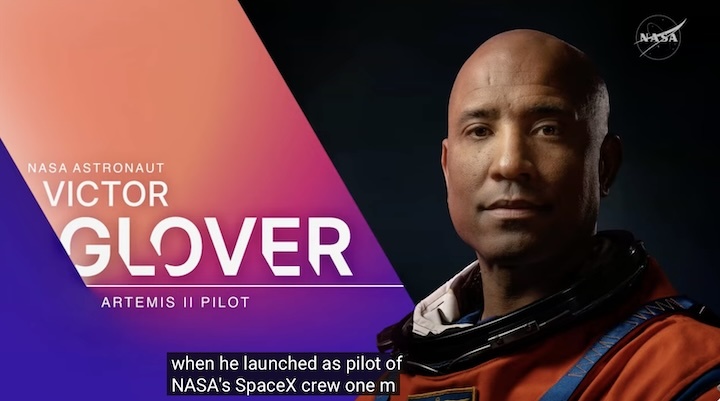
Strapped inside the Orion spacecraft atop the SLS were veteran NASA astronauts Reid Wiseman, Victor Glover and Christina Koch, and rookie flyer Jeremy Hansen, with the Canadian Space Agency.
“We really are going for all, by all,” Wiseman, the mission commander, told reporters before launch. “We want to take the whole world along with us.”
The primary goal of the mission, known as Artemis II, is to check out the Orion spacecraft’s environmental control and life support system, avionics and other equipment, and to validate the performance of ground and flight systems needed for a long-term lunar campaign, including emergency operations and procedures.
In development for 20 years, Orion made an uncrewed, 25-day flight test in late 2022 that included an orbit around the Moon. Unexpected wear on its heat shield delayed the follow-on Artemis II crewed flight for a year while assessments and testing were underway. The shield is being modified for future flights, but for Artemis II NASA changed Orion’s return flight profile based on new understanding of atmospheric reentry aerodynamics and the chemical properties of Orion’s ablative heat shield.
Orion, built by Lockheed Martin, is designed to support a crew of four for 21 days.
NASA had hoped to launch Artemis II earlier this year, but technical issues with the SLS prompted a return to the Vehicle Assembly Building to address a problem with the helium system used to pressurize and purge the SLS upper stage. The work was completed in half the time it took to address a similar issue ahead of the Artemis I launch in November 2022.
Since the Artemis II stack returned to the launchpad on March 20, preparations for flight have proceeded smoothly, setting the stage for the 49 hr. 40 min. Artemis II countdown to begin 10 days later.
Fueling of the SLS with more than 750,000 gal. of liquid hydrogen and liquid oxygen began early April 1, with no leaks or issues reported, leaving the weather as a potential concern for launch.
About 2 hr. before the opening of the launch window at 6:24 p.m., the U.S. Space Force, which supports the launch with range safety, tracking and other services, reported a communications issue with the SLS Flight Termination System (FTS), which would be used to detonate the rocket should it stray off course during ascent. The SLS includes a Launch Abort System (LAS) that would fly the crew’s Orion capsule away from a failing booster for a splashdown in the Atlantic Ocean.
The FTS communications issue was resolved, but an unrelated issue with one of two batteries aboard the LAS set off another round of troubleshooting. That issue also was resolved, and with the weather stable, the launch team proceeded into the final 10 min. of the countdown.
Powered by four Aerojet Rocketdyne RS-25 engines—repurposed from the space shuttle program—and a pair of solid rocket boosters, made by Northrop Grumman, the SLS lifted off with nearly 9 million lb. of thrust to begin the planned nine-day, 1-hr. Artemis II flight test.
Eight minutes after liftoff, the SLS core stage, built by Boeing, separated, leaving the upper stage and Orion flying at nearly 5 mi. per sec. about 100 mi. above Earth. The rocket’s Interim Cryogenic Propulsion Stage (ICPS) was then to conduct two orbit-adjustment burns to place Orion in a high Earth orbit ranging from 115-43,730 mi. above the planet.
The ICPS, built by United Launch Alliance, is expected to separate 3 hr. 23 min. after launch. The Artemis II crew plans to use the discarded upper stage as target practice for a 70-min. piloted flight demonstration, the first of two scheduled during the mission.
The manual flying exercise is a practice run for a newly added mission in the Artemis flight test series. Slated for mid-2027, another crewed Orion spacecraft will attempt to rendezvous and dock with one or both of the Human Landing Systems in development by SpaceX and Blue Origin. The redesignated Artemis III mission, which will unfold in low Earth orbit, builds skills for a crewed lunar landing attempt on Artemis IV in early 2028.
Orion is expected to remain in Earth orbit for 25 hr. while the crew exercises and uses the spacecraft’s galley, toilet and other systems as part of the spacecraft checkout. If the equipment is operating as planned, NASA will proceed with the next phase of the mission and send Orion on toward the Moon with a 6-min. burn of the spacecraft’s service module, provided by the European Space Agency. The so-called translunar injection burn would put Orion on a trajectory that would reach as far as 4,700 mi. past the Moon, setting a new distance record for a human spaceflight.
The burn also positions Orion to return to Earth on April 10, with splashdown in the Pacific Ocean off the coast of San Diego about 8:20 p.m. EDT on a free-return trajectory that uses the gravitational forces of the Earth and the Moon.
Artemis II marks the first human spaceflight beyond Earth orbit since the final Apollo mission to the Moon in 1972.
Quelle: AVIATION WEEK
+++
Artemis II Mission Launches Successfully
AT 6:36 PM Cape Canaveral time, NASA’s SLS rocket lifted off without incident with the four members of the Artemis II spacecraft aboard. During the first few hours, Orion will complete its journey into Earth orbit and, throughout the first day, will conduct critical navigation and systems tests. Around the third or fourth day, the spacecraft will begin its trajectory toward the moon and cross its gravitational sphere of influence. In total, the mission will last approximately 10 days.
The mission includes the first woman and the first Black person on a crewed mission to lunar orbit. The launch comes 53 years after Apollo 17, the last crewed mission to the Moon.
The Artemis II crew will not land on the moon (that will happen on Artemis IV ). Instead, their capsule will fly at altitudes between 6,000 and 9,000 kilometers above the surface of the far side of the moon, circle it, and begin the return journey to Earth. The mission's main objective is to demonstrate that the space agency has the technological capability to send people to the Moon safely and without incident.
Once they achieve this, NASA will begin preparations for new moon landings in the following years, which will aim to establish the first lunar bases in history and, with them, the sustained and sustainable presence of humans on the satellite.
The launch was successful and occurred on schedule. The launch window opened on Wednesday, April 1, at 6:24 pm Eastern Time (EDT) and could have been extended for two hours, if necessary. NASA would have had five more days to attempt another launch.
Mission Details
The astronauts took off on a NASA SLS rocket and are traveling inside the Orion capsule, described as a spacecraft about the size of a large van. They will orbit Earth for at least two days to test the onboard instruments. Then they will align the spacecraft to begin its journey to the moon. By the fifth or sixth day of flight, the capsule is expected to enter the moon's sphere of influence, where the satellite's gravity is stronger than Earth's, and dock with its orbit.
When the spacecraft passes “behind” the moon, the most dangerous phase will begin. The crew will be out of contact with Earth for about 50 minutes due to interference from the moon itself. During this crucial moment, the crew must capture images and data from the moon, taking advantage of the far-more-advanced technology they carry than was available during the Apollo era.
After completing the return, the capsule will head home, taking advantage of the Earth-moon gravity field to save fuel. According to NASA estimates, by the 10th day of flight the crew will be close to reaching the planet.
Artemis II has five priorities: It must sustain the crew safely throughout the flight; operate essential systems for a manned lunar campaign, from ground infrastructure to space hardware; retrieve flight data and use it in future missions; activate an effective emergency system in case of a critical scenario; and verify subsystems and validate emerging data.
Secondary Goal: Beat China
As in the Apollo era, the United States is fighting a space competition with another technological power. However, instead of Russia, the rival now is China, which is rapidly advancing its program to put its own taikonauts on the surface of the moon. By way of context, in the next two years alone, the Chinese space agency plans to send two more Chang'e robots, as well as a lunar lander before 2030.
For the current NASA administration, maintaining space leadership is a stated goal. Although the agency operates on a much smaller budget than during the Cold War, geopolitical pressure has pushed its partners, including SpaceX and Blue Origin, to prioritize technologies that will accelerate the US return to the lunar surface.
The first lunar settlement is key to the future of space geopolitics. While the moon's territory "belongs to no one" and is governed under the rules of the Outer Space Treaty, the first arrivals will establish operational safety zones, or perimeters where no one else can approach. The first lunar bases will have the best positions over potential vital resource deposits, located in the permanently dark craters of the South Pole, and no one else will be able to take their position away from them.
What’s Next?
Once the mission is over, NASA will rewrite its road map. Artemis III, once billed as the first lunar landing mission, will now focus on testing critical systems, such as the suits and the transport module, all in low Earth orbit. The first manned landing will be moved to a future mission, probably Artemis IV, still without a firm date, and will have to operate without the Gateway station, whose recent cancellation forces a redesign of the program's logistical architecture.
Mastering lunar descent with new technology is key to the new lunar base construction plan, divided into three phases, dozens of missions, and an investment of close to $10 billion.
Quelle: WIRED
+++
Artemis II mission begins
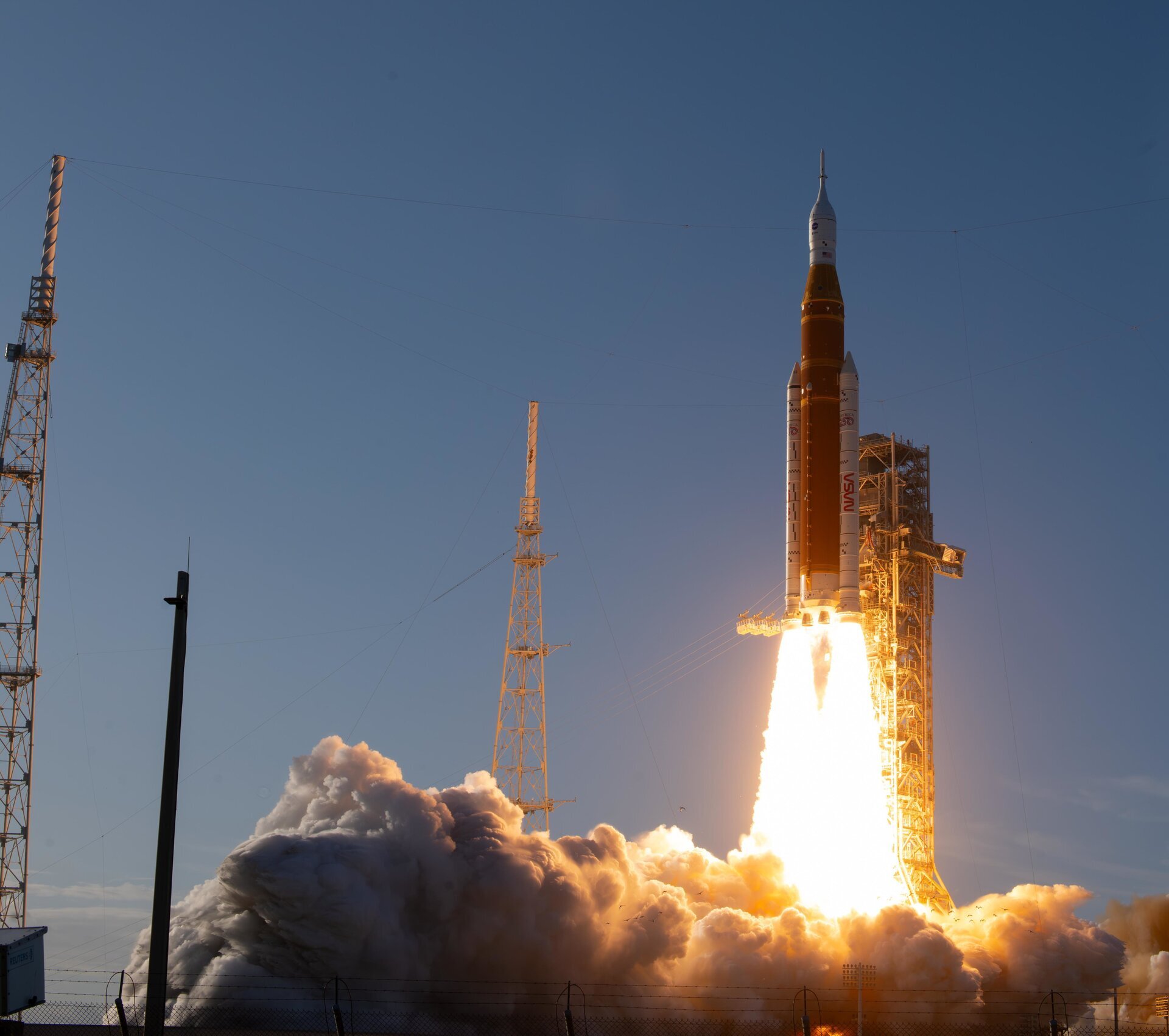
At 00:35 CEST today (18:35 local time on 1 April), NASA's Space Launch System rocket lifted off from the Kennedy Space Center in Florida, carrying four astronauts aboard the Orion spacecraft on Artemis II. At the heart of the mission is ESA's European Service Module, which powers, propels and sustains the Orion spacecraft and its crew on their journey around the Moon and safely back to Earth.
“This is the first time astronauts are flying aboard Orion,” says ESA’s Director General Josef Aschbacher. “Artemis II builds on the success of Artemis I and confirms Europe’s essential role in humankind’s return to the Moon and future exploration beyond. ESA is proud to stand shoulder to shoulder with its international partners, led by NASA. Together, we are demonstrating that cooperation remains our most powerful engine for the future.”
Over the next 10 days, NASA astronauts Reid Wiseman, Victor Glover and Christina Koch, together with Canadian Space Agency astronaut Jeremy Hansen, will fly around the Moon and return safely to Earth, the first journey of its kind since Apollo 17 in 1972, over half a century ago.
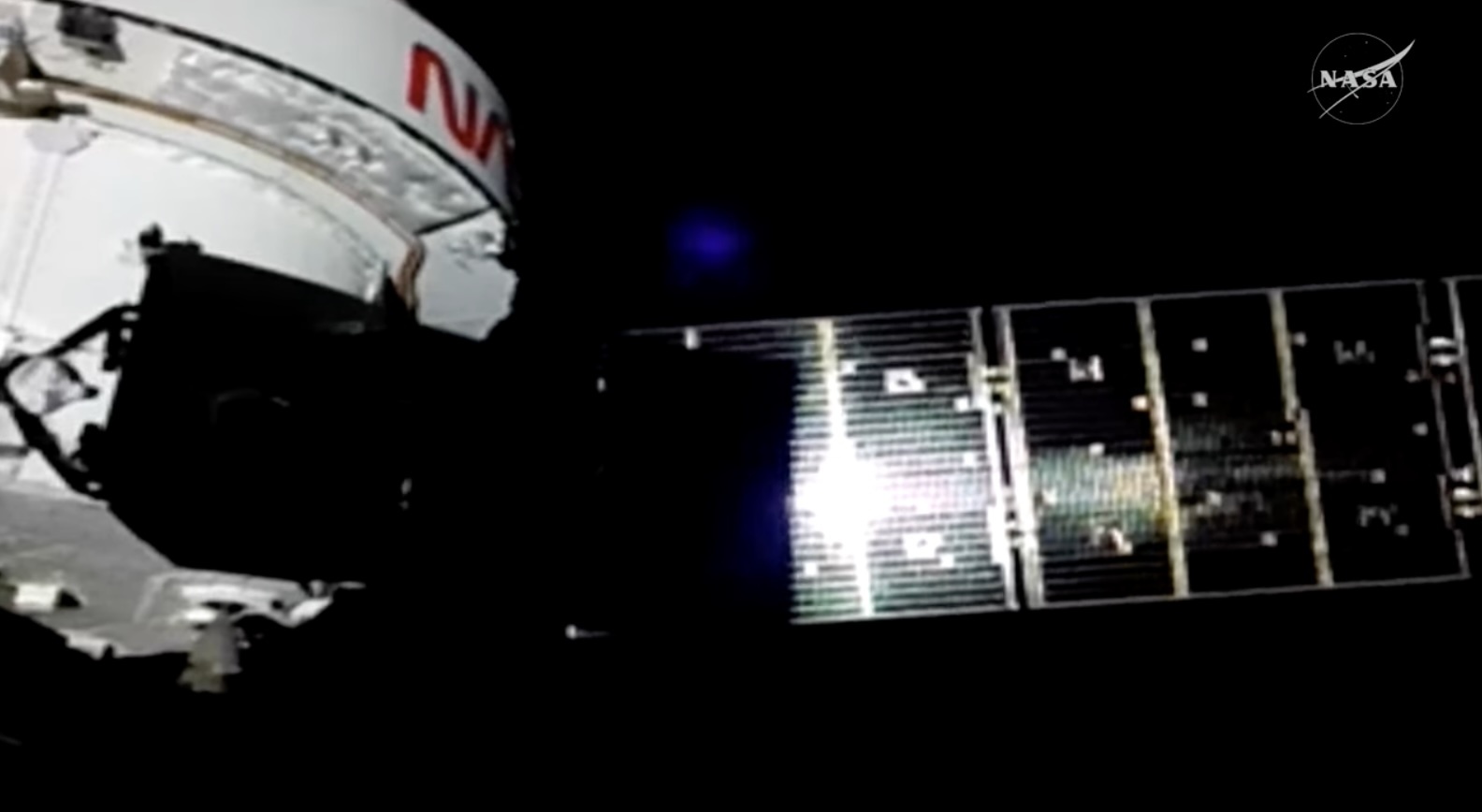
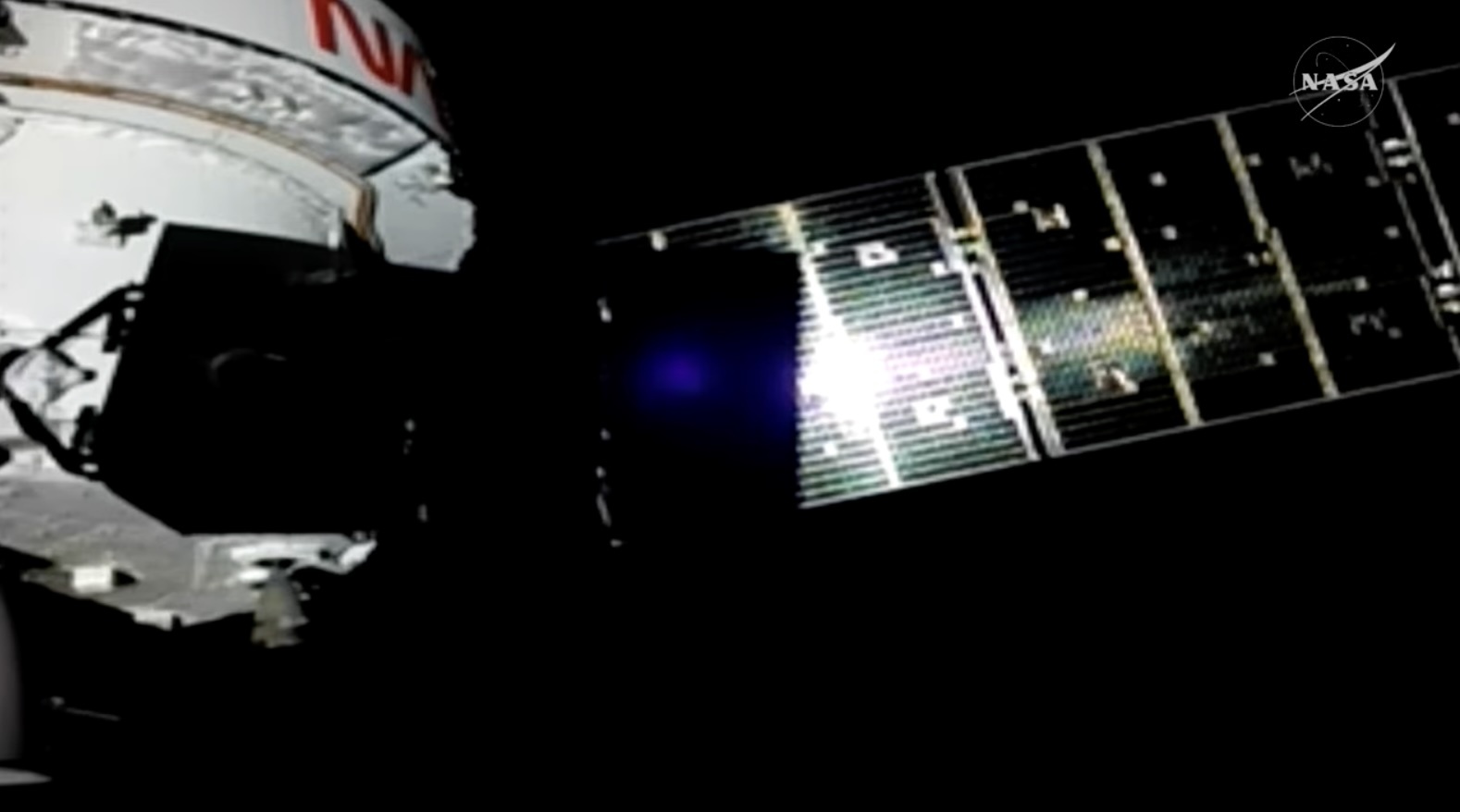
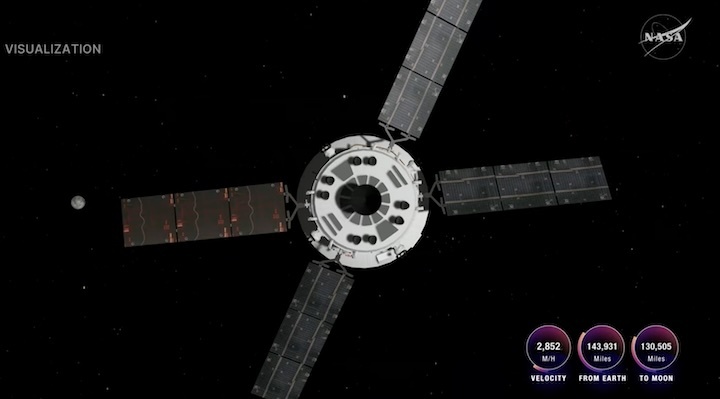
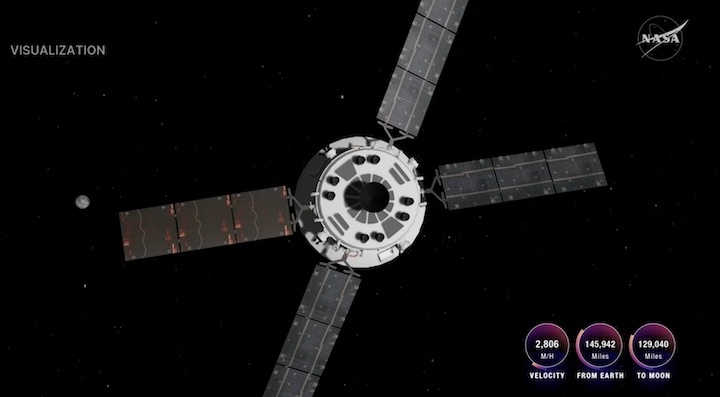
Powering Orion on this historic voyage is our second European Service Module, which is responsible for life support for the astronauts, as well as power generation and propulsion. Its four solar arrays, each stretching seven metres, give electricity to the spacecraft, while its systems provide air, water, and a comfortable temperature for the astronauts. Thirty-three engines, including a powerful repurposed Space Shuttle engine, will guide Orion through deep space and perform critical manoeuvres on the lunar journey.
European hardware

European hardware is put to work just minutes after liftoff. Around 20 minutes after launch, Orion's European-built solar arrays deploy, unfurling into space to begin supplying electricity to the spacecraft. The crew then enters a high Earth orbit, where they spend the first day testing Orion's systems and taking manual control of the spacecraft. Using the European Service Module's 24 reaction control system engines, they practise manoeuvres needed for future docking operations.

On the second day of the mission, the European Service Module's main engine will ignite for the critical trans-lunar injection burn, sending Orion and its crew on a four-day journey to the Moon. Throughout the voyage there and back, the module will continue to play a vital role, firing its smaller engines to fine-tune Orion's trajectory where needed and ensure the spacecraft remains on course for a safe return to Earth.

As Orion and its crew approach our home planet, the European Service Module will separate from the crew module and burn up harmlessly in Earth's atmosphere, having completed its task of carrying the astronauts safely home. The Artemis II mission will conclude as the crew module splashes down safely in the Pacific Ocean.
European engineers
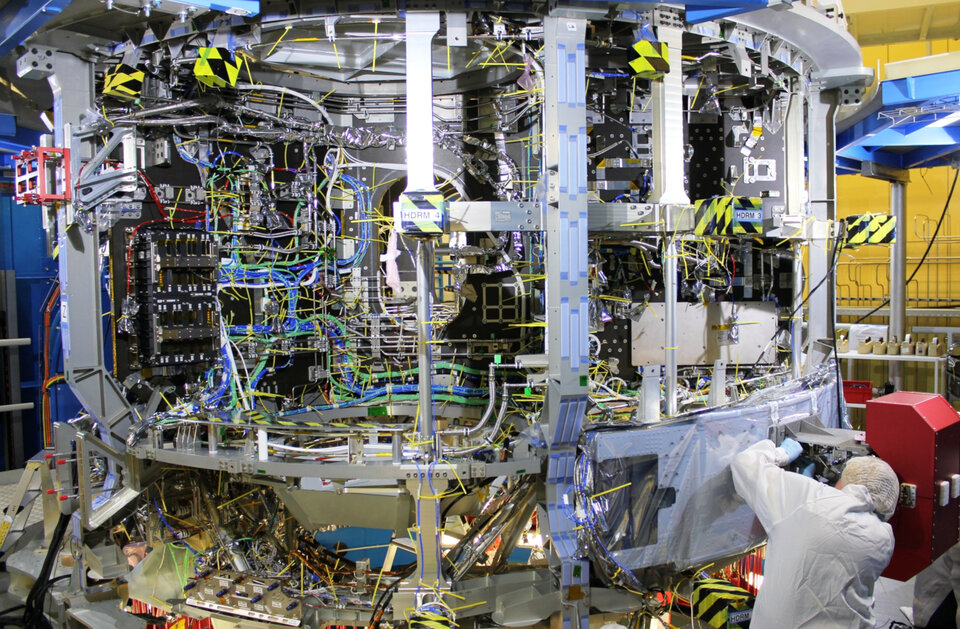
The second European Service Module is the product of a vast industrial effort that spans almost a decade. Contributions have come from across 10 European countries, involving 20 main contractors and over 100 European supplies, from the creation of its backbone structure by Thales Alenia Space in Turin, Italy, to the integration of all components by prime contractor Airbus in Bremen, Germany.

The vital contributions of Europe to Artemis II continue after liftoff. European engineers will support the mission around the clock from ESA's technical centre in the Netherlands, ESA's European Astronaut Centre in Germany, and NASA's Johnson Space Center in Houston, ensuring expert oversight of the European-built systems.
“Although no ESA astronaut is part of this flight, the European Space Agency is,” says Daniel Neuenschwander, ESA’s director for Human and Robotic Exploration. “The excellency of the European industry is underlined by the crucial role that the European Service Module will play in this mission and the ones to come. This know-how is the foundation for future deliveries in the Artemis partnership, but also for achieving our own European goals for human and robotic exploration.”
Artemis II Flight Update: Crew and Ground Teams Successfully Troubleshoot Orion’s Toilet
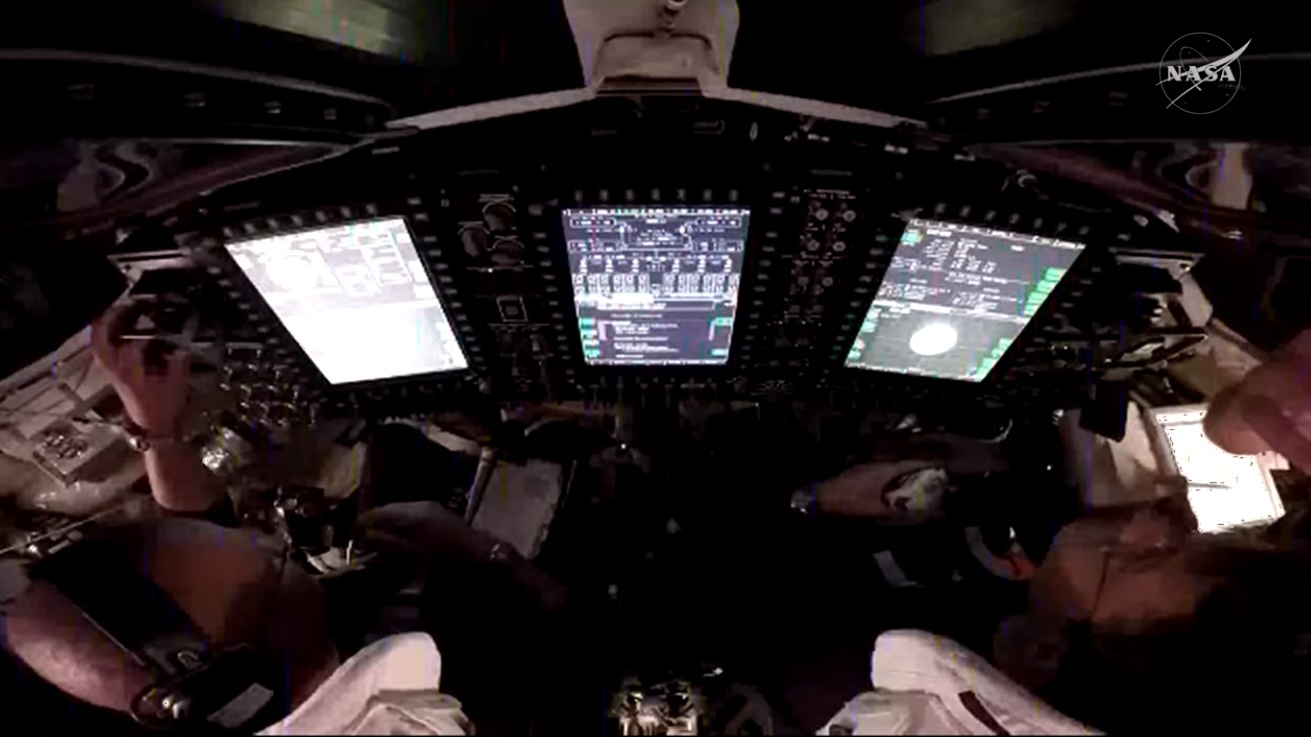
The Artemis II crew, working closely with mission control in Houston, were able to restore the Orion spacecraft’s toilet to normal operations following the proximity operations demonstration.
Ahead of the apogee raise burn on April 1, the Artemis II crew reported a blinking fault light and mission control teams successfully assessed the data and worked with the crew to troubleshoot and resolve the issue.
The crew now will take a four-hour nap and be awakened at 7 a.m. EDT on Thursday, April 2, to prepare for the perigee raise burn. This burn will lift the lowest point of Orion’s orbit around Earth. Together with the apogee raise burn completed earlier, these burns shape the spacecraft’s initial orbit and prepare it for later translunar operations. The crew members then will resume their sleep period around 9:40 a.m.
Quelle: NASA
----
Update:
.
Quelle: NBX
+++
NASA Artemis II crew plans moon observations, equipment tests on Day 3
After a successful trans-lunar injection burn to leave Earth orbit, the NASA Artemis II crew on Friday, April 3, are headed toward the moon — sending them farther into space than anyone has traveled since the last Apollo mission in 1972.
The second day of the mission, April 2, saw the Orion spacecraft’s main engine on the European Service Module, which is the part underneath the spacecraft that provides power, thrust, and life support, perform the engine burn. This was the critical moment that sent the crew out of their high Earth orbit and toward the moon.
That was to be followed by the first of three smaller engine firings, called the outbound trajectory correction, ensuring Orion stays on target for its circle around the moon.
Day three, which is April 3, will see the astronauts break into investigations beyond spacecraft operations.
Prepare for lunar observations
According to NASA, the astronauts will practice the procedures they'll carry out as they fly close to the moon on the sixth day of the mission. This includes running through the observations they plan to make of the lunar surface. While cameras provide quality images, the human eye can see details and colors cameras cannot — keeping scientists intrigued to learn what the crew will see.
Some of these details will be views never seen by the Apollo missions. This is because the Apollo missions always flew when the side facing Earth was fully illuminated.
The astronauts will also need to get some exercise.
They'll use the Flywheel exercise device, which allows for resistance and aerobic exercise in the small living quarters of the Orion spacecraft. It is essential for astronauts to increase exercise, as the microgravity environment contributes to quick muscle loss.
Artemis II crew to practice medical procedures
On Friday, the astronauts will also conduct safety demonstrations, such as CPR and evaluation of the medical kit. This includes looking at the thermometer, blood pressure monitor, stethoscope and otoscope. These tasks will be assigned to Artemis II Pilot Victor Glover, Commander Reid Wiseman, and Mission Specialist Jeremy Hansen.
NASA said Mission Specialist Christina Koch will spend the second half of the third day testing Orion’s emergency communications system with the Deep Space Network. The Deep Space Network are large radio antenna located in California, Spain, and Australia which send and receive data from spacecraft.
Artemis II will reach the vicinity of the moon on the fifth day of the mission. While the mission is not landing, the astronauts will become the first humans to venture to the moon since the Apollo 17 mission in 1972.
They will experience their closest pass of the moon, swinging around the far side, on the sixth day.
Quelle: Florida Today
+++
NASA’s Artemis II Mission Leaves Earth Orbit for Flight around Moon
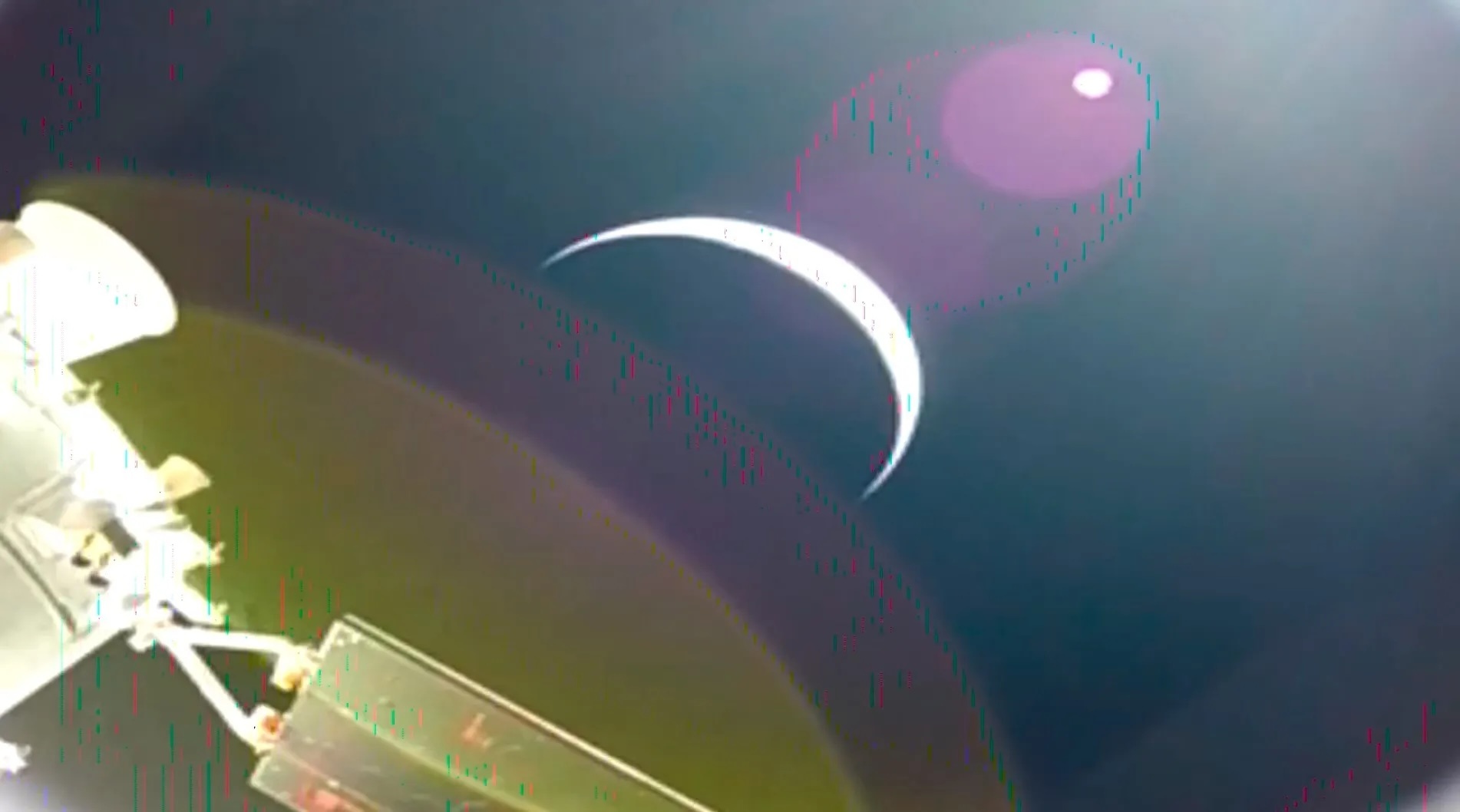
For the first time in more than 50 years, astronauts on a NASA mission are bound to fly around the Moon after successfully completing a key burn of Orion’s main engine.
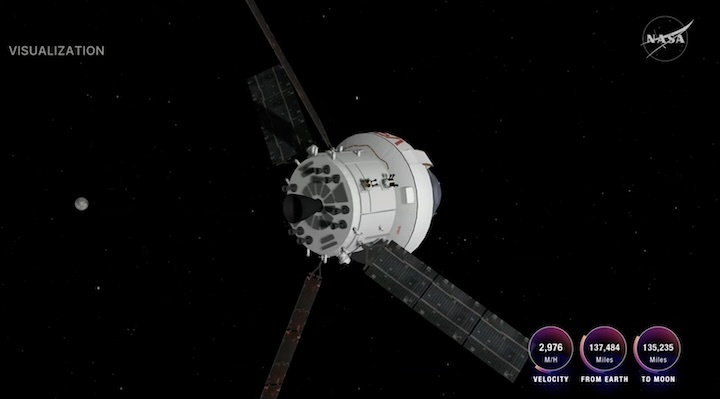
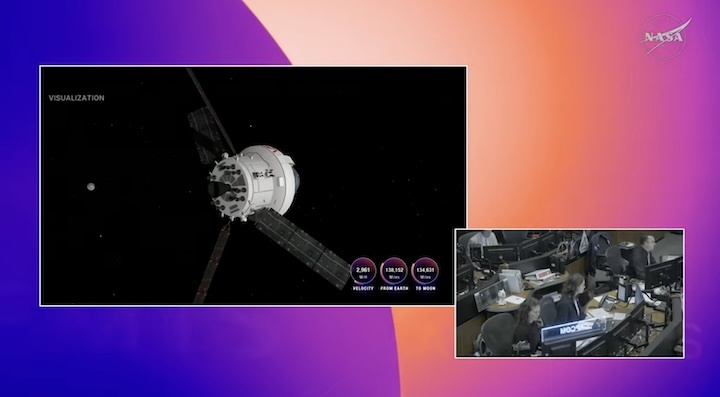
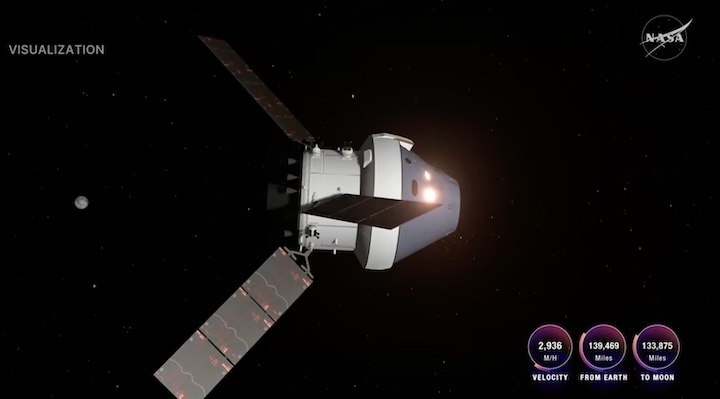
With the approximately six-minute firing of the spacecraft’s service module engine on Thursday, known as the translunar injection burn, Orion and its crew of NASA astronauts Reid Wiseman, Victor Glover, Christina Koch, and CSA (Canadian Space Agency) astronaut Jeremy Hansen accelerated to break free of Earth’s orbit and began the outbound trajectory toward Earth’s nearest neighbor.
“Today, for the first time since Apollo 17 in 1972, humans have departed Earth orbit. Reid, Victor, Christina, and Jeremy now are on a precise trajectory toward the Moon. Orion is operating with crew for the first time in space, and we are gathering critical data, and learning from each step,” said Dr. Lori Glaze, acting associate administrator for the Exploration Systems Development Mission Directorate at NASA Headquarters in Washington. “Each milestone we reach marks meaningful progress on the path forward for the Artemis program. While we have eight intensive days of work ahead, this is a big moment, and we’re proud to share it with the world.”
NASA’s SLS (Space Launch System) rocket and Orion spacecraft lifted off from Launch Pad 39B at the agency’s Kennedy Space Center in Florida at 6:35 p.m. EDT on April 1, sending the four astronauts on a planned 10-day test flight around the Moon and back.
After reaching space, Orion deployed its four solar array wings, enabling the spacecraft to receive energy from the Sun, while the crew and engineers on the ground immediately began transitioning the spacecraft from launch to flight operations to start checking out key systems.
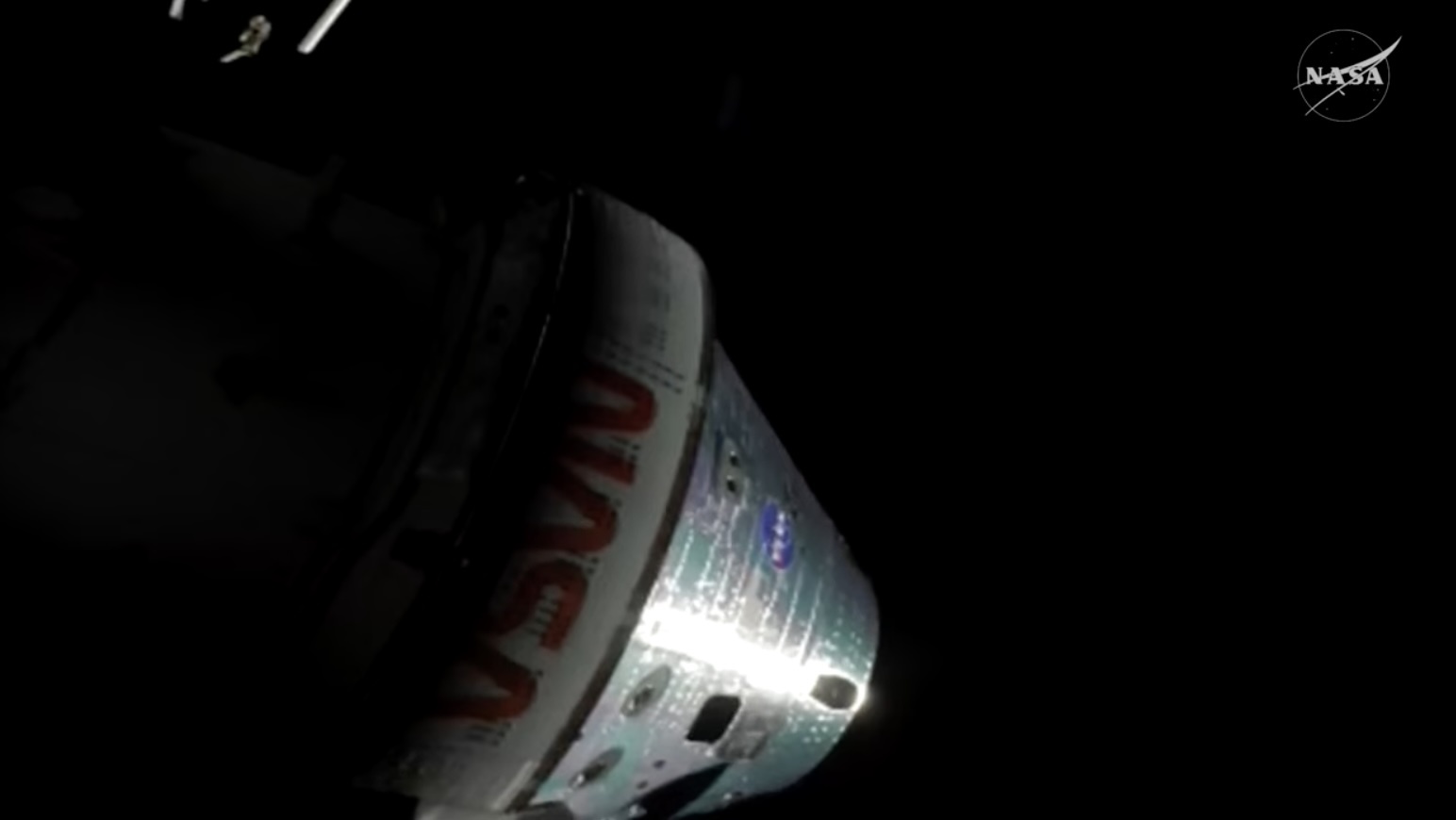
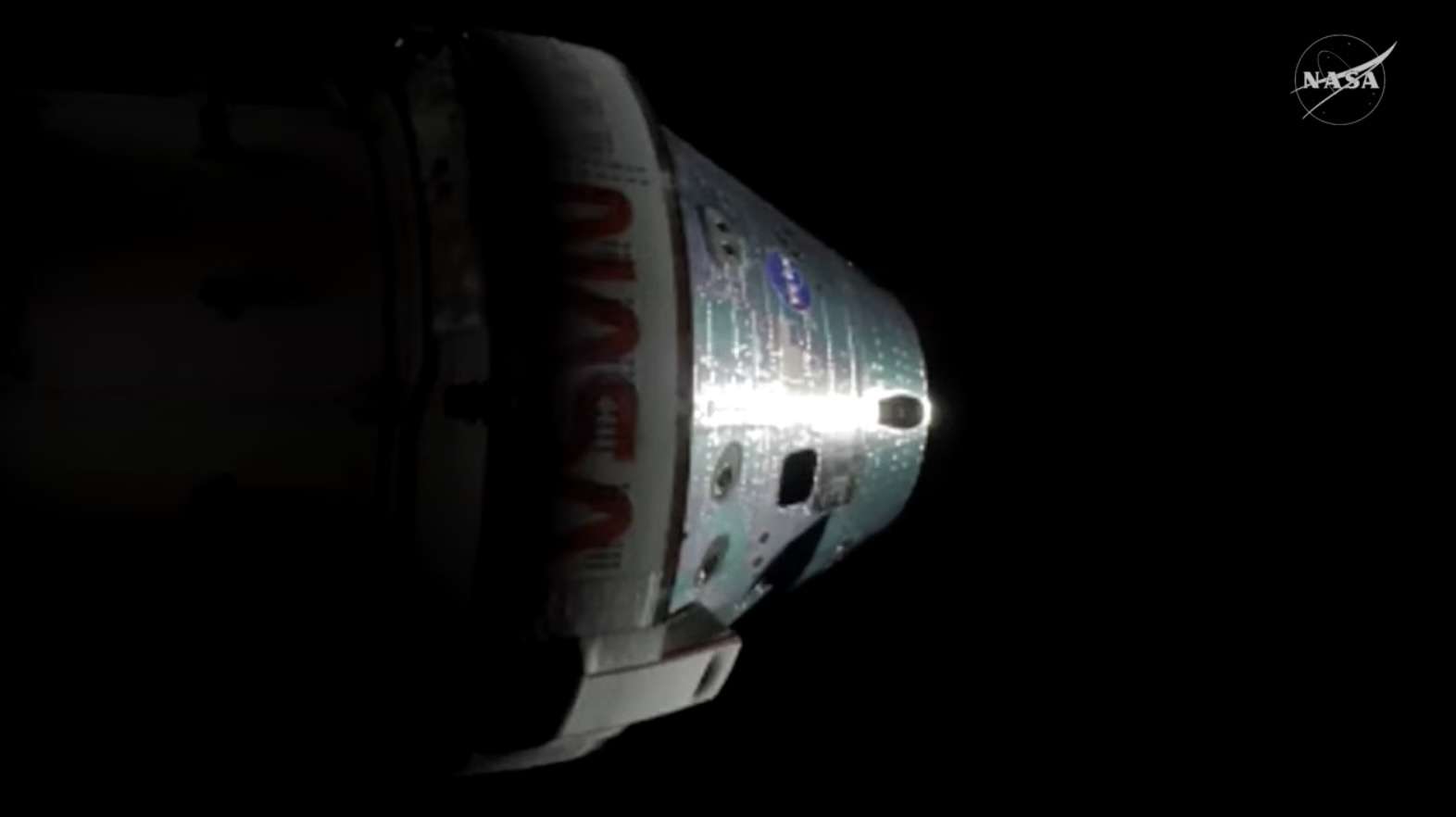
About 49 minutes into the test flight, the SLS rocket’s upper stage fired to put Orion into an elliptical orbit around Earth. A second planned burn by the stage propelled Orion, which the crew named “Integrity,” into a high Earth orbit extending about 46,000 miles above the Earth for about 24 hours of system checkouts. After the burn, Orion separated from the stage, flying free on its own.
The crew then conducted a manual piloting demonstration to test Orion’s handling qualities using the ICPS (interim cryogenic propulsion stage) as a docking target.
At the conclusion of the demonstration, Orion executed an automated departure burn to safely back away from the ICPS, after which the stage performed its own disposal burn and re-entered Earth’s atmosphere over a remote region of the Pacific Ocean.
Prior to its re-entry, four small CubeSats were deployed from SLS rocket’s Orion stage adapter.
Other tasks completed so far include a transition to the Deep Space Network for communications, the crew becoming acclimated to the space environment, completing their first rest periods, performing the first flywheel exercise, restoring the spacecraft’s toilet to normal operations, and configuring the spacecraft for the translunar injection burn.
During a planned lunar flyby on Monday, April 6, the astronauts will take high resolution photographs and provide their own observations of the lunar surface, including areas of the far side of the Moon never seen directly by humans. Although the lunar far side will only be partially illuminated during the flyby, the conditions should create shadows that stretch across the surface, enhancing relief and revealing depth, ridges, slopes, and crater rims that are often difficult to detect under full illumination.
Following a successful lunar flyby, the astronauts will return to Earth and splash down in the Pacific Ocean off the coast of San Diego.
As part of a Golden Age of innovation and exploration, NASA will send Artemis astronauts on increasingly challenging missions to explore more of the Moon for scientific discovery, economic benefits, and to build on our foundation for the first crewed missions to Mars.
Quelle: NASA
+++
Artemis II Flight Day 2: Orion Completes TLI Burn, Crew Begins Journey to the Moon
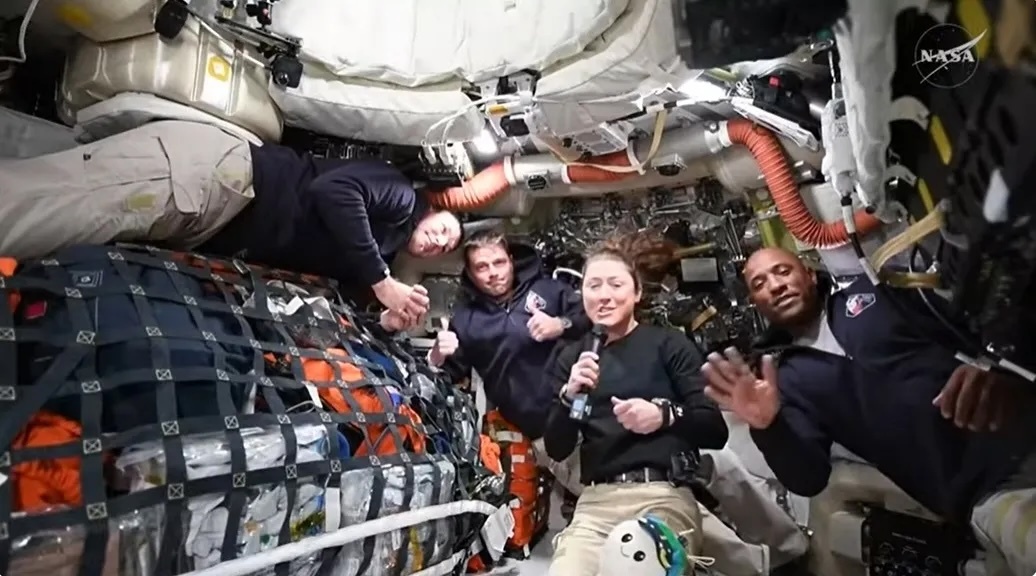
NASA’s Artemis II crew is on the way to the Moon.
After the mission management team polled “Go” Thursday, NASA’s Orion spacecraft fired its main engine for five minutes and 50 seconds beginning at 7:49 p.m. EDT, to successfully complete the translunar injection (TLI) burn, sending the crew in Orion out of Earth orbit and on a trajectory toward the Moon.
Orion’s main engine provides up to 6,000 pounds of thrust, enough to accelerate a car from 0 to 60 mph in about 2.7 seconds. At the time of the burn, Orion’s mass was 58,000 pounds and burned approximately 1,000 pounds of fuel during the firing.
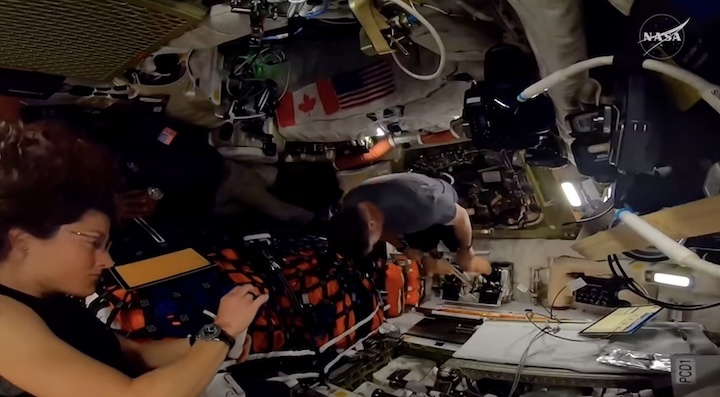
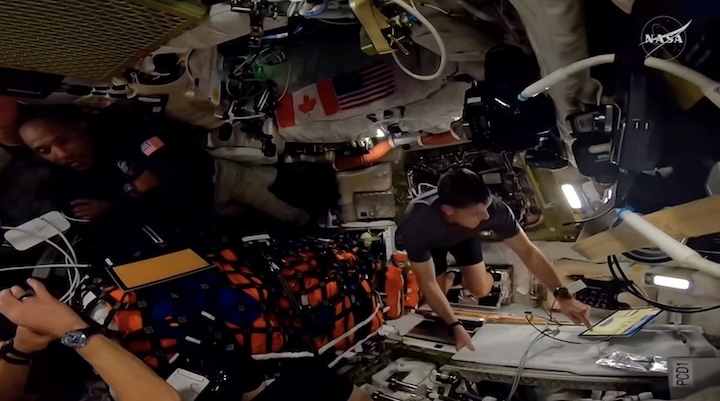
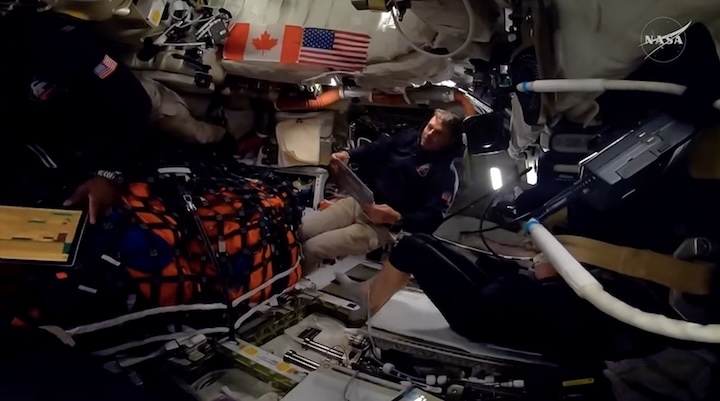
Crew members also are spending time exercising on the spacecraft’s flywheel exercise device. During exercise, teams on the ground monitored the spacecraft’s air revitalization system, which maintains a breathable, comfortable cabin environment for the crew, and assessed how exercise impacts movement of the spacecraft.
The flywheel uses a simple cable‑based mechanism that supports both aerobic exercises like rowing and resistive movements such as squats and deadlifts. Operating much like a yo‑yo, the device provides resistance proportional to the force applied, allowing loads up to 400 pounds. This capability is especially important in deep space, where astronauts do not have access to the extensive exercise equipment aboard the International Space Station. On the station, crews rely on more than 4,000 pounds of exercise hardware spread across roughly 850 cubic feet. In contrast, Orion’s flywheel weighs just 30 pounds and is about the size of a carry‑on suitcase—meeting the strict mass and volume constraints of deep‑space missions while still supporting crew health and reentry readiness.
The crew members – NASA astronauts Reid Wiseman, Victor Glover, Christina Koch, and CSA (Canadian Space Agency) astronaut Jeremy Hansen – have successfully checked out the AVATAR scientific payload.
Engineers also determined that a brief loss of two-way communications between the ground and crew that occurred shortly after the crew reached orbit was due to a ground configuration issue involving the Tracking and Data Relay Satellite system. The issue was rectified quickly with no impact to mission operations.
Lunar Science Team Prepares for Flyby
After the TLI burn that sent Orion on its path to the Moon, the lunar science team began building a Lunar Targeting Plan, a guide to what the crew will look at on the Moon’s surface during its approximately six-hour observation on Monday, April 6.
The targeting plan will include documenting features that can help scientists understand how the Moon and solar system formed, such as craters, ancient lava flows, and cracks and ridges created as the Moon’s outer layer slowly shifted over time.
One feature that will be added to the plan is a solar eclipse, which will last for nearly an hour toward the end of the flyby window. During the eclipse, the Sun will be hidden from view as it moves behind the Moon from the perspective of Orion. The crew will see a mostly dark Moon at this time — an opportunity for them to look for flashes of light from meteoroids striking the Moon’s surface, dust lofting above the edge of the Moon, and deep space targets, including planets. While the Sun slides behind the Moon, the crew will observe the solar corona, the Sun’s outermost atmosphere, while it’s visible.
View the latest imagery from the Artemis II mission on our Artemis II Multimedia Resource Page. Please follow @NASAArtemis on X, Facebook, and Instagram for real-time updates. Live coverage of the mission is available on NASA’s YouTube channel.
Quelle: NASA
+++
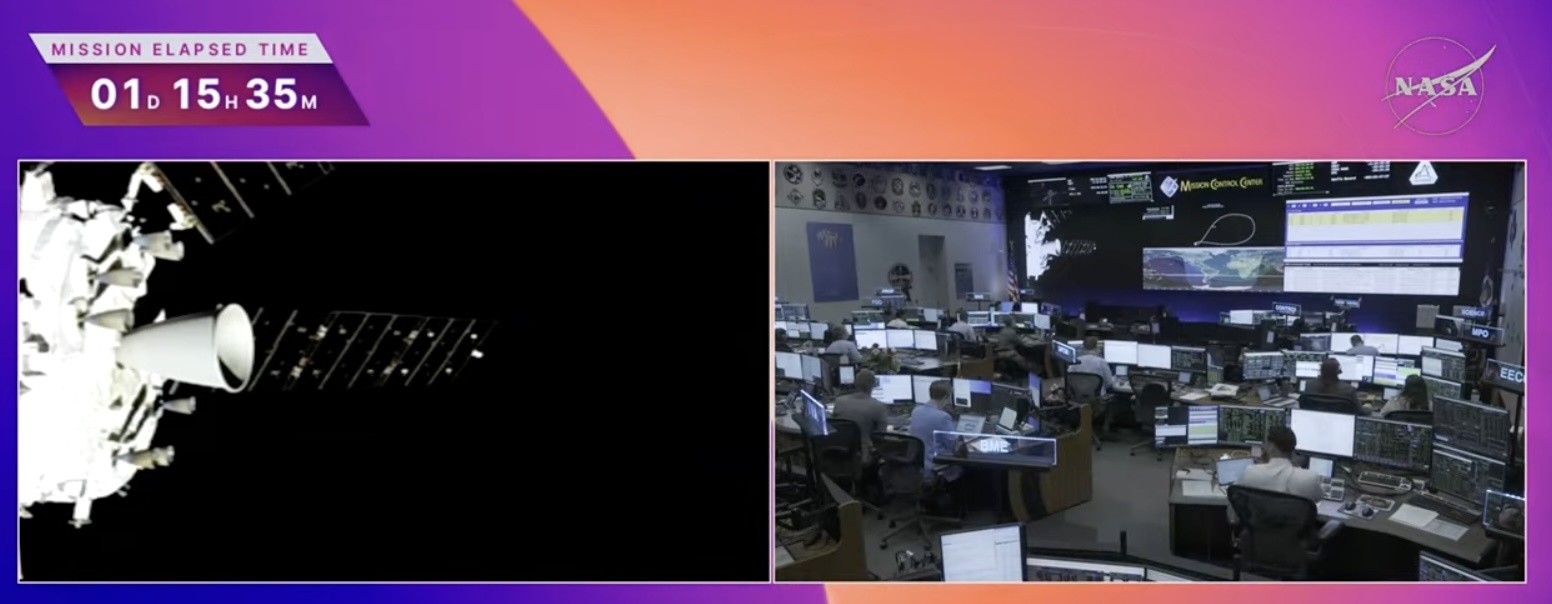

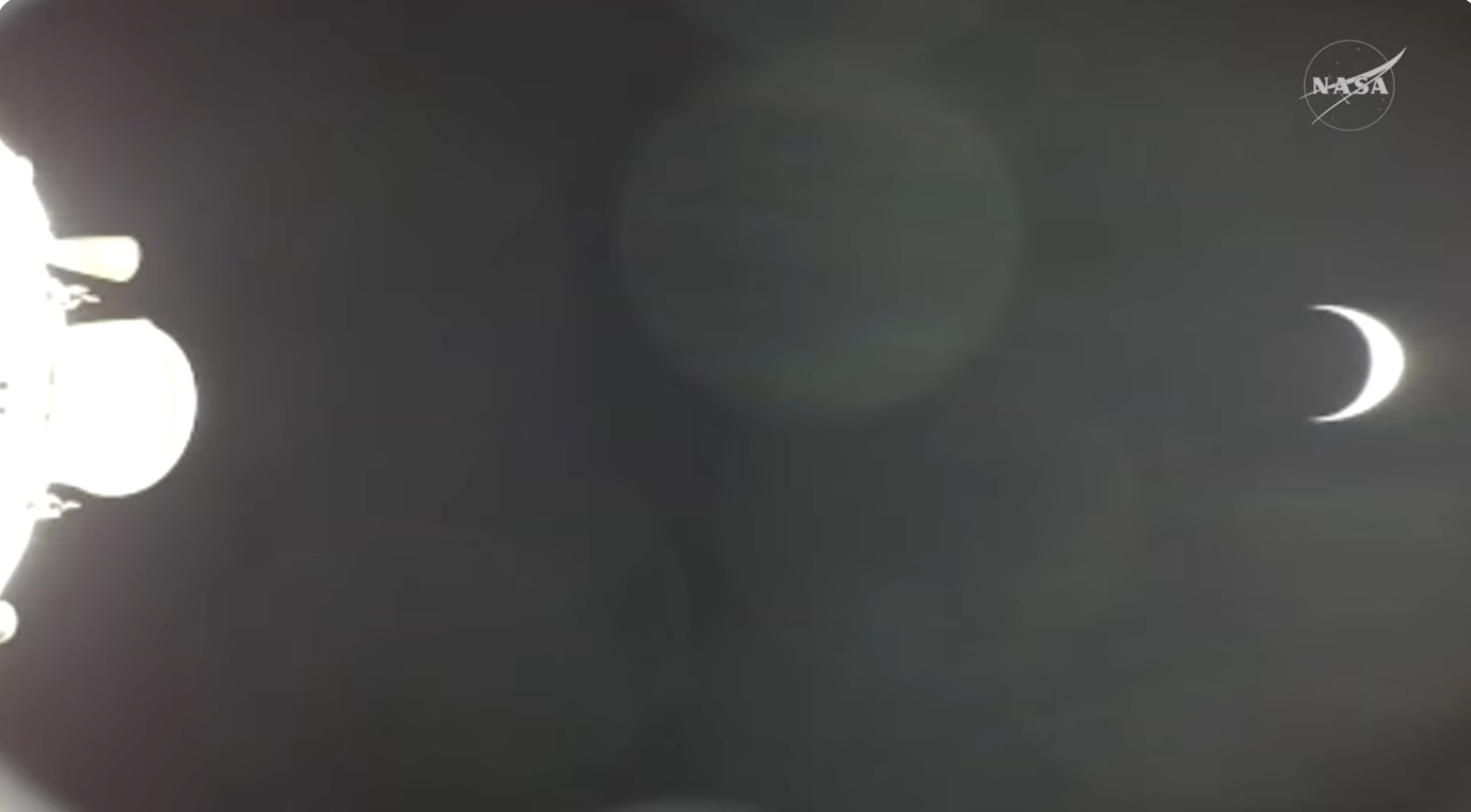
Quelle: NASA
----
Update: 4.04.2026
.
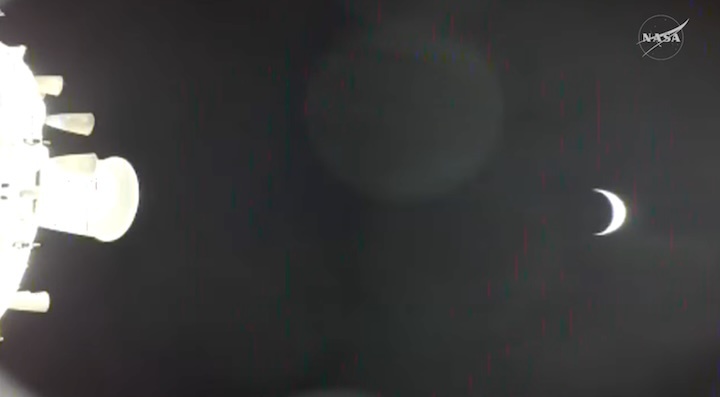
Crew schickt erste Bilder

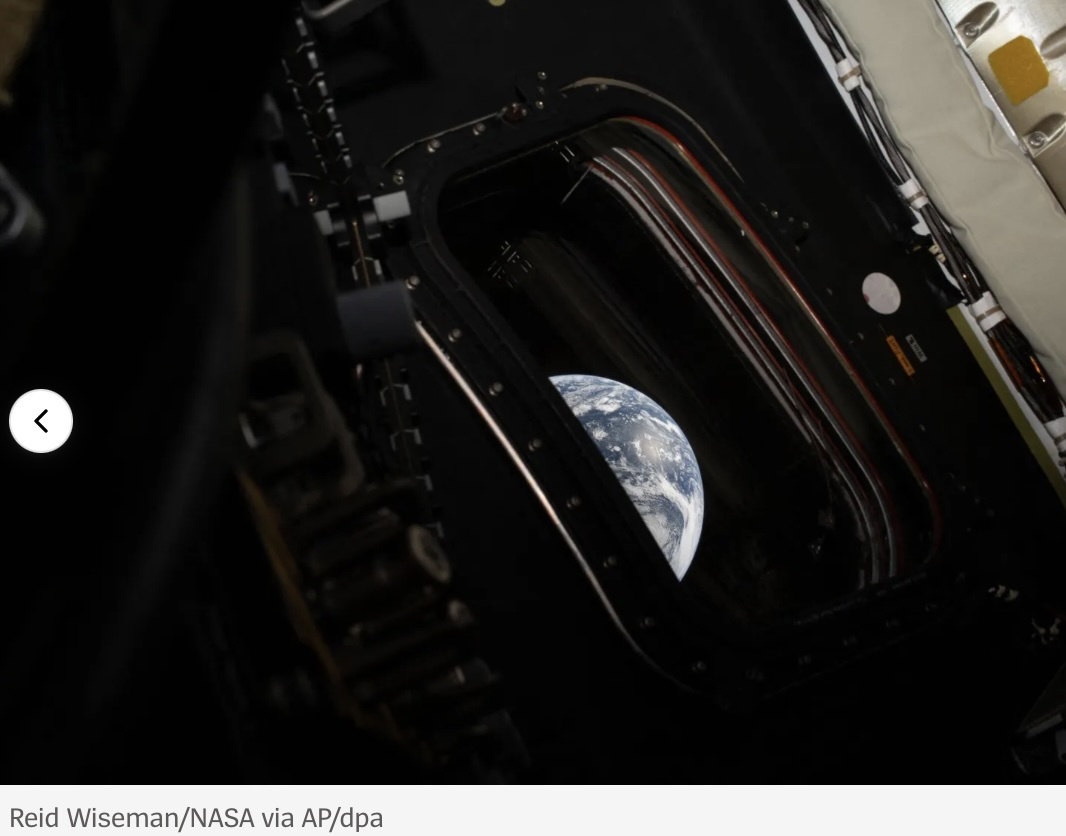

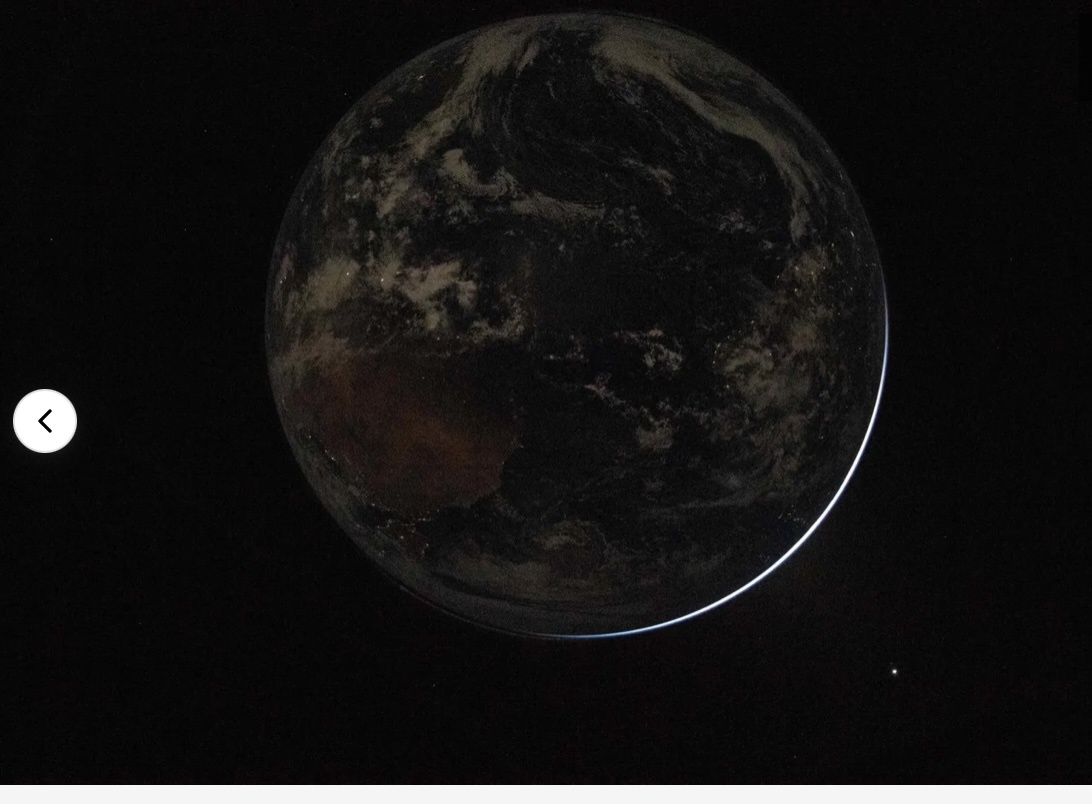
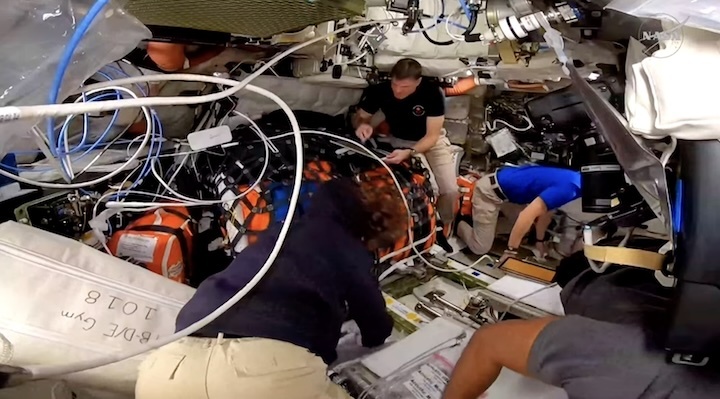
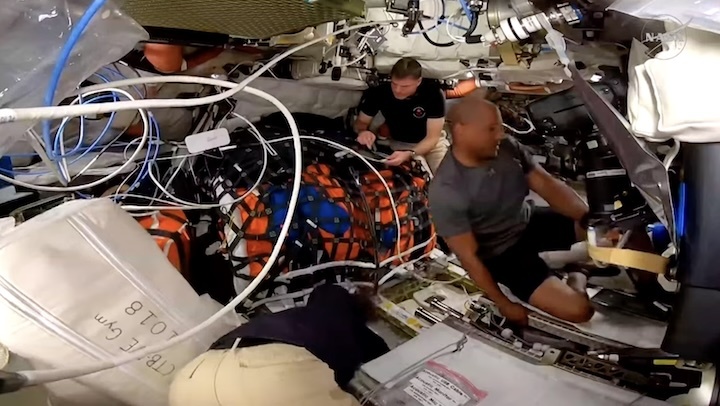
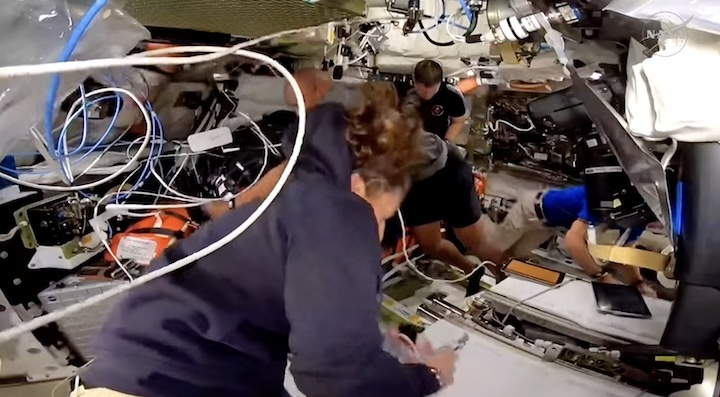
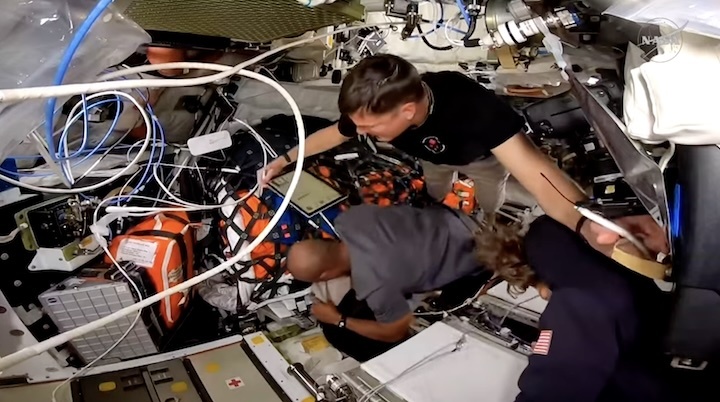
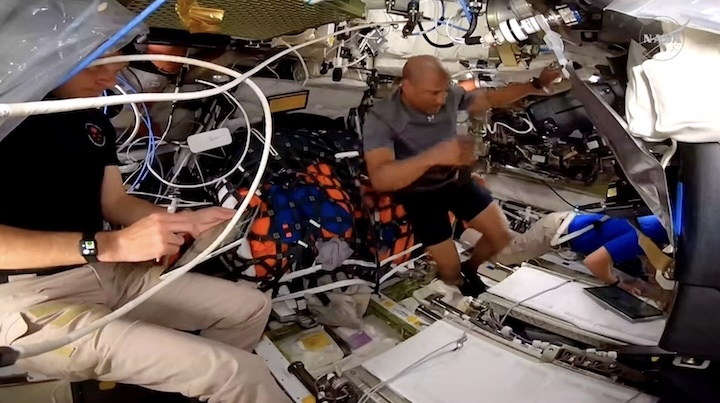
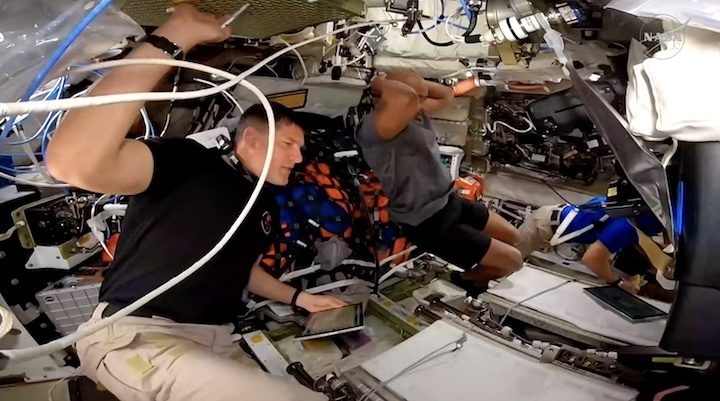
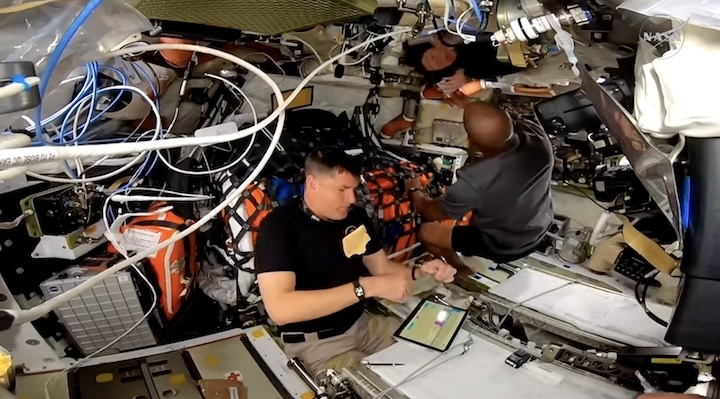
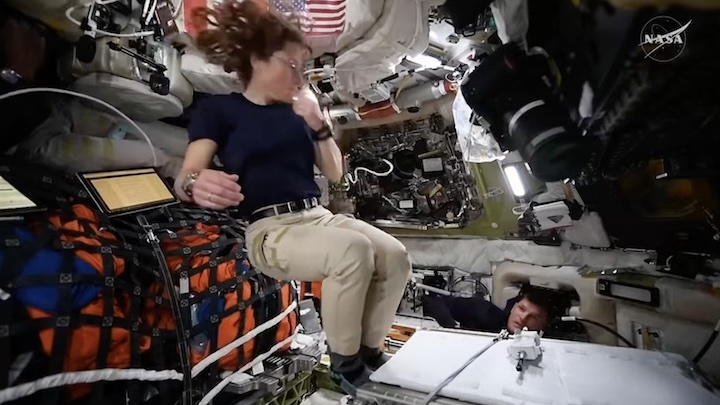
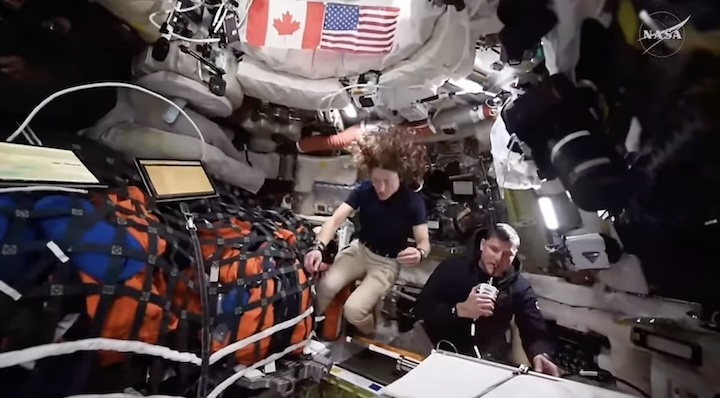
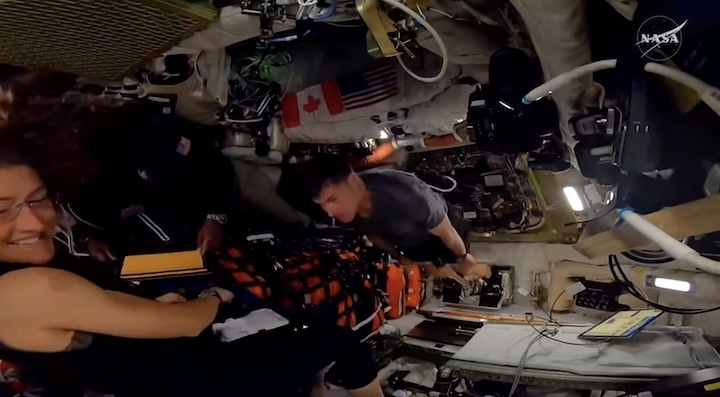
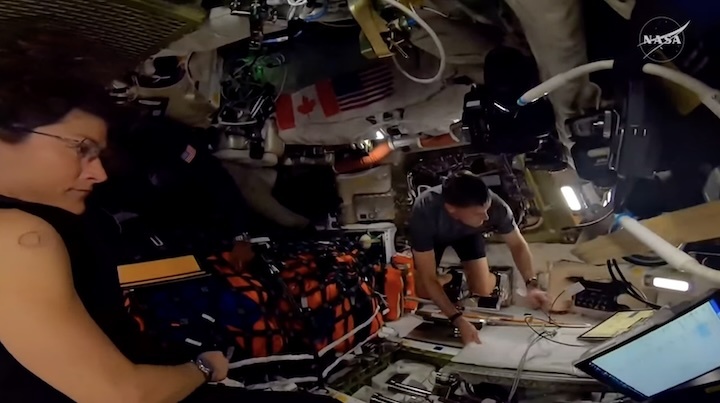
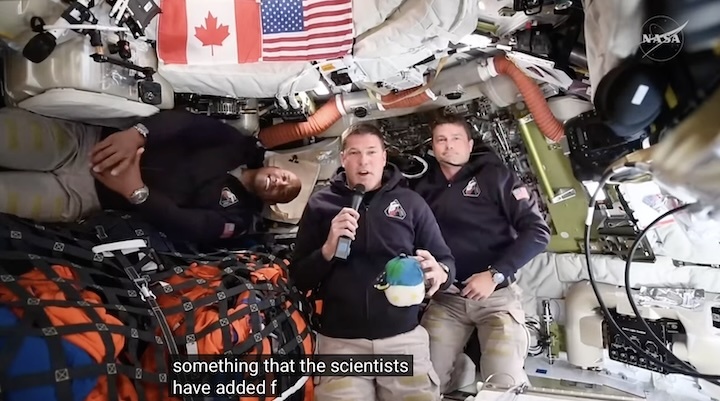
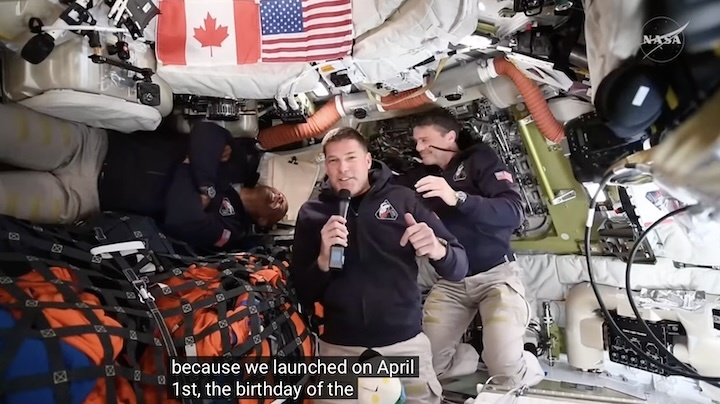
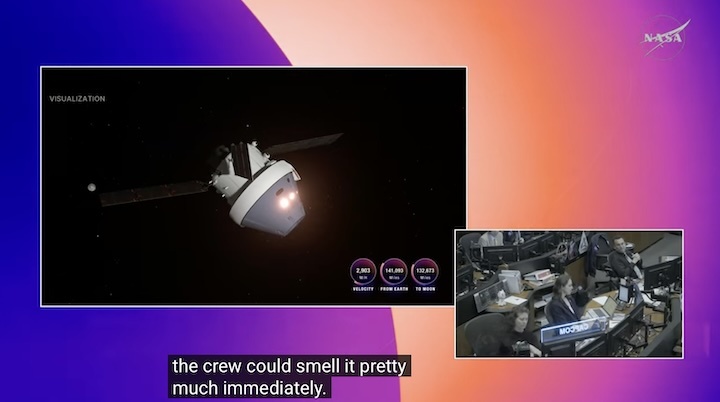
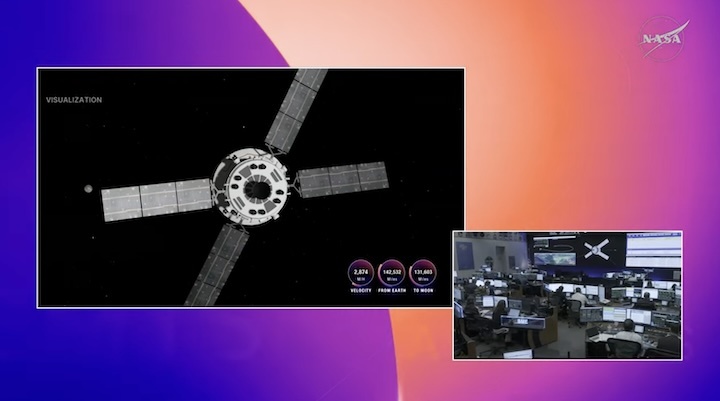
NASA’s Artemis II Crew Launches to the Moon
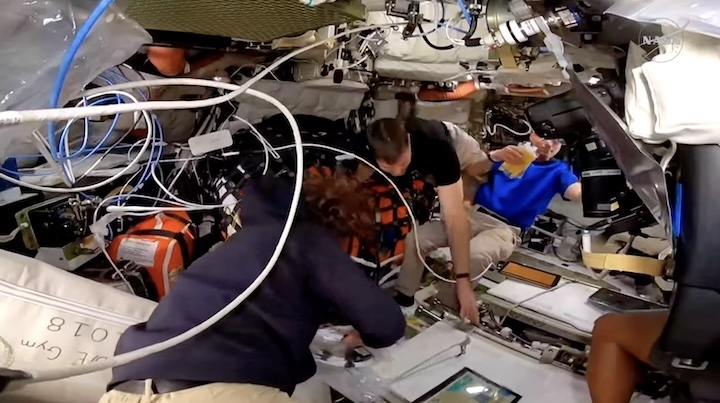

Quelle: NASA