
12.02.2026
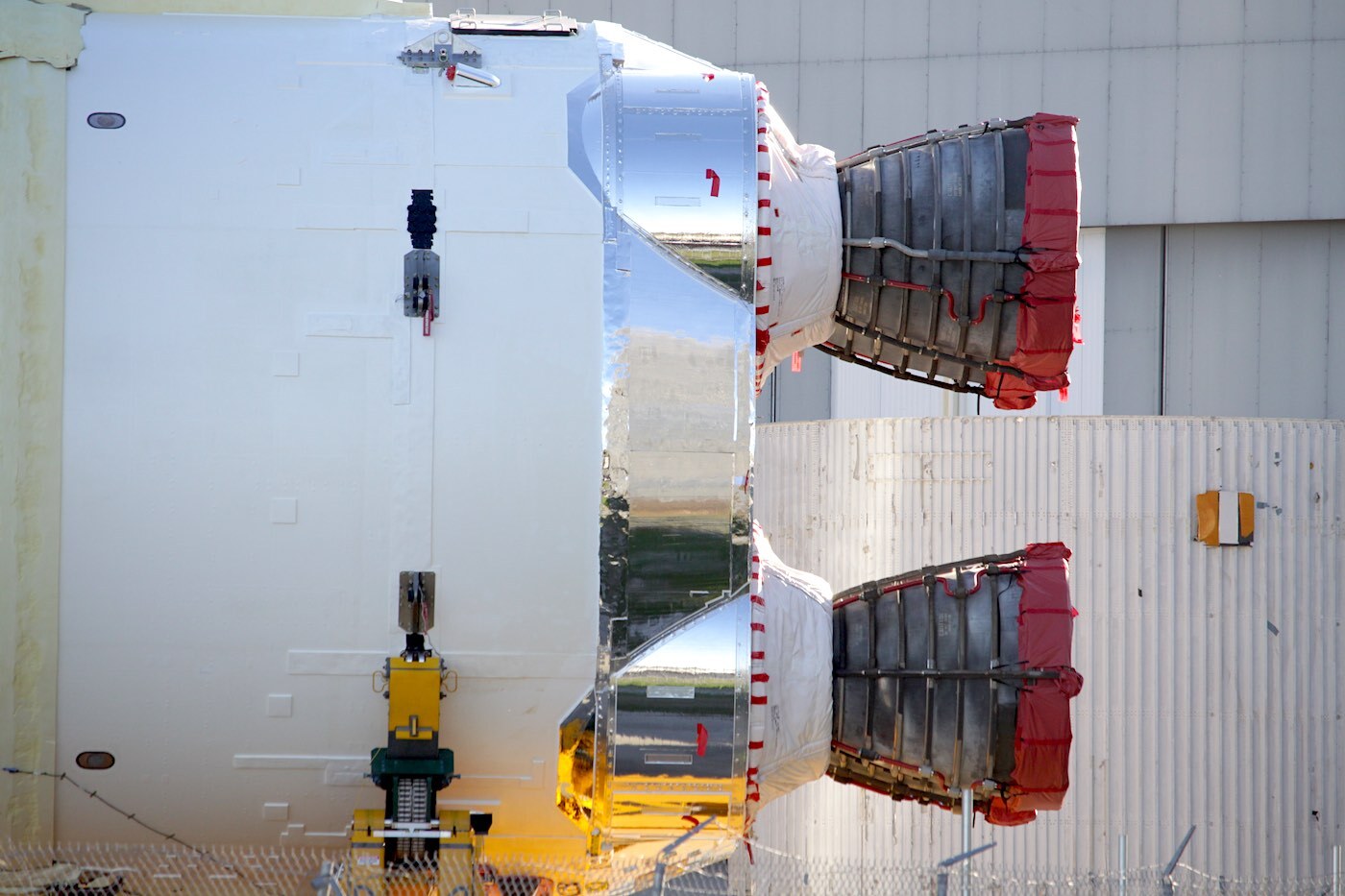
An issue that sprung up during NASA’s prelaunch testing for its first two Artemis lunar missions is a well-known phenomenon that also plagued many space shuttle launches: leaky hydrogen fittings and seals on the launch pad infrastructure.
NASA ruled out a launch of Artemis II this month after multiple such leaks arose while fueling up the SLS rocket during a Feb. 3 wet dress rehearsal of a countdown to launch. Now, the rocket is set to lift off no earlier than March from Launch Complex 39B in Florida, carrying four astronauts who are to loop around the moon in preparation for a landing on the next mission.
As of Sunday, technicians had removed seals around two supercooled liquid hydrogen propellant lines in the tail service mast umbilical that runs from the base of the rocket’s mobile launch platform to the main tank in its core stage, and NASA engineers are analyzing those seals, NASA said in a blog post.
“They’ve made progress in changing out a few seals, and they’re doing some testing on those seals,” NASA’s Steve Stich, program manager of NASA’s Commercial Crew Program, said during a Monday press conference.
According to the blog post, NASA plans testing at Stennis Space Center in Mississippi, “to evaluate additional dynamics of the [rocket and ground-side interface] plates. Engineers are reviewing options to test the repair work prior to the next wet dress rehearsal to ensure the seals are performing as expected.”
NASA has previously described such seals as being made of Teflon polymer, which, unlike metal, stays somewhat pliable and forms a seal at the minus 253 degrees Celsius (minus 423 Fahrenheit) required for the rocket’s hydrogen propellent to remain liquid. At such temperatures, metal and many other materials often become brittle and are subject to cracking or shrinking.
Leaks with the same umbilical occurred numerous times during prelaunch rehearsals for the uncrewed Artemis I flight in 2022, delaying that mission by several months while NASA worked on a solution. NASA ultimately replaced the seals and varied the flow of the supercooled hydrogen during core stage fill-up to allow the seals to warm a bit and “reseat,” meaning realign.
Hydrogen-related delays were common during the space shuttle era as well, according to a 2008 NASA technical report. “Ground crew veterans at Kennedy Space Center still talk about what they call ‘the summer of hydrogen’ — the long, frustrating months in 1990 when the shuttle fleet was grounded by an elusive hydrogen leak,” wrote Philip Weber, who is now the senior tech integration manager for Ground Systems Development and Operations at NASA’s Kennedy Space Center.
The problem, Weber recounted, turned out to be that the company supplying the seals had been testing them with liquid nitrogen, a larger molecule that remains liquid at higher temperatures than hydrogen. At the time, NASA said it resolved the issue by replacing and upgrading faulty seals and refining sealing techniques such as correcting improper torque on bolts. That’s also when NASA updated hydrogen gas dispersion and sensing.
Asked for an interview about the latest problems, NASA’s communications staff acknowledged the agency’s long history with hydrogen, but noted the differences between shuttle and SLS, which include “new ground systems [that] have new interfaces like the quick disconnects.” These fittings on the hydrogen fueling system are designed to fill the rocket quickly before launch and detach quickly.
The NASA spokespeople noted “it is not unusual to have issues with the use of these systems when they are exposed to extreme cryogenic temperatures.”
NASA made a number of changes after Artemis I, many of which were effective, launch director Charlie Blackwell-Thompson said during a press conference last week about the Artemis II leaks. For instance, the agency changed the design of a “replenish valve” and a “flex hose” in the quick disconnect interfaces, both of which had contributed to Artemis I leaks, and “and we did not see any hydrogen leaks there” during the Feb. 3 wet dress.
The prevalence of cryogenic hydrogen leaks, especially in space applications, have been a long-time research focus in academia but require more research, said Jacob Leachman, a professor of mechanical engineering and director of the Hydrogen Properties for Energy Research Center at Washington State University.
Hydrogen is challenging from the get-go because, as the smallest element, it can wiggle into tiny gaps or cracks. But that only accounts for part of the difficulty, he said. The bigger challenge is predicting how any material in such a system behaves at cryogenic temperatures — an area he views as chronically underfunded.
“You could say there hasn’t been proper investment into fundamental science and research and liquid hydrogen training in this country for decades. And that might be part of the issue,” Leachman told me.
Pending the results of the seal analysis, NASA plans to conduct a second wet dress for Artemis II, with a modified sequence of events focused on fueling. The outcome of that test will determine whether the March launch opportunities — the first of which is March 6 — will be feasible.
Quelle: AEROSPACE AMERICA