
3.02.2026
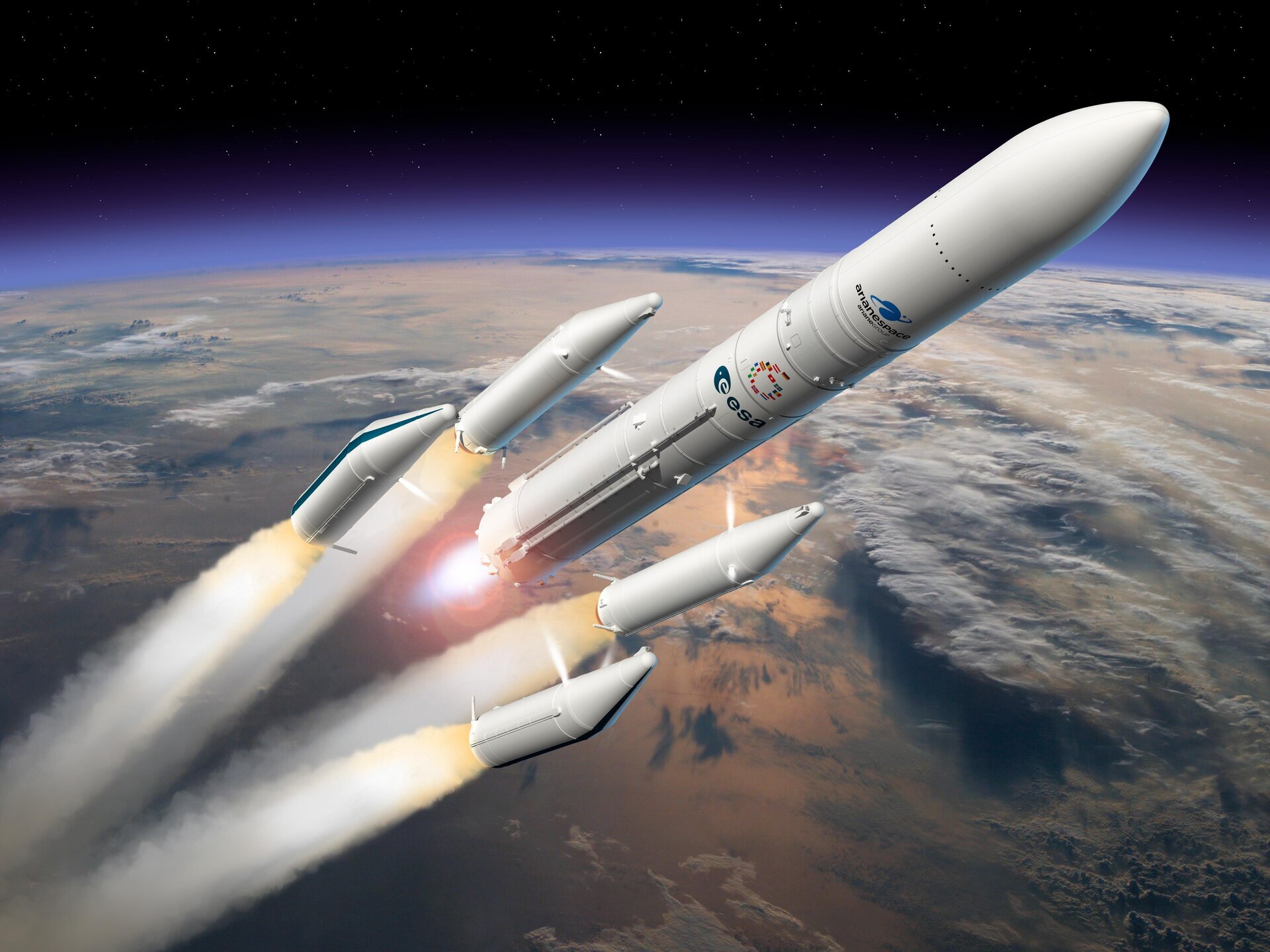
First launch of Ariane 6 with four boosters
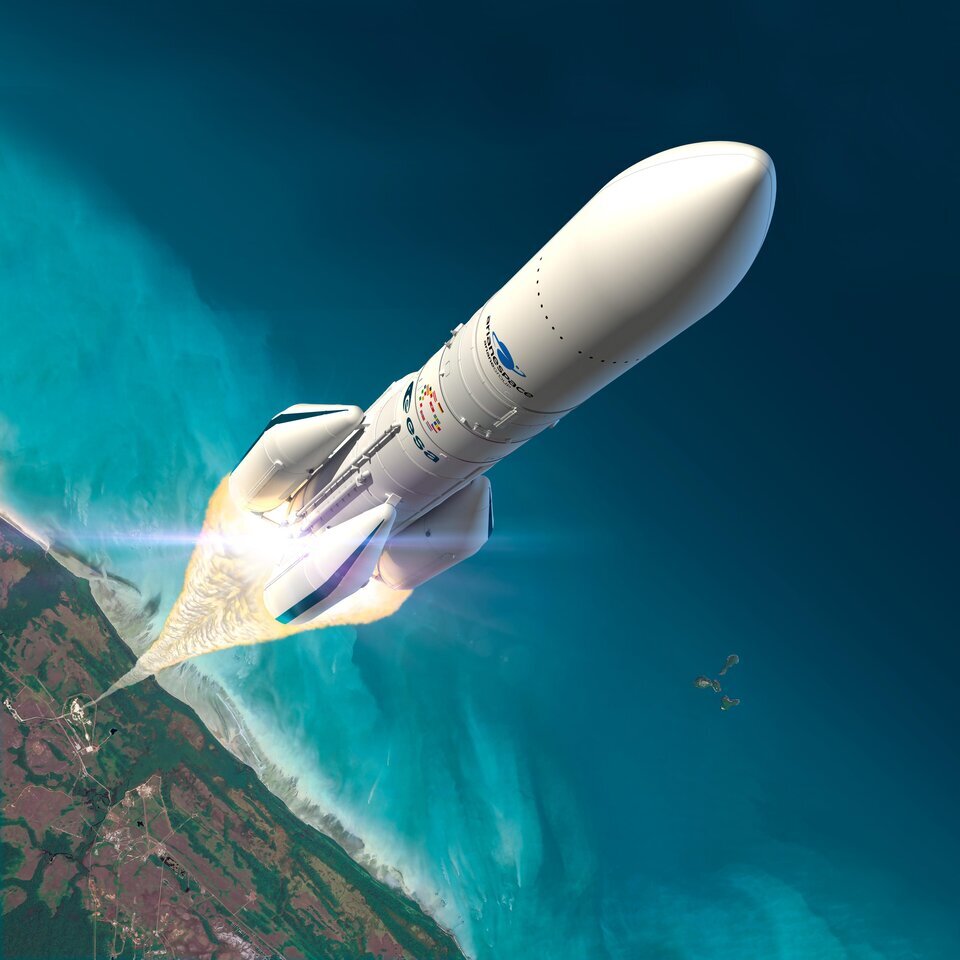
Set for 12 February between 16:45–17:13 GMT (17:45–18:13 CET, 13:45–14:13 local time), Europe’s most powerful rocket is preparing for liftoff – now with even more power. Flight VA267 will see Ariane 6 take 32 satellites for Amazon’s Leo constellation to low-Earth orbit. This will be the sixth flight for Ariane 6, and the first with four boosters to propel the rocket off the launch pad at Europe’s Spaceport in French Guiana.
Watch the launch live starting half an hour before liftoff on ESA web TV. The flight will take 114 minutes from liftoff to separation of the last satellites.
Most powerful version so far

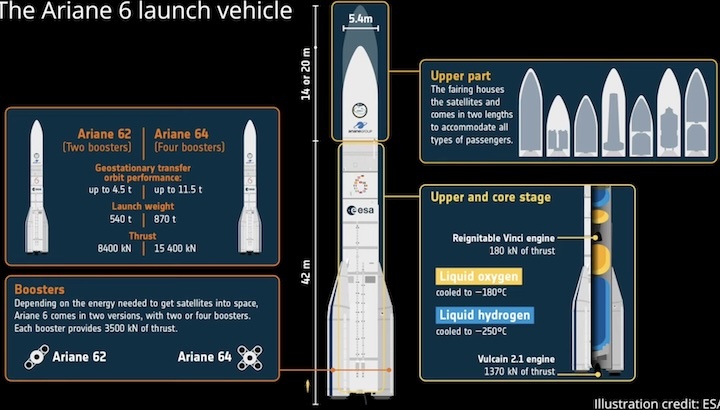
Ariane 6 is a three-stage launch vehicle with the boosters, main stage and then upper stage expending their propellant to reach orbit. The number of boosters and length of the tip of the rocket, called the fairing, can be adapted per mission.
Ariane 6 in its four-booster configuration doubles the rocket’s performance compared to the two-booster version that has flown five times including the inaugural flight in 2024. The P120C boosters used by Ariane 6 are one of the most powerful one-piece motors in production in the world. Flying with four boosters takes Ariane 6 to a whole new class of rockets. With the extra thrust from two more boosters Ariane 6 can take around 21.6 tonnes to low Earth orbit, more than double the 10.3 tonnes it could bring to orbit with just two boosters. The flight will demonstrate and prove the performance of four boosters working together with the main stage in real flight.
Standing tall

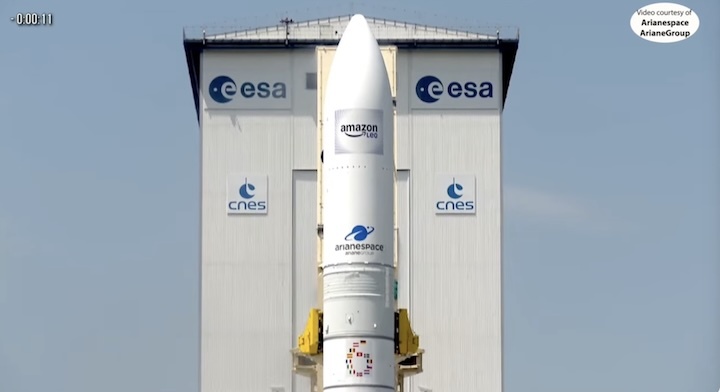
For this flight, Ariane 6 will be using the long fairing that houses the 32 Leo satellites inside and protects them from the elements until they reach space. The fairing is 20 m tall and 5.4 m diameter and could carry four giraffes standing on each other’s shoulders.
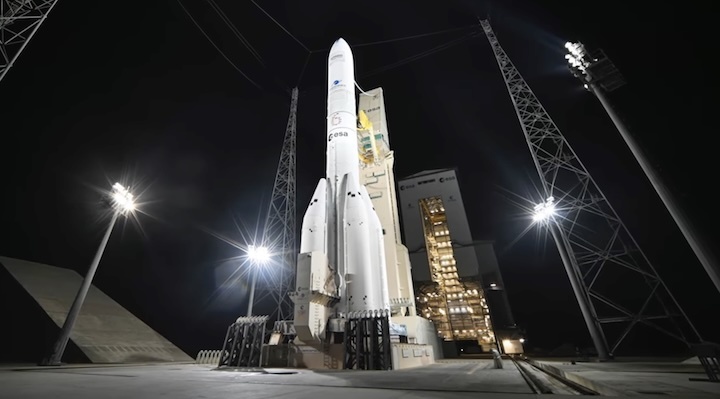
As this is the first flight with a long fairing, it makes this launch the tallest Ariane 6 so far. Once assembled on the launch pad at Europe’s Spaceport in French Guiana it will be 62 m high, roughly the same as a 20-storey building.
This flight will demonstrate Ariane 6 in its most powerful version. For the development of Ariane 6, the European Space Agency works with an industrial network in 13 European countries, led by prime contractor and design authority ArianeGroup. French space agency CNES manages the range operations at Europe’s Spaceport in French Guiana. Arianespace is the launch service provider.

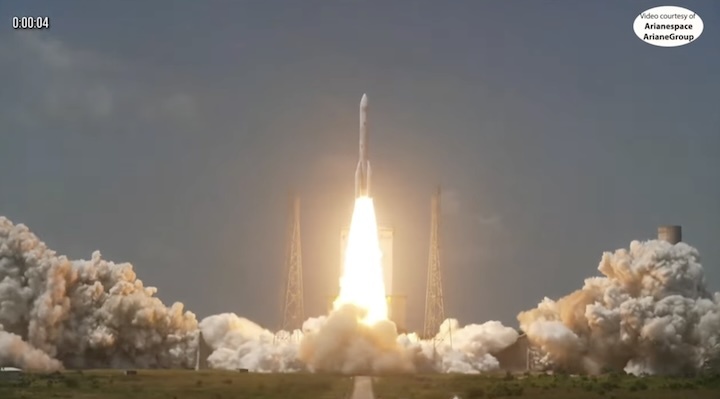
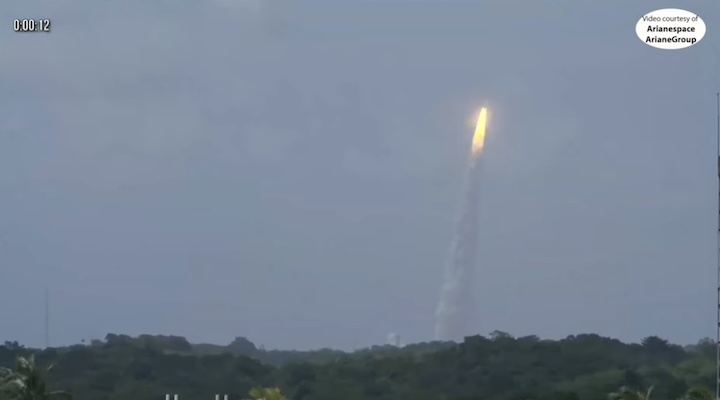
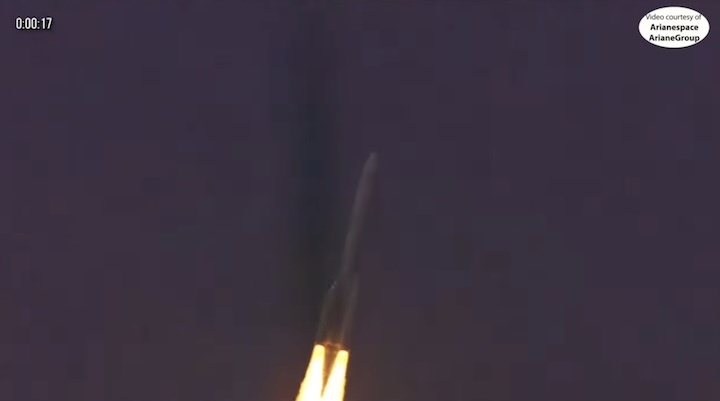
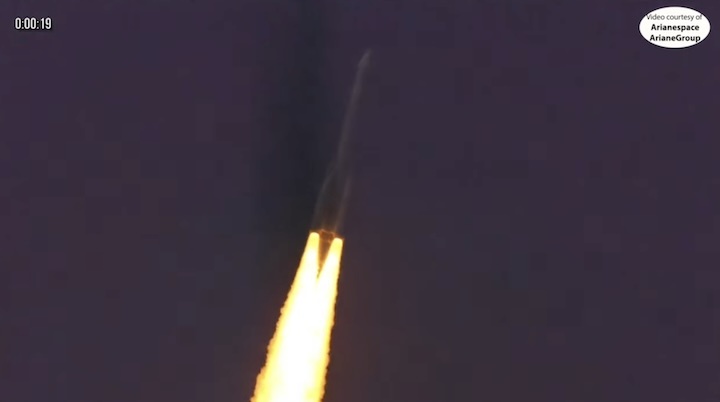
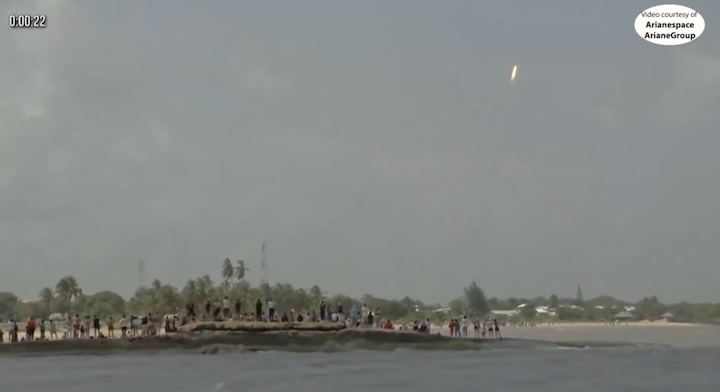
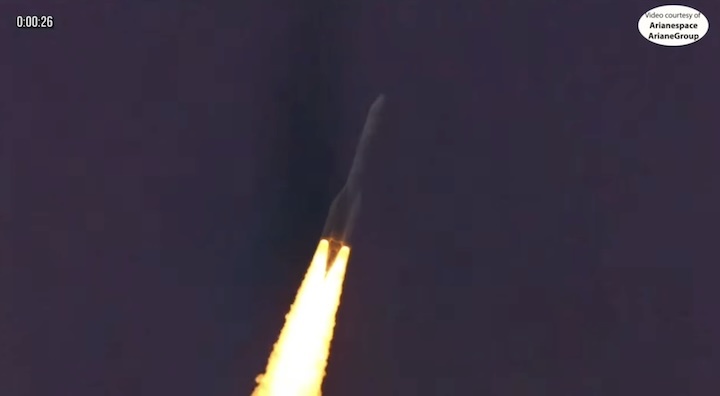
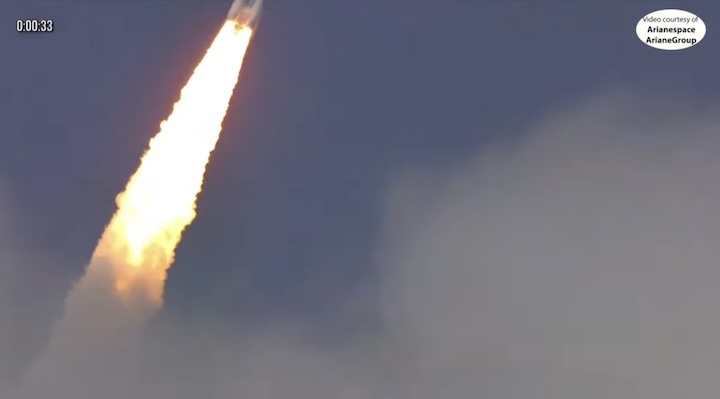
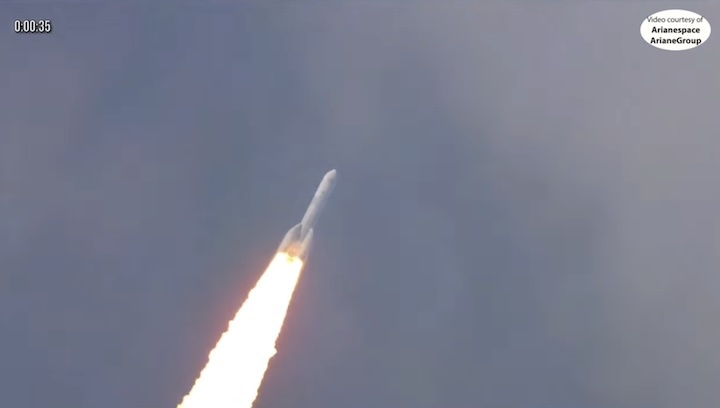
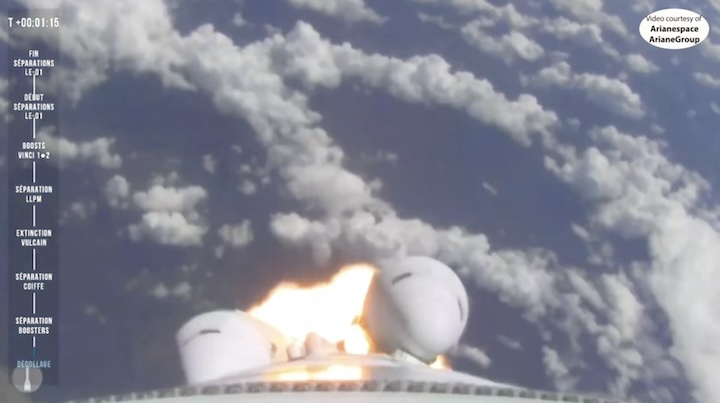
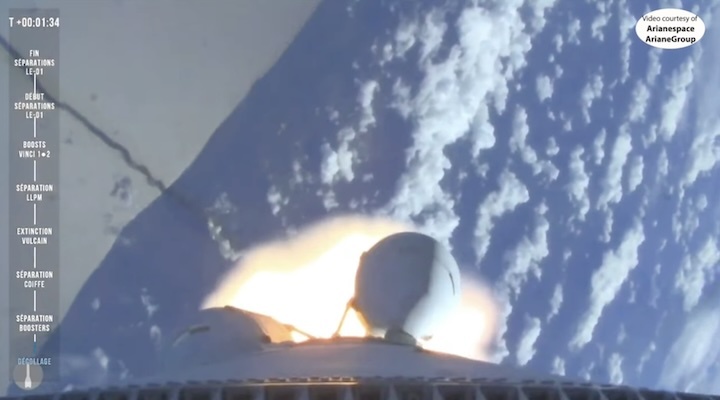
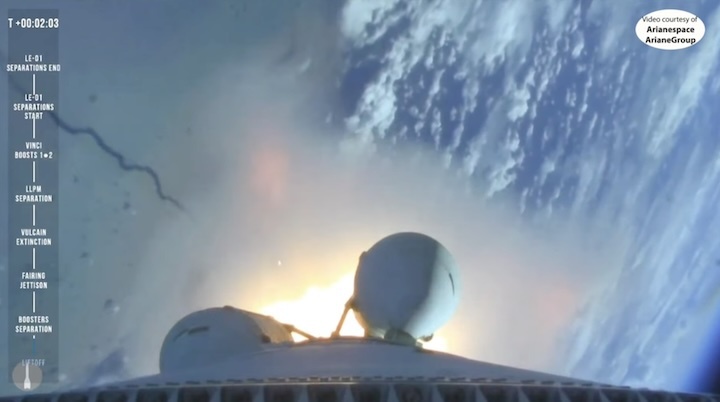
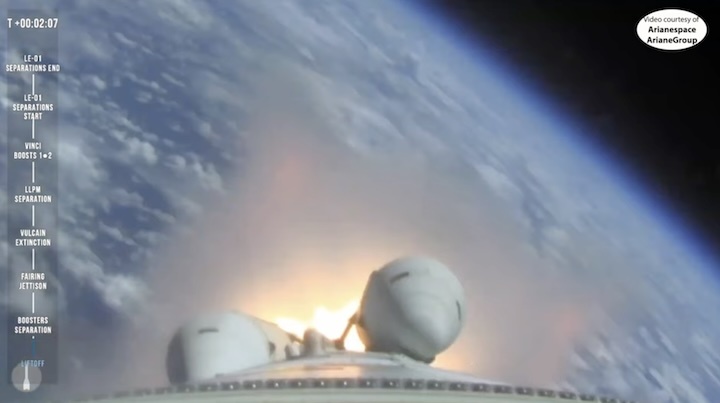
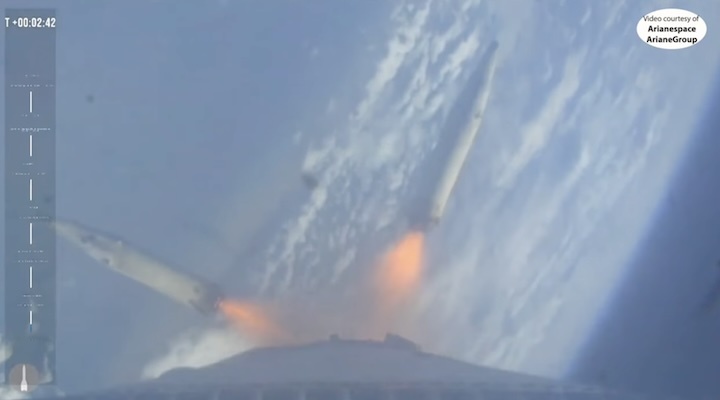
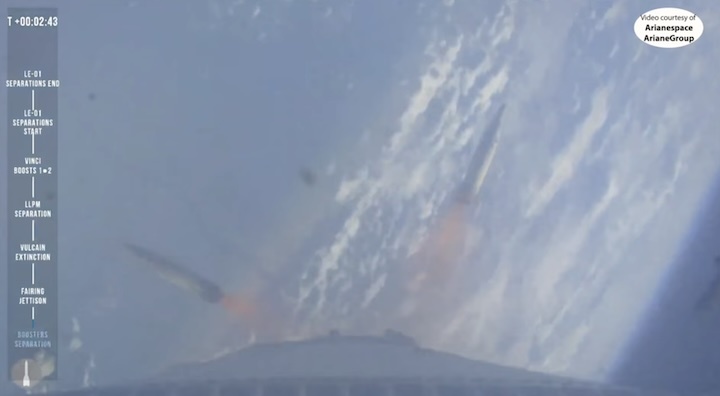
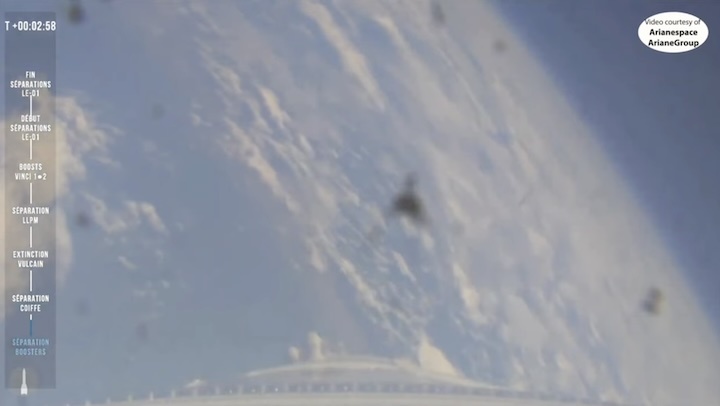
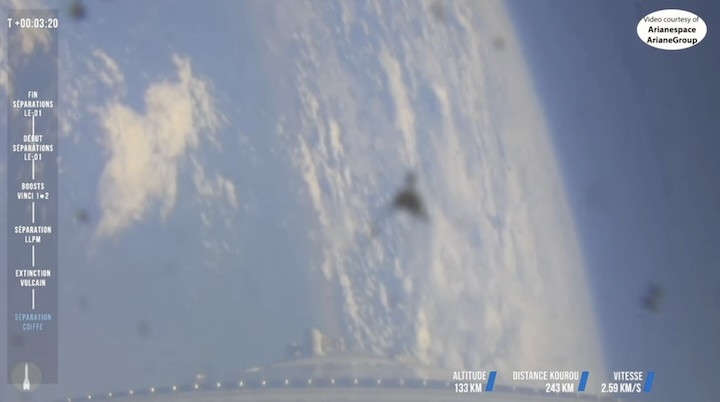
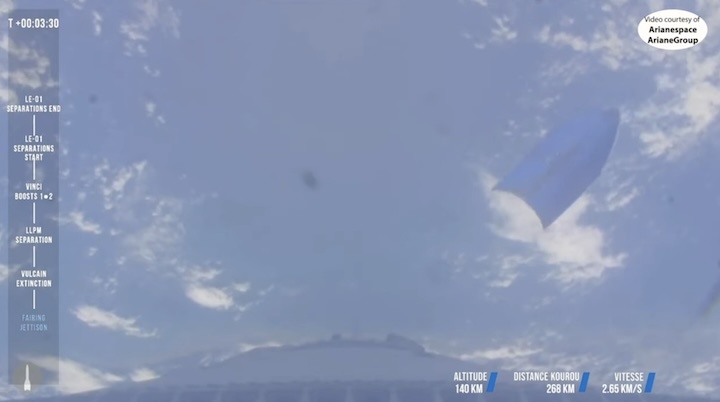
Arianespace Debuts Ariane 6 Heavy With Amazon Leo Deployment
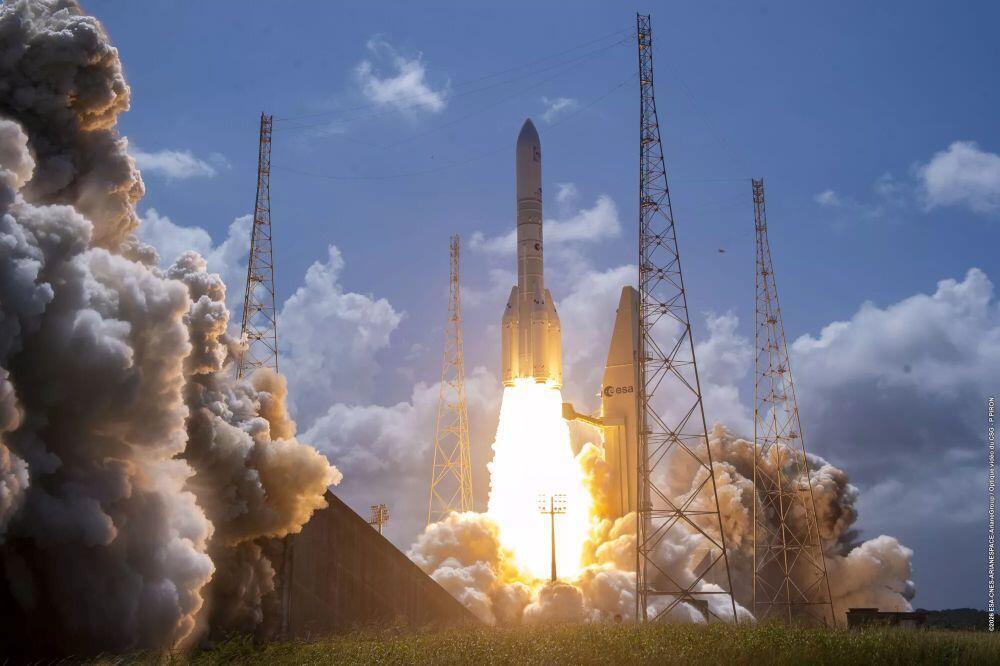
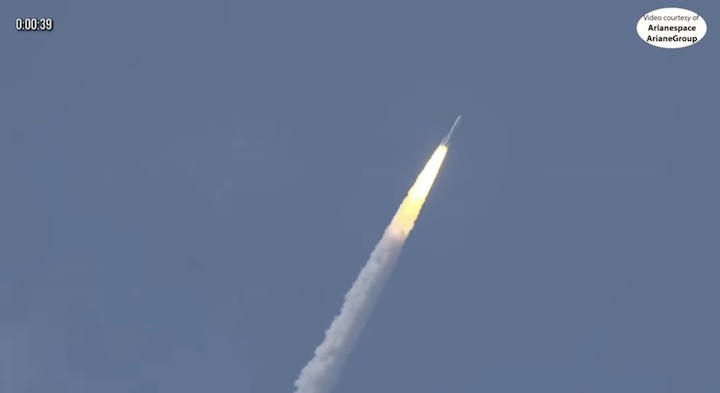
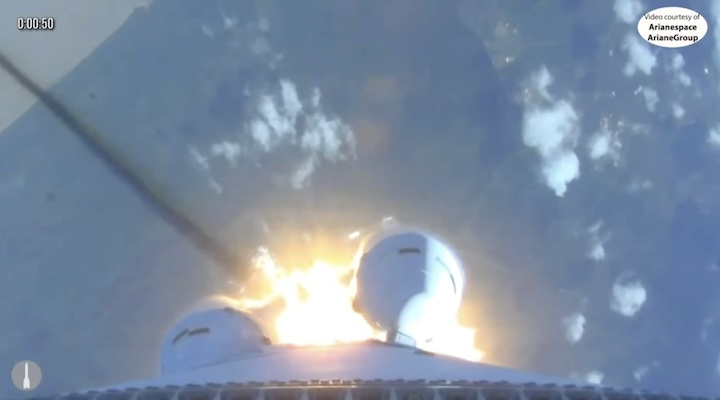
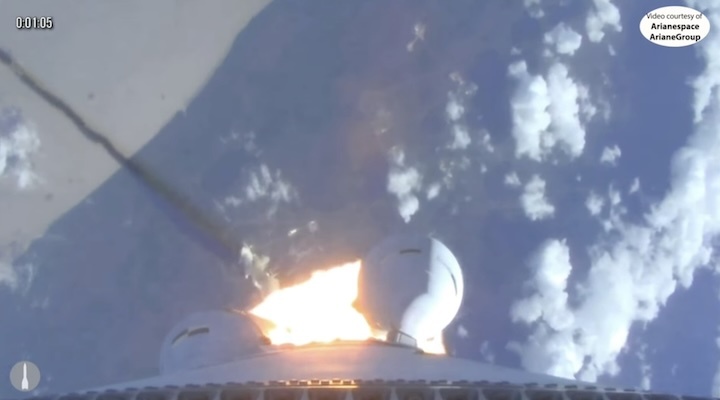
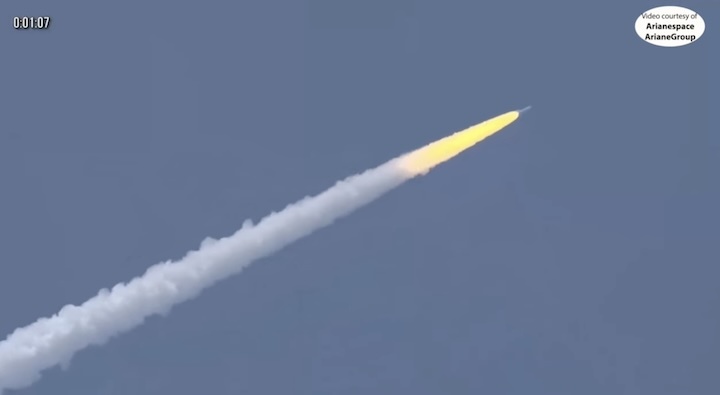
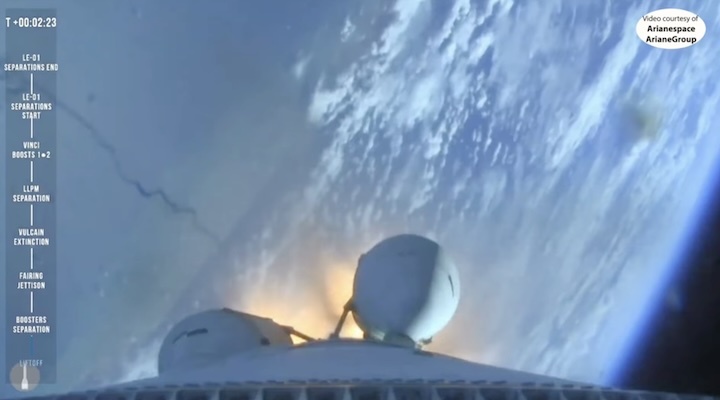
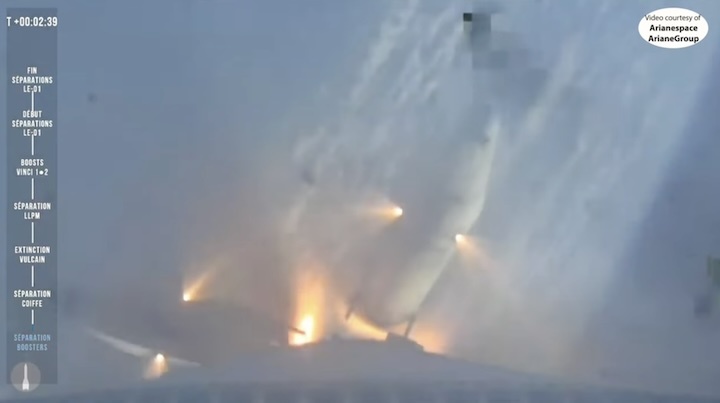
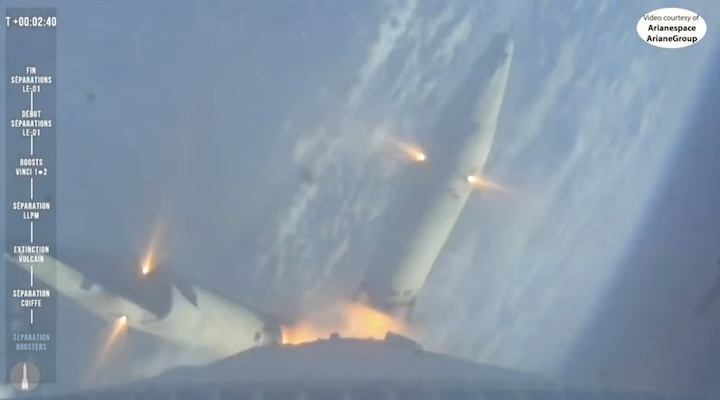
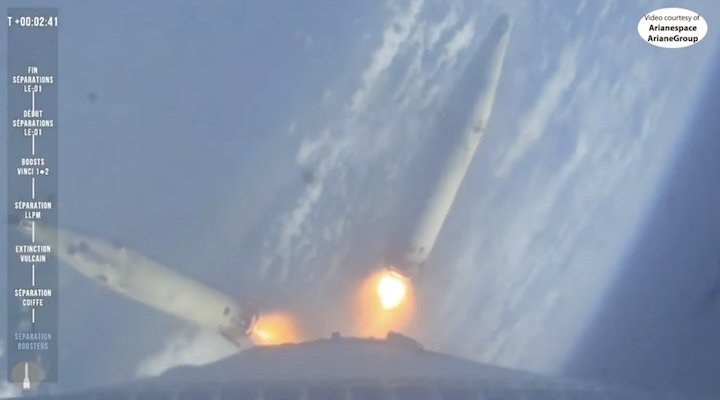
KOUROU, French Guiana—Arianespace achieved a double-first with the inaugural flight of the Ariane 64 launcher configuration and satellite deployment for its highest-profile commercial customer, Amazon.
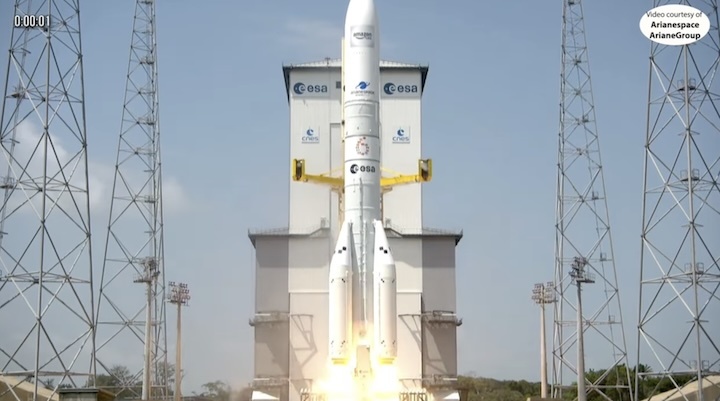
The Ariane 6, sporting four rather than only two P120C boosters, took off from the European spaceport here at 11.45 a.m. EST on Feb. 12. It began deploying the 32 Amazon LEO satellites from the Beyond Gravity-furnished dispenser over a 20-min. period about 90 min. later. The satellites are due to operate in low Earth orbit at around 465 km (289 mi.).
“All 32 Leo satellites are operating nominally in space,” Amazon said a few hours after the flight.
The VA267 mission marked the sixth overall flight for an Ariane 6 and the first for the roughly 21.6-metric-ton payload capacity configuration that is more than double the 2-booster Ariane 62 version. The rocket featured a larger 20-m-tall fairing to accommodate the satellites.
“It was a highly complex mission, the first constellation, the first Ariane 64, the first commercial flight,” Arianespace CEO David Cavaillolès told reporters. It was also the first nongovernmental Ariane 6 launch and one of seven-eight planned throughout 2026.
The flight from the Amazonian region and designated Leo Europe 1 by the customer was the first of 18 Amazon booked with Ariane 6 to build out its broadband satellite constellation that aims to rival SpaceX’s Starlink. It is Amazon’s eighth constellation deployment launch and first using a heavy rocket.
Amazon plans between four to five Ariane 64 launches this year and around 20 overall depending on launch cadence. The next launch should come soon, Cavaillolès said. “Starting today, we’ll prepare the next launch” due before the summer.
With the launch, Amazon now has more than 200 satellites in orbit with a plan to deploy 3,232 spacecraft. It has spent more than $10 billion on the system and has launch commitments through early 2029, it has said.
If launches in the coming months run at pace, Amazon is looking to begin offering some service in the first half of the year. The U.S., Canada, UK, Germany and Argentina are among the early markets.
Still, the company late last month asked the U.S. Federal Communications Commission for schedule relief from a deadline of deploying around 1,618 satellites, or half of the original constellation size, before August 2026, projecting only 700 satellites deployed at the time.
Delays with launch vehicles, including Ariane 6, United Launch Alliance’s Atlas V and Blue Origin’s New Glenn, have contributed to delays to deploying Amazon Leo, the e-commerce giant argued, adding it completed only seven of 20 planned launches last year. It has asked for a 24-month extension of the interim deadline.
“Amazon Leo’s scaled-up manufacturing capacity of up to 30 satellites per week and secured launch manifest of 102 launches from four providers demonstrate a confirmed ability to meet the required 1,618 satellites well before the proposed July 30, 2028, deadline,” the company said, suggesting it would reach the ultimate deadline early.
It plans more than 30 launches in 2027 and beyond.
Despite the slower-than-planned initial rollout of Amazon Leo, the FCC approved the company to expand the current system and deploy its second-generation satellites. The FCC is allowing the company to increase the constellation size to more than 7,000 spacecraft and add spectrum. The approval also will add polar coverage to Amazon Leo, the company said Feb. 10.
That constellation expansion will drive demand for more launches. Cavaillolès would not comment on any talks with Amazon on further Ariane 6 orders. The customer feedback from the first mission was “highly positive,” he said, adding “this is very positive for the next steps.”
Arianespace plans to launch a more powerful Ariane 64 over the course of the year and into next, sporting more powerful P160C boosters and an upgraded upper-stage Vinci engine that, with some launcher optimization, will represent the Block 2 configuration capable of placing 24 metric tons of payload into LEO. The design, in part, was driven by Amazon Leo needs.
Quelle: AVIATION WEEK