
23.01.2026
'Eye of God' nebula looks like a cosmic lava lamp in new James Webb Space Telescope image
It may be one of the most iconic sights in the night sky, but astronomers have never seen the Helix Nebula like this before.
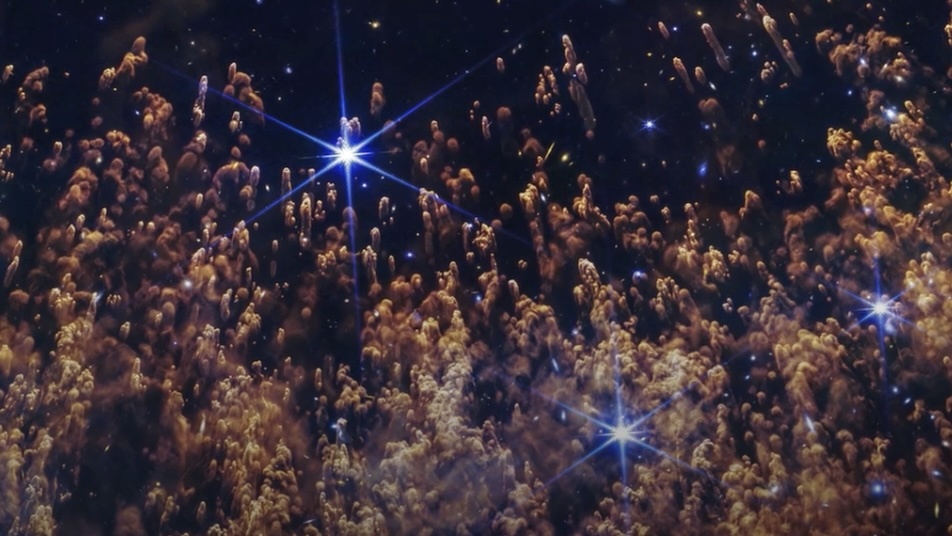
Astronomers have been given a new and incredibly detailed look at a very familiar astronomical object thanks to the James Webb Space Telescope (JWST). The new JWST image shows the Helix Nebula, the ring-like structure of which has led to the nickname the Eye of God.
The Helix Nebula is composed of stellar material shrugged off by a dying star as its outer layers were blasted away and its core collapsed to form a dense stellar remnant called a white dwarf. White dwarfs are the type of stellar corpses that are left behind when stars with similar masses as the sun run out of hydrogen in their cores and can no longer generate the energy to support themselves against the inward push of their own gravity. The remains that surround them are referred to as "planetary nebulas," even though they have nothing to do with planets at all.
That means that this intricate view of the Helix Nebula, located some 650 light-years away from Earth in the constellation Aquarius, gives scientists a hint of what is to come for our own star when it exhausts its hydrogen fuel in around 5 billion years. So, while this familiar sight for astronomers may look like a lava lamp in these images, it may actually serve as a crystal ball, foretelling doom for our solar system.
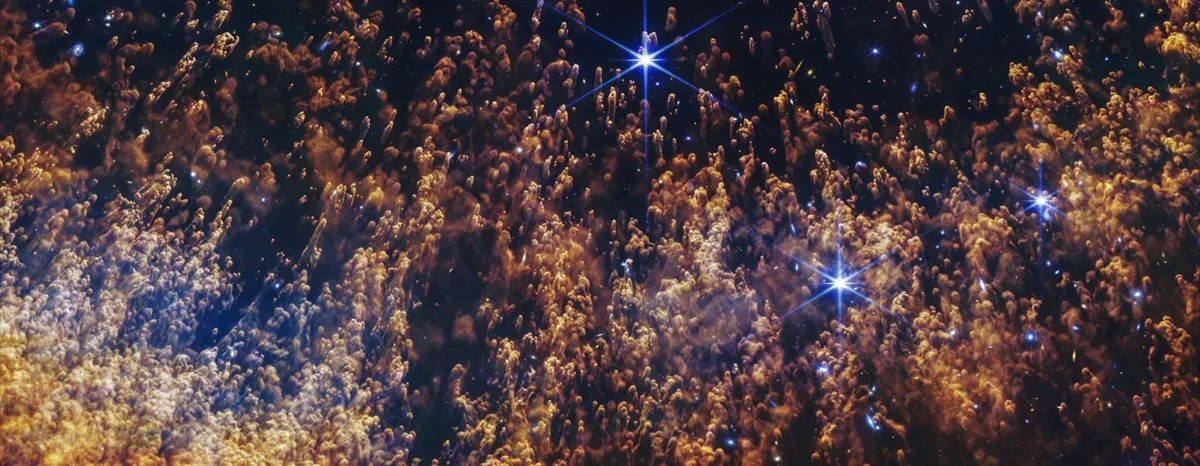
The Helix Nebula as seen by the JWST with its comet-like knots, fierce stellar winds, and layers of gas shed off by a dying star interacting with its surrounding environment. (Image credit: NASA, ESA, CSA, STScI, A. Pagan (STScI))
The Helix Nebula, also known as NGC 7293 or Caldwell 63, was first discovered by German astronomer Karl Ludwig Harding prior to 1824. It is one of the closest and brightest planetary nebulas that can be seen from Earth.
Since then, the Helix Nebula has been imaged by a vast array of telescopes, including the Hubble Space Telescope, with the JWST joining the fray with an infrared image courtesy of its Near-Infrared Camera (NIRCam).
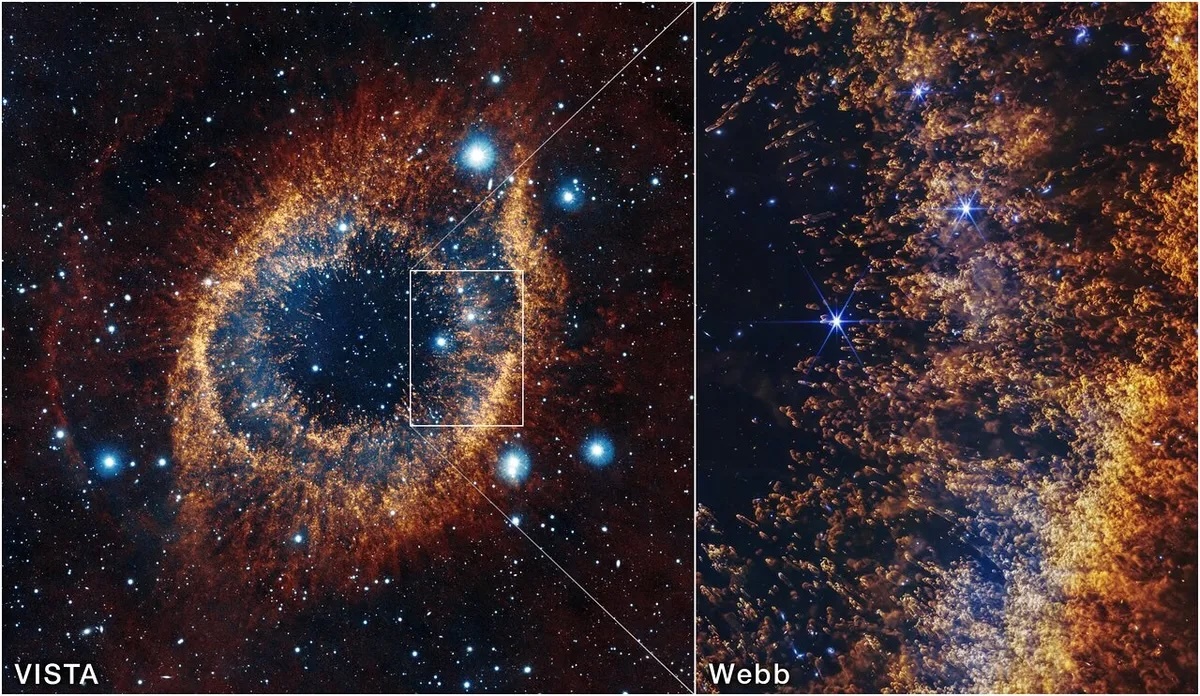
(Left) The Helix Nebula as seen by the Visible and Infrared Telescope for Astronomy. (Right) The smaller field of view from the JWST’s NIRCam (right). (Image credit: NASA, ESA, CSA, STScI, A. Pagan (STScI))
The image clearly traces winds of blisteringly hot gas emerging from the vicinity of the white dwarf stellar remnant at the heart of the Helix Nebula as they slam into outer shells of previously shed cold gas and dust. This demonstrates a sharp transition between the hot gas of this system and its coolest counterpart.
Not visible in the JWST image is the smoldering white dwarf in the center of the Helix Nebula, but astronomers can see the effect of the radiation it emits as it lights close surrounding gas, heating it and causing it to be ionized.
Further out from the stellar remnant are dust pockets of cold molecular hydrogen, in which conditions are just right for the formation of complex molecules. These could one day become the building blocks of new planets, and perhaps even life.Thus, perhaps this cosmic crystal ball also offers a look backwards billions of years into the past before the solar system took shape around our infant sun.
Quelle: SC
----
Update: 28.01.2026
.
NASA’s James Webb Space Telescope Finds Crystal-Spewing Protostar
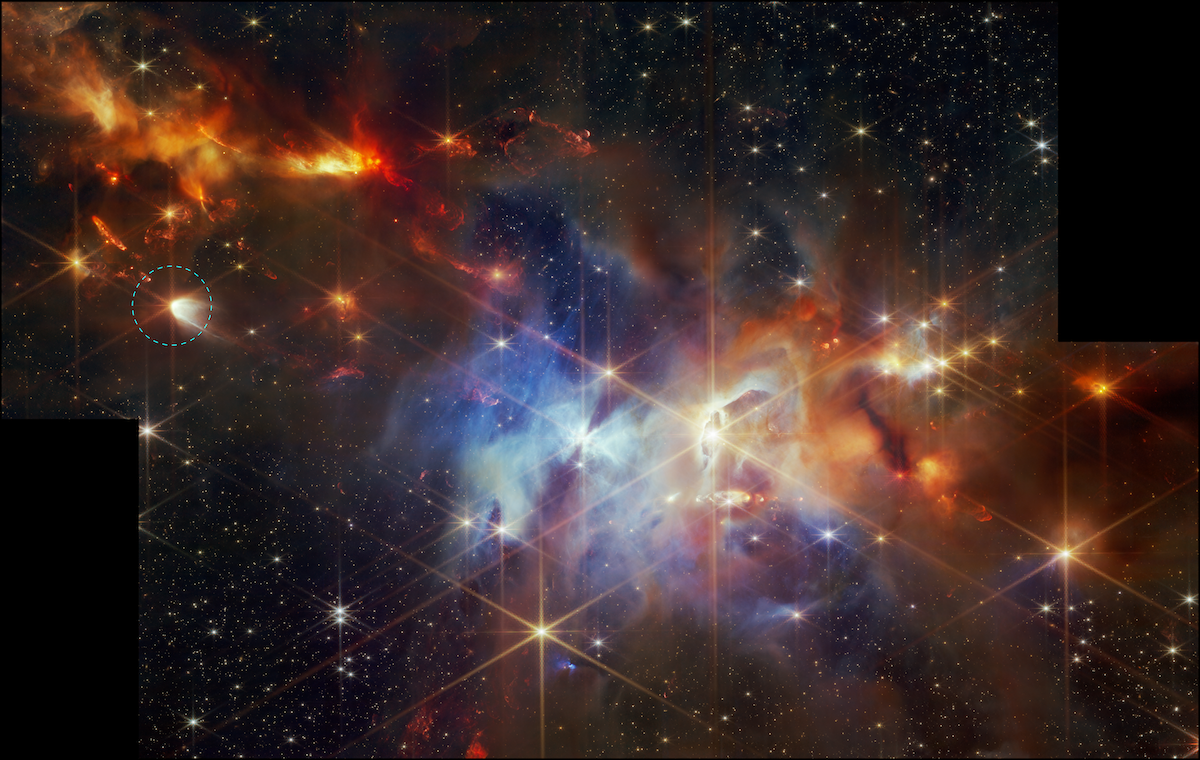
NASA, ESA, CSA, STScI, Klaus Pontoppidan (NASA-JPL), Joel Green (STScI); Image Processing: Alyssa Pagan (STScI)
The NIRCam (Near-Infrared Camera) on NASA’s James Webb Space Telescope captured the actively forming protostar EC 53 (circled at left) in the Serpens Nebula in this image released on Jan. 21, 2026.
Astronomers have long sought evidence to explain why comets at the outskirts of our own solar system contain crystalline silicates, since crystals require intense heat to form and these “dirty snowballs” spend most of their time in the ultracold Kuiper Belt and Oort Cloud. Now, looking outside our solar system, Webb has returned the first conclusive evidence that links how those conditions are possible.
The telescope clearly showed for the first time that the hot, inner part of the disk of gas and dust surrounding a very young, actively forming star is where crystalline silicates are forged. Webb also revealed a strong outflow that is capable of carrying the crystals to the outer edges of this disk. Compared to our own fully formed, mostly dust-cleared solar system, the crystals would be forming approximately between the Sun and Earth.
Quelle: NASA
----
Update: 30.01.2026
.
NASA Webb Pushes Boundaries of Observable Universe Closer to Big Bang
NASA’s James Webb Space Telescope has topped itself once again, delivering on its promise to push the boundaries of the observable universe closer to cosmic dawn with the confirmation of a bright galaxy that existed 280 million years after the big bang. By now Webb has established that it will eventually surpass virtually every benchmark it sets in these early years, but the newly confirmed galaxy, MoM-z14, holds intriguing clues to the universe’s historical timeline and just how different a place the early universe was than astronomers expected.
“With Webb, we are able to see farther than humans ever have before, and it looks nothing like what we predicted, which is both challenging and exciting,” said Rohan Naidu of the Massachusetts Institute of Technology’s (MIT) Kavli Institute for Astrophysics and Space Research, lead author of a paper on galaxy MoM-z14 published in the Open Journal of Astrophysics.
Due to the expansion of the universe that is driven by dark energy, discussion of physical distances and “years ago” becomes tricky when looking this far. Using Webb’s NIRSpec (Near-Infrared Spectrograph) instrument, astronomers confirmed that MoM-z14 has a cosmological redshift of 14.44, meaning that its light has been travelling through (expanding) space, being stretched and “shifted” to longer, redder wavelengths, for about 13.5 of the universe’s estimated 13.8 billion years of existence.
“We can estimate the distance of galaxies from images, but it’s really important to follow up and confirm with more detailed spectroscopy so that we know exactly what we are seeing, and when,” said Pascal Oesch of the University of Geneva, co-principal investigator of the survey.
Image: COSMOS Field MoM-z14 Galaxy (NIRCam Image)
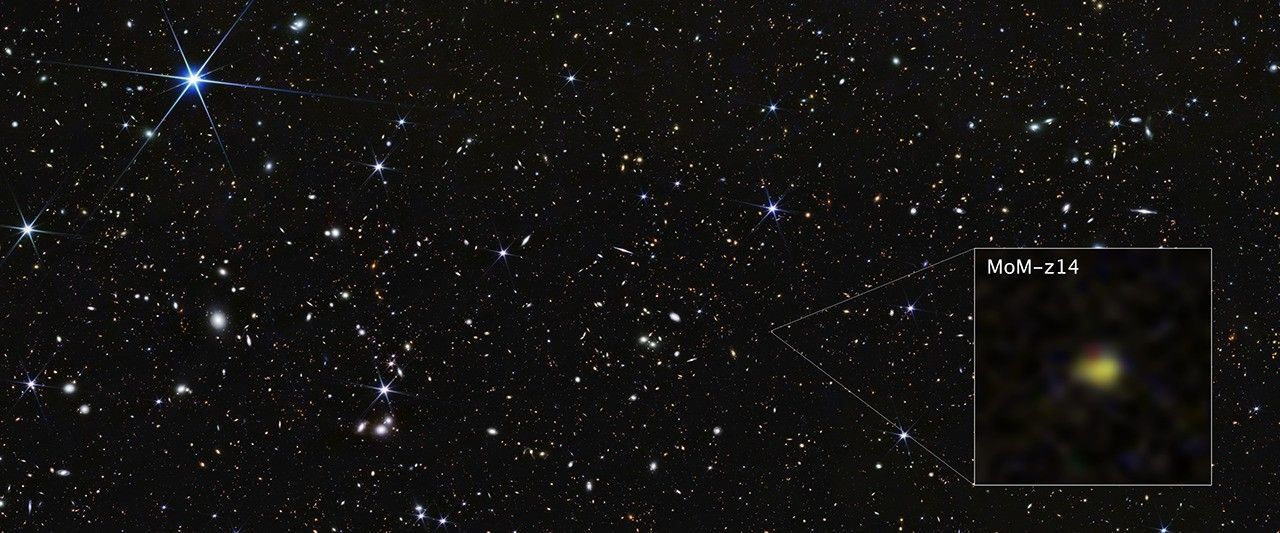
Intriguing Features
MoM-z14 is one of a growing group of surprisingly bright galaxies in the early universe – 100 times more than theoretical studies predicted before the launch of Webb, according to the research team.
“There is a growing chasm between theory and observation related to the early universe, which presents compelling questions to be explored going forward,” said Jacob Shen, a postdoctoral researcher at MIT and a member of the research team.
One place researchers and theorists can look for answers is the oldest population of stars in the Milky Way galaxy. A small percentage of these stars have shown high amounts of nitrogen, which is also showing up in some of Webb’s observations of early galaxies, including MoM-z14.
“We can take a page from archeology and look at these ancient stars in our own galaxy like fossils from the early universe, except in astronomy we are lucky enough to have Webb seeing so far that we also have direct information about galaxies during that time. It turns out we are seeing some of the same features, like this unusual nitrogen enrichment,” said Naidu.
With galaxy MoM-z14 existing only 280 million years after the big bang, there was not enough time for generations of stars to produce such high amounts of nitrogen in the way that astronomers would expect. One theory the researchers note is that the dense environment of the early universe resulted in supermassive stars capable of producing more nitrogen than any stars observed in the local universe.
The galaxy MoM-z14 also shows signs of clearing out the thick, primordial hydrogen fog of the early universe in the space around itself. One of the reasons Webb was originally built was to define the timeline for this “clearing” period of cosmic history, which astronomers call reionization. This is when early stars produced light of high enough energy to break through the dense hydrogen gas of the early universe and begin travelling through space, eventually making its way to Webb, and us. Galaxy MoM-z14 provides another clue for mapping out the timeline of reionization, work that was not possible until Webb lifted the veil on this era of the universe.
Legacy of Discovery Continues
Even before Webb’s launch, there were hints that something very unanticipated happened in the early universe, when NASA’s Hubble Space Telescope discovered the bright galaxy GN-z11 400 million years after the big bang. Webb confirmed the galaxy’s distance — at the time the most distant ever. From there Webb has continued to push back farther and farther in space and time, finding more surprisingly bright galaxies like GN-z11.
As Webb continues to uncover more of these unexpectedly luminous galaxies, it’s clear that the first few were not a fluke. Astronomers are eagerly anticipating that NASA’s upcoming Nancy Grace Roman Space Telescope, with its combination of high-resolution infrared imaging and extremely wide field of view, will boost the sample of these bright, compact, chemically enriched early galaxies into the thousands.
“To figure out what is going on in the early universe, we really need more information —more detailed observations with Webb, and more galaxies to see where the common features are, which Roman will be able to provide,” said Yijia Li, a graduate student at the Pennsylvania State University and a member of the research team. “It’s an incredibly exciting time, with Webb revealing the early universe like never before and showing us how much there still is to discover.”
The James Webb Space Telescope is the world’s premier space science observatory. Webb is solving mysteries in our solar system, looking beyond to distant worlds around other stars, and probing the mysterious structures and origins of our universe and our place in it. Webb is an international program led by NASA with its partners, ESA (European Space Agency) and CSA (Canadian Space Agency).
Quelle: NASA
----
Update: 2.02.2026
.
Webb pushes boundaries of observable Universe closer to Big Bang
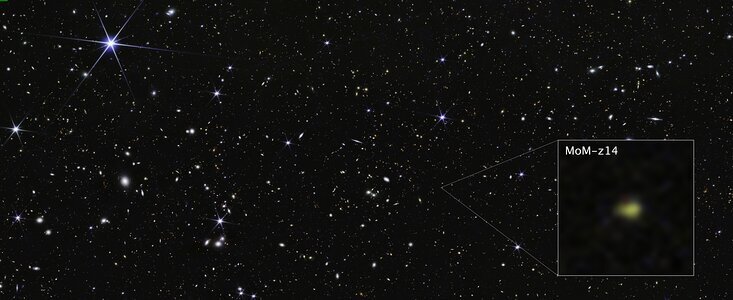
The NASA/ESA/CSA James Webb Space Telescope has topped itself once again, delivering on its promise to push the boundaries of the observable Universe closer to cosmic dawn with the confirmation of a bright galaxy that existed 280 million years after the Big Bang.
By now Webb has established that it will eventually surpass virtually every benchmark it sets in these early years, but the newly confirmed galaxy, MoM-z14, holds intriguing clues to the Universe’s historical timeline and just how different a place the early Universe was than astronomers expected.
“With Webb, we are able to see farther than humans ever have before, and it looks nothing like what we predicted, which is both challenging and exciting,” said Rohan Naidu of the Massachusetts Institute of Technology’s (MIT) Kavli Institute for Astrophysics and Space Research, lead author of a paper on galaxy MoM-z14 published in the Open Journal of Astrophysics.
Due to the expansion of the Universe that is driven by dark energy, discussion of physical distances and “years ago” becomes tricky when looking this far. Using Webb’s NIRSpec (Near-Infrared Spectrograph) instrument, astronomers confirmed that MoM-z14 has a cosmological redshift [1] of 14.44, meaning that its light has been travelling through (expanding) space, being stretched and “shifted” to longer, redder wavelengths, for about 13.5 of the Universe’s estimated 13.8 billion years of existence.
“We can estimate the distance of galaxies from images, but it’s really important to follow up and confirm with more detailed spectroscopy so that we know exactly what we are seeing, and when,” said Pascal Oesch of the University of Geneva in Switzerland, co-principal investigator of the survey.
Intriguing features
MoM-z14 is one of a growing group of surprisingly bright galaxies in the early Universe – 100 times more than theoretical studies predicted before the launch of Webb, according to the research team.
“There is a growing chasm between theory and observation related to the early Universe, which presents compelling questions to be explored going forward,” said Jacob Shen, a postdoctoral researcher at MIT and a member of the research team.
One place researchers and theorists can look for answers is the oldest population of stars in the Milky Way galaxy. A small percentage of these stars have shown high amounts of nitrogen, which is also showing up in some of Webb’s observations of early galaxies, including MoM-z14.
“We can take a page from archeology and look at these ancient stars in our own galaxy like fossils from the early Universe, except in astronomy we are lucky enough to have Webb seeing so far that we also have direct information about galaxies during that time. It turns out we are seeing some of the same features, like this unusual nitrogen enrichment,” said Naidu.
With galaxy MoM-z14 existing only 280 million years after the big bang, there was not enough time for generations of stars to produce such high amounts of nitrogen in the way that astronomers would expect. One theory the researchers note is that the dense environment of the early Universe resulted in supermassive stars capable of producing more nitrogen than any stars observed in the local Universe.
The galaxy MoM-z14 also shows signs of clearing out the thick, primordial hydrogen fog of the early Universe in the space around itself. One of the reasons Webb was originally built was to define the timeline for this “clearing” period of cosmic history, which astronomers call reionization. This is when early stars produced light of high enough energy to break through the dense hydrogen gas of the early Universe and begin travelling through space, eventually making its way to Webb, and us. Galaxy MoM-z14 provides another clue for mapping out the timeline of reionization, work that was not possible until Webb lifted the veil on this era of the Universe.
Legacy of discovery continues
Even before Webb’s launch, there were hints that something very unanticipated happened in the early Universe, when the NASA/ESA Hubble Space Telescope discovered the bright galaxy GN-z11 400 million years after the big bang. Webb confirmed the galaxy’s distance — at the time the most distant ever. From there Webb has continued to push back farther and farther in space and time, finding more surprisingly bright galaxies like GN-z11.
As Webb continues to uncover more of these unexpectedly luminous galaxies, it’s clear that the first few were not a fluke. “It’s an incredibly exciting time, with Webb revealing the early Universe like never before and showing us how much there still is to discover” added Yijia Li, a graduate student at the Pennsylvania State University and a member of the research team.
Notes
[1] The Universe is expanding, and that expansion stretches light traveling through space in a phenomenon known as cosmological redshift. The greater the redshift, the greater the distance the light has traveled.
Quelle: ESA
----
Update: 7.02.2026
.
James Webb Space Telescope's view of 800,000 galaxies paints a detailed picture of dark matter
Astronomers used James Webb Space Telescope data to determine the density of the universe's most mysterious "stuff."
Using the James Webb Space Telescope, astronomers have built a detailed map of dark matter, showing the density of this mysterious stuff across a field of view that encompasses around 800,000 galaxies.
Dark matter is so puzzling to scientists because it doesn't interact with electromagnetic radiation, or simply light,, and is thus effectively invisible to us. This tells researchers that dark matter isn't just difficult-to-see ordinary matter made up of protons, neutrons and electrons, which are particles that do interact with light. Hence, the search for particles that could comprise dark matter has been a complicated one. To make matters even more complex, these particles appear to outweigh particles that comprise ordinary matter in the cosmos by a ratio of five to one.
Fortunately, dark matter does interact with gravity, therefore influencing the very fabric of space and time. And the curvature of space caused by large concentrations of dark matter — like dark matter haloes that envelope galaxies and galactic clusters — can influence the passage of light in a process called gravitational lensing first predicted by Albert Einstein back in 1915. It is through its gravitational influence that astronomers were able to use the James Webb Space Telescope (JWST) to build this new map of dark matter.
The area of the sky analyzed with this investigation is around 2.5 times the size of the full moon (as seen from our vantage point on Earth) and located in the constellation of Sextans. The JWST studied this region for around 255 hours with its Near-Infrared Camera (NIRCam) instrument as part of the Cosmic Evolution Survey (COSMOS).
COSMOS is conducted by around 15 different telescopes, including the JWST's trusty sibling the Hubble Space Telescope. These eyes on the universe all repeatedly study a larger section of the sky equivalent to around 10 full moons. This repetition with instruments that see the cosmos in different ways allows scientists to investigate how galaxies grow, with Hubble and JWST data helping to unravel the role dark matter plays in things like galactic evolution.Additionally, Hubble observed the same region involved in the new study back in 2007, and the section has since been investigated by many other ground-based telescopes independently. But the immense sensitivity of the JWST has helped scientists produce a map with around 10 times more galaxies than those produced by ground telescopes and twice as many as seen in the Hubble map.
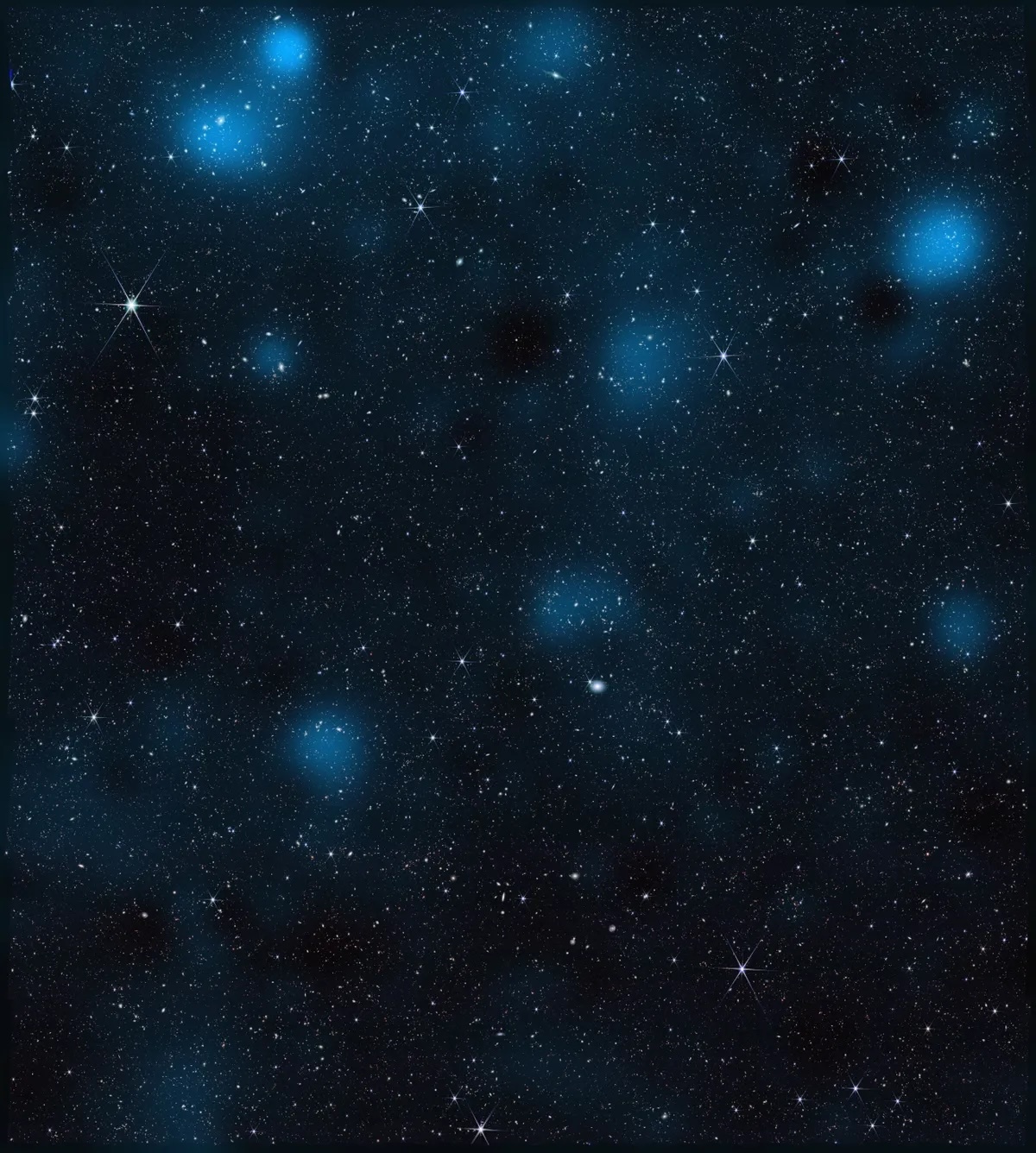
The JWST's view of 800,000 galaxies with the blue indicating dark matter concentrations. The more intense the blue, the denser the dark matter (Image credit: NASA/STScI/J. DePasquale/A. Pagan)
Using these JWST observations, the team inferred the distribution of dark matter using "weak gravitational lensing" in particular, which is the subtle distortion of light from thousands of background galaxies caused as it passes warped space caused by concentrations of dark matter.
Additionally, observing the region with the JWST's other main instrument, Mid-Infrared Instrument (MIRI), allowed the researchers to better measure the distances to the galaxies in this section of the sky.
Quelle: SC
+++
James Webb Space Telescope reveals an exceptional richness of organic molecules in one of the most infrared luminous galaxies in the local Universe
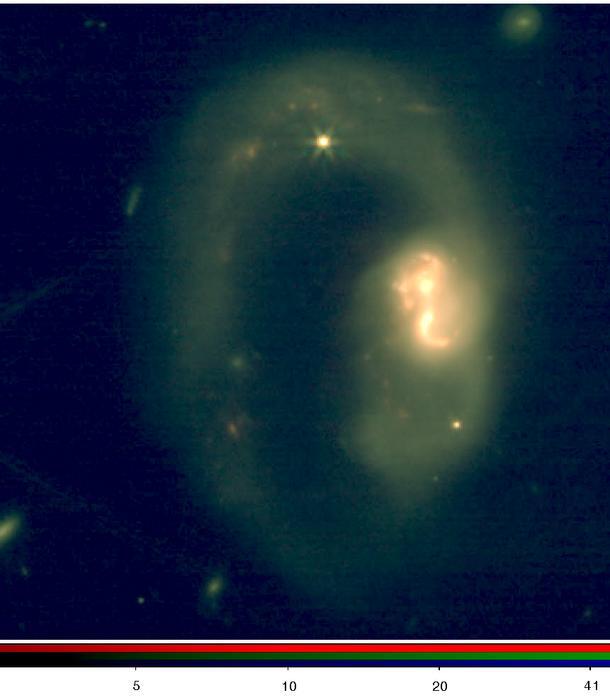
JAMES WEBB SPACE TELESCOPE NEAR-INFRARED CAMERA (JWST NIRCAM) FALSE COLOUR IMAGE OF IRAS07251-0248, MADE BY COMBINING EXPOSURES WITH THE 2 MM (BLUE), 2.77 MM (GREEN) AND 3.56 MM (RED) WIDE FILTERS ON NIRCAM. DATA ARE PART OF THE OBSERVATIONS CARRIED OUT UNDER JWST GO PROGRAMME ID 3368 (P.I. L. ARMUS). CALIBRATED DATA WERE OBTAINED FROM THE MIKULSKI ARCHIVE FOR SPACE TELESCOPES AT THE SPACE TELESCOPE SCIENCE INSTITUTE, WHICH IS OPERATED BY THE ASSOCIATION OF UNIVERSITIES FOR RESEARCH IN ASTRONOMY, INC., UNDER NASA CONTRACT NAS 5-03127 FOR JWST.
A recent study, led by the Center for Astrobiology (CAB), CSIC-INTA and using modelling techniques developed at the University of Oxford, has uncovered an unprecedented richness of small organic molecules in the deeply obscured nucleus of a nearby galaxy, thanks to observations made with the James Webb Space Telescope (JWST). The work, published in Nature Astronomy, provides new insights into how complex organic molecules and carbon are processed in some of the most extreme environments in the Universe.
The study focuses on IRAS 07251–0248, an ultra-luminous infrared galaxy whose nucleus is hidden behind vast amounts of gas and dust. This material absorbs most of the radiation emitted by the central supermassive black hole, making it extremely difficult to study with conventional telescopes. However, theinfrared wavelength range penetrates the dust and provides unique information about these regions, revealing the dominant chemical processes in this extremely dusty nucleus.
State-of-the-art instruments
The team used spectroscopic observations from the JWST space telescope covering the 3–28 micron wavelength range, combining data from the NIRSpec and MIRI instruments. These observations allow the detection of chemical signatures from gas-phase molecules, as well as features from ices and dust grains. Thanks to these data, the researchers were able to characterize the abundance and temperature of numerous chemical species in the nucleus of this buried galaxy.
The observations reveal an extraordinarily rich inventory of small organic molecules, including benzene (C₆H₆), methane (CH₄), acetylene (C₂H₂), diacetylene (C₄H₂), and triacetylene (C₆H₂), and, detected for the first time outside the Milky Way, the methyl radical (CH₃). In addition to gas-phase molecules, a large abundance of solid molecular materials was found, such as carbonaceous grains and water ices.
“We found an unexpected chemical complexity, with abundances far higher than predicted by current theoretical models,” explains lead author Dr Ismael García Bernete formerly of Oxford University and now a researcher at CAB. “This indicates that there must be a continuous source of carbon in these galactic nuclei fuelling this rich chemical network.”
These molecules could play a key role as fundamental building blocks for complex organic chemistry, of interest for processes relevant to life. Co-author Professor Dimitra Rigopoulou(Department of Physics, University of Oxford) adds: “Although small organic molecules are not found in living cells, they could play a vital role in prebiotic chemistry representing an important step towards the formation of amino acids and nucleotides.”
Factories of organic molecules in the Universe
The analysis, involving techniques and theoretical polycyclic aromatic hydrocarbons (PAHs) models developed by the Oxford group, suggests that the observed chemistry cannot be explained solely by high temperatures or turbulent gas motions. Instead, the results point to cosmic rays, abundant in these extreme nuclei, as fragmenting PAHs and carbon-rich dust grains, releasing small organic molecules into the gas phase.
The study also finds a clear correlation between hydrocarbon abundance and the intensity of cosmic-ray ionization in similar galaxies, supporting this scenario. These results suggest that deeply obscured galactic nuclei could act as factories of organic molecules, playing a key role in the chemical evolution of galaxies.
This work opens new avenues to study the formation and processing of organic molecules in space extreme environments and demonstrates the enormous potential of JWST to explore regions of the Universe that have remained hidden until now.
In addition to CAB, the following institutions also contributed to this work: Instituto de Física Fundamental (CSIC; M. Pereira-Santaella, M. Agúndez, G. Speranza), University of Alcalá (E. González-Alfonso) and University of Oxford (D. Rigopoulou, F.R. Donnan, N. Thatte).
Quelle: AAAS
----
Update: 10.02.2026
.
James Webb Space Telescope finds an early‑universe galaxy collision no one expected
Discovery made by Texas A&M researchers shows the universe was far more complex, far earlier, than astronomers have long thought.
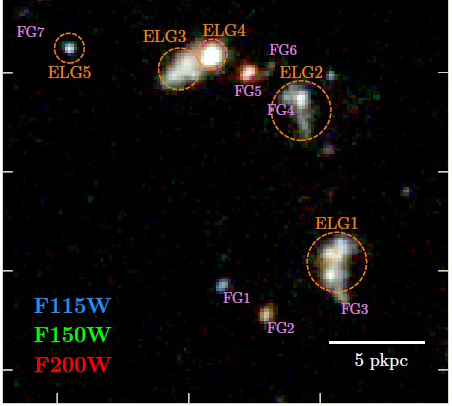
A pseudo-color image of JWST’s Quintet (JQ) at redshift 6.71. The five emission line galaxies in JQ are indicated by large orange circles and labeled (ELG1–ELG5).
Astronomers at Texas A&M University have discovered a rare, tightly packed collision of galaxies in the early universe, suggesting that galaxies were interacting and shaping their surroundings far earlier than scientists had predicted.
Using observations from the James Webb Space Telescope (JWST), the researchers identified an ongoing merger event of at least five galaxies about 800 million years after the Big Bang, along with evidence that the collision was redistributing heavy elements beyond the galaxies themselves. Before JWST, astronomers expected complex galaxy mergers and widespread enrichment by oxygen and other products of stellar fusion to become common well over a billion years after the Big Bang. This discovery shows those processes were already underway far earlier than models predicted.
Dr. Weida Hu, a postdoctoral researcher and the study’s lead author, and Dr. Casey Papovich, professor of physics and astronomy, published their findings in Nature Astronomy.
JWST reveals unexpected galaxy merger in the early universe
At that early point in cosmic history, astronomers generally expect galaxies to be relatively small and isolated. Instead, the newly discovered system — dubbed “JWST’s Quintet”— shows multiple galaxies interacting within a compact region of space and surrounded by a halo of oxygen‑rich gas.
“What makes this remarkable is that a merger involving such a large number of galaxies was not expected so early in the universe’s history, when galaxy mergers were thought to (be) simpler and usually involve only two to three galaxies,” Hu said.
Early galaxies formed stars at unusually high rates
The system was identified in data from the JWST Advanced Deep Extragalactic Survey, one of the deepest imaging campaigns conducted with JWST.
Although the galaxies are separated by tens of thousands of light-years, they occupy an unusually compact region of space and formed stars at a rate about 250 times the mass of the sun per year, far higher than typical galaxies at that time.
Galaxy collisions spread heavy elements into surrounding space
The researchers also detected an extended halo of glowing gas linking several of the galaxies. The gas emits light from ionized oxygen and hydrogen. The surprising result is that this gas lies outside the galaxies. The elements, such as oxygen, are only produced inside stars and later removed from the galaxies during the collision.
The team’s analysis suggests the enrichment was driven primarily by gravitational interactions during the merger, rather than by galactic winds alone, providing direct evidence that galaxy collisions were shaping their surrounding environments in the young universe.

[This discovery] tells us our theories of how galaxies assemble — and how quickly they do so — need to be updated to match reality.
Discovery challenges models of early galaxy evolution
Papovich notes this discovery matters because it helps explain a growing mismatch between what astronomers’ models predict and what JWST is actually observing.
“By showing that a complex, merger-driven system exists so early, it tells us our theories of how galaxies assemble — and how quickly they do so — need to be updated to match reality,” Papovich said.
The discovery may help explain why JWST has identified a growing number of massive galaxies that appear largely inactive just a few billion years later. If systems like JWST’s Quintet merged rapidly and exhausted their gas early, they could evolve into those massive galaxies seen at later times.
Future JWST observations will examine the motion of gas and galaxies within the system, offering additional insight into how early cosmic structures formed.
Additional Texas A&M authors on the paper are: Dr. Lu Shen, postdoctoral research associate; Dr. Justin Spilker, assistant professor; and Justin Cole, Ph.D. student. This research was supported by the National Science Foundation, the Kavli Institute for Theoretical Physics, NASA and Marsha and Ralph Schilling.
Quelle: Texas A&M University