
2.04.2026
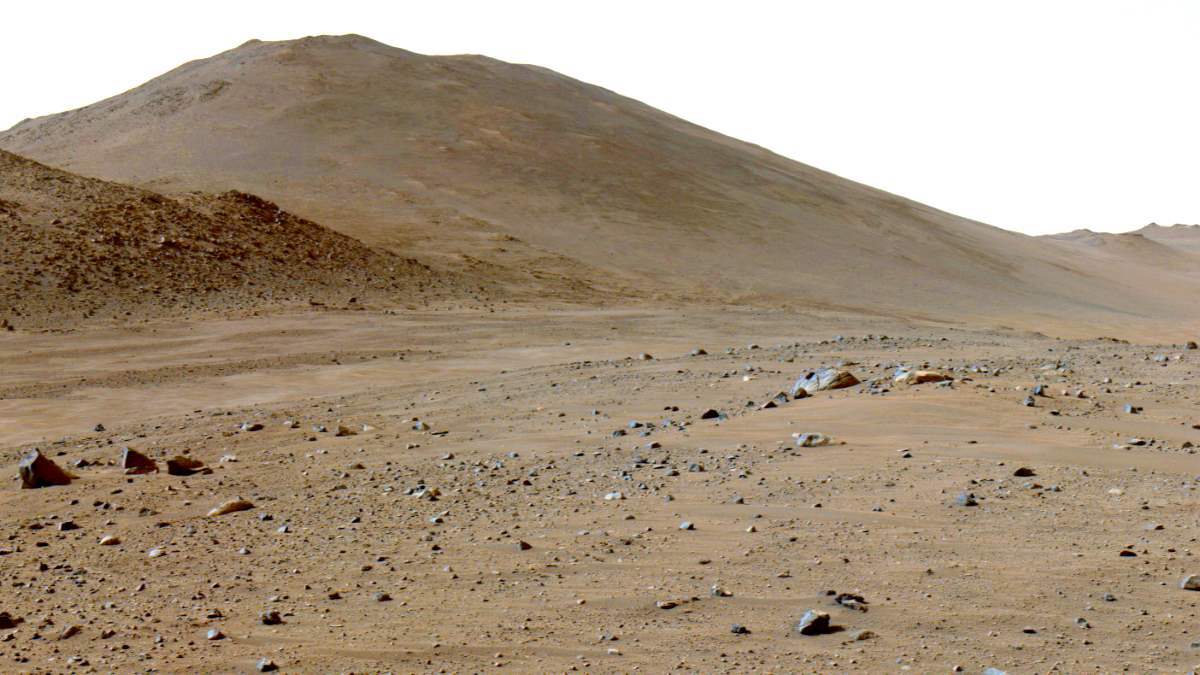
Perseverance image of ancient river channel Neretva Vallis taken in 2024. Credit: NASA / JPL-Caltech
NASA’s Mars rover Perseverance has found ancient nickel-rich sediments on the Red Planet which share chemical similarities with rocks formed by living microbes on Earth.
The rocks were gathered in Neretva Vallis. The region used to be a river channel that carried water into a lake in Mars’s Jezero crater where Perseverance landed in 2021 to understand Martian history and look for possible signs of ancient life.
Researchers used a laser, and infrared and X-ray spectrometers onboard Perseverance to analyse the chemistry of 126 sedimentary rock samples and 8 rock surfaces believed to have been formed about 3 billion years ago.
The findings are published in Nature Communications.
A total of 32 samples showed the presence of nickel (Ni) with concentrations reaching 1.1% of the rock’s total weight.
“The bulk Ni concentrations presented in this study … constitute the highest abundances ever seen in bedrock in situon Mars,” the authors write.
Nickel was found alongside iron sulphide (FeS) and sulphate (SO42−) minerals, produced by the breakdown of these rocks, such as jarosite and akaganeite. The chemistry and structure of the rocks analysed using Perseverance bear a striking similarity with those found on Earth which have a biological origin.
“On Earth, sedimentary Fe-sulphides … are believed to form primarily via microbial sulphate reduction in the presence of Fe-bearing minerals,” the researchers say. They explain that these findings point to a “potential biosignature”.
They are quick to add that there are non-biological explanations for the findings.
“However, it is also possible that purely abiotic reactions, such as H2 generation during serpentinisation, contributed to the observed redox-driven organic and mineral associations. Either way, this discovery raises major questions about the potential for prebiotic or biotic chemistry on early Mars.”
“To more definitively resolve the source of Ni in Neretva Vallis and its possible connection with organic matter, Ni/S isotope measurements and micron-scale chemical mapping should be performed”, they say.
The authors say that a sample collected at Sapphire Canyon in Neretva Vallis is earmarked for returning to Earth and should be subjected to further analysis.
NASA and the European Space Agency are preparing a Mars Sample Return mission which is set to be confirmed later this year.
Quelle: CONNECTSCI