
31.03.2026
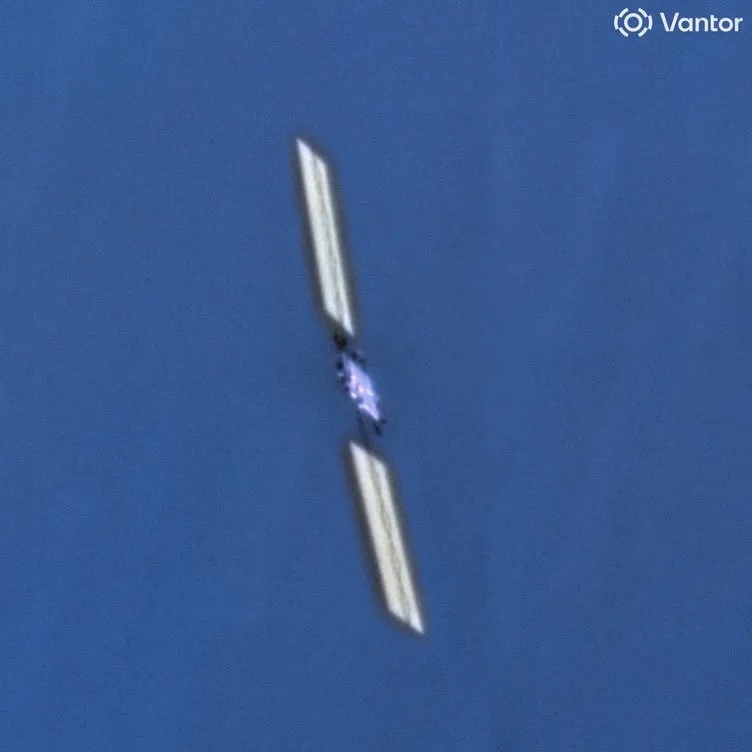
An image of Starlink-35956, a satellite that suffered an in-orbit anomaly Dec. 17, confirming the spacecraft was largely intact despite generating hundreds of pieces of debris. Credit: Vantor
KENNEDY SPACE CENTER, Fla. — For the second time in just over three months, a SpaceX Starlink satellite has generated debris from an apparent on-orbit malfunction.
SpaceX confirmed March 30 that Starlink-34343 “experienced an anomaly” March 29, causing a loss of communications with the spacecraft. The satellite, launched in May 2025, was in orbit at an altitude of 560 kilometers.
LeoLabs, a company that operates a network of radars to track objects in low Earth orbit, said March 30 it had detected “tens” of objects in the vicinity of Starlink-34343 after the event. The company said more debris may be present.
Both SpaceX and LeoLabs downplayed the risk from the incident. SpaceX said that the debris posed no threat to the International Space Station or the upcoming Artemis 2 launch. The company proceeded with a Falcon 9 launch of the Transporter-16 mission early March 30.
“Due to the low altitude of the event, fragments from this anomaly will likely deorbit within a few weeks,” LeoLabs stated.
It added that the incident involving Starlink-34343 appeared similar to one Dec. 17 involving Starlink-35956. In that incident, an unspecified anomaly caused rapid venting of the spacecraft’s propellant tank and a sudden decrease in the spacecraft’s altitude by 4 kilometers. However, the spacecraft remained intact, confirmed by pictures taken of it by a Vantor imaging satellite.
LeoLabs said that earlier incident appeared to be caused by an “internal energetic source” rather than a debris impact. Such sources include propellant tanks and batteries.
That breakup took place in a lower orbit, 418 kilometers, and debris remained below the International Space Station. The spacecraft reentered Jan. 17, according to data from The Aerospace Corp.
SpaceX did not disclose the cause of that incident and did not state if it believed that Starlink-34343 suffered the same anomaly. “The SpaceX and Starlink teams are actively working to determine root cause and will rapidly implement any necessary corrective actions,” SpaceX said of the March 29 event.
While SpaceX appeared to pause Starlink launches after the December incident — after a pair of Starlink launches Dec. 17, the next did not occur until Jan. 4 — there was no immediate sign of a similar pause after the latest anomaly. A Falcon 9 lifted off from Cape Canaveral Space Force Station about six hours after SpaceX’s statement, carrying 29 Starlink satellites.
Quelle: SC