
10.02.2026
Mission Summary
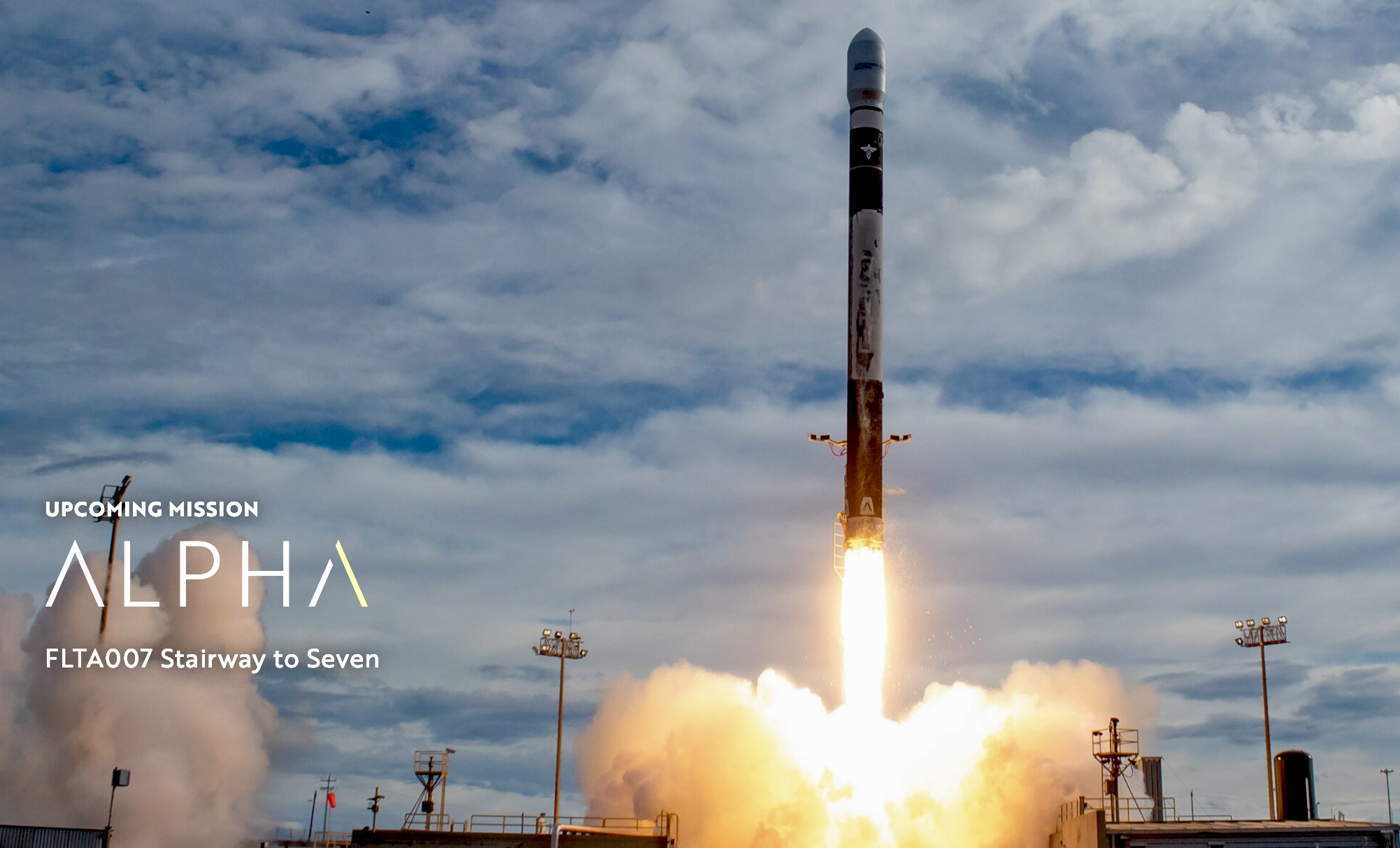
Alpha Flight 7 is the last flown in the rocket’s current configuration and serves as a test flight with the primary goal to achieve nominal first and second stage performance.
Flight 7 will test and validate key systems ahead of Firefly’s Block II configuration upgrade on Flight 8 that’s designed to enhance reliability and manufacturability across the vehicle. The Block II configuration includes a 7-foot increase to Alpha’s length, consolidated batteries and avionics built in house, an enhanced thermal protection system, and stronger carbon composite structures built with automated machinery.
The subsystems tested on Flight 7, including the in-house avionics and thermal improvements, will allow Firefly to gain flight heritage and validate lessons learned ahead of the full configuration upgrade.
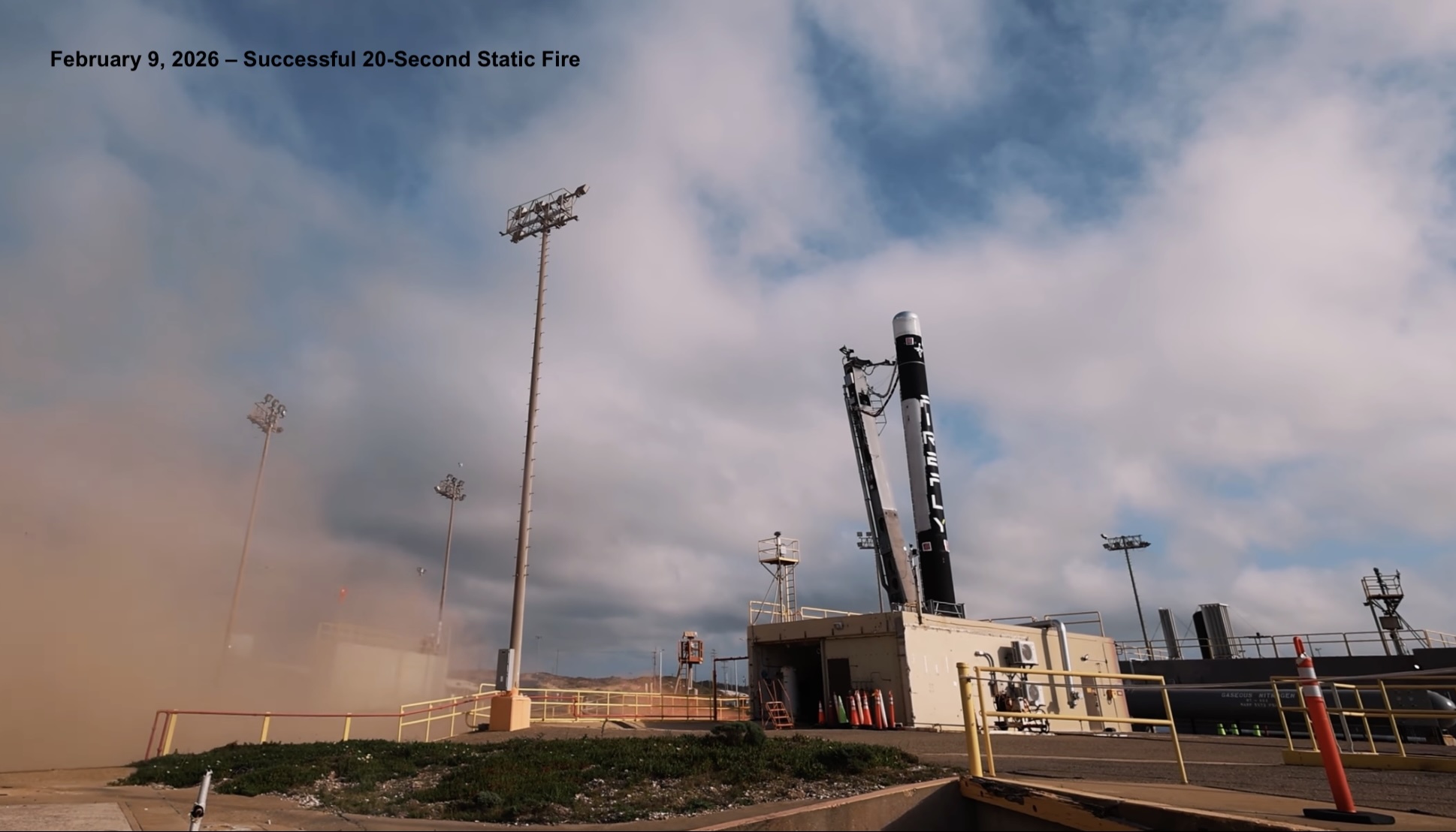
Firefly confirmed the team successfully completed a full duration 20-second static fire on February 6 at our launch pad in Vandenberg. The team is now preparing for launch no earlier than February 18.
Quelle: Firefly
----
Update: 28.02.2026
-
Firefly Aerospace Alpha Rocket Ready for Return to Flight at Vandenberg
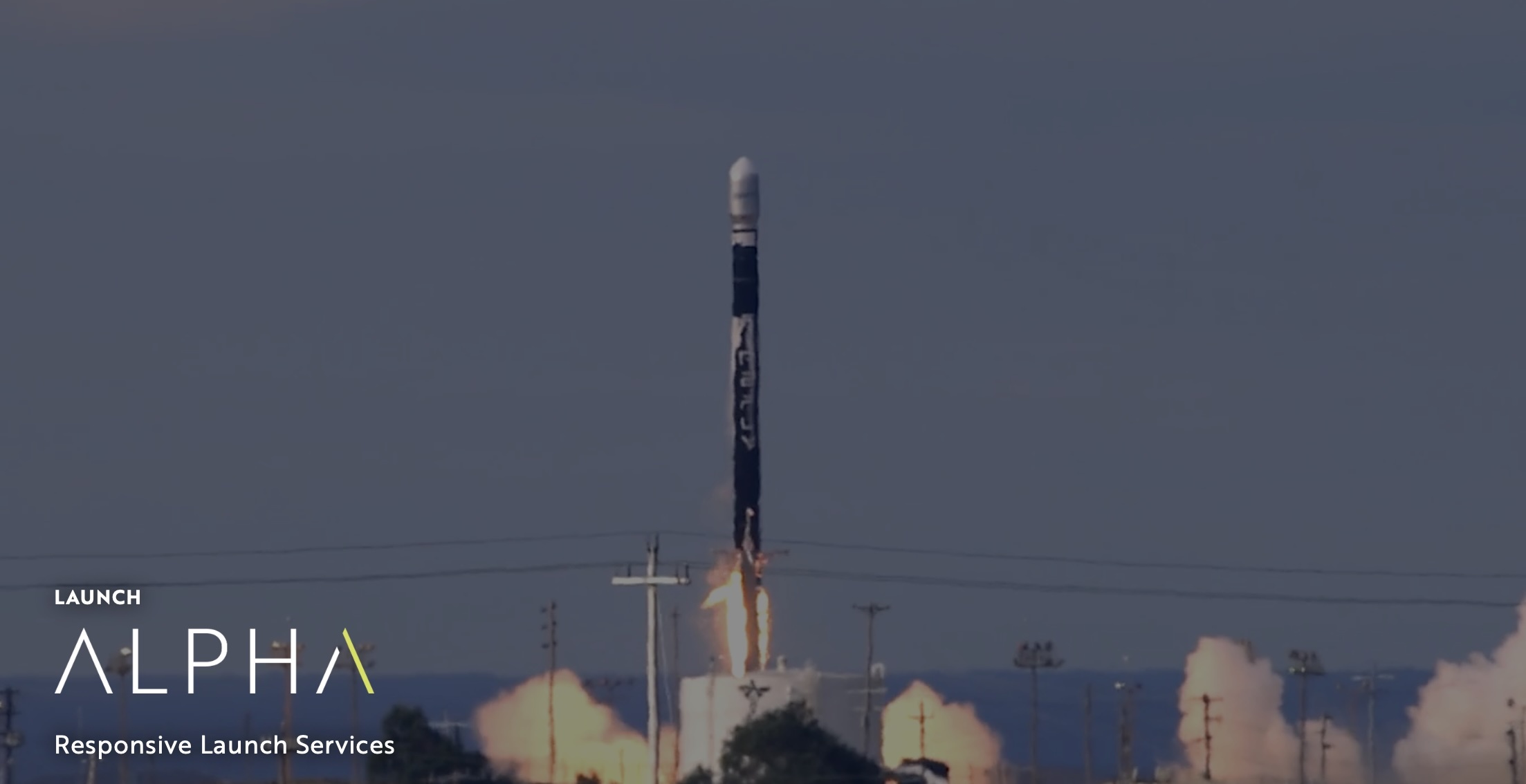
Hoping a new year brings better outcomes, the Firefly Aerospace Alpha rocket will return to flight at Vandenberg Space Force Base on Saturday following a couple of failures in 2025.
The Texas company’s small rocket is expected to lift off from Space Launch Complex-2 between 4:50 p.m. and 6:50 p.m. for what has been dubbed the Stairway to Seven mission.
The rocket’s liftoff has been thwarted by recent rainstorms, which delayed the departure by more than a week, as well as upper-level winds that exceeded guidelines for the launch.
Alpha’s launch is labeled a test operation as Firefly looks to validate key systems ahead of the firm’s next-generation rocket featuring various upgrades.
Saturday’s launch will be the last flown in the rocket’s current configuration and serves as a test flight “with the primary goal to achieve nominal first- and second-stage performance,” according to an update released by Firefly.
The subsystems tested on Flight 7, including the avionics and thermal improvements, will allow Firefly to gain flight heritage and validate lessons learned ahead of the full configuration upgrade.
The test demonstration mission follows the failure of the sixth Alpha launch on April 29 at Vandenberg.
The vehicle was three seconds short of achieving orbital velocity and five seconds short of the target payload deployment orbit, according to Firefly’s update on the review released in late August.
Using ground-based video, onboard telemetry, post-flight testing and more, Firefly pinpointed the probable cause as excessive heat from plume-induced flow separation.
“Alpha Flight 6 flew a higher angle of attack than prior missions,” Firefly said. “Plume-induced flow separation intensified heat on the leeward side reducing structural margins, causing the booster to rupture from stage separation induced loads.
“Fortunately, the corrective actions are straight forward: increase thermal protection system thickness on Stage 1 and reduce angle of attack during key phases of the flight.”
Quelle: Noozhawk
----
Update: 12.03.2026
.
Firefly Aerospace's Alpha rocket reaches orbit on 1st launch since explosive accidents last year
"Mission success! Alpha Flight 7 achieved nominal performance and validated key systems ahead of our Block II configuration upgrade."
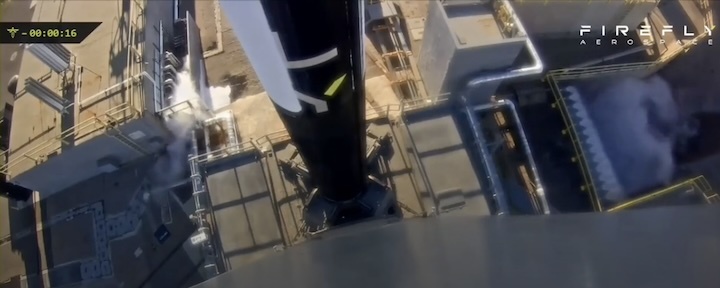
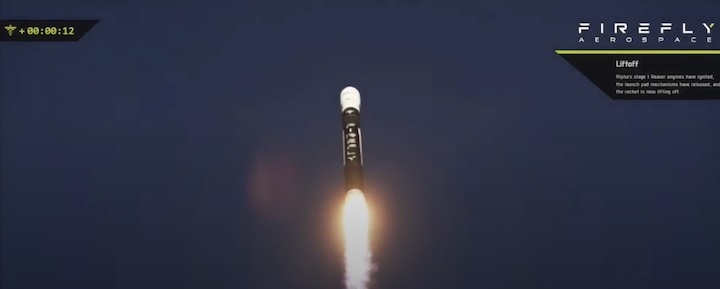



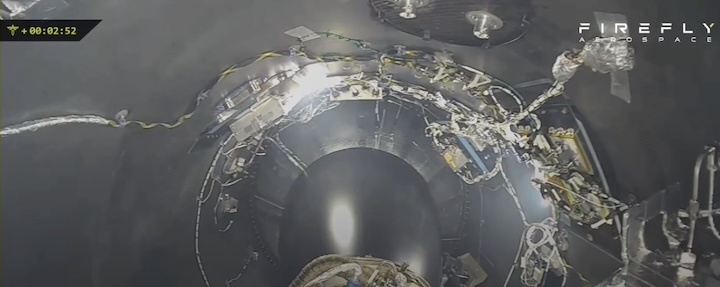


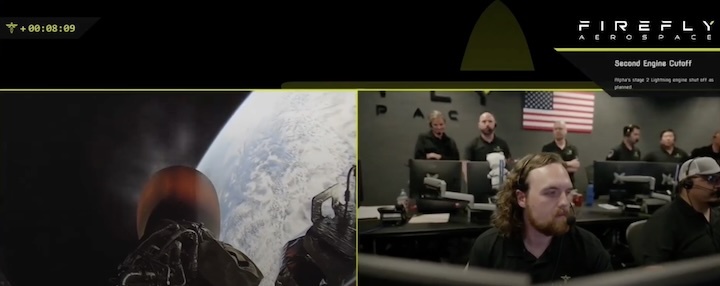
Texas-based Firefly Aerospace is celebrating today (March 11) after successfully launching its Alpha rocket for the first time in nearly a year.
Today's mission, called "Stairway to Seven," was the seventh flight for Alpha, which suffered two major mishaps during 2025. The first occurred during the "Message in a Booster" mission last April, which carried a technology-demonstrating satellite for Lockheed Martin but failed to deliver it to orbit after an anomaly occurred during stage separation.
Then, last September, an Alpha first stage exploded on the stand during prelaunch tests for "Stairway to Seven." This mishap added months to the mission development timeline as the company investigated a cause and got another booster ready for flight.
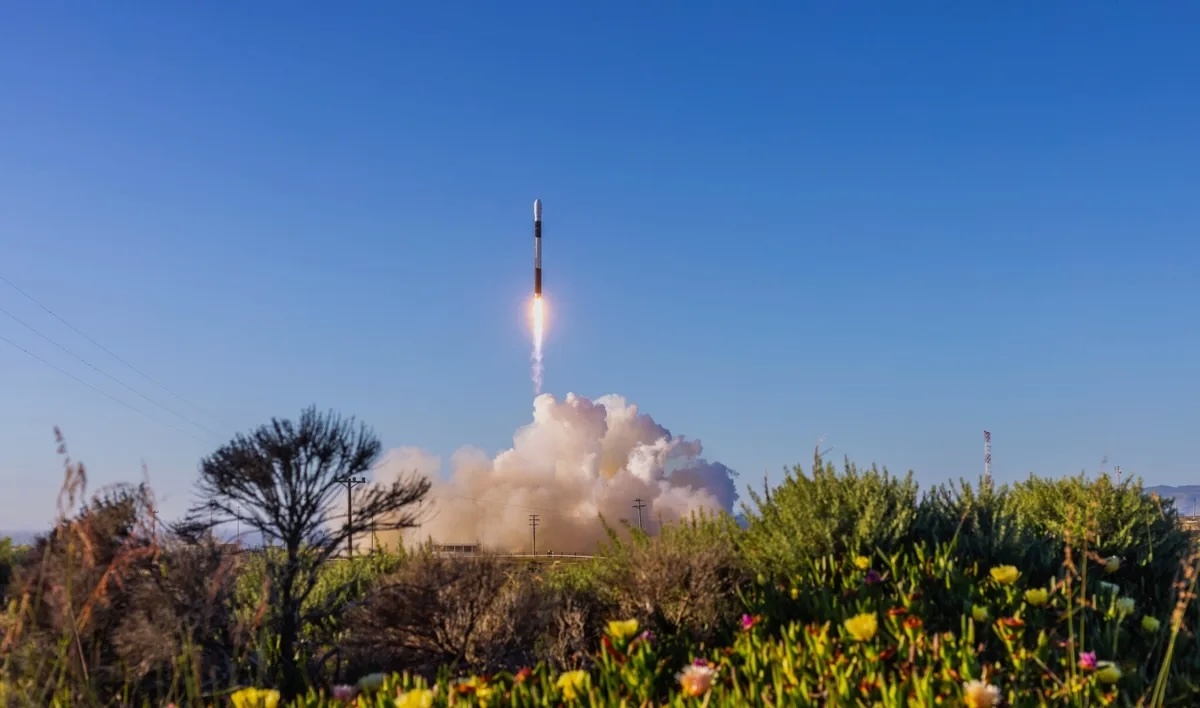
Firefly Aerospace's Alpha rocket launches on the "Stairway to Seven" mission on March 11, 2026. (Image credit: Firefly Aerospace)
The test-stand explosion was eventually traced to "a process error during stage one integration that resulted in a minute hydrocarbon contamination," according to a Firefly update in November, which ruled out a design flaw in the rocket and cleared its path back to the launch pad.
Nevertheless, Firefly changed "Stairway to Seven." The company reframed it as a test flight, focusing on achieving "nominal first and second stage performance," according to a mission description.
"Stairway to Seven" took to this skies this evening (March 11) from Space Launch Complex-2 at Vandenberg Space Force Base in California, with liftoff at 8:50 p.m. ET (0050 GMT on March 12).
At approximately 2 minutes, 40 seconds into flight, Alpha successfully executed first-stage separation, jettisoning its main booster as the rocket's upper stage continued powering its way to orbit.
Following fairing ejection about 30 seconds later, Alpha cut off its upper-stage engine about 8 minutes after liftoff and reached orbit as planned, 151 miles (243 kilometers) above Earth.
"Mission success! Alpha Flight 7 achieved nominal performance and validated key systems ahead of our Block II configuration upgrade. This test flight also delivered a demonstrator payload for @LockheedMartin. Congratulations to the entire Stairway to Seven team!" Firefly wrote via X after the flight.
Having now successfully climbed the "Stairway to Seven," Firefly will retire Alpha's Block I configuration, as it continues upgrading the launch vehicle to enhance its capabilities.
More than just a requalification flight, Firefly says Alpha's seventh launch served to "test and validate key systems ahead of Firefly’s Block II configuration," which is slated to debut on Flight 8.
Alpha Block II will stand about 7 feet (2.13 meters) taller than its 96.7-foot-tall (29.6-m) predecessor and will feature upgraded avionics and power systems, as well as improved thermal protections.
Today's launch was a significant step forward for Firefly, which has excelled in some areas of its space business more than others. Last year, the company's uncrewed Blue Ghost moon lander became the first private spacecraft to successfully complete a mission on the lunar surface, but Alpha has now managed full mission success just three times in its seven orbital launch attempts.
Quelle: SC