
7.02.2026
ISRO Chairman V. Narayanan said India is working on reusable launch vehicle technology but does not see SpaceX or other private firms as competition.
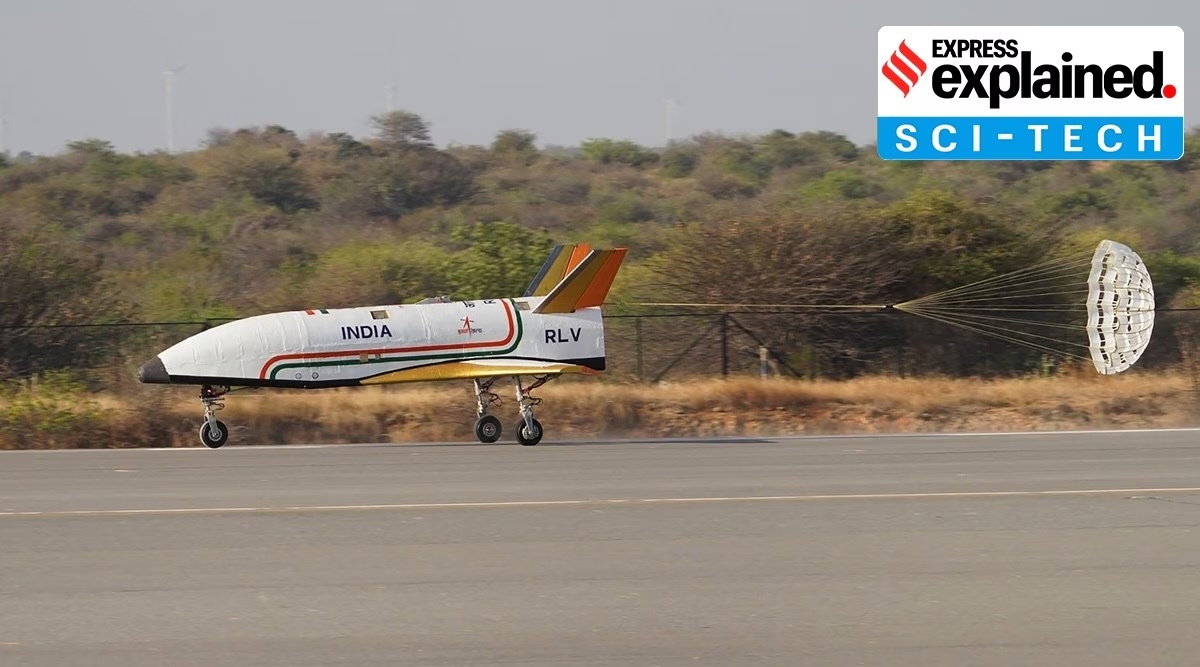
ISRO with DRDO and Indian Air Force successfully conducts the Reusable Launch Vehicle Autonomous Landing Mission (RLV LEX) from Aeronautical Test Range, Chitradurga, Karnataka, Sunday, April 2, 2023. (PTI Photo)
Reusable rockets, like those used by SpaceX, are cost effective but the Indian Space Research Organisation (ISRO) does not view SpaceX or other organisations as competition, said ISRO Chairman V. Narayanan. Speaking to the media in Pune at the convocation of D.Y. Patil International University on February 5, Narayanan also said that ISRO has an experimental programme to develop reusable launch vehicles.
ISRO is renowned for its cost-effective space programs, with its Mars orbiter having a cheaper budget than even some Hollywood movies. But American company SpaceX’s reusable launcher technology has slashed costs of launch by a huge margin. Responding to a question about whether this was stiff competition for ISRO, Narayanan said, “No doubt when you go for reusable launches it will be cost effective. We are working towards reusable launch technology development”.
“We don’t consider this as competition. Because the Indian Space Programme is meant for India. Strength only respects strength, if you don’t have a vibrant space programme no one is going to respect you. And right now we are serving the common man of the country,” he added.
When asked about the timeline of development of reusable launches Narayanan said, “We only have an experimental programme so far and we are working towards that.”
Learning from failures
Talking about how ISRO learnt from its failures in the past, the Chairman remarked in his convocation speech, “Chandrayaan 2, it was a great mission. We all worked together for so many years, and then went ahead with the mission in 2019. We were supposed to soft land at the South Pole of the Moon, but unfortunately it was a hard landing. And then we had to do our homework on a lot of things. We took it as a great opportunity to learn lessons.”
Narayanan continued, “A 10 member committee was constituted, with a terms of reference, you have to understand, and give your recommendation in 30 days… The team did a fantastic job. Exactly 30 days, 5 hours before the deadline, I know 500 people sleeping only 3 to 4 hours per day, we submitted the report. And with more than 100 recommendations implemented, Chandrayaan 3 was a very grand, successful mission.”
ISRO has faced successive failures in the past one year with its trusted PSLV rocket. The first unsuccessful launch happened in May 2025 when the rocket developed problems in the third stage of launch. The second failure was in January 2026 when the PSLV-C62 carrying 16 satellites also developed a snag in the third stage. Its Failure Analysis Committee report has not been made public.
Quelle: The Indian Express