
3.02.2026
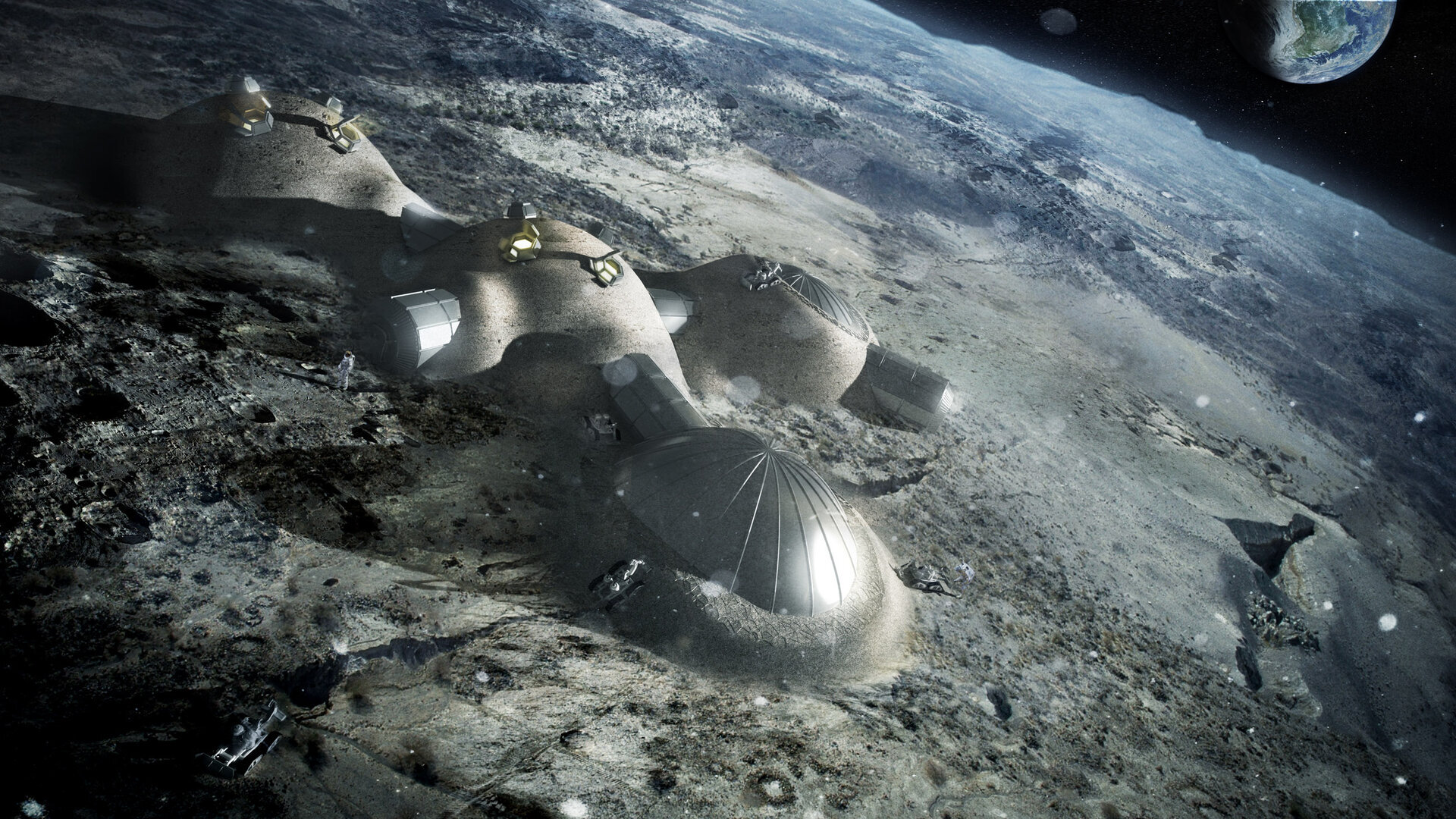
Before constructing any building on Earth, engineers need to understand the soil beneath it. The same principle applies to future lunar infrastructure, but there's a significant challenge: we have very limited data about lunar soil properties, and the tools to measure them haven't been calibrated for the Moon's harsh environment.
A recent ESA Discovery project led by the Norwegian Geotechnical Institute (NGI) designed a calibration chamber that will enable accurate testing of cone penetration instruments under lunar conditions, providing crucial data for future construction on the Moon and beyond.
Cone penetration testing (CPT) is a standard geotechnical method used on Earth to measure soil parameters before any excavation or construction begins. A cone-shaped instrument (penetrometer) is pushed into the soil, measuring resistance and providing data on soil strength, stiffness and other critical properties.
"For building on the Moon, we need to know how to build structurally sound infrastructure," says Dylan Mikesell, Senior Specialist at NGI and the project lead. "A good understanding of soil and its strength is essential for building safe structures – we need to know about stiffness, cohesion and the strengths of the materials we're building with."
The challenge is that CPT measurements require careful calibration to provide accurate information, and current calibration chambers aren't designed for extraterrestrial conditions or materials.
Understanding lunar soil

Most of what we know about lunar soil comes from the Apollo missions, which explored equatorial regions. There is virtually no data from the lunar poles, where future missions and infrastructure are likely to be concentrated.
"The Apollo 15 mission showed a contradiction between field observations and simulations," Mikesell explains. "If we are going to put infrastructure on the Moon we need to do a thorough design job. We need to be able to relate what we learn from testing on Earth to what we'll encounter on the lunar surface."
The 'Environment Controlled Calibration Chamber for CPT Testing on Extra-Terrestrial Soils' project addressed this gap by designing a chamber tailored specifically to lunar conditions and soils. The chamber design allows laboratory-controlled testing of lunar soil simulants under relevant environmental conditions, including the Moon's extreme temperatures and vacuum. NGI worked with APVacuum on the design of the vacuum and cooling system.
The system is also designed with flexibility in mind, allowing other geotechnical tools, sensors or data acquisition systems to be incorporated for comprehensive testing.
"With this Discovery activity, NGI has laid the groundwork for trustworthy geotechnical data on the Moon," says Moritz Fontaine, Discovery & Preparation Officer and ESA's lead for the project. "Before we can build infrastructure, we need to understand the soil beneath it – and before we can understand the soil, we need instruments we can trust. This chamber makes that possible."
Applications beyond the Moon
The completed chamber design represents a crucial precursor to future technology development, providing the foundation for accurate geotechnical testing that will support safe construction on the Moon and other extraterrestrial bodies.
The calibration chamber could also enable other technologies, with potential applications extending beyond lunar exploration to other extraterrestrial surfaces such as Mars. The data collected could support various initiatives or even have commercial applications.
The project was proposed through ESA's Open Space Innovation Platform (OSIP), which seeks out promising new ideas for space research, and was funded by the Discovery element of ESA's Basic Activities.
"We enjoyed proposing the idea through OSIP," says Mikesell. "Working with ESA had great advantages in identifying risks and getting valuable feedback."
Quelle: ESA