
1.02.2026
An uncontrolled atmospheric re-entry of the Chinese ZQ-3 R/B second stage, weighing about 11 tonnes, is expected over Europe on January 30, 2026. EU Space Surveillance and Tracking (EU SST) reports a predicted re-entry centered near 11:20 UTC ± 48 minutes. National sensors coordinated through the Finnish Meteorological Institute (FMI) and EU SST Operations Centres are tracking the object and assessing potential airspace impacts south of Denmark and in the Baltic region.
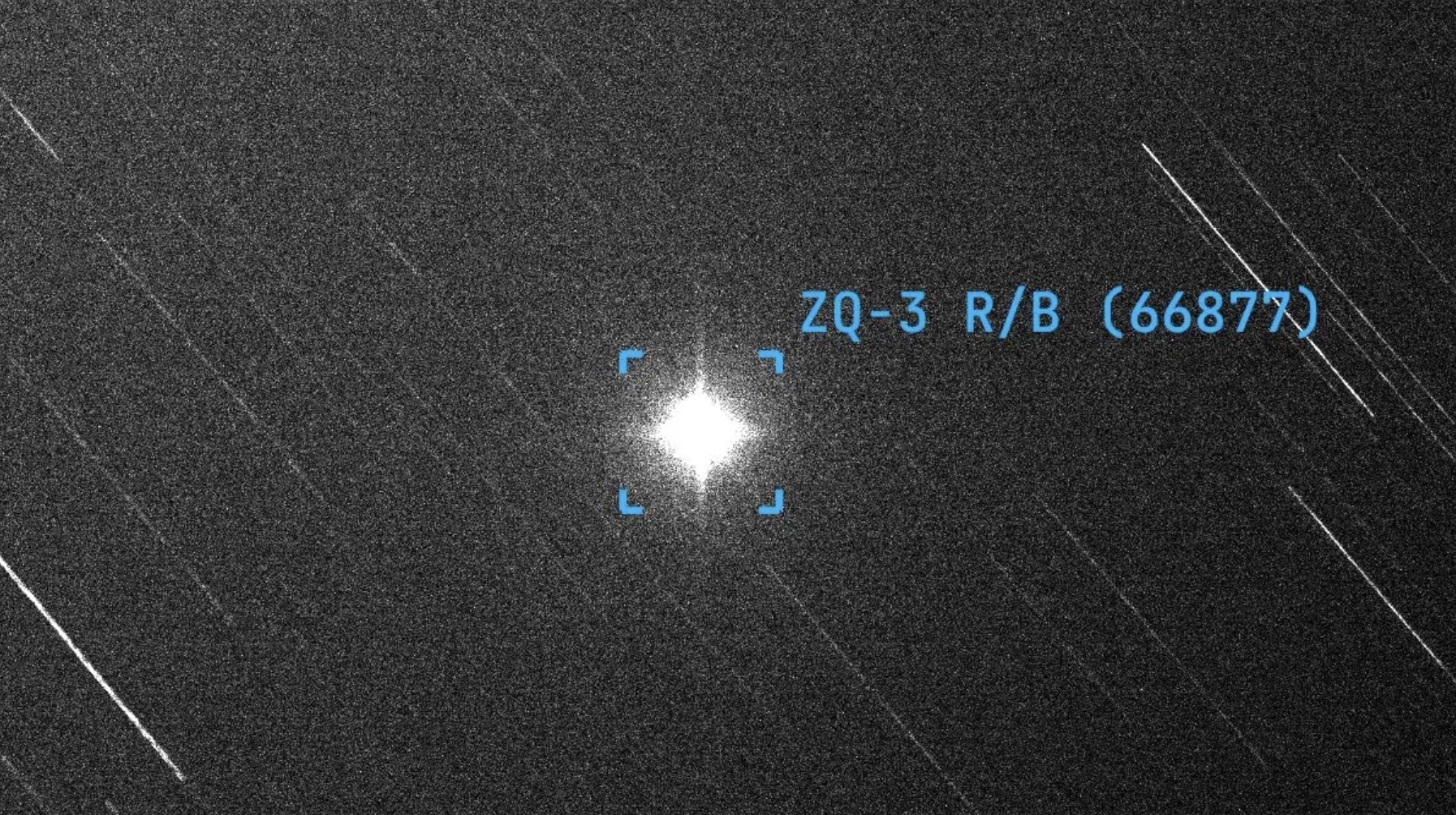
ZQ 3 R/B at ~280 km (174 miles) altitude captured by the EU SST contributing sensor POLON-CHILE at 01:01 UTC on January 28, 2026. Image
credit: POLSA
The European Space Surveillance and Tracking (EU SST) network continues to monitor the uncontrolled
atmospheric re-entry of the Chinese ZQ-3 R/B rocket stage. The latest autonomous predictions place the expected decay around 11:20 UTC ± 48 minutes on January 30.
The object, catalogued as 2025-282A (#66877), is the second stage of the ZQ-3 launcher that lifted off from
China on December 3, 2025, during the vehicle’s maiden flight. According to EU SST and the Finnish
Meteorological Institute (FMI), the stage weighs approximately 11 tonnes and measures 12–13 m (40–43 feet)
in length.
FMI reports the possibility that a dummy payload remains attached to the stage, which could influence its
aerodynamic break-up pattern.
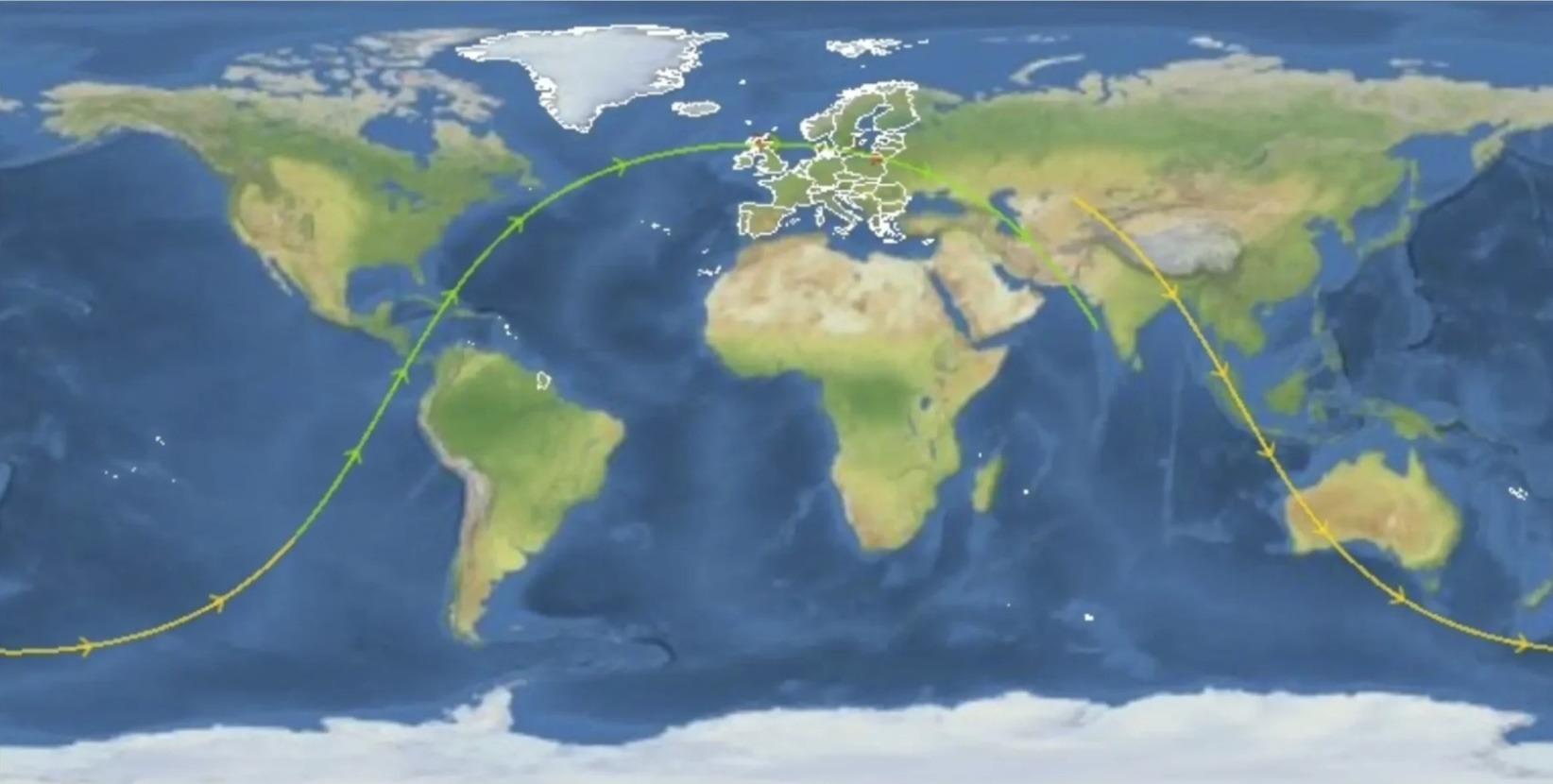
Image credit: SST Cooperation 2025
EU SST assesses that the re-entry will begin at around 80 km (50 miles) altitude, where most of the structure is expected to disintegrate. The Finnish Meteorological Institute stated that any remaining fragments would fall south of Denmark and the Baltic states, and that the object poses no risk to Finland. As of 11:30 UTC, EU SST had not yet confirmed the exact time or location of atmospheric entry.
EU SST Operations Centres and national aerospace authorities continue to exchange tracking data with aviation coordination channels. Any tactical airspace actions will be issued through national AIS or NOTAM services if required during the final decay phase.
Uncontrolled re-entries of this scale occur several times each year worldwide. Analyses by The Aerospace Corporation and ESA indicate that the probability of debris causing harm in any single event is assessed as very low, though the growing number of large launch vehicles increases operational monitoring demands for aviation and civil protection agencies.
Update:
According to data provided by Space Track, the ZQ-3 rocket stage re-entered Earth’s atmosphere at 12:39
UTC over the South Pacific Ocean, near coordinates 54.2°S, 189.6°E.
Quelle: The Watchers