
30.01.2026
South Korea's Verification Satellite Launches Successfully
Satellite establishes communication, set to verify Earth observation system
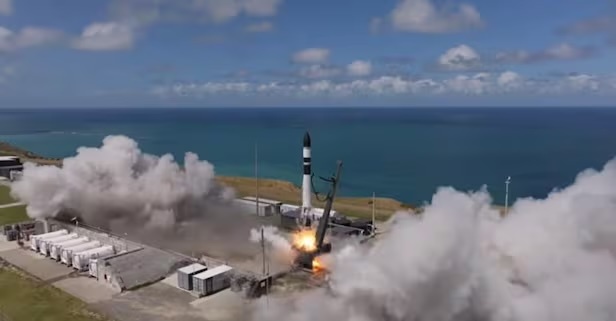
The space launch vehicle 'Electron' carrying a miniature cluster satellite verifier heads to space. /Korea AeroSpace Administration
South Korea’s first verification satellite for a micro low-Earth orbit constellation, designed for Earth observation, successfully launched into space on the 30th after three attempts. During this third attempt, there was a crisis when the countdown paused, but the issue was promptly resolved, leading to a successful launch.
U.S. space company Rocket Lab launched the verification satellite aboard its Electron rocket from the Mahia Launch Complex in New Zealand at 10:22 a.m. Korea Standard Time (2:22 p.m. local time) on the same day. Approximately 54 minutes after launch, at around 11:15 a.m., the verification satellite was successfully separated from the launch vehicle, the company announced. Rocket Lab initially attempted to launch at 9:55 a.m. but postponed the launch with 8 minutes and 59 seconds remaining on the countdown. The company then successfully launched the rocket afterward.
Rocket Lab had previously attempted to launch the verification satellite for the micro constellation twice last year, on December 11 and 16, but both attempts failed. The verification satellite successfully established communication with a domestic ground station located within the Korea Aerospace Industries Research Institute approximately 2 hours and 51 minutes after launch, at around 1:12 p.m. On the same day, the Korea AeroSpace Administration stated, "Initial communication results confirmed that the satellite’s solar panels were successfully deployed, producing stable power, and the overall satellite status was found to be in good condition."
The micro constellation satellite system consists of 11 Earth observation satellites, each weighing under 100 kilograms, designed to monitor the Korean Peninsula. By continuously capturing and monitoring the region, the system is used to respond to sudden disasters and emergencies.
The verification satellite launched this time is intended to assess the performance of the prototype launched in April two years ago. The satellite will begin its official mission in July and verify the quality of Earth observation images for the next six months. The Korea AeroSpace Administration plans to sequentially deploy up to 11 satellites in the future to reduce observational gaps and enhance monitoring and response capabilities.
Quelle: The Chosun Daily