
28.01.2026

NASA Moves Steps Closer to Artemis II Fueling Test Ahead of Launch
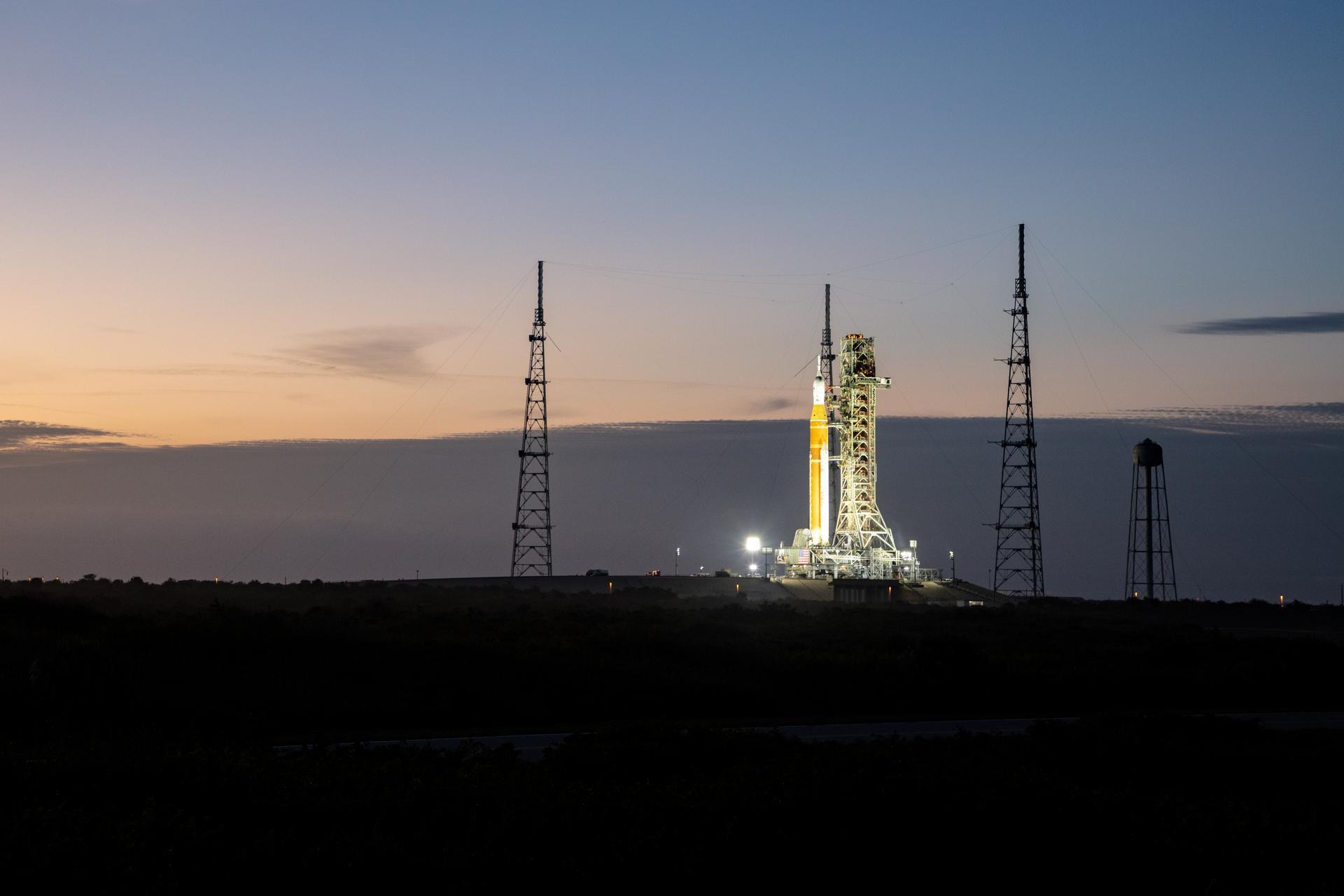
Teams at NASA’s Kennedy Space Center in Florida continue to prepare the SLS (Space Launch System) rocket, Orion spacecraft, and ground infrastructure in advance of the Artemis II test flight. Engineers have remained on track or ahead of schedule as they work through planned activities at the launch pad and are getting ready to conduct a wet dress rehearsal, leading up to a simulated “launch” as early as Saturday, Jan. 31.
The upcoming wet dress rehearsal is a prelaunch test to fuel the rocket. During the rehearsal, teams demonstrate the ability to load more than 700,000 gallons of cryogenic propellants into the rocket, conduct a launch countdown, and practice safely removing propellant from the rocket without astronauts inside the spacecraft.
During several “runs,” the wet dress rehearsal will test the launch team’s ability to hold, resume, and recycle to several different times in the final 10 minutes of the countdown, known as terminal count. The rehearsal will count down to a simulated launch at 9 p.m. EST, but could run to approximately 1 a.m. if needed.
The first run will begin approximately 49 hours before launch when launch teams are called to their stations, to 1 minute 30 seconds before launch, followed by a planned three-minute hold and then countdown resumption to 33 seconds before launch – the point at which the rocket’s automatic launch sequencer will control the final seconds of the countdown. Teams then will recycle back to T-10 minutes and hold, then resume down to 30 seconds before launch as part of a second run.
If needed, NASA may rollback SLS and Orion to the Vehicle Assembly Building for additional work ahead of launch after the wet dress rehearsal.
Over the weekend, teams successfully serviced the SLS rocket boosters, which involved loading hydrazine into the booster aft skirts. The team continues operations to prepare Orion for flight, including stowing items inside the spacecraft and performing planned pyrotechnic work on the launch abort system. Technicians performed checkouts of core stage’s four RS-25 engines and pressurized a tank in the spacecraft propulsion system used for fueling, called the composite overwrapped pressure vessel.
With cold weather sweeping the country and lower than normal temperatures expected in Florida Tuesday, Jan. 27, technicians are taking steps to ensure environmental control systems keeping Orion and SLS elements at the proper conditions are prepared for the cold.
Engineers and scientists also are addressing issues that cropped up during operations in preparation for crewed flight. During an evaluation of the emergency egress system, the baskets used to transport the crew and other pad personnel from the mobile launcher in an emergency stopped short of the terminus area located inside the pad perimeter. Since then, the brakes of the system have been adjusted to ensure the baskets fully descend. In the coming days, technicians also will take additional samples of Orion’s potable water system to ensure the crew’s water is drinkable. Initial samples showed higher levels of total organic carbon than expected.
Crew also remain in quarantine in Houston, which they entered on Jan. 23.
Quelle: NASA
----
Update: 29.01.2026
.
NASA moves critical fueling test for Artemis 2 moon rocket up to Jan. 31
The SLS wet dress rehearsal is the rocket's last major hurdle before launch.
NASA is progressing a little faster than originally predicted toward a critical fueling test of its Artemis 2 moon rocket.
The agency had targeted no later than Feb. 2 to complete the "wet dress rehearsal" for the Artemis 2 Space Launch System (SLS) rocket, which — if it passes that crucial test with flying colors — could launch astronauts on a mission around the moon as early as Feb. 6.
NASA now says it hopes to wrap the critical fueling and countdown simulation as early as this Saturday (Jan. 31). "Engineers have remained on track or ahead of schedule as they work through planned activities at the launch pad and are getting ready to conduct a wet dress rehearsal, leading up to a simulated 'launch,'" the agency wrote in an update on Monday (Jan. 26).
Artemis 2's SLS and Orion capsule were rolled from the Kennedy Space Center's Vehicle Assembly Building (VAB) to their pad at Launch Complex-39B (LC-39B) on Jan. 17. Since their arrival, teams have secured the vehicle's mobile launch platform for integration with LC-39B ground infrastructure and readied the rocket for its final phase of testing before launch.
The upcoming wet dress rehearsal will officially kick off about two full days ahead of its simulated T-0 liftoff time, as launch teams begin tending their stations. The most critical portion of the test will take place on Saturday, when cryogenic fuel loading of the rocket's two main stages will commence. In total, SLS will take on more than 700,000 gallons (2,650,000 liters) of cryogenic propellant and weigh approximately 5.75 million pounds (about 2.6 million kilograms) once fully fueled.
The goal will be to run the SLS mission clock down to T-33 seconds, the point at which the rocket's computer would take over system monitoring during an actual launch attempt. If all goes according to plan, after SLS' T-33 second countdown hold, mission operators will reset the simulated clock to T-10 minutes and run it down a second time, to T-30 seconds.
NASA plans to put SLS and ground teams through their paces during the test, with several "runs" during the T-10 minute terminal count period to assess operating procedures for holding, resuming and recycling the mission clock, according to the agency's update.
If everything during the SLS wet dress rehearsal goes entirely as designed, NASAcould launch the Artemis 2 mission as early as Feb. 6. But there are a lot of potential hiccups that could cause a delay in that timeline.
The wet dress rehearsals for the uncrewed Artemis 1 mission (there were four of them) were plagued with fueling leaks and issues that forced SLS to be rolled back to the Vehicle Assembly Building (VAB) three times for repairs. NASA officials have voiced confidence that they have addressed those issues, but even a perfect wet dress rehearsal may not result in a Feb. 6 launch.
Weather, for one, is a major consideration, as frigid temperatures have overtaken a huge portion of the U.S., Florida's Space Coast included. While not plunged into the teens like other states, temperatures at the Kennedy Space Center are predicted to dip below freezing this weekend — an atypical occurrence for the region, and cold enough for NASA to take preliminary steps to safeguard the rocket from the inclement weather.
"Technicians are taking steps to ensure environmental control systems keeping Orion and SLS elements at the proper conditions are prepared for the cold," NASA wrote in the update.
Artemis 1's SLS famously withstood a hurricane just days before its successful launch in November 2022, but freezing temperatures are something NASA keeps a particularly close eye on. In January 1986, cold temperatures compromised rubber O-ring seals on the solid rocket boosters of the space shuttle Challenger, which led to a tragic accident that claimed the lives of seven astronauts during the launch of the STS-51L mission.
As it approaches its first crewed launch to the moon in more than half a century, NASA is keeping crew safety as a main focus. In preparations to support astronauts aboard SLS and the rocket's launch platform, engineers recently found a problem with, and replaced the brakes on, the crew escape baskets that zipline astronauts away from the tower in emergency evacuation situations, NASA's update said.
As their mission approaches, the Artemis 2 astronauts recently entered a pre-mission quarantine to ensure their health and readiness ahead of launch. Flying as Orion's first-ever passengers, the Artemis 2 crew includes NASA astronauts Reid Wiseman (the mission's commander), pilot Victor Glover, mission specialist Christina Koch and Canadian Space Agency astronaut Jeremy Hansen, also a mission specialist.
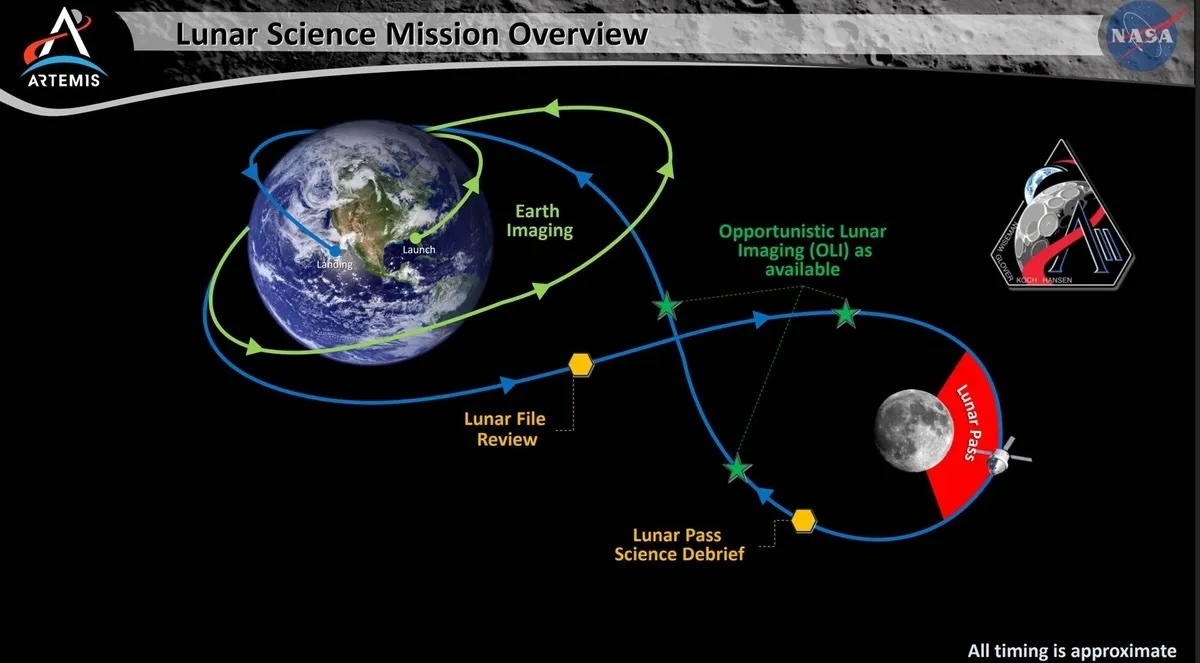
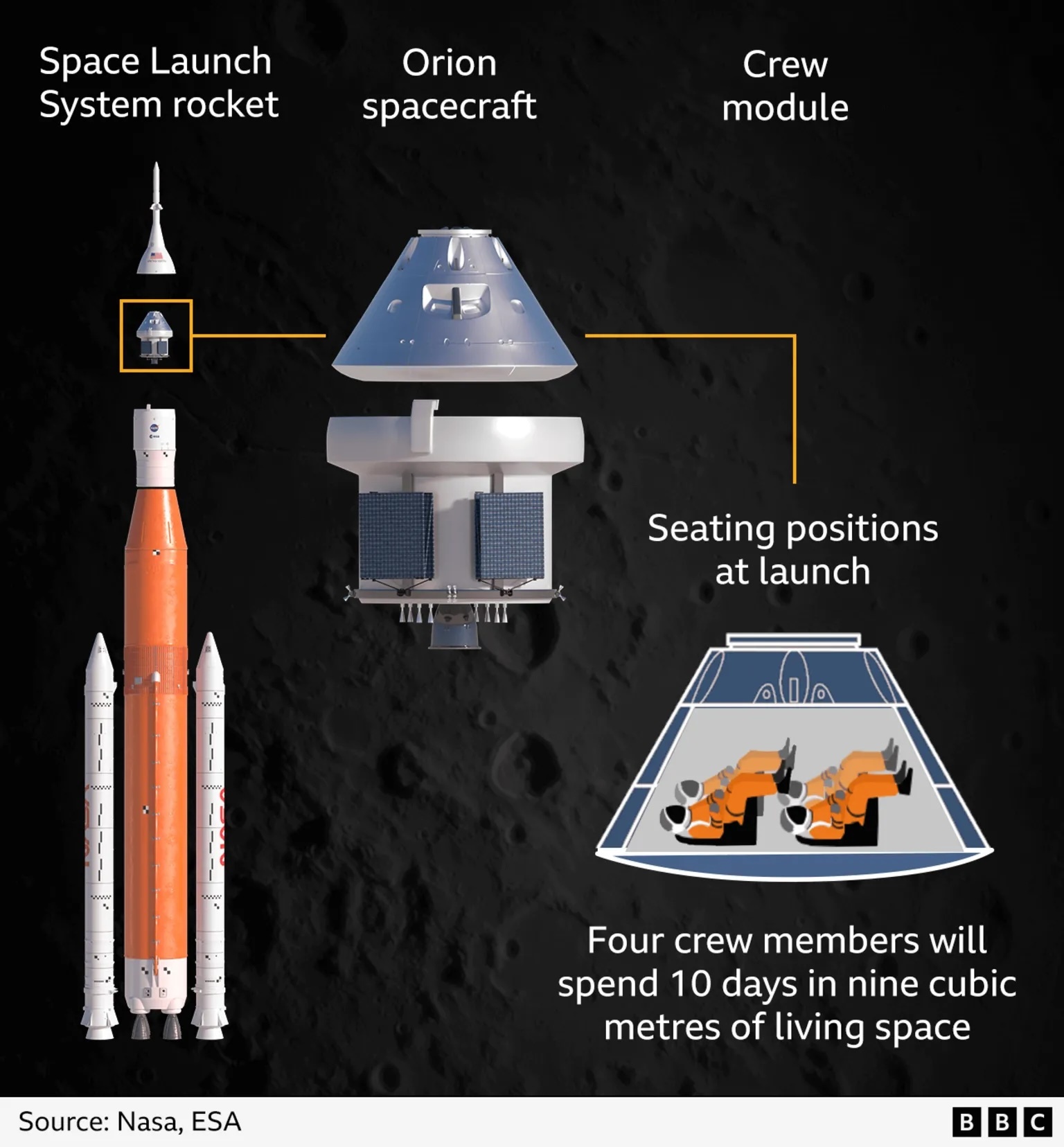
SLS will launch the quartet aboard Orion on a mission that will last about 10 days. Their first stop will be Earth orbit, where they will verify their spacecraft's systems and ready Orion for a course to the moon known as a "free-return" trajectory.
Instead of setting Orion up for an insertion into lunar orbit, the free-return trajectory will loop the spacecraft once around the moon on a figure-eight flight path back to Earth, ensuring the crew's return regardless of Orion's propulsion status, should unexpected issues crop up during flight.
While Artemis 2 won't land on the moon, the mission comes with its own historical significance beyond just returning people to lunar space. Depending on their particular launch time and specific trajectory, Orion's course around the far side of the moon has the potential to fly the Artemis 2 astronauts farther from Earth than any human has ever been.
Should Artemis 2 go smoothly, NASA plans to land astronauts on the lunar surface on Artemis 3. That mission is expected to launch sometime in 2028. By then, NASA hopes to expand its Artemis program infrastructure to include the first elements of the Gateway space station planned for lunar orbit, as well as the critical completion of the program's first Human Landing Services vehicle — a contract awarded to SpaceX and its Starship spacecraft. However, the agency recently signalled an interest in other bidders like Blue Origin, hoping that competition might lead to another crewed lunar lander being available sooner.
The upcoming Artemis 2 wet dress rehearsal is expected to begin as early as Thursday evening (Jan. 29) and operate toward a simulated launch at 9:00 p.m. EST on Saturday (0200 GMT on Feb. 1). NASA plans to broadcast the test on its streaming platform, with Space.com coverage of fueling procedures beginning Saturday.
Quelle: SC
----
Update: 1.02.2026
.
Preparing for Artemis II: Training for a Mission Around the Moon
Four astronauts will soon travel beyond low Earth orbit and fly around the Moon on Artemis II, a mission that will test NASA’s systems and hardware for human exploration of deep space.
Since June 2023, NASA astronauts Reid Wiseman, Victor Glover, Christina Koch, and CSA (Canadian Space Agency) astronaut Jeremy Hansen have been preparing for their lunar journey. The approximately 10-day mission will test the SLS (Space Launch System) rocket and Orion spacecraft, named Integrity by the crew, while requiring the quartet to operate with greater autonomy and make critical decisions far from Earth.
Training for Artemis II is all risk mitigation. By preparing the astronauts and flight controllers for what they might encounter, we enable mission success.

ARTEMIS II CHIEF TRAINING OFFICER
Jacki Mahaffey
Unlike missions to the International Space Station, Artemis II offers no nearby safe harbor and no option to be back on Earth within hours of a problem. Training reflects that reality. Crews are prepared not just to follow procedures, but to understand spacecraft systems well enough to adapt when conditions change.
Training began with mission fundamentals, including how Orion and SLS systems function individually and together. From there, the crew progressed through phases of training that moved from routine on-orbit operations to more complex mission segments such as ascent, entry, and landing. Each phase builds on the last as the crew moves closer to flight.
In parallel, astronauts trained in medical operations, exercise systems, spacesuits, and daily life aboard Orion. Together, these elements form a single, integrated mission timeline.
Observing the Moon Through the Lens
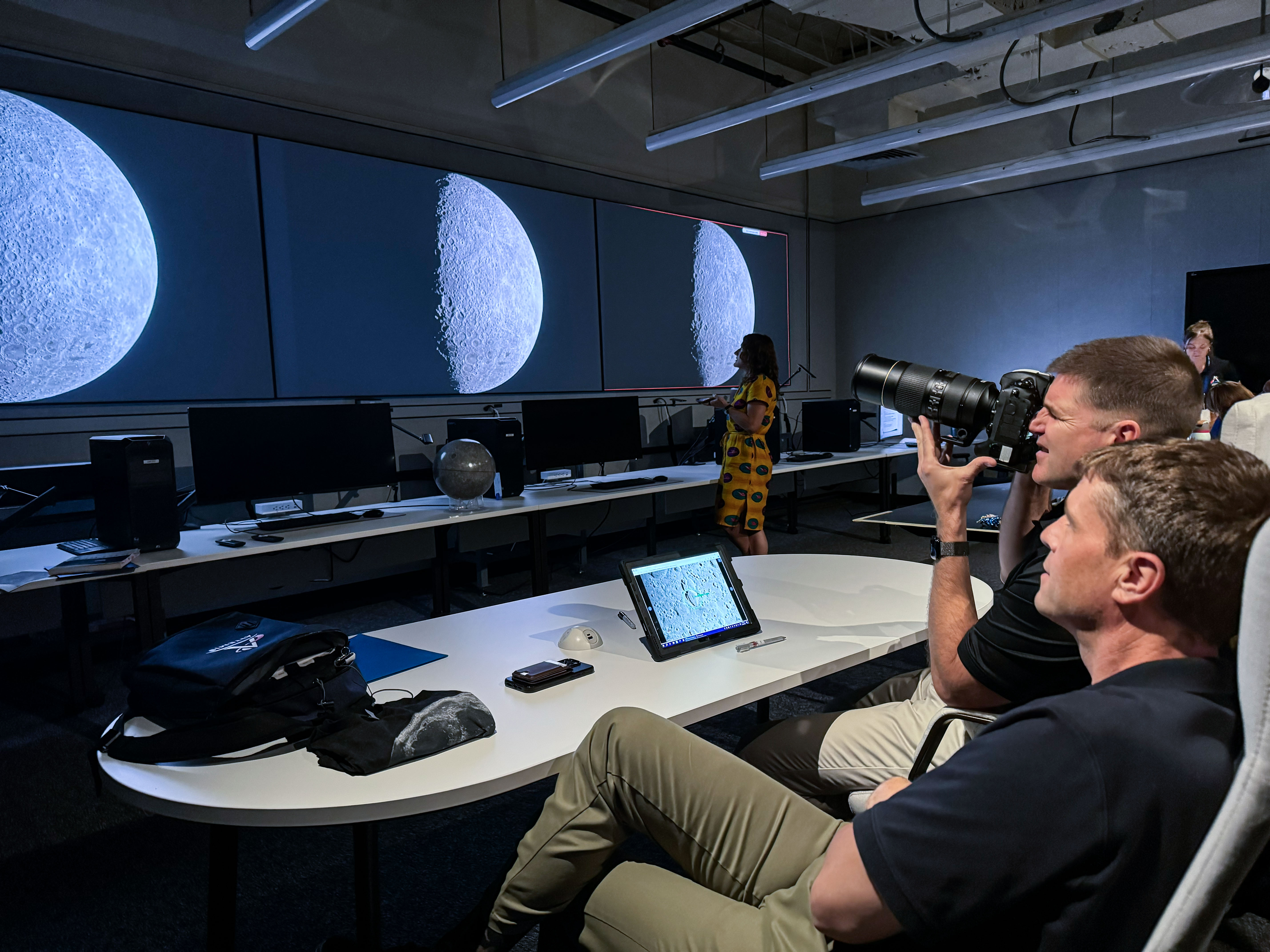
A key part of Artemis II training includes lunar observation and photography. At NASA’s Johnson Space Center in Houston, astronauts studied the Moon’s far side, learning to identify crater shapes, surface textures, color variations, and reflectivity.
Although Artemis II will not land on the Moon, the crew will conduct detailed observations from lunar orbit to prepare for future Artemis missions.
Flight Training at Ellington Field
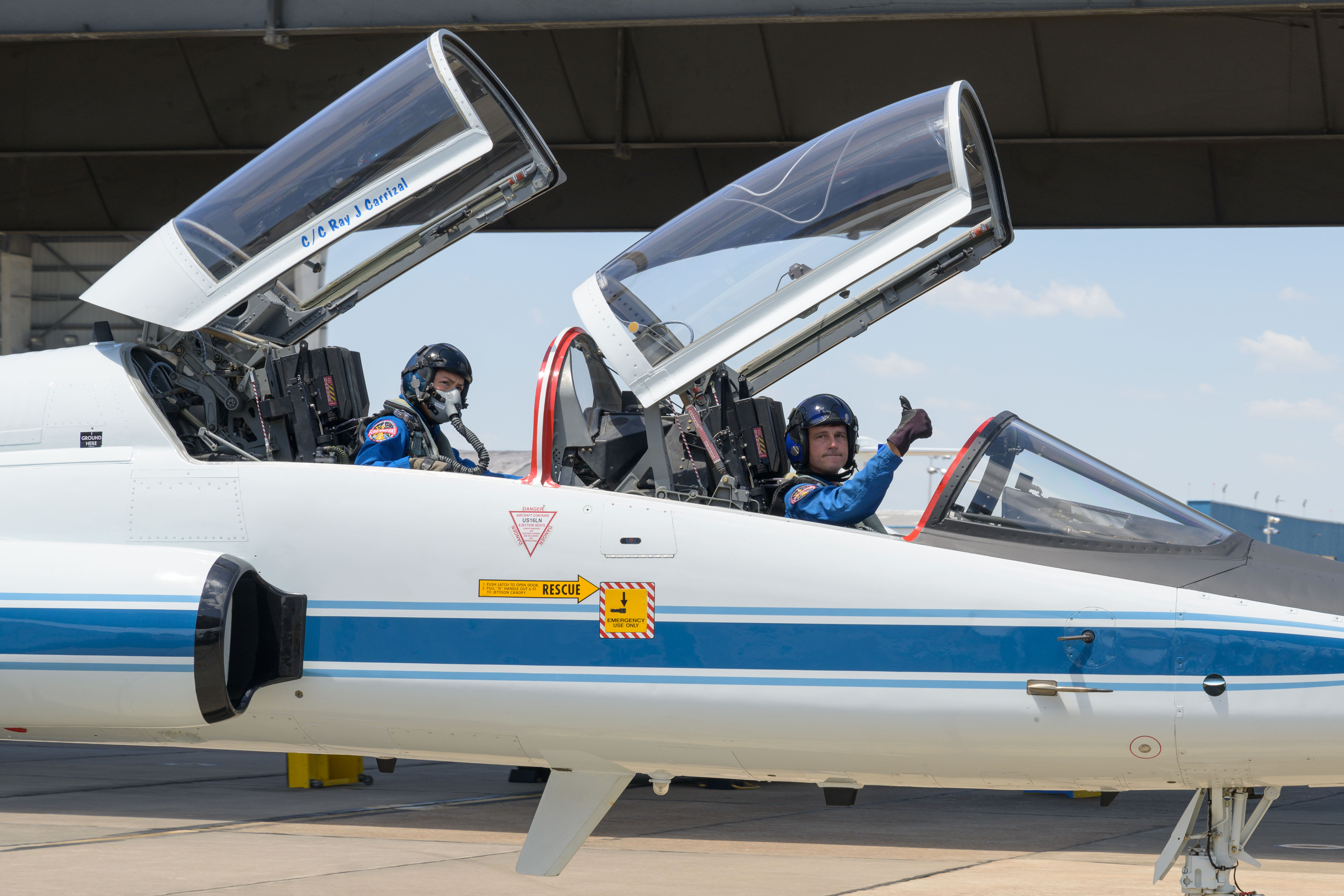
In addition to classroom instruction and simulations, the Artemis II crew trains in T-38 jet aircraft at Johnson’s Ellington Field. The T-38 exposes astronauts to high-workload, dynamic flight conditions that build spatial awareness and adaptability, skills that translate directly to decision-making under pressure in spaceflight.
Protecting Crew Health in Deep Space
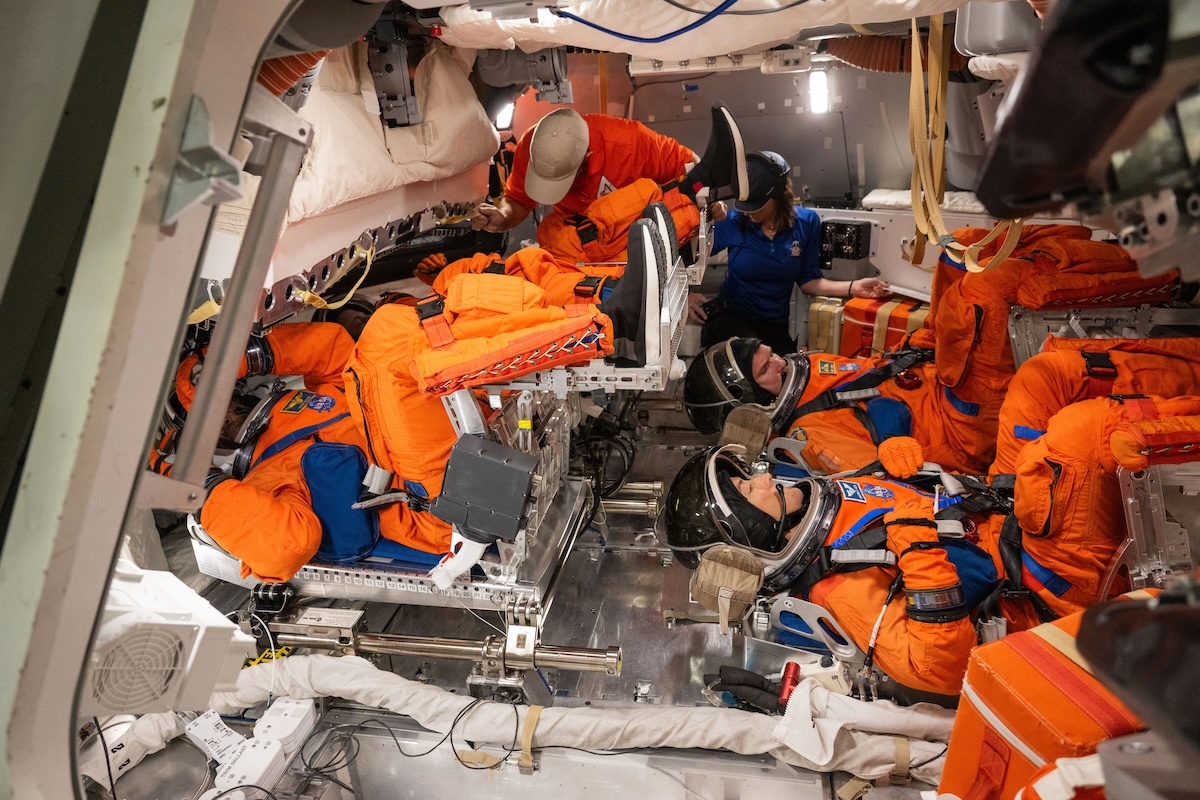
The crew donned their Orion Crew Survival System spacesuits during training to support testing of Orion’s environmental control and life support systems. The suit provides pressure, oxygen, and thermal protection during launch, entry, and contingency scenarios while Orion’s life support systems manage cabin oxygen, water, temperature, and overall crew health throughout the mission.
Mastering Orion Systems and Simulations

Inside the Orion Mission Simulator at Johnson, the crew rehearsed every phase of the mission, from routine operations to emergency response. Simulations are designed to teach astronauts how to diagnose failures, manage competing priorities, and make decisions with delayed communication from Earth.
Through this process, the quartet learned every aspect of the Orion crew module’s interior, including how to navigate onboard displays and execute the procedures used to fly and monitor the spacecraft.
Science Preparation and Geology Training
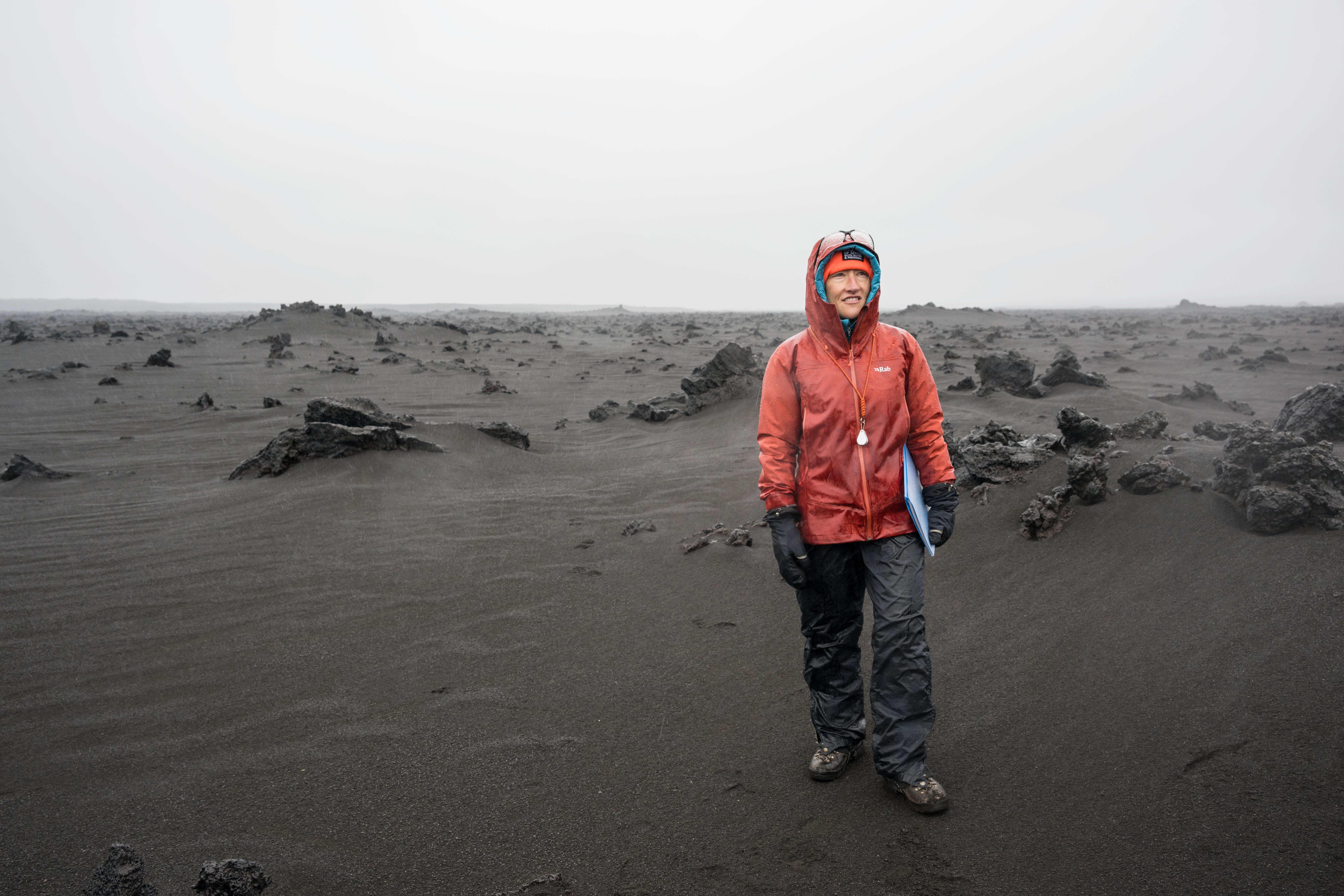
While Artemis II astronauts will not land on the Moon, the geology fundamentals they develop during field training in remote environments are critical to meeting the mission’s science objectives.
During the mission, the crew will examine a targeted set of surface features, including craters and regolith, from orbit. Astronauts will document variations in color, reflectivity, and texture to help scientists interpret geologic history.
Preparing for Splashdown and Recovery
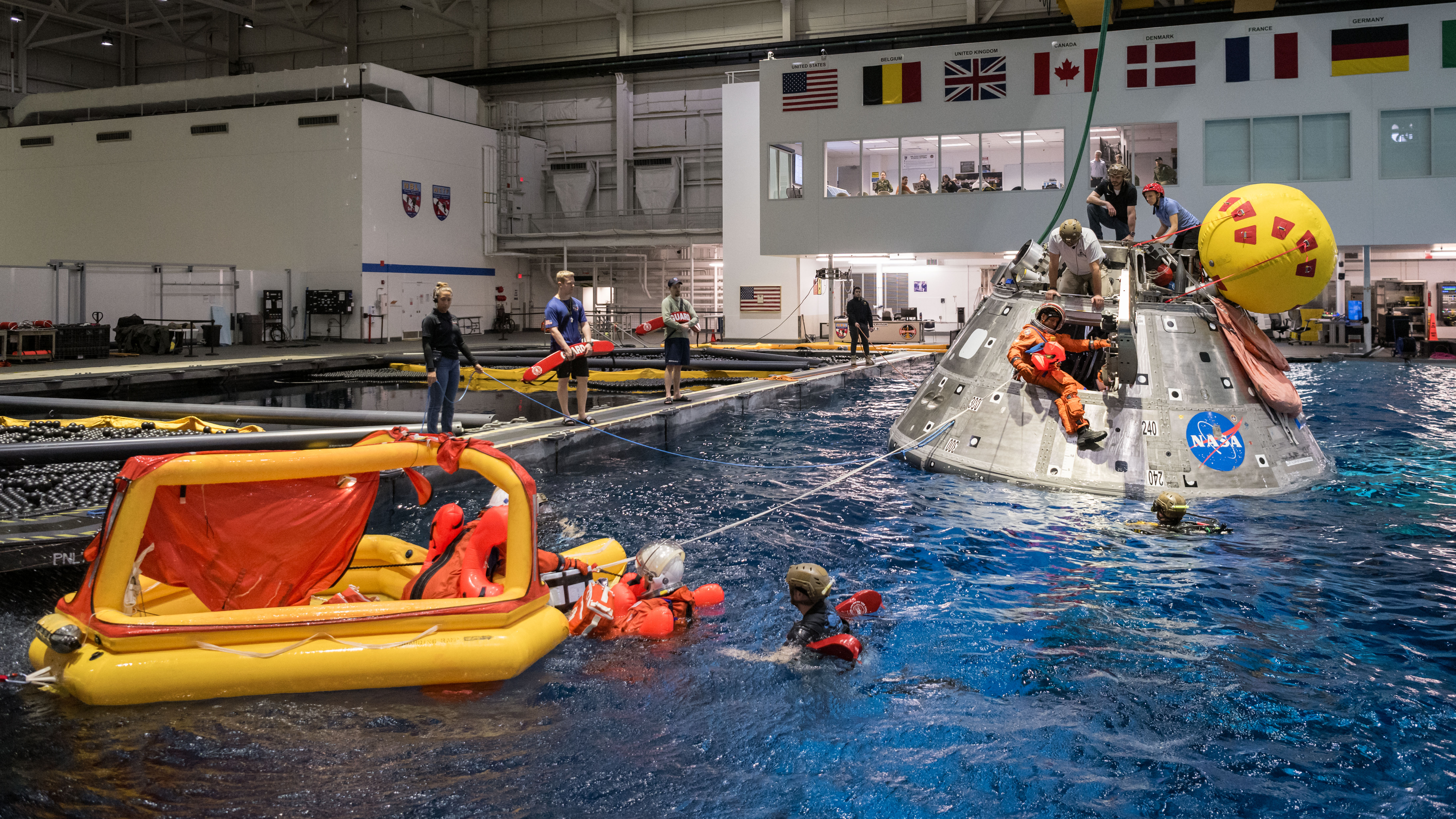
The mission will conclude when the Artemis II mission splashes down.
The crew worked through splashdown and recovery operations at the agency’s Neutral Buoyancy Laboratory. They rehearsed how to exit the Orion spacecraft safely in different scenarios, stabilize the spacecraft, and board a raft – skills they will rely on after returning from their mission around the Moon.
The Crew is Go for Launch
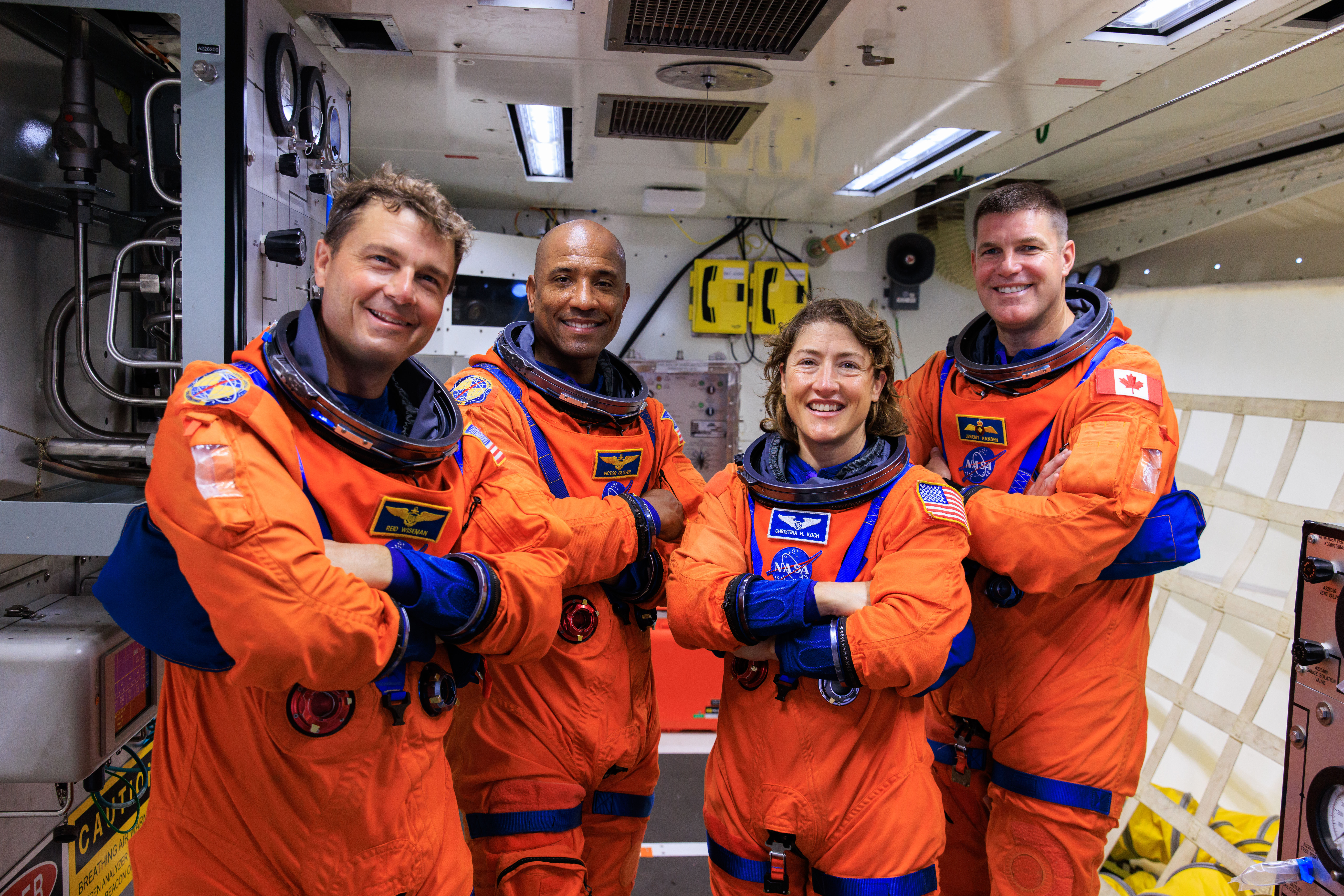
The Artemis II crew also completed integrated ground systems tests at NASA’s Kennedy Space Center in Florida. These included suited tests, full mission rehearsals, and launch-day dry runs that walked astronauts through every step, from traveling to the launch pad to entering Orion at Launch Pad 39B.
As Artemis II moves closer to launch, the focus shifts from preparation to readiness as the crew enters the next era of exploration beyond low Earth orbit.
Quelle: NASA
----
Update: 2.02.2026
.
Countdown Begins for Artemis II Wet Dress Rehearsal
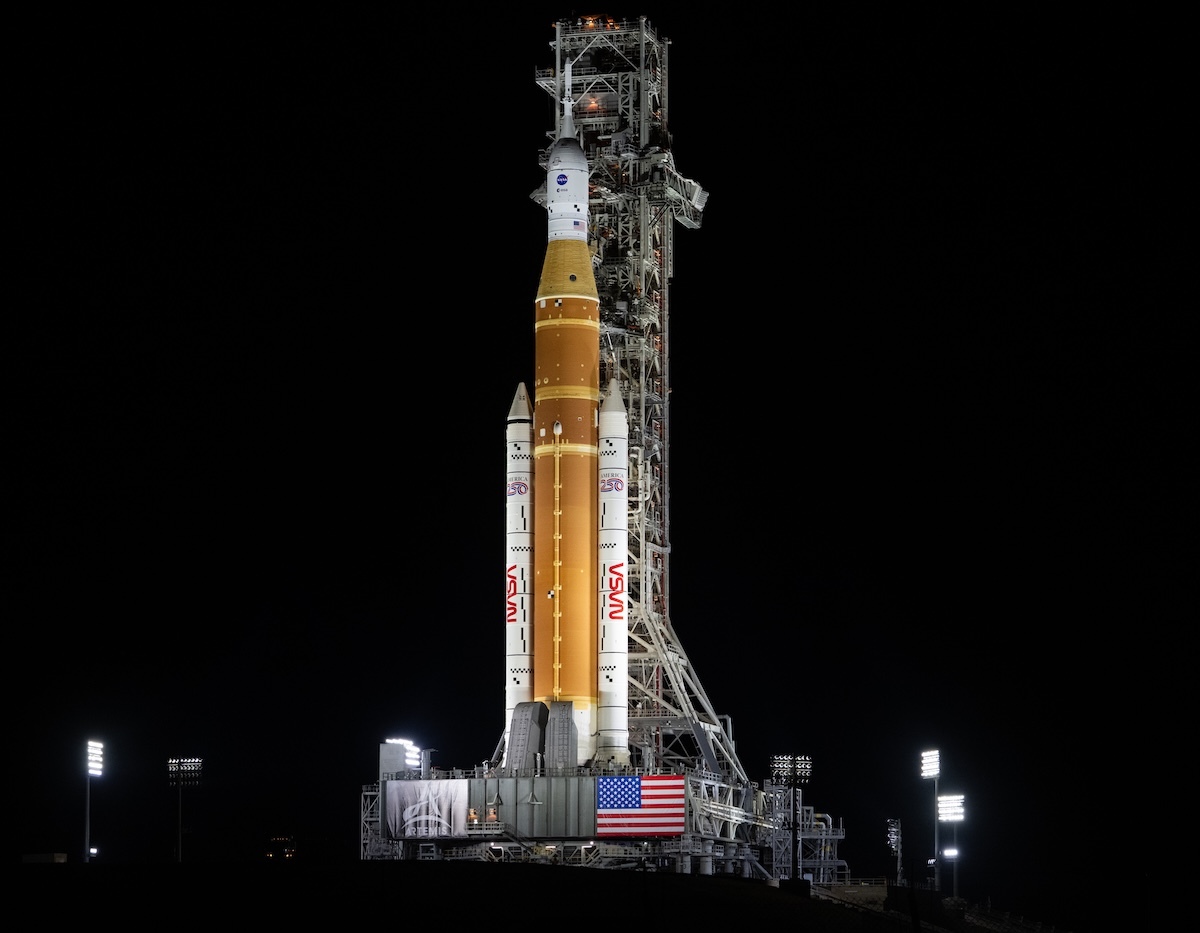
The countdown for the Artemis II wet dress rehearsal is underway at NASA’s Kennedy Space Center in Florida.
The countdown clock began at 8:13 p.m. EST, or L-48 hours, 40 minutes before the opening of a simulated launch window at 9 pm. Mon, Feb. 2. The test is expected to go until approximately 1 a.m. Feb. 3.
This test will run the launch team, as well as supporting teams in the Mission Control Center at NASA’s Johnson Space Center in Houston and other supporting NASA centers, through a full range of operations, including loading cryogenic liquid propellant into the SLS (Space Launch System) rocket’s tanks, conducting a launch countdown, demonstrating the ability to recycle the countdown clock, and draining the tanks to practice scrub procedures. These steps ensure the team is fully prepared for launch day.
A 24/7 live stream of the rocket at the pad continues online. NASA will provide a separate feed during tanking activities, as well as real-time blog post updates regarding the test during the fueling day.
Countdown Milestones
The countdown contains “L minus” and “T minus” times. “L minus” indicates how far away we are from liftoff in hours and minutes. “T minus” time is a sequence of events that are built into the countdown. Pauses in the countdown, or “holds,” are built into the countdown to allow the launch team to target a precise launch window, and to provide a cushion of time for certain tasks and procedures without impacting the overall schedule. During planned holds in the countdown process, the countdown clock is intentionally stopped and the T- time also stops. The L- time, however, continues to advance.
During the rehearsal, the team will execute a detailed countdown sequence. They will pause at T-1 minute and 30 seconds for up to three minutes, then resume until T-33 seconds before launch and pause again. After that, they will recycle the clock back to T-10 minutes and conduct a second terminal countdown to approximately T-33 seconds before ending the sequence. This process simulates real-world conditions, including scenarios where a launch might be scrubbed due to technical or weather issues. At the end of the test, the team will drain the propellant and review all data before setting an official target launch date.
While the Artemis II crew members are not participating in the wet dress rehearsal, crew milestones occurring during launch day will be incorporated into the test timeline and the Artemis closeout crew will practice their closeout operations, which include closing the Orion crew module and launch abort system hatches.
Below are some of the key events that take place at each milestone after the countdown
begins. All times are approximate for when these milestones are expected to occur.
L-49 hours 15 minutes and counting
- L-49H, 15M: The launch team arrives on their stations and the countdown begins
- L-48H40M: The countdown clock begins
- L-47H30M – L-38H30M: Fill the water tank for the sound suppression system
- L-48H45M – L-39H45M: Liquid Oxygen (LOX)/Liquid Hydrogen (LH2) system
preparations for vehicle loading - L-39H30M – L-38H45M: The core stage is powered up
- L-40H30M – L-39H: The interim cryogenic propulsion stage (ICPS) is powered
up - L-38H45M – L-34H30M: Final preparations of the four RS-25 engines
L-34 hours 30 minutes and counting
- L-33H45M – L-33H10M: The ICPS is powered down
- L-32H30M – L-28H30M: Charge Orion flight batteries to 100%
- L-30H30M – L-23H30M: Charge core stage flight batteries
- L-19H15M – L-17H45M: The ICPS is powered-up for launch
- L-19H30M – L-16H: Orion crew suit regulator leak checks
L-15 hours and counting
- L-14H30M – L-13H: All non-essential personnel leave Launch Complex 39B
- L-12H45M – 11H15M: Ground Launch Sequencer (GLS) activation
- L-13H15M – L-11H05M: Air-to-gaseous nitrogen (GN2) changeover and vehicle
cavity inerting
L-11 hours, 40 minutes and counting
- L-11H35M – L-9H20M: 2-hour 15-minute built in countdown hold begins
- L-11H40M – L-10H30M: Launch team conducts a weather and tanking briefing
- L-10H20M: Launch team decides if they are “go” or “no-go” to begin tanking the
rocket - L-10H10M – L-9H50M: Core stage LOX transfer line chilldown
- L-10H10M – L-9H25M: Core stage LH2 chilldown
- L-10H20M – L-9H: Orion cold soak
L-10 hours and counting - L-9H50M – L-9H10M: Core stage LOX main propulsion system chilldown
- L-9H25M – L-9H: Core stage LH2 slow fill start
- L-9H20M: Resume T-Clock from T-8H10M
- L-9H10M – L-8H55M: Core stage LOX slow fill
- L-9H – L-7H40M: Core stage LH2 fast fill
- L-8H55M – L-6H10M: Core stage LOX fast fill
- L-8H45M – L-8H10M: ICPS LH2 chilldown
- L-8H10M – L-7H25M: ICPS LH2 fast fill start
- L-7H45M – L-6H: ICPS LOX main propulsion system chilldown
- L-7H40M – L-7H30M: Core stage LH2 topping
- L-7H30M – terminal count: Core stage LH2 replenish
- L-7H25M – L-7H05M: ICPS LH2 vent and relief test
- L-7H05M – L-6H55M: ICPS LH2 tank topping start
- L-6H50M – terminal count: ICPS LH2 replenish
- L-6H10M – L-5H40M: Orion communications system activated (RF to mission
control) - L-6H10M – L-5H40M: Core stage LOX topping
L-6 hours and counting
- L-6H – L-5H15M: ICPS LOX fast fill
- L-5H40M – terminal count: Core stage LOX replenish
- L-5H15M – L-5H: ICPS LOX vent and relief test
- L-5H – L-4H40M: ICPS LOX topping
- L-5H40M: Stage pad rescue
- L-5H40M: Closeout crew assemble
- L-4H40M – terminal count: ICPS LOX replenish
- L-4H40M: All stages replenish
- L-4H40M: Start 40-minute built in hold
- L-4H40M-L-4H25M: Closeout crew to white room
- L-4H30M – L-4H20M: Crew Module hatch preps and closure
- L-4H20M – L-3H20M: Counterbalance mechanism hatch sealpress decay
checks - L-3H20M – L-2H40M: Crew Module Hatch service panel install/closeouts
- L-2H40M – L2H20M: Launch Abort System (LAS) Hatch closure for flight
- L-1H10M: Launch Director brief – Flight vehicle/TPS Scan results with CICE
- L-1H45M – L-1H40M: Closeout crew departs Launch Complex 39B
L-40 minutes and holding
- L-40M: Built in 30-minute countdown hold begins
L-25 minutes and holding
- L-25M: Transition team to Orion to Earth communication loop following final NTD
briefing - L-16M: The launch director polls the team to ensure they are “go” for launch
T-10 minutes and counting
- T-10M: Ground Launch Sequencer (GLS) initiates terminal count
- T-8M: Crew Access Arm retract
- T-6M: GLS go for core stage tank pressurization
- T-6M: Orion set to internal power
- T-5M57S: Core stage LH2 terminate replenish
- T-4M: GLS is go for core stage auxiliary power unit (APU) start
- T-4M: Core Stage APU starts
- T-4M: Core stage LOX terminate replenish
- T-3M30S: ICPS LOX terminate replenish
- T-3M10S: GLS is go for purge sequence 4
- T-2M02S: ICPS switches to internal battery power
- T-2M: Booster switches to internal batter power
- T-1M30S: Hold for three minutes to verify core stage certification hold time
- T-1M30S: Core stage switches to internal power
- T-1M20S: ICPS enters terminal countdown mode
- T-50S: ICPS LH2 terminate replenish
- T-33S: GLS sends “go for automated launch sequencer” command
- T-33S: GLS Cutoff/Recycle
Inside the terminal countdown, teams have a few options to hold the count if needed.
- The launch team can hold at 6 minutes for the duration of the launch window,
less the 6 minutes needed to launch, without having to recycle back to 10
minutes. - If teams need to stop the clock between T-6 minutes and T-1 minute, 30
seconds, they can hold for up to 3 minutes and resume the clock to launch. If
they require more than 3 minutes of hold time, the countdown recycles back to T-
10. - If the clock stops after T-1 minute and 30 seconds, but before the automated
launch sequencer takes over, then teams can recycle back to T-10 to try again,
provided there is adequate launch window remaining. - On launch day, after handover to the automated launch sequencer, any issue
that would stop the countdown would lead to concluding the launch attempt for
that day.
Quelle: NASA
----
Update: 4.02.2026
.
NASA Conducts Artemis II Fuel Test, Eyes March for Launch Opportunity
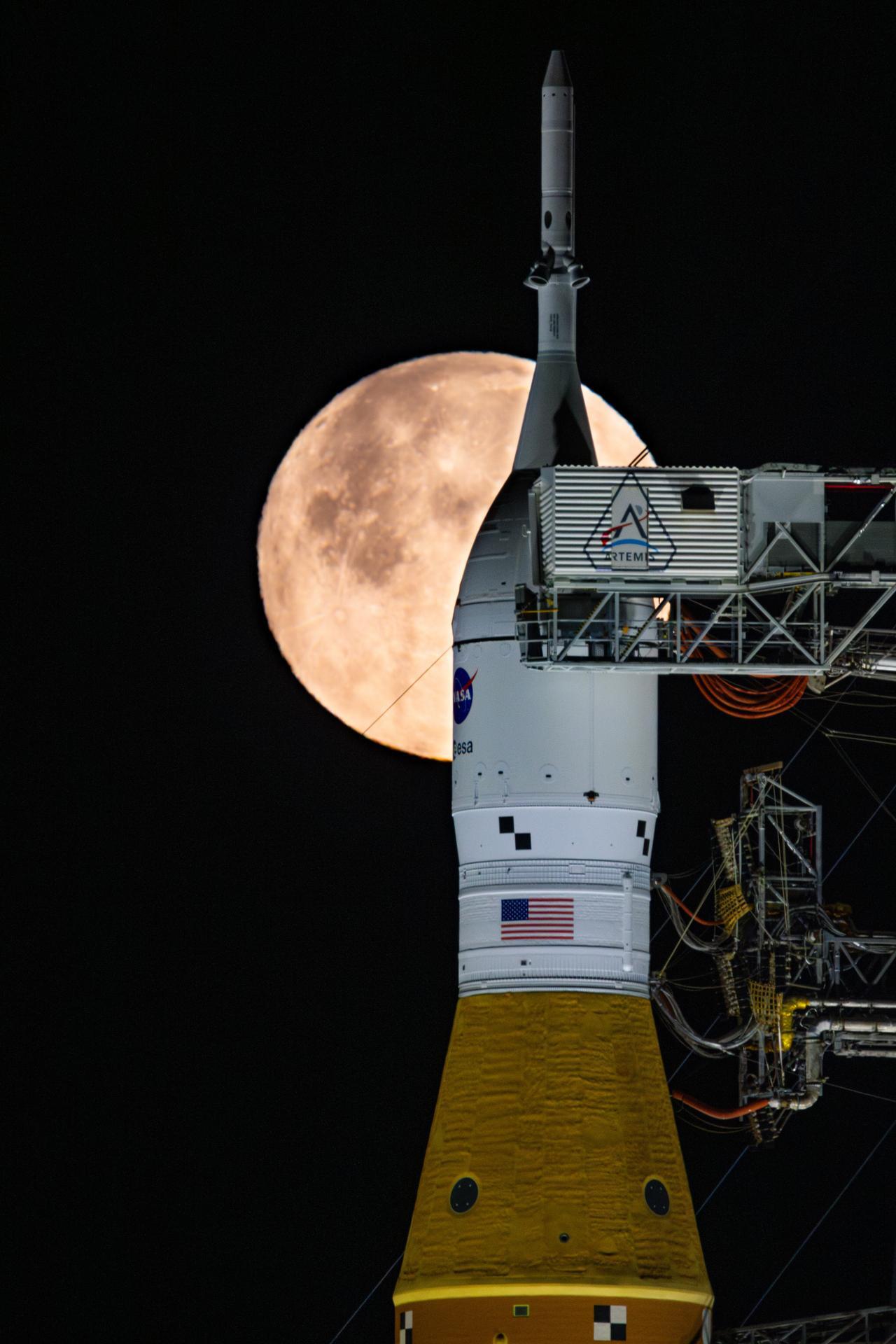
NASA concluded a wet dress rehearsal for the agency’s Artemis II test flight early Tuesday morning, successfully loading cryogenic propellant into the SLS (Space Launch System) tanks, sending a team out to the launch pad to closeout Orion, and safely draining the rocket. The wet dress rehearsal was a prelaunch test to fuel the rocket, designed to identify any issues and resolve them before attempting a launch.
Engineers pushed through several challenges during the two-day test and met many of the planned objectives. To allow teams to review data and conduct a second wet dress rehearsal, NASA now will target March as the earliest possible launch opportunity for the flight test.
Moving off a February launch window also means the Artemis II astronauts will be released from quarantine, which they entered in Houston on Jan. 21. As a result, they will not travel to NASA’s Kennedy Space Center in Florida Tuesday as tentatively planned. Crew will enter quarantine again about two weeks out from the next targeted launch opportunity.
NASA began the approximately 49-hour countdown at 8:13 p.m. EST on Jan. 31. Leading up to, and throughout tanking operations on Feb. 2, engineers monitored how cold weather at Kennedy impacted systems and put procedures in place to keep hardware safe. Cold temperatures caused a late start to tanking operations, as it took time to bring some interfaces to acceptable temperatures before propellant loading operations began.
During tanking, engineers spent several hours troubleshooting a liquid hydrogen leak in an interface used to route the cryogenic propellant into the rocket’s core stage, putting them behind in the countdown. Attempts to resolve the issue involved stopping the flow of liquid hydrogen into the core stage, allowing the interface to warm up for the seals to reseat, and adjusting the flow of the propellant.
Teams successfully filled all tanks in both the core stage and interim cryogenic propulsion stage before a team of five was sent to the launch pad to finish Orion closeout operations. Engineers conducted a first run at terminal countdown operations during the test, counting down to approximately 5 minutes left in the countdown, before the ground launch sequencer automatically stopped the countdown due to a spike in the liquid hydrogen leak rate.
In addition to the liquid hydrogen leak, a valve associated with Orion crew module hatch pressurization, which recently was replaced, required retorquing, and closeout operations took longer than planned. Cold weather that affected several cameras and other equipment didn’t impede wet dress rehearsal activities, but would have required additional attention on launch day. Finally, engineers have been troubleshooting dropouts of audio communication channels across ground teams in the past few weeks leading up to the test. Several dropouts reoccurred during the wet dress rehearsal.
The team carried out updated procedures to purge the Orion service module’s cavities with breathing air during closeout crew operations rather than gaseous nitrogen to ensure the team assisting the crew into their seats and closing Orion’s hatches can safely operate in the White Room.
With March as the potential launch window, teams will fully review data from the test, mitigate each issue, and return to testing ahead of setting an official target launch date.
Crew safety will remain the highest priority, ensuring NASA astronauts Reid Wiseman, Victor Glover, and Christina Koch, and CSA (Canadian Space Agency) astronaut Jeremy Hansen, return home at the end of their mission.
In addition to a statement from NASA Administrator Jared Isaacman released Tuesday, agency leaders will discuss initial results from the wet dress rehearsal during a news conference at 1 p.m. on Tuesday. Previously, NASA was targeting the news conference to begin at 12 p.m. The agency will stream the news conference live on its YouTube channel.
Quelle: NASA
----
Update: 5.02.2026
.
'Chance for rocket to talk to us' NASA says of Artemis II launch delay
NASA officials tried to put a positive spin on the critical test of the Artemis II rocket that resulted in a decision to delay the upcoming launch. Too many issues arose, proving more work needs to be done before this much-anticipated moon mission is ready to go.
The Feb. 2 wet dress rehearsal test ended early with a recurring hydrogen leak, delaying liftoff another month. Now the Artemis II mission, which will send four astronauts on a test flight around the moon, is set for no earlier than March 6. The mission is the precursor to the Artemis III moon landing, returning humanity to the moon for the first time in more than 50 years.
It's also the first crewed test flight of this massive Space Launch System rocket.
"For me, the big take away was we got a chance for the rocket to talk to us, and it did just that," John Honeycutt, chair of Artemis II Mission Management Team, said during a Feb. 3 press briefing.
Launch teams discovered a hydrogen leak within the rocket's core stage during fueling in the wet dress rehearsal test on Monday, Feb. 2. Fueling was able to resume but then the team experienced multiple delays connected to the Orion spacecraft's final preparations. This included an issue with a valve for the spacecraft's crew module hatch pressurization, which NASA said was recently replaced.
"The test gave us exactly what we needed. It was an opportunity for us to wring out the system as well as the team before we go ask our crew to fly on launch day," said Honeycutt.
The test was supposed to simulate launch day operations, including fueling the rocket with liquid hydrogen and liquid oxygen up until T-33 seconds. The NASA teams didn't get that far. The test was ended with more than five minutes on the clock.
“They did just an incredible job getting through that test last night," said NASA Associate Administrator Amit Kshatriya. "We have challenges throughout, but the way they managed themselves with poise and dignity and got as much data as we could while the vehicle was in the test configuration, really just a phenomenal job.”
NASA officials said they were in constant contact with the four-astronaut crew, who had been in quarantine and planning to fly into Kennedy Space Center on Feb. 3. With the launch delay, the crew has been released from quarantine and will not travel to Florida until approximately 10 days prior to launch.
"I was conversing with our commander, Reid Wiseman, as we went through wet dress yesterday," said Lori Glaze, acting associate administrator for NASA's Exploration Systems Development Mission Directorate. "We've been staying in constant communication so they know where we are and that we're all together on this as we are moving forward with our plans."
Hydrogen leaks not new to NASA's Artemis
Hydrogen leaks were one of the issues seen during the 2022 Artemis I mission prior to liftoff. Glaze said that being able to completely fill the rocket's tank during the Feb. 2 test, despite the reoccurring leak, was success.
"We really did learn a lot from the Artemis I mission, and we implemented a lot of the lessons learned yesterday through wet dress," said Glaze. "And I would say many of those were demonstrated successfully."
Charlie Blackwell-Thompson, launch director for NASA's Exploration Ground Systems Program, said that it was around 12:29 p.m. on Feb. 2 that the rocket's core stage experienced its first leak — a 12 to 14 percent leak rate. A 16 percent rate is the established limit in which it becomes an issue for ignition. However, thanks to a workaround discovered during Artemis I, teams managed to bring that leak rate down and continue fueling.
Following delays, the countdown proceeded to T-6 minutes, and the crew access arm retracted —marking the first time that has been done in terminal count with the ground launch sequencer.
But as core stage pressurization proceeded, the hydrogen leak rate picked up once again, causing teams to terminate the test with more than five minutes left on the clock.
By 6 a.m. Tuesday, Feb. 3, the core stage had been drained and teams continue to review data.
NASA officials said the agency will reveal more information as it becomes available, including the date of a new wet dress rehearsal. There was no immediate talk of rolling the rocket back into the Vehicle Assembly Building.
Quelle: Florida Today