
25.01.2026
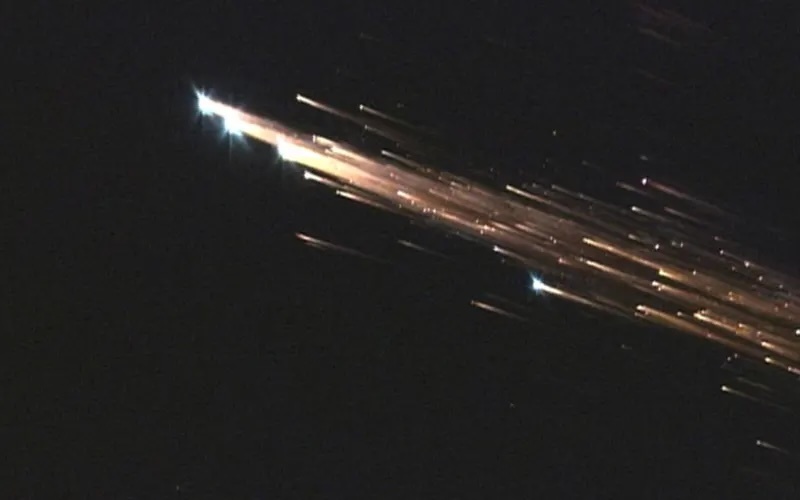
Note: This is not an image of the SpaceX upper stage re-entry | Credit: ESA / NASA
The European Space Agency has published a call to tender for a study examining the re-entry and breakup of a SpaceX Falcon 9 upper stage in February last year.
In the early hours of 19 February 2025, a Falcon 9 second stage underwent an uncontrolled atmospheric re-entry over Poland. At least four fragments of the stage survived re-entry and landed in various locations across the country. While no one was injured and no property was damaged, at least one fragment landed in a populated area. The incident ultimately led to the dismissal of the head of the Polish Space Agency, after information about the re-entry was sent to the wrong email addresses at the Ministry of National Defence.
On 21 January, ESA’s Space Safety Programme published a call for tender for a study that would utilise data collected during the re-entry of the Falcon 9 upper stage over Poland in February 2025 to help predict the risks associated with the re-entry of elongated upper stages.
According to the call, there are currently considerable uncertainties surrounding the physics and dynamics of destructive re-entry in the very low Earth orbit regime, below 150 kilometres in altitude. The study, therefore, aims to maximise the scientific return from the Falcon 9 re-entry event using publicly available data, noting that access to SpaceX’s proprietary information is unlikely.
Understanding the dynamics of rocket upper stage re-entry is becoming an increasingly relevant topic. Public launch statistics indicate that in 2015, there were approximately 80 orbital rocket launches. A decade on, that figure has almost quadrupled, with 317 successful orbital rocket launches occurring in 2025.
While the study aims to contribute to a broader understanding of uncontrolled re-entries in the very low Earth orbit regime, the call is conservative in how it frames the study’s potential outputs. It states that lessons learned from the analysis will be used to draw general conclusions on re-entry predictability and the risks associated with elongated upper stages, as well as to support educational outreach activities aimed at raising awareness.
Quelle: European Spaceflight LTD