
18.01.2026

Artemis II Moon Rocket Ready for Big Move
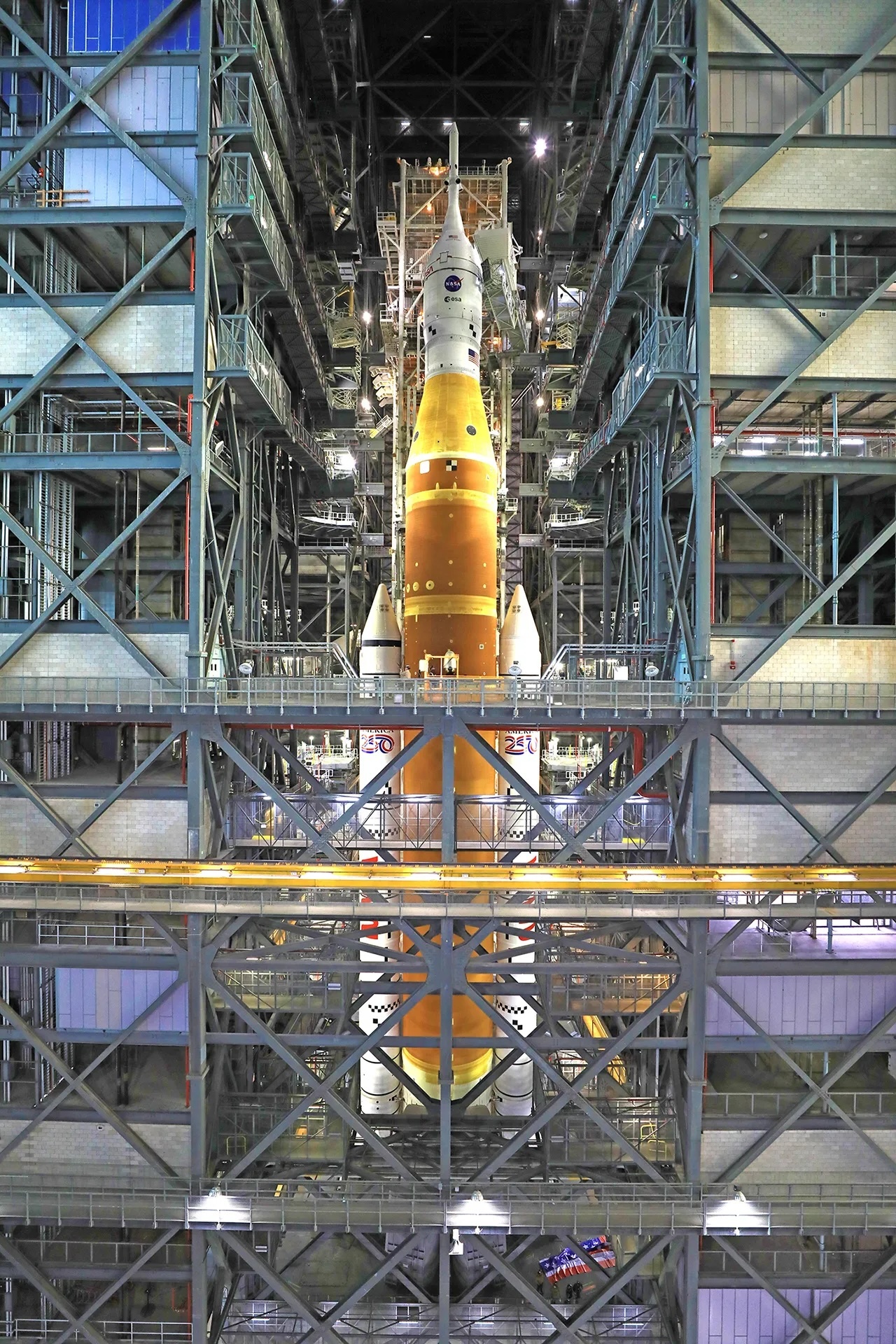
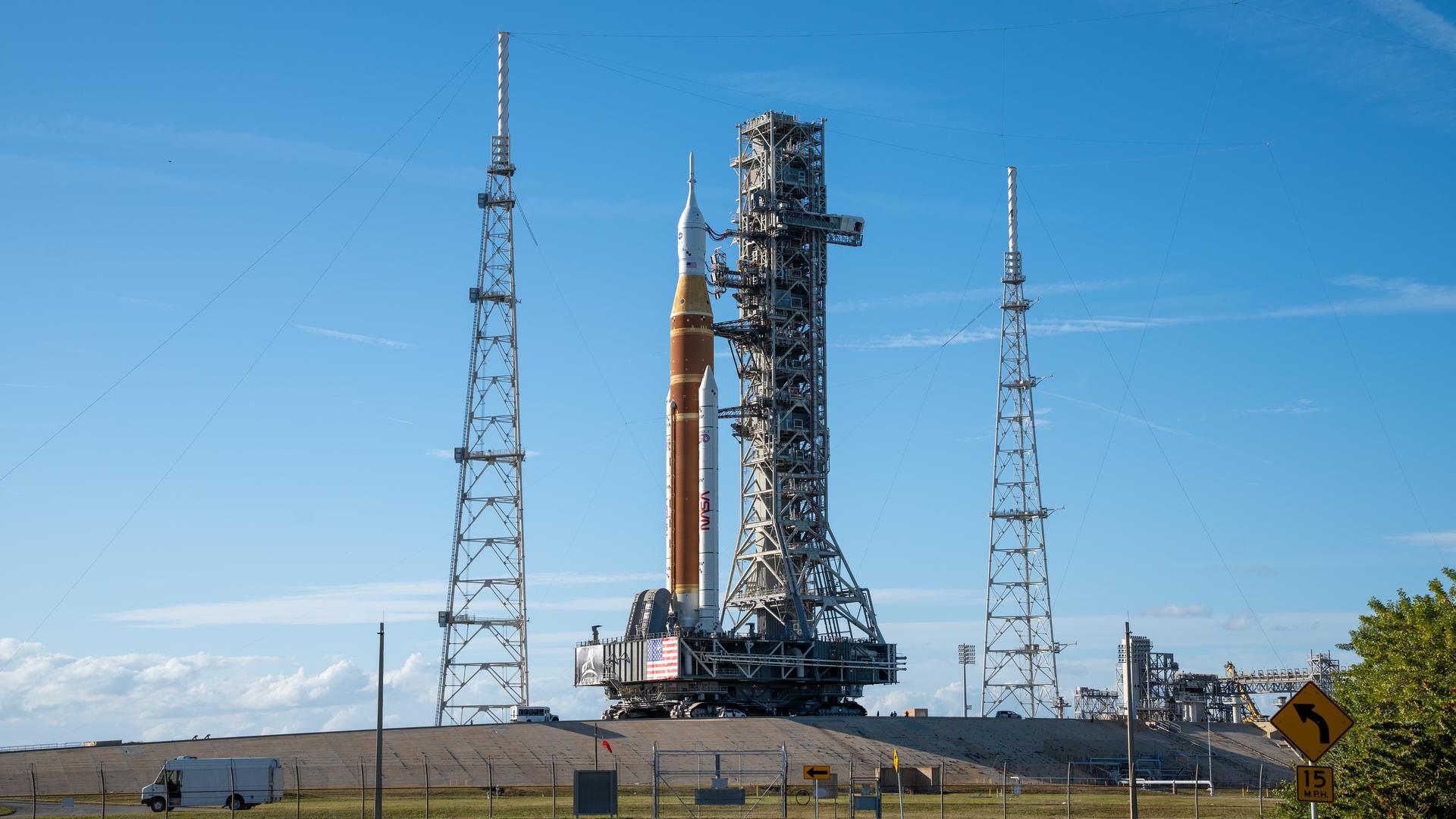
Inside the Vehicle Assembly Building at NASA’s Kennedy Space Center in Florida, the agency’s Artemis II Moon rocket stands poised for the next step in its journey. Engineers are targeting no earlier than 7 a.m. EST, Saturday, Jan. 17, to begin rolling NASA’s powerful SLS (Space Launch System) rocket and Orion spacecraft, atop the mobile launcher, to the spaceport’s Launch Pad 39B.
NASA’s crawler-transporter 2 will carry the 11-million-pound stack at about one mile per hour along the four-mile route to Launch Pad 39B. The journey will take up to 12 hours. The time of rollout is subject to change if additional time is needed for technical preparations or weather.
A live feed of rollout will begin at the start of rollout and a media gaggle with NASA Administrator Jared Isaacman and the Artemis II crew will begin at 9 a.m. Both will stream on NASA’s YouTube channel. Individual streams for each of these events will be available from that page. Learn how to stream NASA content through a variety of online platforms, including social media.
Below is the weather criteria for rollout:
Do not roll to launch pad if the lightning forecast is greater than 10% within 20 nautical miles of the launch area during rollout.
Do not roll to launch pad if there is greater than a 5% chance of hail forecast in the launch area during rollout.
Do not roll to launch pad if sustained wind is forecast to be greater than 40 knots or peak wind greater than 45 knots.
Do not roll to launch pad if temperature is less than 40 degrees Fahrenheit or exceeds 95 degrees Fahrenheit at the launch area during rollout.
Rollout to the pad marks another milestone leading up to the Artemis II mission. In the coming weeks, NASA will complete final preparations of the rocket and, if needed, rollback SLS and Orion to the Vehicle Assembly Building for additional work. While the Artemis II launch window opens as early as Friday, Feb. 6, the mission management team will assess flight readiness after the wet dress rehearsal across the spacecraft, launch infrastructure, and the crew and operations teams before selecting a launch date.
As part of a Golden Age of innovation and exploration, the approximately 10-day Artemis II test flight is the first crewed flight under NASA’s Artemis campaign. It is another step toward new U.S.-crewed missions to the Moon’s surface, leading to a sustained presence on the Moon that will help the agency prepare to send the first astronauts – Americans – to Mars.
Quelle: NASA
+++
NASA’s Artemis II Moon Rocket on Way to Launch Pad
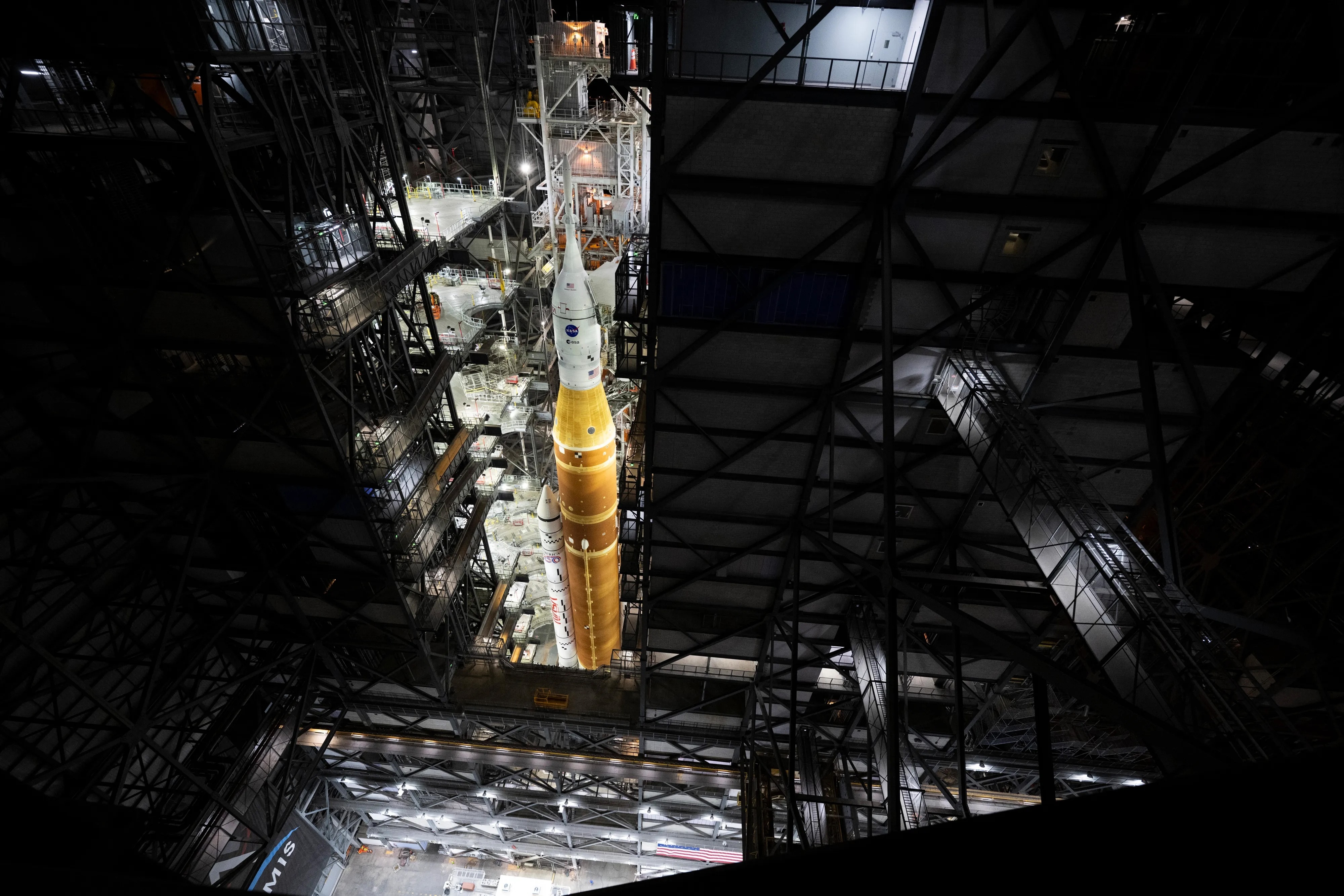
The SLS (Space Launch System) rocket and Orion spacecraft that will carry four astronauts around the Moon is rolling to Launch Complex 39B at NASA’s Kennedy Space Center in Florida. The four-mile trek began at 7:04 a.m. EST on Saturday, Jan. 17, and is expected to take up to 12 hours.
The 11-million-pound stack has been undergoing preparations for launch in the Vehicle Assembly Building since October. NASA’s crawler-transporter 2 is slowly moving it on top of the mobile launcher at a speed of about 1 mph. A live feed of the move is available on NASA’s YouTube channel.
At 9 a.m., the Artemis II crew – Commander Reid Wiseman, Pilot Victor Glover, and Mission Specialist Christina Koch of NASA, along with CSA’s (Canadian Space Agency) Mission Specialist Jeremy Hansen – will be joined by NASA Administrator Jared Isaacman for a Q&A with media in attendance, which also will be available to view live on YouTube.
Once at the launch pad, engineers in the coming days will prepare SLS and Orion for a wet dress rehearsal test that includes loading all the propellants into the rocket. This rehearsal will allow the Artemis mission management team to assess flight readiness. The earliest launch window for the approximately 10-day mission around the Moon opens on Friday, Feb. 6.
Quelle: NASA
----
Update: 19.01.2026
.
NASA's SLS rocket rolls to launch pad head of Artemis II moon mission
As the sun rose Saturday, Jan. 17, a crowd gathered at NASA’s Kennedy Space Center to watch a sight long awaited: the 322-foot-tall SLS rocket that will support the Artemis II lunar mission headed to the launch pad.
After rolling out of the Vehicle Assembly Building, SLS was off on a 12-hour, four-mile trip to Launch Complex 39B at NASA’s Kennedy Space Center. Mounted atop the crawler-transporter 2, the giant rocket moved at a snail’s pace of just 1 mile per hour, including slowdowns for hills and turns.
“I was around for Artemis I ... ” said John Honeycutt, Artemis II mission management team chair during a pre-rollout press briefing. “This one feels a lot different. Putting crew on the rocket and taking the crew around the moon — this is going to be our first step toward sustained lunar presence.”
No earlier than Feb. 6, commander Reid Wiseman, pilot Victor Glover, and mission specialists Christina Koch and Jeremy Hansen will launch atop the giant rocket, taking the Orion spacecraft on a test flight around the moon.
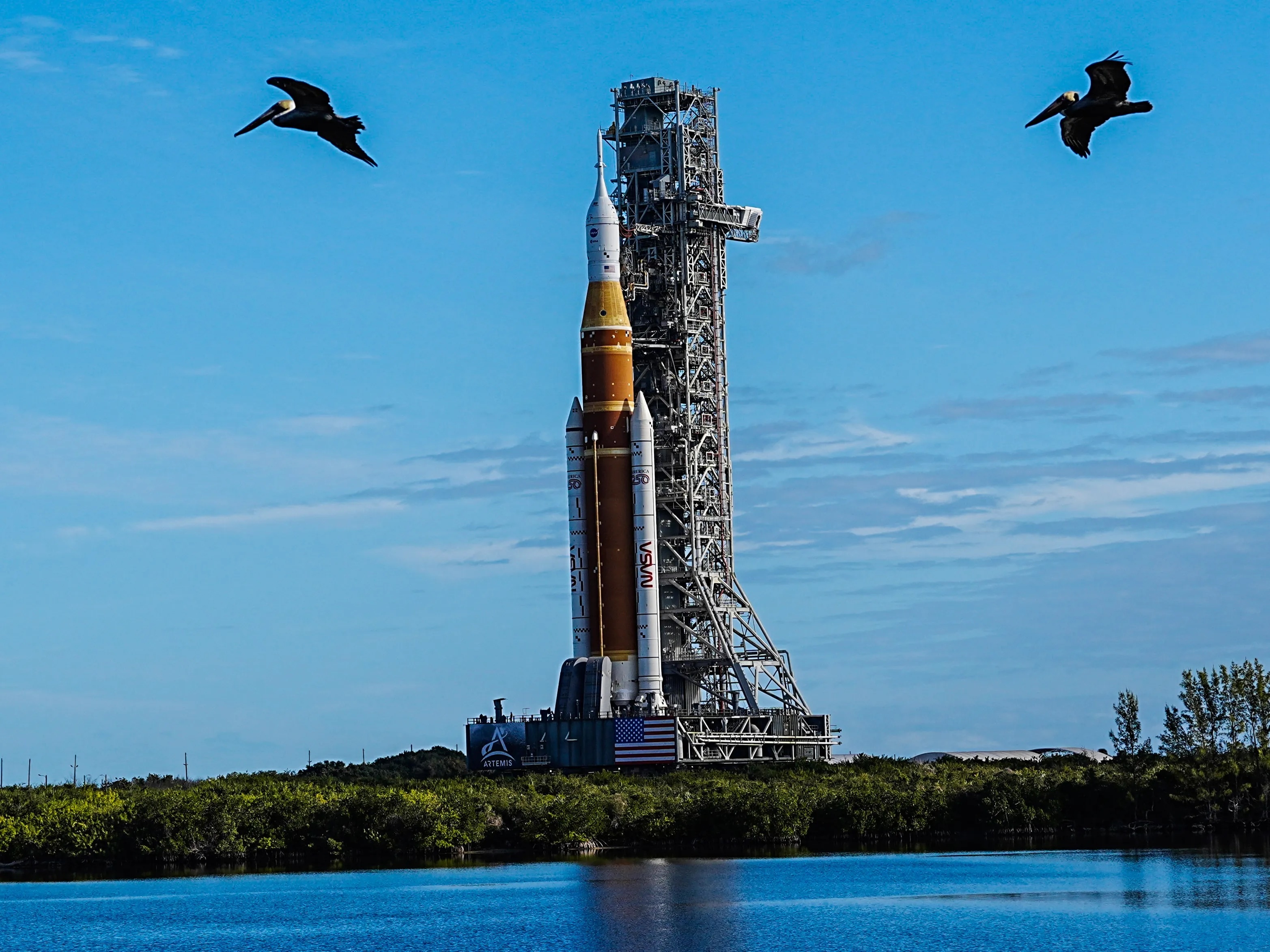
"And why are we doing this? We are doing this to fulfill a promise," said NASA Administrator Jared Isaacman during a Jan. 17 press briefing. "A promise to the American people (that) we will return to the moon. A promise to all of the pioneers ... the engineer, the scientists, the astronauts, the researchers from the 1960s, which laid the foundation which we are standing upon right now."
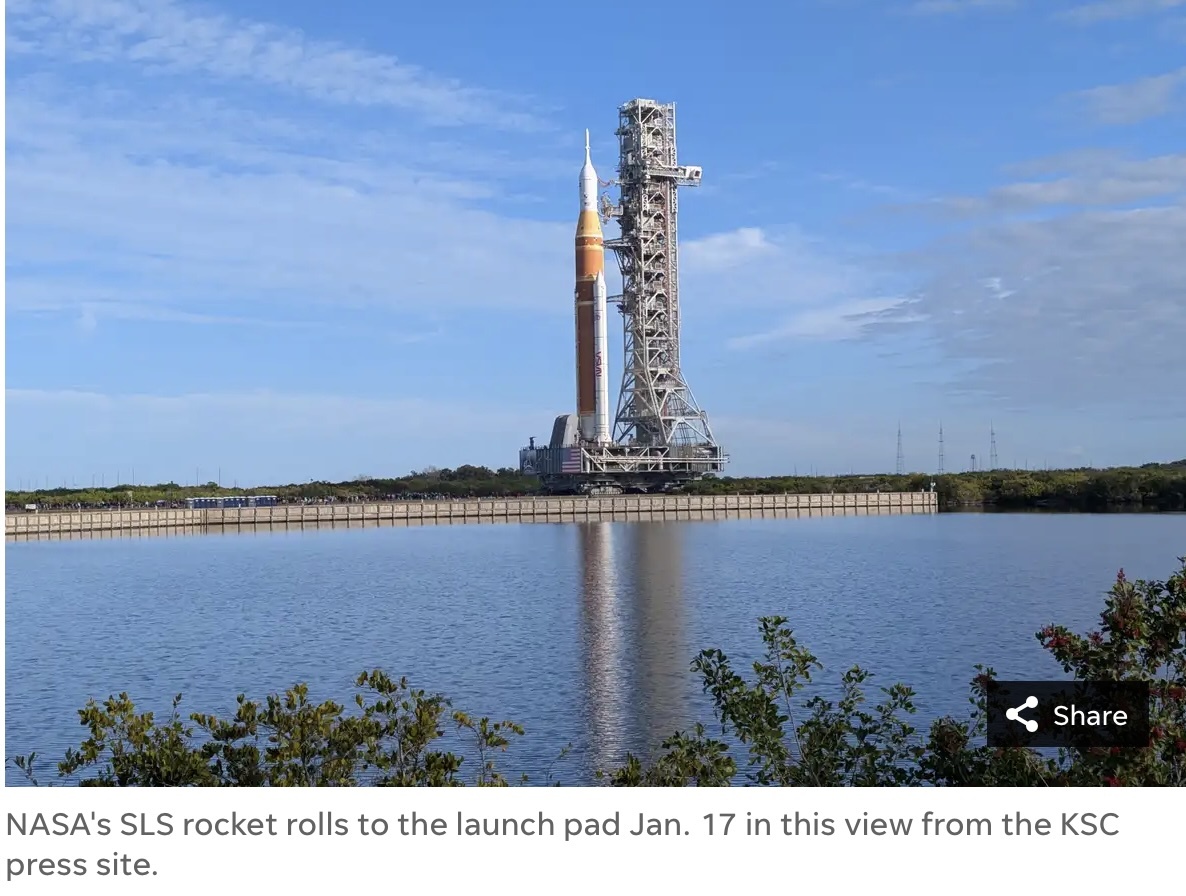
The last time the public got a glimpse of this rocket was the uncrewed Artemis I mission back in Nov. 2022.
Once the Space Launch Systems rocket is at the launch pad, teams will connect the rocket’s systems ahead of prelaunch testing. The next big milestone will be a wet dress rehearsal, which involves fueling the rocket and going through pre-launch motions to ensure everything is in order before the big day arrives.
The four Artemis II astronauts will also visit the launch site, and receive a briefing on the emergency egress system.
This historic test flight, which will see the astronauts fly around the moon, will proceed the Artemis III mission that returns humans to the lunar surface for the first time since 1972. An executive order by the current administration called for the landing to be no later than 2028.
Quelle: Florida Today
----
Update: 23.01.2026
.
NASA’s Artemis II Mission to Fly Legacy Keepsakes with Astronaut Crew
As America approaches its 250th anniversary of declaring independence, NASA’s Artemis II mission will carry a host of mementos that reflect the nation’s long tradition of exploration, innovation, and leadership in its official flight kit. The items will fly aboard the Orion spacecraft, launched on top of the Space Launch System (SLS) rocket, as it carries four astronauts around the Moon on the first crewed test flight of the agency’s Artemis campaign.
“Historical artifacts flying aboard Artemis II reflect the long arc of American exploration and the generations of innovators who made this moment possible,” said NASA Administrator Jared Isaacman. “This mission will bring together pieces of our earliest achievements in aviation, defining moments from human spaceflight, and symbols of where we’re headed next. During America’s 250th anniversary, Orion will carry astronauts around the Moon while also carrying our history forward into the next chapter beyond Earth.”
Selected to honor America’s historic achievements in space, inspire the next generation of explorers, and reinforce U.S. leadership through international cooperation in science and education, the mementos continue a proud tradition carried forward from Artemis I and earlier human spaceflight missions. Together, they highlight the freedom and innovation that have unlocked the Golden Age of human space exploration.
A 1-inch by-1-inch swatch of muslin fabric from the original Wright Flyer the Wright Brothers used to make the first powered flight in 1903 will be flying aboard Artemis II, lent by the Smithsonian’s National Air and Space Museum. A smaller square cut of the swatch previously flew aboard space shuttle Discovery on STS-51D in 1985 and will make its second journey into space. After the mission, the fabric will be reunited with two other 1903 Wright Flyer swatches at the museum, celebrating the nation’s history and innovation in aviation.
Also flying aboard the Artemis II mission will be a 13-by-8-inch American flag, which flew with the first shuttle mission, STS-1, the final shuttle mission, STS-135, and NASA’s first crewed test flight of SpaceX’s Crew Dragon spacecraft, SpaceX Demo-2.
A flag that was set to fly on NASA’s Apollo 18 mission is included in the flight kit and will make its premiere flight with Orion. The flag serves as a powerful emblem of America’s renewed commitment to human exploration of the Moon, while honoring the legacy of the Apollo pioneers who first blazed the trail.
Orion also will carry a copy of a 4-by-5-inch negative of a photo from the Ranger 7 mission, the first U.S. mission to successfully make contact with the lunar surface. NASA’s Jet Propulsion Laboratory in California managed the Ranger series of spacecraft, built to help identify safe Moon landing sites for Apollo astronauts. The photo represents a major turning point in the race to the Moon that will be echoed today through the success of Artemis.
On Artemis I, a variety of tree seeds flew and were distributed to educational organizations and teachers after the mission, following in the footsteps of tree seeds flown aboard the Apollo 14 mission sprouted into “Moon Trees” after being returned to Earth. The seeds have since taken root at 236 locations across the U.S. to become their own Artemis I Moon Trees. Soil samples collected from the base of established Artemis I Moon Trees planted at NASA’s 10 centers will fly aboard Artemis II, representing the full cycle of exploration: launch, flight, growth, and return to space again. The CSA (Canadian Space Agency) will fly various tree seeds in the kit with the intention of distributing them after the mission.
Also included in the kit will be an SD card including the millions of names of those who participated in the “Send Your Name to Space” campaign, bringing the public along on this journey. The kit will include a variety of flags, patches, and pins to be distributed after the mission to stakeholders and employees who contributed to the flight.
Additionally, NASA has included items from several of its partners in the kit. Stickers and patches from CSA will fly, and ESA (European Space Agency) will fly a flag in the kit for distribution after the mission, marking NASA’s international collaboration with other space agencies through Artemis. Orion’s European Service Module, the powerhouse of the spacecraft, is provided by ESA.
Carrying mementos on the NASA spacecraft has been a tradition since the 1960s, one that was continued on Artemis I, the first uncrewed test flight of Orion and the SLS. During this mission, Orion carried a symbolic flight kit including historical artifacts, from Apollo missions STEM, or science, technology, engineering, and math, items, digitized student essays and teacher pledges, and more.
The official flight kit for Artemis II, which contains about 10 pounds of mementos in total, augments important scientific research aboard Orion.
Quelle: NASA
+++
From earth (soil) to the moon (flag): NASA to fly artifacts on Artemis II
NASA's first astronauts to fly to the moon in more than 50 years will pay tribute to the lunar and space exploration missions that preceded them, as well as aviation and American history, by taking with them artifacts and mementos representing those past accomplishments.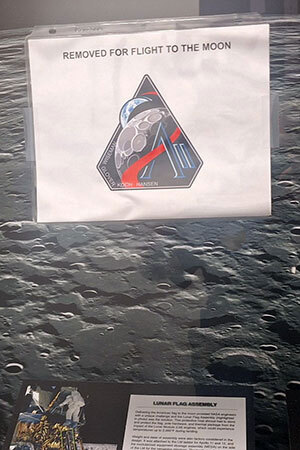
A sign hung on a glass exhibit case at NASA Headquarters in Washington reads that the Apollo 18 lunar surface flag that had been on display was "removed for flight to the moon" as part of the Official Flight Kit (OFK) for the Artemis II mission. (Cole Simmons)
NASA on Wednesday (Jan. 21) revealed the contents of the Artemis II mission's Official Flight Kit (OFK), continuing a tradition dating back to the Apollo program of packing a duffel bag-size pouch of symbolic and celebratory items to celebrate the flight and recognize the people behind it. The kit includes more than 2,300 items, including a handful of relics.
"This mission will bring together pieces of our earliest achievements in aviation, defining moments from human spaceflight and symbols of where we're headed next," Jared Isaacman, NASA's Administrator, said in a statement. "Historical artifacts flying aboard Artemis II reflect the long arc of American exploration and the generations of innovators who made this moment possible."
The Artemis II mission, which may launch as soon as early February, is set to take three NASA astronauts — commander Reid Wiseman, pilot Victor Glover and mission specialist Christina Koch — and a representative of the Canadian Space Agency, mission specialist Jeremy Hansen, on a 10-day flight that take them farther out into space than any humans have ever traveled before and then return them safely to Earth.
The mission includes a flyby of the moon, affording the crew an opportunity to see parts of the far side never observed directly by human eyes.
Banners aboard
"During America's 250th anniversary, Orion will carry astronauts around the moon, while also carrying our history forward into the next chapter beyond Earth," said Isaacman.
Inside the OFK are numerous flags of different types, including hundreds of U.S. and "America 250" flags for post-flight presentation. The kit also holds two special examples of the stars and stripes, one that is returning to space for its third time, and another that is finally getting its chance to fly.
The "Legacy Flag" which first flew on STS-1, the inaugural space shuttle mission in 1981, was then launched to the International Space Station on STS-135, the final space shuttle mission, in 2011 and brought back to Earth by the SpaceX Demo-2 crew, the first astronauts to fly into orbit on a U.S. commercial spacecraft, 2020. NASA then pledged to fly the 13-by-8-inch (33-by-20-centimeter) American flag yet again on the next crewed flight the moon.
A larger, 3-by-5-foot (0.9-by-1.5-meter) U.S. flag is also in the Artemis II OFK. It was prepared like at least seven others to be deployed on the lunar surface until its mission, Apollo 18, was canceled due to budget cuts. The banner was instead put on display at NASA Headquarters in Washington until recently, when it was taken off exhibit to make its premiere flight to the moon on Artemis.
Other flags inside the mission's OFK include those representing U.S. states and military branches, the United Nations, various schools and other countries. The European Space Agency (ESA), which provided the service module for he Artemis II Orion spacecraft, has aboard one its logo flags for display after the mission.
From the ground to flight
The Artemis I OFK that flew on an uncrewed test flight in 2022, carried tree seeds around the moon, similar to how Apollo 14 astronaut Stuart Roosa did in 1971. The resulting Artemis moon trees, like the Apollo moon trees before them, have since grown to become living reminders of what humanity is capable of achieving.
On Artemis II, NASA is flying soil samples collected from the base of established Artemis moon trees that were planted at the agency's ten centers. The packets of earth represent "the full cycle of exploration: launch, flight, growth and return to space again," as explained by NASA. The Canadian Space Agency will restart that cycle with tree seeds it is flying on Artemis II to be planted around Canada.
The Smithsonian's National Air and Space Museum has loaned a 1-by-1-inch (2.54-by-2.54 cm) swatch of muslin fabric that was cut from the right wing of the original Flyer that the Wright Brothers used to make the first powered flight in 1903. The swatch was cut from a larger sample that previously launched on the space shuttle Discovery's STS-51D mission in 1985.
After Artemis II, NASA will return the fabric to the museum, which displays the Wright Flyer as well as other space-flown swatches, including pieces that were landed on the moon by Neil Armstrong and Buzz Aldrin in 1969.
Before Apollo 11 touched down with the first humans, NASA's Ranger 7 became the first U.S. mission to successfully make contact with the lunar surface. Artemis II will carry a copy of a 4-by-5-inch (10-by-13-cm) negative of a photo from that 1964 robotic mission. The photo represents "a major turning point in the race to the moon that will be echoed today through the success of Artemis," according to NASA officials.
Shavings and a name card... two bits (of rodeo)
Beyond patches, pins and decals, a few other standout items in the 10-pound (4.5-kilogram) Artemis II Official Flight Kit include an SD card recorded with the names of 2.9 million (and counting) people who signed up to be on the mission and metal shavings from the construction of the Space Launch System (SLS) core stage, the largest component of the mission's launch vehicle.
There is also a badge and a "leather back number" from the Houston Livestock Show and Rodeo, an annual event in "Space City," home to the Johnson Space Center in Texas.
In addition to the OFK, the astronauts each have their own Personal Preference Kit (PPK), a smaller pouch in which they can carry mementos that have significance to them. As examples, Wiseman said he is flying a notecard to take down his thoughts during the flight; Glover has a bible, heirlooms for his wife and children and a collection of inspirational quotes compiled by Apollo 9 astronaut Rusty Schweickart; Koch has handwritten notes from people that she loves to serve as a tactile connection between her and them; and Hansen has four moon pendants that he is taking for his wife and three children.
+++
This is the Artemis II Official Flight Kit (OFK) manifest as provided by NASA and transcribed by collectSPACE from the original PDF.
| Item | Quantity | |||
|
|
||||
|
Shavings from SLS (Space Launch System) core stage |
1
|
|||
|
|
||||
|
Mini U.S. flags |
5
|
|||
|
|
||||
|
U.S. flags |
3
|
|||
|
|
||||
|
Artemis II rubber stamp |
1
|
|||
|
|
||||
|
Copy of JPL Ranger Program lunar photo negative |
1
|
|||
|
|
||||
|
U.S flags |
50
|
|||
|
|
||||
|
Lockheed Martin patches |
17
|
|||
|
|
||||
|
U.S. flags |
50
|
|||
|
|
||||
|
Exploration Ground System (EGS) program flags |
40
|
|||
|
|
||||
|
Extravehicular Activity and Human Surface Mobility Program (EHP) patches |
15
|
|||
|
|
||||
|
Artemis embossing discs |
4
|
|||
|
|
||||
|
America 250 flags |
3
|
|||
|
|
||||
|
Artemis embroidered ribbons |
5
|
|||
|
|
||||
|
Artemis II holographic seals |
850
|
|||
|
|
||||
|
Artemis II pins |
150
|
|||
|
|
||||
|
200
|
||||
|
|
||||
|
SD card ("Send Your Name to Space" campaign) |
1
|
|||
|
|
||||
|
Unflown Apollo 18 mission flag |
1
|
|||
|
|
||||
|
15
|
||||
|
|
||||
|
State of Ohio Pins |
10
|
|||
|
|
||||
|
Goddard Space Flight Center (GSFC) Pins |
20
|
|||
|
|
||||
|
Human Landing System (HLS) decals |
64
|
|||
|
|
||||
|
8
|
||||
|
|
||||
|
Assorted Flags (U.S. states & territories, UN) |
65
|
|||
|
|
||||
|
Houston Livestock Show & Rodeo badge |
1
|
|||
|
|
||||
|
Houston Livestock Show & Rodeo leather back number |
1
|
|||
|
|
||||
|
Assorted flags (U.S., FL) |
60
|
|||
|
|
||||
|
Assorted flags (U.S., NASA, Army, AL, LA, TN, various universities) |
53
|
|||
|
|
||||
|
Marshall Space Flight Center (MSFC) stickers |
10
|
|||
|
|
||||
|
Moon tree soil |
10 small bags
|
|||
|
|
||||
|
Wright Brothers Plane Fabric Swatch from Smithsonian |
1
|
|||
|
|
||||
|
Assorted flags (U.S. states & territories, Artemis Accords nations) |
108
|
|||
|
|
||||
|
Assorted flags (2 sets, U.S. states) |
100
|
|||
|
|
||||
|
Orion pins |
20
|
|||
|
|
||||
|
U.S. flags |
50
|
|||
|
|
||||
|
Artemis flag signed by Airbus employees |
1
|
|||
|
|
||||
|
Postcard signed by Orion employees |
2
|
|||
|
|
||||
|
Artemis II patches & pins |
20
|
|||
|
|
||||
|
Silver Snoopy pins |
100
|
|||
|
|
||||
|
SLS flags |
40
|
|||
|
|
||||
|
NASA rubber stamp |
1
|
|||
|
|
||||
|
Zinnia and chile peppers seed packet |
1
|
|||
|
|
||||
|
Mississippi flag |
28
|
|||
|
|
||||
|
Entry, descent, and landing material swatch |
1
|
|||
|
|
||||
|
U.S. flags |
65
|
|||
|
|
||||
|
1
|
||||
|
|
||||
|
Canadian Space Agency stickers |
12
|
|||
|
|
||||
|
Canadian flag stickers |
20
|
|||
|
|
||||
|
Jeremy Hansen personal mission patch stickers |
12
|
|||
|
|
||||
|
Royal Canadian Air Force stickers |
1
|
|||
|
|
||||
|
Innu flag stickers |
1
|
|||
|
|
||||
|
Canadian Space Agency patch |
4
|
|||
|
|
||||
|
Canadian flag patch |
6
|
|||
|
|
||||
|
2
|
||||
|
|
||||
|
Various tree seeds |
1
|
|||
|
|
||||
|
ESA (European Space Agency) flag |
1
|
|||
Quelle: CS
----
Update: 26.01.2026
.
Artemis II crew wears 'Freedom 250' patch for US semiquincentennial
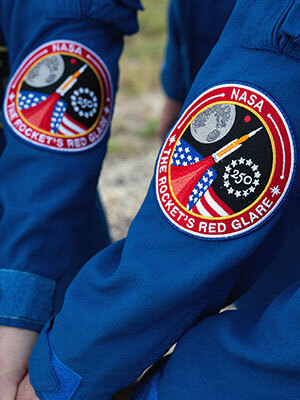
NASA's Artemis II crew pose for a picture showing the Freedom 250 commemorative patch on their flight suits, Jan. 17, 2026, at NASA's Kennedy Space Center in Florida. (NASA/Joel Kowsky)
The next astronauts to fly to the moon are now wearing their pride for America's history on their sleeves.
NASA on Thursday (Jan. 22) formally revealed the Freedom 250 commemorative patch and announced that the Artemis II astronauts will wear the emblem "during their historic launch."
Set to fly by and beyond the moon — going farther into deep space than anyone has gone before — Artemis II commander Reid Wiseman, pilot Victor Glover and mission specialist Christina Koch, all NASA astronauts, and mission specialist Jeremy Hansen with the Canadian Space Agency will return to Earth 10 days after their launch. The mission coincides with the United States' semiquincentennial.
"Honoring America's 250th anniversary ... the [patch's] theme, 'Rocket's Red Glare,' draws inspiration from the iconic lyric in The Star-Spangled Banner symbolizing perseverance, innovation and the enduring spirit of exploration that defines our nation," read a NASA description.
The four-inch (10-centimeter) circular patch depicts the Artemis II Space Launch System (SLS) rocket lifting off on a red plume. The booster is backdropped by a billowing American flag and positioned between the moon and Mars to one side and the "Freedom 250" logo on the other. The depiction of the moon includes an astronaut's boot print on its surface.
Freedom 250 is the national, non-partisan organization leading the celebration of the 250 years since the signing of the Declaration of Independence, establishing the United States.
The patch was produced by A-B Emblem and designed by artist Phillip Elkins.
"Realizing that I quite literally designed something that will travel out of this world is both humbling and surreal," wrote Elkins in a social media post. "Space has always represented something bigger than ourselves — curiosity, courage and the quiet belief that we're meant to keep exploring."
Wiseman, Glover, Koch and Hansen were first seen with the Freedom 250 patch at the rollout of their SLS rocket to the launch pad on Jan. 17. Standing together at the Kennedy Space Center in Florida, the four crewmates displayed the new addition to their NASA blue flight suits. The emblem was sewn to each of their left-arm sleeves, just below their elbows.
In addition to the Freedom 250 commemorative, the astronauts also wore the Artemis II mission patch, their respective space agency insignia and country flags and patches representing their previous spaceflights.
Hansen also had on his Canadian Space Agency personal patch, representing the indigenous communities in Canada.
The Freedom 250 emblem adds to other ways that NASA and the astronauts are helping to celebrate the milestone year. In December, the agency revealed the "America 250" logo on the two solid rocket boosters that will help launch Artemis II. The mission's Official Flight Kit (OFK) also includes three "America 250" flags to be flown to the moon and returned to Earth.
Quelle: CS
----
Update: 27.01.2026
.
Artemis II Crew Enters Quarantine Ahead of Journey Around Moon

The next astronauts to fly around the Moon went into quarantine late Friday.
NASA astronauts Reid Wiseman, Victor Glover, and Christina Koch, along with CSA (Canadian Space Agency) astronaut Jeremy Hansen, will ensure that they don’t pick up any illness that could delay their mission by limiting their exposure to others in the days before they lift off. This period, called the health stabilization program, typically starts about 14 days before launch. Beginning quarantine now preserves flexibility as teams work toward potential opportunities in the February launch period. At this time, the agency still has not set an official launch date as testing continues for the rocket and spacecraft. Pending the outcome of the wet dress rehearsal or other operations considerations, the crew can come out of quarantine, and re-enter 14 days before any launch date.
The crew will begin quarantine in Houston, and if testing continues to go well and activities progress toward a possible launch next month, they will fly to NASA’s Kennedy Space Center in Florida about six days ahead of launch. There, the Artemis II crew will live in the astronaut crew quarters inside the Neil A. Armstrong Operations and Checkout Building, before launch day. During quarantine, the crew can continue regular contact with friends, family, and colleagues who are able to observe quarantine guidelines, and will avoid public places, wear masks, and maintain distance from others they come into contact with as they continue their final training activities. Those training activities will continue in the days ahead with mission simulations and medical checkouts.
Meanwhile, teams at Kennedy continue to prepare the SLS (Space Launch System) rocket and Orion spacecraft, along with associated ground systems, ahead of launch. Teams have completed all checkouts of mechanical power systems, cryogenic propellant lines, and engines at Launch Pad 39B. On Saturday, Jan. 24, the pad perimeter will be cleared of all non-essential personnel for SLS booster servicing planned to begin over the weekend.
On the other side of the country, the NASA and Department of War teams that will work together to retrieve the crew and spacecraft following their return to Earth and splashdown in the Pacific Ocean are performing a final simulation of their activities, called a just-in-time training, at sea. Those teams will begin making their way to Orion’s splashdown location in the days after launch.
The approximately 10-day Artemis II mission around the Moon is the first crewed flight under NASA’s Artemis campaign. It will help test the systems and hardware needed to continue sending astronauts on increasingly difficult missions to explore more of the Moon for scientific discovery, economic benefits, and to continue building toward the first crewed missions to Mars.
Quelle: NASA