
17.01.2026
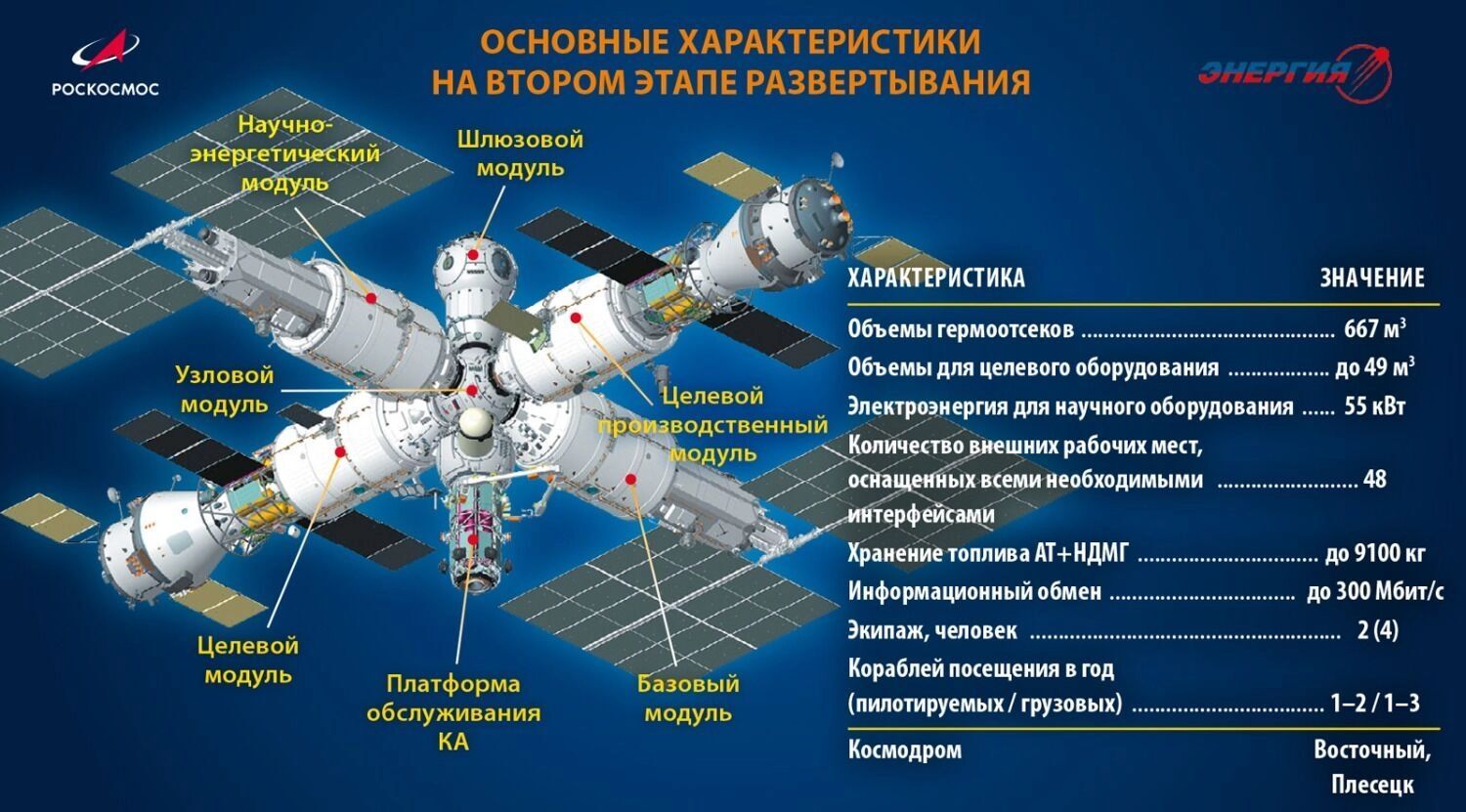
Russia’s decision to alter the orbital plans for the Russian Orbital Station (ROS) follow-on to the International Space Station (ISS) has caused Moscow to build use of the Baikonur spaceport back into its planning.
The spaceport in Kazakhstan is set to serve as the launch point for initial elements of the new space station. Russia would launch the Science Power Module (NEM), universal node module and the airlock from the site, Russia’s First Vice Premier Denis Manturov told journalists on Jan. 6.
The decision to transfer at least part of the station deployment effort to Baikonur comes after Moscow said the orbital parameters for the ROS would shift. Since 2021, space agency Roscosmos pushed for a station with a high inclination of 97 deg. to observe all of Russia. Cosmonauts on the ISS, which flies with the 51.6 deg. inclination, can see only 20% of their country.
To mitigate the risk of higher radiation on the polar orbit, Roscosmos suggested making the ROS more automated and only periodically staffed. The deployment of ROS elements along with the launch of cargo and crew was expected to use the new Vostochny commercial spaceport in Russia’s Far East.
But in early December, Manturov announced a change in strategy and a decision to deploy ROS with 51.6 deg. inclination. The shift, he said in an interview with Russian television, is intended to facilitate growing cooperation with India, which plans to deploy its first orbital station with the 51.5 deg. inclination by the end of the decade.
But the change may also reflect difficulties that Russia has experienced developing modules for the new station. The NEM was designed to increase the power supply for the Russian segment of the ISS. Using it in the original ROS construct would have required the installation of more control and life support systems as well as radiation protection for the polar orbit.
Sticking to the familiar ISS inclination gives Roscosmos a chance to rely on proven technologies. Russia’s most modern element within the ISS, the Nauka module, would now be connected with the NEM, the universal node and the airlock to form the core of the ROS. This segment will be later detached from the ISS to remain in orbit while the international facility is deorbited.
Using Baikonur for the ROS also eliminated the need to use a more powerful Angara-A5M modification which is yet to be developed. It also offers safer crew recovery options in case of a launch failure, rather than having to land in the frigid waters of the North Pacific.
Manturov said Baikonur will also serve for launches of the crewed Soyuz ROS ships. But he noted that Progress ROS cargo vehicles—as well as future crewed spacecraft, the station core and specialized modules—will be orbited from Vostochny.
Quelle: AVIATION WEEK