
3.01.2026
SpaceX is gearing up for a new chapter in its ambitious Starship program, with the company confirming the successful trial run of a specialized transport barge for moving massive Starship vehicles from its Starbase facility in Texas to launch sites on Florida’s Space Coast.
NSF’s Julia Bergeron identified the Marmac 31 vessel, leading to confirmation from SpaceX’s Vice President of Launch, Kiko Dontchev.
The development follows months of speculation after Dontchev first outlined the company’s transportation strategy in September.
That information was part of a plan conceived years ago, requiring Elon Musk to confirm the initial Starbase-to-KSC shipping plan after enthusiasts initially claimed vehicles could not be transported horizontally, which is the only viable procedure for shipping a 237-foot-tall booster.
Dontchev also clarified that both the Super Heavy booster and Starship upper stage would be tilted to a horizontal position for maritime transit, in response to an artist’s rendering of a Starship traveling vertically aboard a vessel.
“Initial deliveries are a single booster or ship per trip, with the plan to move to multiple vehicles per transit sooner than later,” he wrote. “You’ll thank me later.”
On December 30, 2025, Bergeron spotted the deck barge Marmac 31 delivering hardware to the turn basin near Starbase before docking at Beyel Brothers’ canal lot.
Bergeron, known for her keen eye on SpaceX logistics, immediately connected the dots and tagged Dontchev: “Did SpaceX just deliver a Starship transport barge @TurkeyBeaver? A skirted Marmac may be a good fit. You’ll thank me later if I’m right.”
Dontchev quickly confirmed the sighting, replying: “Good eye. Still needs a little work before we put the name on it, but it was a good first trial run of a transport.”
The Marmac 31, a 260-foot by 72-foot deck barge typically used for heavy industrial loads, was recently observed in a modified configuration—with additional work on “skirts” or reinforcements to securely cradle the cylindrical tanks and fuselage sections during the voyage.
SpaceX has already delivered numerous tank sections and other components related to the Starship program by barge, but this trial marks the first dedicated test for full vehicle transport.
Notably, this sea transit is no stranger to the space program. Rocket stages have been transported to KSC since the early days, such as during the Apollo era, then later with the Shuttle External Tank on Pegasus, before that barge was modified to accommodate SLS core stage deliveries. ULA also uses its own ship to transport stages to the East Coast.
Like Pegasus, the modifications to Marmac 31 may also include an enclosure on deck to protect the Starship vehicles during transport on the open seas.
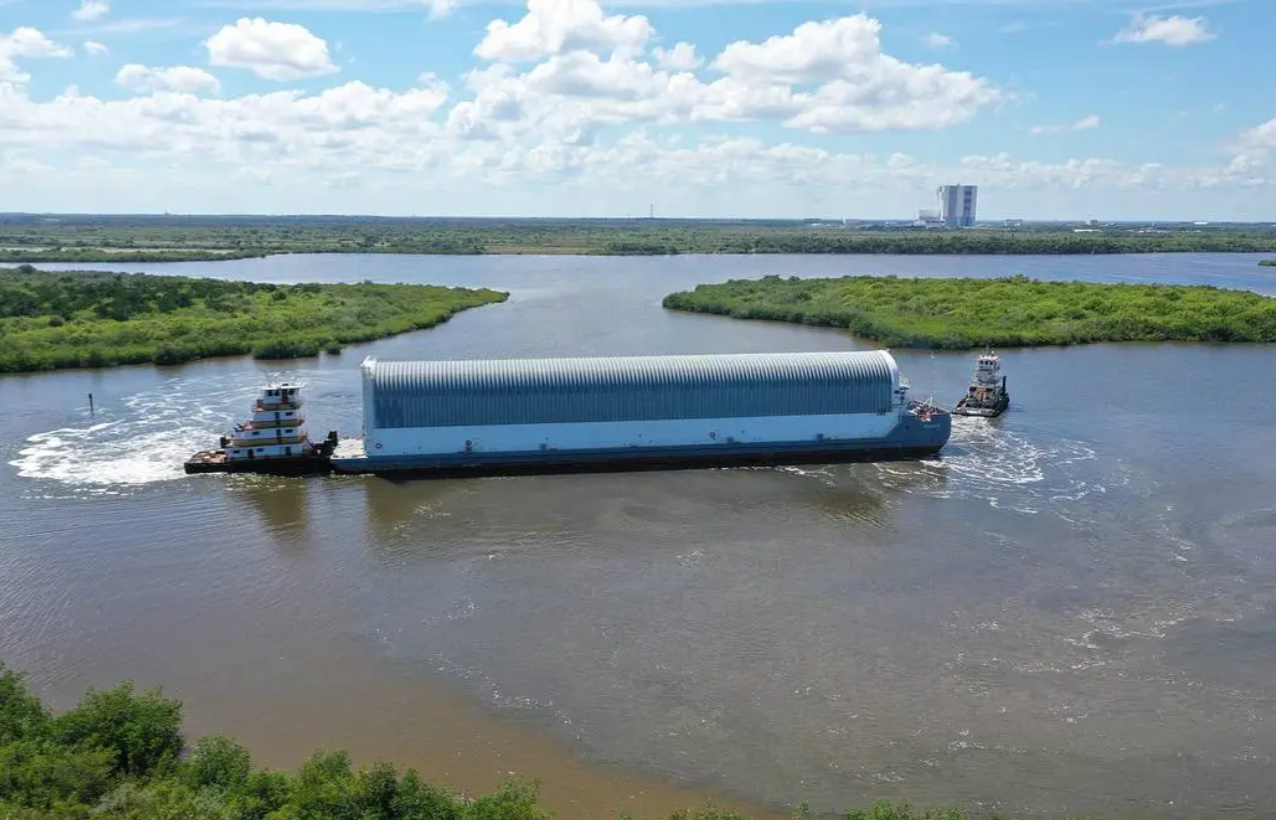
One other notable synergy is that SpaceX’s first Starship arrival from Starbase will likely follow the trusted route up the Banana River and into the KSC turn basin, before being offloaded under the gaze of the historic Vehicle Assembly Building (VAB).
With Starship targeting frequent launches from both Starbase and the historic Launch Complex 39A (and potentially SLC-37) at Cape Canaveral, establishing a reliable and cost-effective supply chain between Texas and Florida is essential—at least for the interim.
SpaceX is busy building huge facilities at Roberts Road, not least the Gigabay, which will be joined by the East Coast’s own Starfactory, allowing vehicles to be built just up the road from the KSC and Cape launch sites.
One fun note related to the recent confirmation is the likelihood that the vessel will gain a name aligned with the rest of the SpaceX seafaring fleet. Humorous suggestions range from “You’ll Thank Me Later” (a direct callback to Dontchev’s earlier post) to “Size Matters” and “No Roads Needed.”
Although Elon Musk may have already decided, aligning with Dontchev’s posts.
As SpaceX prepares for increasingly complex flight tests and aims for orbital refueling demonstrations in 2026, reliable logistics will be key to sustaining the pace. The successful trial of the transport barge represents an important—if less glamorous—step toward making Starship a truly reusable, inter-site operational system.
That also raises one additional question: which will be the first vehicles to take the sea journey? SpaceX could opt to send a future new booster, such as Booster 21 or 22, per viable timelines, or potentially a caught Booster 12.
That decision will likely come after the first flights of the Block 3 Starship, with Flight 12 believed to be no earlier than March, giving SpaceX some time to complete the preparations on the Marmac 31.
Quelle: NSF