
29.12.2025
From Axiom-4 to the 3I/ATLAS ‘interstellar’ encounter, the year was full of exciting space news.
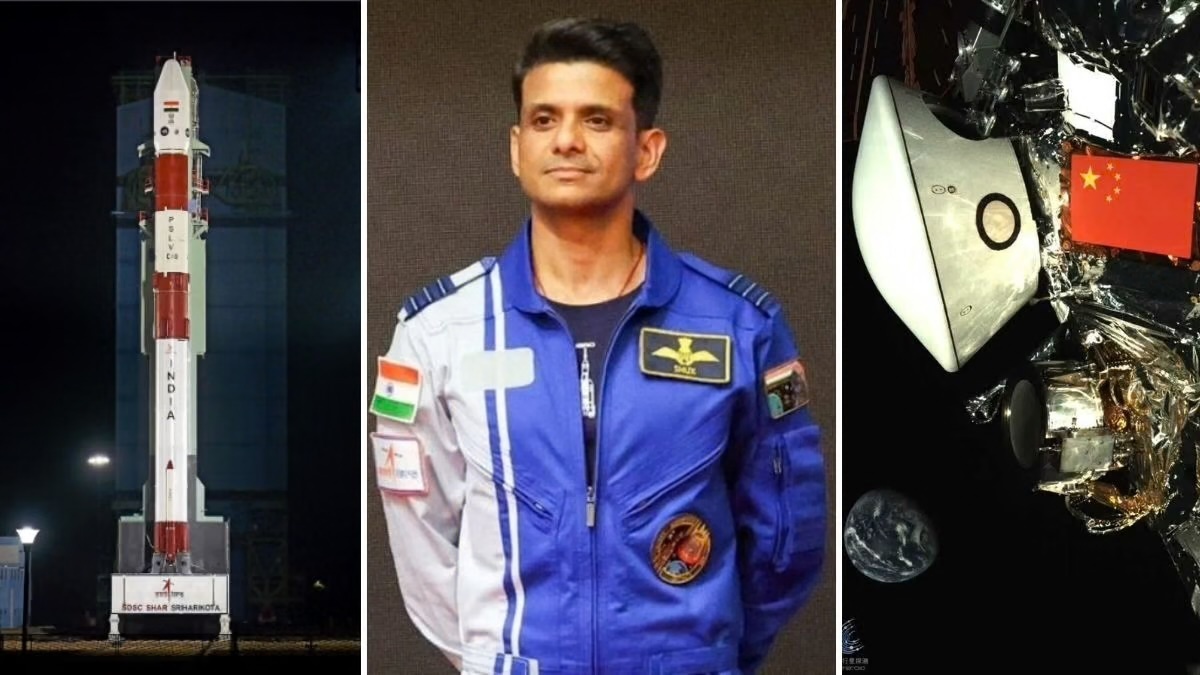
(L-R) PSLV-C60 for SpaDeX launch, Shubhanshu Shukla, and Tianwen-2 | ANI, Wikimedia Commons, X/@AmbXieFeng
From an Indian’s return to space after 41 years to discovering new, unusual comets, humankind’s ventures into outer space only got bigger and better in 2025.
The Chinese National Space Administration (CNSA) launched a probe to collect samples from an asteroid. NASA and ISRO launched the world’s most expensive Earth observation satellite. And ISRO carried out a key mission to test docking technology in space.
ThePrint brings you the top five space achievements of this year.
1. Axiom-4 Mission
This year, Indian astronaut Shubhanshu Shukla made history as the first Indian to go to the International Space Station (ISS) aboard the Axiom-4 Mission. He was only the second Indian to ever go to space, the first being Rakesh Sharma in 1984. The mission, launched by private space-tech company Axiom Space, provided India with the opportunity to conduct research at the ISS along with three other astronauts from Poland, Hungary, and the US.
The Axiom Mission was also significant because Shukla is designated to be one of the four pilots in India’s upcoming crewed space mission, Gaganyaan. The astronauts travelled to the ISS aboard SpaceX’s Dragon spacecraft, piloted by Shukla, and the crew stayed in space for almost 20 days. In that time, Shukla conducted eight research experiments, studying processes such as muscle regeneration and bacterial growth in space.
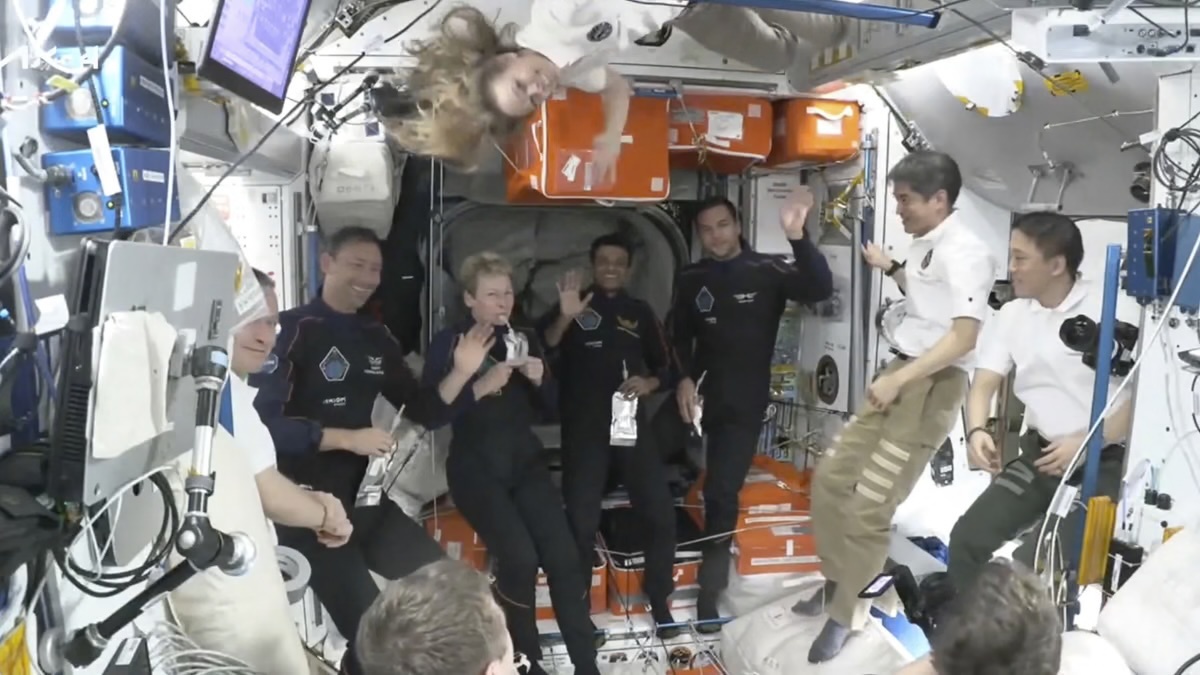
Poland’s Slawosz Uznanski-Wisniewski, Axiom Space’s Peggy Whitson, India’s Shubhanshu Shukla and Hungary’s Tibor Kapu aboard the International Space Station, Thursday 26 June 2025 | PTI
2. 3I/ATLAS comet
The world had an interstellar encounter in 2025 that many even termed an alien visit before it was proven to be a comet. Named 3I/ATLAS, the comet captured the minds of both scientists and citizens as it was first spotted zooming across the solar system in July 2025 by the Asteroid Terrestrial-impact Last Alert System (ATLAS) telescope in Chile.
The comet was immediately identified as being from outside our solar system by NASA scientists because it had a unique, hyperbolic orbit that is beyond the gravitational grip of the Sun. It is the third known interstellar object from outside our solar system, the first two being Oumuamua (2017) and 2I/Borisov (2019).
For a brief window, however, the comet had induced a number of conspiracy theories, from collision with the Earth to being a host for aliens. This was mainly because of 3I/ATLAS’ unique properties: a blueish hue, a speed of 2,21,000 km/hour, and a trajectory around the solar system that follows no particular path.
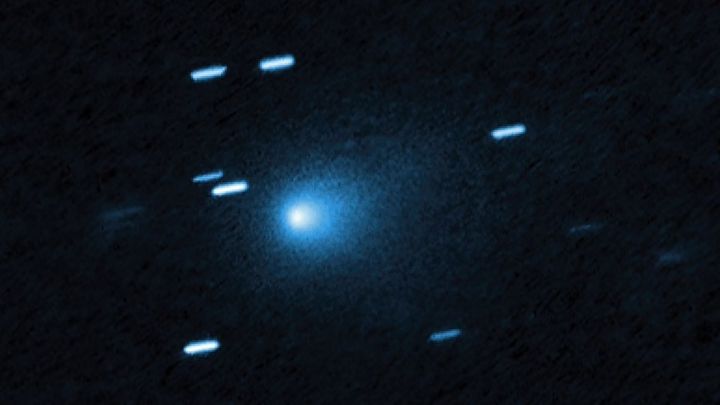
Hubble captured this image of the interstellar comet 3I/ATLAS on 21 July 2025, when the comet was 277 million miles from Earth | NASA
3. Tianwen-2 probe
In May 2025, the CNSA launched the Tianwen-2 probe, an ambitious spacecraft that will go to asteroid 2016HO3 to retrieve samples and bring them back to Earth. The asteroid is located near Mars and was chosen because it has a relatively stable orbit. The CNSA is confident that these samples will yield ‘groundbreaking discoveries for the world’.
The Tianwen-2 probe left on a Long March 3B rocket on 28 May and is expected to return with the samples of the asteroid in 2027. Then, in another ambitious plan, the CNSA revealed that Tianwen-2 will head for the main Mars-Jupiter asteroid belt to study a comet—311P/PANSTARRS—by 2035.
Tianwen-2 is therefore a joint, deep-space mission that will bring back data about an asteroid and a comet. It will expand our understanding of celestial objects, the processes of Earth formation, and other granular details of how these objects are related to the Earth.
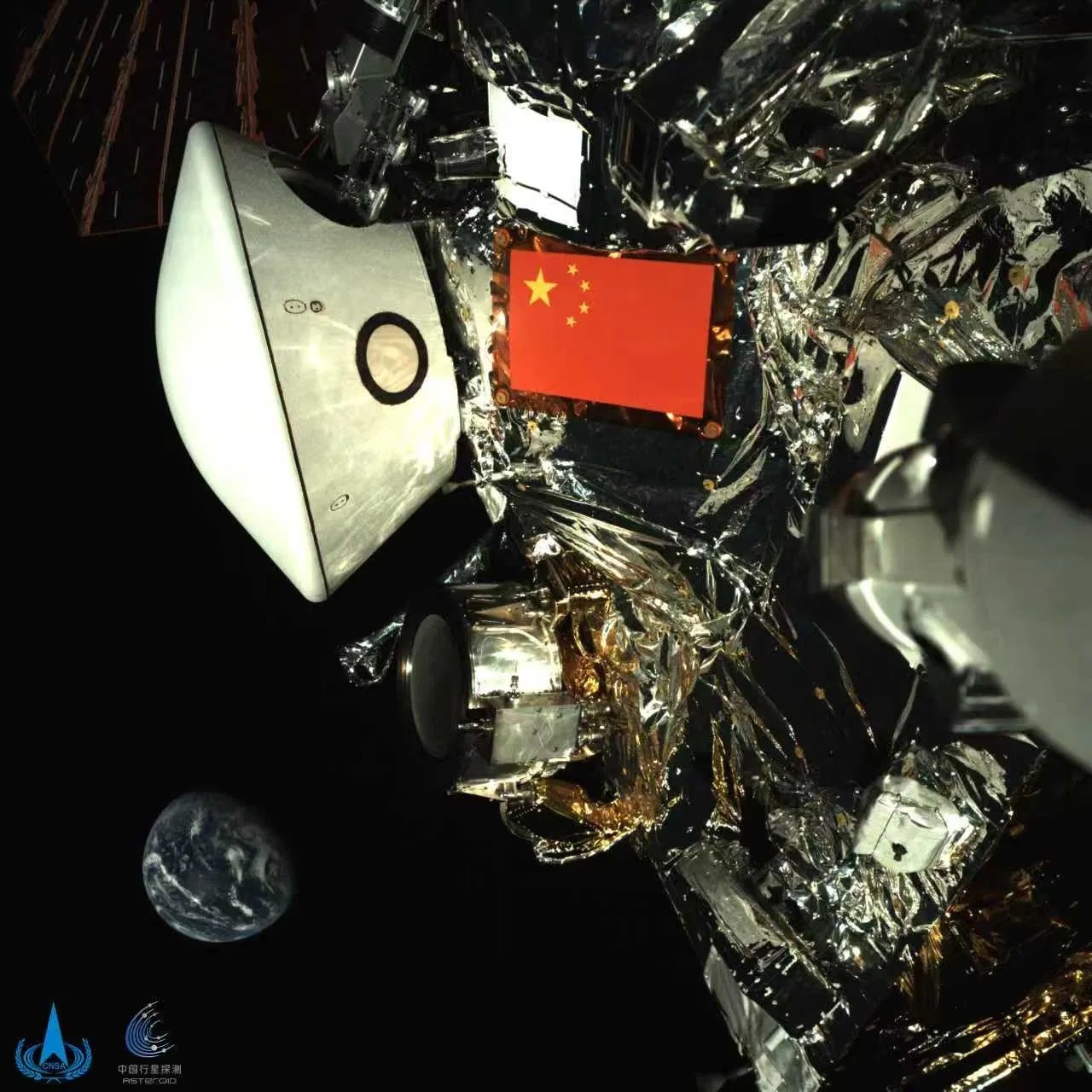
A ‘selfie’ from Tianwen-2 | X/@AmbXieFeng
4. NISAR
NASA-ISRO Synthetic Aperture Radar (NISAR), the world’s most expensive and powerful Earth Observation satellite, was jointly launched this year by the US and India, marking a significant stride in their space relations. The satellite took off from ISRO’s Sriharikota launch pad on 30 July and is expected to produce high-quality data that will assist with natural disasters like earthquakes and floods.
The first satellite to have both L-Band and S-Band SAR (satellite aperture radar), the NISAR satellite is also expected to provide information on climate change, such as groundwater reserves, landslides, and other changes on Earth’s surface.
NISAR showed ISRO’s importance in the global space domain. Both organisations also said that the information from this satellite will help the entire world.
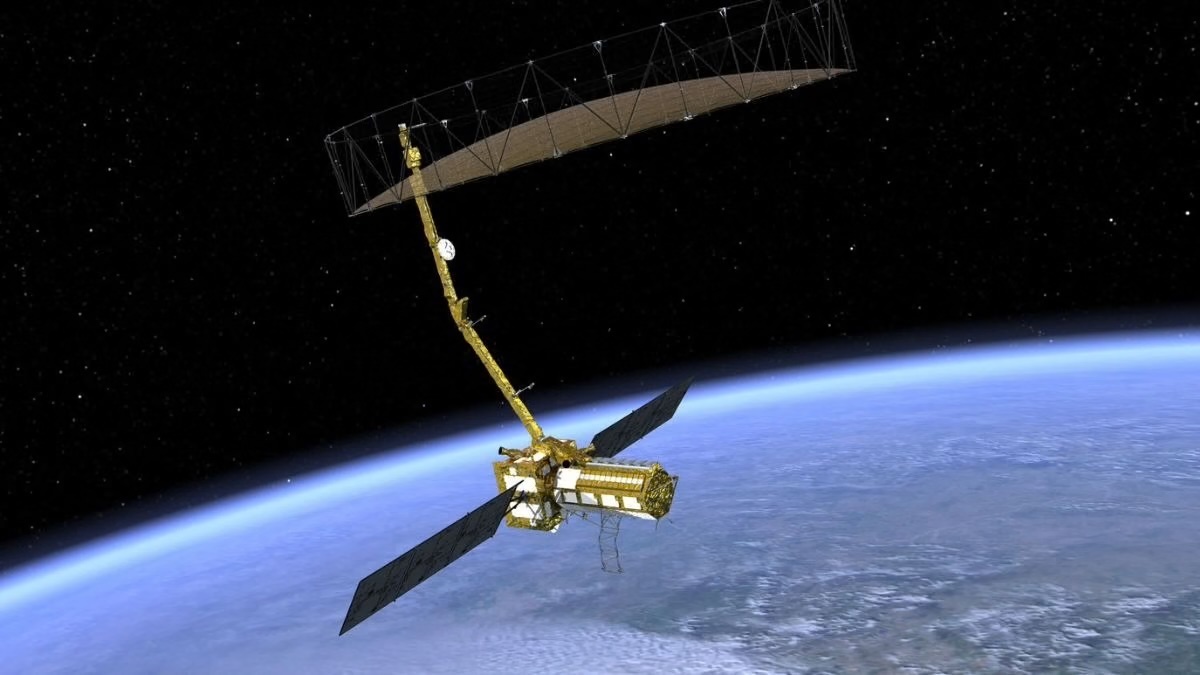
Artist’s concept of NISAR | NASA JPL
5. SpaDeX
The year began with ISRO’s much-touted SpaDeX mission, which was a technology testing mission by ISRO to dock and undock two spacecraft. The SpaDeX Mission was ISRO’s way of showing how two independent spacecraft—Chaser and Target—can be sent to space and then made to ‘rendezvous’.
The mission faced several delays and was finally completed in March 2025. It showed electric power transfer between docked spacecraft and the successful operation of payloads after undocking. It also demonstrated composite spacecraft control, which refers to a combination of techniques used to control a spacecraft’s attitude (orientation in space relative to a reference frame), trajectory, and other aspects.
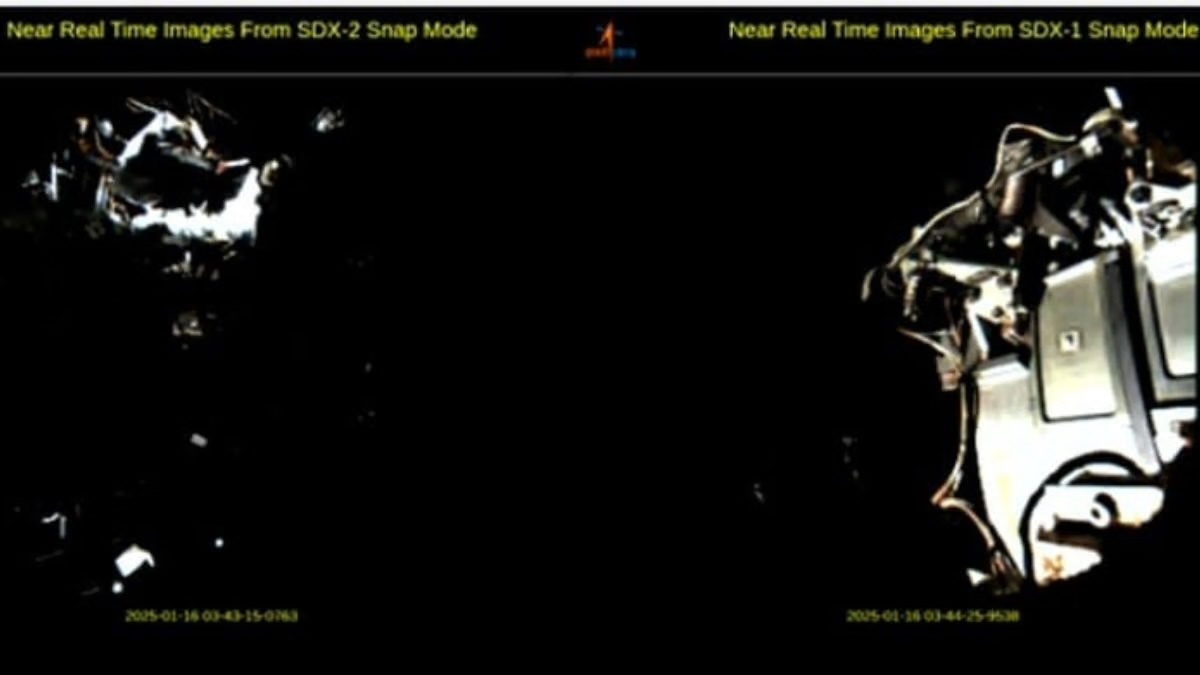
SpaDeX docking | X/@ISRO
SpaDeX was an essential mission as the docking technology will be used by India in the upcoming human spaceflight mission Gaganyaan, scheduled for 2027, and also the space station Bharatiya Antariksha Station, scheduled for 2040.
Quelle: ThePrint