
22.11.2025
Galileo to take its first flight on Ariane 6 on 17 December
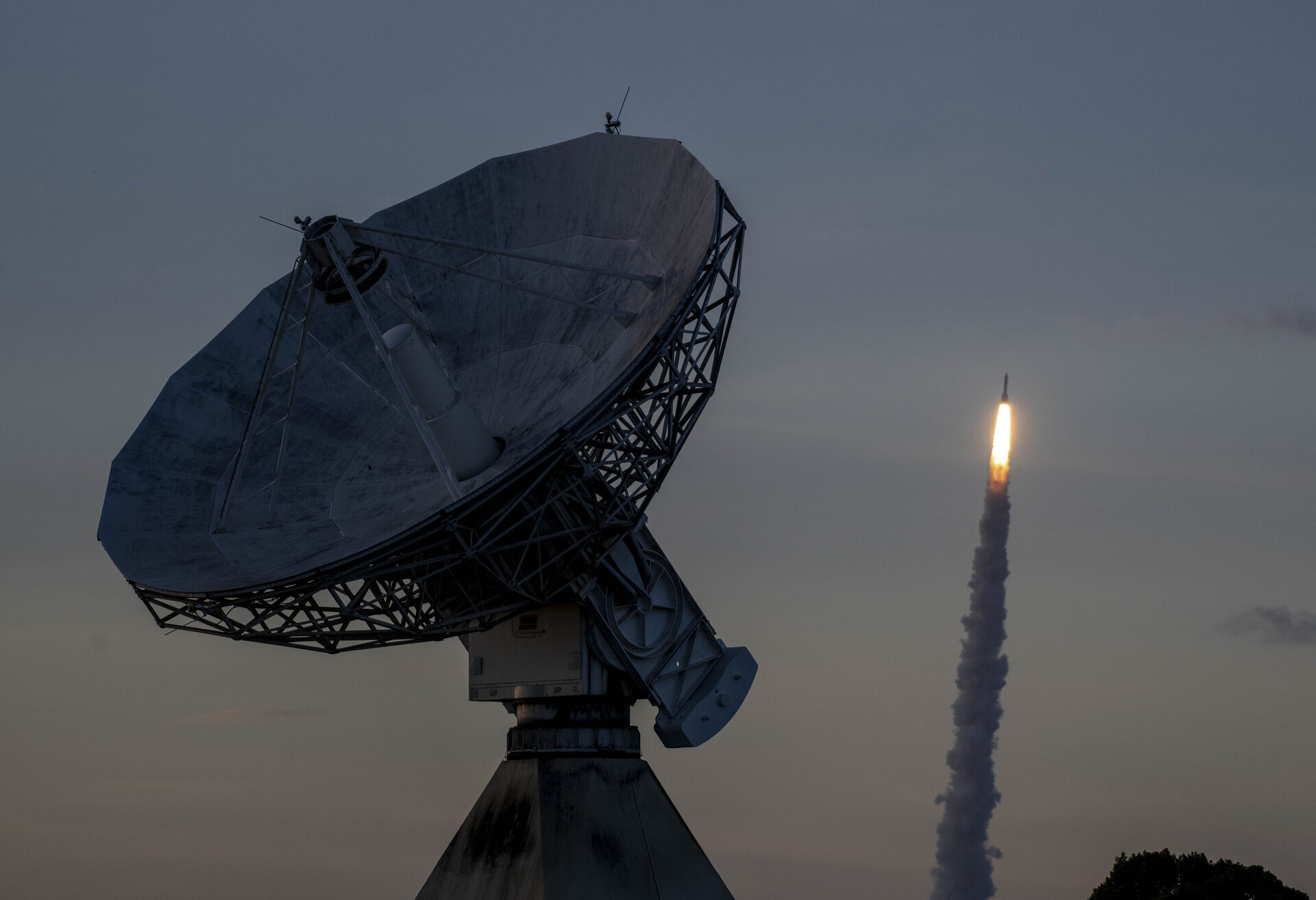
On 17 December 2025, two Galileo satellites will be launched by Arianespace on Ariane 6 from Europe’s Spaceport in French Guiana. This 14th operational launch in the Galileo programme will improve the precision, availability and robustness of the Galileo system. These satellites will benefit the billions of people who use Galileo daily via their smartphone as well as key sectors such as critical infrastructure, autonomous driving, air traffic, maritime, agriculture, emergency services and rescue operations.
Galileo Launch 14 (L14) will place two Galileo First Generation satellites in orbit, joining the constellation of 31 satellites, 27 of which are currently active. The launch is scheduled for 17 December at 05:01 GMT/06:01 CET (02:01 local time) on Ariane 6 from Europe’s Spaceport in French Guiana.
These satellites, designated SAT 33 and SAT 34, will improve the robustness of the Galileo system by adding spares to guarantee the system can provide 24/7 navigation to billions of daily users. They will join the constellation in medium Earth orbit 23 222 km above Earth’s surface.
The European Space Agency (ESA) is responsible for the launch service contract with Arianespace and for the procurement and preparation of the satellites from OHB on behalf of the European Commission. The European Union Agency for the Space Programme (EUSPA) will operate the satellites from the Early Orbit Phase of their operational mission until their disposal at the end of life.

This will be Galileo’s first launch on the Ariane 6 rocket and the fifth launch of Europe’s heavy-lift launcher. Using Ariane 6 to place in orbit the EU’s independent satellite navigation system is a testament to Europe’s space capability and autonomy. This launch continues Galileo’s history with Ariane. Nine years ago, nearly to the day, the first quadruple Galileo launch occurred on Ariane 5.
Since Galileo was declared operational in 2016, it has provided one metre positioning accuracy to users worldwide, contributed to saving thousands of lives and added authentication to mitigate the threat of spoofing.
The constellation was completed as designed in 2024, with the first Galileo satellite decommissioned in April 2025 after 12 years of service. L14 will support Europe’s continued leadership in satellite navigation as it ensures the precision, availability and robustness of the Galileo system and services.
After L14, four Galileo First Generation satellites remain to be launched, after which Galileo Second Generation satellites will begin to join the constellation.
Galileo Second Generation satellites will integrate seamlessly with the current fleet to form the largest European satellite constellation and deliver essential services worldwide. With fully digital navigation payloads, electric propulsion, a better-performing navigation antenna, inter-satellite link capacity, additional atomic clocks and experimental clocks to be validated in orbit, the Second Generation satellites will provide more robust and reliable positioning, navigation and timing.
About Galileo
Galileo is currently the world’s most precise satellite navigation system, serving over five billion smartphone users around the globe since entering Open Service in 2016. All smartphones sold in the European Single Market are now guaranteed Galileo-enabled. In addition, Galileo is making a difference across the fields of rail, maritime, agriculture, financial timing services and rescue operations.
A flagship programme of the EU, Galileo is managed and funded by the European Commission. Since its inception, ESA leads the design, development and qualification of the space and ground systems, as well as procuring launches. ESA is also entrusted with research and development activities for the future of Galileo within the EU programme Horizon Europe. The EU Agency for the Space Programme (EUSPA) acts as the service provider, overseeing the market and application needs and closing the loop with users.
Quelle: ESA
----
Update: 15.12.2025
.
Ariane 6 to Launch Next Galileo Pair: Beyond Gravity Delivers Key Systems for Europe’s Most Precise
Navigation Network
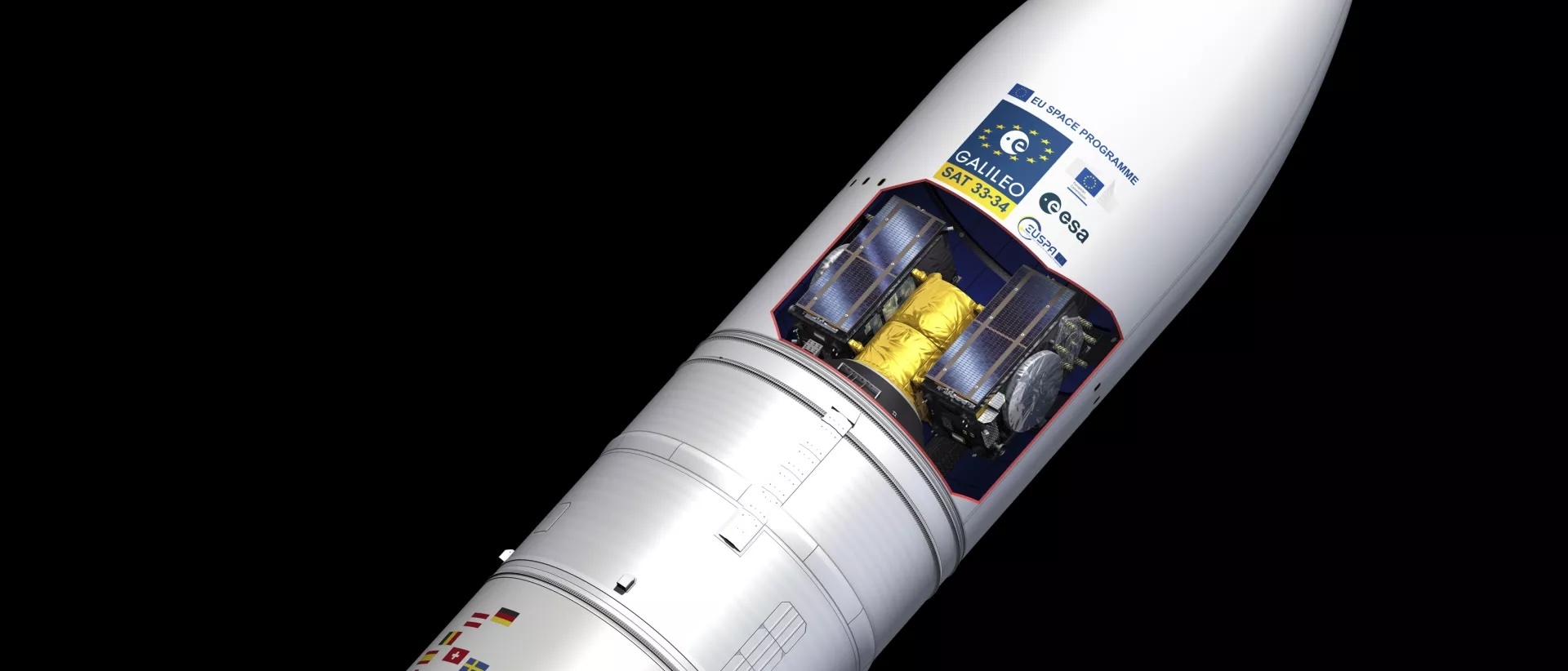
Europe’s Galileo navigation system is set to take another step forward next week as two additional satellites launch aboard an Ariane 6 rocket, using Beyond Gravity’s payload fairing, and thermal insulation. For the satellite, the company has supplied the critical computer and thermal systems that contribute to keeping the satellites operational in orbit – reinforcing Beyond Gravity’s long-standing role in Europe’s most precise and resilient timing and positioning infrastructure.
When the next pair of Galileo satellites lifts off from French Guiana on December 17 aboard an Ariane 6 rocket, they will carry several mission-critical systems from Beyond Gravity. The two satellites will join the constellation of 32 Galileo satellites in orbit, 27 of which are currently active. The additional satellites will strengthen Europe’s independent, civilian-controlled global navigation capability. “Galileo is the world’s most accurate navigation system—and we are proud to have been a key contributor to its development from the outset. Our highly reliable key components, including computer and thermal systems, ensure the smooth operation of the satellites in orbit. This underscores our central role in Europe’s independent satellite navigation system – a crucial pillar of Europe’s technological sovereignty in space”, says Oliver Grassmann, Executive Vice President Satellites at Beyond Gravity, a leading supplier to the space industry headquartered in Zurich, Switzerland. The company supplied a range of mission critical mechanical, thermal and electronics products to European Space Agency’s satellite prime contractor, OHB System AG in Bremen, Germany.
“Brain” for Galileo satellites
At the core of each Galileo satellite is the onboard computer – the spacecraft’s “brain”. Developed by Beyond Gravity the computer runs the onboard data handling software from OHB. The computer monitors the payload, manages the satellite’s status and environment, and ensures smooth coordination between the many subsystems that enable precise navigation signals.
Galileo mission antennas
Beyond Gravity also provided the mission antennas to the two satellites. The mission antenna uploads mission data that is later used by the satellite to generate the navigation message disseminated to Galileo users.
Thermal insulation protects the Galileo satellites
In orbit, the European Galileo satellites face extreme temperature variations of up to 400 degrees Celsius, depending if they face the sun or not. Beyond Gravity’s multilayer thermal insulation is the utmost outer layer of the satellite. It protects the instruments and core electronics against these harsh conditions. The highly efficient insulation consists of several layers of metal-evaporated polyimide film.
Aligning the satellite’s solar arrays towards the sun
The European navigation satellites rely on constant power from the sun. Beyond Gravity’s rotating drive mechanisms ensure the solar panels remain optimally aligned, following the sun through each orbit. These mechanisms, installed on every Galileo spacecraft, help ensure reliable power generation, enabling uninterrupted operation of Europe’s most precise navigation signals.
Making Europe’s satellite navigation more precise and resilient
Galileo’s evolution extends beyond the current constellation. The European Space Agency (ESA) is developing a new, more resilient satellite navigation system that can be combined with the existing Galileo navigation system. New navigation satellites in low Earth orbit (approximately 500 kilometers above the Earth's surface) are intended to supplement existing satellite navigation systems such as GPS and Galileo (at an altitude of around 23,000 kilometers) and make them more resilient and secure, for example against GPS jamming attacks. The project is running under the name Celeste or LEO-PNT (Low-Earth Orbit Positioning, Navigation and Timing). At the end of the year, the first two prototype satellites (Pathfinder A) will be launched into Earth orbit, with eight more to follow in 2026 to demonstrate the system concept. Due to their lower altitude and greater number, these new navigation satellites are much more difficult for an attacker to jam than GPS or Galileo. Beyond Gravity is a key payload partner alongside the space companies GMV (Spain) and OHB System AG (Germany). Beyond Gravity provides crucial technology for the digital signal generation and the payload system clock. This critical component ensures unparalleled navigation signal integrity alongside timing accuracy and stability, underpinned by Beyond Gravity’s payload self-calibration techniques.
Payload fairing protects the satellite
The top of the Ariane 6 rocket, designed and assembled by ArianeGroup, consists of the payload fairing from Beyond Gravity made of carbon fiber composite. The fairing has a diameter of 5.4 meters. Produced at the Beyond Gravity site in Emmen, Switzerland, the two halves of the payload fairing protect the satellite from the harsh forces experienced during launch and the early flight stages.
Insulation for Ariane 6
In Austria, Beyond Gravity produced the high-temperature insulation for the rocket engines of the launcher’s lower and upper stage. This thermal solution is designed to protect the Vulcain engine on the lower stage and Vinci engine on the kick stage and endure extreme temperatures up to 1,500 degrees Celsius for several minutes.
Gimbal Mechanism for upper stage
For Ariane 6, the Austrian Beyond Gravity site is also supplying a gimbal mechanism for the upper stage of the rocket. The mechanism serves as a joint to align the engine for the thrust vector control of the rocket's upper stage. The special mechanism, which weighs just ten kilograms, has to transmit the thrust forces of 15 tons, comparable to the force of a diesel locomotive.
Galileo provides global positioning, navigation and timing
The European Navigation System Galileo, also dubbed the “European GPS”, is created by the European Union through the European Space Agency (ESA) and operated by the European Union Agency for the Space Program. Galileo is a civil satellite navigation system that provides global positioning, navigation and timing. With at least four satellites constantly visible to the user, positioning becomes much more accurate than with previous systems, down to a meter.
Quelle: beyond gravity
----
Update: 17.12.2025
.
WITH ARIANE 6, ARIANESPACE SUCCESSFULLY LAUNCHES EU'S GALILEO L14
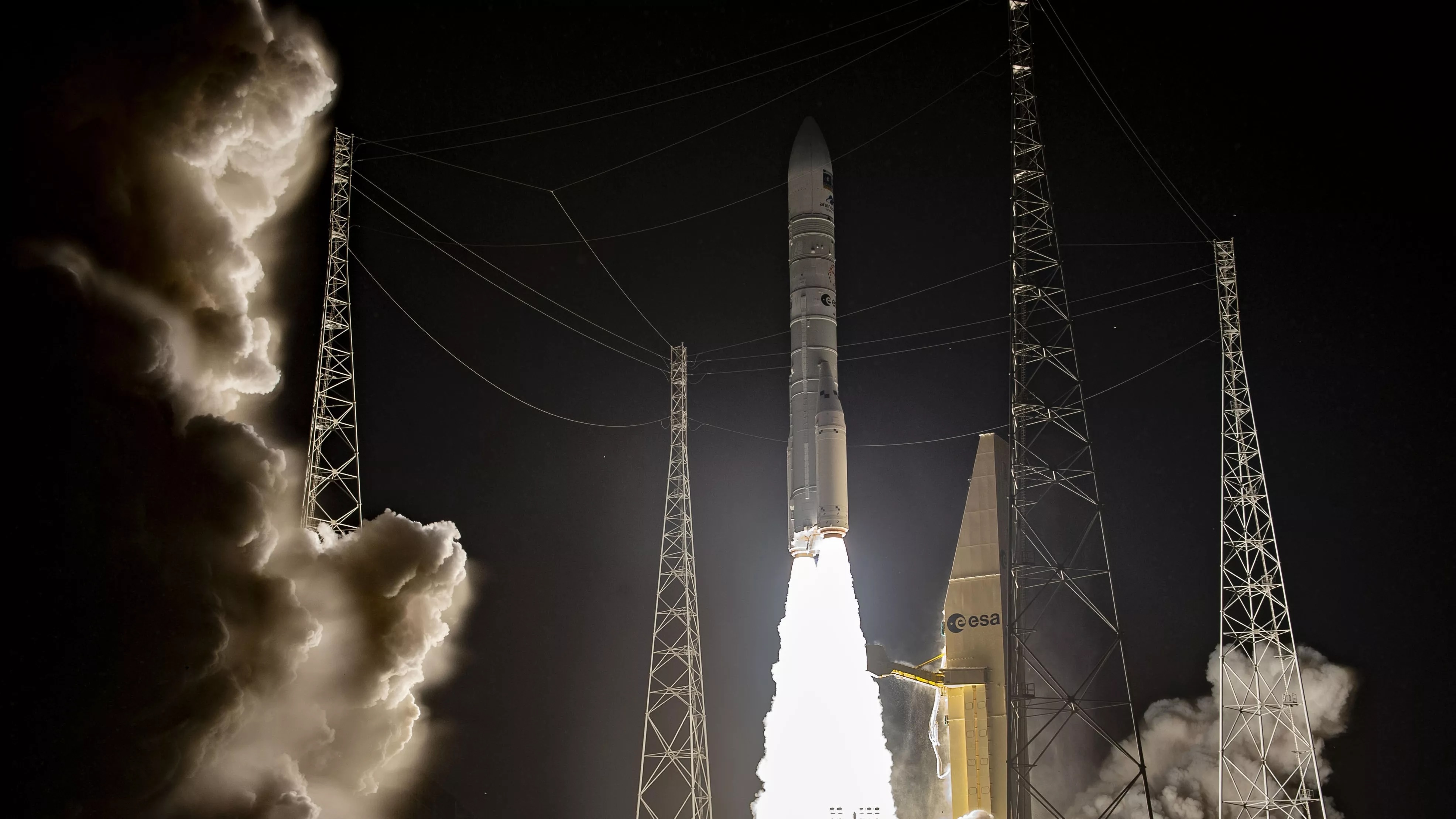
- On December 17, 2025, with Ariane 6, Arianespace successfully placed into orbit a pair of Galileo satellites for the European Space Agency (ESA), on behalf of the European Commission and the European Union Agency for the Space Programme (EUSPA).
- The satellites SAT 33 and SAT 34 are part of the 14thlaunch of the Galileo program (Galileo L14). Both join the constellation of first-generation Galileo satellites, to strengthen the precision, availability and robustness of Europe's navigation satellite system.
- The VA266 mission was the fifth launch of Ariane 6, Europe's heavy-lift launcher. It was performed with an Ariane 62 (two boosters).
- With this launch, Arianespace supports a critical European navigation satellite system and guarantees Europe's autonomous access to space.
On December 17, 2025 at 2:01 a.m. local time (5:01 a.m. UTC, 6:01 a.m. CET), Arianespace successfully launched the pair of satellites, Galileo L14 from Europe's Spaceport in French Guiana.
The mission, called VA266, was the fifth flight of Ariane 6, Europe's heavy-lift launcher. It was performed with an Ariane 6 with two boosters, the Ariane 62, which has been successful since its inaugural flight in 2024.
The satellites designated SAT 33 and SAT 34 were placed into a medium Earth orbit at an altitude of approximately 22 922 km. Their separation occurred 3 hours and 55 minutes after lift-off.
David Cavaillolès, CEO of Arianespace stated: “As the first launch of Ariane 6 for the Galileo program, the launcher, which perfectly placed the Galileo SAT 33 and SAT 34 satellites into orbit, once again demonstrates its reliability and precision. This success strengthens the performance and resilience of Europe's own navigation system, delivering concrete benefits to billions of users worldwide. Our teams have once again demonstrated operational excellence, and we thank ESA, the European Commission and the EUSPA for their renewed trust. ”
“High precision, reliability, versatility, modularity: this is Ariane 6 signature. With five successful flights in less than 18 months, Ariane 6 is performing the fastest entry into service for a heavy launcher”, commented Martin Sion, CEO of ArianeGroup. “ArianeGroup teams are committed to deliver on the next steps of the production ramp-up in 2026, hand in hand with all our industrial partners across Europe” added Martin Sion.
Ariane 6 once again demonstrates its versatility with a new payload configuration specifically designed for a Galileo-type mission. For the needs of this mission, the upper part of the launcher has been fully adapted by ArianeGroup. It consists of a short fairing, a light launch vehicle adaptor (LVA) used for the first time on an Ariane 6 flight, as well as a dispenser specific to the Galileo missions allowing a lateral attachment of the two satellites.
Galileo is a flagship component of the EU Space Programme. Owned by the European Union, it is under the management of the European Commission. It delivers best-in-class performance for real-time positioning accuracy worldwide, down to the meter range. It also offers innovative capabilities for professional users, such as authentication of signals and high-accuracy services, along with additional dedicated governmental services. Since its inception, ESA has been leading the design, development and qualification of the space and ground systems, as well as procuring launches. The EU Agency for the Space Programme (EUSPA) acts as the service provider, overseeing the market and application needs and closing the loop with users.
Quelle: arianespace