
14.11.2025
A three-person crew stranded at China's space station after their spacecraft will return Friday using the craft that brought the replacement crew up, state media said
BEIJING -- A three-person crew stranded at China's space station after their spacecraft was apparently hit by space debris will return Friday using the craft that brought their replacement crew, state media said.
The three astronauts were on a six-month rotation at the space station and supposed to return four days after the new crew arrived on Nov. 1.
Their return was aborted after their Shenzhou-20 spacecraft was believed to have been struck by a small piece of space debris. They are coming back using the Shenzhou-21 craft instead, state media said.
The three astronauts — Chen Dong, Chen Zhongrui and Wang Jie — traveled to the Tiangong space station in April.
The were "in good condition, working and living normally,” China's Manned Space Engineering office said on Tuesday.
China has made steady progress with its space program since 2003. It has built its own space station and has a goal of landing a person on the moon by 2030.
The latest Shenzhou-21 mission brought mice for experiments, a first for China's space program.
Quelle: abcNews
+++
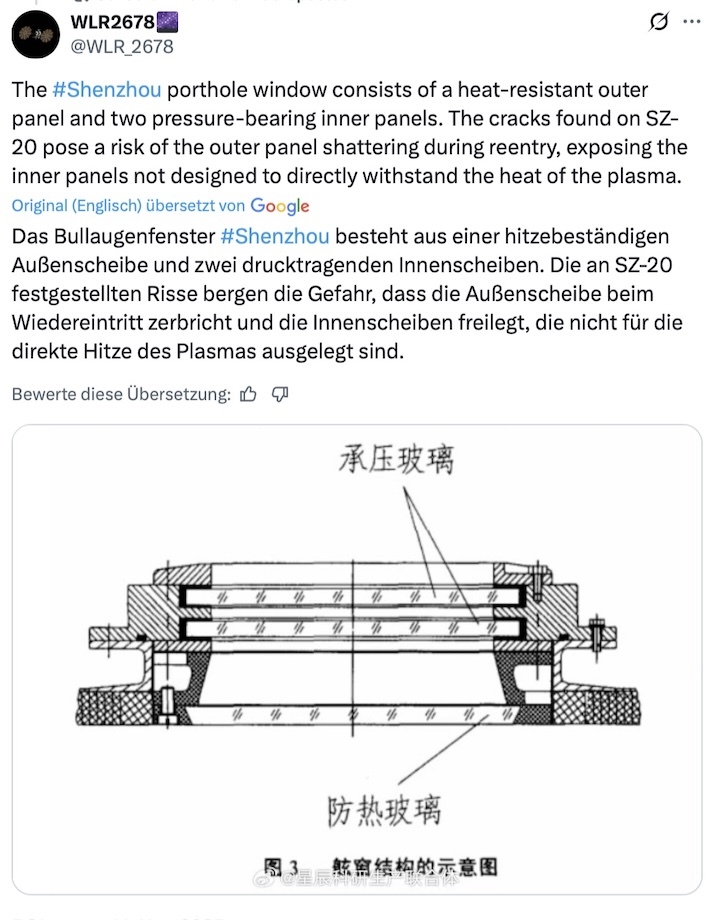
+++
China's Shenzhou-21 return capsule touches down on Earth
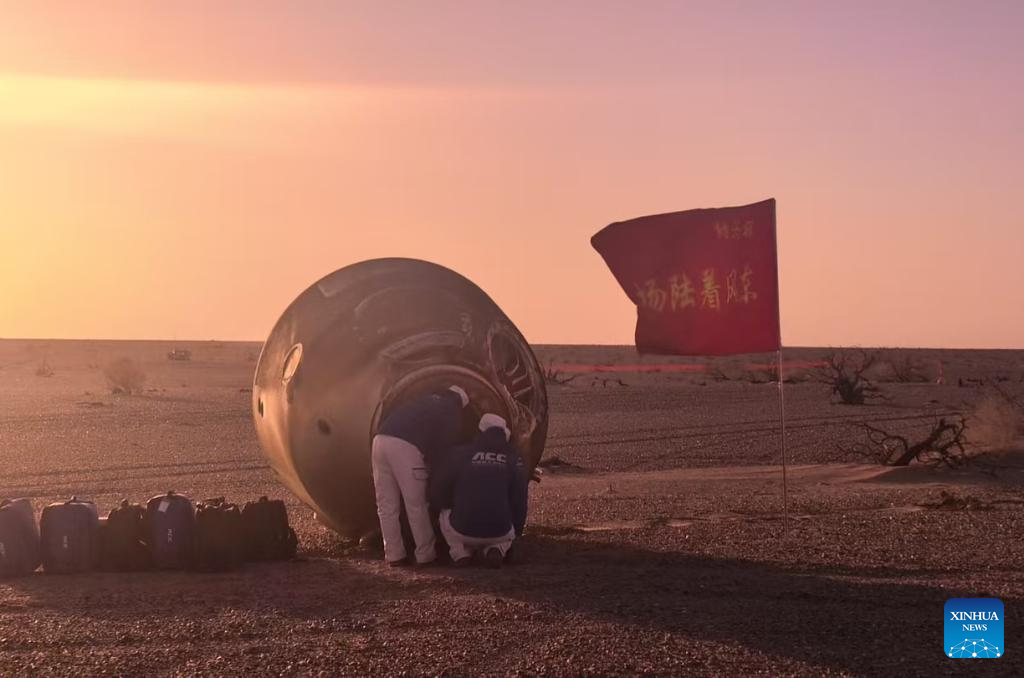
The return capsule of the Shenzhou-21 spaceship, carrying the Shenzhou-20 astronauts Chen Dong, Chen Zhongrui and Wang Jie, touches down at the Dongfeng landing site in north China's Inner Mongolia Autonomous Region, Nov. 14, 2025. (Photo by Wang Jiangbo/Xinhua)
The return capsule of the Shenzhou-21 spaceship, carrying the Shenzhou-20 astronauts Chen Dong, Chen Zhongrui and Wang Jie, touched down at the Dongfeng landing site in north China's Inner Mongolia Autonomous Region on Friday.
At 11:14 a.m.(Beijing Time), the Shenzhou-21 crewed spaceship undocked from the space station combination. At 2:49 p.m., the Beijing Aerospace Control Center issued a return command through the ground station, and the orbital capsule of the Shenzhou-21 spaceship separated from the return capsule.
The brake engine then ignited, and the Shenzhou-21 return capsule separated from the propulsion capsule. The return capsule touched down at 4:40 p.m. at the Dongfeng landing site in north China's Inner Mongolia Autonomous Region, the China Manned Space Agency (CMSA) said.
The astronauts are all in good health. They had spent 204 days in orbit, setting a new record for the longest in-orbit stay among Chinese astronaut crews, the CMSA said. ■
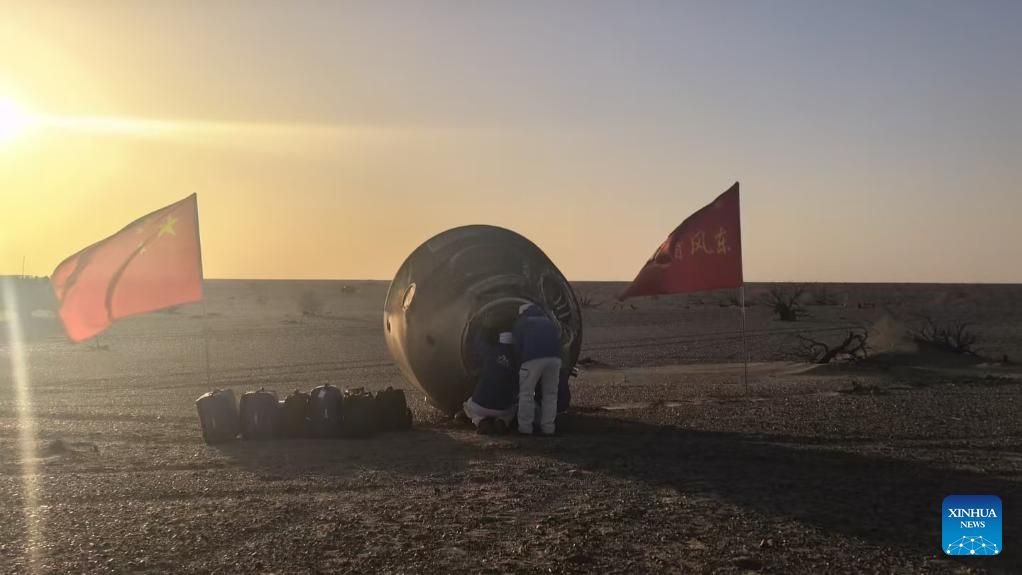
The return capsule of the Shenzhou-21 spaceship, carrying the Shenzhou-20 astronauts Chen Dong, Chen Zhongrui and Wang Jie, touches down at the Dongfeng landing site in north China's Inner Mongolia Autonomous Region, Nov. 14, 2025. (Photo by Wang Jiangbo/Xinhua)
Quelle: Xinhua
+++
China's Shenzhou-20 spacecraft found unfit for crewed return
The Shenzhou-20 spacecraft does not meet the requirements for the astronauts' safe return and will remain in orbit to continue relevant experiments, the China Manned Space Agency (CMSA) announced Friday.
Tiny cracks have been found in the return capsule's viewport window, which are most probably caused by external impact from space debris, according to the CMSA.
Quelle: Xinhua
----
Update: 15.11.2025
.
Shenzhou-20 astronauts arrive in Beijing
The Shenzhou-20 crew arrived in Beijing by plane on Friday after completing their space station mission.
The three astronauts, Chen Dong, Chen Zhongrui and Wang Jie, landed safely on Earth aboard the Shenzhou-21 spacecraft on Friday. The Shenzhou-21 return capsule touched down at 4:40 p.m. (Beijing Time) at the Dongfeng landing site in north China's Inner Mongolia Autonomous Region, and the crew had all exited the return capsule by 5:21 p.m., according to the China Manned Space Agency (CMSA).
After staying in orbit for 204 days, the three astronauts are all in good health, and the return mission was a success, the CMSA said.
The crew will now enter a period of medical quarantine, and undergo comprehensive medical examinations and health evaluations, the agency said, noting that they will meet with press in Beijing following the end of this period.
Quelle: Xinhua
+++
Shenzhou-20 astronauts back to Earth in China's first alternative space return procedure
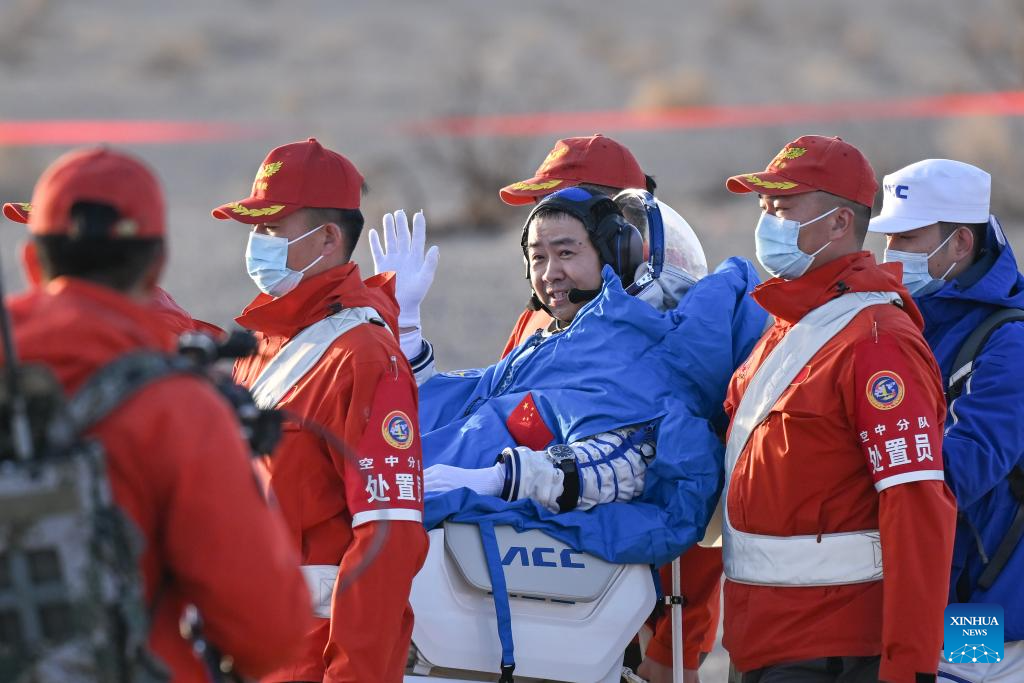
Astronaut Chen Dong, commander of the three-member Shenzhou-20 crew, is out of the Shenzhou-21 spaceship's return capsule after it touched down on Earth at the Dongfeng landing site in north China's Inner Mongolia Autonomous Region, Nov. 14, 2025. (Xinhua/Li Zhipeng)
The three astronauts of China's Shenzhou-20 mission landed safely on Earth aboard the Shenzhou-21 spacecraft on Friday, marking the first successful implementation of an alternative return procedure in the country's space station program history.
The alternative plan was adopted after the original return vessel, the Shenzhou-20 spacecraft, experienced a suspected impact from space debris. The China Manned Space Agency (CMSA) confirmed the return mission was a complete success.
By 5:21 p.m. (Beijing Time), the Shenzhou-20 crew, Chen Dong, Chen Zhongrui and Wang Jie, had all left the Shenzhou-21 return capsule. They had spent 204 days in orbit and are all in good health, the CMSA said.
The Shenzhou-20 crew set a new record for the longest in-orbit stay among Chinese astronaut crews, and Commander Chen Dong has become the first Chinese astronaut to accumulate over 400 days in orbit.
Chen Dong has completed six extravehicular tasks, making him the Chinese astronaut with the most extravehicular tasks to date. "Space exploration has never been easy for humankind," said the mission commander, sitting in a chair in front of the capsule.
"This mission was a true test, and we are proud to have completed it successfully. China's space program has withstood the test, with all teams delivering outstanding performances... This experience has left us a profound impression that astronauts' safety is really prioritized," Chen Dong said.
Chen Zhongrui and Wang Jie, on their first flight mission, have completed all assigned tasks.
"With our crew working as one and seamlessly aligned with ground teams, we have successfully completed every task and fulfilled the mission," said Chen Zhongrui. "I feel profoundly happy."
"After six months in space, it's good to be back on Earth and feel gravity again. This mission was not only a success, but also a challenging and arduous journey of personal growth," said Wang. "I will continue to dedicate myself to space exploration."
The Shenzhou-20 spacecraft, originally scheduled to return the three astronauts to Earth on Nov. 5, does not meet the requirements for their safe return and will remain in orbit to continue relevant experiments, the CMSA said.
Tiny cracks have been found in the Shenzhou-20 return capsule's viewport window, which are most probably caused by external impact from space debris, the CMSA added.
At 11:14 a.m., the Shenzhou-21 crewed spaceship undocked from the space station combination. At 2:49 p.m., the Beijing Aerospace Control Center issued a return command through the ground station, and the orbital capsule of the Shenzhou-21 spaceship separated from the return capsule.
Then the braking engine ignited, and the Shenzhou-21 return capsule separated from the propulsion capsule. The return capsule touched down at 4:40 p.m. at the Dongfeng landing site in north China's Inner Mongolia Autonomous Region, the CMSA said.
The agency said that the Shenzhou-22 spacecraft will be launched at an appropriate time in the future.
The Shenzhou-22 mission will also ferry a fresh cargo batch to the station. "The launch capacity is precious, so we make full use of it," said Zhou Yaqiang, an expert from the CMSA. "This flight will bring the crew new food supplies as well as devices and equipment for the station."
FRUITFUL ORBITAL EXPERIMENTS
During the mission, the crew carried out four extravehicular activities and multiple payload transfer tasks, successfully installing space debris protection devices, setting up external auxiliary equipment, and inspecting external facilities and equipment.
Among these, installing foot restraints and interface adapters on the external platform has significantly improved the efficiency of astronauts' extravehicular operations. Additionally, the space debris protection devices previously planned for the Wentian lab module have been fully installed.
In the field of space science and applications, the crew, in close collaboration with ground-based scientific and technical personnel, has achieved phased results in areas such as microgravity fundamental physics, space materials science, space medicine, and aerospace new technologies.
They obtained high-quality protein crystals in space, which may yield potential targets for tumor therapy. They successfully heated the tungsten alloy to 3,100 degrees Celsius, setting a new global record for the highest temperature achieved in space materials science experiments. They also observed, for the first time, charged colloids forming long-lived metastable structures through crystallization under microgravity conditions.
They also marked new success in the "space garden" inside the Wentian lab module, where freshly sown carrots have begun to sprout following the earlier lettuce harvest.
Meanwhile, the astronauts' menu received a significant upgrade as a newly arrived hot-air oven allowed crew members of both Shenzhou-20 and Shenzhou-21 to enjoy freshly grilled chicken wings and steak.
MICE EXPERIMENTS
Joining the Shenzhou-20 crew on their journey home were "mice astronauts," which had been transported to the space station on Oct. 31. They had lived aboard the space station for almost two weeks, nearly twice the originally planned duration.
As the first mammalian model animals sent to the space station, the mice remained under continuous multi-dimensional video monitoring throughout their stay in orbit, with their activity and behavior closely observed.
Researchers are expected to analyze these recordings to investigate how weightlessness and a confined environment affect mouse behavior.
Following their return to Earth, scientists will analyze the mice's behavioral, physiological and biochemical metrics to learn their acute responses and adaptive changes to space conditions, providing evidence for space biology.
"The experiment gives us a good foundation for further large-scale mammalian research in orbit," said Zhang Lu, an expert from the Technology and Engineering Center for Space Utilization (CSU) of the Chinese Academy of Sciences (CAS).
Mice are a key model animal in life sciences due to their high genetic similarity to humans, small size, short reproductive cycle and ease of genetic modification, making them ideal for studying physiological processes and organismal development in space, explained Huang Kun, an expert from the CSU.
"The findings will be critical to assessing the feasibility of long-term human survival and reproduction in space, and may also deliver insights beneficial to human health on Earth," Huang said, while noting that the experiment will represent a major step forward in China's space life science research capabilities. ■
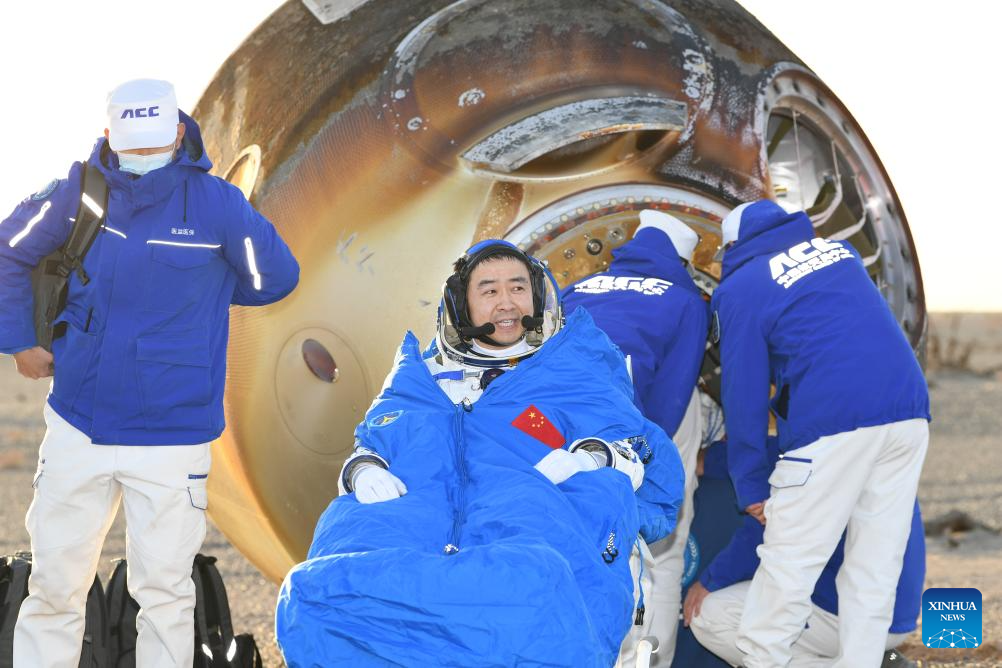
Astronaut Chen Dong, commander of the three-member Shenzhou-20 crew, is out of the Shenzhou-21 spaceship's return capsule after it touched down on Earth at the Dongfeng landing site in north China's Inner Mongolia Autonomous Region, Nov. 14, 2025. (Photo by Wang Jiangbo/Xinhua)
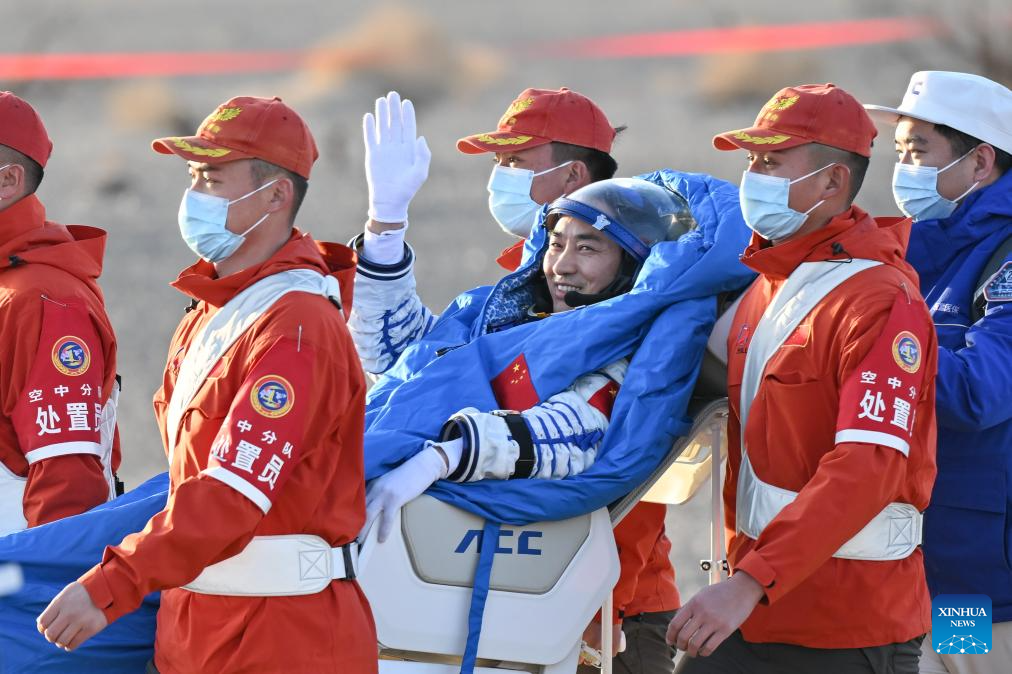
Chen Zhongrui, a Shenzhou-20 astronaut, is out of the Shenzhou-21 spaceship's return capsule after it touched down on Earth at the Dongfeng landing site in north China's Inner Mongolia Autonomous Region, Nov. 14, 2025. (Xinhua/Li Zhipeng)
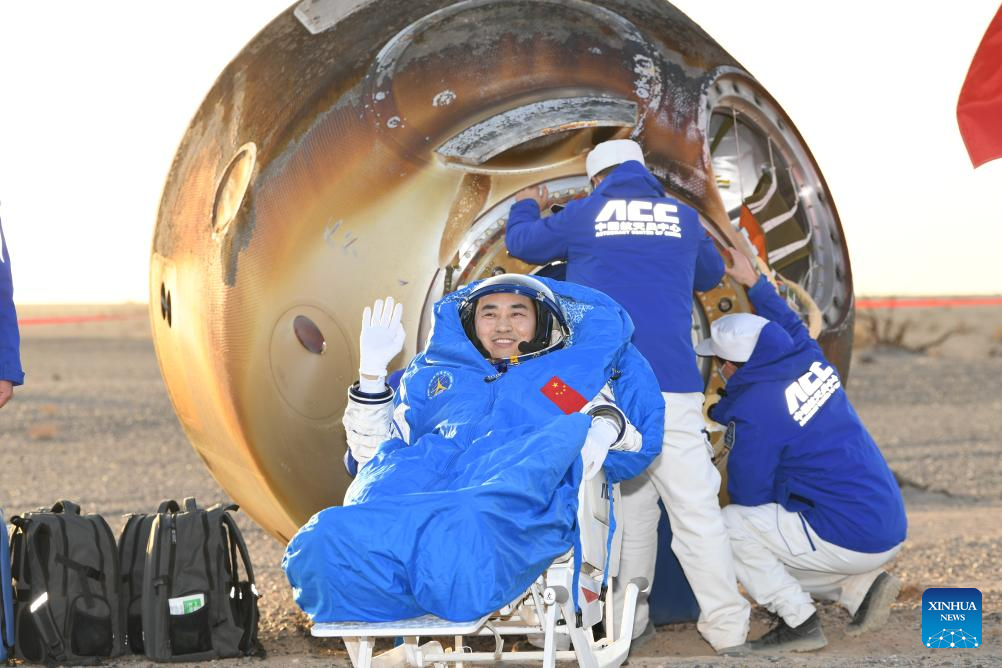
Chen Zhongrui, a Shenzhou-20 astronaut, is out of the Shenzhou-21 spaceship's return capsule after it touched down on Earth at the Dongfeng landing site in north China's Inner Mongolia Autonomous Region, Nov. 14, 2025. (Photo by Wang Jiangbo/Xinhua)
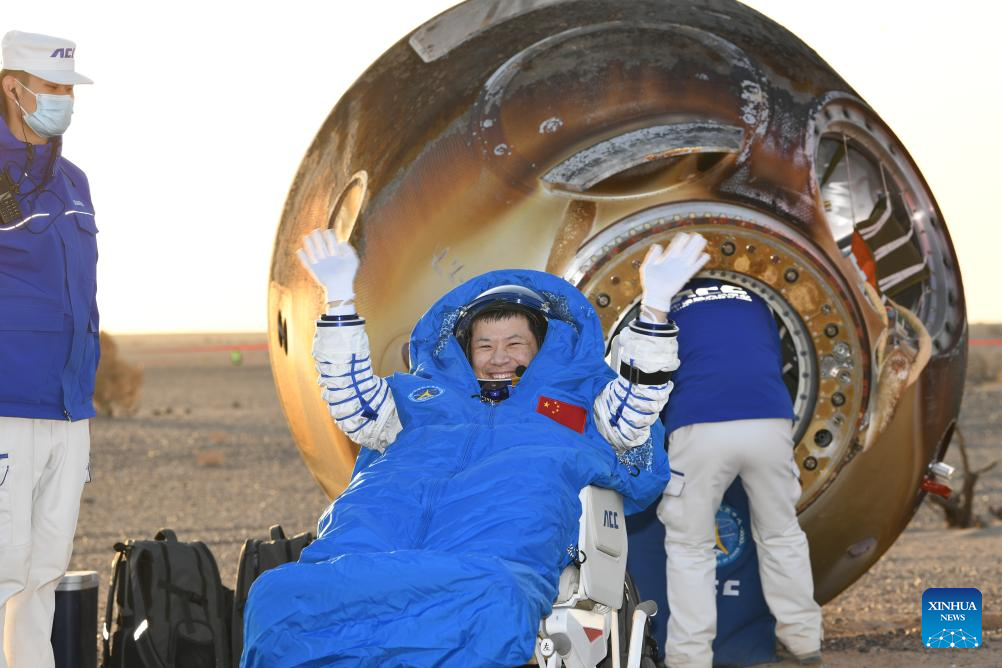
Wang Jie, a Shenzhou-20 astronaut, is out of the Shenzhou-21 spaceship's return capsule after it touched down on Earth at the Dongfeng landing site in north China's Inner Mongolia Autonomous Region, Nov. 14, 2025. (Photo by Wang Jiangbo/Xinhua)
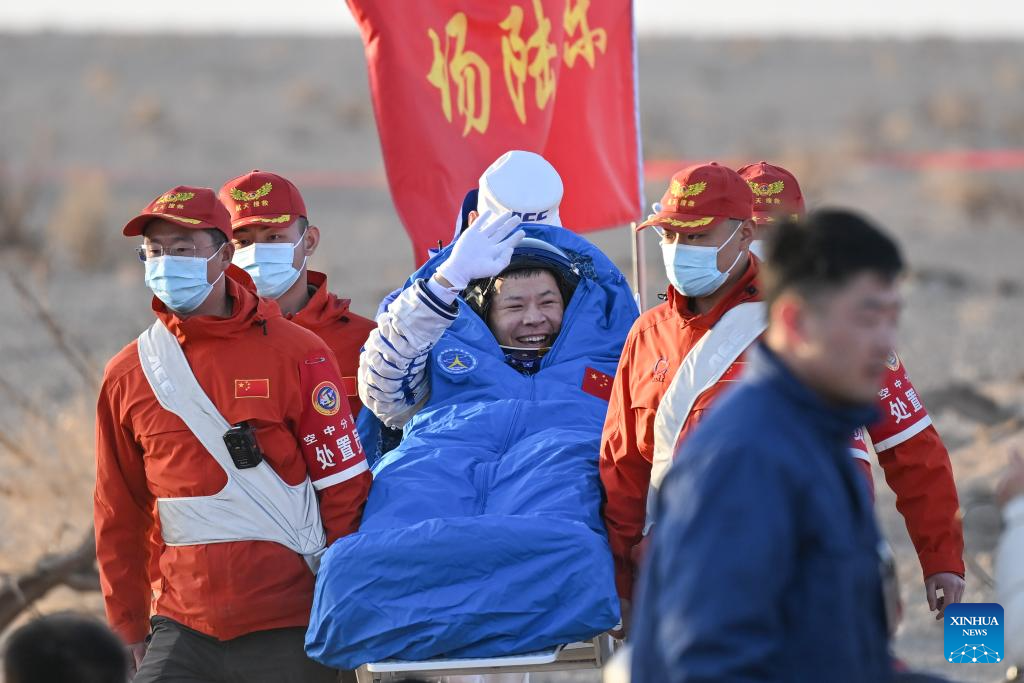
Wang Jie, a Shenzhou-20 astronaut, is out of the Shenzhou-21 spaceship's return capsule after it touched down on Earth at the Dongfeng landing site in north China's Inner Mongolia Autonomous Region, Nov. 14, 2025. (Xinhua/Li Zhipeng)
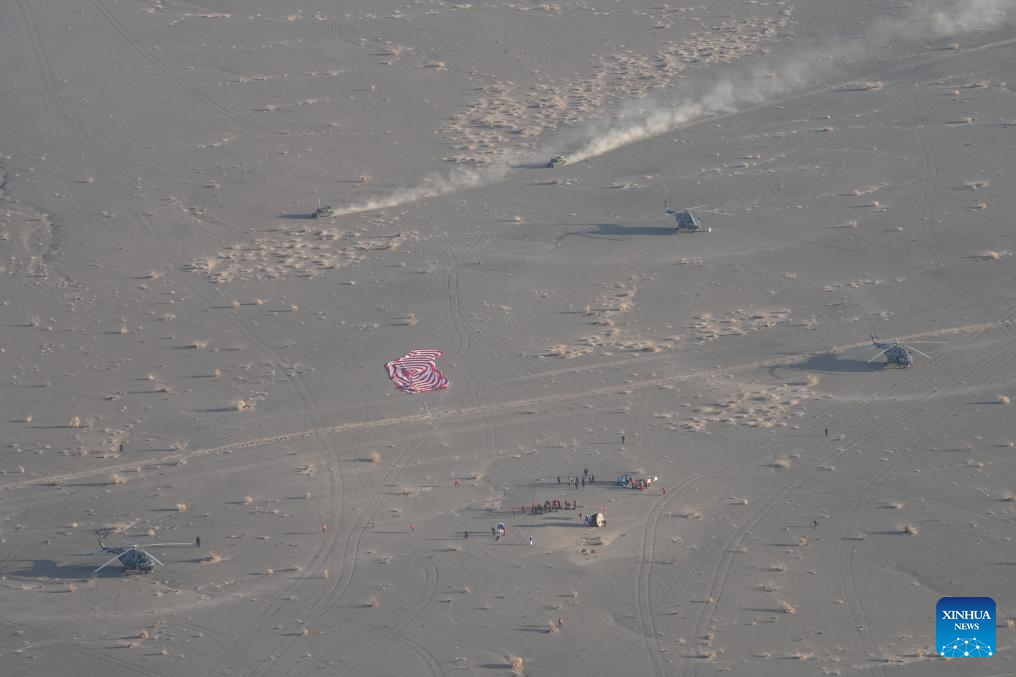
The return capsule of the Shenzhou-21 spaceship, carrying the Shenzhou-20 astronauts Chen Dong, Chen Zhongrui and Wang Jie, touches down at the Dongfeng landing site in north China's Inner Mongolia Autonomous Region, Nov. 14, 2025. (Xinhua/Li Minggang)
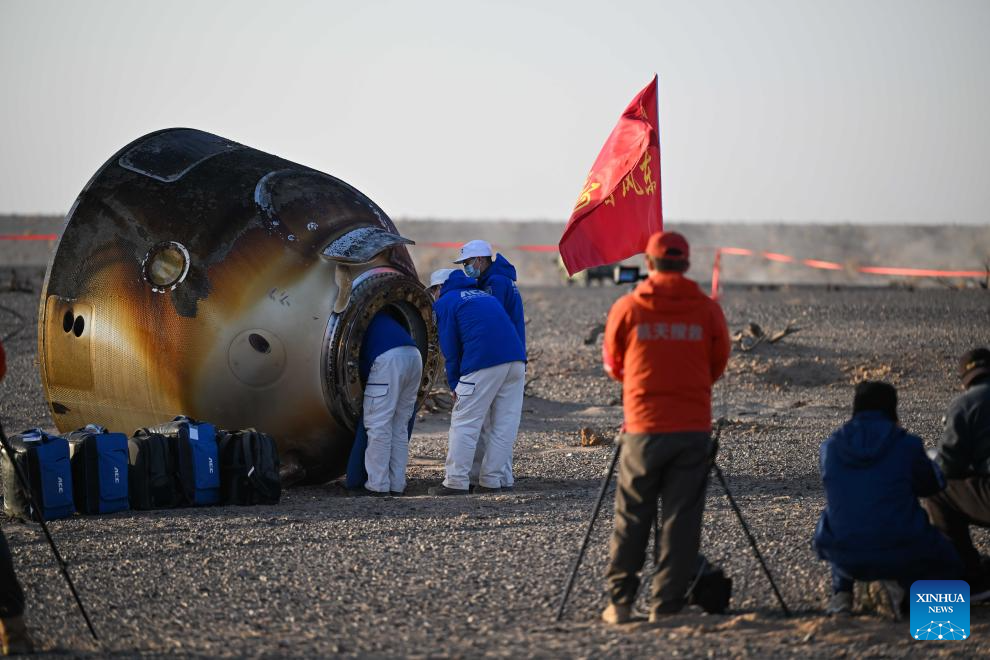
The return capsule of the Shenzhou-21 spaceship, carrying the Shenzhou-20 astronauts Chen Dong, Chen Zhongrui and Wang Jie, touches down at the Dongfeng landing site in north China's Inner Mongolia Autonomous Region, Nov. 14, 2025. (Xinhua/Li Zhipeng)
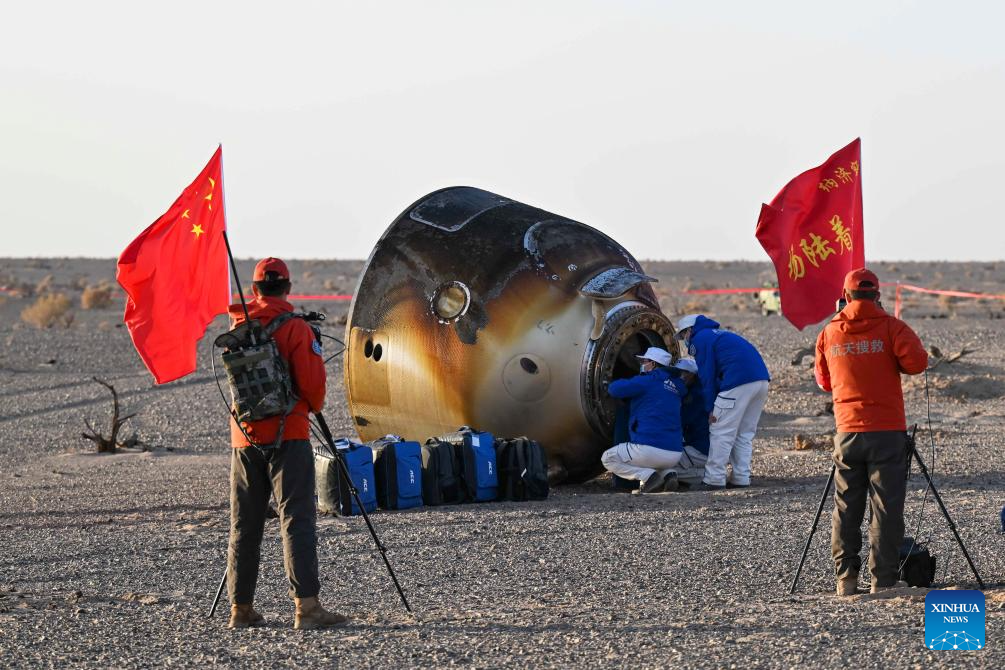
The return capsule of the Shenzhou-21 spaceship, carrying the Shenzhou-20 astronauts Chen Dong, Chen Zhongrui and Wang Jie, touches down at the Dongfeng landing site in north China's Inner Mongolia Autonomous Region, Nov. 14, 2025. (Xinhua/Li Zhipeng)
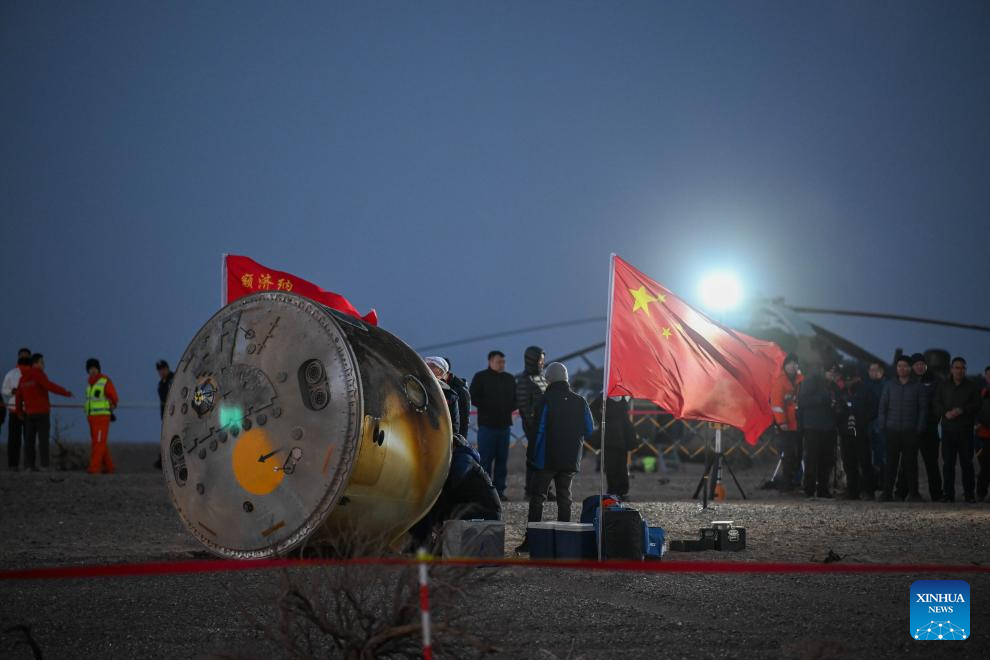
The return capsule of the Shenzhou-21 spaceship, carrying the Shenzhou-20 astronauts Chen Dong, Chen Zhongrui and Wang Jie, touches down at the Dongfeng landing site in north China's Inner Mongolia Autonomous Region, Nov. 14, 2025. (Xinhua/Li Zhipeng)
Quelle: Xinhua