
29.03.2025
Understanding Cosmic Explosions: StarBurst Arrives at NASA for Testing
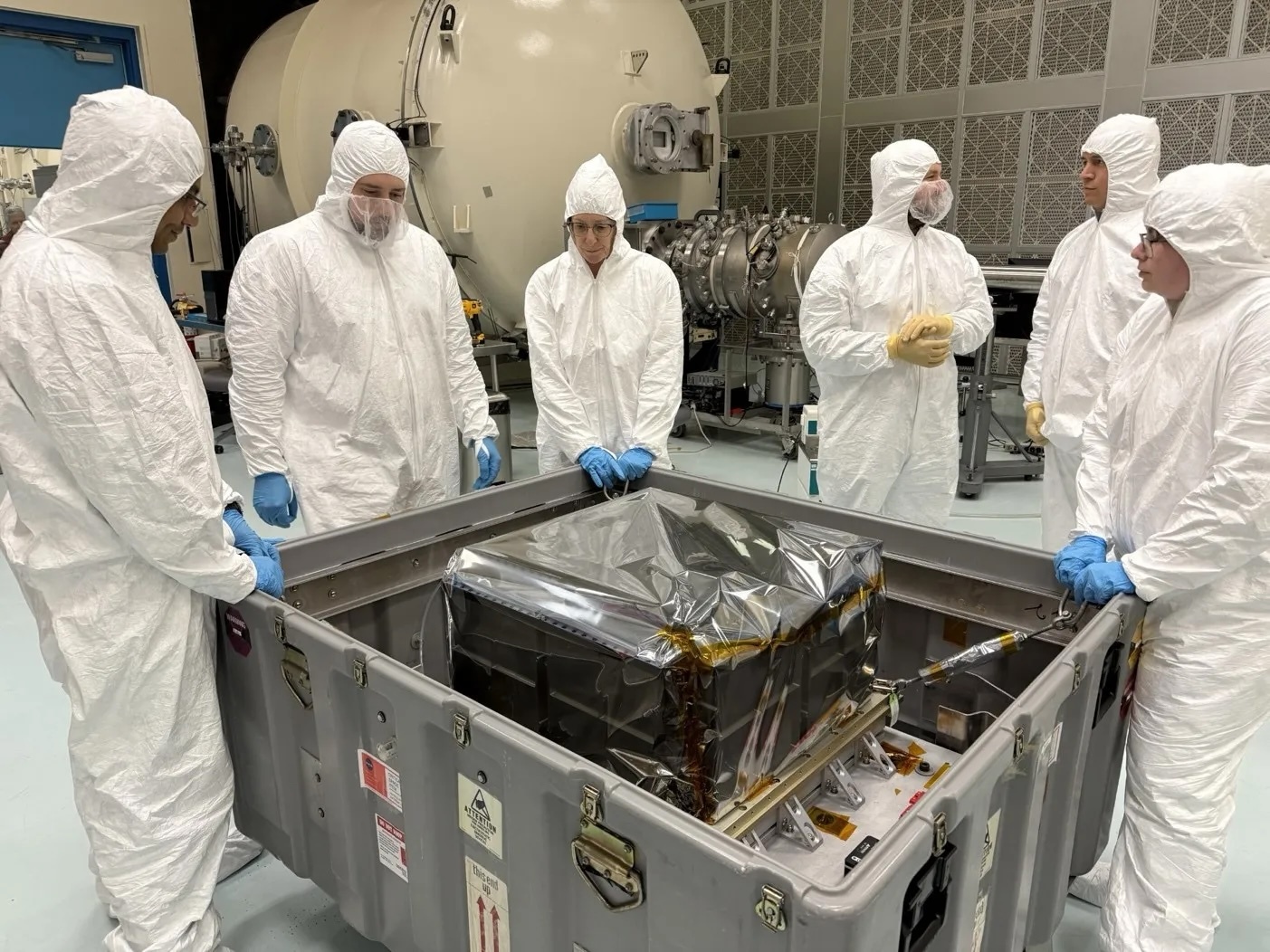
StarBurst, a wide-field gamma ray observatory, arrived at NASA’s Marshall Space Flight Centerin Huntsville, Alabama, March 4 for environmental testing and final instrument integration. The instrument is designed to detect the initial emission of short gamma-ray bursts, a key electromagnetic indicator of neutron star mergers.
“Gamma-ray bursts are among the most powerful explosions in the universe, and they serve as cosmic beacons that help us understand extreme physics, including black hole formation and the behavior of matter under extreme conditions,” said Dr. Daniel Kocevski, principal investigator of the StarBurst mission at NASA Marshall.
According to Kocevski, neutron star mergers are particularly exciting because they produce gamma-ray bursts and gravitational waves, meaning scientists can study these events using two different signals – light and ripples in space time.

The merging of neutron stars forges heavy elements such as gold and platinum, revealing the origins of some of Earth’s building blocks.
“By studying these gamma-ray bursts and the neutron star mergers that produce them, we gain insights into fundamental physics, the origins of elements, and even the expansion of the universe,” Kocevski said. “Neutron star mergers and gamma-ray bursts are nature’s laboratories for testing our understanding of the cosmos.”
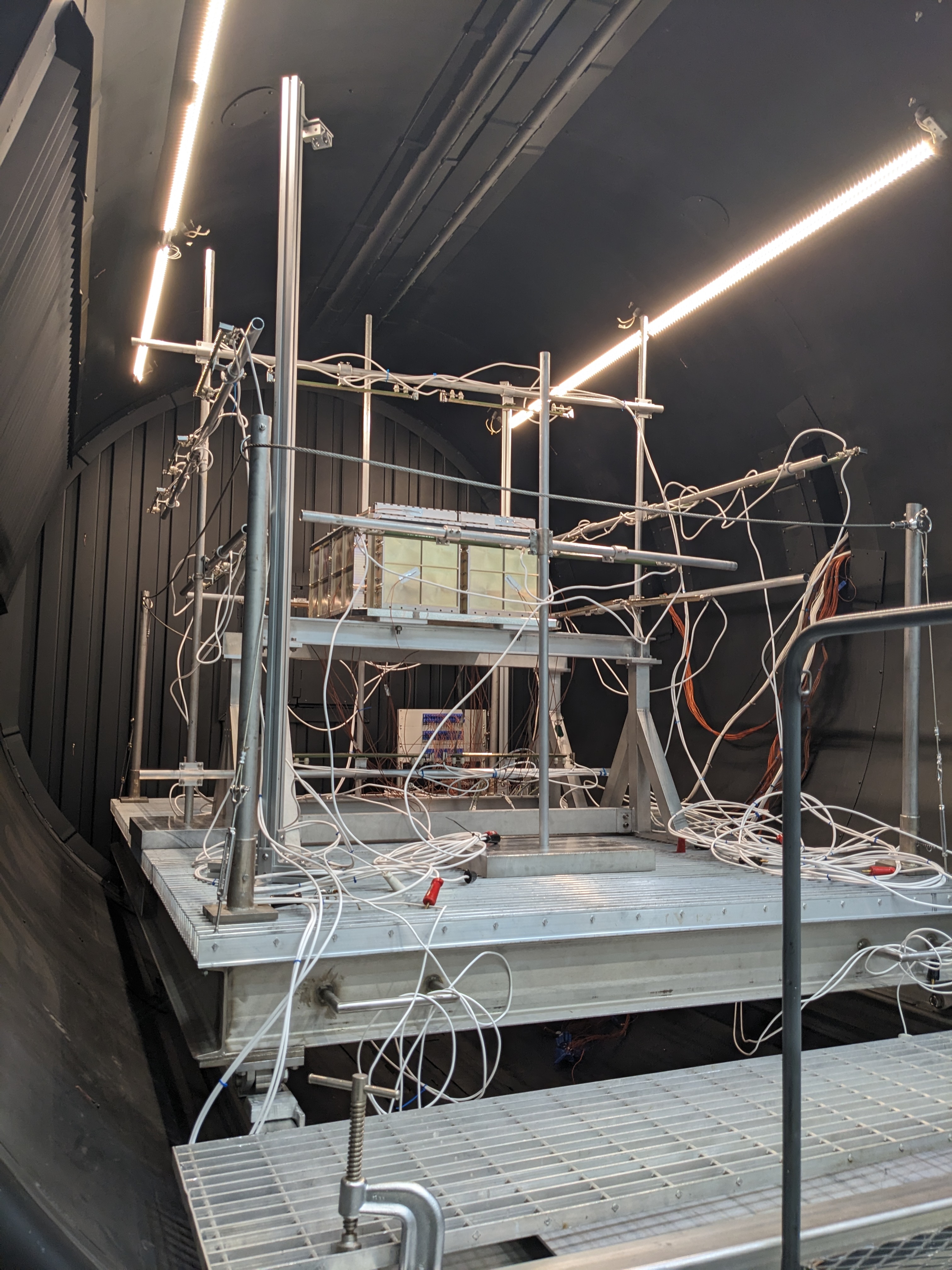
StarBurst will undergo flight vibration and thermal vacuum testing at Marshall in the Sunspot Thermal Vacuum Testing Facility. These tests ensure it can survive the rigors of launch and harsh environment of space.
Final instrument integration will happen in the Stray Light Facility, which is a specialized environment to help identify and reduce unwanted light in certain areas of the optical systems.

StarBurst is a collaborative effort led by NASA’s Marshall Space Flight Center, with partnerships with the U.S. Naval Research Laboratory, the University of Alabama Huntsville, the Universities Space Research Association, and the UTIAS Space Flight Laboratory. StarBurst was selected for development as part of the NASA Astrophysics Pioneers program, which supports lower-cost, smaller hardware missions to conduct compelling astrophysics science.
Quelle: NASA
----
Update: 11.01.2026
.
Shaken, Not Stirred: NASA’s StarBurst Aces Extreme Temperature Tests
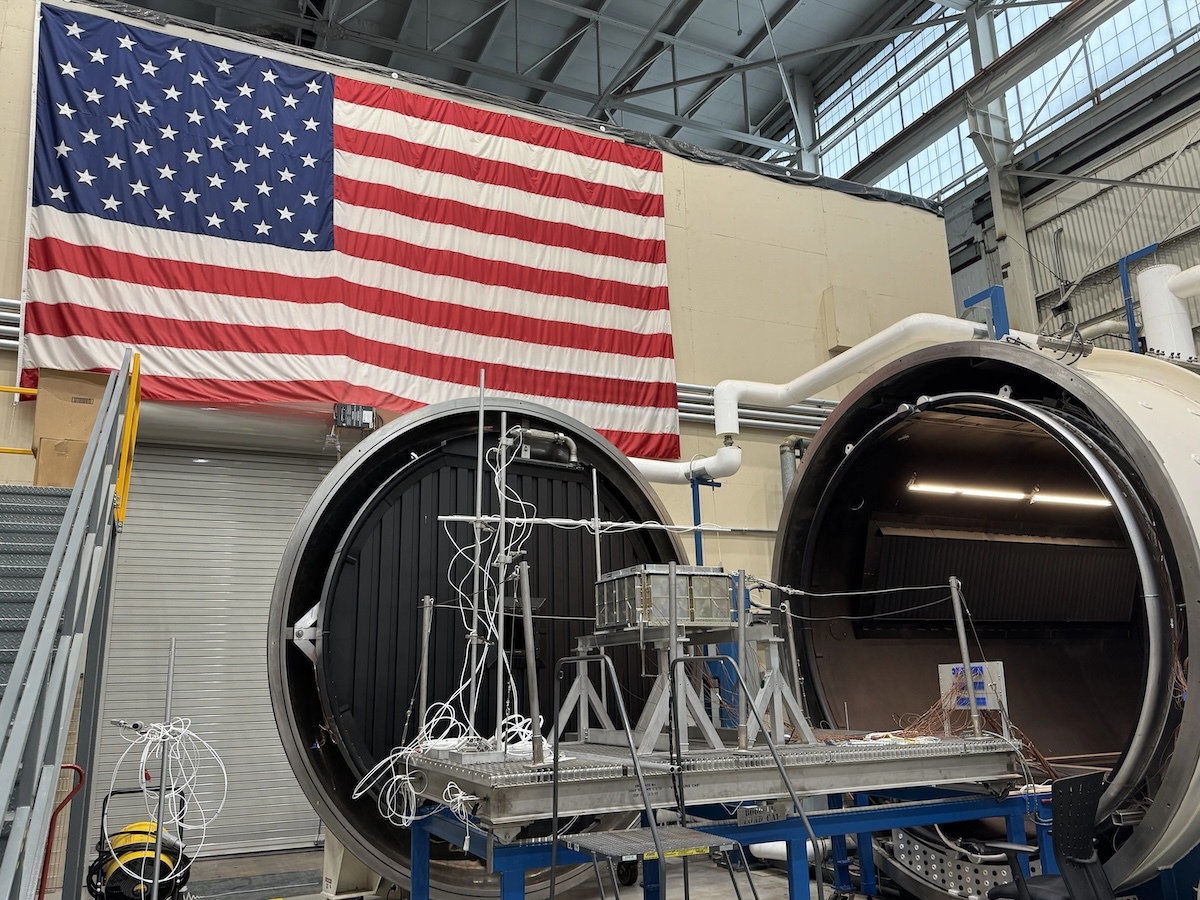
Heated, cooled, shaken, and settled – NASA’s StarBurst instrument is several steps closer to being ready for launch. The small satellite is now awaiting instrument calibration following a successful integration in Canada and rigorous testing by engineers at the agency’s Marshall Space Flight Center in Huntsville, Alabama.
StarBurst is designed to detect the initial emission of short gamma-ray bursts, some of the most powerful explosions in the universe and a key indicator of neutron star mergers. This would provide valuable insight into such events, which are also detected through gravitational waves by observatories on Earth. These events are where most of the heavy metals in the universe, such as gold and platinum, are formed. To date, only one such event has been observed simultaneously in gravitational waves and gamma-rays; StarBurst is expected to find up to 10 per year.
StarBurst arrived at NASA Marshall in March 2025. During its time at the center, the instrument underwent thermal testing in a vacuum chamber and flight vibration testing.
The team held StarBurst’s nonstop thermal testing in a vacuum chamber, 24 hours a day for 18 days. Technicians placed radioactive material into the vacuum chamber, giving StarBurst the ability to detect gamma-ray signals during the tests.
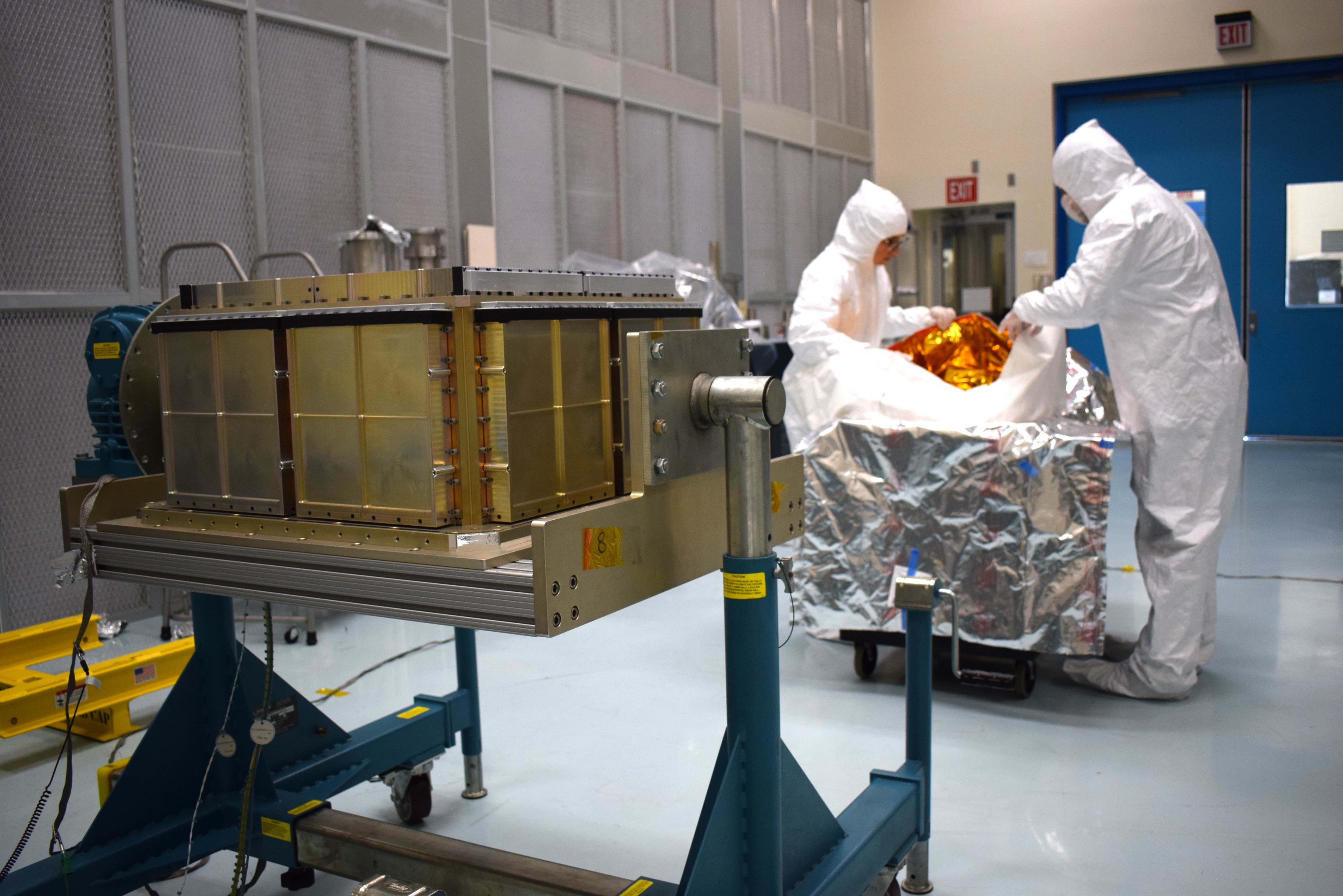
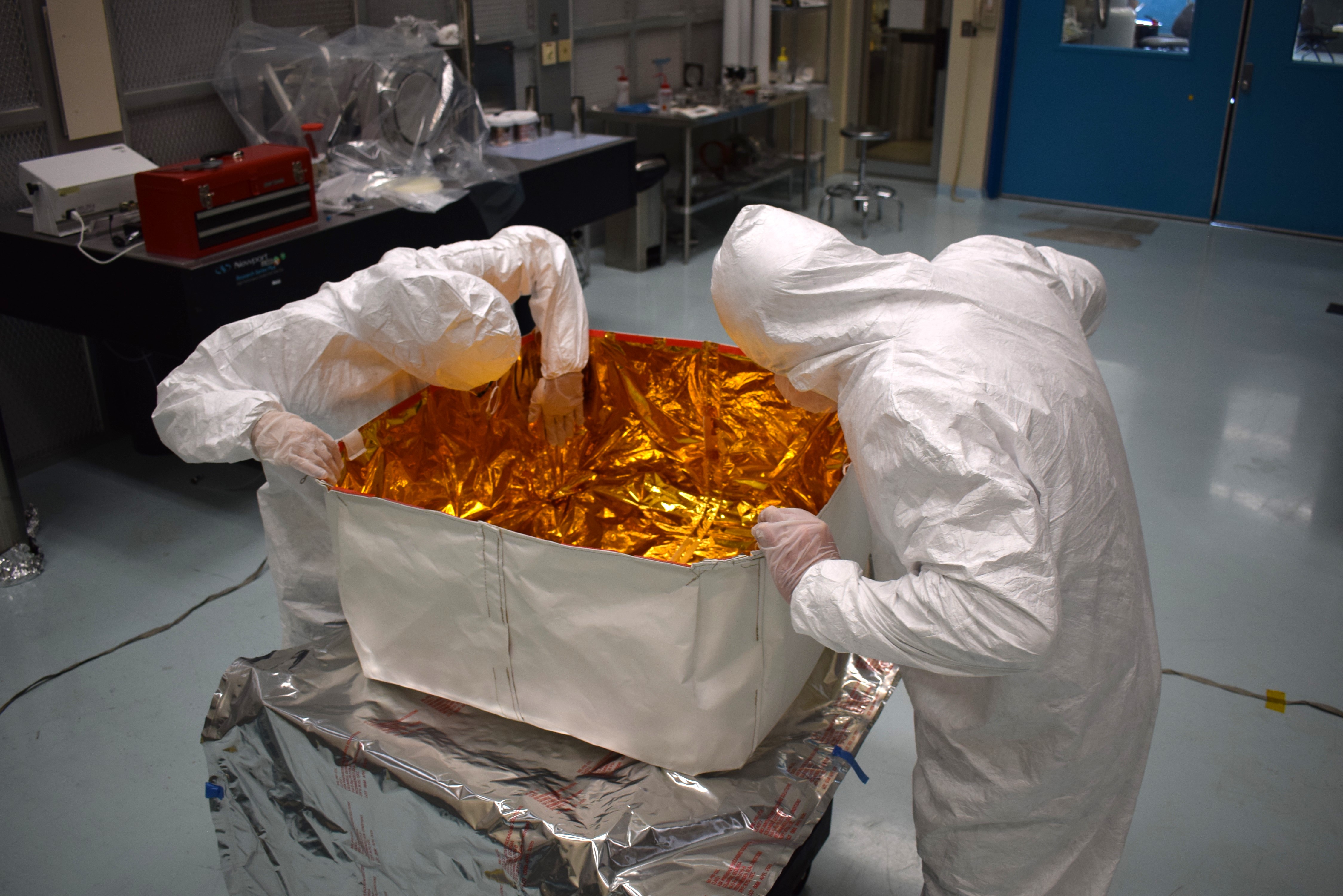
Test teams conducted thermal balance testing to simulate the hottest and coldest situations the instrument will operate under in space. Data from these tests improves thermal models used by NASA engineers, while also ensuring the satellite can handle these temperatures in orbit.
NASA engineers also completed a 24-hour “bake-out,” a process that removes unwanted gas or vapor from the instrument using extreme heat in a vacuum.
“NASA’s StarBurst mission is ready for its next stage of assembly and is one step closer to flight,” said Daniel Kocevski, principal investigator at NASA Marshall. “Testing at NASA Marshall has verified engineering models, adding our understanding of how StarBurst will operate in space as it observes gamma ray emission from merging neutron stars to help us better understand the building blocks of Earth—and the universe.”
Outside of the vacuum chamber, a “vibe test” bolted the instrument to a special “shaker table” to simulate the vibrations and turbulence StarBurst will experience during launch.
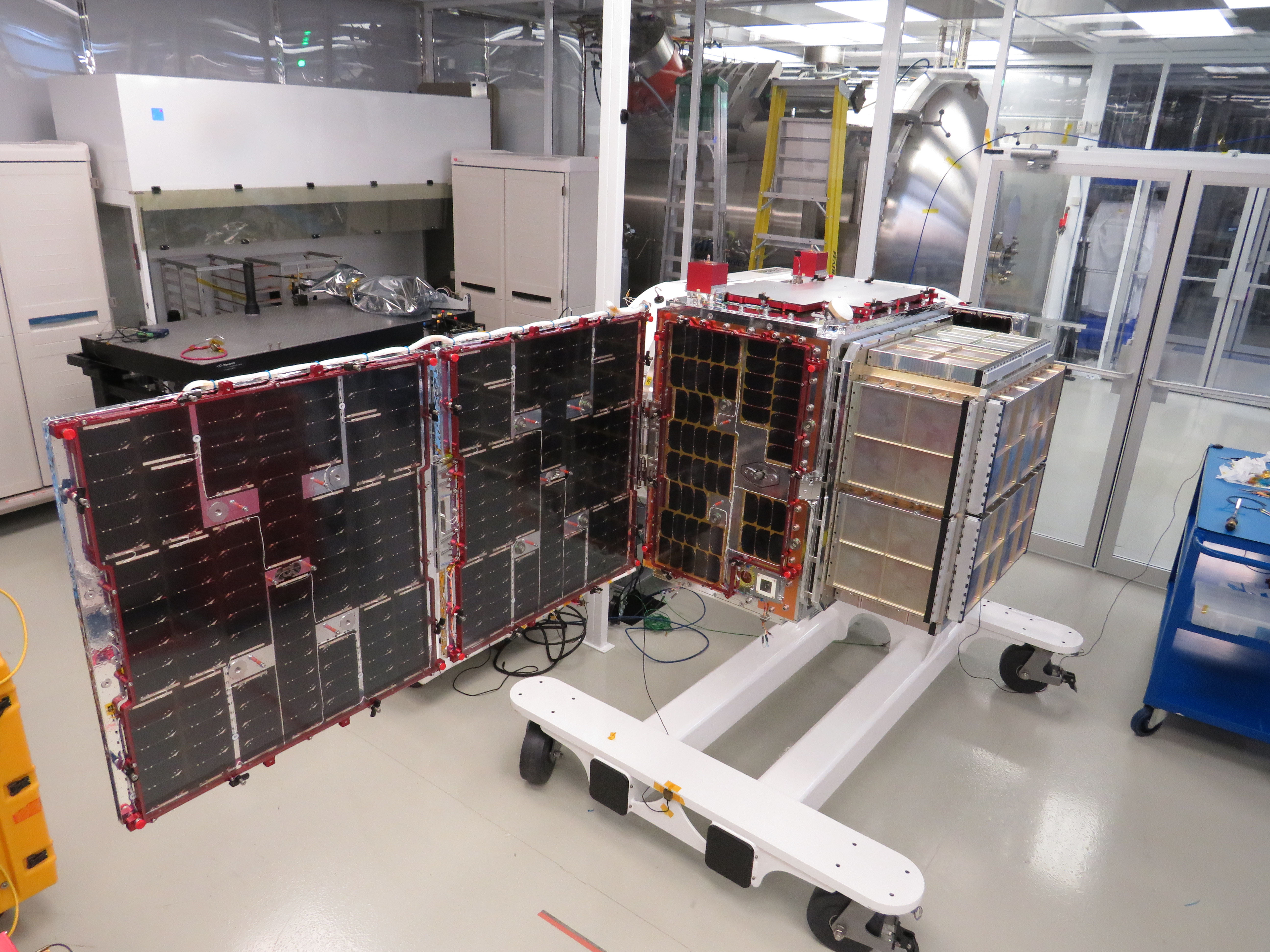
The Marshall team shipped the StarBurst instrument to Space Flight Laboratory at the University of Toronto, which manufactured the spacecraft bus, in August.
Prior to shipment, teams at Marshall’s Stray Light Facility fit-tested the multi-layer insulation blanket needed to insulate the crystal detector units from the harsh space environment. StarBurst is equipped with 12 of these detectors, which serve as the main gamma-ray detection system on the spacecraft.
Marshall team members traveled to Toronto and were on hand to help integrate the instrument with the spacecraft bus in early September. Testing at Marshall set the stage for planned post-integration testing, which included functional testing and electromagnetic compatibility testing. StarBurst is scheduled to undergo additional calibration, vibration, and thermal vacuum testing in the spring.
Integration teams intend to have StarBurst launch-ready by June 2026. NASA plans to launch the satellite as early as 2027 during the next run of the Laser-Interferometer Gravitational Wave Observatory to maximize the chance of detecting gamma-ray bursts that coincide with gravitational wave events. To date, such a joint gamma-ray and gravitational-wave detection has been observed only once.
StarBurst is a collaborative effort led by NASA’s Marshall Space Flight Center, with partnerships with the U.S. Naval Research Laboratory, the University of Alabama Huntsville, the Universities Space Research Association, and the University of Toronto Institute for Aerospace Studies Space Flight Laboratory. StarBurst was selected for development as part of the NASA Astrophysics Pioneers program, which supports lower-cost, smaller hardware missions to conduct compelling astrophysics science.
Quelle: NASA